
Social Stratification and Class
77 resources created by 60 users
This Social Stratification and Class page on GoConqr gathers community-made quizzes, mind maps, flashcards and notes, from caste and class systems and meritocracy to poverty, ethnic inequality and gender inequality. It's built for school students, university students and professional candidates revising a topic, plus teachers after ready-made material. There are over 750 resources here, including more than 30 quizzes, over 400 mind maps and more than 200 flashcards, pitched at secondary and university level. Pick a topic, try a quiz to find your gaps, then make your own revision sets.
Top Social Stratification and Class resources
-
39 cardsSociology- social stratification Sociology- social stratification
-
40 questionsIntro to SOC - Module 5 - Quiz How did Max Weber define power?
-
51 questionsSociology Final Social Stratification is a concept that refers to
-
38 cardsSocial inequality Define social inequality
-
61 cardsunit 3: social inequality revision notes and keywords from glossary
-
48 cardsExplanations of Ethnic Inequalities Abbott et al?
-
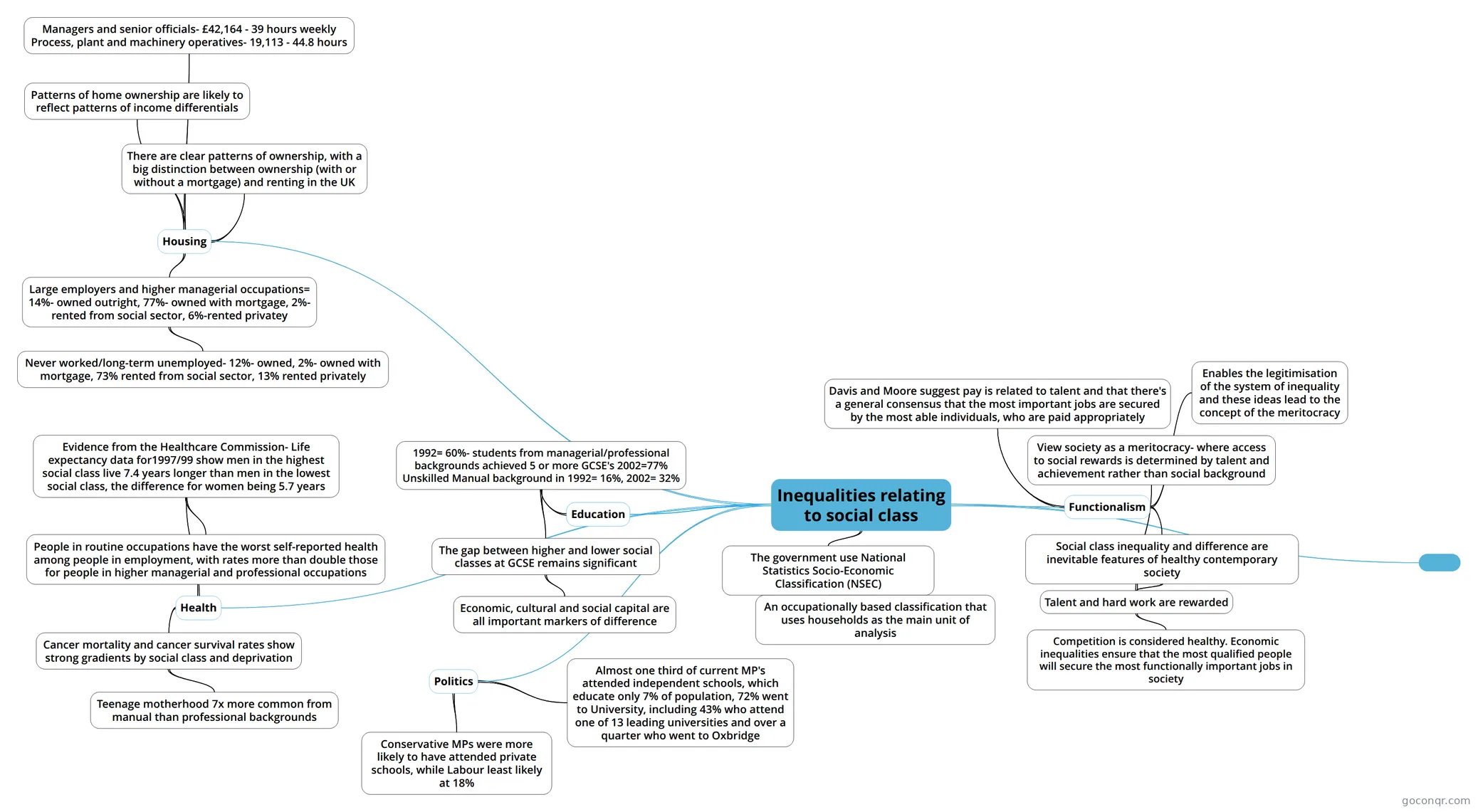 Mind map Inequalities relating to social class
-
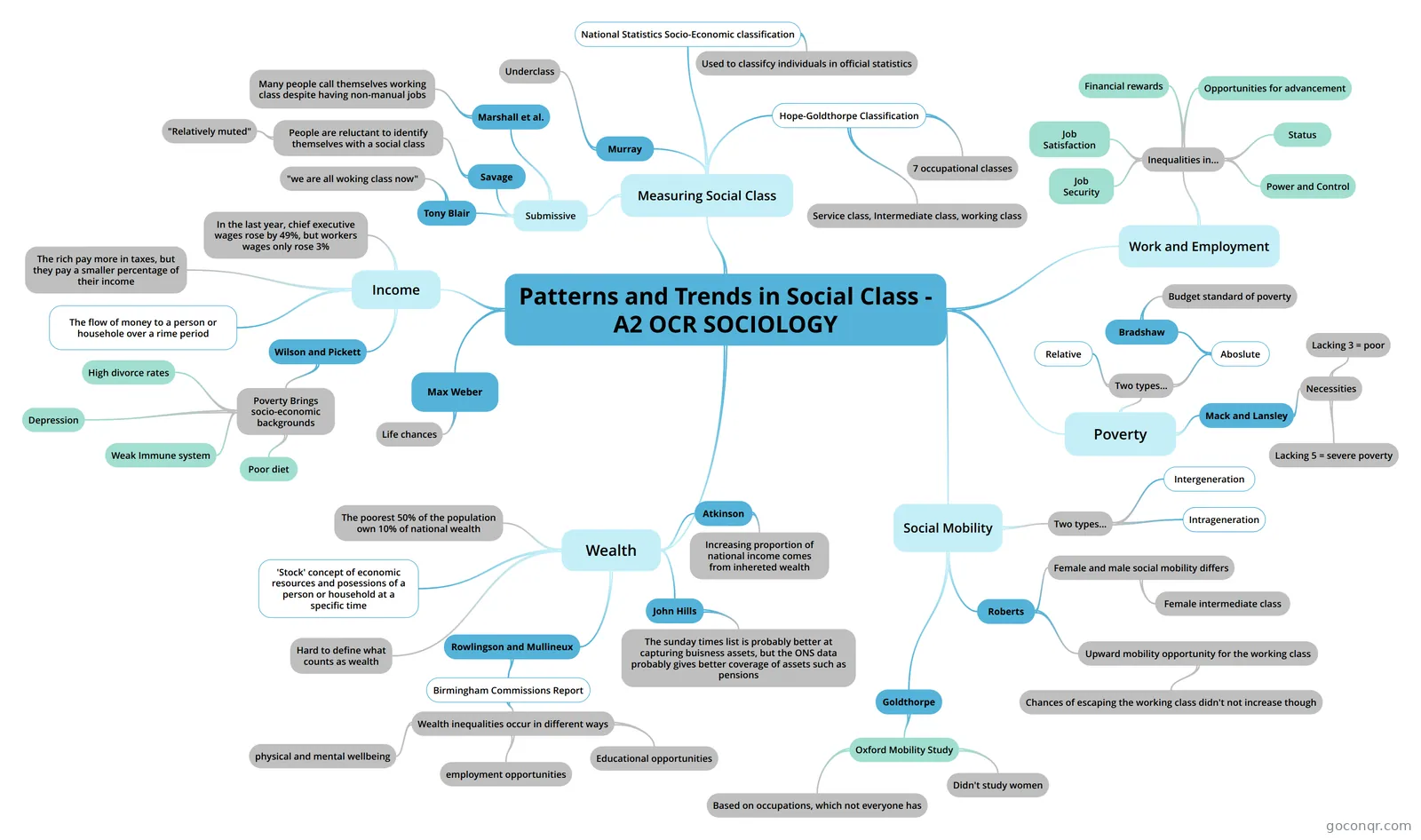 Mind map Patterns and Trends in Social Class - A2 OCR SOCIOLOGY Mind Map of key sociologists and theories involved in the patterns and trends in social class. Part of OCR ...
Quizzes
-
40 questionsIntro to SOC - Module 5 - Quiz How did Max Weber define power?
-
51 questionsSociology Final Social Stratification is a concept that refers to
-
10 questionsPoverty Quiz The poverty rate in metropolitan areas lower than the poverty rate in rural areas?
-
5 questionsSocial Status Achieved Status is status you work for
Mind maps
See all 36 mind maps-
Inequalities relating to social class
-
Patterns and Trends in Social Class - A2 OCR SOCIOLOGY Mind Map of key sociologists and theories involved in the patterns and trends in social class. Part of OCR ...
-
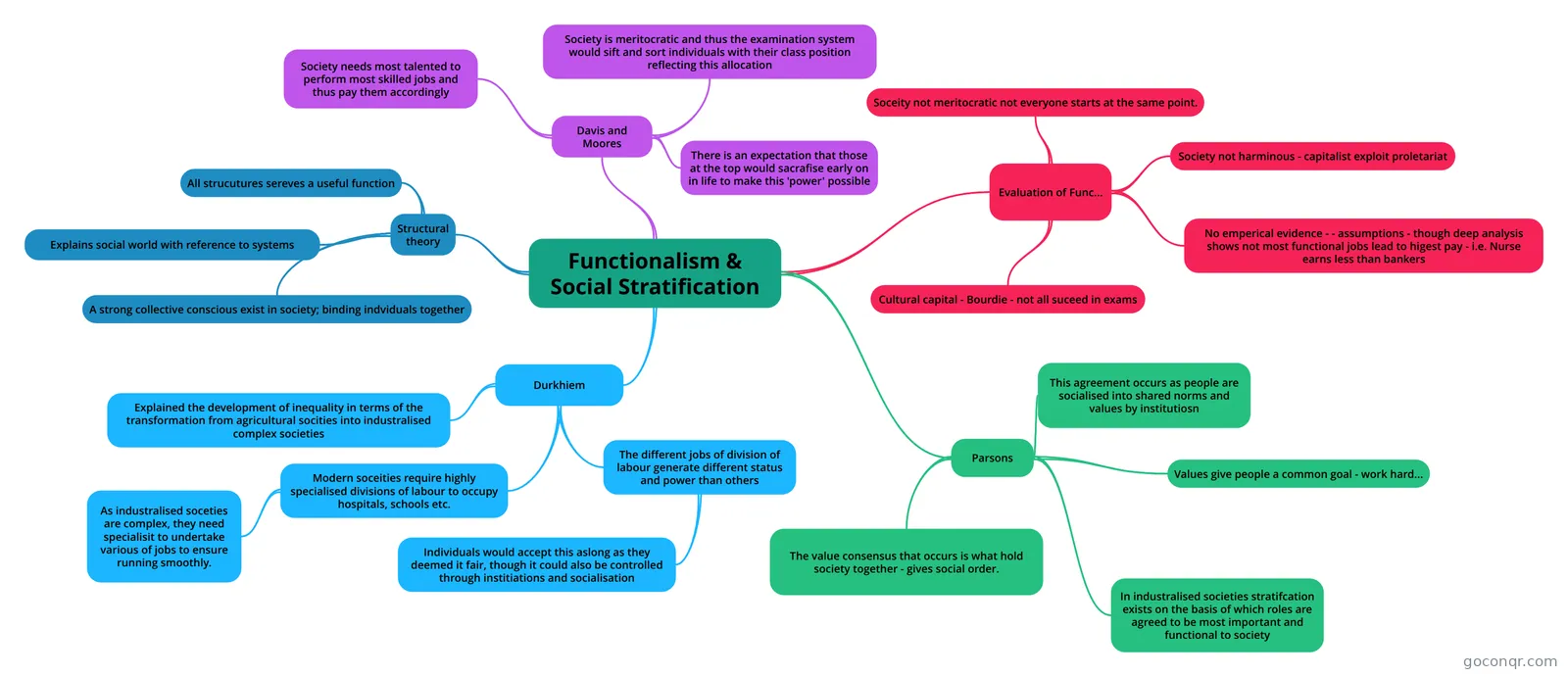 Functionalism & Social Stratification Social stratification - functionalist
-
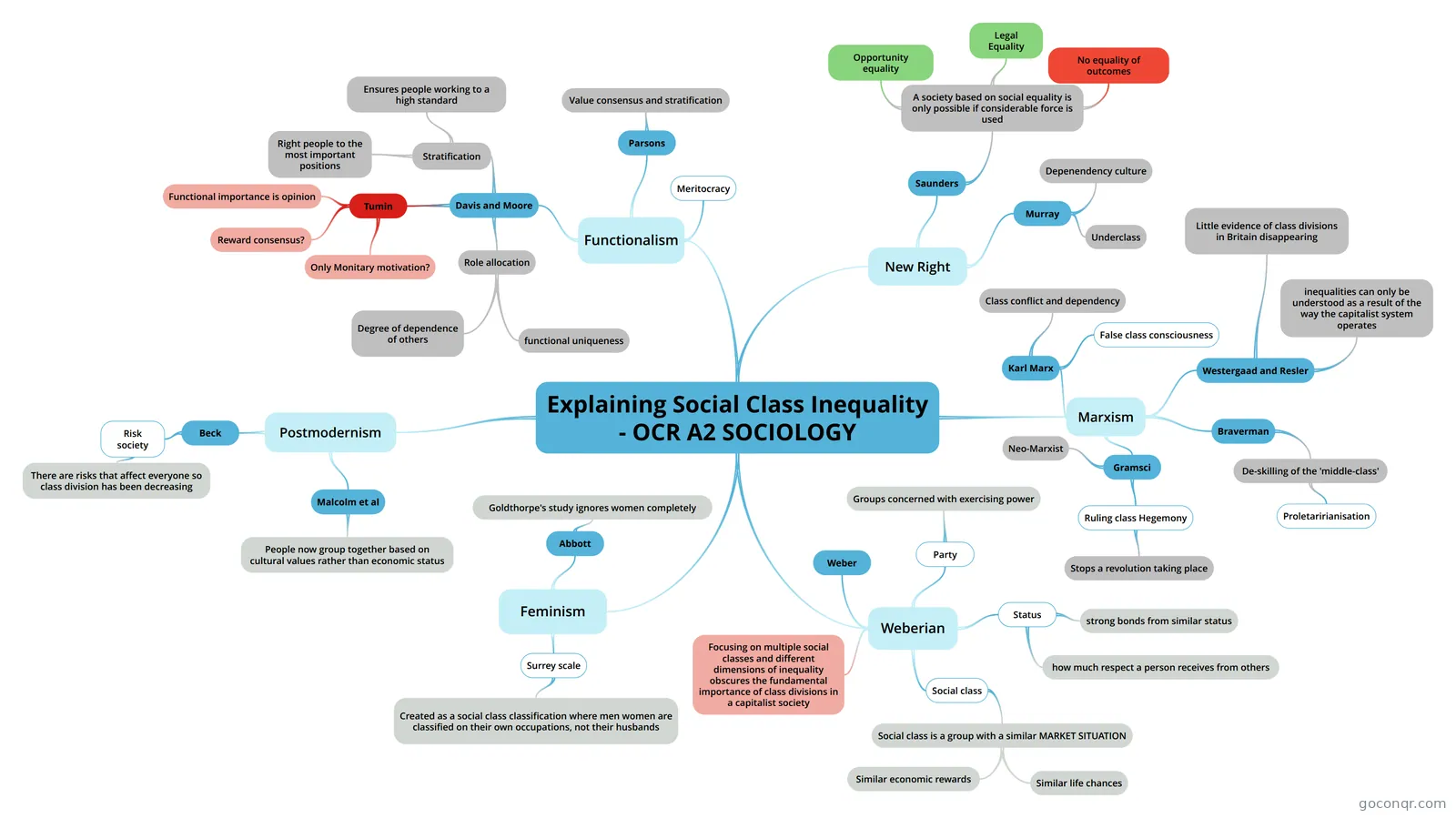 Explaining Social Class Inequality - OCR A2 SOCIOLOGY
-
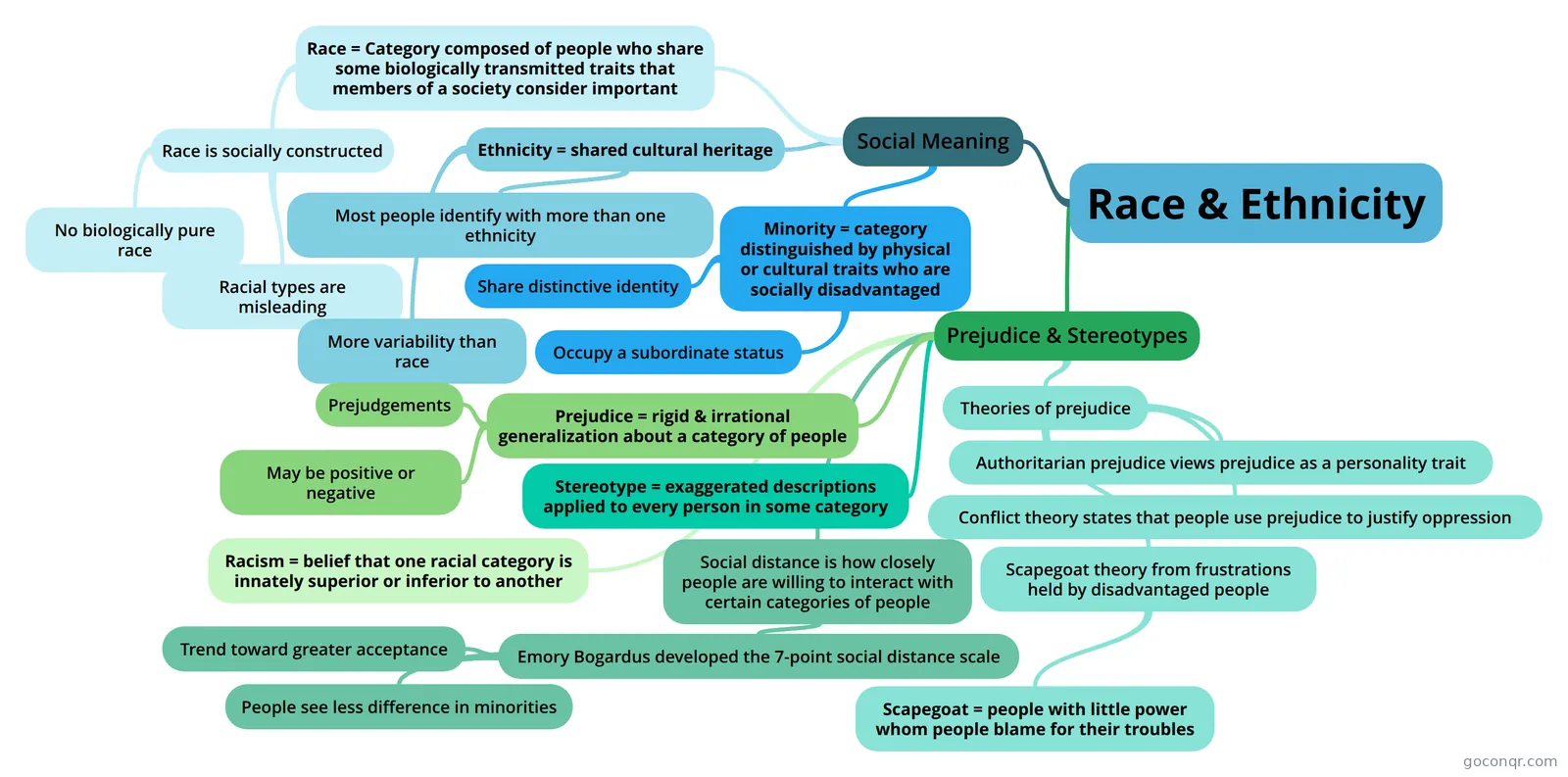 Race & Ethnicity
-
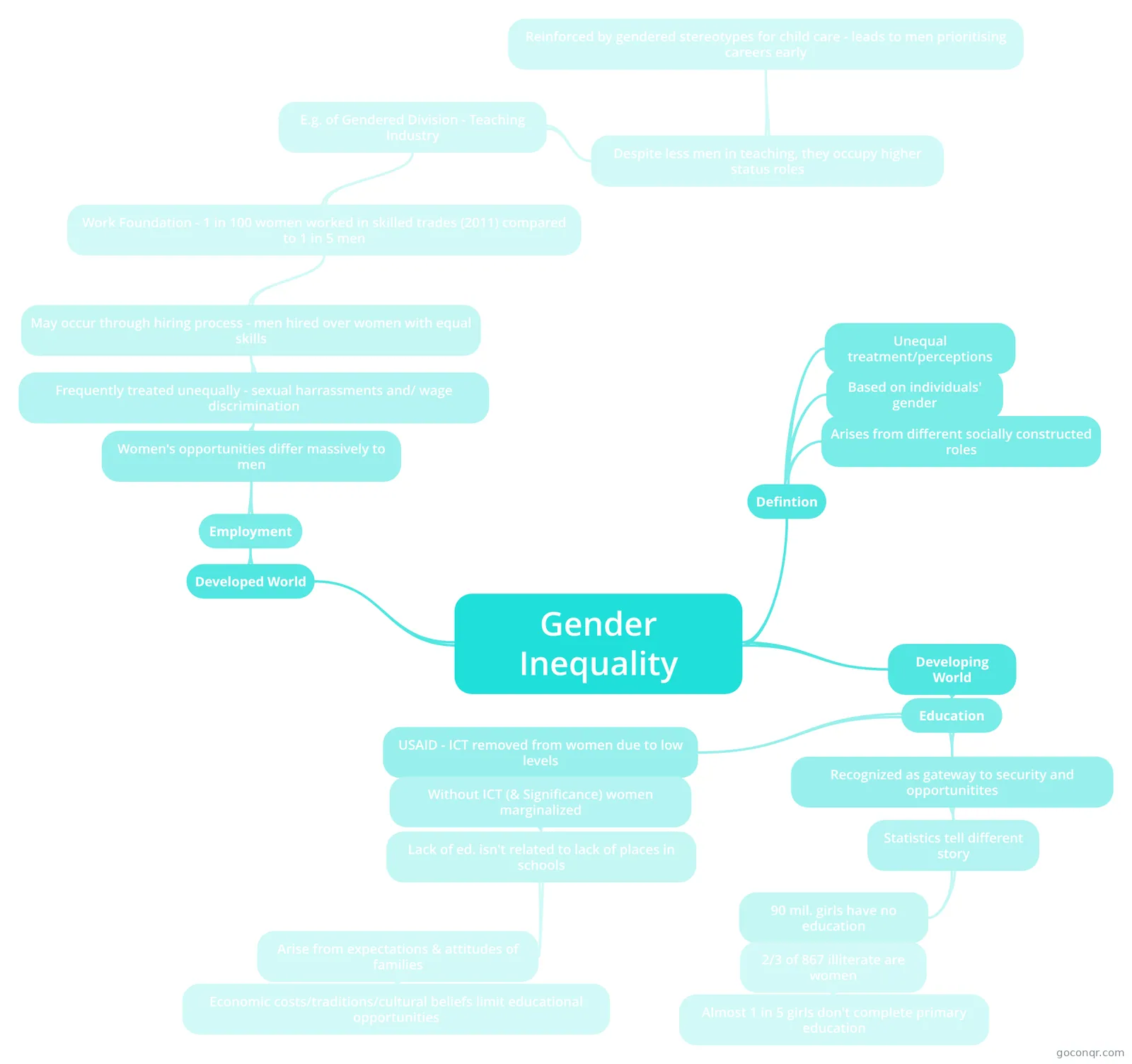 Gender Inequality
-
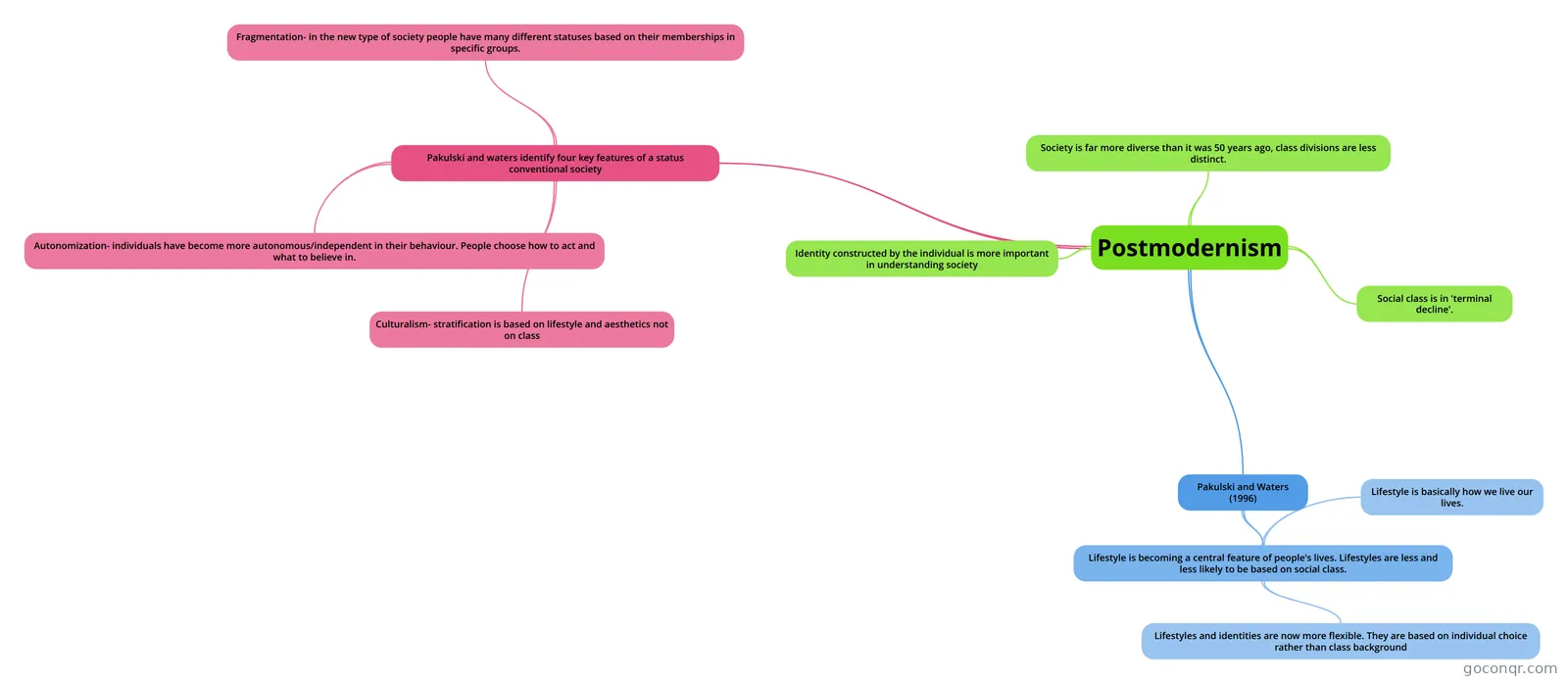 Postmodernism
-
 Bascics of Social Inequality
Flashcards
See all 31 flashcards-
39 cardsSociology- social stratification Sociology- social stratification
-
38 cardsSocial inequality Define social inequality
-
61 cardsunit 3: social inequality revision notes and keywords from glossary
-
48 cardsExplanations of Ethnic Inequalities Abbott et al?
-
7 cardsSocial Stratisfication HARDEST TOPIC
-
47 cardsSociology Final intro to soc final flash cards
-
23 cardsIntro to Sociology What is Sociology?
-
33 cardsChapter 8
Notes
-
Sociology: Chpt. 7 Stratification and Social Class Sociology NotesExam 3 Chapters 7-10Chapter 7: Stratification and Social ClassThe inability to see class helps class persist. What is Social Stratification?-Social Stratification- the system of structure social inequal...
-
Unit 3 Gender and the World of Work even if women have high representation, they earn lessPolicy Recommendations for reducing gender wage gap, occupational segregation?-incentivize companies to narrow hiring gaps-mandate chi...
-
Evidence of Ethnic Inequalities Labour Market Labour Market Survey (2004) - Ethnic Penalty, whites had the lowest unemployment rates at 5% compared to 14% for Black Afro Caribbean males, 13% for Bangladeshi males and 11% for Pakistani. Panorama Surv...
-
Poverty & Social inequality - created from Mind Map Absolute poverty is defined as a condition of severe deprivation of basic human needs of food, clear water, sanitation facilities, health, shelter and education and information ~ on the international poverty line is b...
-
Evidence of social class inequalities- Middle/ Upper class advantage Income and Wealth The High Pay Centre- the total pay of chief executives of the 100 largest companies had risen by 19% compared with the average increase of less than 3% for their employees Marxist - view that senior ...
-
Evidence of age inequality-Youth Labour Market Labour Force Survey- 12.3% aged 15-24 year olds were unemployed compared with only 4.9% of people over 25 Barron and Norris- Young people more likely to be found more likely to be found in the secondary ...
More Sociology topics
About Social Stratification and Class
GoConqr OriginalWhat the page covers
This page sits in the Stratification and Inequality strand of Sociology. It starts with the basics: the flashcard deck Sociology- social stratification covers caste and class systems, social mobility, meritocracy, ideology and the functions of stratification. From there the resources widen to class, poverty, ethnicity, gender and age.
Theory and explanation
Several mind maps deal with how sociologists explain inequality. Functionalism & Social Stratification sets out the structural view that every structure serves a useful function. Postmodernism argues that social class is in terminal decline because society is more diverse and identity is built by the individual. The map on explaining social class inequality for OCR A2 Sociology covers Parsons, Davis and Moore, and meritocracy.
Evidence and measurement
For evidence, look at Inequalities relating to social class, which looks at the National Statistics Socio-Economic Classification. The OCR A2 map on patterns and trends in social class covers income, poverty and Wilson and Pickett. Others cover health inequalities, ethnic minorities and life chances, and Bourdieu on social capital.
A sensible order
- Begin with a flashcard deck on stratification to learn the key terms.
- Read a mind map on one theory, such as functionalism.
- Move to the evidence maps and notes on class, ethnicity, gender or age.
- Take a quiz, such as Poverty Quiz or Wealth Inequality Final, and note what you missed.
- Go back to the maps for those gaps.
Using quizzes and maps together
Maps show how ideas connect, so they suit essay planning, including questions such as the 40-mark theory question on explaining social inequality. Quizzes test recall. Use a map first, then a quiz, then revisit the map. The materials mention A-level Sociology, GCSE Sociology and the MCAT, so check which one matches your course.
When you're ready, pick one topic and try a quiz, or start your own maps and flashcards from what you find.
Frequently asked questions
Where should I start on this page?
Start with the flashcard deck Sociology- social stratification. It covers caste systems, class systems, social mobility, meritocracy and ideology, so you get the key vocabulary first. After that, move to a mind map on a theory, then try a quiz to see what stuck.
What do the mind maps cover?
The mind maps cover theories such as functionalism and postmodernism, plus evidence on social class, poverty, health, ethnicity, gender and age. There are over 400 of them. Some are written for OCR A2 Sociology, and others suit general university courses.
Are the resources free to use?
Yes. Every resource listed here is free to open, study and take, with no account needed. They were made by GoConqr users rather than by GoConqr itself, so it's worth checking them against your own course materials.
Which levels and exams do these resources suit?
The mix is mostly secondary, with a good share at university level. Listed resources mention A-level Sociology, GCSE Sociology and the MCAT. School students, university students, professional candidates and teachers can all find material here.
Can I make my own versions?
Yes. A free account saves your quiz scores and lets you make your own quizzes, mind maps, flashcards and notes. That's handy if you want to adapt a topic, such as poverty or ethnic inequality, to your own syllabus.
What if I can't find a topic I need?
Try nearby terms. Inequality material appears under stratification, class, poverty, ethnicity, gender, age and global inequality. If a gap remains, build your own notes or flashcards on it and use the existing maps as a model.