
Poverty, Welfare and Social Policy
411 resources created by 320 users
This Poverty, Welfare and Social Policy page on GoConqr gathers community-made mind maps, quizzes, flashcards and notes, from defining and measuring poverty to the Beveridge report, the NHS and family policy. It's built for school students, university students and professional candidates revising a topic, and for teachers after ready-made material. There are over 390 resources here, including more than 30 quizzes and over 270 mind maps, pitched at A-level and GCSE Sociology and at university level. Try a quiz to find your gaps, then open a map.
Select topic
- Defining and Measuring Poverty32
- Causes and Effects of Poverty39
- Poverty, Inequality and Social Groups13
- Poverty Around the World26
- War and Poverty6
- World Hunger5
- Social Exclusion13
- Homelessness15
- Solutions to Poverty6
- Sociological Perspectives on Social Policy31
- The Welfare State16
- Social Protection and Benefits21
- Family and Social Policy39
- Health Policy and Inequalities9
Top Poverty, Welfare and Social Policy resources
-
113 questionsSociology - poverty quiz What is absolute poverty?
-
 Mind map Sociology and social policy
-
28 questionsSCLY1 - Families and Households - Topic 7 Families and social policy. (AS AQA Sociology)
-
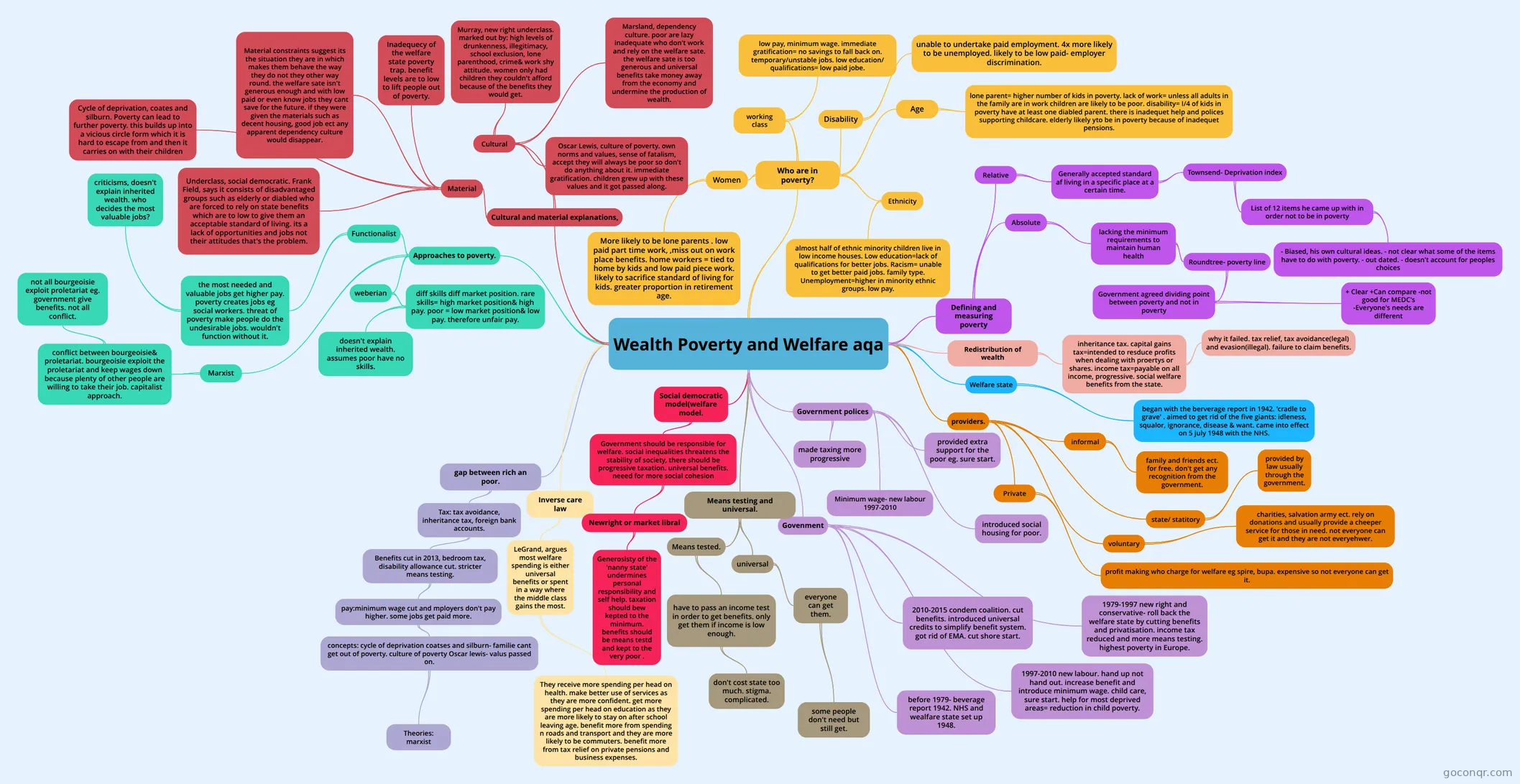 Mind map Wealth Poverty and Welfare aqa not finished yet
-
Mind map Poverty and Inequality
-
Mind map Poverty of Women mind map
-
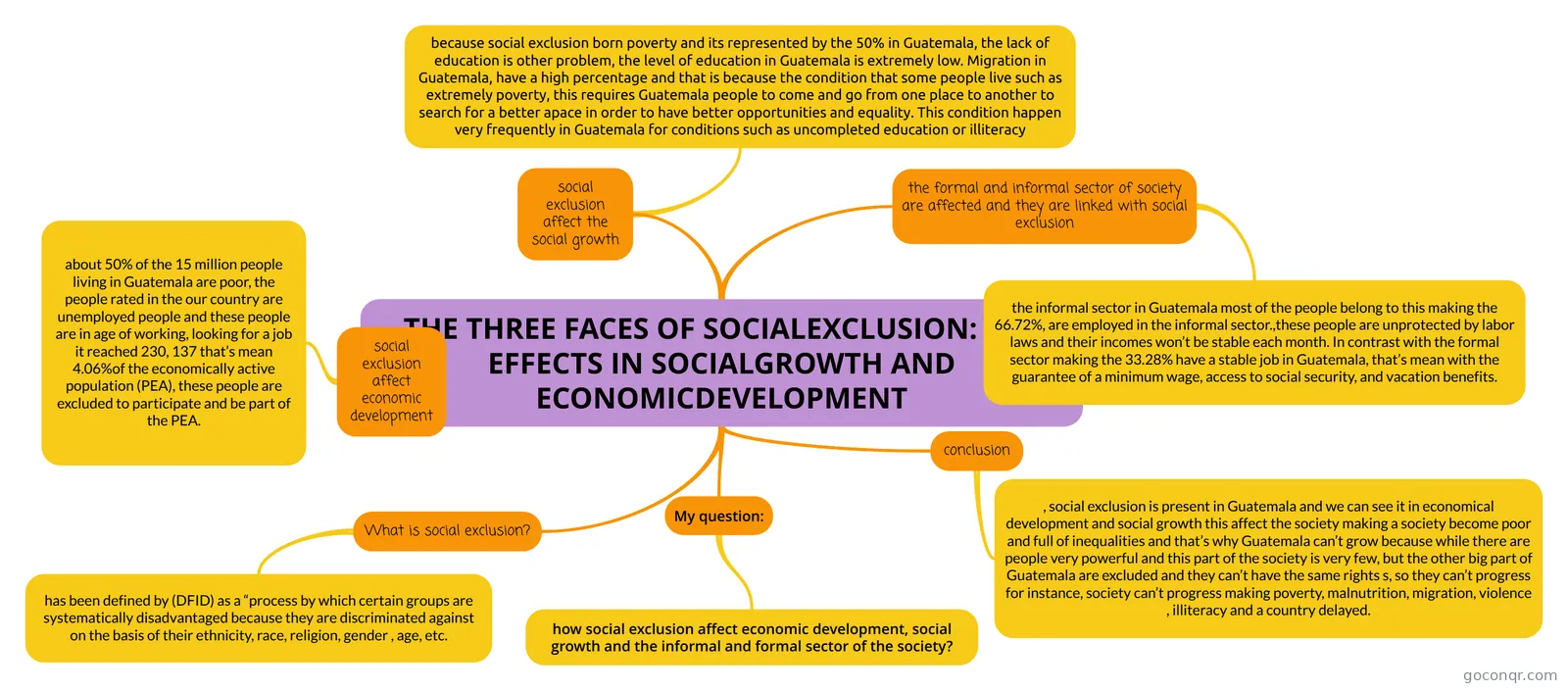 Mind map THE THREE FACES OF SOCIALEXCLUSION: THE EFFECTS IN SOCIALGROWTH AND ECONOMICDEVELOPMENT effects of social exclusion
-
Flowchart Poverty Definition and types of poverty
Quizzes
See all 34 quizzes-
113 questionsSociology - poverty quiz What is absolute poverty?
-
28 questionsSCLY1 - Families and Households - Topic 7 Families and social policy. (AS AQA Sociology)
-
10 questionsPoverty Quiz In 50 years, the poverty rate has risen by 5% and LBJ's war on poverty was a failure.
-
12 questionsSocial Policy and Age 1. What is the age of criminal responsibility in England, Wales and NI?
-
10 questionsPoverty quiz
Mind maps
See all 289 mind maps-
Sociology and social policy
-
Wealth Poverty and Welfare aqa not finished yet
-
Poverty and Inequality
-
Poverty of Women mind map
-
THE THREE FACES OF SOCIALEXCLUSION: THE EFFECTS IN SOCIALGROWTH AND ECONOMICDEVELOPMENT effects of social exclusion
-
 New Right perspective on family and social policy
-
 Donzelot: the policing of families
-
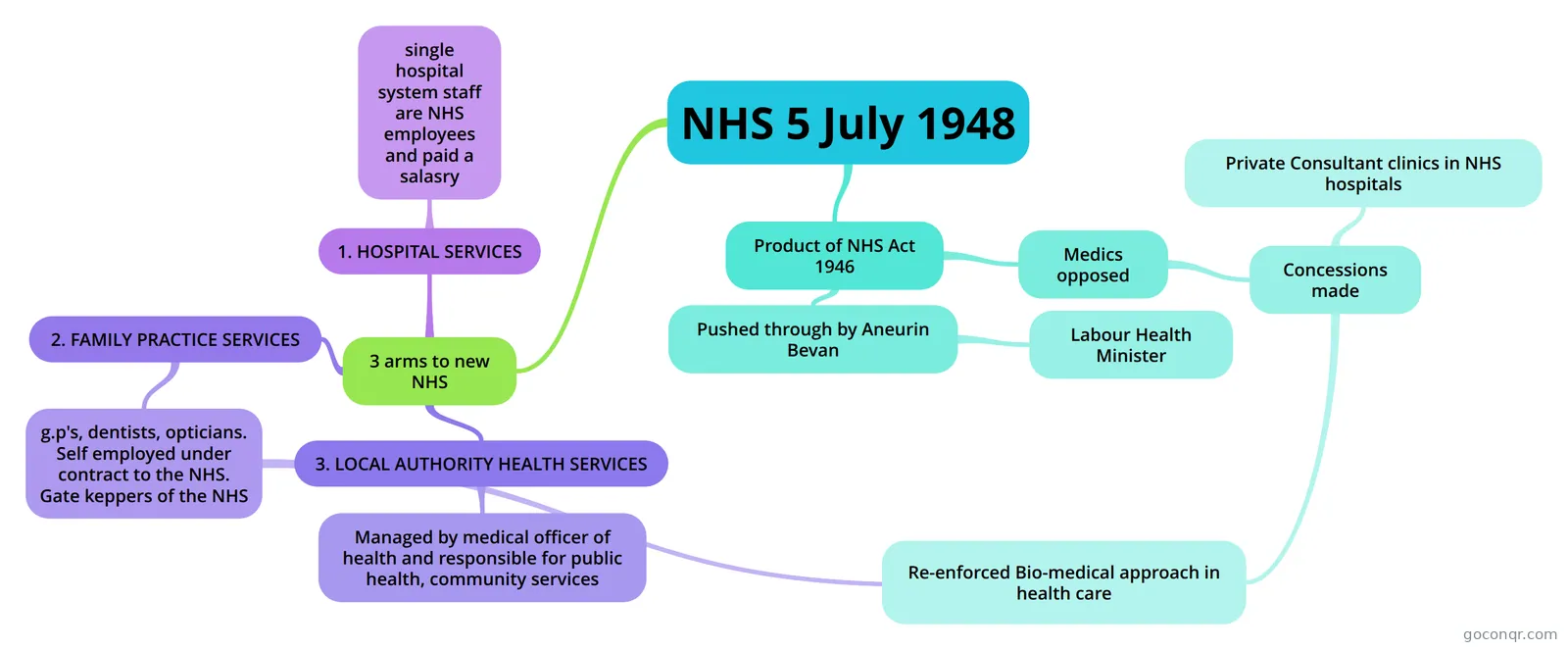 NHS 5 July 1948
Flashcards
See all 65 flashcards-
63 cardsFlashcards on Sociology and Social Policy (2.7) Who was the first sociologist to introduce a useful distinction between sociological problems and social pr...
-
58 cardsSocial Policy Flashcards for Social Policy Exam
-
29 cardsSocial Policy Social Policy - starting points
-
8 cardsModern Studies Bad Governance (Incompetency)
-
5 cardsUNIT 21 CHAPTER 2 BEVERIDGES' ASSUMPTIONS ABOUT GENDER ROLES WHAT WERE THEY?
-
4 cardsSoc (A2) - Sociologists A2 Flashcards on Sociology - Poverty, created by michaelgarcia2012 on 23/06/2015.
Flowcharts
Notes
See all 14 notes-
Poverty and the Working Class in Canada Poverty In CanadaThe working Poor and Marginalized The Working Poor: People who's incomes fall below the given poverty line POVERTY DOESN’T EQUAL JOBLESSNESS a significant portion of Canadians who live in poverty are ...
-
Social Policy GiddensFour practical benefits of sociology: An understanding of the world Heightened awareness of the needs of individuals Assessment of what works - evidence based policy. Increase personal knowledge of oursel...
-
Current policies: troubled families programme Current policies: troubled family programme Conservative government: aim to reduce dependency on welfare state, vote catcher Spend 400 million pounds to assist families with difficulties, will eventually cost 1.3 bill...
-
Block 6 key points On the 1930's poverty, unemployment and growing dissatisfaction with inequality led to increasing pressure for better health care, social services and other improvements in living coniditions The second world war was ...
Topics in Poverty, Welfare and Social Policy
More Sociology topics
About Poverty, Welfare and Social Policy
GoConqr OriginalWhat this unit covers
The resources look at how poverty is defined, who experiences it and how the state responds. The mind map Wealth Poverty and Welfare aqa sets out absolute and relative poverty, including the poverty line idea. Separate maps on Absolute Poverty, Relative Poverty and Consensual Poverty let you look at each definition on its own.
Welfare and social policy
Several maps deal with policy itself. beveridge covers the strengths and limitations of the post-war universal benefits system and its five giants. NHS 5 July 1948 looks at the NHS Act 1946 and the compromises made with medics. Family & Social Policy begins with what social policy means, and Donzelot: the policing of families covers the idea of surveillance. There are also maps on the New Right and feminist perspectives.
Inequality between groups
Some resources look at who is affected. Poverty of Women covers pay inequity, and there are flashcard decks on the distribution of poverty, wealth and income by age and by gender. Poverty and Inequality explains social exclusion in economic, political and cultural forms.
Where to start
- Open Poverty and Inequality for the main ideas.
- Move to Wealth Poverty and Welfare aqa for definitions and measurement.
- Read the Beveridge and NHS maps for the welfare state.
- Finish with the family and social policy maps and the perspectives on policy.
Using quizzes and maps together
Read a map first, then take a quiz such as Sociology - poverty quiz, which asks about absolute poverty and its strengths. Note the questions you miss and go back to the matching map. Flashcard decks like UK Poverty Key words help with terms. This unit sits in the Stratification and Inequality strand of Sociology. Pick a map, test yourself, then make your own version.
Frequently asked questions
Which resource should I open first?
Start with the mind map Poverty and Inequality, which introduces social exclusion in its economic, political and cultural forms. Then move to Wealth Poverty and Welfare aqa for absolute and relative poverty and how poverty is measured. After that, the quizzes will show what has stuck.
Which quiz suits a quick check on definitions?
Sociology - poverty quiz is a good first choice. It asks what absolute poverty is and what its strengths are as a definition. There are also several other poverty quizzes, plus ones on wealth inequality and on social policy, if you want more practice.
What do the mind maps cover?
The maps cover defining poverty, social exclusion, and inequality by gender and age. They also cover the welfare state, with maps on Beveridge and the NHS, and social policy and the family, including the New Right and feminist views. Some also look at poverty in other countries.
Which exams are these resources suited to?
The listed resources mention A-level Sociology and GCSE Sociology, and many follow AQA-style topics such as families and social policy. Others are university-level, so check each resource's content against your own course before relying on it.
Are the resources free, and who made them?
Every resource here is free to open, study and take, with no account needed. They were made by GoConqr users, not by GoConqr itself. A free account also saves your quiz scores and lets you make your own quizzes, mind maps, flashcards and notes.
What if I can't find a topic I need?
Try the neighbouring resources first. Topics such as disability, age or social exclusion often sit inside broader maps and flashcard decks. If nothing fits, you can build your own map or flashcard deck on the missing topic and keep it for revision.