
Population, Demography and Urbanisation
366 resources created by 288 users
This Population, Demography and Urbanisation page on GoConqr gathers community-made mind maps, flashcards, quizzes, notes and slides, from birth and death rates to ageing populations, migration and megacities. It's built for school students revising a topic, university students and professional candidates filling gaps, and teachers after ready-made material. There are over 350 resources here, including more than 280 mind maps and over 30 flashcard decks, with GCSE and A-level Sociology in view. Pick a resource, test yourself, then make your own.
Select topic
- Demographic Indicators7
- Population Composition30
- Birth Rates and Fertility24
- Death Rates and Life Expectancy17
- Migration19
- Demographic Change and Transition33
- Population Growth and Resources21
- Population Policies8
- Ageing Populations45
- Urbanisation and City Development11
- Urban Sociology and Culture24
- Urban Housing and Social Issues11
Top Population, Demography and Urbanisation resources
-
53 cardsDemography and Globalisation In 2001 what was the Total Fertility Rate?
-
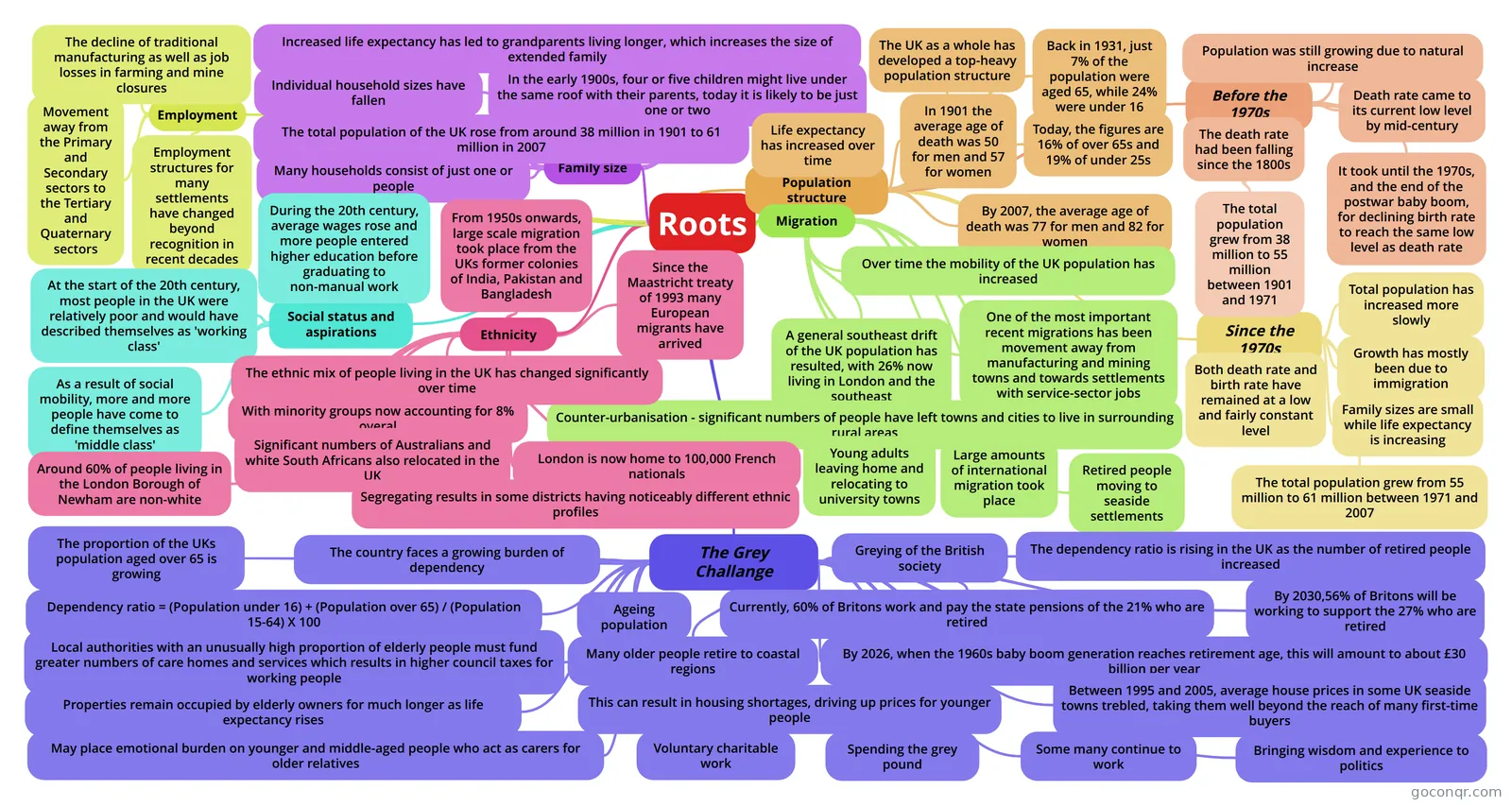 Mind map Roots
-
 Mind map Singapore's Population Policies
-
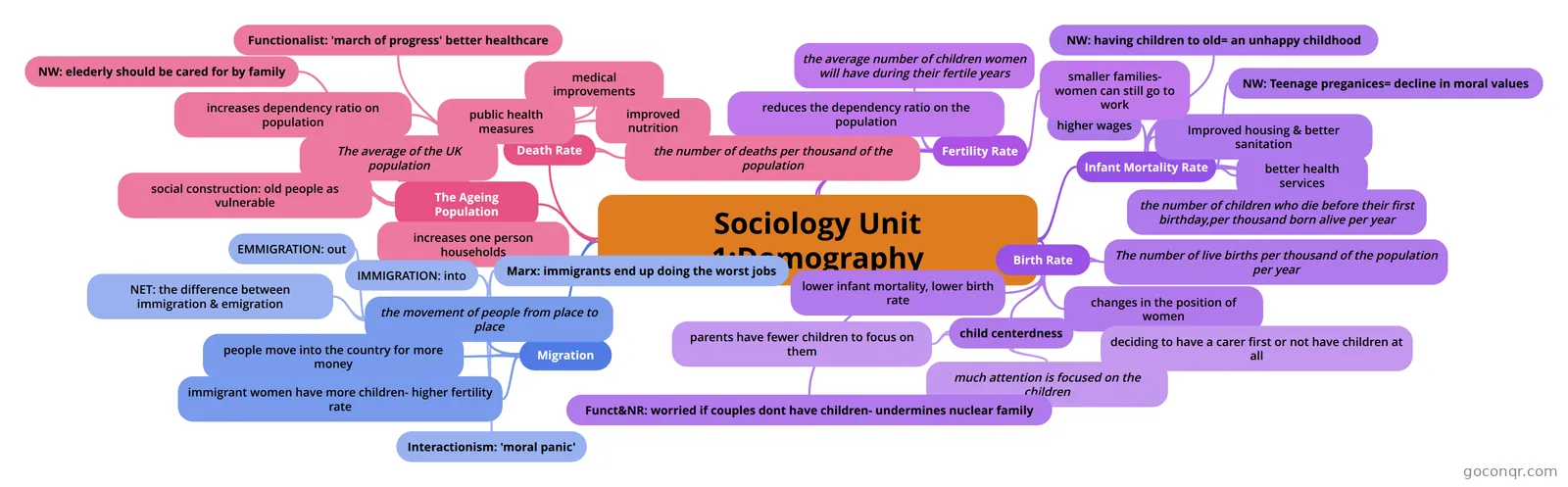 Mind map Sociology Unit 1:Demography
-
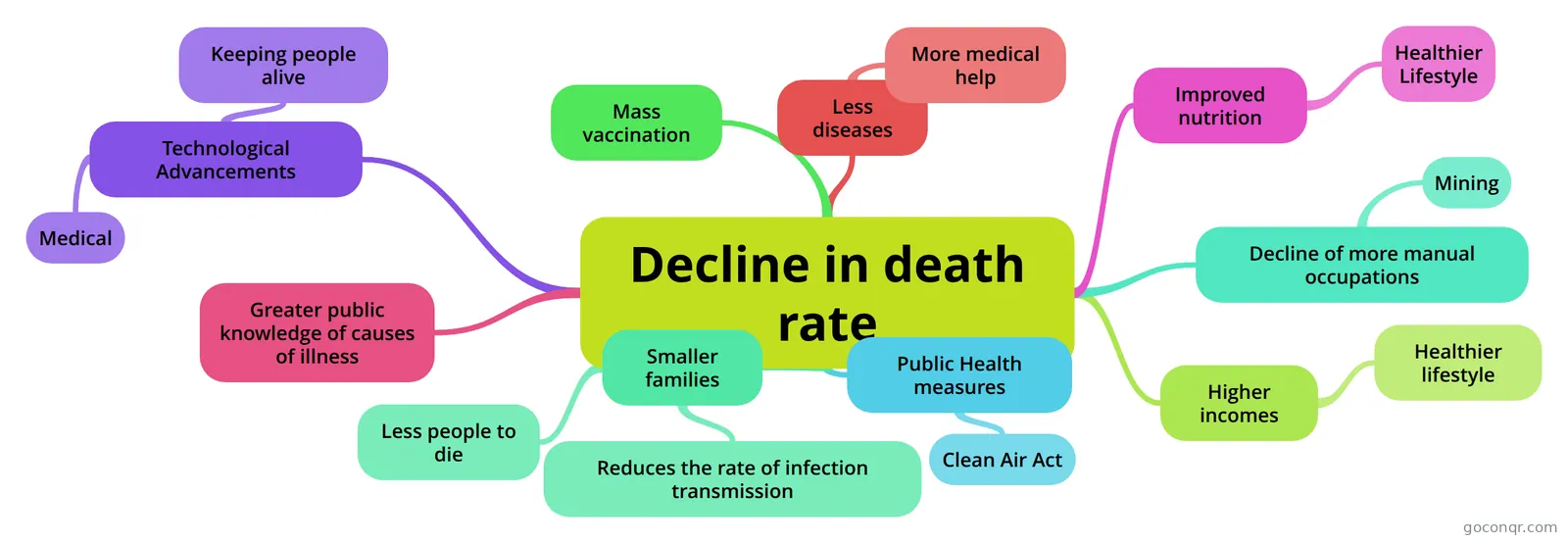 Mind map Decline in death rate
-
12 questionsDemography What's the definition of death rate
-
11 questionsChina's One Child Policy What was China's Population like?
-
Mind map Urbanization and Megacities this chart is about megacities and urbanization
Quizzes
See all 16 quizzes-
12 questionsDemography What's the definition of death rate
-
11 questionsChina's One Child Policy What was China's Population like?
-
25 questionsMoving People Questions Education and woman's autonomy might have a positive effect on fertility thorough: Women understand how to ...
-
15 questionsKriscaa Quiz on Untitled, created by krisca ancheta on 19/11/2018.
Mind maps
See all 296 mind maps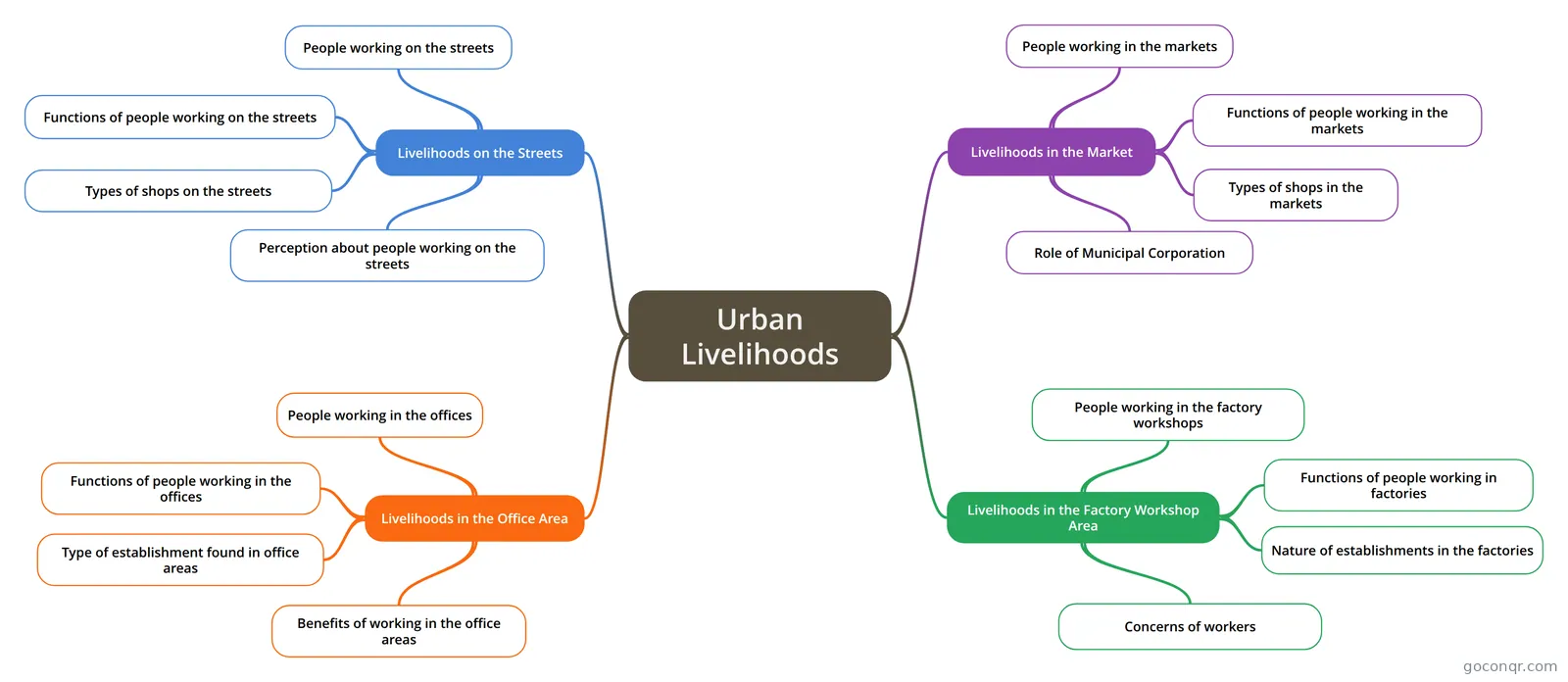
Flashcards
See all 33 flashcards-
53 cardsDemography and Globalisation In 2001 what was the Total Fertility Rate?
-
88 cardsFlashcards on Demography (4.4) How do sociologists define the concept of birth?
-
14 cardsDemographic Change Definintions - Sociology AS Level Definitions for Demographic Change (Topic 5) aimed at Sociologists studying AS Levels
-
12 cardsBirth/ Death rates Definitions of words associated with Birth/ death rates.
Notes
See all 13 notesTopics in Population, Demography and Urbanisation
More Sociology topics
About Population, Demography and Urbanisation
GoConqr OriginalWhat the unit covers
The listed resources follow population from several angles. The mind map Sociology Unit 1:Demography starts with infant mortality rate, defined as the number of children who die before their first birthday per thousand born alive each year. The mind map Decline in death rate looks at improved nutrition, healthier lifestyles and greater public knowledge of the causes of illness.
Case studies and wider themes
Some resources zoom in on places and policies. Singapore's Population Policies begins with the baby boom of the 1950s and 60s, when families averaged six to seven children. The quiz China's One Child Policy checks the facts of that policy. The map Roots covers family size, population structure, migration and ethnicity, noting the UK population rising from around 38 million in 1901 to 61 million in 2007.
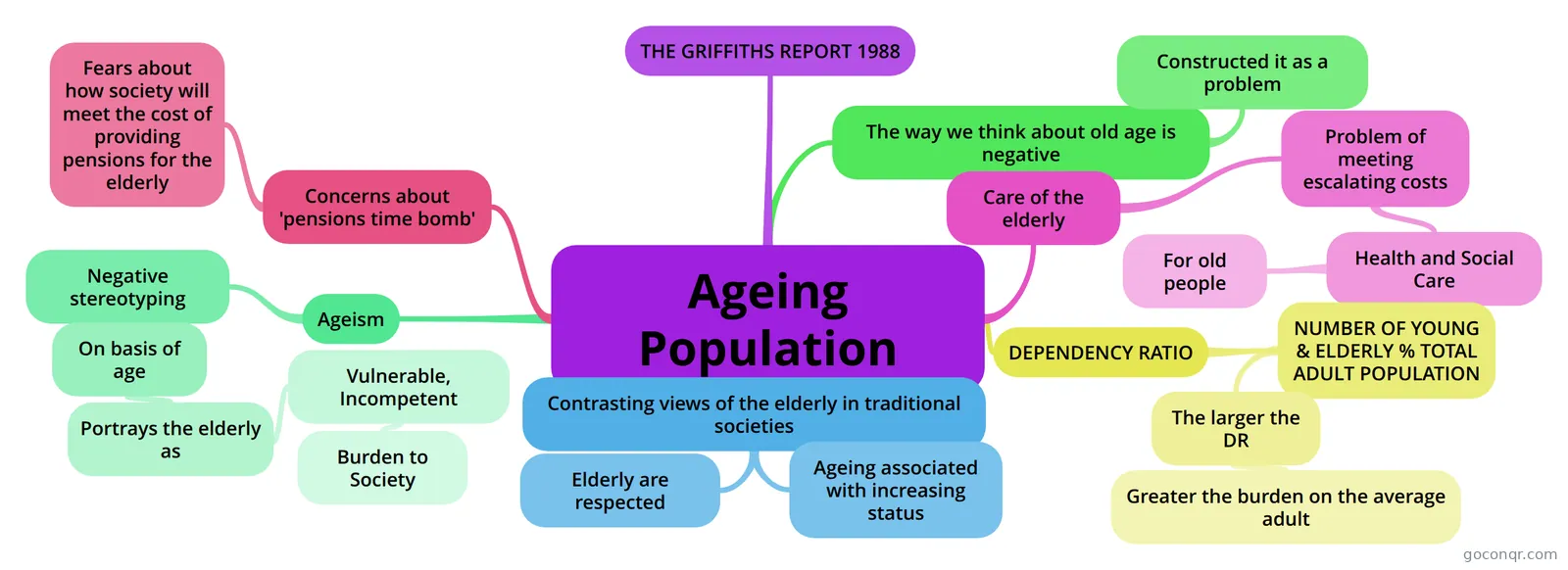
Ageing gets its own strand. The Ageing Population mind map covers the Griffiths Report of 1988, the way old age is framed as a problem, and the rising costs of care.
Urbanisation
For cities, try Urbanization and Megacities, which lists challenges such as overpopulation, pollution, and too few jobs and homes. Urban Livelihoods then looks at work in markets, factory areas, streets and offices, and the role of the municipal corporation.
A sensible order
- Read a core map such as Sociology Unit 1:Demography.
- Take the Demography quiz to see what stuck.
- Move to case studies: Singapore, China, then the ageing population.
- Finish with the urban maps and the flashcard deck Demography and Globalisation.
Use maps to see how ideas connect, and quizzes to find the gaps. Flashcards suit short definitions such as birth and death rates.
Where it fits
This unit sits in the Global Society and Social Change strand of Sociology. Open a map you like, then try the matching quiz.
Frequently asked questions
Which resource should I start with?
Start with the mind map Sociology Unit 1:Demography, which opens with infant mortality rate and related ideas. Then try the Demography quiz, which asks for definitions such as death rate and infant mortality rate. Together they show what you know and what needs more revision.
What do the mind maps cover?
There are over 280 mind maps. They cover falling death rates, births, migration, the ageing population, population policies in Singapore and China, and urban topics such as megacities and urban livelihoods. Many are short, so they work well for quick revision.
Are the resources free to use?
Yes. Every resource listed here is free to open, study and take, with no account needed. They were made by GoConqr users, not by GoConqr itself. A free account also saves your quiz scores and lets you make your own quizzes, mind maps, flashcards and notes.
Which exams and levels do these suit?
Most resources are for secondary level, with a sizeable share for university. Listed resources mention A-level Sociology, GCSE Sociology and GCSE Geography. University students and professional candidates can use the same maps and quizzes to fill gaps in their knowledge.
Is there anything on China's population policy?
Yes. The quiz China's One Child Policy asks about China's population, the year the policy began and the rules around marriage and having children. There is also a mind map called China's one-child Policy, and a flashcard deck on overpopulation in China.
What if I can't find what I need?
Try a nearby resource first, as the same idea often appears under births, deaths, migration or population change. If a gap remains, you can build your own mind map, flashcards or notes and shape them around your course.