
The Family and Households
333 resources created by 210 users
This The Family and Households page on GoConqr gathers community-made mind maps, quizzes, flashcards, notes and slide sets, from theories of the family and family diversity to childhood, couples, divorce and demography. It's built for school students revising a topic and teachers after ready-made material. There are over 2,600 resources here, including more than 100 quizzes and over 1,700 mind maps, with exam mentions such as AQA AS Sociology, A-level Sociology, GCSE Sociology and CSEC. Pick a topic, then try a quiz to find your gaps.
Top The Family and Households resources
-
114 cardsFamily and Relationships what did Murdock study in 1949?
-
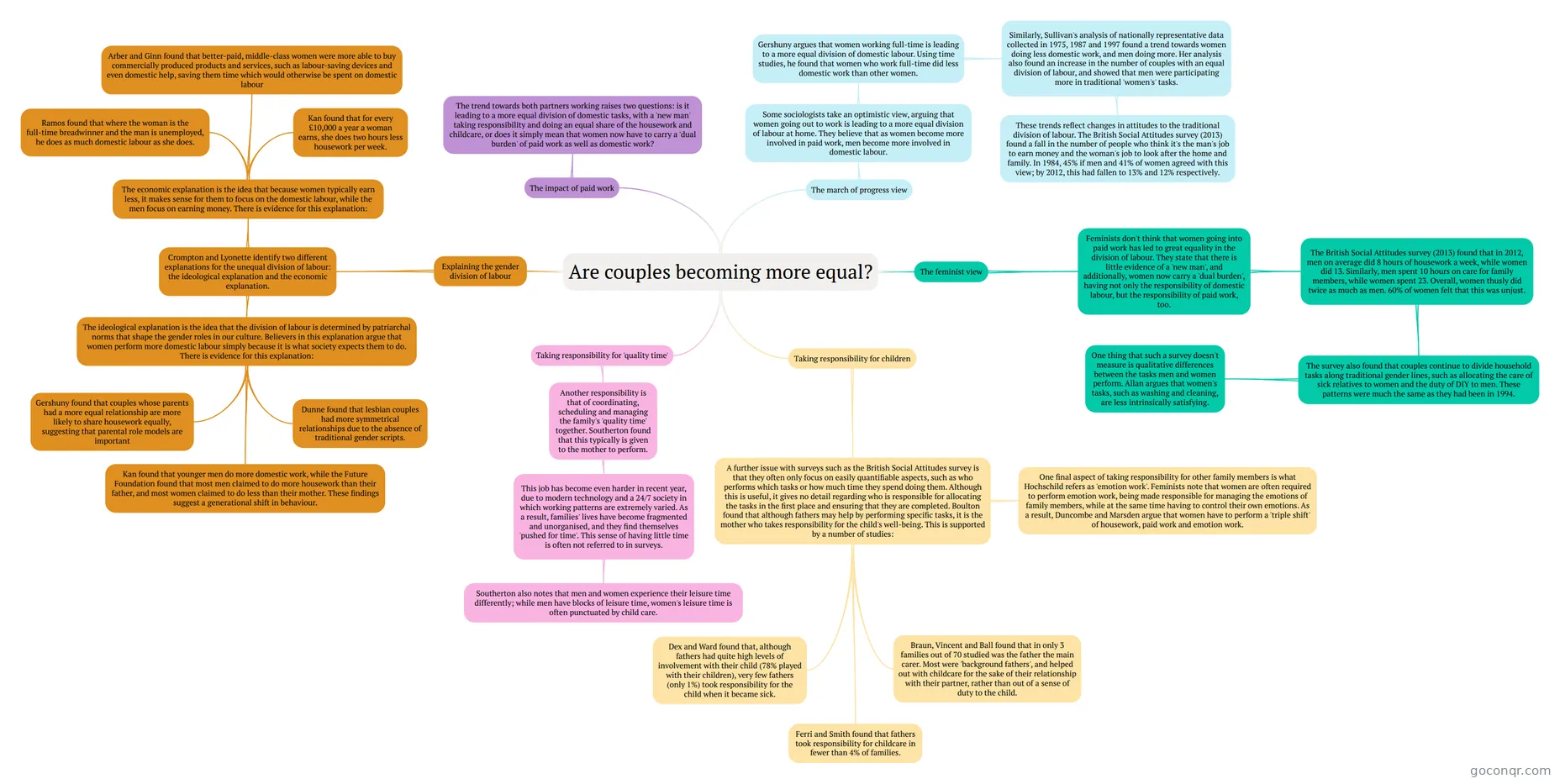 Mind map Are couples becoming more equal?
-
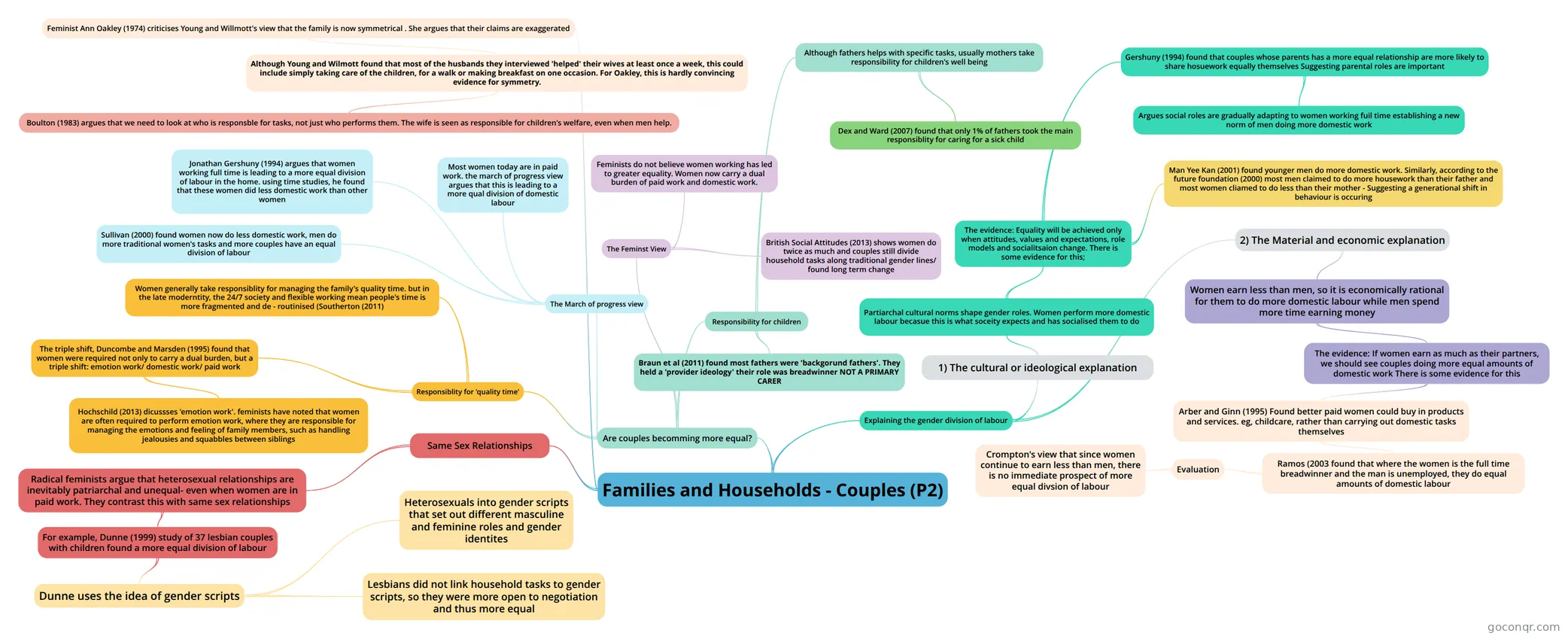 Mind map Families and Households - Couples (P2)
-
84 cardsTheories of Family Name the four functions of family according to George Peter Murdock (1949). (FUNC.)
-
65 cardsAQA Sociology - Family and Households
-
 Mind map Family and Households: Childhood
-
 Mind map Theories of the Family
-
22 questionsSCLY1 - Families and Households theorists quiz- Topic 2 Childhood (AQA AS sociology) Who found that girl children do more domestic labour - especially in lone-parent families, where they do fi...
Quizzes
See all 25 quizzes-
22 questionsSCLY1 - Families and Households theorists quiz- Topic 2 Childhood (AQA AS sociology) Who found that girl children do more domestic labour - especially in lone-parent families, where they do fi...
-
28 questionsSCLY1 - Families and Households theorists - Topic 1 Couples quiz (AQA AS sociology) Instrumental and Expressive roles: Husband has instrumental role and Wife has the expressive role. Based on...
-
54 questionsWJEC Sociology - Family unit sociologists quiz A quiz that tests knowledge on commonly used sociologists for the family topic in WJEC A-level sociology
-
27 questionsSCLY1 - Families and Households - Topic 4 - Demography. (AQA AS Sociology) Which term refers to the number of live births per 1000 of the population per year?
-
15 questionsDivision of labour. What were Parsons model of Family roles?
-
15 questionsTheories of the family quiz Which one of these are not one of Murdock's four functions?
-
6 questionsSociology paper 2 quiz What does kinship mean? (1 mark)
-
9 questionsFunctionalism/Marxism Family It fulfils the needs of its individual members
Mind maps
See all 205 mind maps-
Are couples becoming more equal?
-
Families and Households - Couples (P2)
-
Family and Households: Childhood
-
Theories of the Family
-
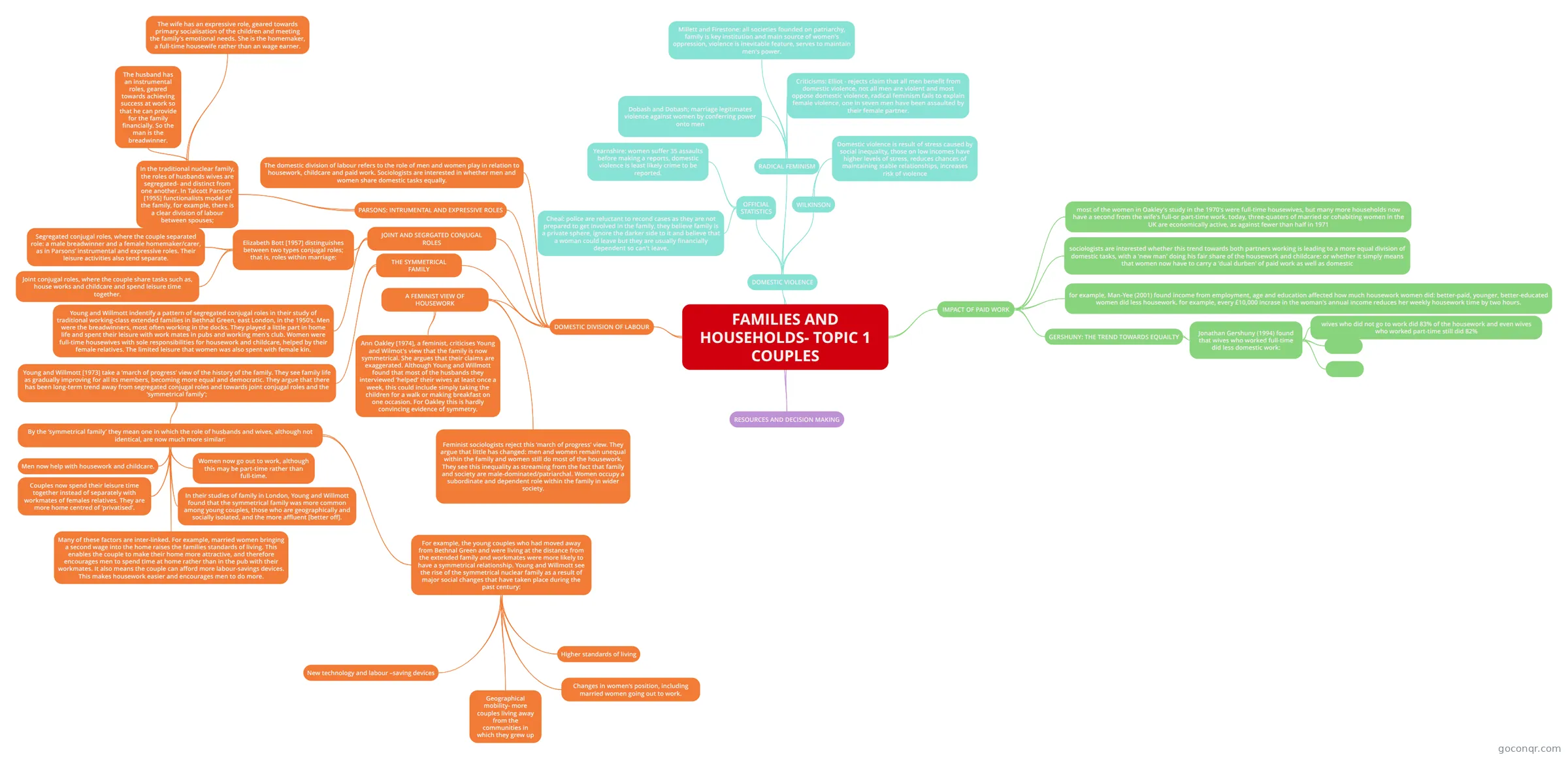 FAMILIES AND HOUSEHOLDS- TOPIC 1 COUPLES
-
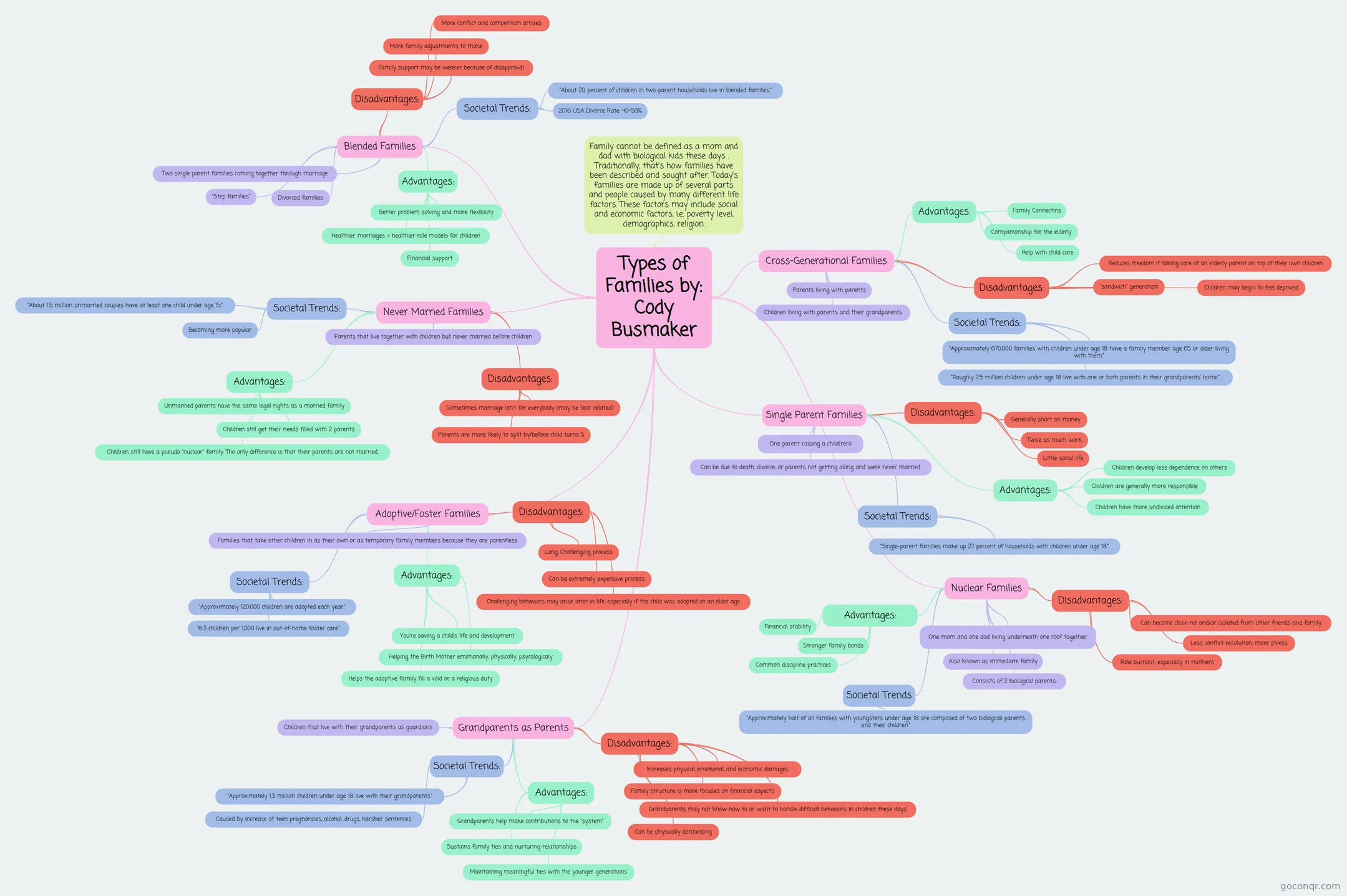 Types of Families by: Cody Busmaker types of families
-
 Theories of the family
-
AQA Sociology- The changing family patterns: Divorce Mind Map on AQA Sociology- The changing family patterns: Divorce, created by Dani Cabot on 29/03/2017.
Flashcards
See all 90 flashcards-
114 cardsFamily and Relationships what did Murdock study in 1949?
-
84 cardsTheories of Family Name the four functions of family according to George Peter Murdock (1949). (FUNC.)
-
65 cardsAQA Sociology - Family and Households
-
54 cardsSociology- Family and Households Flashcards
-
17 cardsFamily diversity flash cards How has the family become diverse?
-
19 cardsSociologists - Demography Flashcards for all relevant sociologists from the aqa textbook for the families section
-
10 cardsSociology: Family Define: A Household
-
11 cardsKey Sociologists - Family and Households Talcott Parsons (1955)
Flowcharts
Notes
-
Recent trends in family Dual earner family Dual earner - A family in which both partners are in paid employment , although one or both partners may be in part time employment. Cohabitation – Living together as a couple without being married....
-
Family Key Words Family Beanpole family Bigamy Birth rate Breadwinner Cereal packet family Child-centeredness Civil partnership Cohabitation Commune Conjugal roles- joint/ segregated Death rate Democratic relationships Demography Dome...
-
Family Socilogists Delphy and Lenord 1992 - Feminist Perspective They emphasised the importance that work plays in gender inequalities. Men gain the most from the exploitation of women's labour, not capitalism. he family plays a major r...
-
AS sociology AQA DIVORCE ...
-
Global Families Western Cultural Values have been projected into many homes through mass media, television programmes, movies and the Internet.Centralisations of states and their powers have influenced family life through the provisi...
-
New Right Theory and the Family CHARLES MURRAY New Right Sociologist "Traditional nuclear family is under threat" Welfare benefits are too high which creates a CULTURE OF DEPENDENCY PERVERSE INCENTIVE for having children New Right (NR) Thinkers are ...
-
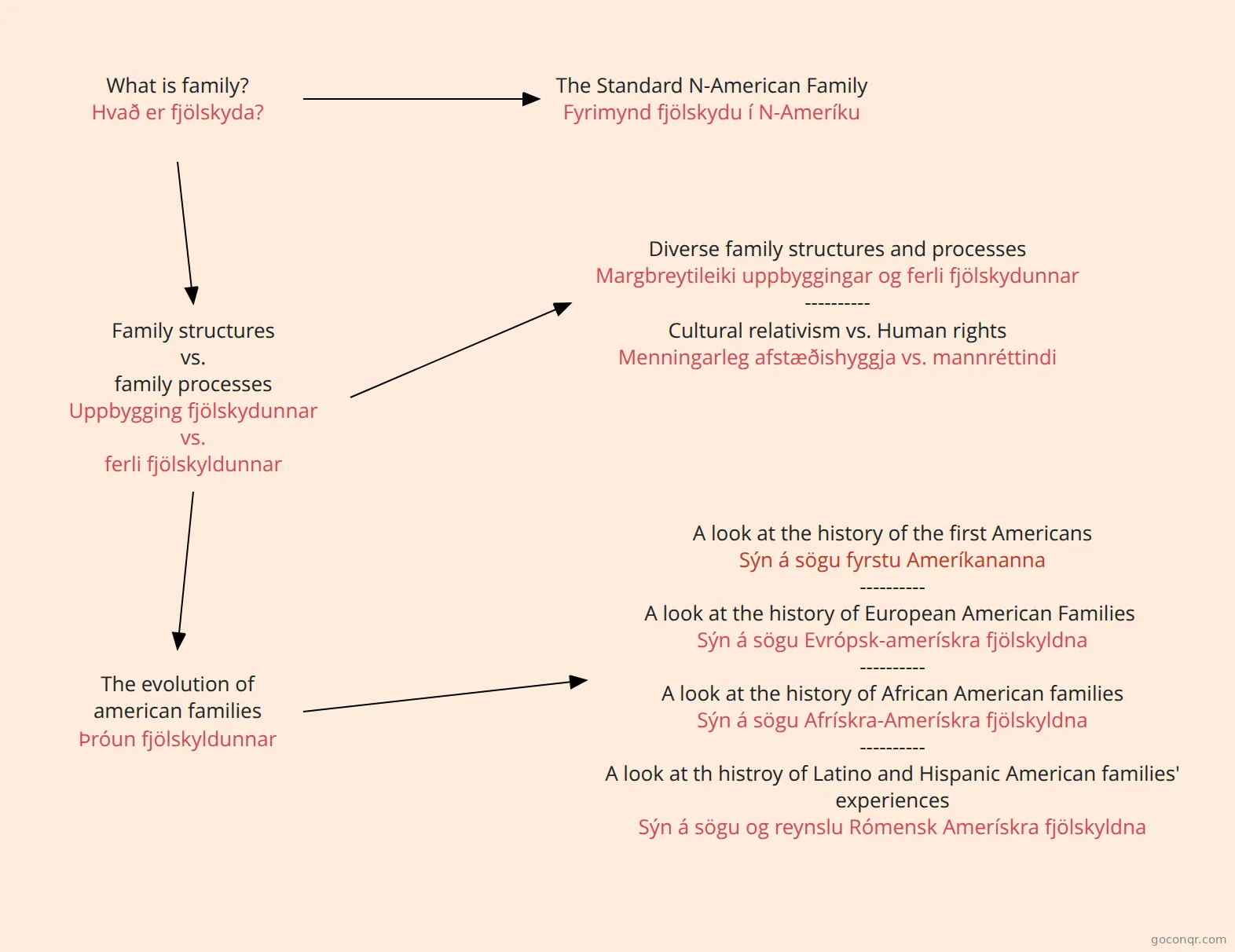
The Evolution of the Family The Evolution of the Family Defining the Modern & Diverse Family: The Vanier Definition socializationthe process by which new members of society acquire the skills knowledge attitudes required to actively participate ...
-
Feminism and the Family The same way Marxists see the family as a tool of the Bourgoise - Feminists see the family as a tool of male dominated society helping to keep women in their place. ANN OAKLEY (1984) Studied housework and gender...
Slides
More Sociology topics
About The Family and Households
GoConqr OriginalWhat the unit covers
This unit sits in the Families and the Life Course strand of Sociology. The resources work through the main topics in turn: theories of the family, family diversity, couples, childhood, changing family patterns, divorce and demography.
- Theories: the mind map Theories of the Family sets out positive views (functionalist and New Right) against critical views (Marxist and feminist), with Murdock's universal-family claim.
- Diversity: the Family Diversity map covers modernism, the nuclear family and the "cereal packet family".
- Couples: Are couples becoming more equal? compares the march of progress view with the feminist view, including paid work and responsibility for children.
- Childhood: the Childhood map looks at social construction, the new sociology of childhood and whether children's position has improved.
Where to start
Begin with the overview map Sociology - Unit 1:Families and households, which lists the main topics in one place. Then take one topic at a time. Theories of the Family is a good first stop, because later topics keep returning to functionalist, Marxist and feminist ideas.
Using maps and quizzes together
Read a map first, then test yourself. The Sociology paper 2 quiz asks short questions such as what kinship means and what ethnocentricity is. The Theories of the family quiz and the Functionalism/Marxism Family quiz suit the theory topics. Note what you miss, then go back to the map and read that branch again.
Learning the sociologists
Names and dates matter in this unit. The Family and Relationships flashcards ask what Murdock studied in 1949 and what Young and Wilmott argued in 1973. The mind maps on Ferri & Smith and Zaretsky add critical views to set beside them.
For teachers
The mix of maps, notes, slide sets and quizzes gives ready-made material for a class topic. Choose a topic, open a resource and see how it fits your lesson, or make your own versions to go alongside.
Frequently asked questions
Which resource should I open first?
Start with the mind map Sociology - Unit 1:Families and households. It lists the main topics, including couples, childhood, changing family patterns, demography and family diversity. Then move to Theories of the Family, since the theories come up again in most other topics on this page.
What do the mind maps cover?
The mind maps cover theories of the family, family diversity, couples and equality, childhood, divorce, demography and gender roles. Others focus on single thinkers, such as Young and Wilmott, Giddens, Beck and Zaretsky, so you can revise one idea at a time.
Which exams do these resources suit?
The listed resources mention A-level Sociology, GCSE Sociology, AQA AS Sociology, AQA A-level Sociology and CSEC. Most are aimed at school students. Check a resource against your own course, because the community who made them may have followed different specifications.
Are the resources free to use?
Yes. Every resource on this page is free to open, study and take, with no account needed. They were made by GoConqr users, not by GoConqr. A free account also saves your quiz scores and lets you make your own quizzes, mind maps, flashcards and notes.
Are there quizzes on specific topics?
Yes. There are more than 100 quizzes in total. Examples include quizzes on theories of the family, couples, childhood, demography and division of labour. Several are written for AQA AS Sociology, so you can test one topic at a time.
What if my topic seems to be missing?
Try a nearby title first. Divorce, for example, appears in both mind maps and notes, and keywords sit in many flashcard decks. If you still cannot find it, make your own map or flashcards for that topic.