
Organisation of the Nervous System
59 resources created by 57 users
This Organisation of the Nervous System page on GoConqr gathers community-made quizzes, mind maps, flashcards and notes, from neuroglia and neurons to the brainstem, ventricles and cerebrospinal fluid. It's built for university students revising neuroanatomy and for teachers after ready-made material. There are over 500 resources here, including more than 70 quizzes, over 200 mind maps and more than 180 flashcard decks, nearly all at university level. Start with a quiz to spot your gaps, then explore the maps.
Top Organisation of the Nervous System resources
-
35 questionsBiopsych Test 1 If a drug speeds up the reuptake of a neurotransmitter, it's an
-
5 questionsT6-1.- What percentage of your brain do you use? What is the isoelectric state?
-
Mind map NERVOUS SYSTEM SISTEMA NERVIOSO CENTRAL INGLES
-
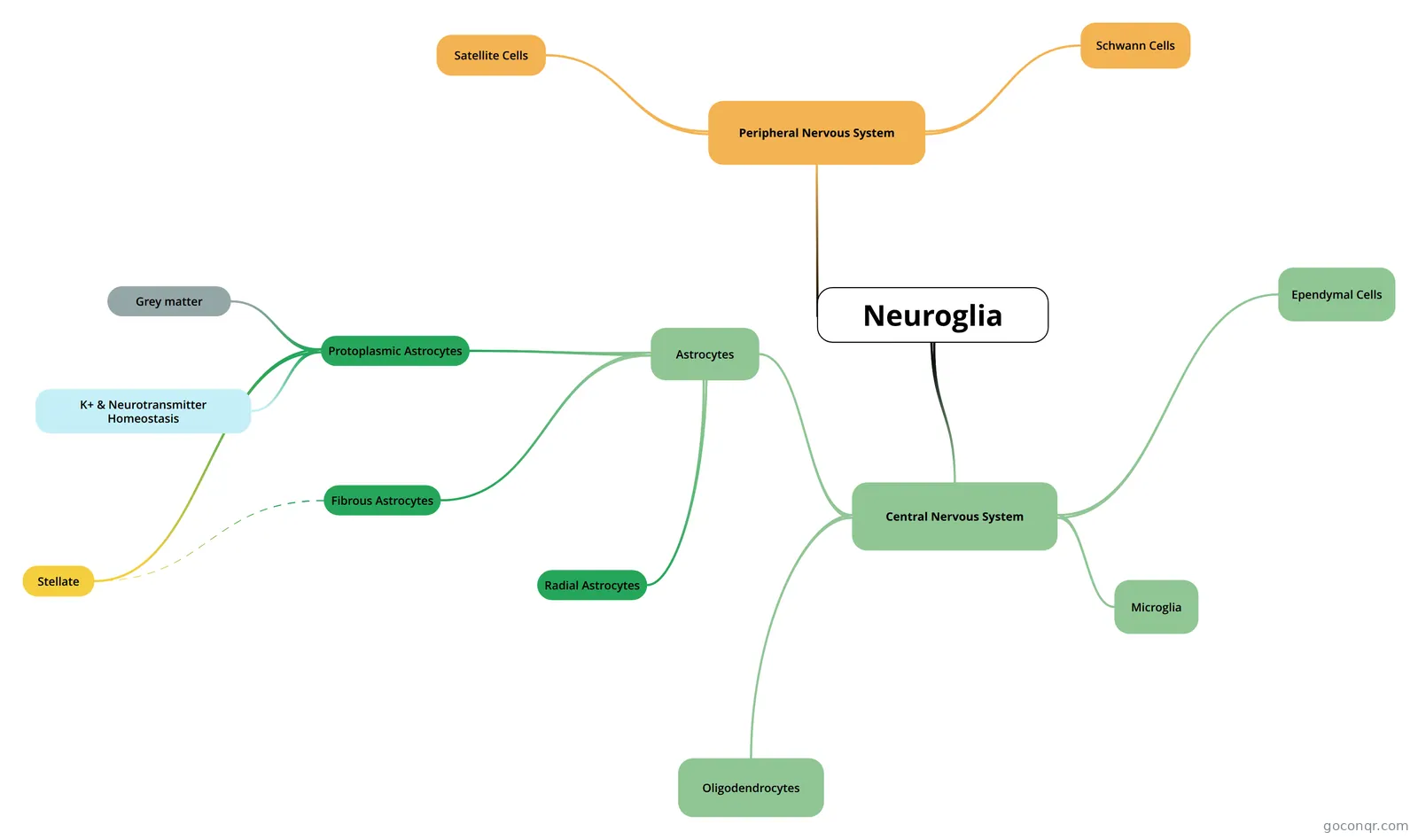 Mind map Neuroglia
-
103 cardsNeuro Exam Review 1 What determines behavior?
-
200 cardsNeuro system Cells that myelinate the nerve cells in the CNS/PNS?
-
117 cardsChapter 3 - Structure and Function of the Nervous System Flashcards for Chapter 3 of Foundations of Behavioral Neuroscience
-
Mind map Basal ganglia: Selection
Quizzes
See all 12 quizzes-
35 questionsBiopsych Test 1 If a drug speeds up the reuptake of a neurotransmitter, it's an
-
5 questionsT6-1.- What percentage of your brain do you use? What is the isoelectric state?
-
39 questionsNeuroanatomy
-
55 questionsPrather Exam 2 The two divisions of the central nervous system are the:
-
39 questions6. Forebrain Each side of the brain is functionally associated with the ipsilateral half of the body
-
19 questionsThe Neuron and The Nervous System - quiz Correctly label the neuron.
-
33 questionsCognitive Neuroscience - The Nervous System
-
25 questionsBrain Function Test A The cells that serve to maintain the barrier between the blood stream and the nervous system are called
Mind maps
See all 17 mind maps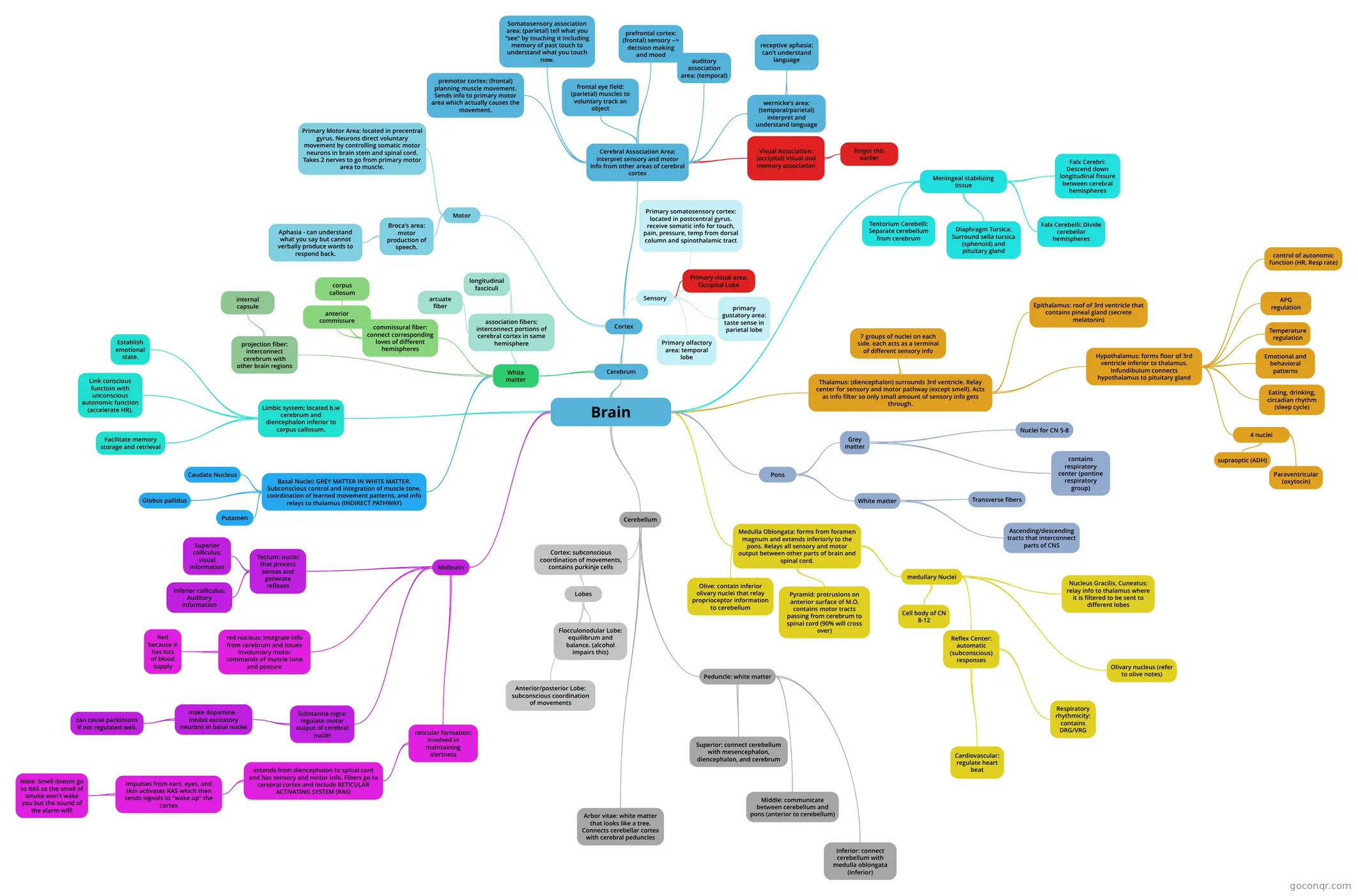
Flashcards
See all 28 flashcards-
103 cardsNeuro Exam Review 1 What determines behavior?
-
200 cardsNeuro system Cells that myelinate the nerve cells in the CNS/PNS?
-
117 cardsChapter 3 - Structure and Function of the Nervous System Flashcards for Chapter 3 of Foundations of Behavioral Neuroscience
-
108 cardsSD329 Block 2 chapter 1 You need to have an overall understanding of the nervous system for this module but what functional role ar...
-
129 cardsLecture 4: Neuroanatomy What are the directions in the 3D space of the brain?
-
92 cardsPSYC1002 What makes up the central nervous system?
-
176 cardsNeuro Cards Nerves that control the body, comprising of the Brain and Spine
-
20 cardsLesson 5-6 Quiz
Notes
Slides
More Neuroscience topics
About Organisation of the Nervous System
GoConqr OriginalWhat the page covers
This unit sits in the Neuroanatomy strand of Neuroscience. It is about how the nervous system is divided and how its parts fit together. The mind maps start with the basics: the central and peripheral nervous systems, sensory and motor divisions, somatic and autonomic branches. Others go deeper into the brain, the brainstem, the cerebellum and the lobes.
Where to start
Begin with the overview maps. The mind maps called NERVOUS SYSTEM and The Nervous System lay out the main divisions in a branching layout that is easy to scan. Then open the Neuroglia map, which names astrocytes, oligodendrocytes, microglia, ependymal cells, satellite cells and Schwann cells. After that, move to the brain: the note called The Brain - created from Mind Map lists the forebrain, midbrain and hindbrain, the limbic system and the four lobes.
Using quizzes and maps together
- Read a map to see the structure.
- Take a quiz without looking back.
- Note which questions you missed.
- Return to the map and fill those branches in.
The quiz Biopsych Test 1 asks about drugs that act on neurotransmitters and what a glutamate agonist does to action potentials. The quiz on what percentage of your brain you use asks about the isoelectric state, brain energy use and sparse coding. Both suit you once you have the basic divisions in mind.
Flashcards for recall
Flashcard decks work well for terms you need to recall exactly. The deck Exam 4: Blood Supply, Ventricles & CSF asks where the major vessels supplying the brain are and which arteries supply it. Other decks cover the telencephalon, the diencephalon, the brainstem and cranial nerves, and glia. Teachers can pick a map, quiz or deck to set alongside a lecture.
Next step
Pick one overview map, try a quiz on the same topic, and then make your own maps and flashcards for the parts you find hardest.
Frequently asked questions
Which resource should I open first?
Start with one of the overview mind maps, such as NERVOUS SYSTEM or The Nervous System. They show the central and peripheral divisions, the sensory and motor branches and the main brain parts. Once that structure feels familiar, try a quiz from the list to test what stuck.
What do the mind maps on this page cover?
They range from general overviews of the nervous system to specific topics. Examples include Neuroglia, the brainstem, the cerebellum, lobes, cerebral hemispheres, neurons and the development of the nervous system. There are over 200 mind maps, so you can usually find one that matches the topic you are studying.
Are the resources free to use?
Yes. Every resource listed here is free to open, study and take, with no account needed. They were made by GoConqr users rather than by GoConqr itself. If you want to save quiz scores or make your own quizzes, maps, flashcards and notes, a free account lets you do that.
What level are these resources aimed at?
Almost all of them are university level, with a small share at secondary level. That makes the page a good fit for university students working through neuroanatomy, and for teachers who want ready-made quizzes, maps and flashcards to use alongside their own teaching.
How many quizzes and flashcard decks are there?
There are more than 70 quizzes and more than 180 flashcard decks, alongside over 200 mind maps and several notes and flowcharts. Quiz titles include Neuroanatomy, Functional neuroanatomy and an overview of the nervous system, so you can choose by topic.
What if I cannot find the topic I need?
Try a neighbouring resource first. A broader map or deck on the brain, the CNS or neuroanatomy often includes the topic you want. If it is still missing, you can build your own mind map, quiz or flashcards and keep them for revision.