
Perimeter, Area and Volume
51 resources created by 48 users
This Perimeter, Area and Volume page on GoConqr gathers community-made quizzes, mind maps, flashcards and notes, from the area of a rectangle and perimeter of compound shapes to surface area and the volume of cones, pyramids and spheres. It's built for school students and primary pupils practising formulas and calculations, and for teachers after ready-made material. There are over 230 resources here, including more than 50 quizzes and over 70 mind maps. Pick a topic, try a quiz to find your gaps, then revise with the flashcards.
Top Perimeter, Area and Volume resources
-
17 cardsExtending to Three Dimensions A cylindrical pressure vessel has a height of 9 feet and a diameter of 6 feet. How much gas can the pressur...
-
5 questionsSURFACE AREAS AND VOLUMES VOLUMES OF A HEMI SPHERE IS DOUBLE THE VOLUME OF A CONE WHOSE RADIUS IS SAME AS THAT OF HEMI SPHERE AND BOT...
-
8 questionsPre-Test on Area of a Rectangle The area of a rectangle along with the height is given below. Find the length.
-
11 cardsSurface Area and Volume Suface area for a closed cylinder
-
Mind map 3D-SHAPES BRYŁY 立體
-
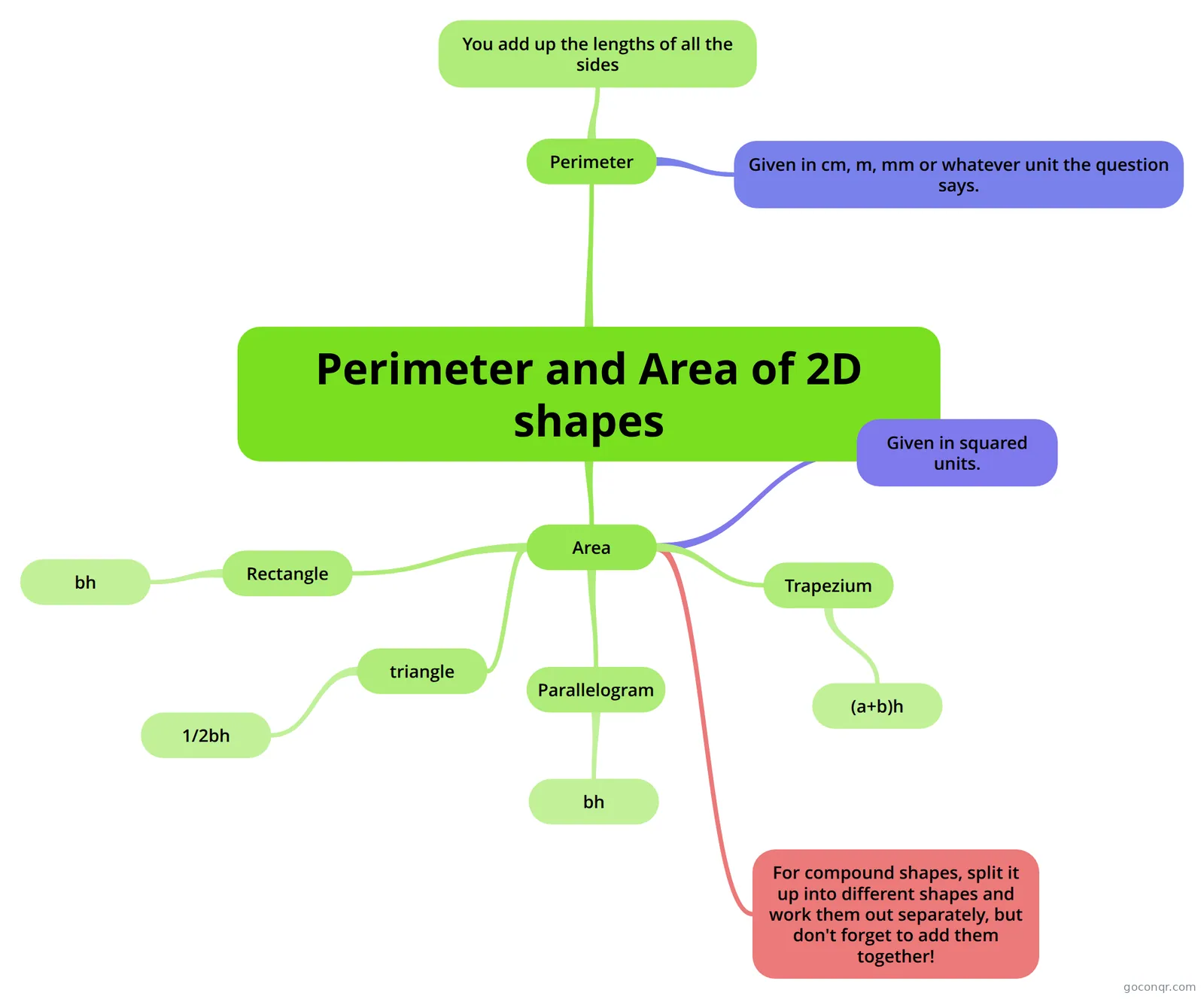 Mind map Perimeter and Area of 2D shapes
-
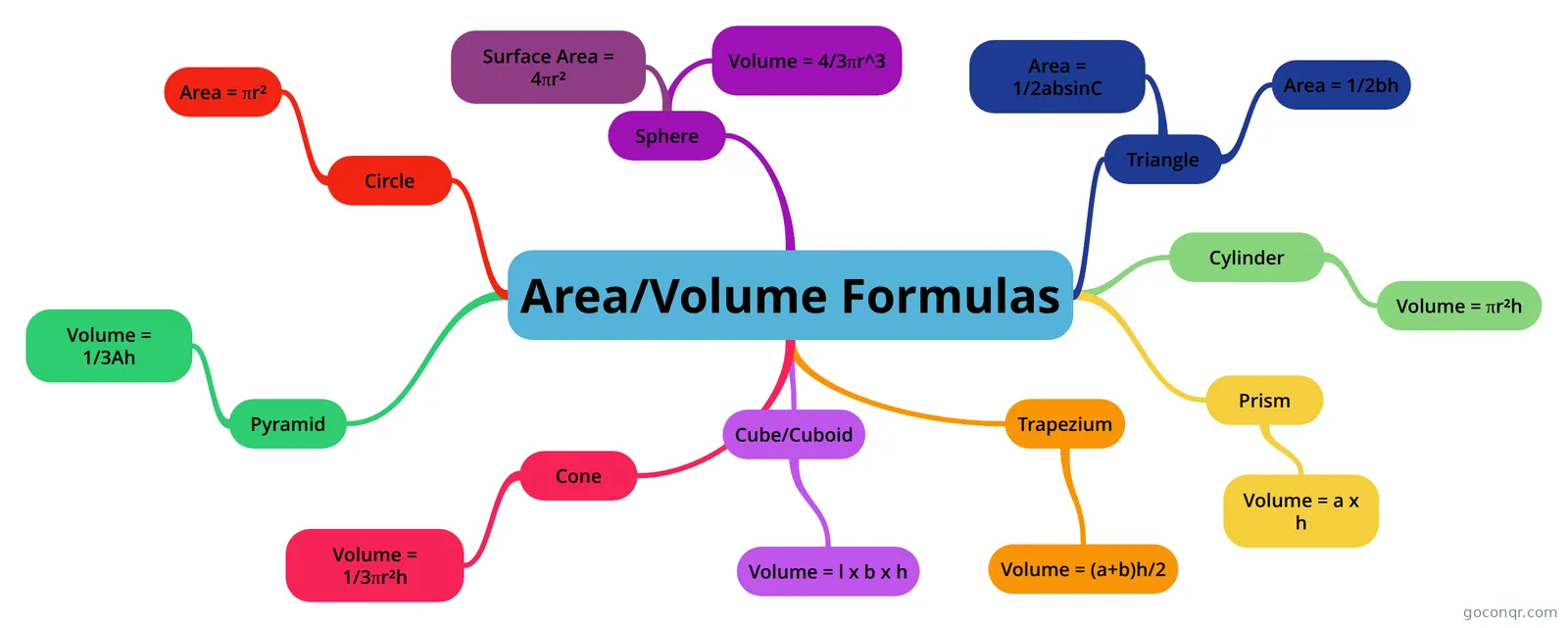 Mind map Area/Volume Formulas Area/Volume Formulas
-
6 cards3 D SHAPE- CUBOID 3 D SHAPES - CUBOID
Quizzes
See all 13 quizzes-
5 questionsSURFACE AREAS AND VOLUMES VOLUMES OF A HEMI SPHERE IS DOUBLE THE VOLUME OF A CONE WHOSE RADIUS IS SAME AS THAT OF HEMI SPHERE AND BOT...
-
8 questionsPre-Test on Area of a Rectangle The area of a rectangle along with the height is given below. Find the length.
-
5 questionsArea and Perimeter Quiz Brian is cutting a piece of cake that is 4 inches long on each side. What is the area of the piece of cake?
-
5 questionsPerimeter of rectangles The perimeter of this rectangle is 82 inches. The base is given, what is the height?
-
9 questionsGardening ~ Level 1 - Level 2 Bob wants to make a patio in his garden using concrete slabs. What is the area of Bob's patio?
-
13 questionsVolume Review Determine the height given the following:
-
5 questionsVolume Math
-
4 questionsArea Check-up What is the area of this shape?
Mind maps
See all 10 mind maps-
3D-SHAPES BRYŁY 立體
-
Perimeter and Area of 2D shapes
-
Area/Volume Formulas Area/Volume Formulas
-
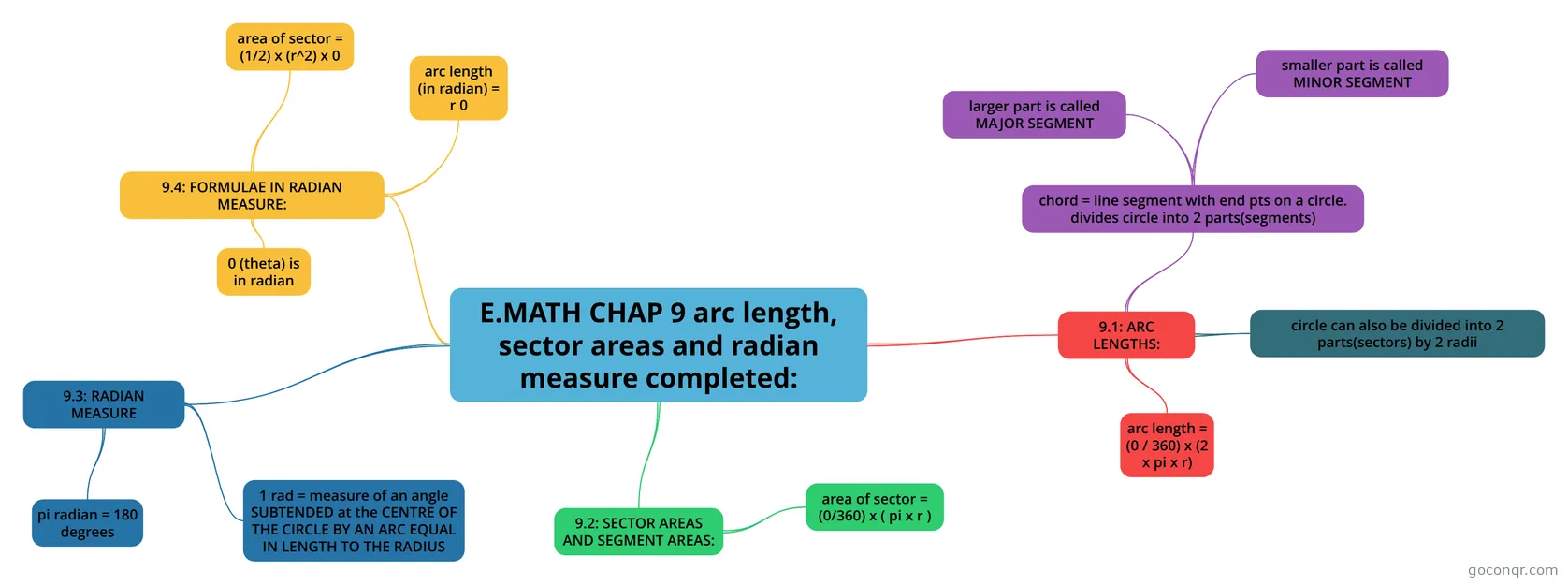 E.MATH CHAP 9 arc length, sector areas and radian measure completed:
-
Unit 7 - Area, Surface area, Circumference and volume
-
Area and Surface Area- Area and Nets Mindmap including Area of shapes and how to draw nets
-
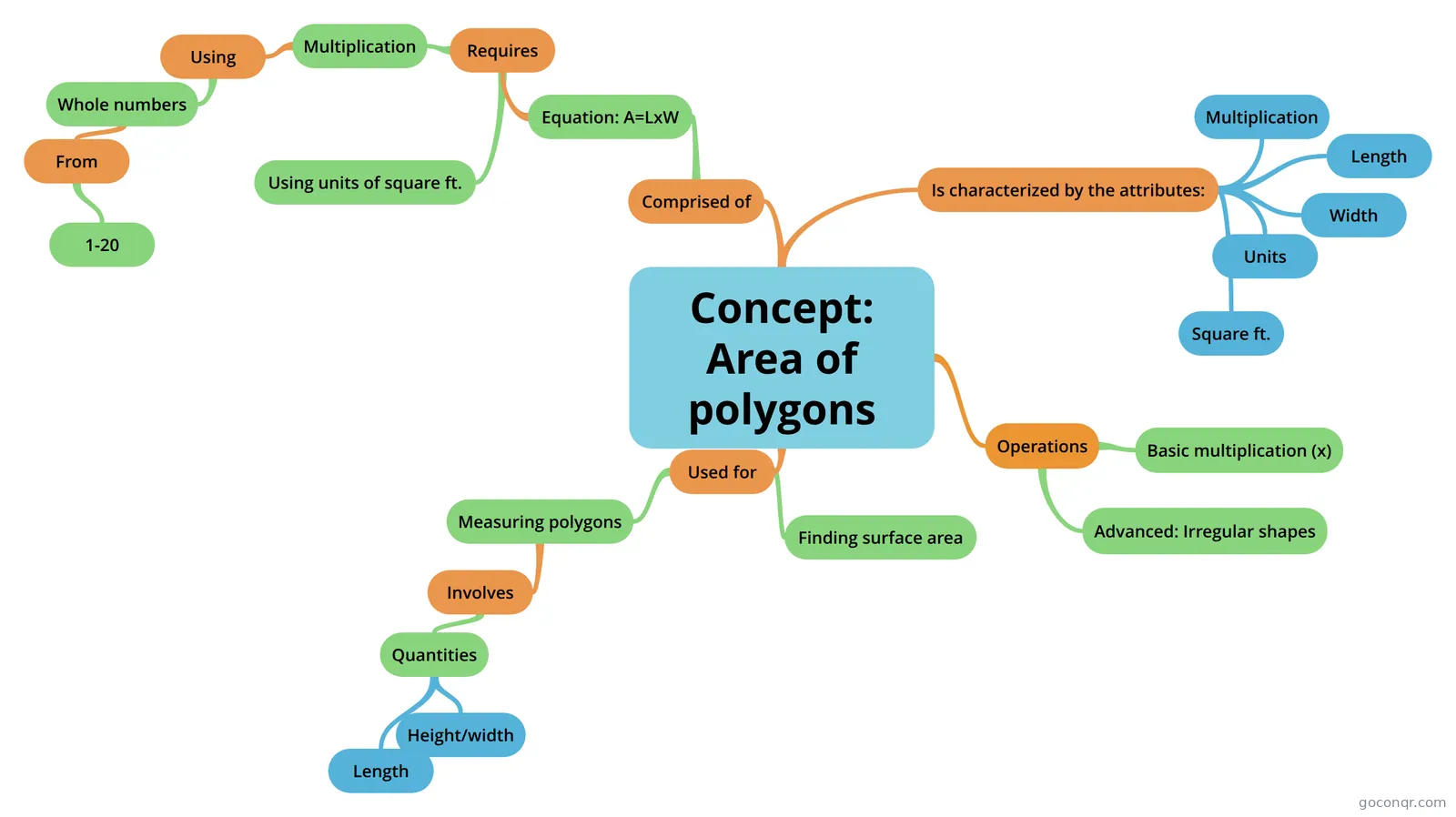 Concept: Area of polygons
-
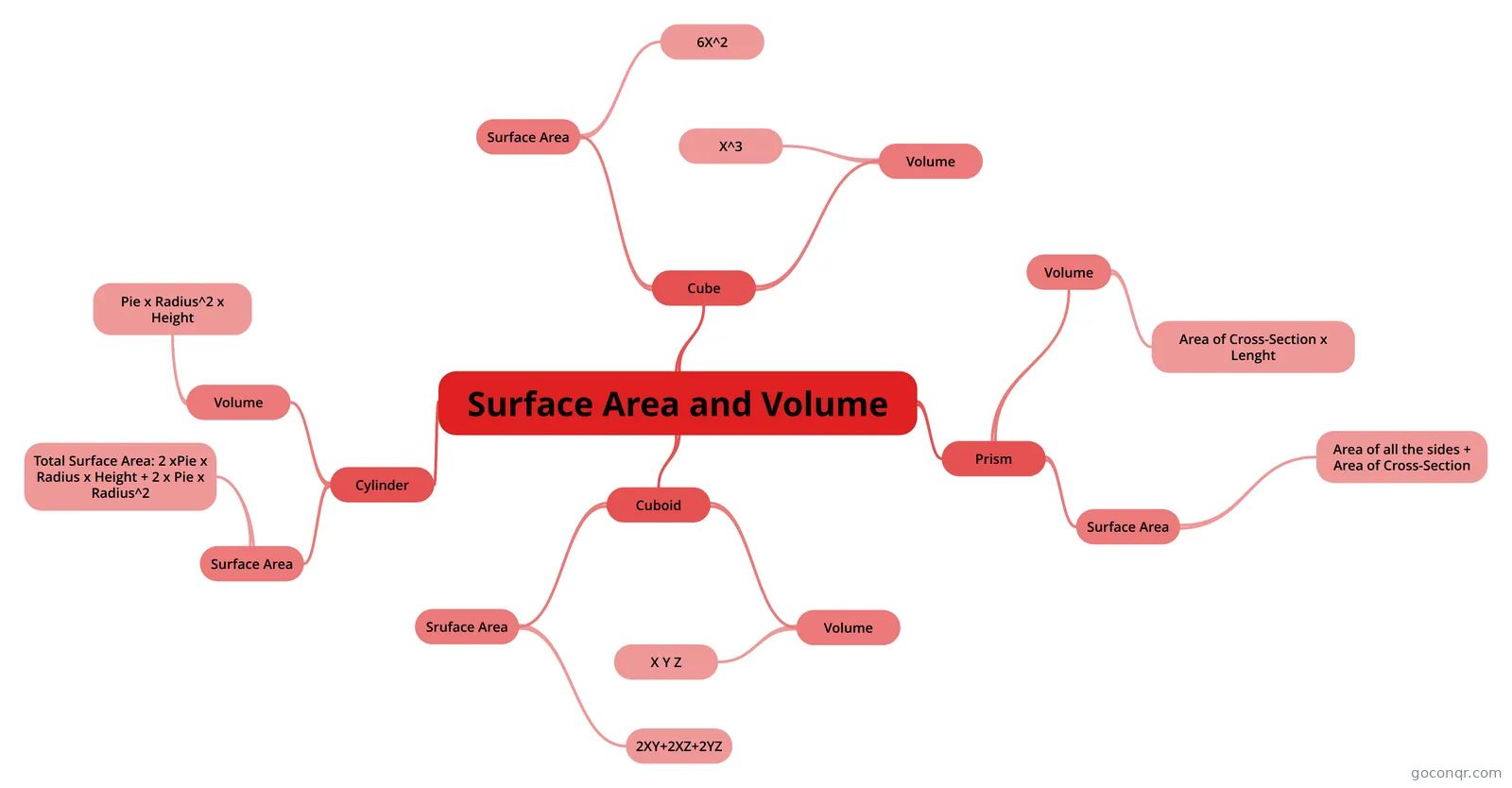 Surface Area and Volume
Flashcards
See all 21 flashcards-
17 cardsExtending to Three Dimensions A cylindrical pressure vessel has a height of 9 feet and a diameter of 6 feet. How much gas can the pressur...
-
11 cardsSurface Area and Volume Suface area for a closed cylinder
-
6 cards3 D SHAPE- CUBOID 3 D SHAPES - CUBOID
-
7 cardsArea of quadrilaterals and triangle p = 2(l+w)
-
45 cardsCC3: Ch 9 Review Find the Volume.
-
13 cardsMaths Formulars S1 How do you find the perimeter of a circle?
-
10 cardsSimple area If a square has sides of 9cm what is the area?
-
10 cardsMML 11.4 Simple closed surface
Flowcharts
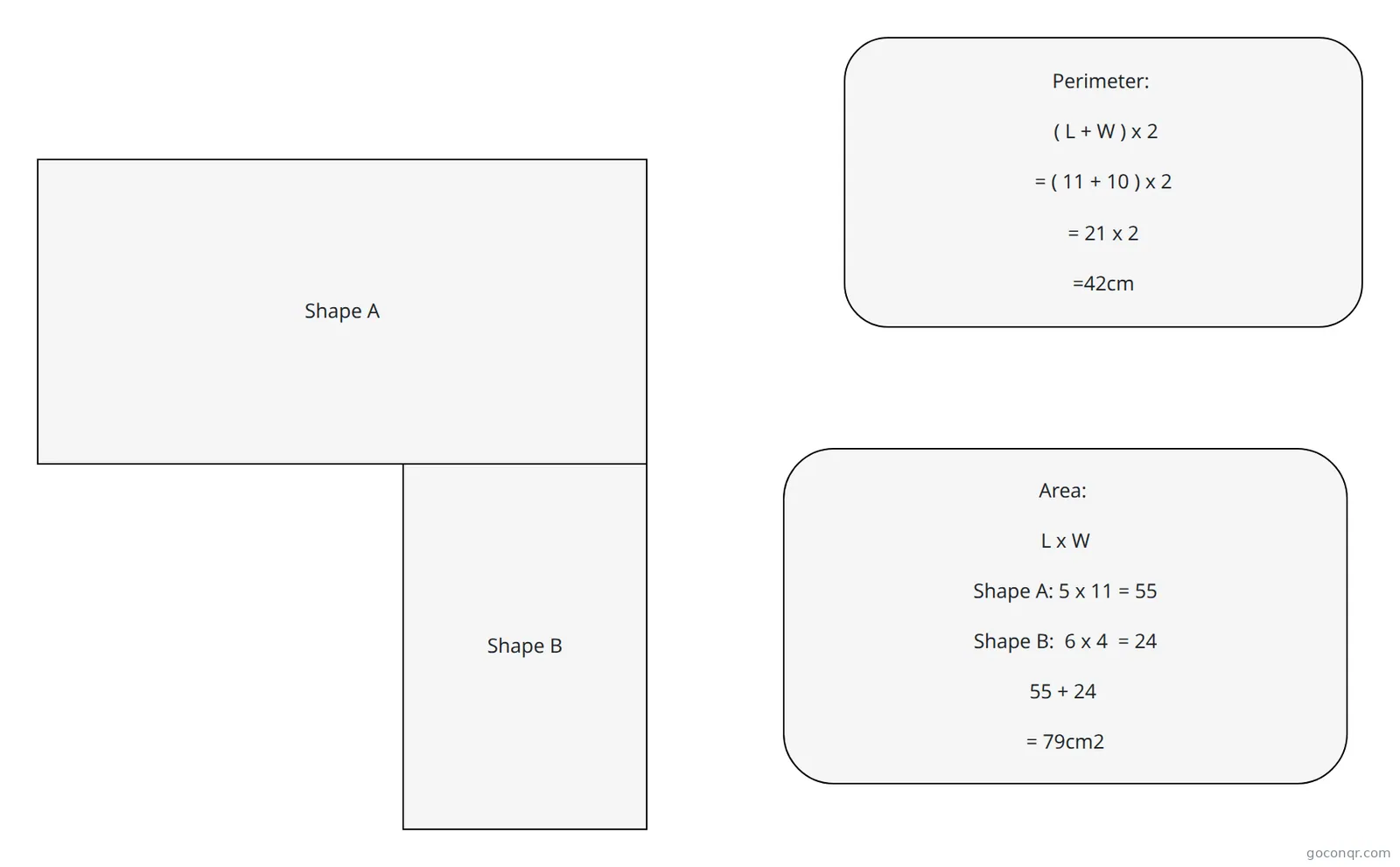
Notes
-
AREA Area of a rectangle: L X W Area of a triangle:1/2 (B X H) AREA OF A CIRCLE:pi X Radius squared
-
Volume An easy way to remember volume formulae is to group 3-D shapes into categories; pointed, linear and spheres. 1. Pointed - These shapes all have a point or tip
-
Mensuration MensurationPrismVolume: (Base area)(Height)Surface Area: 2(base area) + (Perimeter of base area)(Height)CylinderVolume: Closed cylinder:(Base area)(height)= πr2hHollow cylinder:πR2h -πr2h (don’t memorize)PyramidVolume...
-
Maths Volume What is the volume of this cuboid? (Each cube has a side length of 1cm.) 16cm364cm3128cm3 2. What is the volume of this box? 216cm390cm3240cm3 3. A cylinder has a volume of 96cm3. The length is 8cm. What is the area o...
-
Volume Volume=LxWxH New Page
Slides
More Mathematics topics
About Perimeter, Area and Volume
GoConqr OriginalWhat this unit covers
The resources move from flat shapes to solids. On the 2D side, the mind map Perimeter and Area of 2D shapes sets out how to add up sides for perimeter and which formulas give area for rectangles, triangles, parallelograms and trapezia. The deck Area of quadrilaterals and triangle covers kites and rhombuses too. On the 3D side, you will find surface area and volume for cylinders, prisms, pyramids, cones and spheres.
Where to start
If perimeter and area are new, begin with the quizzes on the area of a rectangle and the perimeter of a rectangle. Pre-Test on Area of a Rectangle gives word problems, such as finding a missing length from the area and the height. Then move on to triangles, trapezoids and irregular figures.
- Read a mind map such as Area/Volume Formulas to see the whole set of formulas.
- Work through the flashcards until the formulas feel familiar.
- Take a quiz and note which questions slow you down.
- Go back to the map or notes for those gaps.
Moving into three dimensions
The flashcard deck Surface Area and Volume lists closed cylinders, pyramids and cones, along with the units 1m^3 and 1cm^3. Extending to Three Dimensions has multiple-choice questions, including one on the gas a cylindrical pressure vessel can hold. The mind map 3D Shapes and the one on faces, edges and vertices help with naming solids before you calculate.
Using quizzes and maps together
Use a map first to see how the ideas connect, then a quiz to check them. The notes on mensuration formulas are handy for a quick look before you test yourself. Some resources mention GCSE Maths, so older students can use them as part of revision.
Where it fits
This unit sits within the Geometry, Measurement and Trigonometry strand of Mathematics. Pick one resource that matches where you are now and work through it at your own pace.
Frequently asked questions
Which resource should I open first?
If you are new to the topic, try the quizzes on the area of a rectangle or the perimeter of a rectangle. For formulas, open the Perimeter and Area of 2D shapes mind map or the Surface Area and Volume flashcards. Then test yourself with a quiz.
What do the mind maps cover?
There are over 70 mind maps. Some cover 2D perimeter and area, others cover surface area, volume, 3D shapes, faces, edges and vertices, compound shapes and the Platonic solids. The Area/Volume Formulas map brings circles, spheres, pyramids and cones together.
Are the resources free to use?
Yes. Every resource listed here is free to open, study and take, with no account needed. They were made by GoConqr users, not by GoConqr itself, so styles and depth vary from one resource to the next.
Which levels do they suit?
Most of the material is aimed at secondary school students, with a smaller share for primary pupils. At least one resource mentions GCSE Maths. Teachers can also use the quizzes, notes and flashcards as ready-made material for lessons or revision.
Are there resources on 3D shapes and volume?
Yes. You can find flashcards on volumes of 3D shapes and cylinders, mind maps on volume of prisms and polyhedra, notes on volume problem solving, a slide set on volume and quizzes such as Volume Review. A free account lets you save scores and make your own.
What if I cannot find what I need?
Try a neighbouring resource, since many cover similar ground under different names, such as mensuration or shape and space. You can also make your own quiz, mind map, flashcards or notes to fill the gap.