
Scientific Revolution and Enlightenment
100 resources created by 96 users
This GoConqr page gathers over 920 community-made resources on Scientific Revolution and Enlightenment: quizzes, mind maps, flashcards and notes to revise and practise with.
Top Scientific Revolution and Enlightenment resources
-
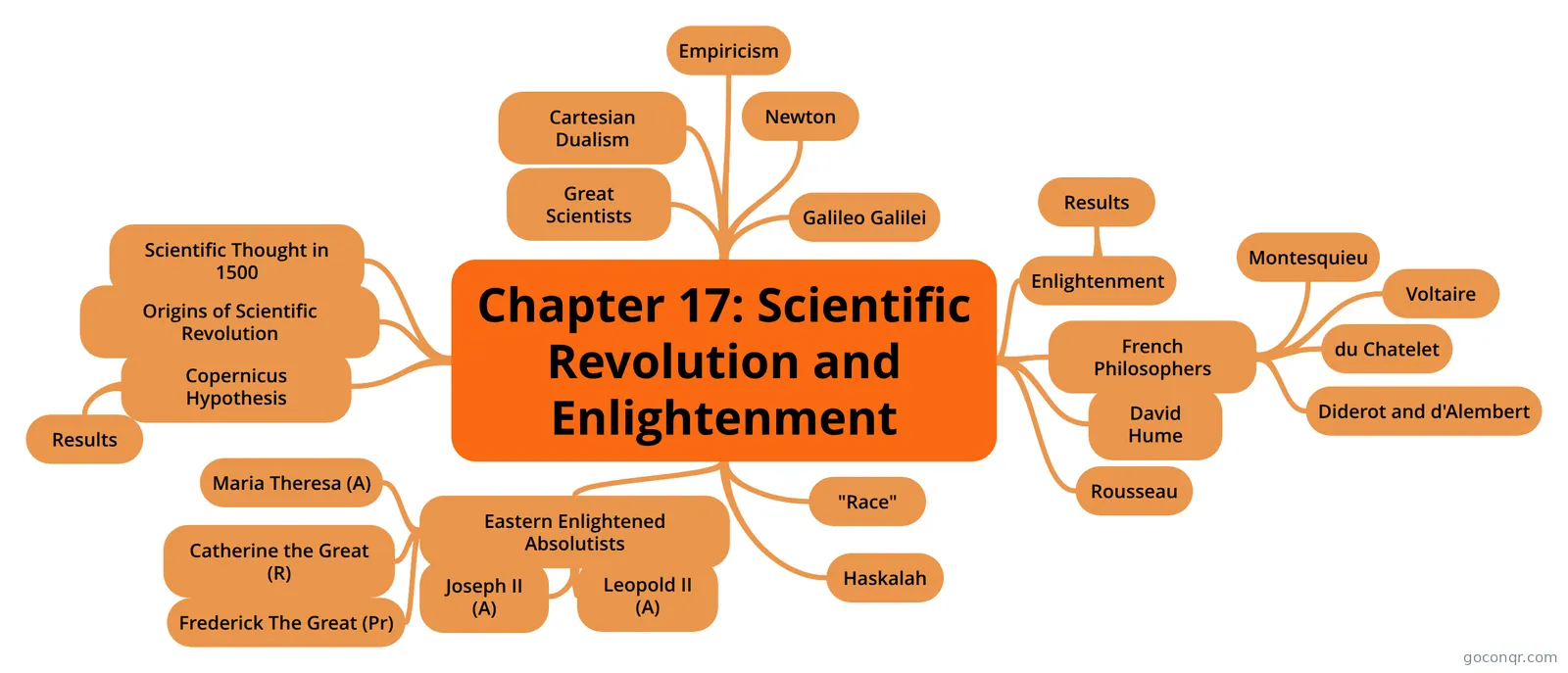 Mind map Chapter 17: Scientific Revolution and Enlightenment
-
Mind map Political Thinkers of the Enlightenment The Political Thinkers of the Enlightenment made a big impact to the way the world views their government a...
-
11 cardsPioneering women in science history you really should know about Some of humanity's greatest scientific breakthroughs have been made by women, although in some cases their ...
-
Mind map 2. The ENLIGHTENMENT
-
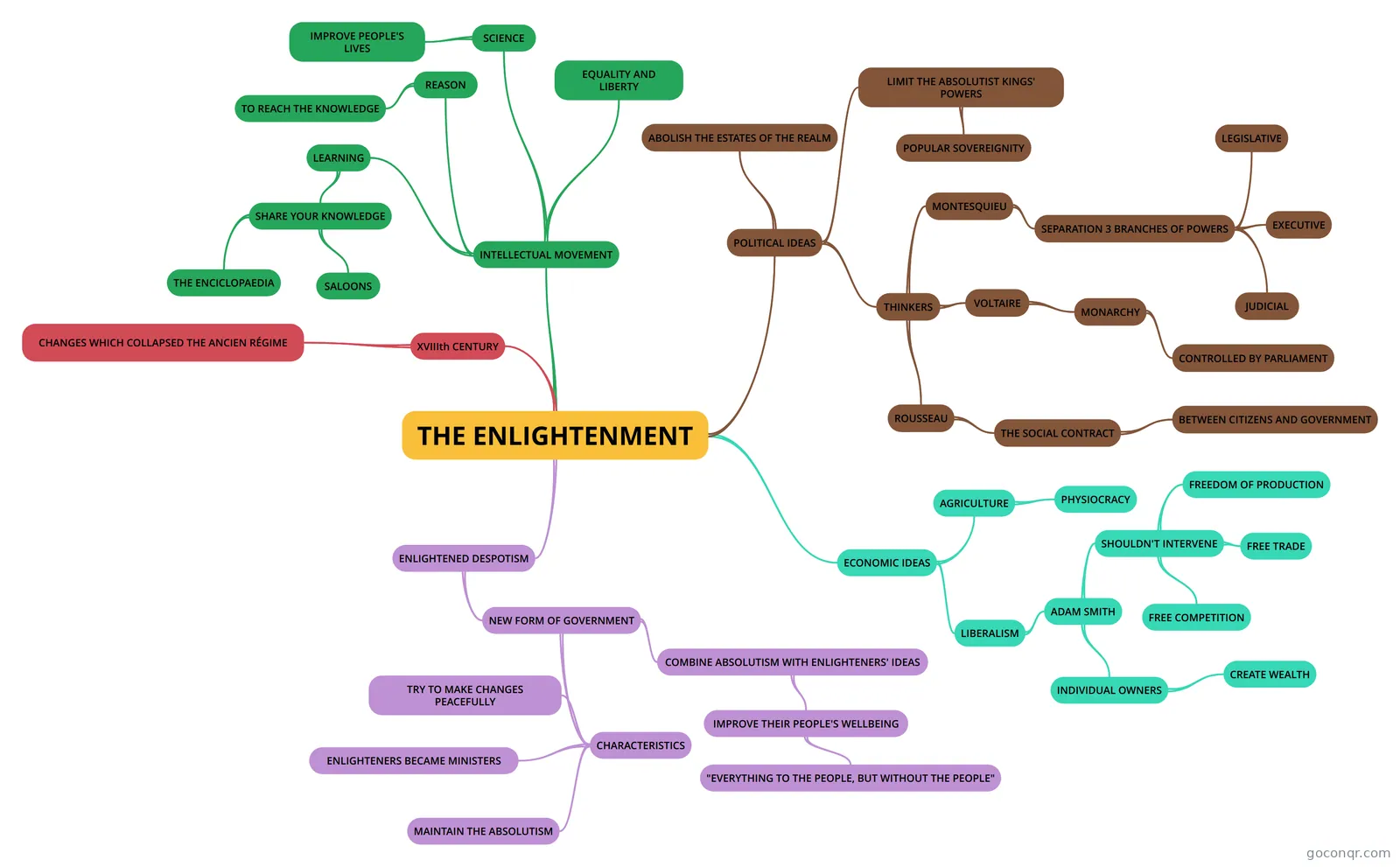 Mind map THE ENLIGHTENMENT LESSON 1 THE ENLIGHTENMENT
-
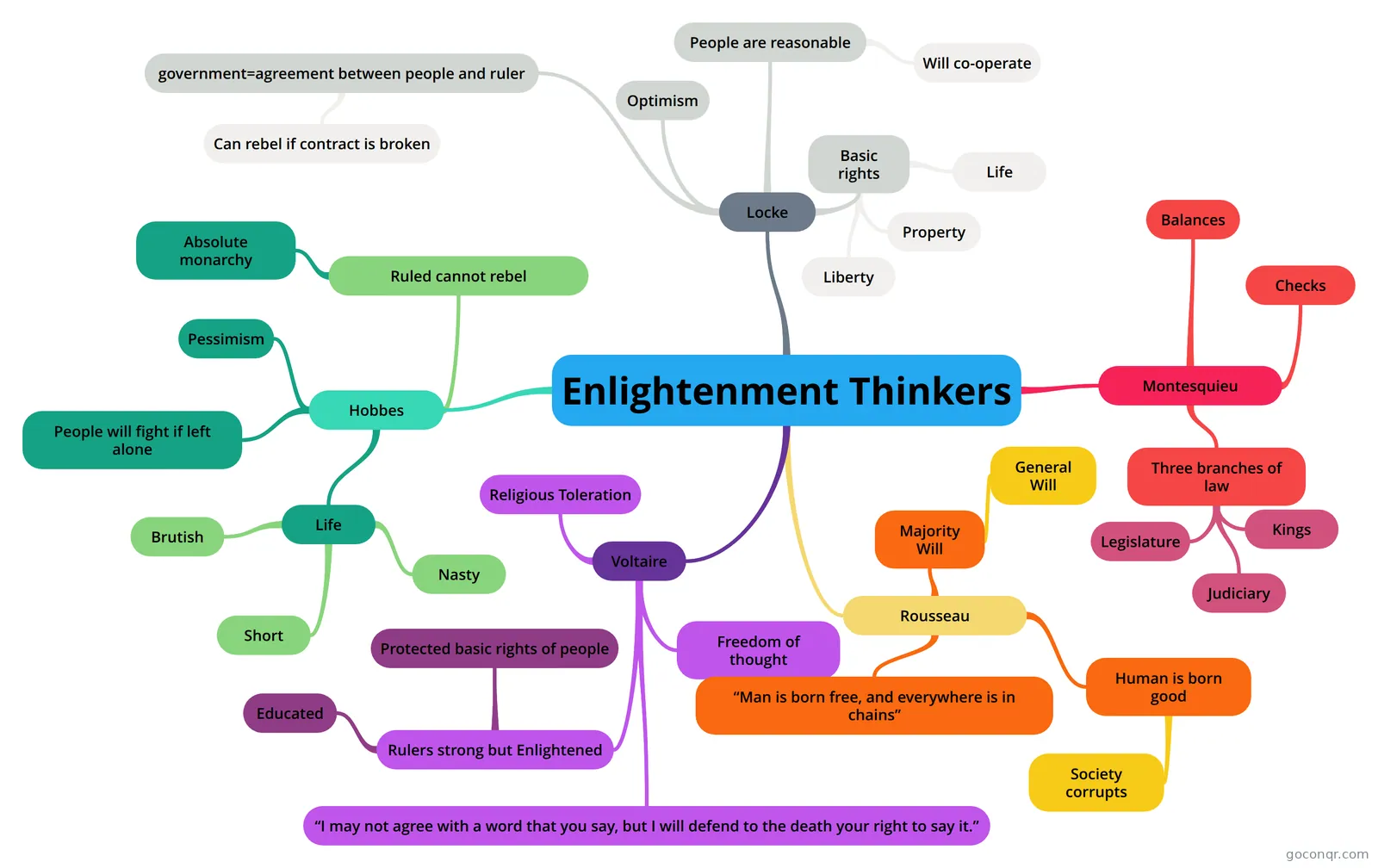 Mind map Enlightenment Thinkers A mind map on the ideas of main Enlightenment thinkers.
-
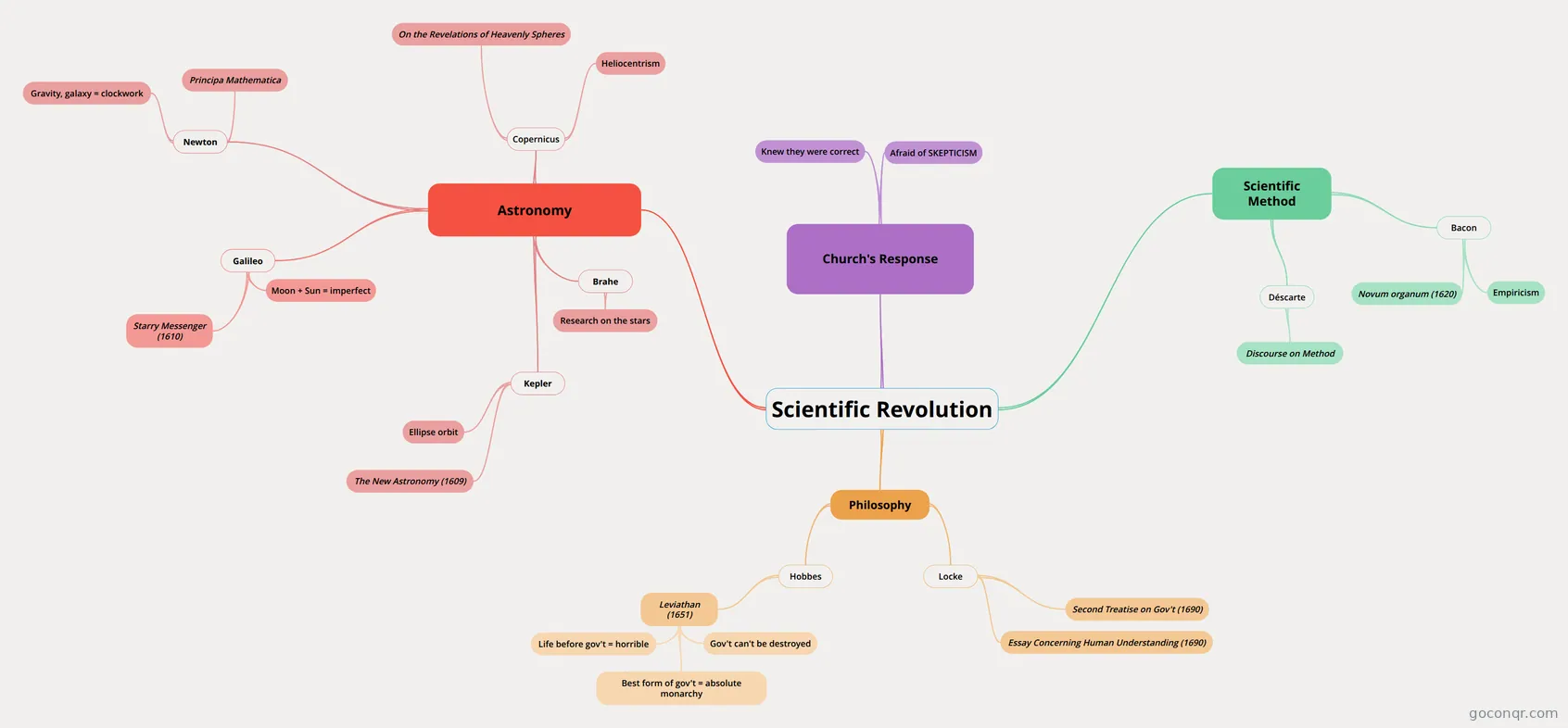 Mind map Scientific Revolution The Scientific Revolution (AP European History)
-
Mind map ENLIGHMENT Mind map history unit 1. Roxana Daria Lacatos 4ºc
Quizzes
-
12 questionsScientific Revolution Who was the first European to make regular observations of the heavens using a telescope?
-
20 questionsThe Enlightenment in Theory Retake study guide
-
20 questionsThe Enlightenment Influencers: Montesquieu & John Locke
-
30 questionsHistoria 1 Parcial 1
-
8 questionsAPWH Topic 5.1 Philosophers Topic 5.1 The Enlightenment. Doesn't go into detail about philosophies.
Mind maps
See all 33 mind maps-
Chapter 17: Scientific Revolution and Enlightenment
-
Political Thinkers of the Enlightenment The Political Thinkers of the Enlightenment made a big impact to the way the world views their government a...
-
2. The ENLIGHTENMENT
-
THE ENLIGHTENMENT LESSON 1 THE ENLIGHTENMENT
-
Enlightenment Thinkers A mind map on the ideas of main Enlightenment thinkers.
-
Scientific Revolution The Scientific Revolution (AP European History)
-
ENLIGHMENT Mind map history unit 1. Roxana Daria Lacatos 4ºc
-
Chapter 19: Changing Lives
Flashcards
See all 58 flashcards-
11 cardsPioneering women in science history you really should know about Some of humanity's greatest scientific breakthroughs have been made by women, although in some cases their ...
-
10 cardsThe ideas of the enlightenment What were the main ideas of Montesquieu?
-
111 cardsScientist Flashcards Who invented the seismometer machine, which could sense distant earthquakes and indicted which direction th...
-
30 cardsChapter 6 no
-
29 cardsAP Euro Chapter 6 awesome sauce
-
27 cardsAP Euro Chapter 7 amazingly awesome
-
30 cardsThe Enlightenment What did John Locke contribute to the Enlightenment?
-
23 cardsHonors History Exam Review Montesquieu's three main ideas
Flowcharts
Notes
-
Global History Regents Review Notes (Scientific Revolution) Scientific Method Dependent on observation and experimentation State the problem Gather information on the problem Form a hypothesis Experiment to test the hypothesis Record and analyze data State conclusion Repeat st...
-
Scientific Revolution - created from Mind Map The curiosity in Math, Physics, Astronomy, Biology and Chemistry Astronomy The study of space Galileo Copernicus The curiosity about Math, Physics, Astronomy, Biology and Chemistry Scientific Revolution
Slides
More History topics
About Scientific Revolution and Enlightenment
GoConqr OriginalWhat this page covers
The resources split into two linked stories: the Scientific Revolution and the Enlightenment. On the science side, the mind map Chapter 17: Scientific Revolution and Enlightenment moves through scientific thought in 1500, the origins of the revolution, the Copernicus hypothesis, Galileo, Newton, empiricism and Cartesian dualism. Another map on the Scientific Revolution adds Brahe, Kepler, Bacon, Descartes, Hobbes and Locke, plus Galileo's Starry Messenger.
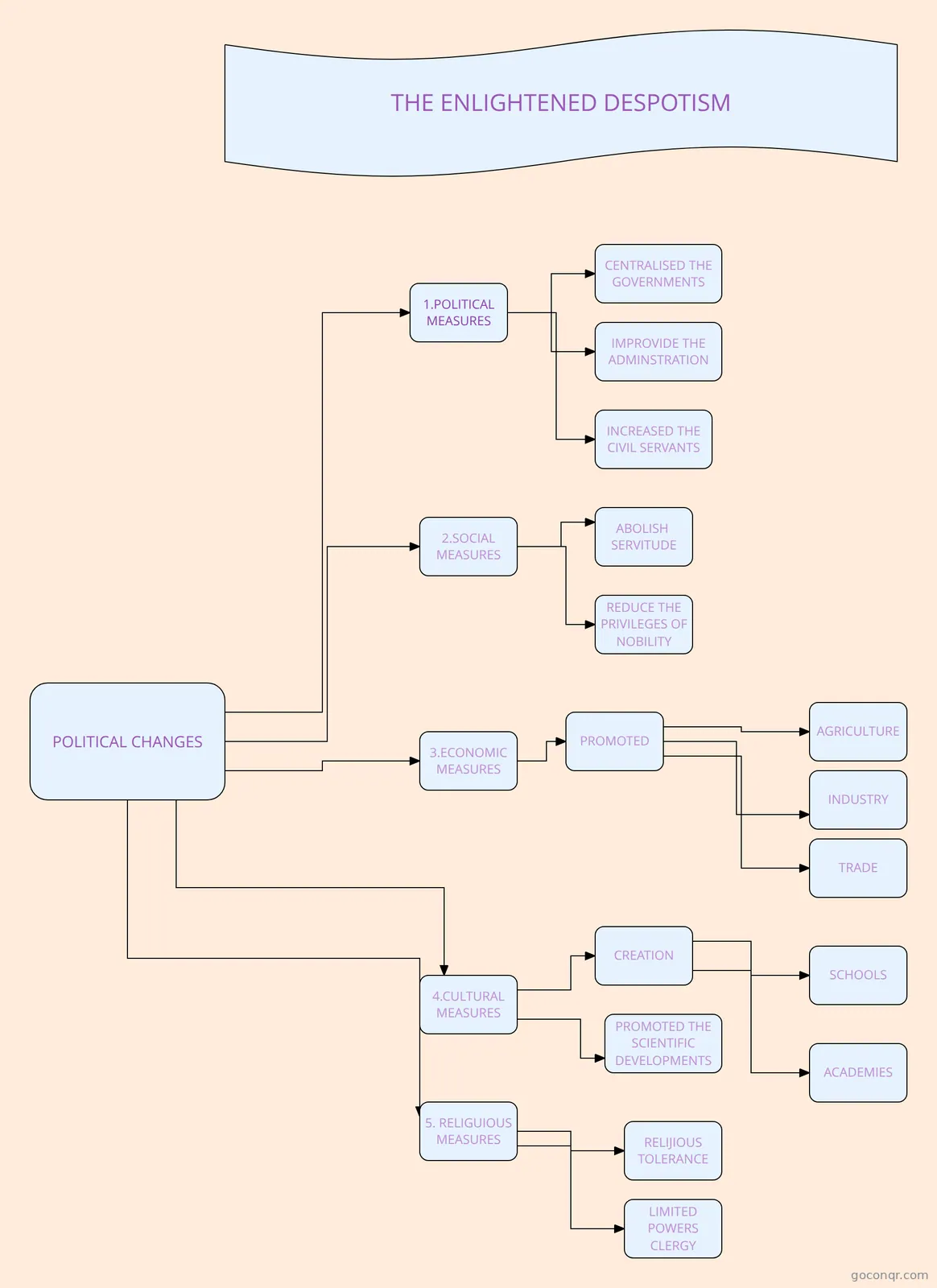
On the Enlightenment side, maps describe a movement that promoted knowledge, science and education to reform society, built on reason, learning and teaching, equality and liberty. Others cover political thinkers and natural rights, and enlightened despots such as Catherine the Great, Joseph II, Frederick II and Carlos III.
Where to start
- Open Chapter 17: Scientific Revolution and Enlightenment for the overall shape.
- Read the Enlightenment maps, including Enlightenment Thinkers, to see who argued what.
- Use the Global History Regents Review Notes (Scientific Revolution) to see the scientific method set out step by step.
- Move on to Enlightened Despotism and Political Thinkers of the Enlightenment.
Using quizzes and maps together
Read a map first, then take a quiz on the same topic. The Enlightenment quiz, for example, asks which of several things Montesquieu did and whether Locke agreed with Descartes on innate reason. Each wrong answer points you back to a branch of the map to review. Flashcard decks such as Enlightened Despots and Major Enlightenment Thinkers help you memorise names and ideas afterwards.
There are also decks on salons, the Lisbon earthquake, women challenging philosophies, and pioneering women in science, which add detail beyond the big names.
Where it fits
This unit sits in the strand The Early Modern World, within History. Most of the material is aimed at school students, and teachers can use the maps and slide sets as ready-made classroom material.
Choose one map, take a quiz, and then build your own flashcards on the thinkers you find hardest to tell apart.
Frequently asked questions
Which resource should I open first?
Start with the mind map Chapter 17: Scientific Revolution and Enlightenment. It runs from scientific thought in 1500 through Copernicus, Galileo and Newton to empiricism and Cartesian dualism, so it gives you the outline before you go deeper into individual thinkers.
What do the Enlightenment mind maps cover?
They cover the movement's main principles of reason, learning and equality, and the thinkers behind them, including Montesquieu, Hobbes, Locke, Voltaire and Rousseau. Others look at natural rights, the three branches of government, enlightened despotism and how Enlightenment ideas spread.
Are there quizzes I can use to test myself?
Yes. There are more than 20 quizzes, including The Enlightenment, The Scientific Revolution Quiz and one on Montesquieu and John Locke. They suit quick checks after reading a map, so you can see which thinkers or ideas need another look.
Which exams do these resources suit?
The listed resources mention AP European History, GCSE History and AP World History. Nearly all of the material is at school level, so it suits students revising for those courses, and teachers can borrow it for lessons.
Are the resources free, and who made them?
Every resource here is free to open, study and take, with no account needed. They were made by GoConqr users, not by GoConqr. A free account also saves your quiz scores and lets you create your own quizzes, maps, flashcards and notes.
What if I can't find the topic I need?
Try the related decks and maps first, such as those on salons, women in science or Francis Bacon. If something is still missing, make your own mind map or flashcard deck on it, using the existing resources as a model.