
Verbs and Verb Types
156 resources created by 153 users
This Verbs and Verb Types page on GoConqr gathers community-made quizzes, mind maps, flashcards and notes, from modal verbs and phrasal verbs to auxiliary verbs, irregular verbs and the subjunctive. It's built for school students practising how verbs work, and for teachers after ready-made material. There are over 1,200 resources here, including more than 70 quizzes, over 700 mind maps and more than 300 flashcard decks, almost all at secondary level. Pick a topic, try a quiz, then make your own set.
Top Verbs and Verb Types resources
-
Mind map Verbs xd
-
Mind map Modal Verbs This is a Mind Map of Modal Verbs and their Functions.
-
16 questionsConfusing verbs: CONSIST - CONTAIN - INCLUDE - INVOLVE The test is aimed at intermediate students and checks the understanding the difference between the confusin...
-
8 questionsModal verbs Modal verbs
-
Mind map MAKE VS.DO make and do
-
7 cardsModal Verbs Teaching grammar - Introduction to modal verbs.
-
Flowchart Auxiliary verbs auxiliary verbs
-
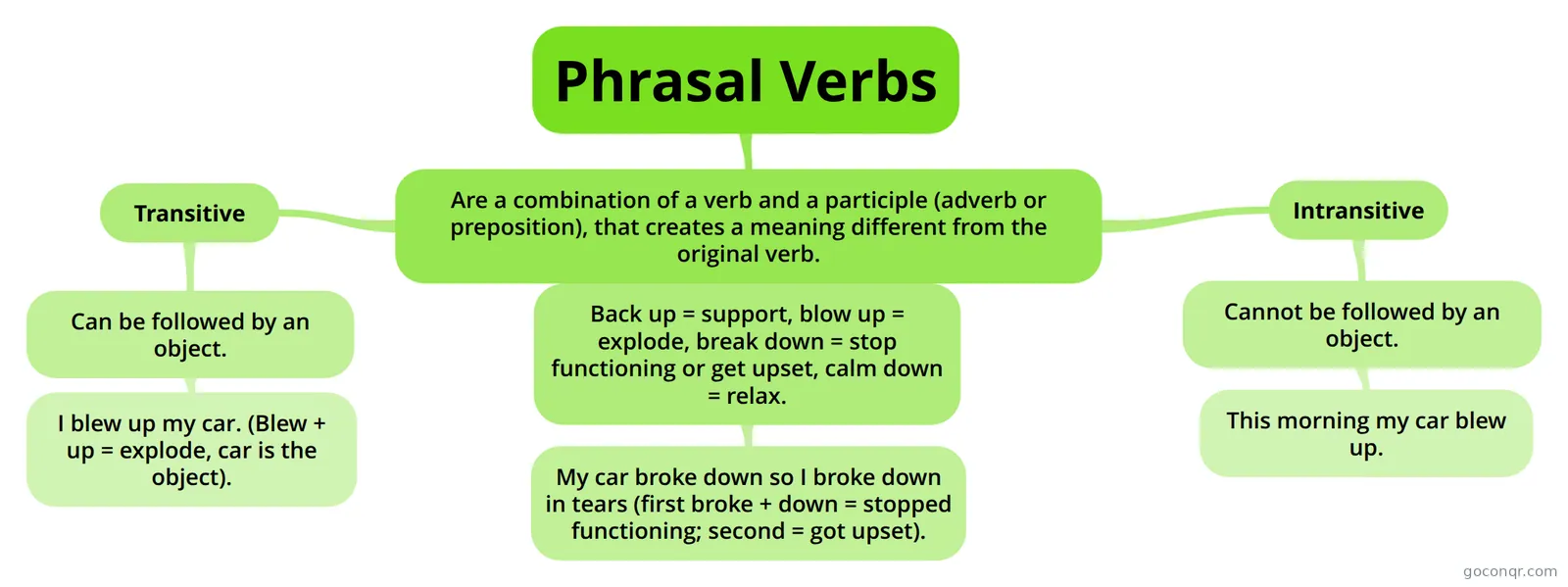 Mind map Phrasal Verbs
Quizzes
See all 20 quizzes-
16 questionsConfusing verbs: CONSIST - CONTAIN - INCLUDE - INVOLVE The test is aimed at intermediate students and checks the understanding the difference between the confusin...
-
8 questionsModal verbs Modal verbs
-
25 questionsProblem verbs Choose the correct verb to complete the sentence.
-
4 questionsThe Subjunctive (Test) To use the subjunctive you need two clauses.
-
25 questionsPresent Subjunctive Choose the correct translation for Ukrainian words in the sentence: It is vital that Sansa Stark вбила Петі...
-
8 questionsRevision 1 Could you ..................... me some money until tomorrow?
-
20 questionsSubjunctive Mood Exercise If they ...... more time, they would take the Japanese course.
-
12 questionsConfusing verbs: STAY - REMAIN Some practice to distinguish between the pair of verbs - stay and remain.
Mind maps
See all 34 mind maps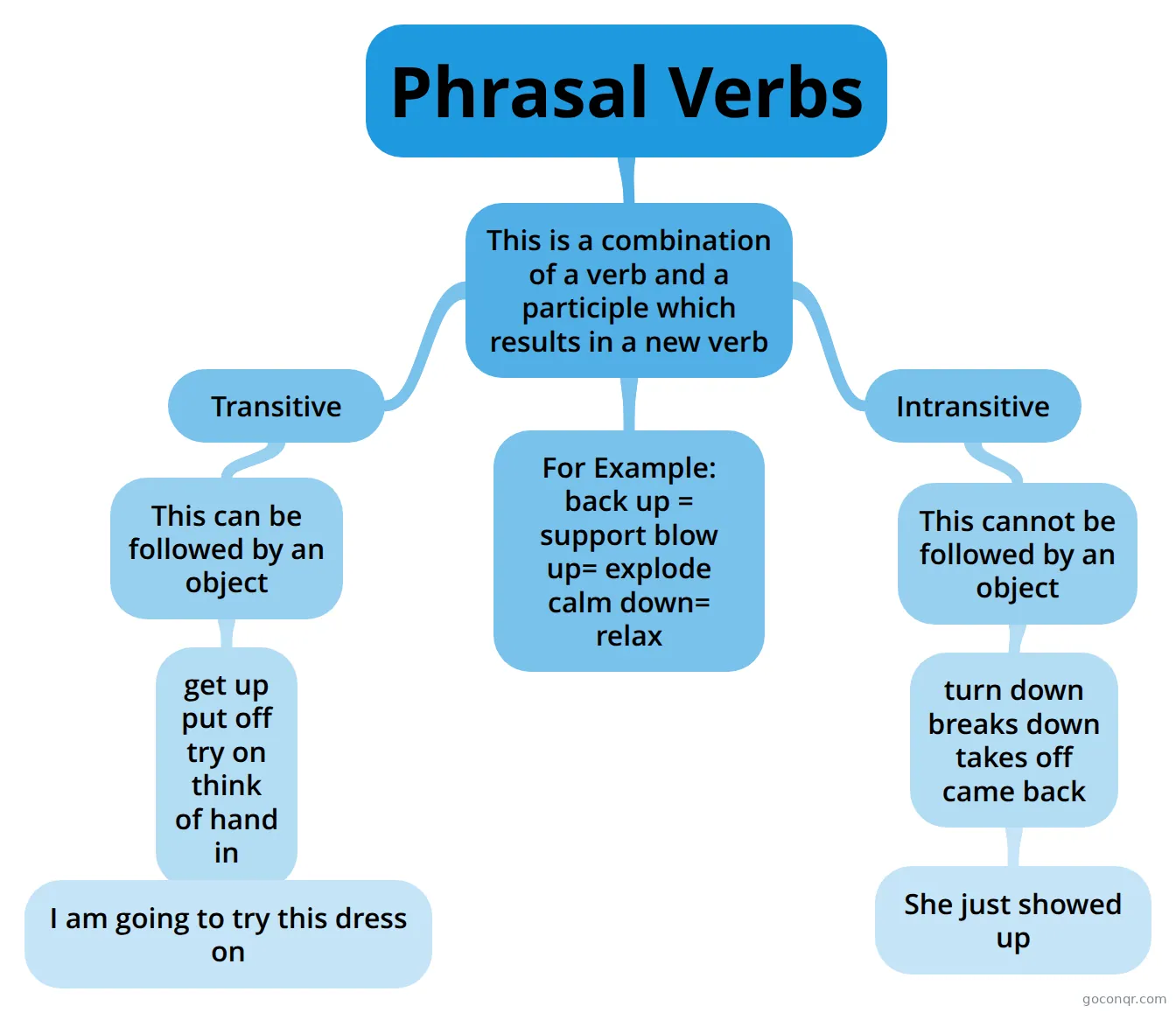
Flashcards
See all 92 flashcards-
7 cardsModal Verbs Teaching grammar - Introduction to modal verbs.
-
15 cardsIrregular Verb List 2 Here are some irregular verbs for you to study
-
200 cardsirregular and regular verbs cartas de verbos
-
100 cardsregular verbs
-
50 cardsThe regular and irregular verbs The present work is done to put into practice the regular and irregular verbs in English
-
100 cardsIrregular verbs el teacher me lo pidio
-
23 cardsVerbs Verbs
-
4 cardsLab 4 Lab 4: Go to “Documentos” and download and read the file Pronunciation of -ed in English. These are rules f...
Flowcharts
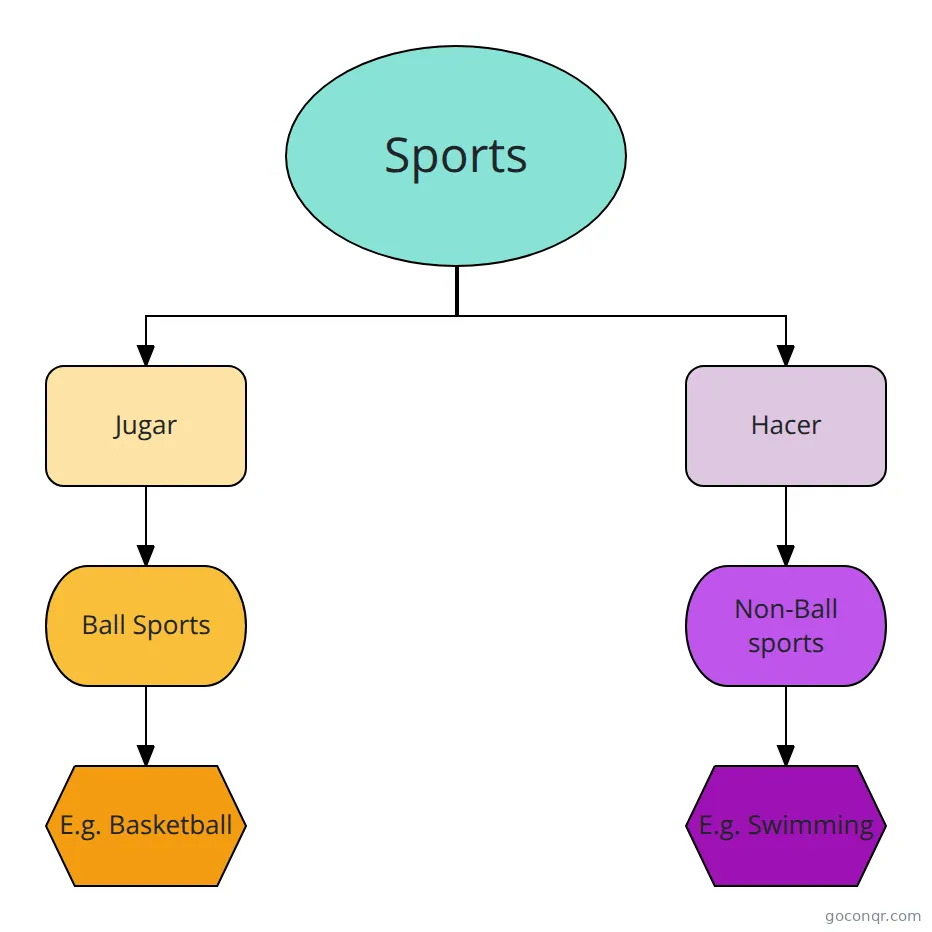
Notes
-
PARTICIPLES Participles Hearing a loud noise, the boy woke up. (oyendo, al oír) Here the word hearing qualifies the noun boy as an adjective does. It is formed from the verb hear and has an o...
-
Active vs Passive voice The following video shows some important aspects of the Active and Passive voice. Listen carefully and write down notes in your notebooks The notes will be reviewed and will be part of your period grade. Thank you!
Slides
More English language topics
About Verbs and Verb Types
GoConqr OriginalWhat this unit covers
The resources here look at verbs from several angles. The mind map Verbs (Types) starts with the basic idea: a verb conveys an action, event or state of being, and it sorts verbs into action, saying, sensing and relating. Others go further, with a flowchart on transitive and intransitive verbs and another on finite and non finite verbs.
Verb groups you can practise
- Modal verbs: the flashcard deck Modal Verbs notes that modals come before the main verb, take no -s, -ing or -ed, and are followed by a bare infinitive. The Modal Verbs mind map groups them by job, such as ability, permission, obligation and advice.
- Phrasal verbs: the Phrasal Verbs mind map explains how a verb plus an adverb or preposition creates a new meaning, with examples like back up and blow up.
- Auxiliary verbs: the flowchart Auxiliary verbs shows be, do, have and will, with forms of be in the present and past.
- Easily confused verbs: MAKE VS.DO sets out when to use each, and a quiz covers consist, contain, include and involve.
- Irregular verbs: several flashcard decks, including Irregular Verb List 2, drill forms such as cling, creep and dig.
Where to start
Begin with a overview map such as Verbs (Types) or the mind map called Verbs, which also touches on auxiliaries, finiteness, aspect and mood. Then pick one group, for example modals, and read its map before trying the Modal verbs quiz.
Using quizzes and maps together
Read a map first to see the pattern, then take a quiz to test it. The confusing-verbs quiz uses gap-fill sentences, so you have to choose the right verb in context. Note the ones you miss, go back to the map, and try again. Flashcards suit irregular forms, which need repeating.
Where it sits
This unit belongs to the strand Grammar: Verbs and Tenses in English language. Teachers can use the quizzes and slide sets as ready-made starters. Choose a topic above and open the first resource that looks useful.
Frequently asked questions
Which resource should I open first?
Try the mind map Verbs (Types) for a clear overview of action, saying, sensing and relating verbs. If you prefer testing yourself straight away, the Modal verbs quiz asks you to pick should, would or could in short everyday sentences, which shows quickly what you already know.
What do the modal verb resources cover?
They cover the rules and the uses. The flashcard deck Modal Verbs explains word order and the bare infinitive. The Modal Verbs mind map groups uses such as prohibition, permission, requests, offers, obligation, ability and advice. The quiz then checks them in sentences.
Are the resources free to use?
Yes. Every resource listed here is free to open, study and take, with no account needed. They were made by GoConqr users rather than by GoConqr itself, so styles vary. A free account saves your quiz scores and lets you make your own quizzes, maps, flashcards and notes.
Is there help with confusing verb pairs?
Yes. The mind map MAKE VS.DO explains that do is for actions and tasks, while make is for building or creating. There is also a quiz on consist, contain, include and involve, and further resources on pairs such as stay and remain.
Which levels are these resources for?
Most are at secondary level, so they suit school students, with a small share at other levels. Teachers can use them as ready-made material for lessons or revision. No exam is named in the listed resources.
What if I can't find the verb topic I need?
Look through the other formats, since a topic missing as a quiz may appear as a map, flashcard deck or note. Subjunctive mood, reflexive verbs, participles, gerunds and infinitives are all listed. You can also build your own set for anything missing.