
Victorian Britain
32 resources created by 28 users
This Victorian Britain page on GoConqr gathers community-made mind maps, flashcards, quizzes and notes, from the Poor Law and Chartism to the Reform Acts, Gladstone and Disraeli, and Victorian health and family life. It's built for school students revising a topic and for teachers after ready-made material, with a little for university students too. There are over 290 resources here, including more than 230 mind maps, 3 quizzes and over 30 flashcard decks, mostly at secondary level. Pick a topic, try a quiz, then build your own maps.
Top Victorian Britain resources
-
Mind map Victorian Era 1860-1890 Victorian Era
-
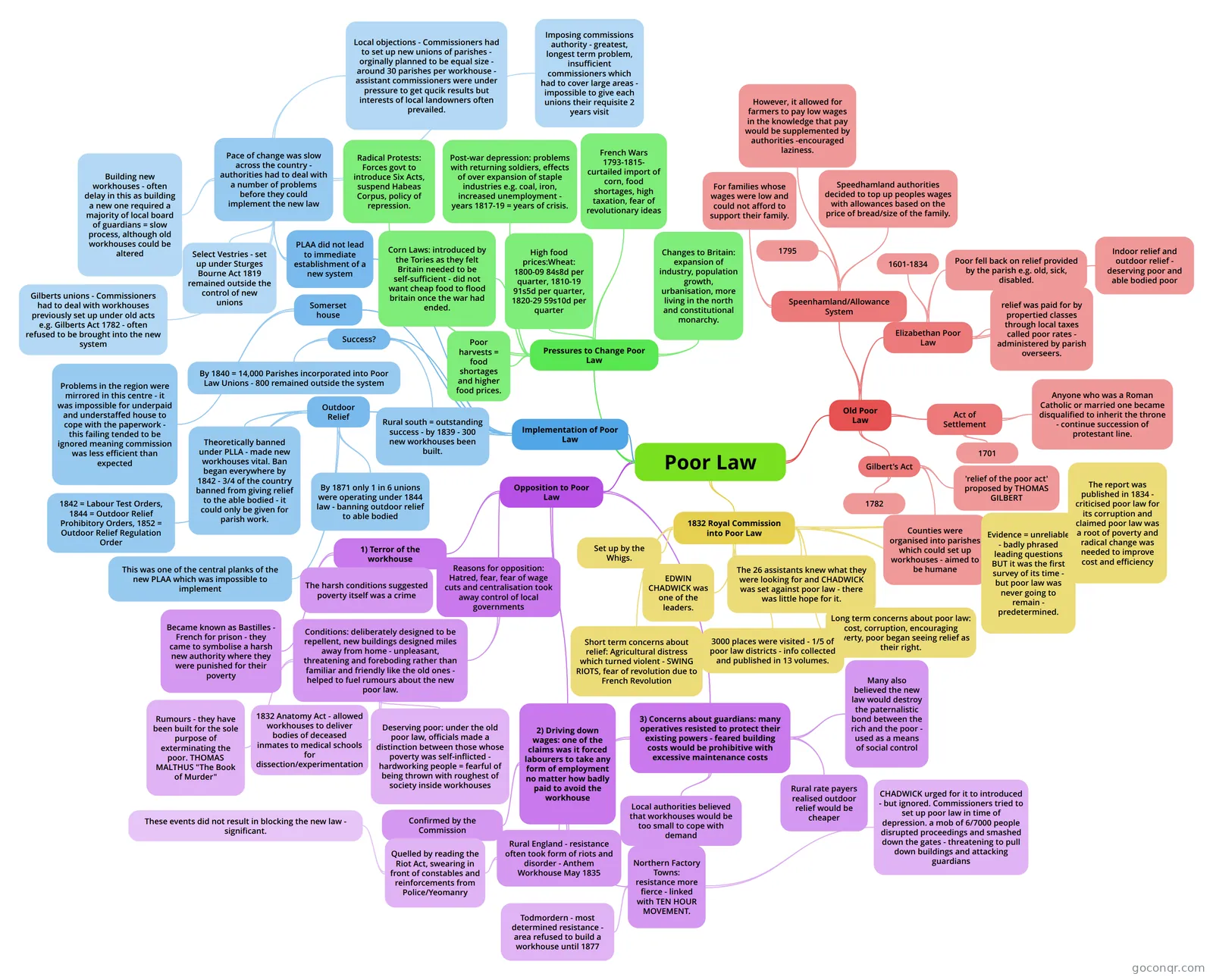 Mind map Poor Law
-
Mind map Victorian Britain: 1837 - 1901 -Education -Queen Victoria -Family Unit -Poverty and Class Divide -Industrial Revolution
-
24 cardsUNIT 4 - 5 TIMELINE: 1840 - 1885 Challenges and consequences: Chartism 1841-58 The triumph of democracy
-
 Mind map Social Inequality in victorian england charles dickens
-
64 cardsDepth Studies Evidence DEPTH STUDY ONE: Early radical reformers (1780-1829)
-
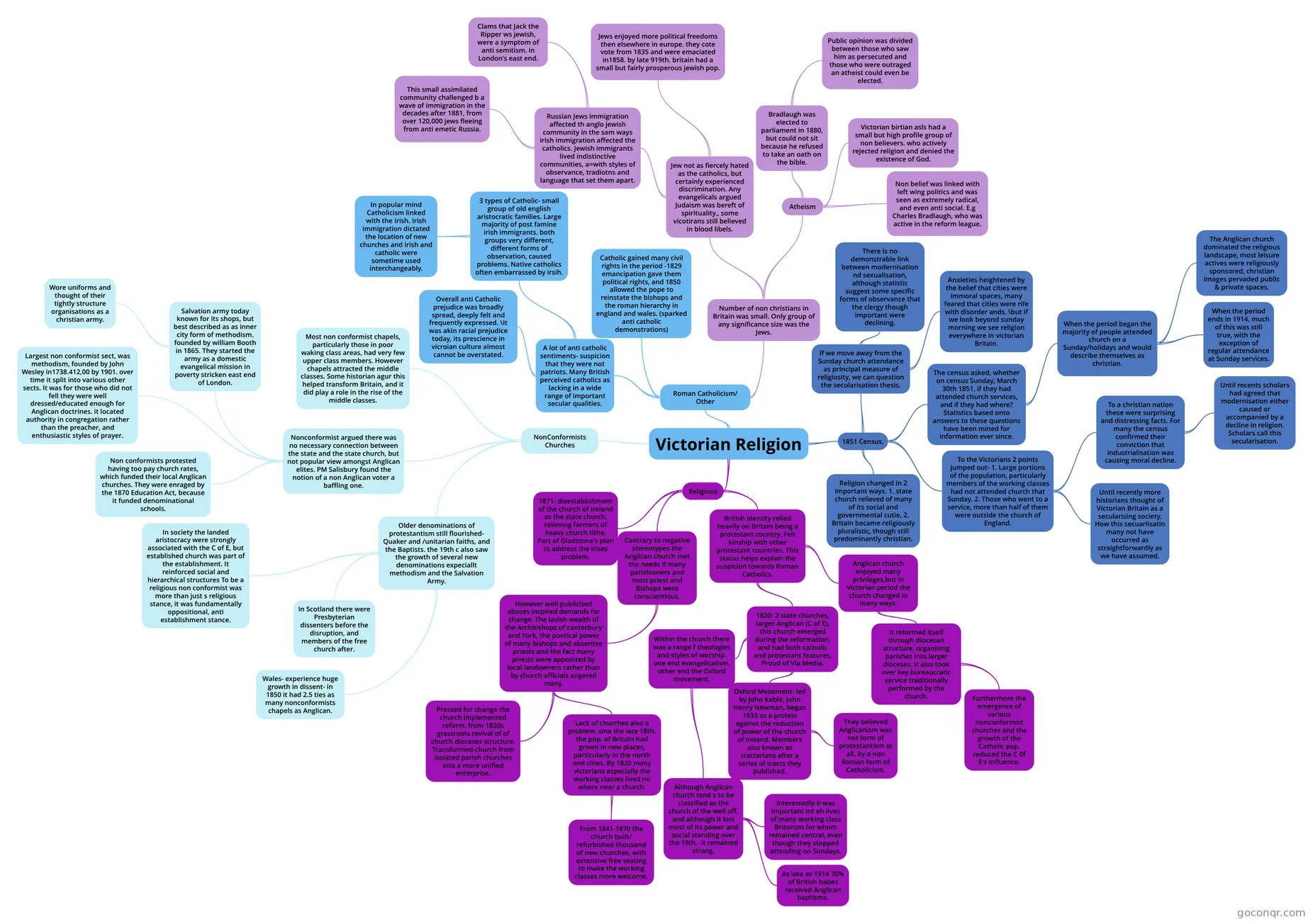 Mind map Victorian Religion
-
25 cardsThe 19th Century The 19th Century I
Mind maps
See all 19 mind maps-
Victorian Era 1860-1890 Victorian Era
-
Poor Law
-
Victorian Britain: 1837 - 1901 -Education -Queen Victoria -Family Unit -Poverty and Class Divide -Industrial Revolution
-
Social Inequality in victorian england charles dickens
-
Victorian Religion
-
Gender and the Victorians
-
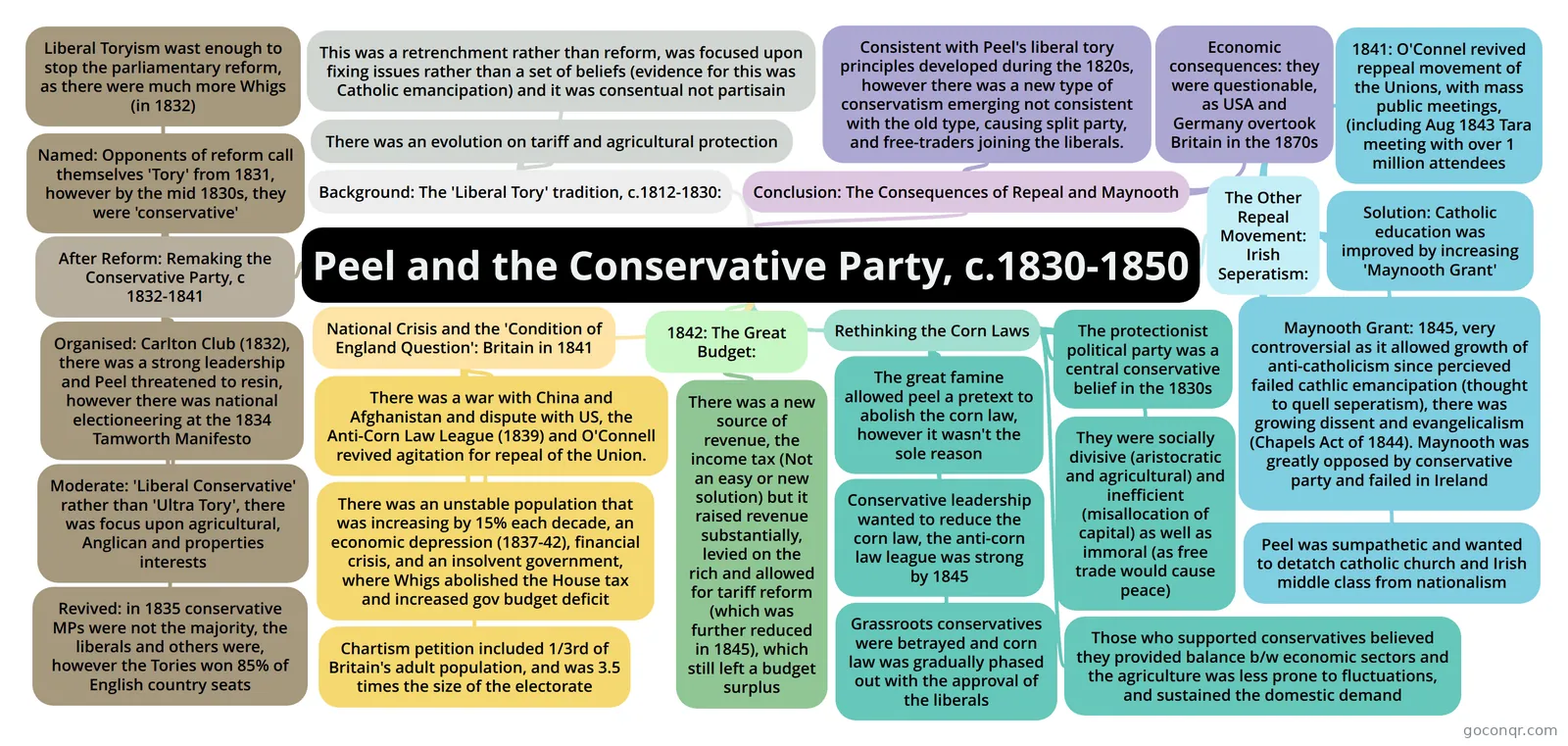 Peel and the Conservative Party, c.1830-1850
-
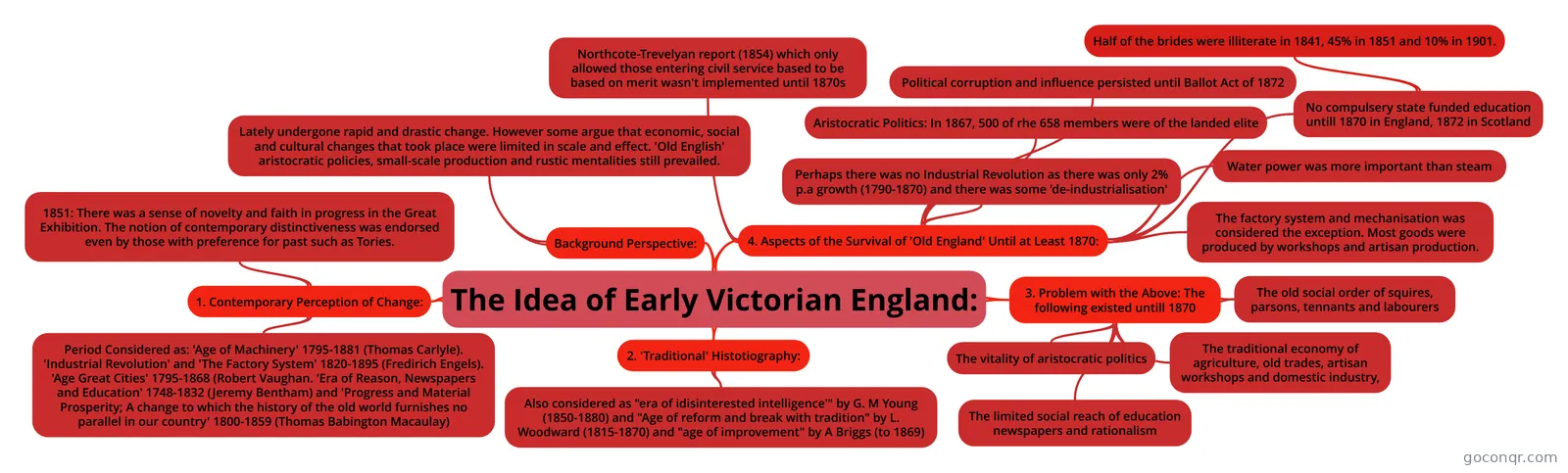 The Idea of Early Victorian England:
Flashcards
-
24 cardsUNIT 4 - 5 TIMELINE: 1840 - 1885 Challenges and consequences: Chartism 1841-58 The triumph of democracy
-
64 cardsDepth Studies Evidence DEPTH STUDY ONE: Early radical reformers (1780-1829)
-
25 cardsThe 19th Century The 19th Century I
-
28 cardsUNIT 1-3 TIMELINE: 1815 - 1840 Representation and Reform
-
15 cardsPoverty and Public Health What was the Poor Law commission replaced by after is was abolished in 1847?
-
4 cardsLichfield House Compact Lichfield House Compact February 1835
Notes
-
19th Century Britain Key Words Whig - Political party in parliament of England. Tory - A member of the conservative party Franchise - The right to vote in public election Radical - Relating to or offering the fundamen...
-
Democratic Reform in Britain Reforming ParliamentIn 1815 Britain was a constitutional monarch w/ parliament and 2 political parties, but was far from democratic. Wealthy nobles and upper class dominated politics. Long standing laws kept many from...
-
What impact did the Poor Law Amendment Act of 1834 have on Britain? Impact of the Poor Law Amendment Act of 1834 (New Poor Law) 1. Who were the 3 new Poor Law Commissioners? What were their backgrounds? Sir Thomas Frankland Lewis - former Tory MP - Captain George Nicholls - self-made ...
-
Social and Economic Reform in Britain A Series of ReformsDuring early - mid 1800s Parliament passed many laws, the most controversial involved free trade (trade between countries without quotas, tariffs, and other restrictions) Britain repealed (canceled)...
-
corn Law reason for Corn Law 1815 Corn Law- guarantee foreign competition would not out beat British wheat growers (causing low prices) if price too low not worth farmers to grow wheat, prices too high the poor could not affor...
-
HISTORY SUFFRAGETTES In the 1800s only rich men allowed to vote. So the women wanted rights to vote too so they set up campaigns for the right to vote. The early campaigners were called suffragists. Millicent Fawcett led a so...
Slides
More History topics
About Victorian Britain
GoConqr OriginalWhat this unit covers
The page brings together material on Victorian society, politics and reform. The mind map Victorian Era 1860-1890 looks at wealth and poverty and describes Victorian Britain as the first urbanised society in the world. The mind map Victorian Britain: 1837 - 1901 covers family, religion, education, poverty and the class divide.
Where to start
- Begin with a broad mind map such as Victorian Era 1860-1890 to get the big picture.
- Move to the flashcard deck on the timeline from 1840 to 1885, which lists dates from the founding of the National Charter Association onwards.
- Choose a theme: the Poor Law, Chartism, parliamentary reform or social inequality.
Key themes in the resources
On poverty, the Poor Law mind map runs from the Elizabethan Poor Law to the Speenhamland system. The flashcards Peel and Social Reform 1832-46 ask why reform was needed. On politics, there are notes and maps on Chartism, the Reform Acts, Gladstone's and Disraeli's ministries and the 1867 Reform Act. Social life is covered by maps on health, prostitution and the changing role of women, plus notes on Drink, Drugs, and the Victorians.
Using quizzes and maps together
Read a map first, then test yourself. The quiz The Victorians and the workhouse pairs well with the Poor Law map, and HY4 1864 Reform Act suits the reform maps. Where a quiz exposes a gap, go back to the matching map or flashcards. Resources mention A-level History and GCSE History, so check them against your own course.
Where it sits
This unit belongs to the strand Revolutions, Industry and Empire in the subject History. Pick a map, take a quiz and see what you remember.
Frequently asked questions
Which resource should I open first?
Start with the mind map Victorian Era 1860-1890 or Victorian Britain: 1837 - 1901. Both give a wide view of wealth, poverty, industry and family life. After that, try the timeline flashcards to fix key dates, then pick a narrower topic such as Chartism.
What do the mind maps cover?
There are over 230 mind maps. They range from the Poor Law and social inequality to Chartism, the Reform Acts, Gladstone's and Disraeli's ministries, Victorian health, urbanisation and the role of women. Each one breaks a topic into short linked points.
Are there quizzes on this page?
Yes, 3 quizzes. They include Contextual Knowledge about Victorian England, The Victorians and the workhouse, and HY4 1864 Reform Act. Use them after reading a map or notes to see which parts you still need to revise.
Which levels and exams do these resources suit?
Most resources are at secondary level, so they suit school students. Some listed resources mention A-level History and GCSE History. A few are aimed at university study. Always check the content against your own course specification.
Are the resources free, and who made them?
Every resource listed here is free to open, study and take, with no account needed. They were made by GoConqr users, not by GoConqr itself. A free account also saves your quiz scores and lets you make your own quizzes, mind maps, flashcards and notes.
What if the topic I need is missing?
Look at related titles first, as topics such as Peel, the Corn Law and Irish policy sit in separate notes and decks. If nothing fits, make your own mind map or flashcards on the gap and use them alongside the community resources.