
Adverbs
604 resources created by 536 users
This Adverbs page on GoConqr gathers community-made mind maps, flashcards, quizzes, slides and notes on adverbs of manner, frequency, time and place, plus position, comparison and adverbials. It's built for school students practising a topic, and for teachers after ready-made material. There are over 500 resources here, including more than 50 quizzes, over 300 mind maps and more than 90 flashcard sets, shared by over 400 contributors. Mostly secondary level. Open a mind map first, then test yourself.
Select topic
- Forming adverbs from adjectives14
- Adverbs of manner82
- Adverbs of frequency204
- Adverbs of time and sequence21
- Already, still, yet and just12
- Adverbs of place5
- Adverbs of degree22
- Sentence adverbs5
- Adverbial phrases and clauses12
- Position of adverbs and adverbials25
- Comparative and superlative adverbs11
- Also, too, either and as well7
Top Adverbs resources
-
6 questionsFrequency Adverbs Exam * Answer questions 1 to 5 taking into account the following text: Camila and her family Camila Lorens lives...
-
28 cardsUNIT 15 Adverbials vs. adverbs
-
Mind map Adverbs
-
Mind map THEME 15: EXPRESSION OF MANNER, MEANS AND INSTRUMENT
-
7 cardsAdverbs of manner Adverbs of manner
-
Mind map Position of Adverbs
-
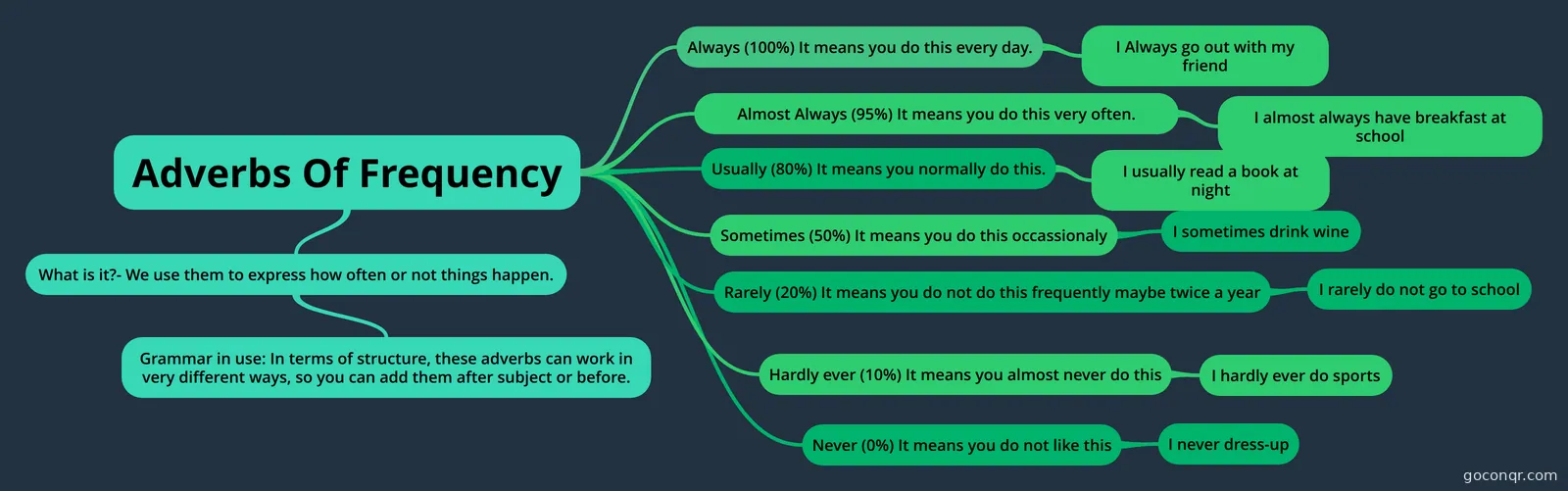 Mind map Adverbs Of Frequency To know each adverb and its percentaje
-
10 questionsAdverbs of frequency What is the right order? (from 100% to 0%)
Quizzes
See all 61 quizzes-
6 questionsFrequency Adverbs Exam * Answer questions 1 to 5 taking into account the following text: Camila and her family Camila Lorens lives...
-
10 questionsAdverbs of frequency What is the right order? (from 100% to 0%)
-
5 questionsAdverbs Replace the prepositional phrase of manner in CAPITALS with an adverb of manner. "Fourno" Lamb: Each year, ...
-
12 questionsUNIT 17
-
13 questionsUNIT 18
-
25 questionsUNIT 25 What is the main function of contingency adverbials?
-
10 questionsAcademic English 11-10 Their complaints have been mostly ignored. Revenue grew by 18 per cent, mostly due to the opening of 33 new...
-
10 questionsAcademic English 12-10 The village has remained basically unchanged for over 300 years. How can you translate “basically” into Rus...
Mind maps
See all 367 mind maps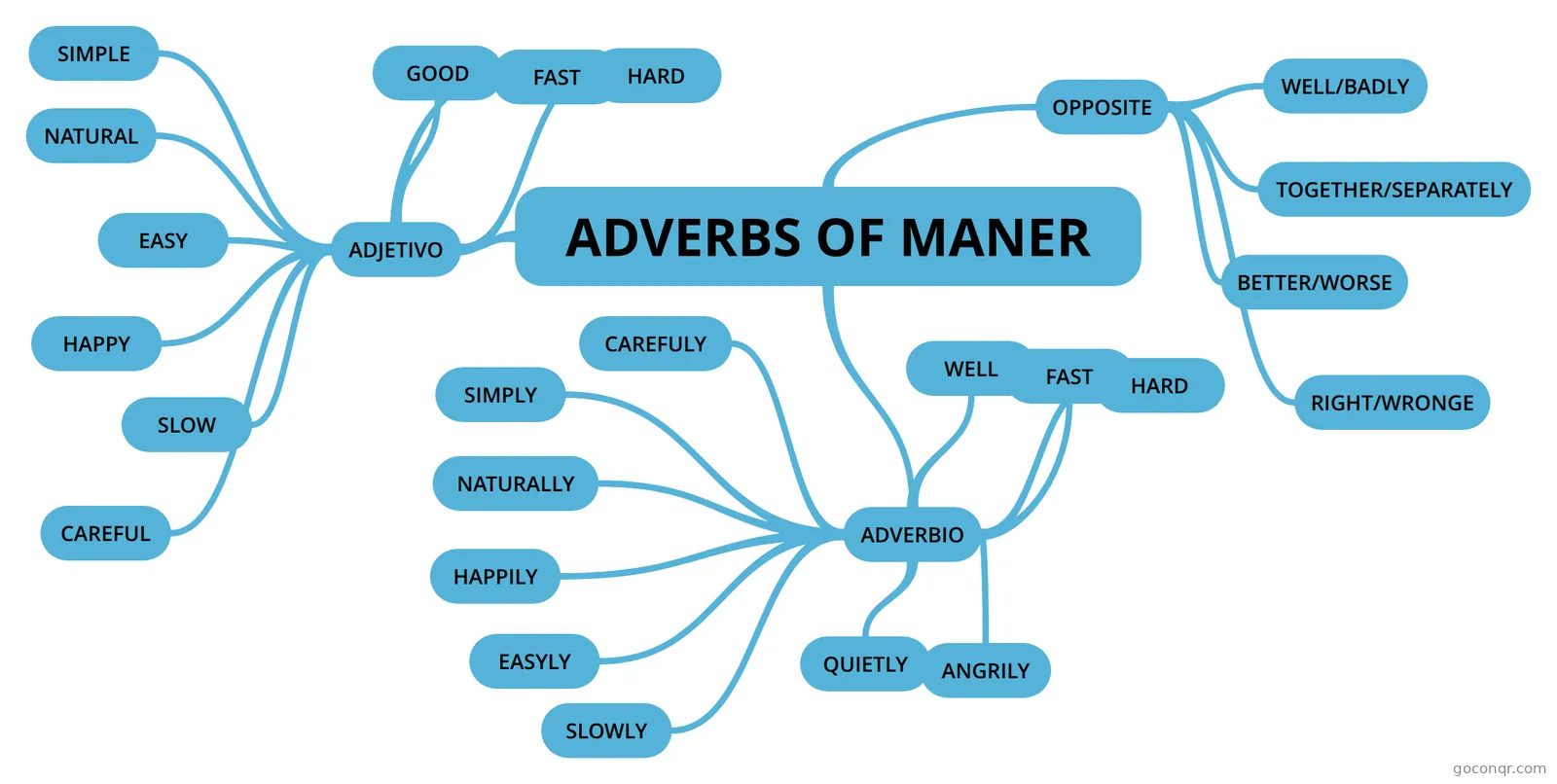


Flashcards
See all 130 flashcards-
28 cardsUNIT 15 Adverbials vs. adverbs
-
7 cardsAdverbs of manner Adverbs of manner
-
11 cardsAdverbs of Frequency Describe your daily activities by making sentences with frequency adverbs.
-
10 cardsAdverbs of Frequency Adverbs of Frequency
-
13 cardsAdverbs of frequency - Les adverbes de fréquence Adverbs of frequency in english for French students
-
4 cardsBasic 1 2.0 Unit 1 - L3
-
5 cardsAdverbs of Time These adverbs of time may help you comprehend them better!
-
8 cardsuso de YET STILL, ALREADY Is it seven o’clock already? (The speaker didn’t expect it to be so late.)
Flowcharts
See all 21 flowchartsNotes
-
Unit 9) Adverbs of Frequency 頻率副詞
-
Already, still or yet? from English Grammar Today Already or yet? We use already to refer to something which has happened or may have happened before the moment of speaking. Already can sometimes suggest surprise on the part of the speaker,...
-
Untitled_1 English GrammarWe use some adverbs to describe how frequently we do an activity. These are called adverbs of frequency and include: Frequency Adverb of Frequency Example Sentence 100% always I always go to bed before ...
-
Untitled_2 We use some adverbs to describe how frequently we do an activity. These are called adverbs of frequency and include: Frequency Adverb of Frequency Example Sentence 100% always I always go to bed before 11pm. 90% usual...
-
frequency adverbs - created from Mind Map seldom Frequently often
-
THE INTI RAYMI - created from Mind Map inti raymi always is a thank you to the sun god the inti raymi usually is celebrated with music and dance the inti raymi never is celebrated in te coast
-
ADVERBS OF FREQUENCY - created from Mind Map ALWAYS SOMETIMES NEVER
Slides
See all 18 slidesTopics in Adverbs
More English language topics
About Adverbs
GoConqr OriginalWhat the page covers
Frequency adverbs make up a large share of this unit. You will find mind maps, flashcard decks, slides, flowcharts and quizzes on how often things happen, from always to never. Alongside them sit resources on adverbs of manner, time and place, and a few on comparing with adverbs.
The mind map Adverbs of Frequency sets out the scale of always, usually and the rest, with a short meaning for each. The Frequency Adverbs mind map gives example sentences such as "I never watch the television."
Where to start
- Begin with the Adverbs mind map, which defines an adverb as a word that adds meaning to verbs, adjectives and other adverbs.
- Move to the Adverbs of manner flashcard deck. It uses the example "She plays piano" to show how a manner adverb tells us how something is done.
- Read the Position of Adverbs mind map. It shows manner adverbs after the verb and, with passive verbs, in mid-position, as in "Mike was seriously injured."
Going further
For a broader view, the mind map on expression of manner, means and instrument covers definition, forms, functions, types, process adverbials, position and comparison. The UNIT 15 flashcard deck looks at adverbials versus adverbs and their semantic types, including space, time and process.
If you are unsure about yet, still and already, there is a flashcard deck and several quizzes on exactly that. Others cover comparing with adverbs.
Using quizzes and maps together
Read a map, then take a quiz on the same point. The Frequency Adverbs Exam asks questions about a short text on Camila and her family, so you practise spotting adverbs in context. When an answer surprises you, go back to the map and check the rule.
Where this unit fits
This unit sits in the strand Grammar: Words and Sentences, within English language. It suits quick revision of one point or a whole run of lessons. Choose one resource today and see how far it takes you.
Frequently asked questions
Which resource should I open first?
Start with the Adverbs mind map for a clear definition and a simple example. Then try the Adverbs of manner flashcard deck, and move on to the Position of Adverbs mind map when you want to know where adverbs go in a sentence.
What do the mind maps cover?
There are over 300 of them. Many deal with adverbs of frequency, from always to never. Others cover adverbs of manner, position in sentences, adverbials, expectation adverbs and the use of rather. One broader map covers definition, forms, functions, types and comparison.
Is there a quiz on frequency adverbs?
Yes, several. The Frequency Adverbs Exam is built around a short text about Camila and her family, with questions to answer from it. Other quizzes cover adverbs of frequency, adverbs of manner, and yet, still and already, so you can choose your focus.
Are the resources free, and who made them?
Every resource listed here is free to open, study and take, with no account needed. They were made by GoConqr users, not by GoConqr itself. A free account also saves your quiz scores and lets you make your own quizzes, maps, flashcards and notes.
Which levels does the page suit?
Most resources are at secondary level, so the page suits school students practising a grammar point. Teachers can use the quizzes, slides and flashcard decks as ready-made classroom material. A small share is aimed at other levels.
What if I cannot find the point I need?
Look through the related topics on the page, such as adverbs of time, adverbs of place, comparative adverbs and adverbials. If your exact point is missing, you can make your own mind map, flashcards or quiz with a free account.