
Daily Routines
176 resources created by 164 users
This Daily Routines page on GoConqr gathers community-made quizzes, mind maps, flashcards, slides and notes, from waking up and getting dressed to household chores and free time activities. It's built for school students and primary pupils practising everyday English, and for teachers after ready-made material. There are over 700 resources here, including more than 60 quizzes, over 360 mind maps and over 290 flashcards, mostly at secondary and primary level. Try a flashcard deck first, then take a quiz.
Top Daily Routines resources
-
10 questionsDAILY ROUTINES, LISTENING ACTIVITY, LESSON 1. KNOW LISA'S DAILY ROUTINES INSTRUCTIONS: Lisa does a lot of activities during the week, do you want to know Lisa's daily routines? let...
-
11 questionsDaily Routine -Skills Development Quiz I brush my theeth at seven fifteen a.m?
-
22 questionsDAILY ROUTINES
-
50 cardsDaily routine 50 routines I perform
-
5 questionsEvents -times and places listening comprehension about events (times, places)
-
50 cardsmy daily routine the daily routine that we all carry out throughout the year
-
Mind map My Daily Routine This is my routine during the week
-
8 questionsDaily Routines and Hobbies Quiz Daily Routines and Hobbies
Quizzes
See all 27 quizzes-
10 questionsDAILY ROUTINES, LISTENING ACTIVITY, LESSON 1. KNOW LISA'S DAILY ROUTINES INSTRUCTIONS: Lisa does a lot of activities during the week, do you want to know Lisa's daily routines? let...
-
11 questionsDaily Routine -Skills Development Quiz I brush my theeth at seven fifteen a.m?
-
22 questionsDAILY ROUTINES
-
5 questionsEvents -times and places listening comprehension about events (times, places)
-
8 questionsDaily Routines and Hobbies Quiz Daily Routines and Hobbies
-
3 questionsquiz fill the blanks quiz
-
15 questionsDaily Routines Read the text entitled "A busy birthday" and select the correct answer in the following 10 questions: First...
-
28 questionsUnit II Match the words and photos Listen and chek
Mind maps
See all 38 mind maps-
My Daily Routine This is my routine during the week
-
my mom's daily routine narración de rutina diaria de un familiar cercano
-
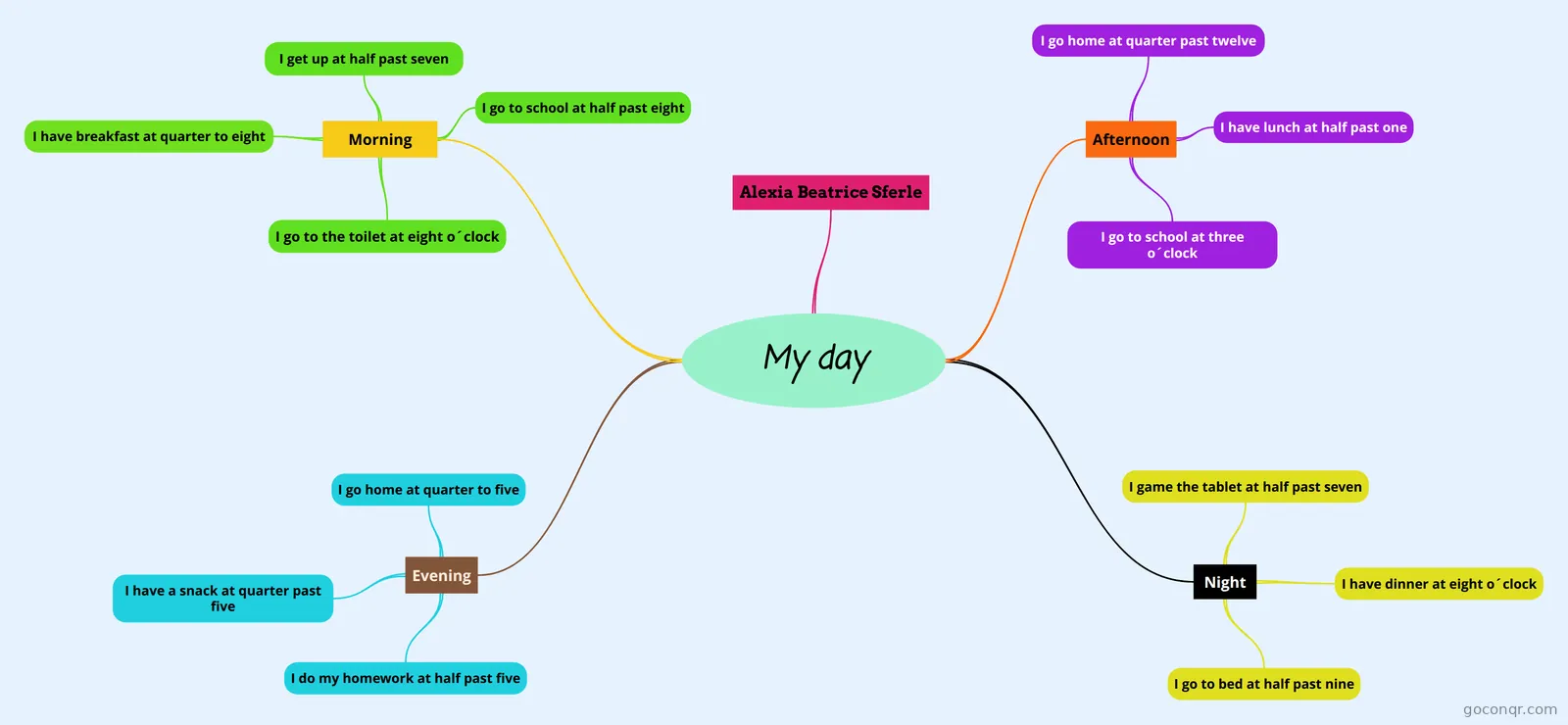 My day
-
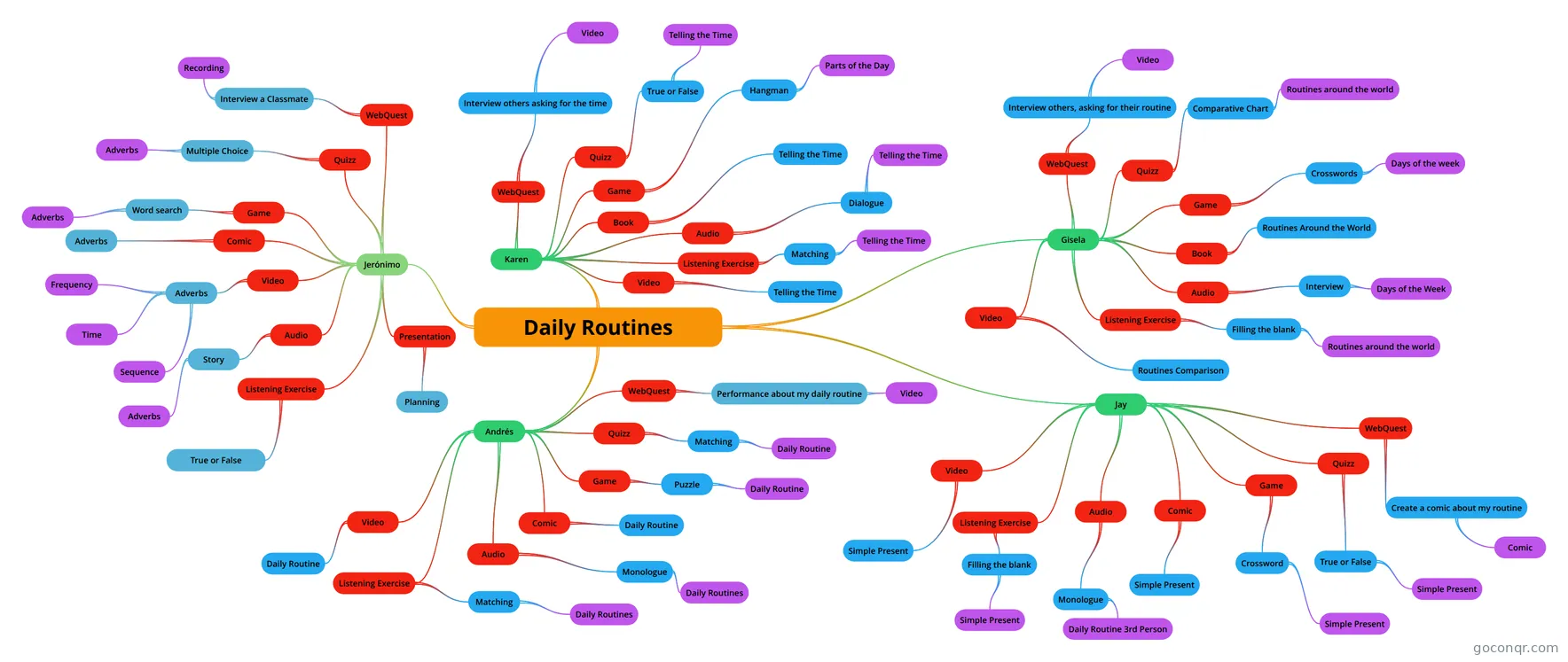 Daily Routines This mind map shows what is our proposal for the Blog of Daily Routines
-
MY DAILY ROUTINE This is my daily routine
-
My Routine Angela Pabon It is my routine...By Angela Pabón
-
YOUR BEST FRIEND’S ROUTINE rutine daily
-
Unit 8. Eating well
Flashcards
See all 98 flashcards-
50 cardsDaily routine 50 routines I perform
-
50 cardsmy daily routine the daily routine that we all carry out throughout the year
-
11 cardsInter 1.2 - Unit 02 - Lesson 03 THE ACTIVITIES THAT CONSTITUTE A PERSON'S ROUTINE
-
14 cardsAction Verbs I Students will check the following action verbs related to daily actions. They will review each of the follo...
-
27 cardsDAILY ROUTINES and FREE TIME ACTIVITIES
-
27 cardsDaily Habits
-
18 cardsDAILY ROUTINES CLASS 2
-
18 cardsDaily Routines (Rutinas Diarias) [FlashCards (tarjetas de aprendizaje) relacionadas con la rutina diaria del ser humano] ¡Espero Les Guste!
Flowcharts
Notes
-
Sample Daily Routine My Daily Routine Some of my friends think I have a boring daily routine, but I like it. I usually get up at about 6:00 or 6:30 in the morning, After my alarm clock wakes me up. First, I brush my teeth, and shave, and ...
-
READING I get up early and get dressed. I usually wear jeans because we do not have a uniform. Then I have cereal for breakfast. School starts at nine. Monday is my favorite day because we have Ge...
Slides
See all 10 slidesMore English language topics
About Daily Routines
GoConqr OriginalWhat this unit covers
This page sits in the Topic Vocabulary strand of English language. It is all about the words and sentences people use to describe a normal day. Many flashcard decks list the same core actions: get up, have breakfast, get dressed, go to school, have lunch, do homework and go to bed. Others stretch into free time, personal hygiene, household chores and eating well.
Where to start
Begin with vocabulary. The deck called Daily Routines and Free Time Activities adds items such as brush one's hair and make the bed. Daily routines 4th Grade and My Daily Routine Story offer shorter, simpler sequences that follow a day in order. Go through a deck once, then say each phrase aloud in a full sentence.
Moving on to quizzes
Quizzes come next. The fill-in-the-gap quiz Daily Routines asks you to complete lines such as "I ______ at 7.00" and to answer questions like "Does he ride a bike?" and "What does he do?". Daily Routines and Hobbies Quiz adds work habits and newspapers at breakfast. For listening practice, try the activity that introduces Lisa's week, then the listening quizzes about Harry's routine and Seamus.
Using maps and slides
The mind maps are mostly called My Daily Routine or similar. They show how one person lays out a day, so they are good for planning your own description. Compare two or three before you write. Slide sets such as A day in my life and Daily Routine Verbs suit a classroom walk-through, and teachers can use them as they are.
Next steps
Work in this order: a deck, a gap-fill quiz, a listening quiz, then a map of your own day. If a topic is missing, make your own set and keep it with your study materials.
Frequently asked questions
Which resource should I open first?
Start with a flashcard deck, such as Daily Routines and Free Time Activities or Daily routines 4th Grade. They give you the key verbs in the order of a normal day. Once the phrases feel familiar, move on to the gap-fill quiz called Daily Routines.
Is there listening practice?
Yes. The quiz on Lisa's daily routines asks you to listen and then choose the correct answer for each question. There are also listening quizzes about Harry's routine and a video comprehension quiz about Seamus. They work well after you have learned the vocabulary.
What do the mind maps cover?
Most of the mind maps are personal accounts titled My Daily Routine or close variants. Others widen the topic, including Everyday life, Lifestyle, Things that I do on weekdays and things that I do at the weekends. Use them as models for describing your own day.
Are the resources free to use?
Yes. Every resource on this page is free to open, study and take, with no account needed. They were made by GoConqr users, not by GoConqr. A free account also saves your quiz scores and lets you create your own quizzes, maps, flashcards and notes.
Who are these resources for?
They suit school students and primary pupils learning to talk about their day in English, with about two thirds at secondary level and a third at primary. Teachers can also use the slide sets, quizzes and decks as ready-made classroom material.
What if the exact topic I need is missing?
Look at nearby resources first. Household chores, hygiene, eating well and weekend activities have their own decks, quizzes or maps. If nothing fits, you can build your own flashcards or mind map around the verbs you need.