
Game Design and Development mind maps
505 mind maps by 454 users · Page 1 of 13
This page gathers game design and development mind maps, from game concepts and visual styles to gamification and clicker projects. School students, university students and professional candidates can use them to explore design ideas, while teachers can find material to share. There are over 460 maps by more than 410 users. Pick a map that interests you and start exploring.
Select topic
- Game Genres and Platforms13
- Game Design Elements and Frameworks30
- Gamification20
- Game Research and Evaluation6
- Game Concepts and Ideas73
- Game Project Planning and Documentation37
- Game World and Level Design7
- Game Mechanics and Interaction6
- Clicker Games69
- Text-Based Adventure Games22
- Arcade and Platform Games10
- Game Programming and Engines14
Mind maps
-
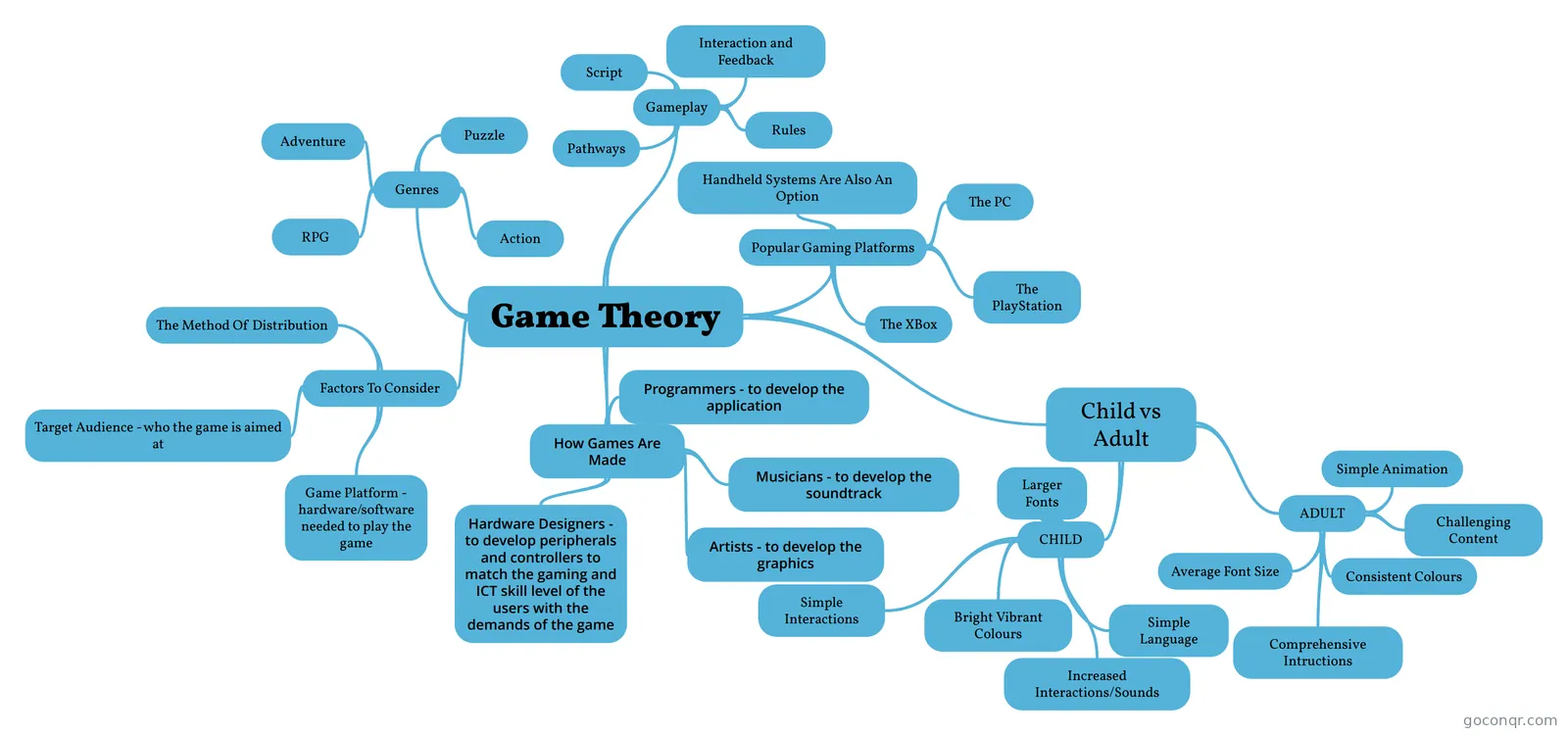 Game Theory
-
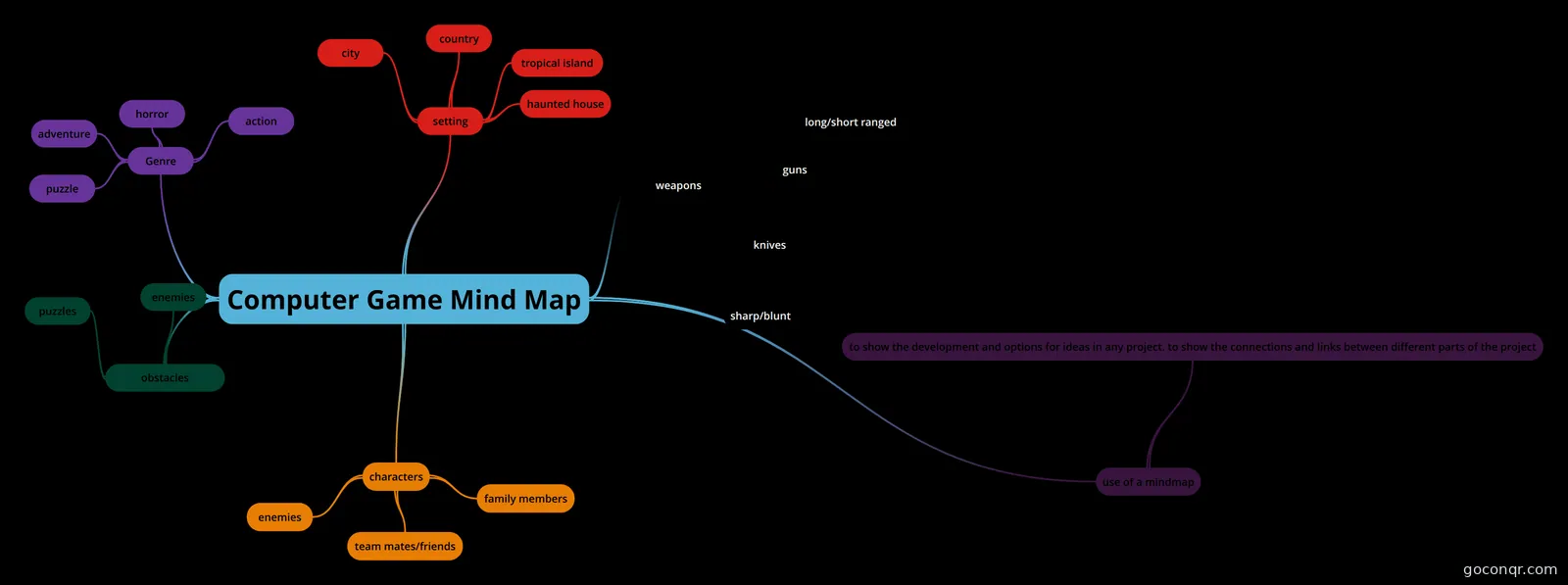 Computer Game Mind Map mind map and the use of a mind map
-
Text based story game
-
My Clicker Game
-
Existing idle clicker games
-
Getting Gamification Right: 22 Best Practices
-
Getting Gamification Right - 22 Best Practices
-
My Clicker Game
-
INTRODUCTION TO GAMIFICATION
-
INTRODUCTION TO GAMIFICATION
-
Game Concept
-
Surface Bound – A return to classic, story-driven gaming
-
Digital solutions
-
clicker games
-
Item 2
-
Croissant Clicker
-
Year 9 Term 4
-
The Community Game
-
GAMIFICATION
-
Getting Gamification Right: 22 best practices
-
GAME
-
GAME DESIGN CONCEPT
-
GETTING GAMIFICATION RIGHT
-
Introduction to GAMIFICATION
-
DigiTech Assignment Y10T1
-
Cookie Clicker
-
2D Game Ideas
-
Untitled
-
Existing Clicker Games
-
iHEARu-PLAY Introducing a game for crowdsourced data collection for affective computing iHEARu-PLAY Introducing a game for crowdsourced data collection for affective computing
-
Clicker Games
-
Imedia - Video game proposal
-
INTRODUCTION TO GAMIFICATION
-
INTRODUCTION TO GAMIFICATION
-
Clicker Game
-
Gamification
-
INTRODUCTION TO GAMIFICATION
-
Super Grappler Bros
-
MDA: A Formal Approach to Game Design and Game Research
-
Up to It
More Game Design and Development resources
About game design and development mind maps
GoConqr OriginalExplore game design and development mind maps
The maps bring together ideas for planning games and thinking about how they work. Imedia - Video game proposal branches into settings and possible environments, while 2D Game Ideas compares visual styles. Other maps explore gamification, game concepts and clicker projects.
Choose a starting point
For a project-focused route, open the video game proposal and follow its branches about player choice and environments. Then look at Existing Clicker Games alongside My Clicker Game to explore maps with different project starting points. If you are interested in design frameworks, try the map on the formal approach to game design and research.
Use the maps to revise
Read a branch, cover it, and write down the ideas you remember before checking the map again. Compare related maps to see how their creators organise a topic. When you want a different way to practise, switch to a quiz or flashcards on the unit page. Choose a map and make your own notes from it.
Frequently asked questions
Which mind map could I start with for a game project?
Try Imedia - Video game proposal if you want to explore how a project can be organised. Its branches include settings, player choice and possible environments. You could then look at 2D Game Ideas for a different view of the visual choices involved in a project.
Are these mind maps free to use?
Yes. Every resource listed here is free to open and study without an account. The maps were made by GoConqr users. A free account also lets you save quiz scores and make your own quizzes, mind maps, flashcards and notes.
What kinds of game ideas do the maps cover?
The page includes maps on game characteristics, development roles, visual styles and gamification. It also lists project maps such as The Community Game, Super Grappler Bros and Cookie Clicker. Browse the titles to find a map that matches the idea you want to investigate.
Who are these mind maps for?
The collection is mainly suited to school students, with resources also for university students and professional candidates. Teachers can browse the maps for material to share. The listed resources mention GCSE Computer Science, and the range of topics lets you choose a map for the idea you are exploring.