
Research Methods and Experimental Design
186 resources created by 164 users
This Research Methods and Experimental Design page on GoConqr gathers community-made quizzes, mind maps, flashcards and notes, from sampling methods and types of data to factorial designs, correlations and inferential tests. It's built for university students and professional candidates, school students, and teachers after ready-made material. There are over 180 resources here, including more than 30 quizzes and over 70 mind maps, made by more than 150 contributors. Pick a topic, try a quiz to find your gaps, then build your own revision set.
Select topic
- Scientific Method and Research Process10
- Types of Research Studies8
- Sampling Methods25
- Variables in Research14
- Types of Data and Levels of Measurement15
- Validity, Reliability and Bias16
- Experimental Design Principles and Controls9
- Factorial and Repeated-Measures Designs12
- Descriptive Statistics and Data Presentation8
- Correlation and Regression8
- Inferential Statistics and Hypothesis Testing19
Top Research Methods and Experimental Design resources
-
14 questionsFactorial Designs What makes a factorial design?
-
76 cardsStatistics Why we need a replicated trial? Why is the unreplicated trial not good to apply in the statistical test?
-
97 questionsExperimental Design Test 3 What is the difference between a 2-factor CRD and a 1-way CRD?
-
87 questionsAdvanced Stats You have decided to investigate the following research hypothesis: “Consumption of carbohydrates induces dr...
-
47 questionsPsychological Research Methods Exam practice The WAIS intelligence quotient (IQ) is normally distributed with a mean of 100 and a standard deviation of ...
-
58 cardsHRSS THEORY EOS What are Cross-sectional study design features?
-
60 cardsquiz2
-
26 cardssample exam statistics 1. In plant breeding, especially in the later phases of a breeding program, trials with breeding material (...
Quizzes
See all 34 quizzes-
14 questionsFactorial Designs What makes a factorial design?
-
97 questionsExperimental Design Test 3 What is the difference between a 2-factor CRD and a 1-way CRD?
-
87 questionsAdvanced Stats You have decided to investigate the following research hypothesis: “Consumption of carbohydrates induces dr...
-
47 questionsPsychological Research Methods Exam practice The WAIS intelligence quotient (IQ) is normally distributed with a mean of 100 and a standard deviation of ...
-
20 questionsChapter 5 An experiment was designed using school children as subjects to determine whether milk prevented their catc...
-
46 questionsCorrelational designs and regression
-
37 questionsStatistics Semester 2 (11-15) what is meant by the term deontological ethics?
-
18 questionsResearch Design and Statistics An experiment is conducted on the effects of consuming caffeine on how well a student performs on a maths t...
Mind maps
See all 74 mind maps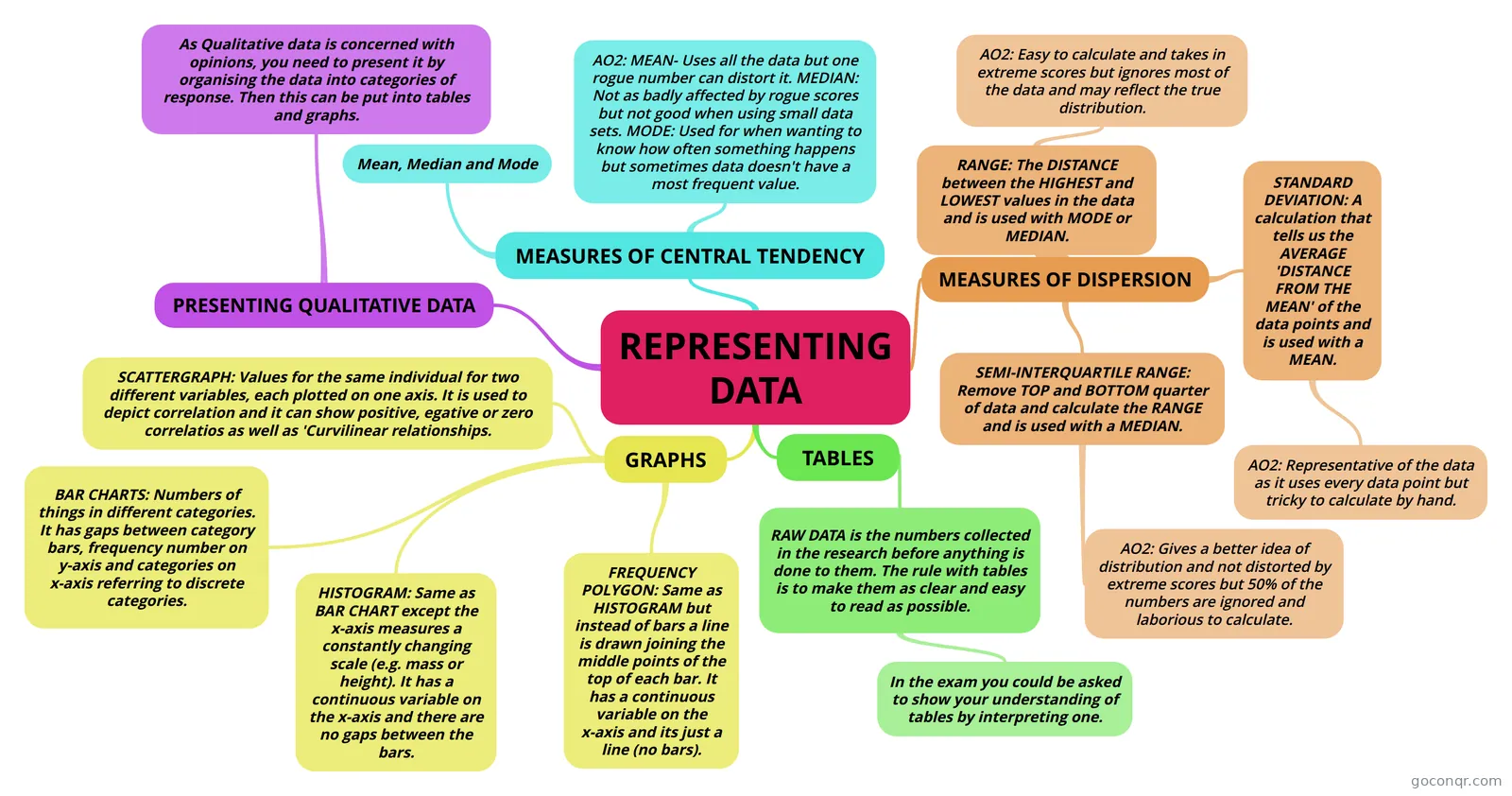
Flashcards
See all 67 flashcards-
76 cardsStatistics Why we need a replicated trial? Why is the unreplicated trial not good to apply in the statistical test?
-
58 cardsHRSS THEORY EOS What are Cross-sectional study design features?
-
60 cardsquiz2
-
26 cardssample exam statistics 1. In plant breeding, especially in the later phases of a breeding program, trials with breeding material (...
-
99 cardsUntitled
-
64 cardsstats-test one
-
12 cardsUntitled The above representation is of an experimental design that would require which statistic, and why:
-
20 cardsStats
Flowcharts
Notes
-
3003PSY Stats Notes Week 1 CHARACTERISTICS OF GOOD PSYCHOLOGICAL RESEARCH Guided by theory Standardised procedures Generalisable- internal and external validity Reliable Uses multiple methods including experimental, correlational and des...
-
Quantitative Analysis - creado desde un Mapa Mental 1. Prepare the data for analysis 2. Data analysis 3. Report the results
-
Statistics - created from Mind Map Types of data Descriptive statistics Inferential statistics
-
Untitled Chapter 3: Experiments with a Single Factor: The Analysis of Variance What If There Are More Than Two Factor Levels? The t-test does not directly apply The analysis of variance (ANOVA) is the appropr...
-
Research Results Research Results: Scales of measurement: nominal, ordinal, interval and ratioDetermines what type of statistical test you would usecomparing group percentages:yes or no situationsdo males and females differs in liking...
-
Confounding Factors - created from Mind Map Hygiene Practices Incidence of Diarrhea among Children Type of Residence
Slides
Topics in Research Methods and Experimental Design
More Statistics and probability topics
About Research Methods and Experimental Design
GoConqr OriginalWhat this unit covers
This unit sits in the Statistical Investigation and Data Collection strand of Statistics and probability. The resources look at how studies are planned, how samples are chosen and how results are analysed.
- Sampling: several mind maps on sampling methods, including stratified sampling, which involves picking people from different groups within the population. There is also a mind map on non-probability sampling.
- Design: mind maps on experimental design and observational study designs, plus flashcards on factorial designs and repeated-measures designs.
- Analysis: flashcards on inferential statistics, significance levels, t tests and F tests.
Where to start
Begin with the mind maps on sampling and types of data. They give you the vocabulary quickly. Then move to the mind map on experimental design and the one on observational study designs, so you can compare the two approaches side by side.
Next, work through the flashcard decks on variables and levels of measurement. The deck on bias, confounding and double blinding is useful once you know the basic designs.
Using quizzes and maps together
Read a mind map first, then test yourself. The Factorial Designs quiz asks what makes a factorial design, what it can assess and when an interaction occurs. Try it after the factorial designs flashcards. If you get a question wrong, go back to the matching map branch and read it again.
Other quizzes, such as Experimental Design and Research Methods Quiz, suit a broader check before an exam. Some resources mention A-level Psychology and AP Statistics, so they may suit those courses.
Going further
The longer notes, such as the 3003PSY Stats Notes, run week by week and cover the characteristics of good psychological research. They suit university students who want a full pass through the topic.
When you are ready, choose one topic, take a quiz, and then make your own maps and flashcards from what you missed.
Frequently asked questions
Which resource should I open first?
Start with a mind map on sampling methods or types of data, as they set out the key terms in a short space. After that, try the Factorial Designs quiz or the flashcards on variables and types of data to see what has stuck.
What do the mind maps cover?
Over 70 mind maps look at sampling, types of data, correlations, research bias, inferential statistics, and experimental and observational designs. One covers cohort studies with a binary exposure. They are a quick way to see how each topic fits together before you test yourself.
Are the resources free to use?
Yes. Every resource listed here is free to open, study and take, with no account needed. A free account also saves your quiz scores and lets you make your own quizzes, mind maps, flashcards and notes.
Which levels and exams do these resources suit?
Most of the material is aimed at university students, with a smaller share at secondary level. Some resources mention A-level Psychology and AP Statistics. Check each resource's content against your own course, since the community made them and they vary in depth.
Who made these resources?
They were made by GoConqr users, not by GoConqr itself. More than 150 contributors have added quizzes, flashcards, maps and notes here. Because of that, styles differ, so it helps to compare two or three resources on the same topic.
Is there anything for revising factorial designs?
Yes. There is a Factorial Designs quiz covering what makes a factorial design, what it can assess and its advantages. There is also a flashcard deck on factorial designs and another on repeated-measures designs, which work well alongside it.