
Islamic Civilization and Empires
60 resources created by 54 users
This Islamic Civilization and Empires page on GoConqr gathers community-made mind maps, flashcards, quizzes and notes, from the rise of Islam and the early caliphates to the Abbasids and the Ottomans. It's built for school students revising a topic and teachers after ready-made material. There are over 900 resources here, including more than 30 quizzes, over 800 mind maps and more than 70 flashcard decks, with some AP World History material. Pick a mind map to get your bearings, then try a quiz.
Top Islamic Civilization and Empires resources
-
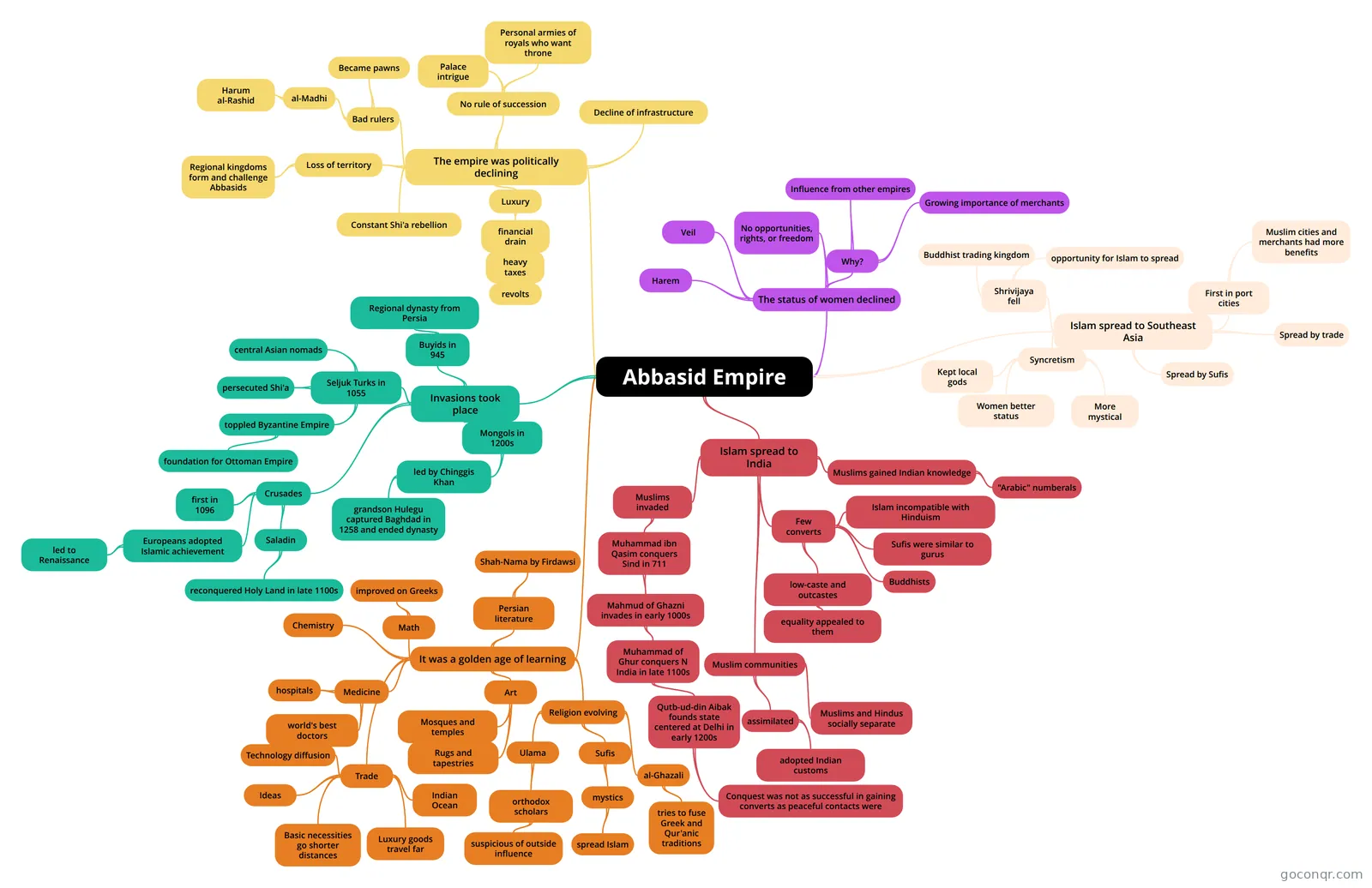 Mind map Abbasid Empire
-
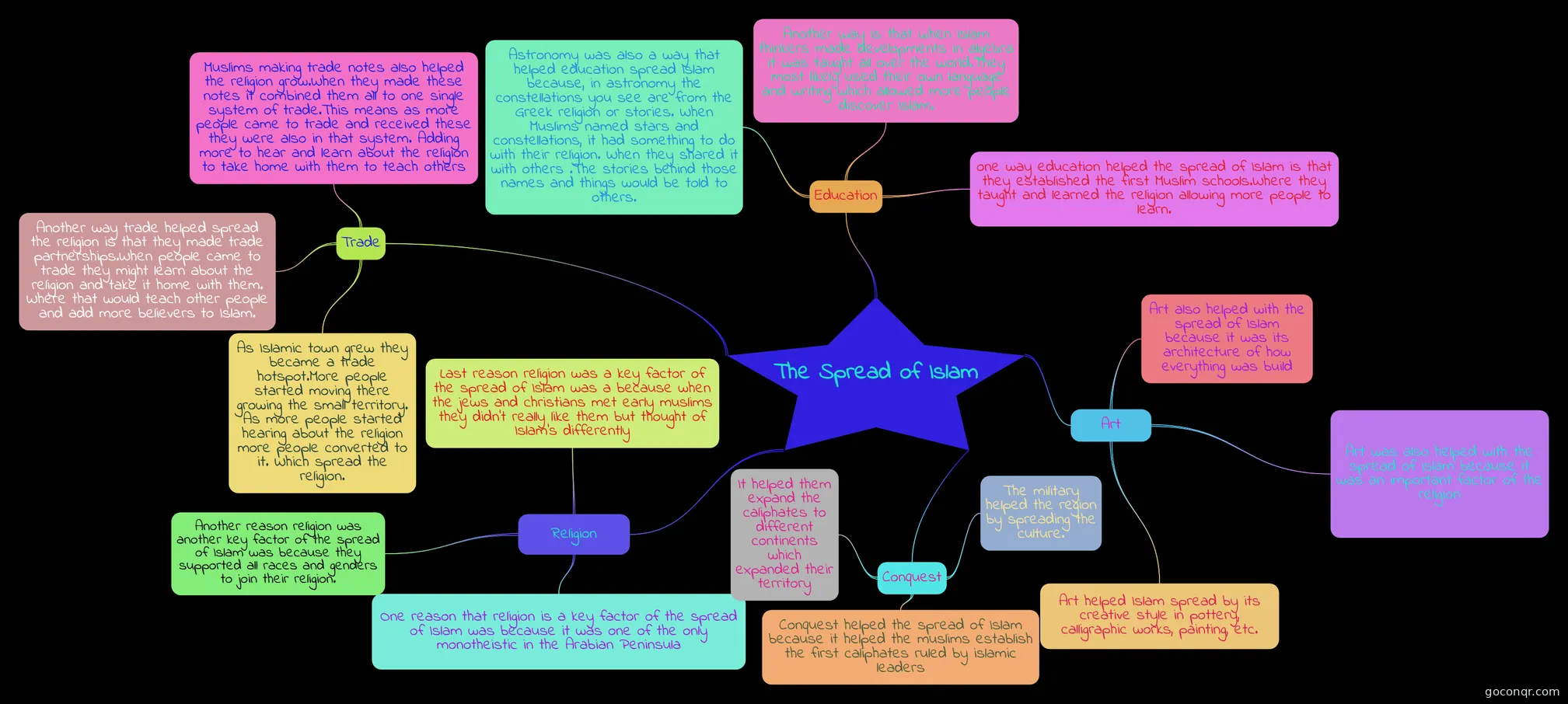 Mind map The Spread of Islam for islam spread of islam
-
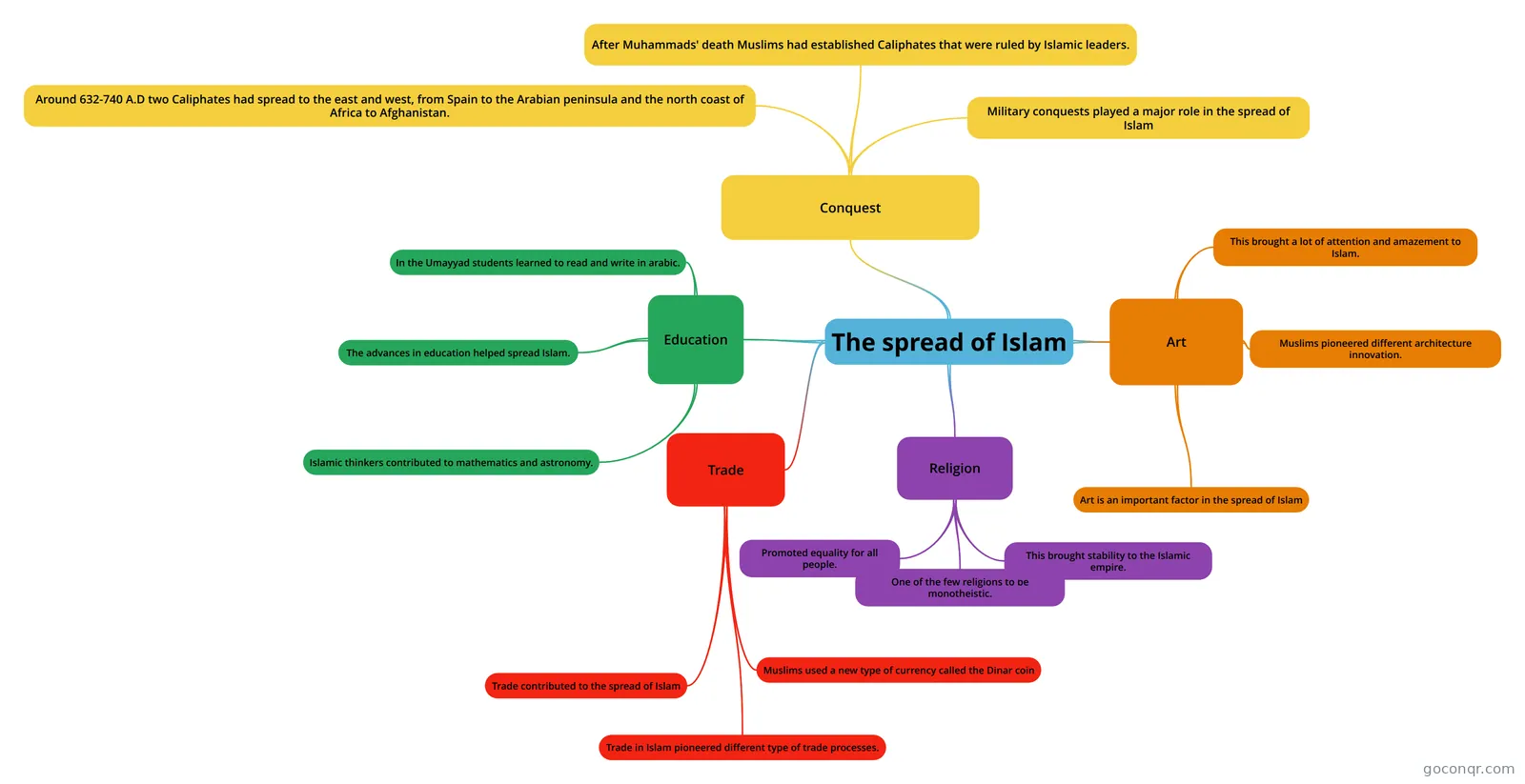
Mind map The Spread Of Islam The Spread Of Islam
-
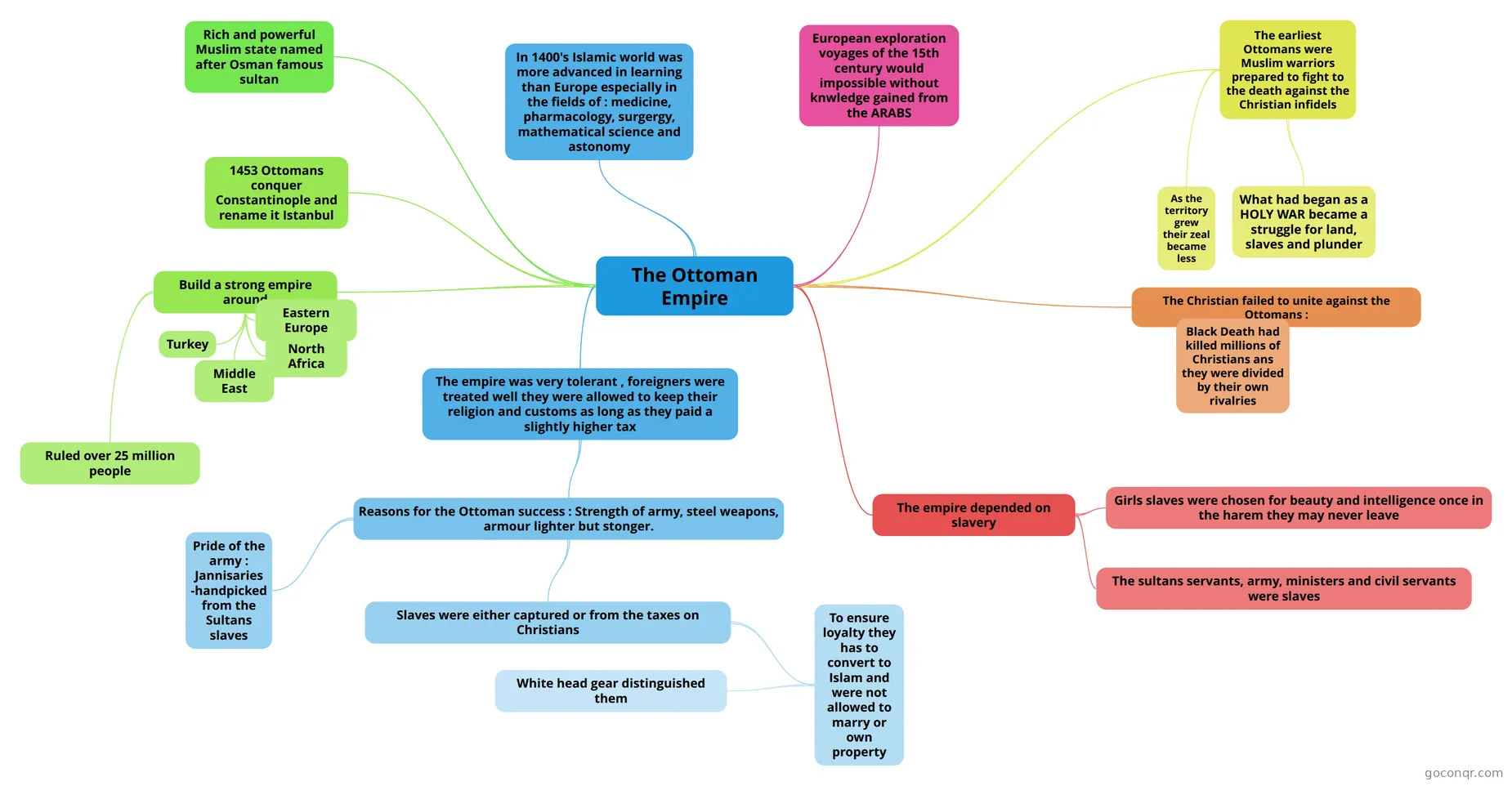 Mind map The Ottoman Empire
-
Mind map ISLAMIC EMPIRE
-
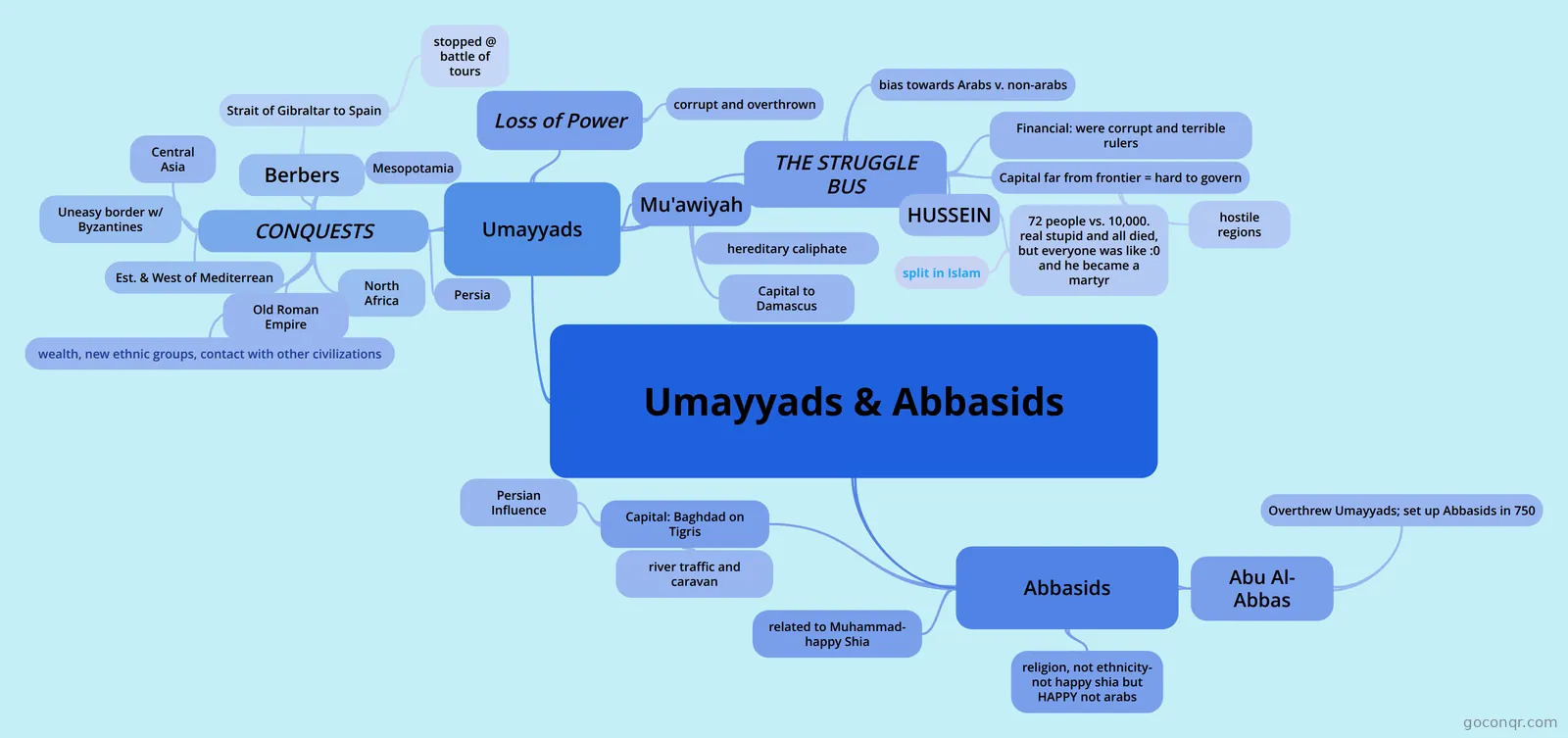 Mind map Umayyads & Abbasids For test 10/16
-
8 cardsWorld History Ch. 10.2 Islam Expands Vocabulary from "World History: Patterns of Interaction"
-
10 cardsWorld History Ch. 10.1 The Rise of Islam Vocabulary from "World History: Patterns of Interaction"
Quizzes
Mind maps
See all 37 mind maps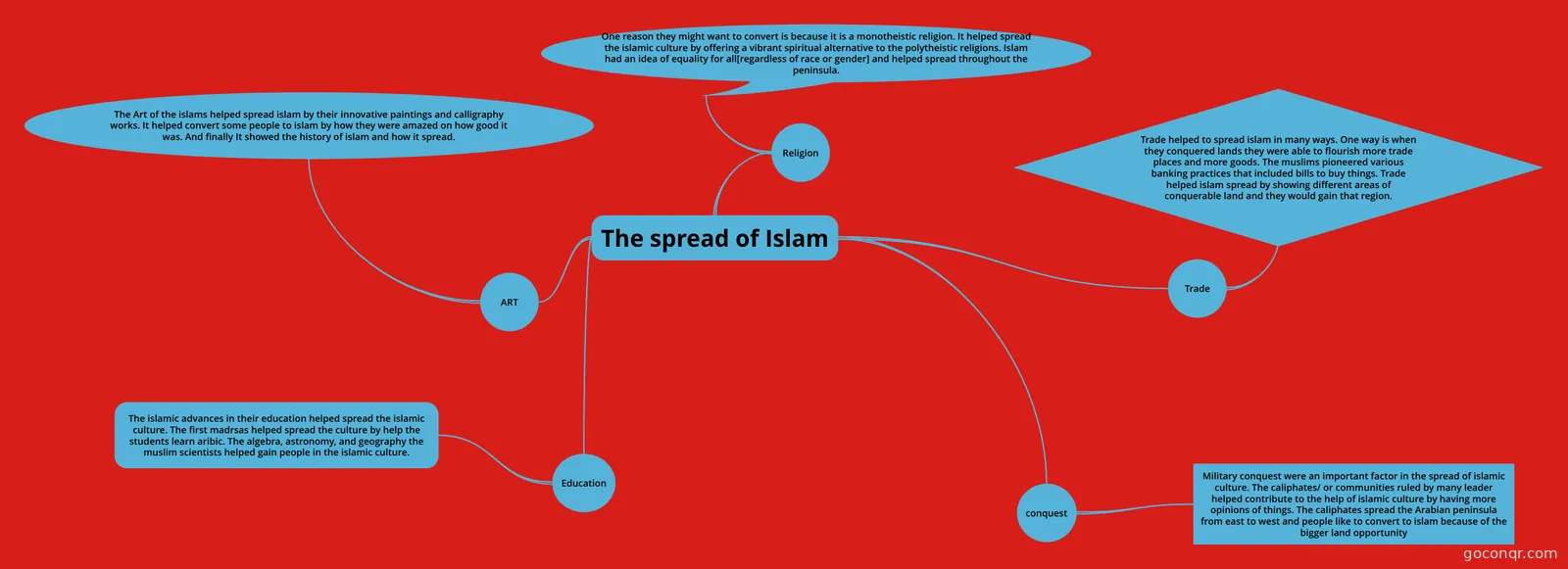
Flashcards
See all 16 flashcards-
8 cardsWorld History Ch. 10.2 Islam Expands Vocabulary from "World History: Patterns of Interaction"
-
10 cardsWorld History Ch. 10.1 The Rise of Islam Vocabulary from "World History: Patterns of Interaction"
-
19 cardsIslamic Civilization - Chapter 3 Bill's Socials
-
34 cardsGLOSSARY ISLAM
-
25 cardsHistory: Textbook Pg 170-175 What are the explanations for the success of the Arab Muslim armies?
-
36 cardsIslam - Muhammad ( muhammad, islam, religion, convert, makkah, etc)
-
8 cardsMuhammad* & Islam: The role of the individual-Pg 162&163 -The messages of God to Muhammad* were collected together in the Quran
-
35 cardsgeog ch4 TEST Who is Abu Bakr
Notes
-
Structure of Islamic Society * Caliph: the first leader of the Islamic empire. They were both the political and religious leader. Sultan: the Muslim's supreme leader. Very important symbolic person. New Page
-
Midterm Review Notes Hist 55 Midterm Review Structure of Exam IDs (four or five with choice out of 8): emphasis on significance of event/person/institution 1 essay (choice out of 2) that will reflect on a key shift or transition and requi...
-
Human Heritage: The Spread of Islam The Spread of Islam: The Arabian peninsula was located between northeast coast of Africa and central Asia. The people who live there were known as Arabs, most of them were Bedouins (herders who roamed he desert lookin...
-
Ottoman and the Turks Ottoman forces brought cannons to attack the Byzantine empire. The defenders had a chain across the harbor in order to protect the invasion from the sea. The Turks launched their ships into the harbor. Then the Turks ...
More History topics
About Islamic Civilization and Empires
GoConqr OriginalWhat the page covers
The page follows Islamic history from its beginnings to the later empires. Early items cover Arabia before Islam, such as the mind maps Pre-Islamic Arabia and Makkah before Muhammad, and the life of the Prophet. Next come the caliphates, including Four Rightly Guided Caliphs, and the Umayyad and Abbasid dynasties. The Ottomans and the gunpowder empires come later.
Where to start
Begin with the mind map The Spread Of Islam. It explains that Islam spread mainly through conquest and that, after Muhammad died, leaders called caliphs ruled separate groups. Then open Umayyads & Abbasids. It covers Mu'awiyah, the hereditary caliphate, the capital at Damascus and conquests across North Africa.
The Abbasid Empire mind map follows on. It notes a golden age of learning, the spread of Islam to India and Southeast Asia, and later political decline and invasions. For the Ottomans, try The Ottoman Empire, which names Osman and the capture of Constantinople, now Istanbul.
Using maps, flashcards and quizzes together
- Read a mind map to see how the ideas connect.
- Go through a flashcard deck for key terms. World History Ch. 10.1 The Rise of Islam covers Muhammad, Hijrah, the Qur'an and Shari'a. World History Ch. 10.2 Islam Expands covers caliph, Sunni, Shi'a and Sufi.
- Take a quiz, such as Islam Map Quiz or Trade and the Islamic World, and note what you missed.
- Go back to the map for those gaps.
If you are working towards AP World History, the deck AP World HIstory-Ottoman Empire 1700-1914 is a useful place to look.
Where it sits
This unit belongs to the strand The Medieval World in the subject History. Teachers can use the notes, slides and maps as ready-made starting points for lessons.
When you are ready, pick one resource, work through it, and then make a map or deck of your own.
Frequently asked questions
Which resource should I open first?
Start with the mind map The Spread Of Islam. It gives a clear overview of how Islam spread, including conquest and the role of caliphs. Then move on to Umayyads & Abbasids and the Abbasid Empire map, which add the dynasties and the golden age of learning.
What do the Ottoman resources cover?
The Ottoman mind maps cover the empire named after Osman, the capture of Constantinople and its renaming as Istanbul, and the territory the Ottomans built up. There are also flashcard decks on Ottoman Empire Expansion and Ottoman Decline, plus a deck on the gunpowder empires.
Are there resources for AP World History?
Yes. The page lists flashcards titled ap world history Islam and AP World HIstory-Ottoman Empire 1700-1914. Most of the material is made for school students, so it also suits general revision of Islamic history. Check each resource against your own course.
Can I use the resources for free?
Yes. Every resource on this page is free to open, study and take, with no account needed. They were made by GoConqr users rather than by GoConqr itself. A free account also saves your quiz scores and lets you make your own quizzes, mind maps, flashcards and notes.
What can I do with the quizzes?
Quizzes are a quick way to find gaps. Try Islam Map Quiz, Trade and the Islamic World or Spread of Islam and Africa after reading a mind map. Whatever you get wrong shows what to revisit in the maps or flashcards.
What if the topic I need is missing?
Look through the related maps, notes and flashcards first, since similar topics are often covered under other titles. If you still cannot find it, you can build your own mind map, flashcards or notes with a free account and use them for revision.