
Mechanisms and Mechanical Systems
12 resources created by 12 users
This Mechanisms and Mechanical Systems page on GoConqr gathers community-made mind maps, flashcards, quizzes and notes, from levers and gears to cams, linkages and animatronics. It's built for school students revising Design and technology, and for teachers after ready-made material. There are over 160 resources here, including more than 140 mind maps, 15 flashcards decks' worth of revision prompts and 2 quizzes, all made by more than 100 contributors. Pick a map, then test yourself with a quiz.
Top Mechanisms and Mechanical Systems resources
-
44 cardsEngineering- Mechanical/structural/pnuematic systems 8 Flashcards on Engineering- Mechanical/structural/pnuematic systems, created by AsimAli Rehman on 02/11/2019.
-
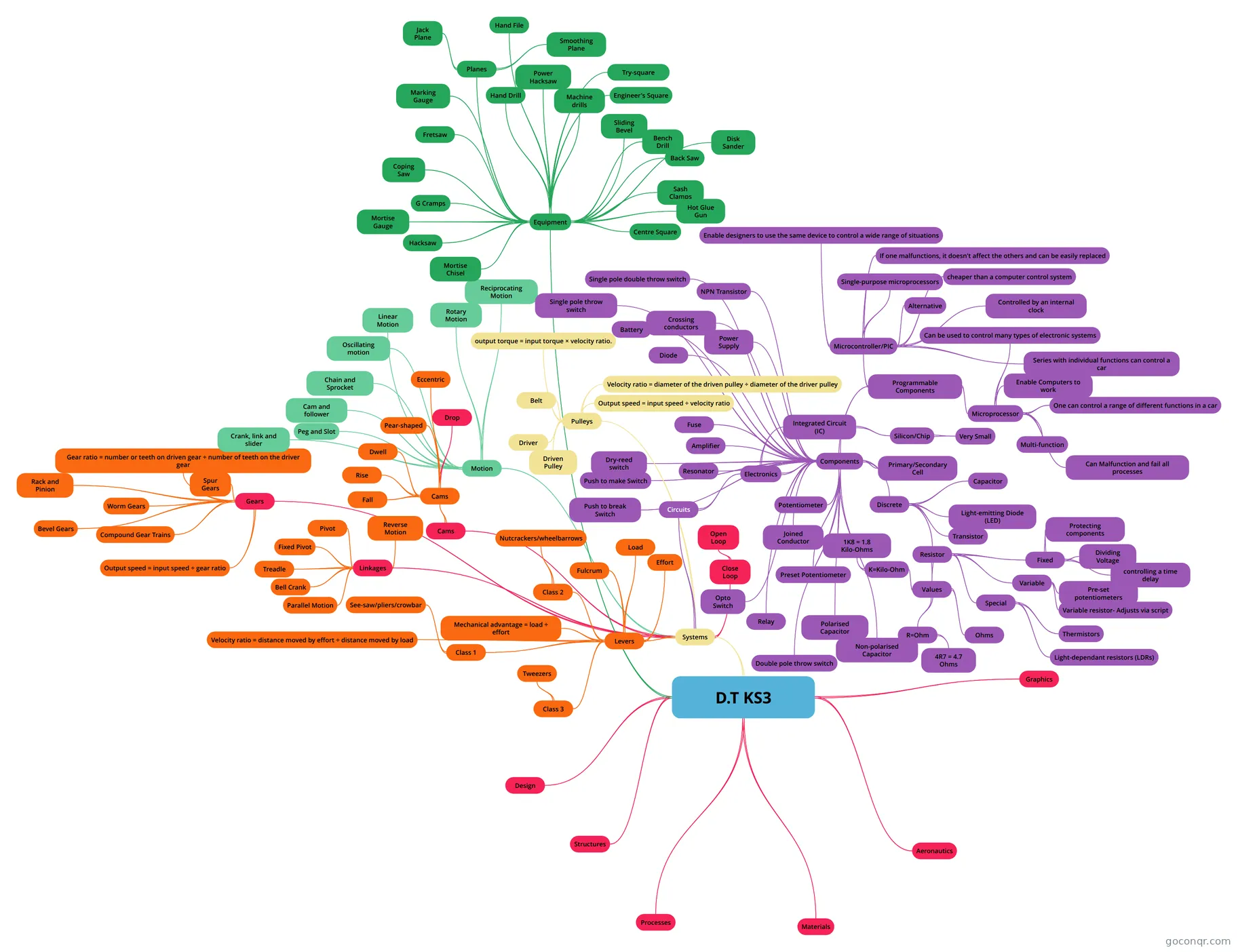 Mind map D.T KS3 A basic D.T mindmap for KS3
-
22 cardsUnit 1.3 Wheels, Pulleys and Gears WHEELS, PULLEYS AND GEARS UNIT 1.3
-
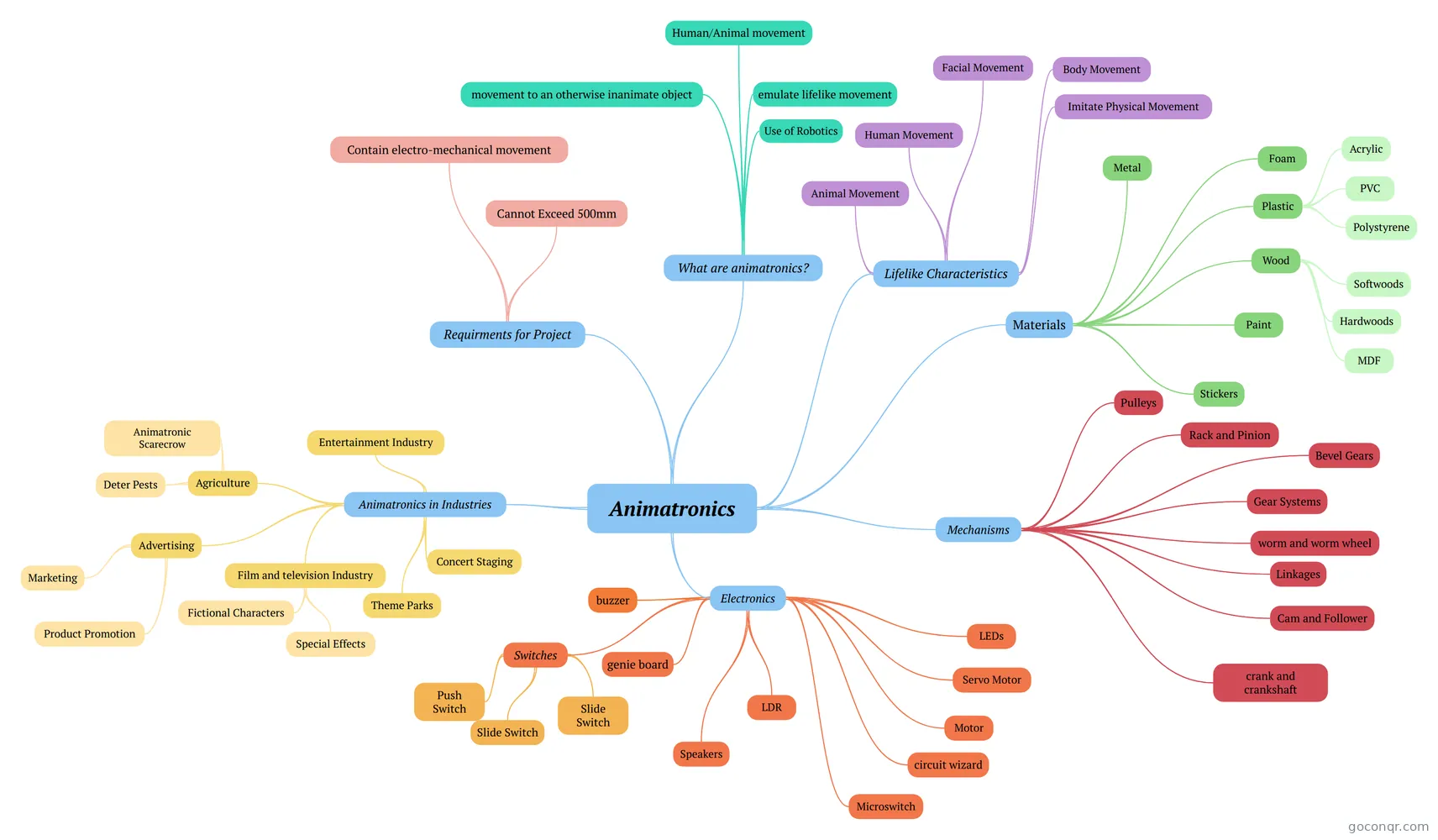 Mind map Animatronics mindmap for tech
-
20 cardsMechanisms flashcards 20 flashcards about the different mechanisms that can be found in the mental map.
-
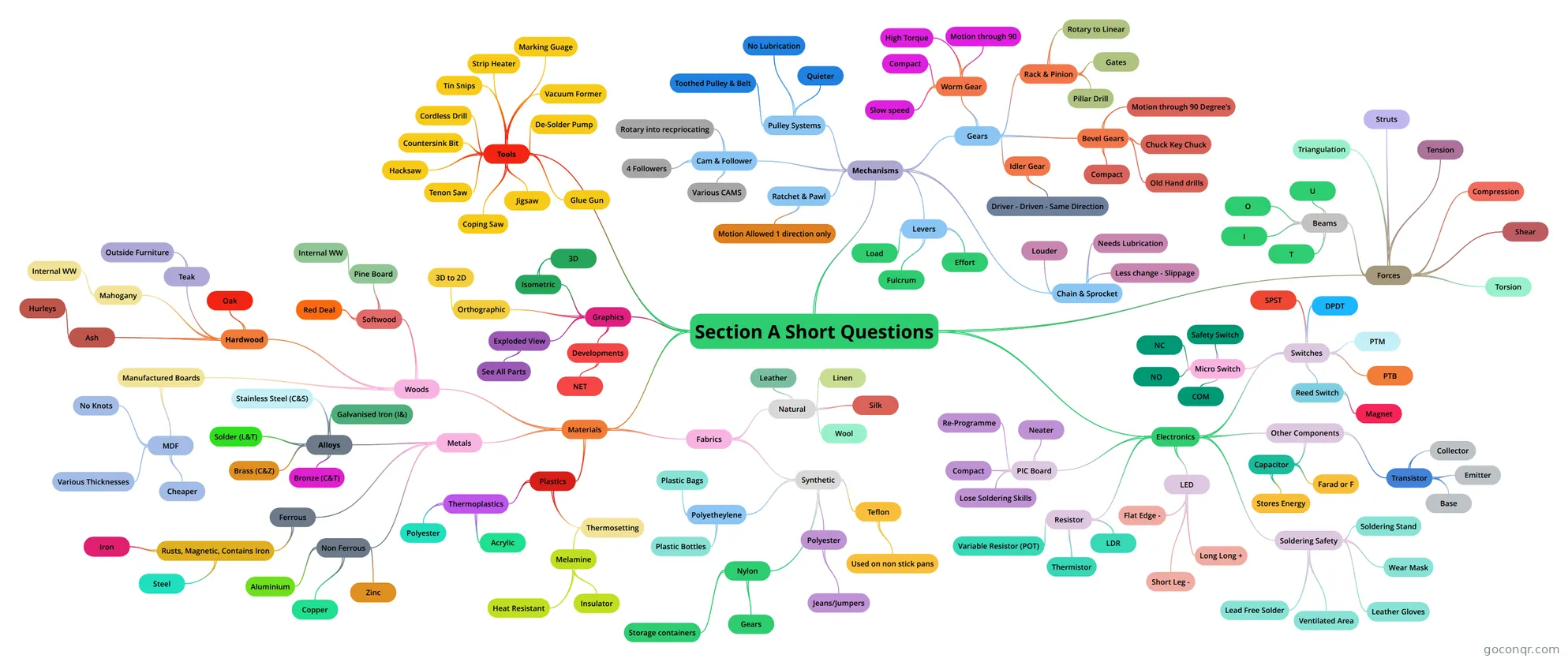 Mind map Section A Short Questions
-
4 cardsTechnolgy flashcard FIRST CLASS LEVERS the fulcrum is always in the middle between the load and the effort
-
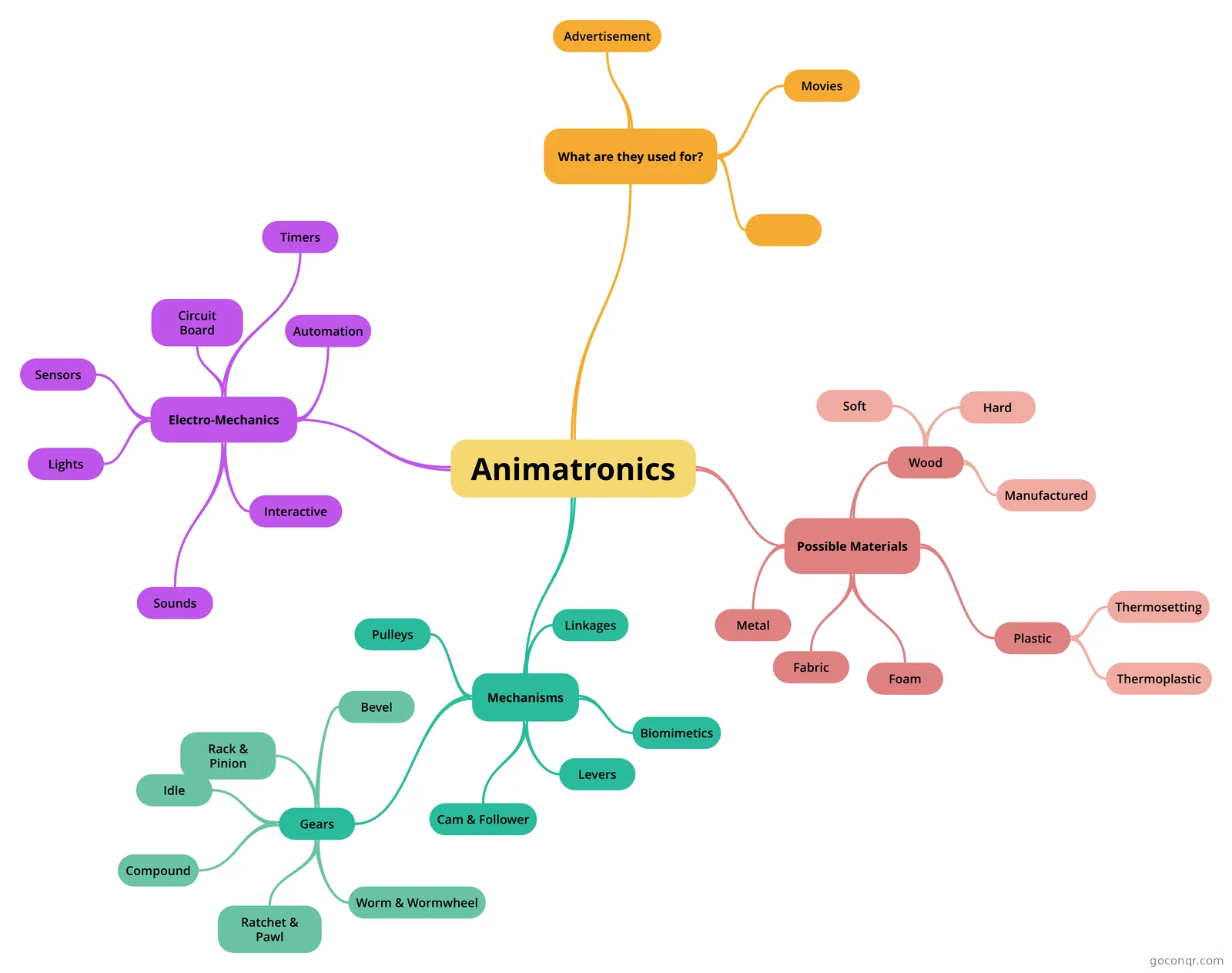 Mind map Animatronics mind map
Mind maps
Flashcards
-
44 cardsEngineering- Mechanical/structural/pnuematic systems 8 Flashcards on Engineering- Mechanical/structural/pnuematic systems, created by AsimAli Rehman on 02/11/2019.
-
22 cardsUnit 1.3 Wheels, Pulleys and Gears WHEELS, PULLEYS AND GEARS UNIT 1.3
-
20 cardsMechanisms flashcards 20 flashcards about the different mechanisms that can be found in the mental map.
-
4 cardsTechnolgy flashcard FIRST CLASS LEVERS the fulcrum is always in the middle between the load and the effort
-
3 cards1.3 Flashcards: Wheels,Pulleys and gears What is the axle?
More Design and technology topics
About Mechanisms and Mechanical Systems
GoConqr OriginalWhat the page covers
This unit sits in the Systems and Structures strand of Design and technology. Most of the material is mind maps, with flashcard decks, a flowchart, a note and two quizzes alongside. Topics include levers and their classes, gear types, belt and chain drives, pulleys, cams and followers, linkages, and animatronics.
Where to start
- Open the D.T KS3 mind map for the basics: levers, fulcrum, effort and load, and the three lever classes with everyday examples.
- Move on to the Core 1.5 Mechanisms maps, which cover cranks and sliders, simple and compound gear trains, idlers, bevel gears, rack and pinion, revolutions per minute and velocity ratio.
- Look at Systems and Control Mechanism for rotational velocity, velocity ratio and torque.
Gears, drives and motion
The flowchart Gears (unit 3) sorts spur, compound spur, idler, bevel, rack and pinion, and worm gears. The flashcard deck Mechanical Systems asks about the four types of motion, including linear, reciprocating and oscillating. Mechanical Systems (2) moves on to belt drives, chain and sprocket examples, pulleys and why mechanisms need maintenance. For wheels, axles, rims and pulleys, try Unit 1.3 Wheels, Pulleys and Gears.
Real-world applications
The Animatronics and Animatronics Analysis maps link mechanisms to lifelike movement, themed attractions and concert staging, and they list materials such as wood, acrylic and foam. Teachers may like these for project ideas. The resources mention GCSE Design and Technology, so they suit students at that stage.
Using quizzes and maps together
Read a map, then cover it and try the Technology Multi Choice Quiz or the Mechanical devices quiz. Where an answer is shaky, go back to the matching map or flashcard deck. Pick one topic today and see how much you can recall.
Frequently asked questions
Where should I start on this page?
Begin with the D.T KS3 mind map, which sets out levers, fulcrum, effort and load, and the three lever classes. Then move to the Core 1.5 Mechanisms maps for gears, cranks and sliders, and velocity ratio. Finish by testing yourself with one of the quizzes.
What do the mind maps cover?
They cover levers, gear types, cams and followers, linkages, belt and chain drives, velocity ratio and torque. Some look at applications such as animatronics, a remote control vehicle and a pull along toy, so you can see mechanisms used in projects.
Are the resources free to use?
Yes. Every resource listed here is free to open, study and take, with no account needed. They were made by GoConqr users rather than by GoConqr itself. A free account saves your quiz scores and lets you make your own quizzes, maps, flashcards and notes.
Which levels and exams do they suit?
All the resources here are at secondary level, and they mention GCSE Design and Technology. They suit school students revising mechanisms, and teachers looking for ready-made maps and flashcards to use in lessons.
How many quizzes and flashcard decks are there?
There are 2 quizzes, Technology Multi Choice Quiz and Mechanical devices, plus 15 flashcard decks. The decks cover mechanical systems, wheels, pulleys and gears, mechanical advantage and general mechanisms, so they work well for quick recall practice.
What if I cannot find the topic I need?
Try a related map or deck first, since topics such as gears and motion appear in several resources. If a gap remains, you can make your own mind map or flashcards on the missing topic, and use the existing ones as a model.