
Materials and Their Properties
175 resources created by 138 users
This Materials and Their Properties page on GoConqr gathers community-made quizzes, mind maps, flashcards and notes, from timber, metals and plastics to smart materials, composites and adhesives. It's built for school students revising Design and technology, and for teachers after ready-made material. There are over 2,200 resources here, including more than 40 quizzes, over 1,800 mind maps and more than 240 flashcard decks, mostly at secondary level. Try a quiz to find your gaps, then see what you can add.
Top Materials and Their Properties resources
-
24 cardsProperties/Materials Flashcards Explain the working properties of materials?
-
49 cardsPlastics PVC (poly vinyl chloride)
-
33 cardsMetals Revision Cards describe the structure of metals
-
41 cardsWood properties and processes What are the properties of oak?
-
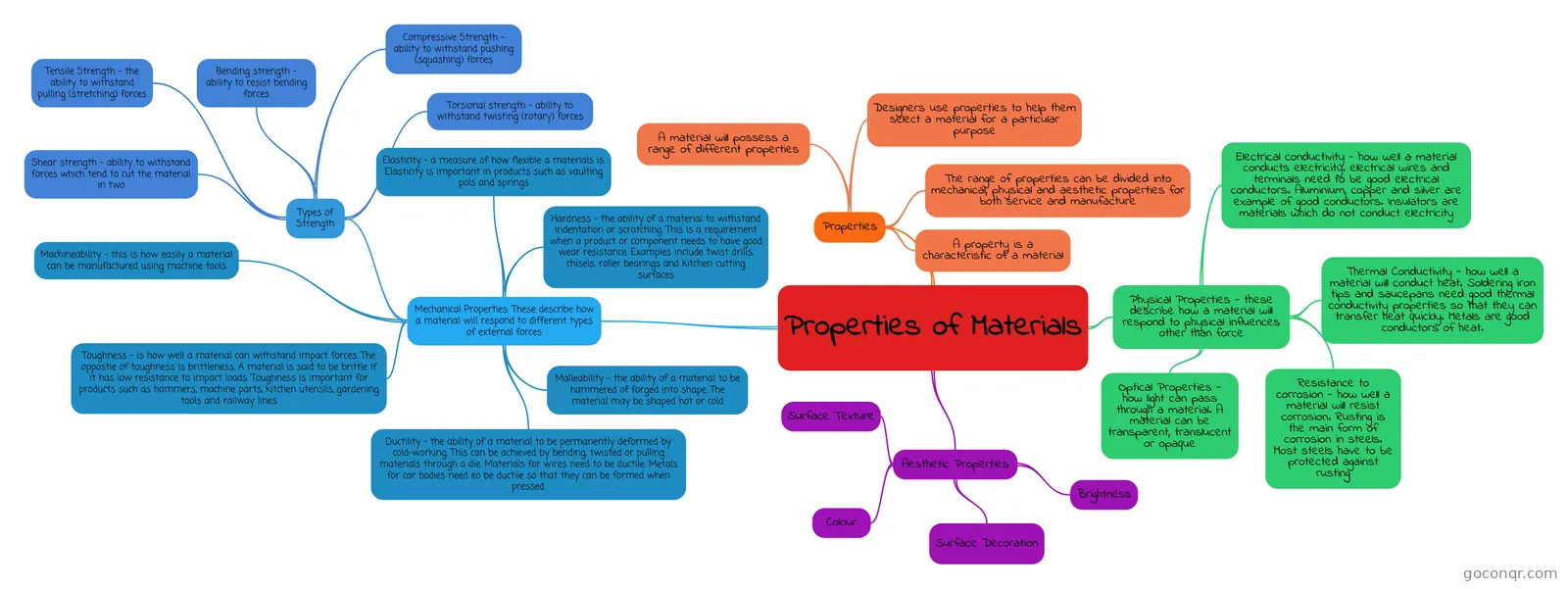 Mind map Properties of Materials Mind Map on Properties of Materials, created by Army Dan on 06/03/2018.
-
8 questionsPlastics Quiz This quiz is a good test of your overall materials knowledge in the topic of plastics and will help you pre...
-
33 cardsIGCSE Woods Outline of woods and notes on them
-
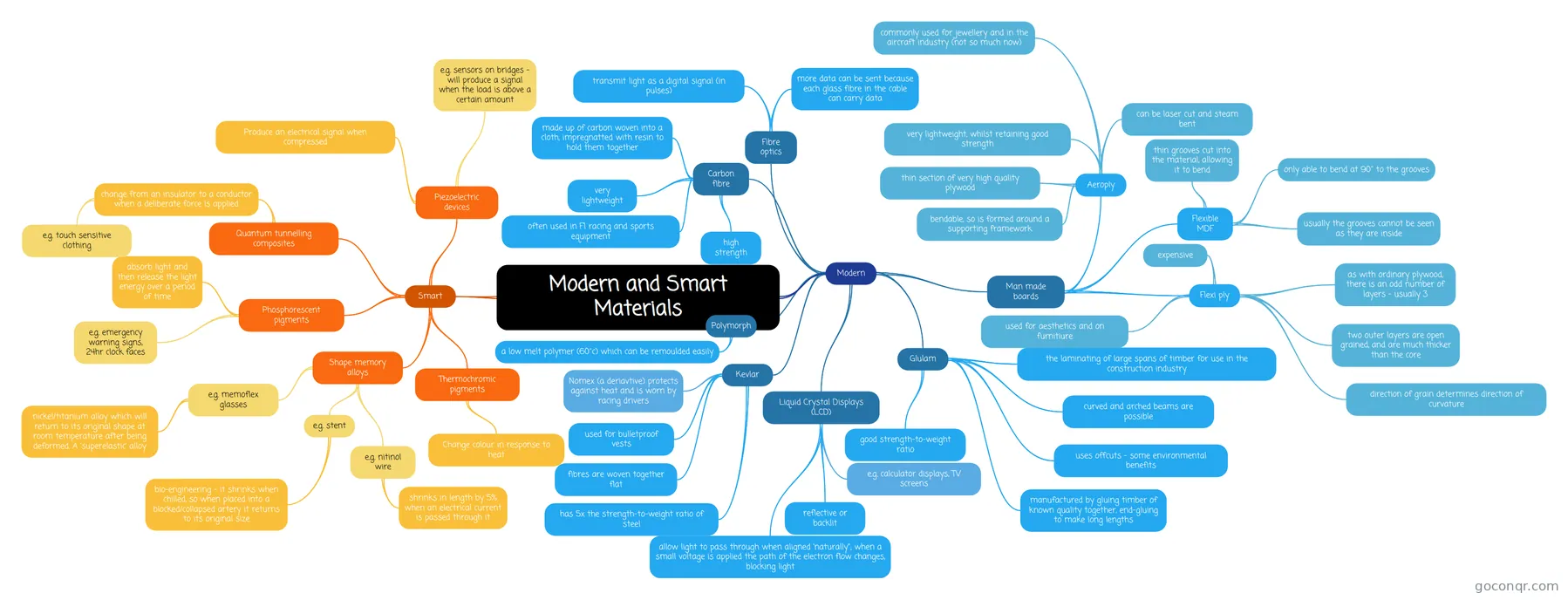 Mind map Modern and Smart Materials Mind map on Smart and Modern materials
Quizzes
See all 16 quizzes-
8 questionsPlastics Quiz This quiz is a good test of your overall materials knowledge in the topic of plastics and will help you pre...
-
10 questionsDesign Technology Which of these are hardwoods?
-
8 questionsGCSE DT Resistant Materials Quiz Which one of these Woods is a Softwood?
-
2 questionsDT - wood Which of the following are hard woods
-
3 questionsOL material properties Young's modulus or elastic modulus measures resistance of a material to be deformed elastically
-
103 questionsAQA GCSE Product Design Questions Select the DISadvantages of using perfect binding over thread-sewing (for a book)
-
17 questionsMaterial Classifications Choose the correct classification for the following material : Copper
-
10 questionsMaterials Test 2.1 The source of cotton fibre is:
Mind maps
See all 113 mind maps-
Properties of Materials Mind Map on Properties of Materials, created by Army Dan on 06/03/2018.
-
Modern and Smart Materials Mind map on Smart and Modern materials
-
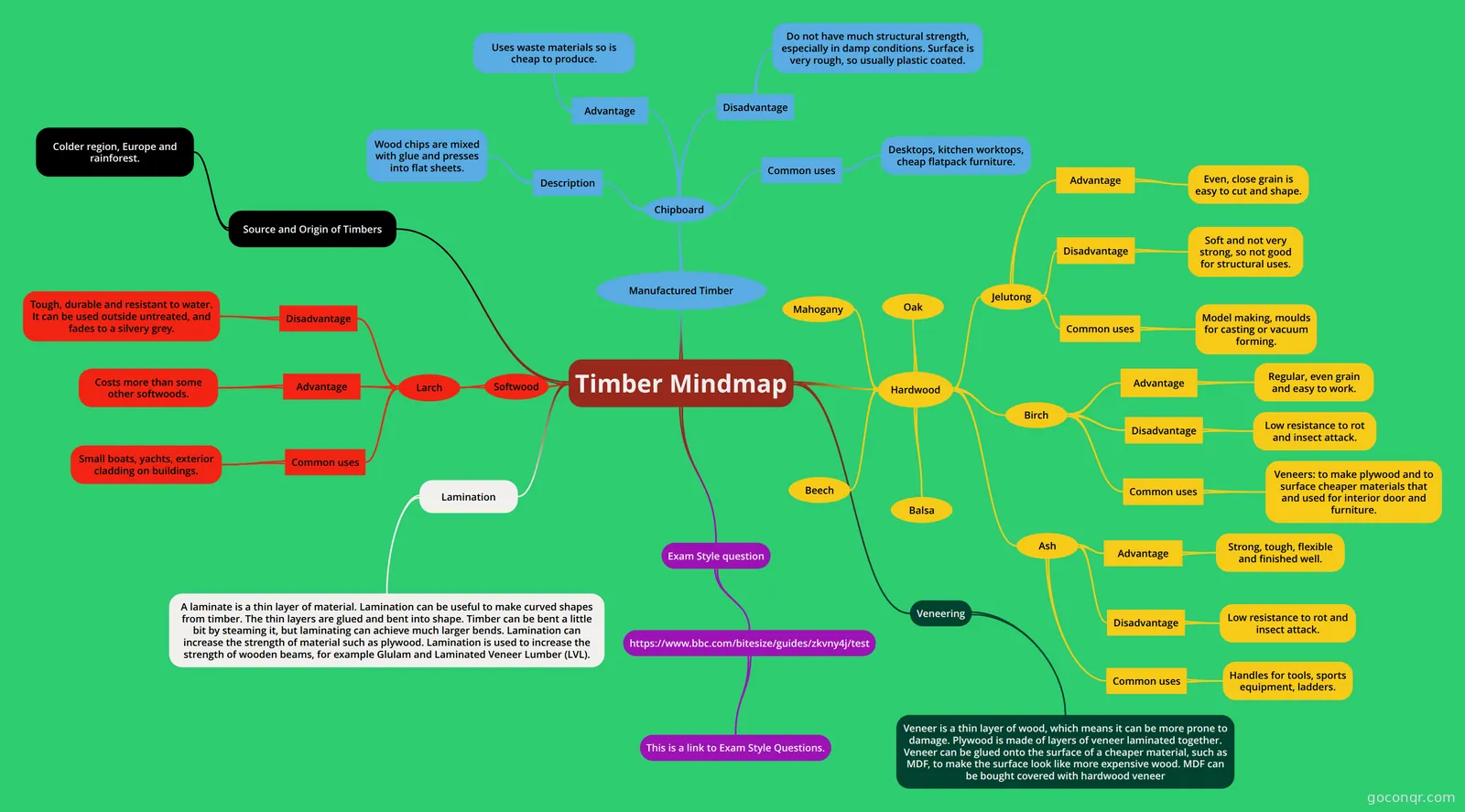 Timber Mindmap Timber mindmap
-
PLASTIC MATERIALS Mind map of the clasification of plastics and the characteristics and uses of each type.
-
PLASTIC MATERIALS Mind map about the classification of different types of plastic materials, its properties and objects fabri...
-
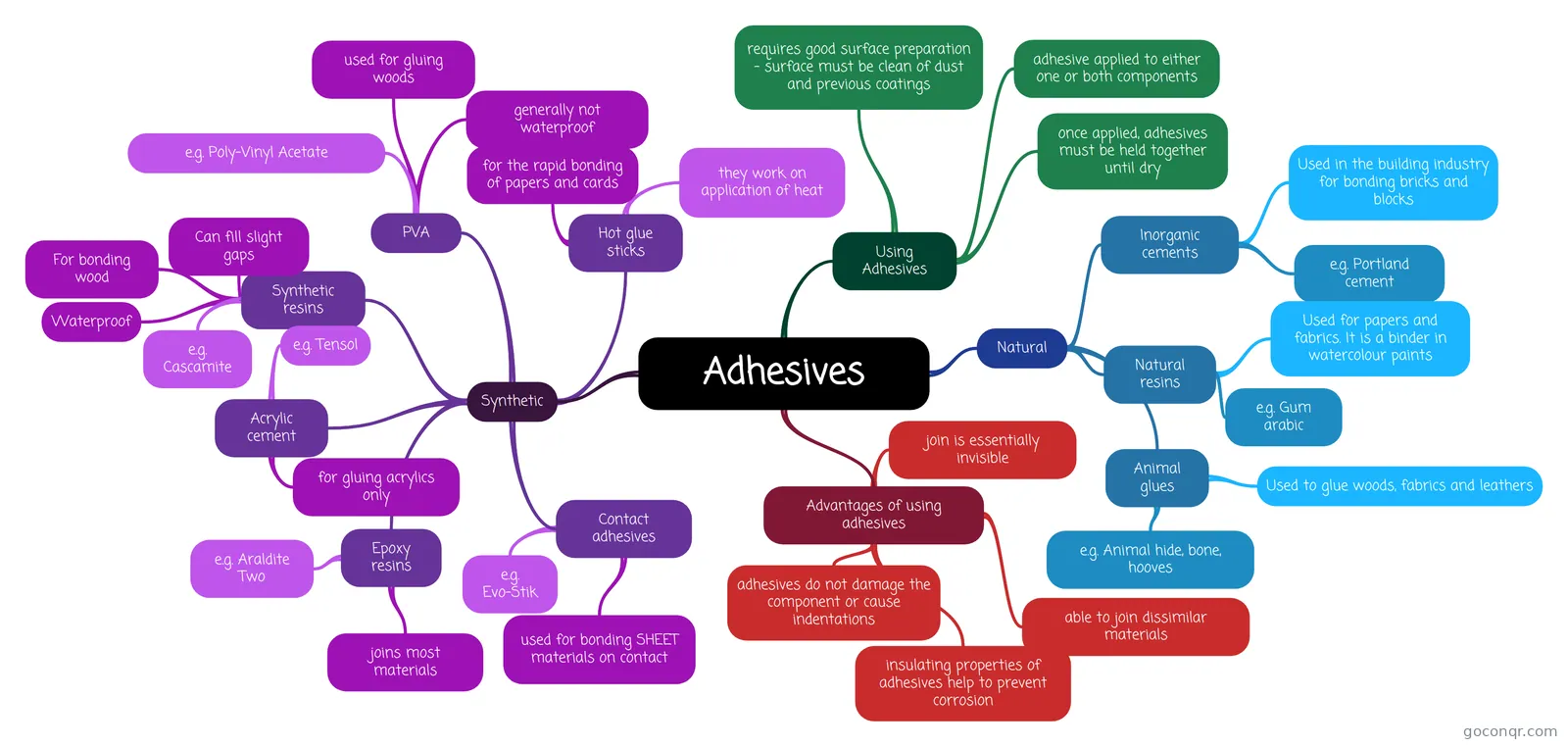 Adhesives Mind map on the different adhesives and their uses
-
Smart/modern materials
-
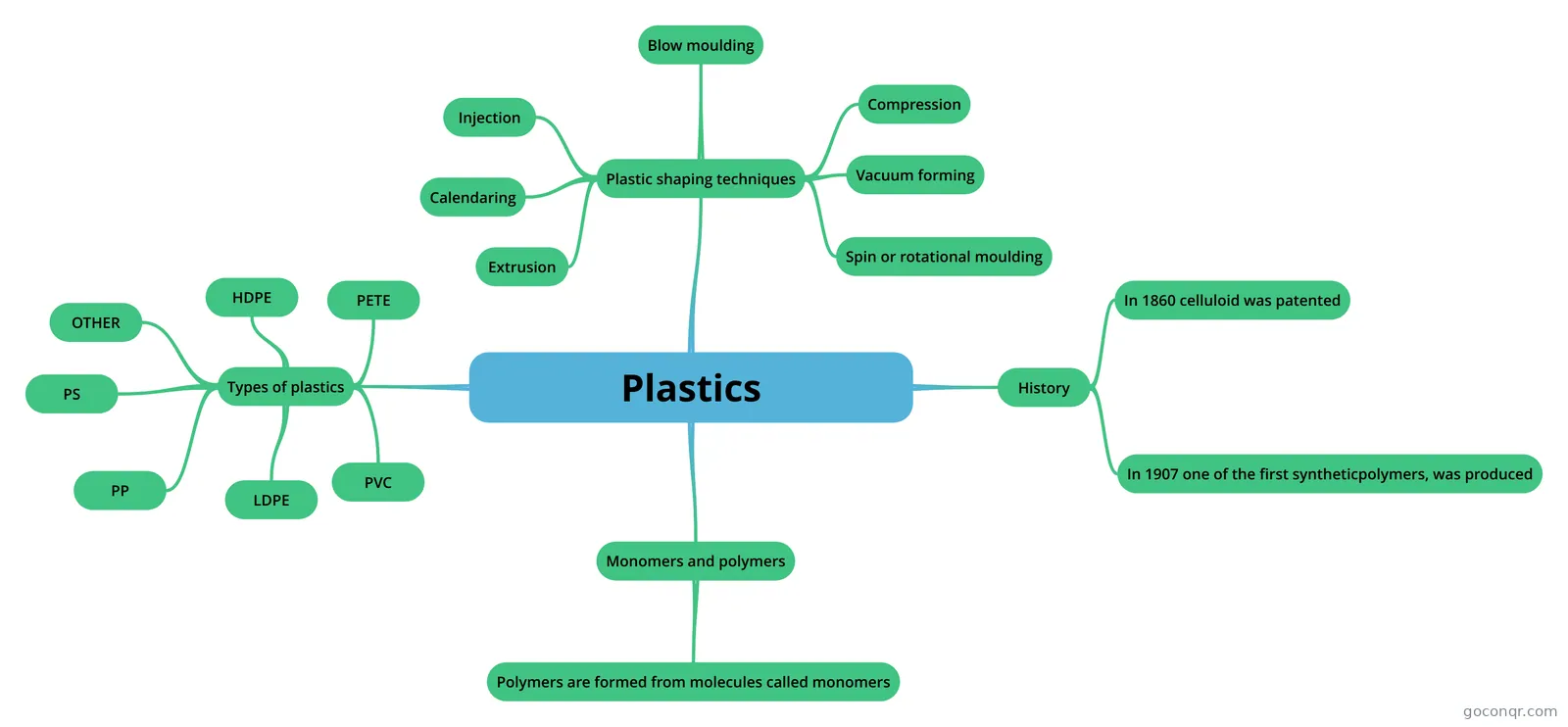 Plastics
Flashcards
See all 42 flashcards-
24 cardsProperties/Materials Flashcards Explain the working properties of materials?
-
49 cardsPlastics PVC (poly vinyl chloride)
-
33 cardsMetals Revision Cards describe the structure of metals
-
41 cardsWood properties and processes What are the properties of oak?
-
33 cardsIGCSE Woods Outline of woods and notes on them
-
26 cardsResistant materials Tools Name this tool and explain its use.
-
27 cardsDesign and technology gcse What is tension?
-
8 cardsSmart Materials Give the properties of Shape memory alloys (SMA) ‘Nitinol’ and a use for it.
Flowcharts
Notes
-
smart, modern and nano materials smart materials are materials that responds to a stimulus like heat or light and then return to their original state hen the stimulus is removed, Thermo - heat Hydro - liquid Chromic - colour photo - light&...
-
Material ConneXion: Material Update Nissha Printing Co., Ltd.Printed films for the in-mold decoration (IMD) of plastics. Brushed stainless steel, marble, wood, porcelain, soft touch, and hidden detail (revealed once backlit) are just some of the effects...
Slides
More Design and technology topics
About Materials and Their Properties
GoConqr OriginalWhat this unit covers
This unit sits in the Materials strand of Design and technology. The resources, made by more than 1,700 contributors, work through the main material families: woods, metals, plastics, composites, and smart and modern materials. Several also cover properties, adhesives, finishing techniques and materials testing.
Where to start
Begin with the big-picture maps. The mind map Properties of Materials sets out mechanical properties, which describe how a material responds to external forces, and splits strength into types such as tensile strength, the ability to withstand pulling. The Timber Mindmap then compares hardwoods, softwoods and manufactured timber, with advantages, disadvantages and common uses for woods such as oak, beech, ash and balsa.
Material by material
- Woods: the flashcard deck IGCSE Woods lists softwoods such as Scots Pine and Spruce, and hardwoods such as Ash, Elm and Oak.
- Plastics: the Plastics flashcards name PVC, ABS, Nylon and LDPE, while the PLASTIC MATERIALS mind map separates elastomers, thermoplastics and thermosets.
- Metals and more: look for the maps on ferrous metals and steels, plus decks on smart materials and composites.
Using quizzes and maps together
Read a map first, then test yourself. The Plastics Quiz asks which industrial process suits mass-producing low cost water bottles. GCSE DT Resistant Materials Quiz checks softwoods and hardwoods, and its questions include which uses beech and cedar are put to. Note what you miss, go back to the matching map, then retry.
The listed resources mention GCSE Design and Technology, AQA, A-level and Leaving Cert Construction Studies, so check which suits your course. Teachers can pick a ready-made quiz or deck for a class. Choose a material, open a quiz and see how far you get.
Frequently asked questions
Which resource should I open first?
Start with the Properties of Materials mind map. It explains mechanical properties and the types of strength, which the other resources build on. After that, try the Plastics Quiz or the GCSE DT Resistant Materials Quiz to see what has stuck.
What do the mind maps cover?
They cover timber, metals, plastics, composites, smart and modern materials, adhesives, finishing techniques and materials testing. The Timber Mindmap compares hardwoods and softwoods, while PLASTIC MATERIALS separates elastomers, thermoplastics and thermosets. Others focus on ferrous metals and steels.
Are these resources free to use?
Yes. Every resource listed here is free to open, study and take, with no account needed. They were made by GoConqr users, not by GoConqr itself, so it's worth checking that a resource matches your own course.
Which exams do the resources suit?
Most are secondary level. The listed resources mention GCSE Design and Technology, GCSE Product Design, AQA Design & Technology, A-level Design and Technology, Junior Certificate Woodwork and Leaving Cert Construction Studies. Check the content against your own specification.
Can I revise woods with flashcards?
Yes. The IGCSE Woods deck lists softwoods and hardwoods with examples, and the Softwoods and Woods decks add more practice. Pair them with the DT - wood quiz to test what you remember.
What if I can't find what I need?
Try a nearby topic, such as composites, smart materials or adhesives, as the resources overlap. If something is still missing, you can make your own quiz, mind map, flashcards or notes with a free account, which also saves your quiz scores.