
Introduction to Philosophy
249 resources created by 224 users
This Introduction to Philosophy page on GoConqr gathers community-made quizzes, mind maps, flashcards and notes, from the branches of philosophy and the birth of philosophy in ancient Greece to epistemology, ethics and existentialism. It's built for university students and professional candidates, school students, and teachers after ready-made material. There are over 230 resources here, including more than 30 quizzes and over 130 mind maps, pitched mostly at university level with a good share for school. Pick a resource, try a quiz to spot your gaps, then build your own.
Top Introduction to Philosophy resources
-
55 cardsPhilosophy A2 AQA Key Words A - C Philosophy key words from A2 Lacewing A - C. They are the first 55 key words from the glossary, that every ...
-
80 questionsPhilosophy 102 Which of the following is not a subfield of philosophy?
-
118 questionsItP | Final Exam Rachels says that finding satisfaction in helping others is not
-
48 cardsPHIL-1301 Unit #1 Study Deck!
-
48 cardsPHIL-1301 Unit #2 Study Deck!
-
35 cardsPhilosophy Exam 1
-
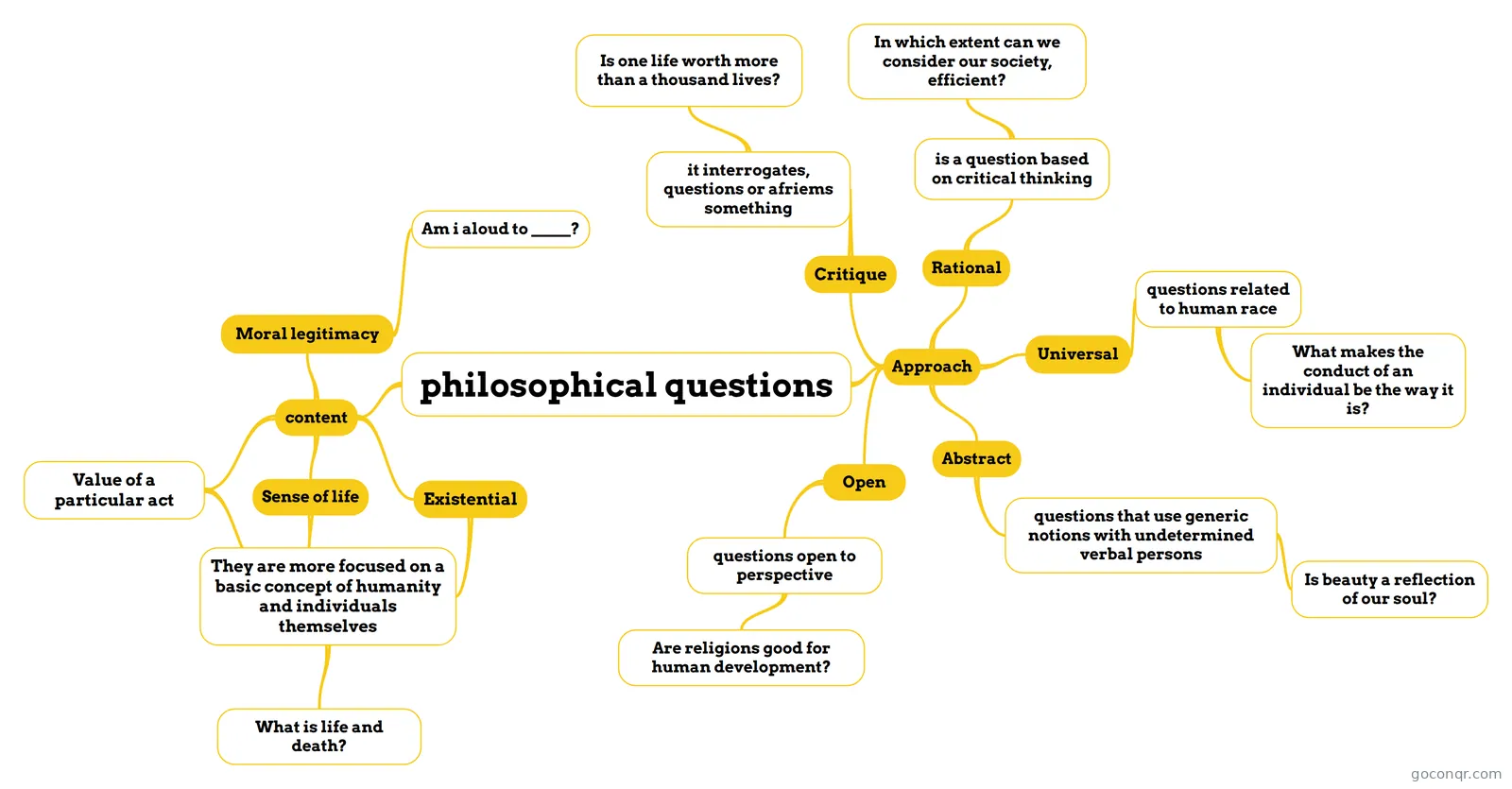 Mind map philosophical questions philosophical questions
-
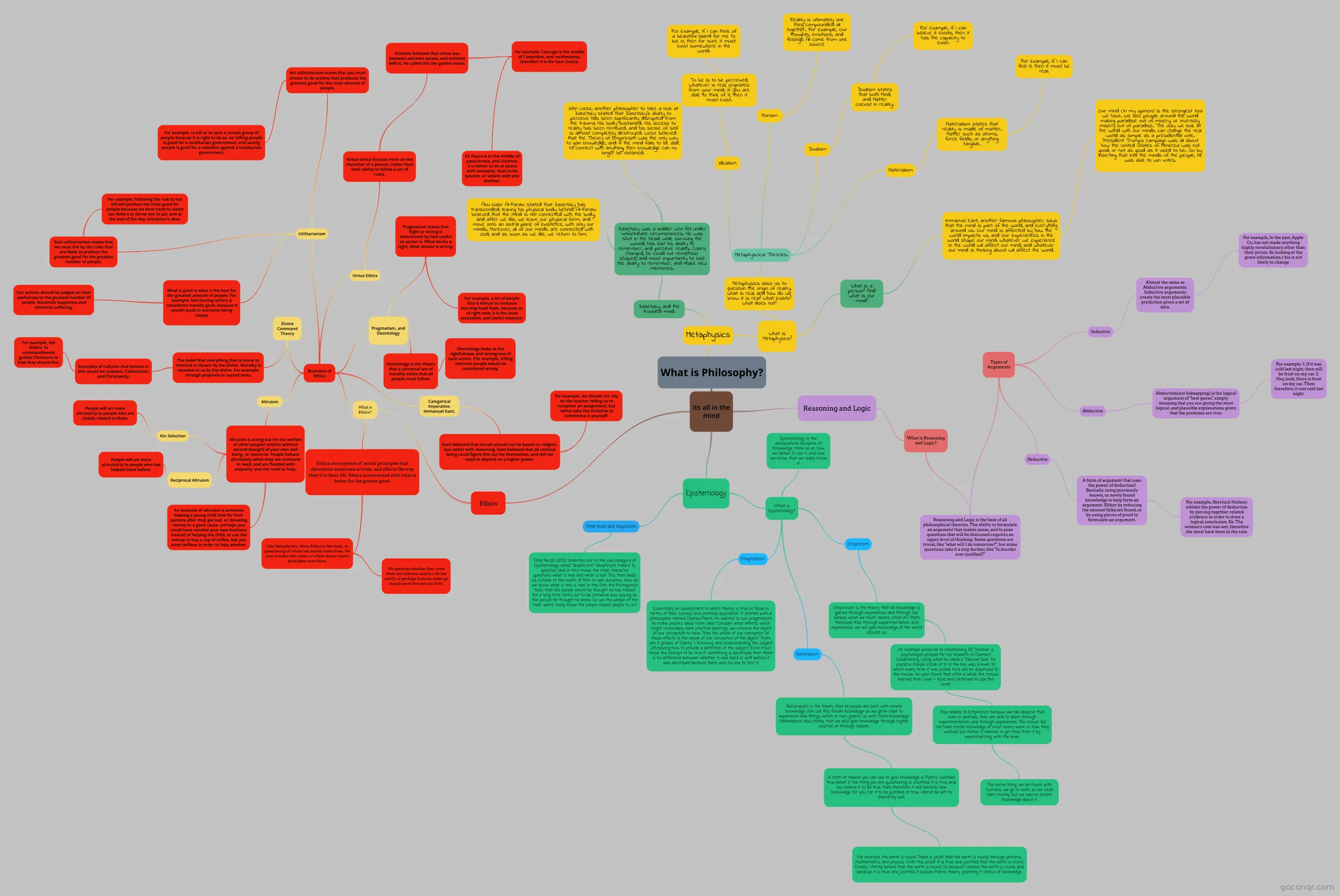 Mind map What is Philosophy? This is it chief.
Quizzes
See all 38 quizzes-
80 questionsPhilosophy 102 Which of the following is not a subfield of philosophy?
-
118 questionsItP | Final Exam Rachels says that finding satisfaction in helping others is not
-
60 questionsPhilosophy1-60 2. Scholasticism is...:
-
30 questionsEthics Exam 1 Metaphysics is the branch of philosophy concerned with
-
15 questionsPhilosophy Midterm According to Socrates, what sort of people make mistakes?
-
14 questionsMoral theology chapters 1-4 What is education
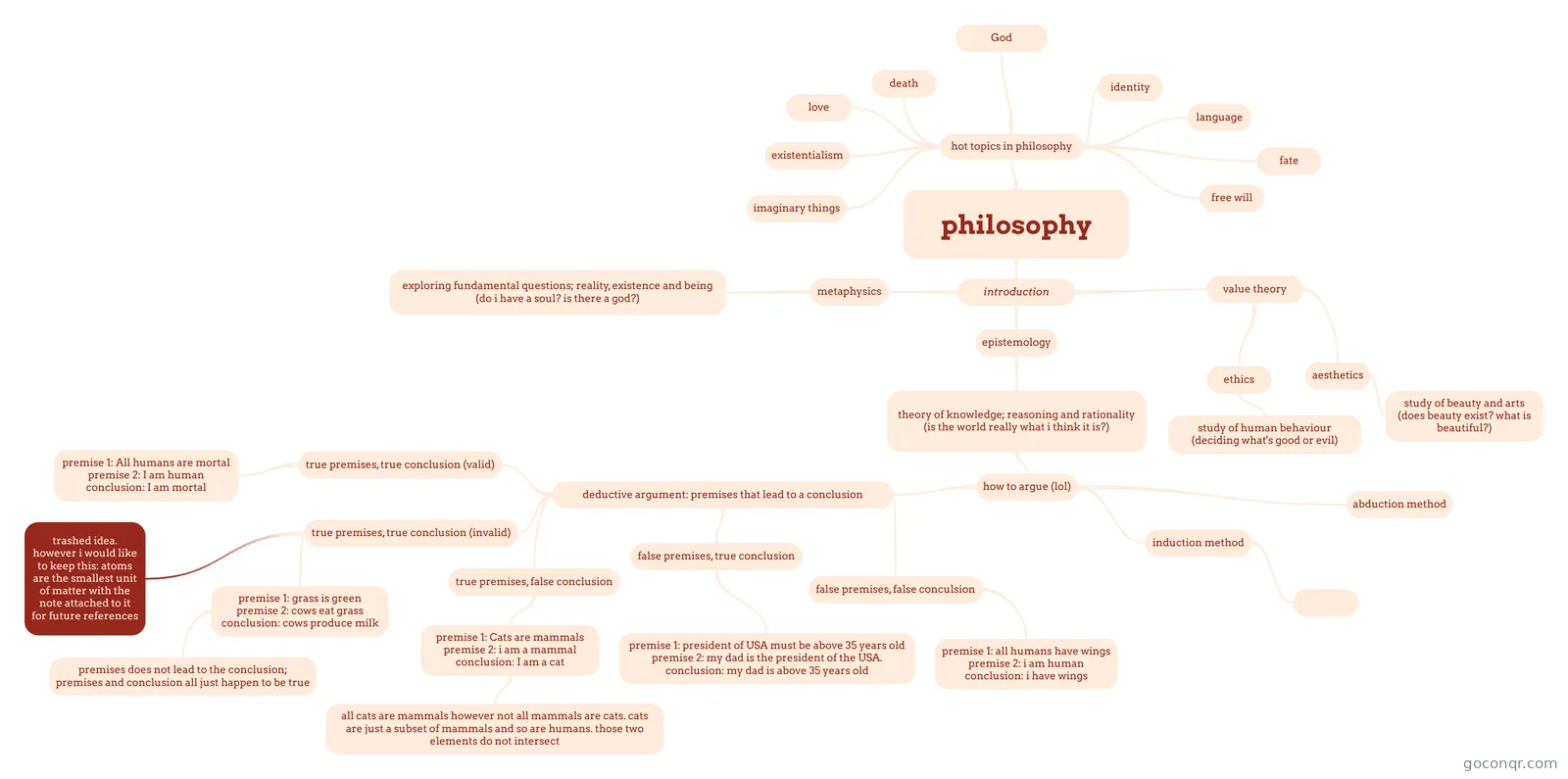
Mind maps
See all 144 mind maps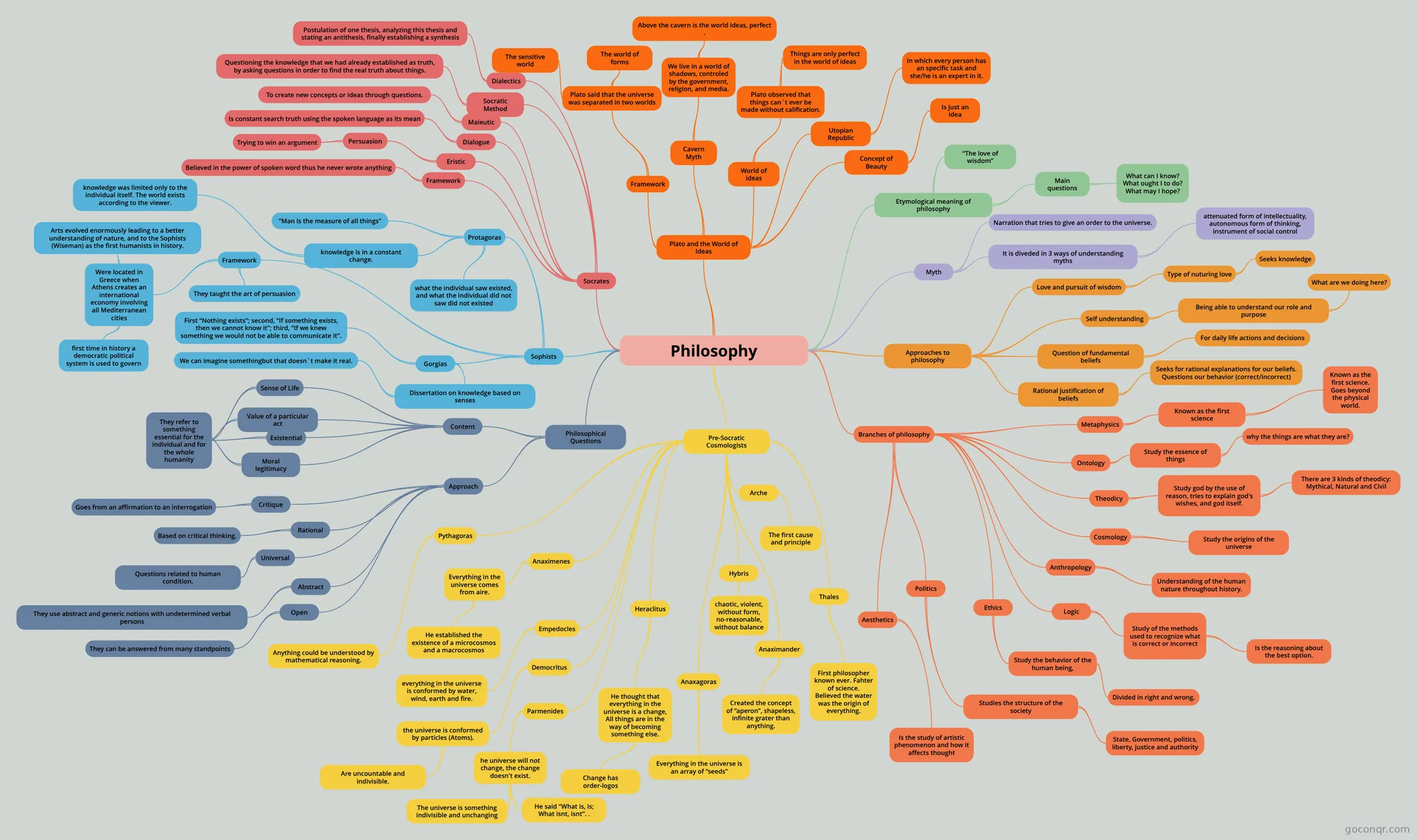
Flashcards
See all 50 flashcards-
55 cardsPhilosophy A2 AQA Key Words A - C Philosophy key words from A2 Lacewing A - C. They are the first 55 key words from the glossary, that every ...
-
48 cardsPHIL-1301 Unit #1 Study Deck!
-
48 cardsPHIL-1301 Unit #2 Study Deck!
-
35 cardsPhilosophy Exam 1
-
34 cardsphy100 exam one study guide What is Philosophy?
-
15 cardsPhilosophical Terms
-
7 cardsMain Branches of Philosophy 7 Main branches of philosophy
-
9 cardsQuotes from Great Philosophers QUOTES FROM GREAT PHILOSOPHERS
Notes
See all 11 notes-
Philosophy Class 1A Chapter 1: What is Philosophy?Thinking Philosophically About LifeIt is systematic, critical, reflection of the way which we judge, live and act with the pursuit of wisdom.Philosophy as the "mother of all disciplines"T...
-
Breakdown of Philosophy Moral Truth Belief in Platonic Forms : moral truth as God-independent transcendent truth, analogy with mathematical truths. Moral elitism Moral knowledge and weakness of will Moral truth as based on natural fac...
-
Sophie's World Class Notes:-Aristotle has a great influence in history because he tutored Alexander the Great- Logic, was first nailed down the rules and how it works and science - thinking about the way you think(metacognition) - W...
Topics in Introduction to Philosophy
More Philosophy topics
About Introduction to Philosophy
GoConqr OriginalWhat this unit covers
This unit collects early-stage philosophy study material made by GoConqr users. The flashcard decks cover key vocabulary such as premise, conclusion, metaphysics, epistemology, ethics, aesthetics and logic. The mind maps lay out the traditional divisions of philosophy, the value of philosophy, human nature and existentialism.
Where to start
Begin with the big picture. The mind maps What is Philosophy? and Traditional Divisions of Philosophy give you a quick outline of the field. Then read the notes called Breakdown of Philosophy to see the ideas in sentences rather than branches.
Next, learn the language. The deck Philosophy Exam 1 runs from philosophy, philia and sophia through to premise and conclusion. For A-level Philosophy, the AQA key words deck for A to C covers terms such as a priori, a posteriori, analytic and argument map.
Using quizzes and maps together
- Read a mind map and try to redraw it from memory.
- Take a quiz on the same theme, such as Philosophy 102, which asks about subfields of philosophy and what epistemology addresses.
- Note the questions you missed and go back to the matching map or deck.
- Return to the quiz a few days later and compare.
The unit also includes a final-exam style quiz and several midterm decks, which suit later revision once the basics are settled.
Where it sits
This unit belongs to the strand Introduction to Philosophy and Reasoning in the Philosophy subject. Most resources suit university students, with a solid group for school students, so you can choose material at the depth you need.
Make it yours
Open a deck, take a quiz, then shape your own maps and flashcards around the topics that still feel shaky.
Frequently asked questions
Where should I start in this unit?
Start with a overview mind map such as What is Philosophy? or Traditional Divisions of Philosophy. Then move to a vocabulary deck like Philosophy Exam 1, and finish with a quiz such as Philosophy 102 to see which ideas have stuck and which need another look.
What do the mind maps cover?
The mind maps cover the nature and value of philosophy, the branches of philosophy, the birth of philosophy in ancient Greece, human nature, existentialism and the question of what is real. Several are revision maps for midterms and end-of-year review, so you can compare how different students organised the same ideas.
Are the resources free to use?
Yes. Every resource on this page is free to open, study and take, with no account needed. They were made by GoConqr users, not by GoConqr itself. If you want to save quiz scores or make your own quizzes, maps, flashcards and notes, a free account lets you do that.
Which levels and exams do these resources suit?
Most of the resources suit university students, and a good share suit school students. One listed deck is written for A-level Philosophy, using AQA key words. Teachers can also use the ready-made quizzes, maps and decks as starting points for lessons or revision tasks.
Is there anything for testing myself?
Yes. There are more than 30 quizzes, including Philosophy 102, a final exam quiz and several midterm and study-guide quizzes. Flashcard decks such as the PHIL-1301 study decks use fill-in-the-blank prompts, which are handy for checking definitions and names.
What if I can't find the topic I need?
Try a nearby resource first, such as a branches of philosophy map or a key terms deck, since they often touch on neighbouring topics. If the gap remains, you can build your own mind map, flashcards or quiz on the topic using a free account.