
Philosophy of Religion: Foundations and Society
243 resources created by 152 users
This Philosophy of Religion: Foundations and Society page on GoConqr gathers community-made mind maps, flashcards, slides, quizzes and notes on the arguments for God's existence, the problem of evil, religious experience and life after death. It's built for school students revising a topic, university students filling gaps, and teachers after ready-made material. There are over 1,400 resources here, including more than 40 quizzes and over 900 mind maps, mostly at A-level and GCSE stage with some university work. Try a quiz to find your gaps, then explore the maps.
Top Philosophy of Religion: Foundations and Society resources
-
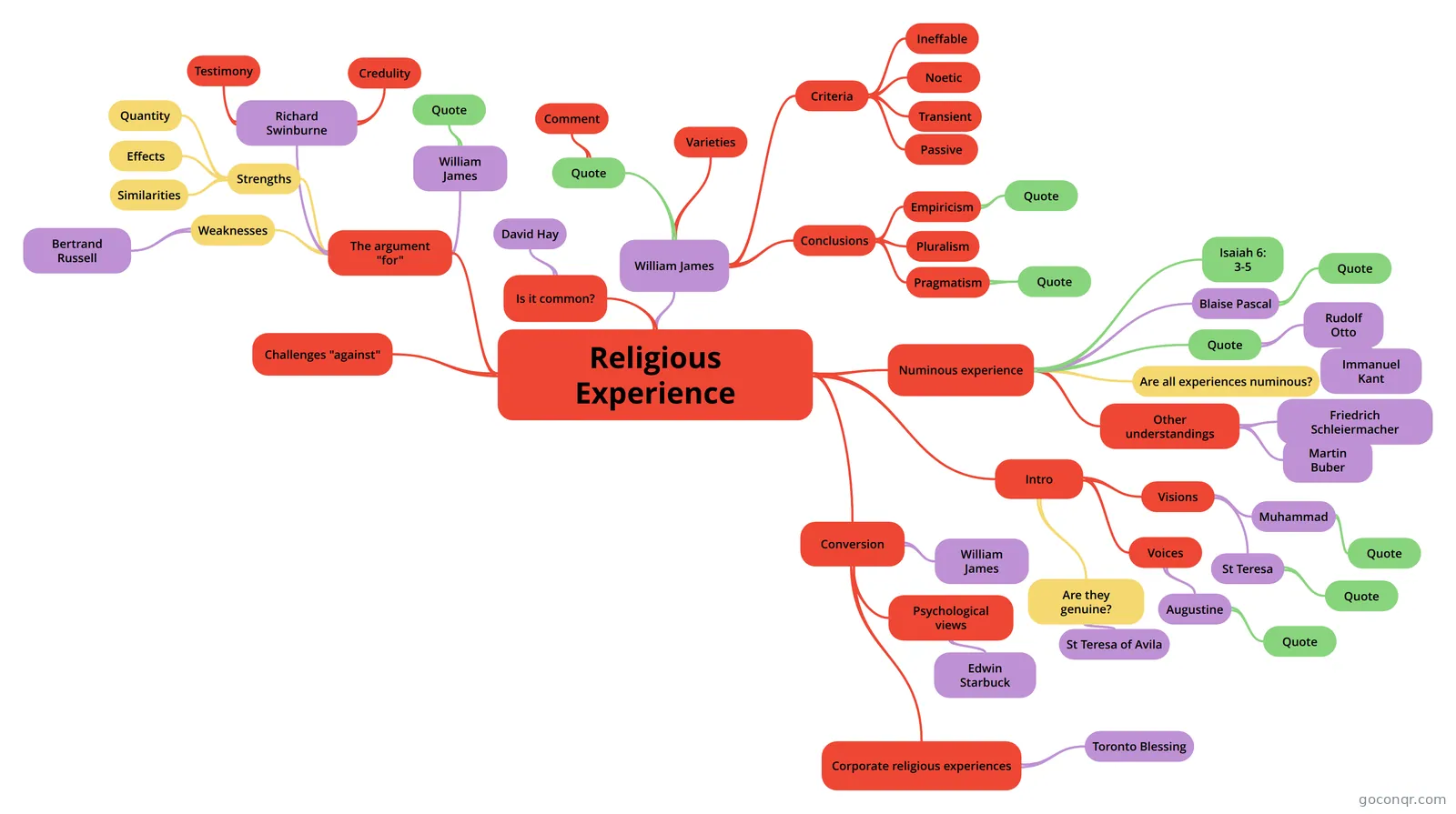 Mind map Religious Experience
-
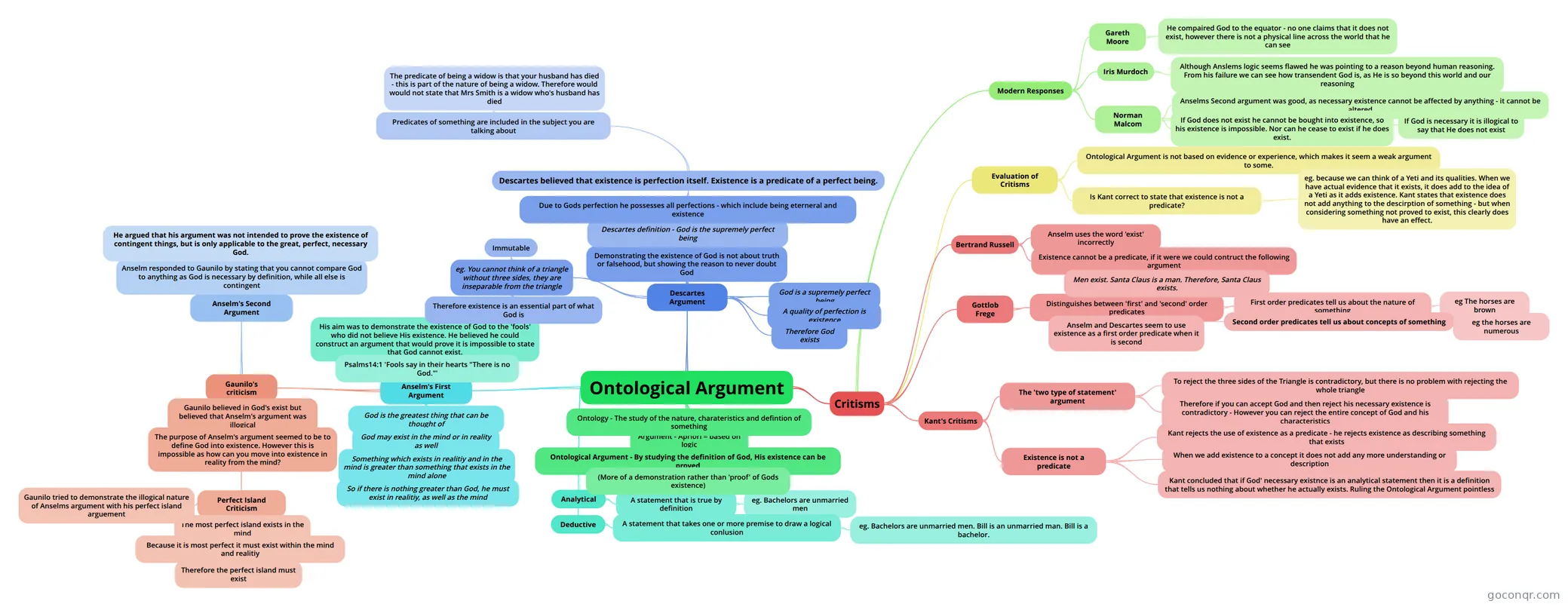
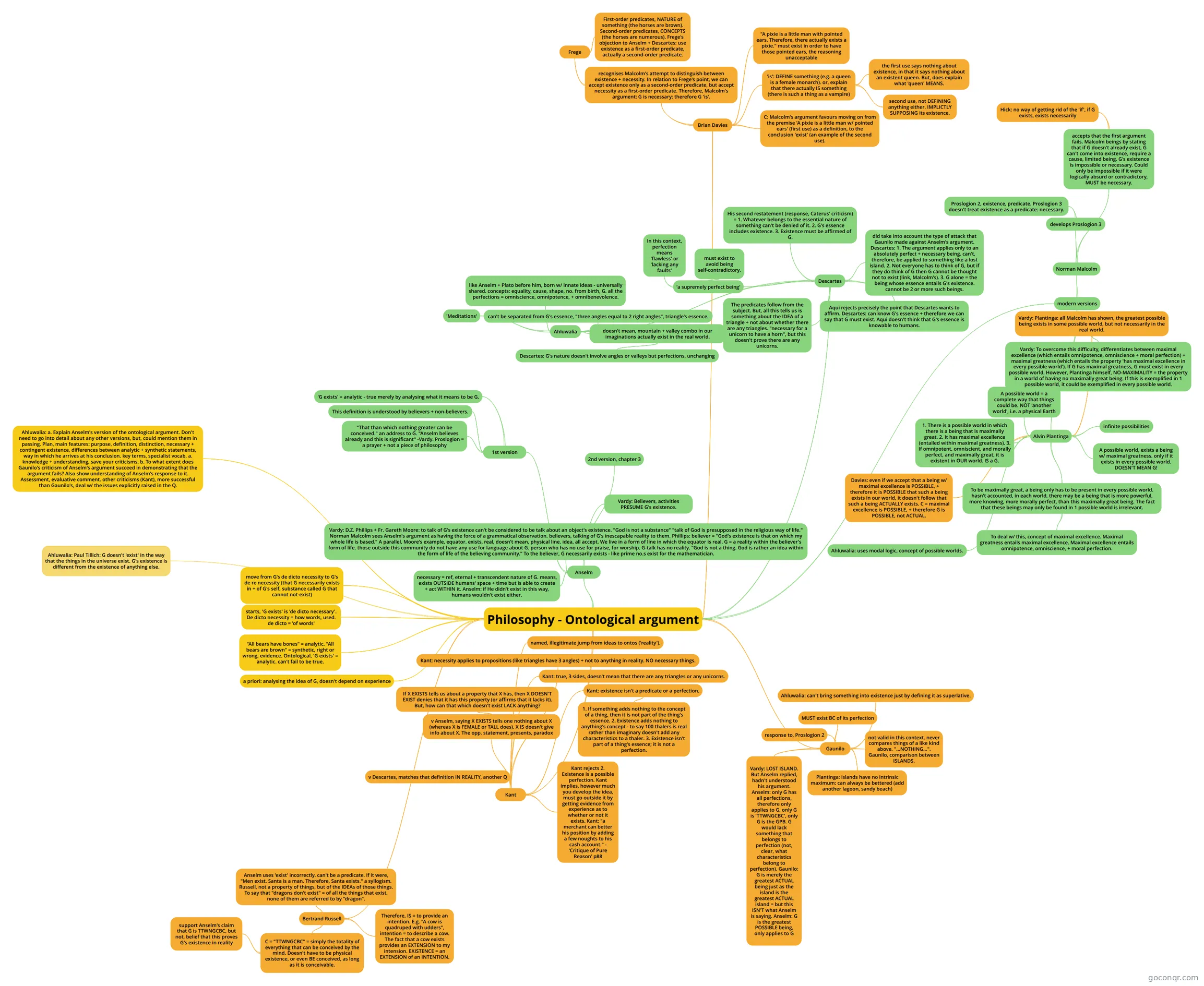 Mind map Philosophy - Ontological argument Philosophy
-
36 cardsDesign Arguments What do design arguments seek to do?
-
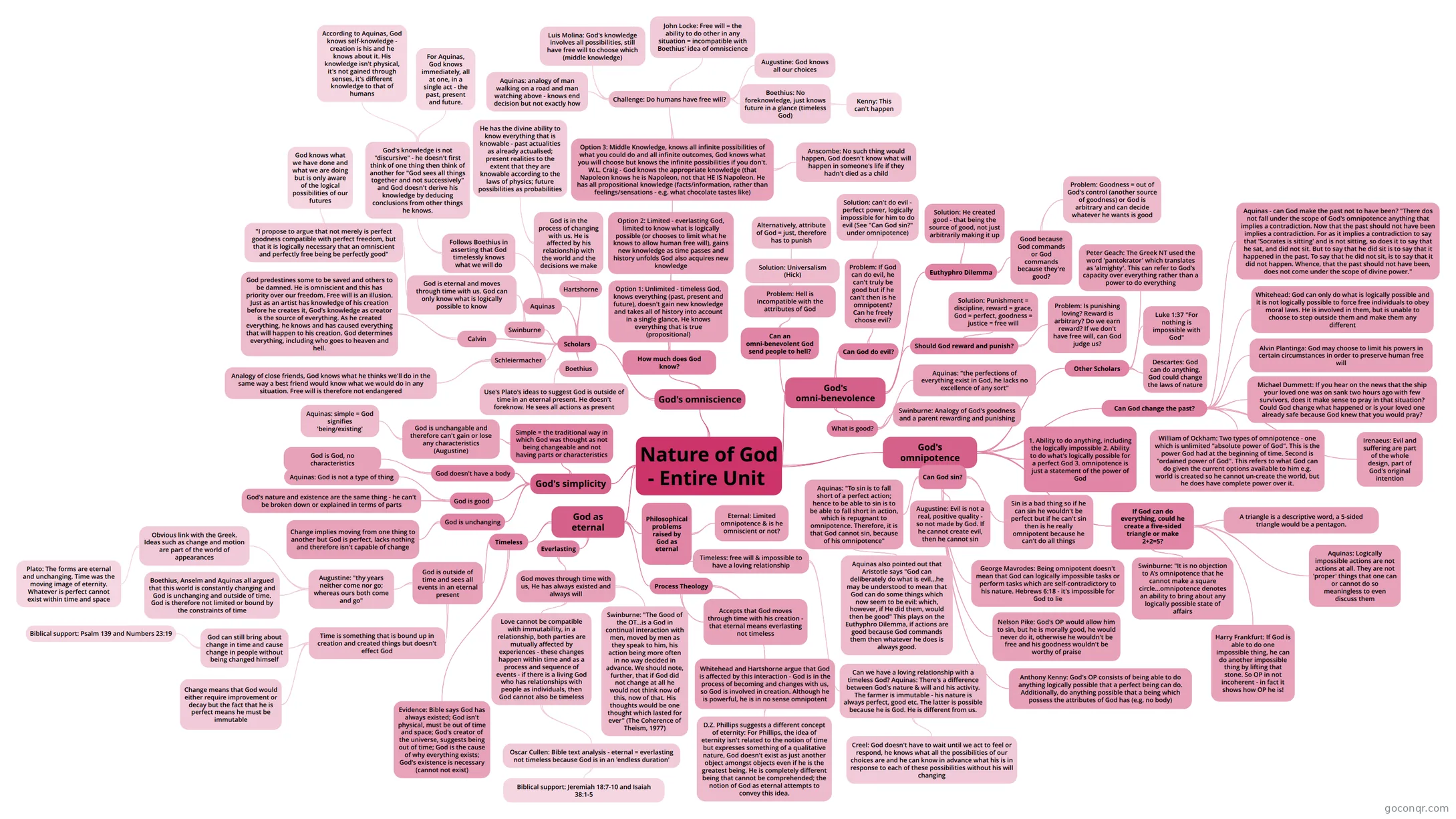 Mind map Nature of God - Entire Unit OCR Philosophy of Religion A2 unit - Nature of God
-
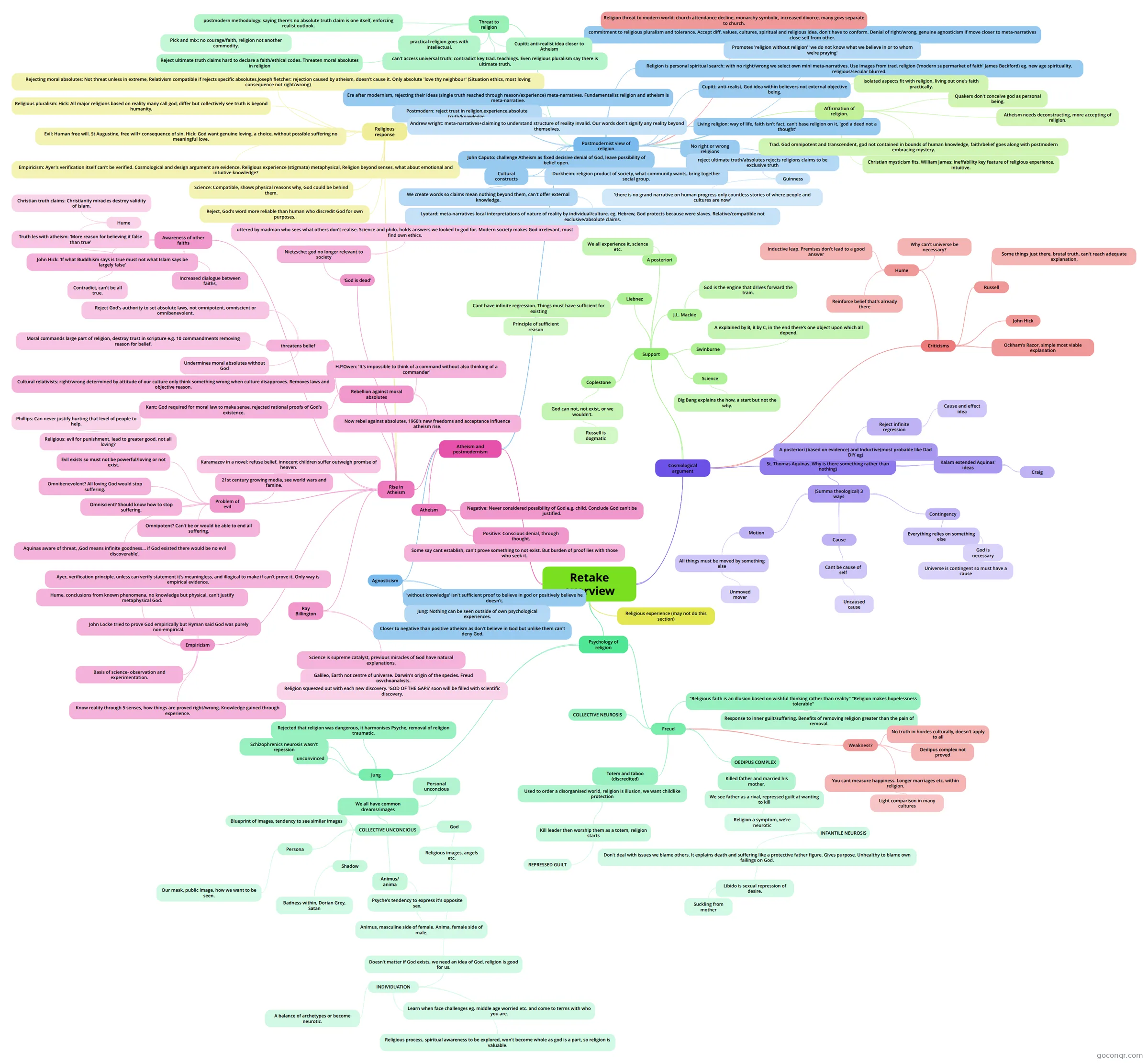 Mind map Retake overview
-
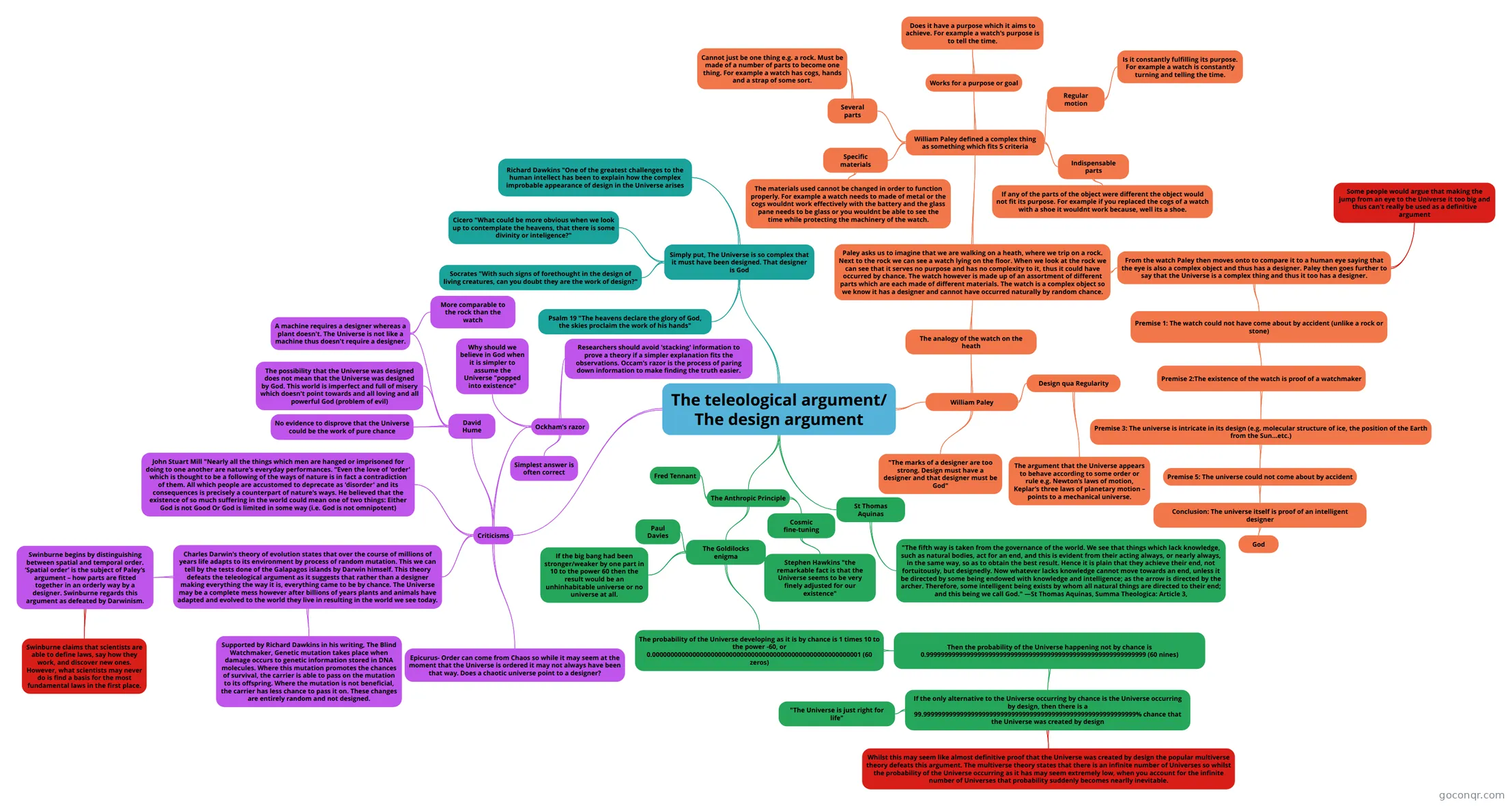 Mind map The teleological argument/ The design argument The title
-
20 questionsTest 3 Early in the Phaedo, the executioner who is to administer the poison to Socrates tells one of Socrates's fr...
-
19 questionsOntological Argument A Level Edexcel Who created the Ontological Argument?
Quizzes
See all 10 quizzes-
20 questionsTest 3 Early in the Phaedo, the executioner who is to administer the poison to Socrates tells one of Socrates's fr...
-
19 questionsOntological Argument A Level Edexcel Who created the Ontological Argument?
-
30 questionsThe Great Philosophy Quiz - Let's Plato! How did Platonic theories of the Forms influence Christianity? Select the applicable:
-
10 questionsCosmological Argument Quiz What was Aquinas' argument from the efficient cause?
-
20 questionsDeterminism Determinism is ...
-
16 questionsPhil exam 2 Humes refutes the teleological argument in what way
-
15 questionsDesign Argument Quotes
-
4 questionsAre we free? - Religious and Ethical perspectives (R&P A-LEVEL) What is free will?
Mind maps
See all 145 mind maps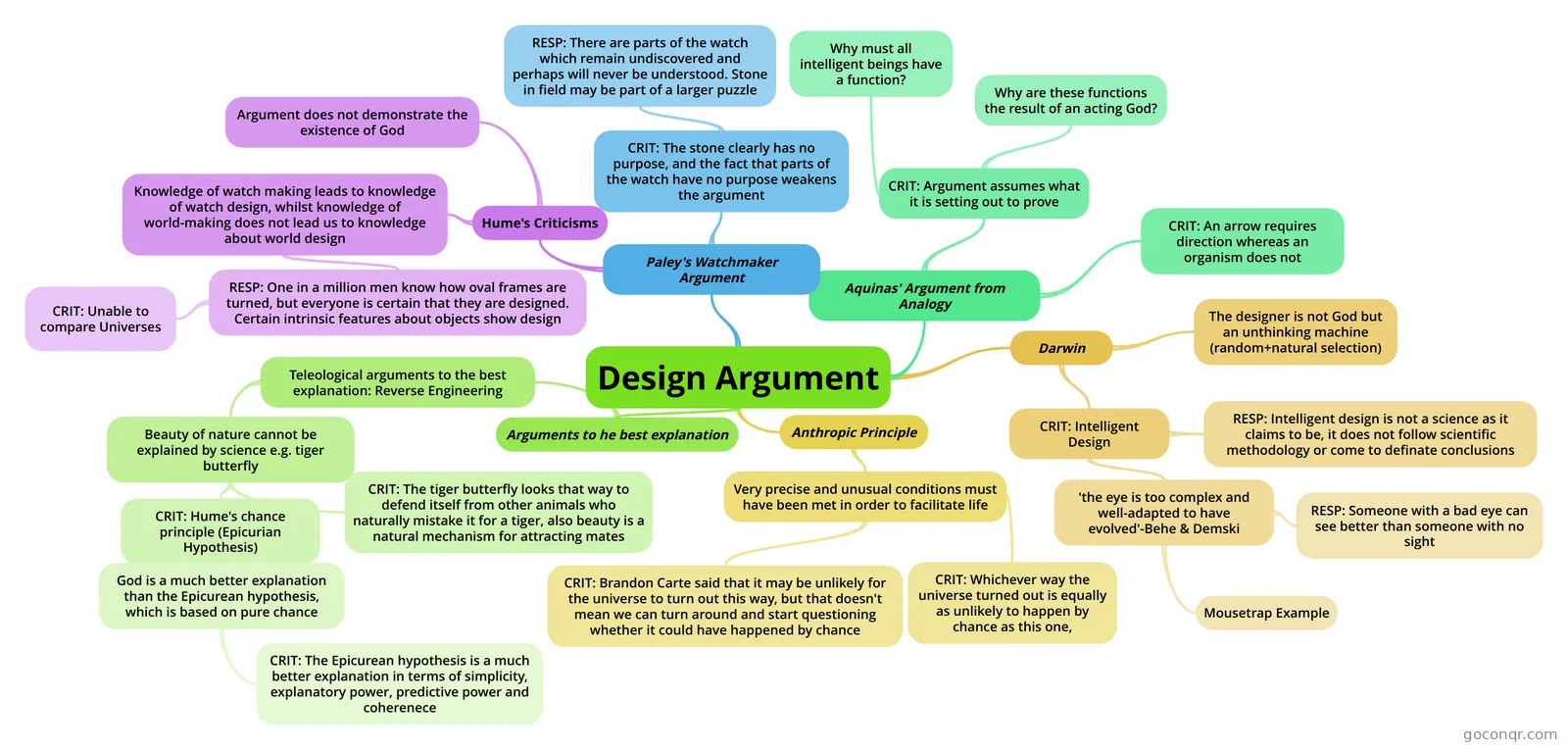
Flashcards
See all 59 flashcards-
36 cardsDesign Arguments What do design arguments seek to do?
-
15 cardsOntological Argument WHAT TYPE OF ARGUMENT IS THE ONTOLOGICAL ARGUMENT?
-
8 cardsDavid Hume's Criticism's against the Cosmological Argument. Where did David Hume write his views against Thomas Aquinas' Cosmological argument?
-
24 cardsKey Terms: The Cosmological Argument Thomas Aquinas (1224-1274)
-
25 cardsPhilosophy of Religion: Key Terms (unfinished deck) Divine attributes (name 6)
-
75 cardsOntological Argument What is the basics of the ontological argument?
-
26 cardsRST3B The Ontological Argument AO1
-
17 cardsThe Nature of God: Key Terms A Level Boethius flashcards
Flowcharts
Notes
See all 20 notes-
westphal sample essay 1 (a) Examine the argument and/or interpretation in the passage. Throughout his work, M.Westphal examines what he see’s to be a shift in modern times from ‘philosophical theology’ (an interest in God) to ‘philosophy o...
-
A2 Philosophy and Ethics: Life after Death Life after death KEY PHILOSOPHERS Resurrection
-
The Religious Experience Argument The Argument Many people have experiences they identify as 'religious.' Experiences that are a part of a religious life include the ups and downs of faith, doubt, sacrifice, and achievement. However, the experiences i...
-
Is religious faith rational? Ontological Argument A-Priori : an argument not based on evidence or experience St.Anselm of Canterbury did not intend to argue for Gods existence but argued against "the fool who doesn't believe in God" through a pra...
-
Religious Experience: An Introduction What is a religious experience? The term 'religious experience' can conjure up a wide and diverse range of images. We might assume that it can mean anything from saying a prayer, to attending a service at a place of w...
-
Body soul personal identity Body, soul and personal identity revision sheet A. What does the spec want you to know? &nb...
-
AS Philosophy Exam Questions The Cosmological Argument:Part A: Explain the main arguments put forward by Copleston in his radio debate. (25 marks) Jan 2012 Explain Aquinas' cosmological argument. (25 marks) June 2009 Explain Hume's criticisms of ...
-
The Argument from Conscience he simple, intuitive point of the argument from conscience is that everyone in the world knows, deep down, that he is absolutely obligated to be and do good, and this absolute obligation could come only from God. Thus...
Slides
More Philosophy topics
About Philosophy of Religion: Foundations and Society
GoConqr OriginalWhat this unit covers
The listed resources are built around the classic arguments for God's existence. The Cosmological Argument slides begin with cosmology as the study of the universe, then ask why anything exists at all. The Ontological Argument mind map covers Anselm, Descartes and modern versions from Norman Malcolm. The teleological material looks at purpose and order, with Aquinas and William Paley. There are also resources on the nature of God, the problem of evil, miracles, body, mind and soul, and life after death.
Where to start
- Open the Religious Experience mind map. It runs from William James and David Hay to the criteria of an experience: ineffable, noetic, transient and passive.
- Read the slides on the Cosmological Argument, then the slides on the Teleological Argument.
- Move to the Ontological Argument mind map and compare it with the flashcards on the same argument.
- Finish with the problem of evil and the Augustinian Theodicy maps.
Using quizzes and maps together
Go through a mind map first and say each branch aloud without looking. Then take a quiz such as the Cosmological Argument Quiz or the TELEOLOGICAL ARGUMENT quiz. Anything you miss goes back to the map, or into flashcards. The Design Arguments deck asks what design arguments seek to do and what Swinburne's three types are. That makes it a good check after the maps.
Essay practice
For longer writing, the notes include a sample essay on Westphal and a note explaining the ontological argument as outlined by Anselm. Read them to see how an answer is structured. Exam boards named across the resources include OCR, Eduqas and IB, so check which one matches your course.
Where it sits
This unit belongs to the Philosophy of Religion strand of the Philosophy subject. Pick one argument, try its quiz, and then make your own maps or flashcards to fill any gaps.
Frequently asked questions
Which resource should I open first?
Start with the Religious Experience mind map, or the slides on the Cosmological Argument if you prefer a step-by-step read. Both give a clear overview. Then move to the ontological and teleological material, and use a quiz to check what has stuck.
What do the mind maps cover?
The maps cover the main arguments for God's existence, including cosmological, ontological and design arguments. They also cover religious experience, the nature and attributes of God, the problem of evil, Augustinian Theodicy, miracles, body, mind and soul, and life after death. Some are short overviews, others are full unit summaries.
Which levels and exams do these resources suit?
Most resources are at school level, and the titles and excerpts mention A-level Religious Studies, A-level Philosophy, GCSE Religious Studies, IB, OCR and Eduqas. A smaller share is university level. Check the exam board named in a resource against your own course before relying on it.
Are the resources free to use?
Yes. Every resource listed here is free to open, study and take, with no account needed. A free account also saves your quiz scores and lets you make your own quizzes, mind maps, flashcards and notes.
Who made these resources?
They were made by GoConqr users, including students and teachers, not by GoConqr itself. Because of that, quality and style vary. Compare a few on the same argument and check them against your own course materials.
What if my topic seems to be missing?
Look through the related arguments first, since topics often overlap. For example, Hume's criticisms appear in the cosmological flashcards and the miracles material. If you still can't find what you need, you can build your own mind map or flashcards for it.