
Ancient Greek Philosophy
93 resources created by 65 users
This Ancient Greek Philosophy page on GoConqr gathers community-made mind maps, quizzes, flashcards, slides and notes on Socrates, Plato and Aristotle, from the Allegory of the Cave to Aristotle's Politics. It's built for school students revising a topic, university students filling gaps and professional candidates, plus teachers after ready-made material. There are over 650 resources here, including more than 20 quizzes, over 470 mind maps and more than 100 flashcard sets, mostly at A-level and university level. Pick a thinker, try a quiz to find your gaps, then make your own set.
Top Ancient Greek Philosophy resources
-
Mind map Plato and Aristotle Summary
-
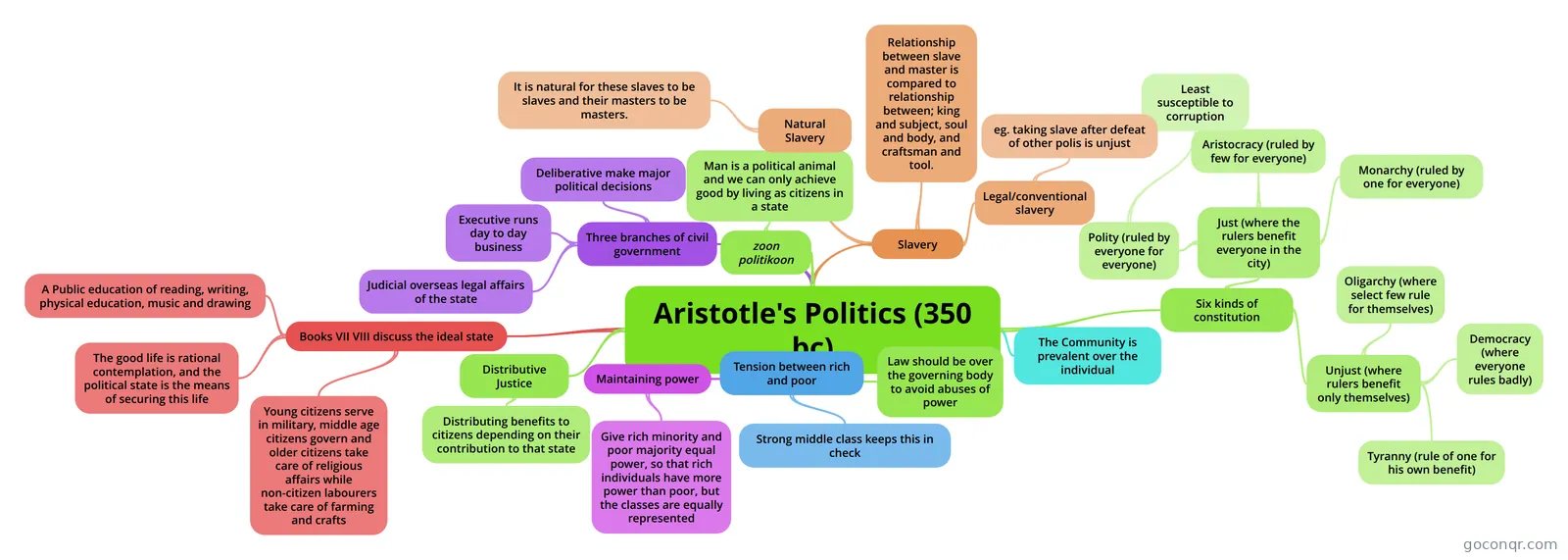 Mind map Aristotle's Politics (350 bc)
-
24 questionsAristotle Revision Quiz Aristotle rejected Plato's theory of The Forms because he believed in what type of knowledge?
-
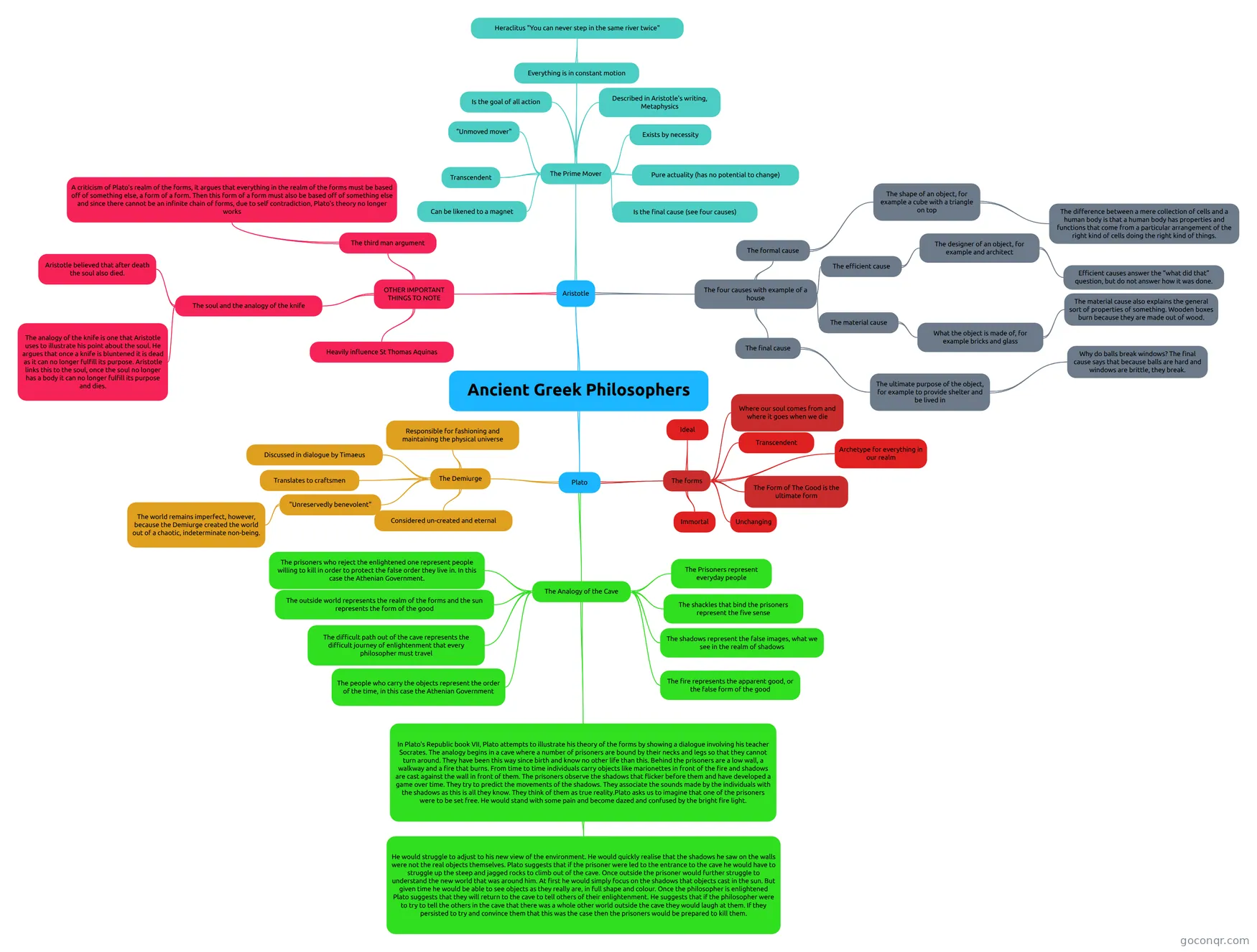 Mind map Ancient Greek Philosophers A description and explanation of both Aristotle and Plato's ideas
-
Mind map ancient Greek influences on philosophy mindmap for topic of ancient greek influences
-
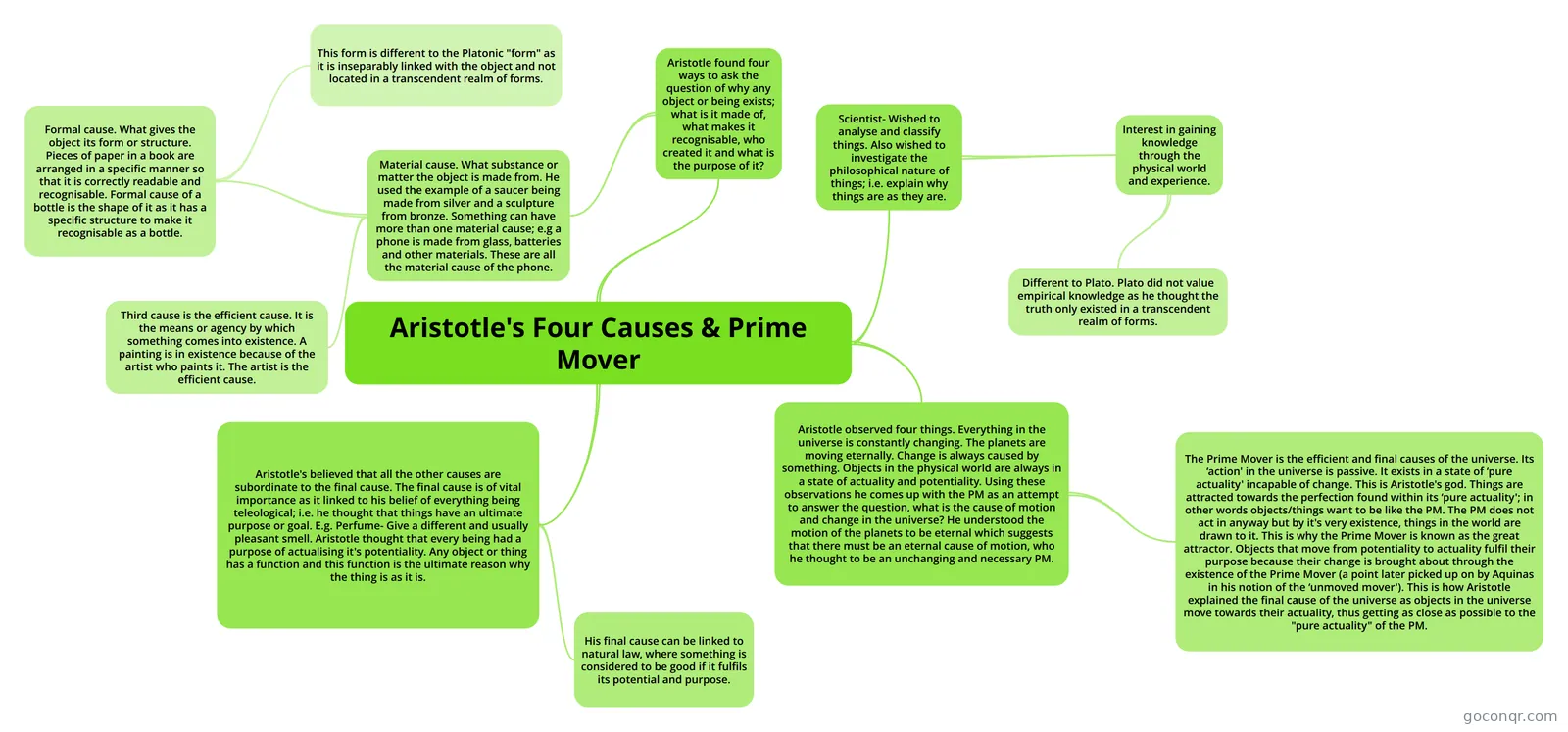 Mind map Aristotle's Four Causes & Prime Mover Philosophy of Religion (OCR)
-
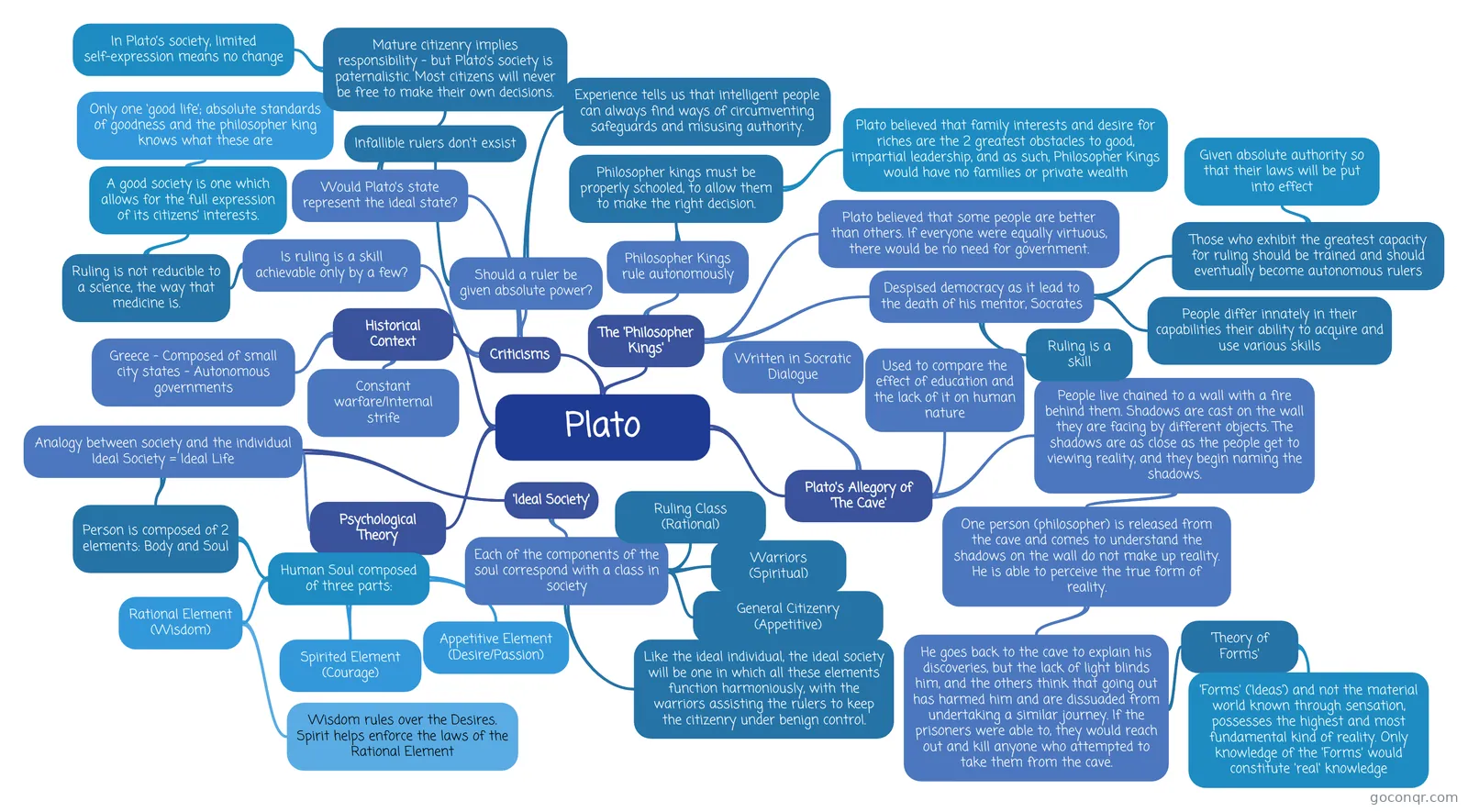 Mind map Plato
-
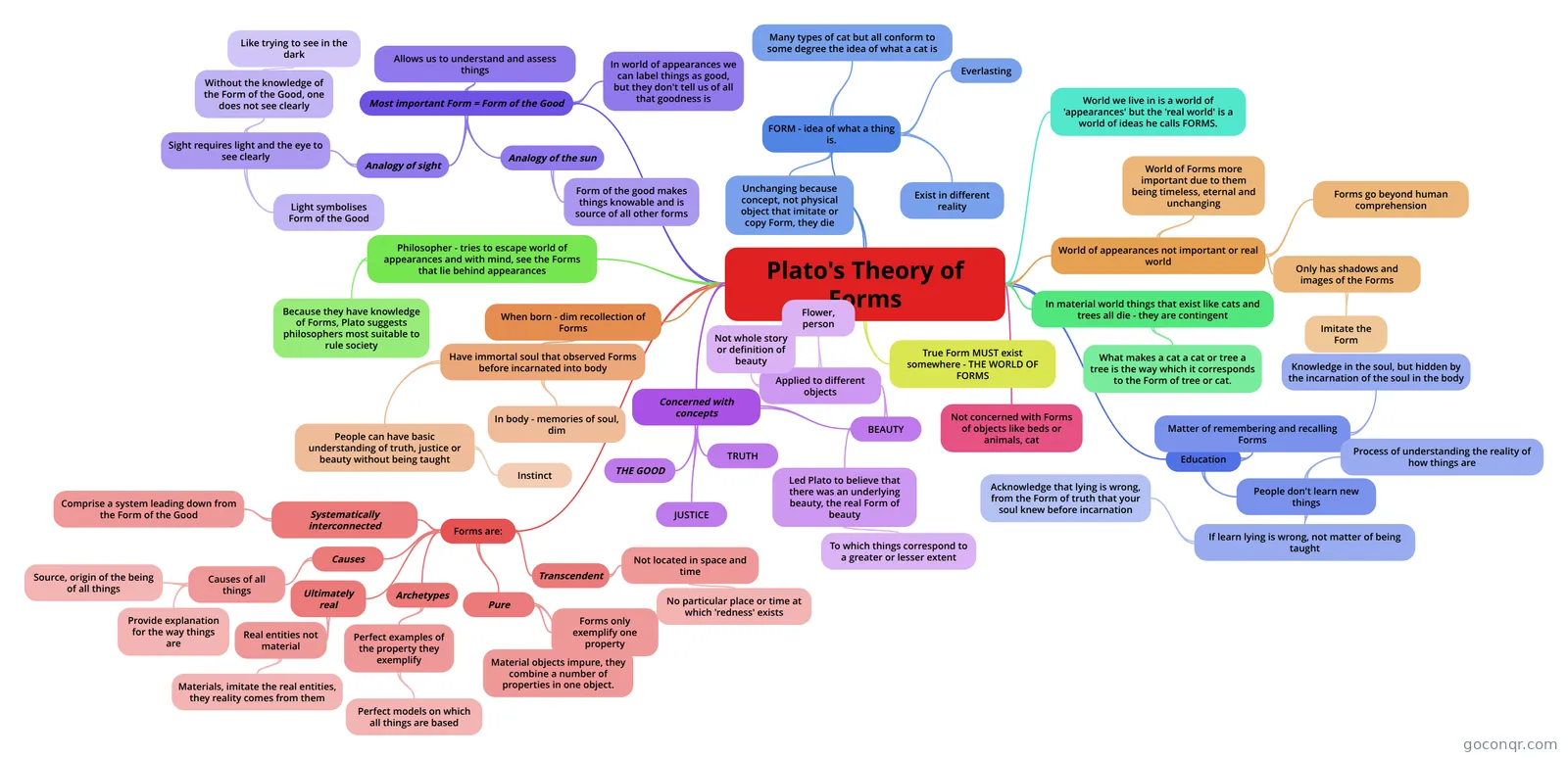 Mind map Plato's Theory of Forms
Quizzes
-
24 questionsAristotle Revision Quiz Aristotle rejected Plato's theory of The Forms because he believed in what type of knowledge?
-
32 questionsPhilosophy - Final Exam [ 32 questions | Part #2] The word "Sophist" is translated from Greek as:
-
6 questionsSaturday Stoic Quiz #1 Stoicism is all about repressing emotions.
-
11 questionsWho did what now?...Ancient Greek edition Left no writings only fragments. The 'first philosopher' because he was concerned with the base nature of t...
-
8 questionsDo you know the presocratic philosophers? aka the muffin men pt1 The world is an ever-living fire (flux) of conflict and struggle. This process is what keeps reality in a s...
Mind maps
See all 50 mind maps-
Plato and Aristotle Summary
-
Aristotle's Politics (350 bc)
-
Ancient Greek Philosophers A description and explanation of both Aristotle and Plato's ideas
-
ancient Greek influences on philosophy mindmap for topic of ancient greek influences
-
Aristotle's Four Causes & Prime Mover Philosophy of Religion (OCR)
-
Plato
-
Plato's Theory of Forms
-
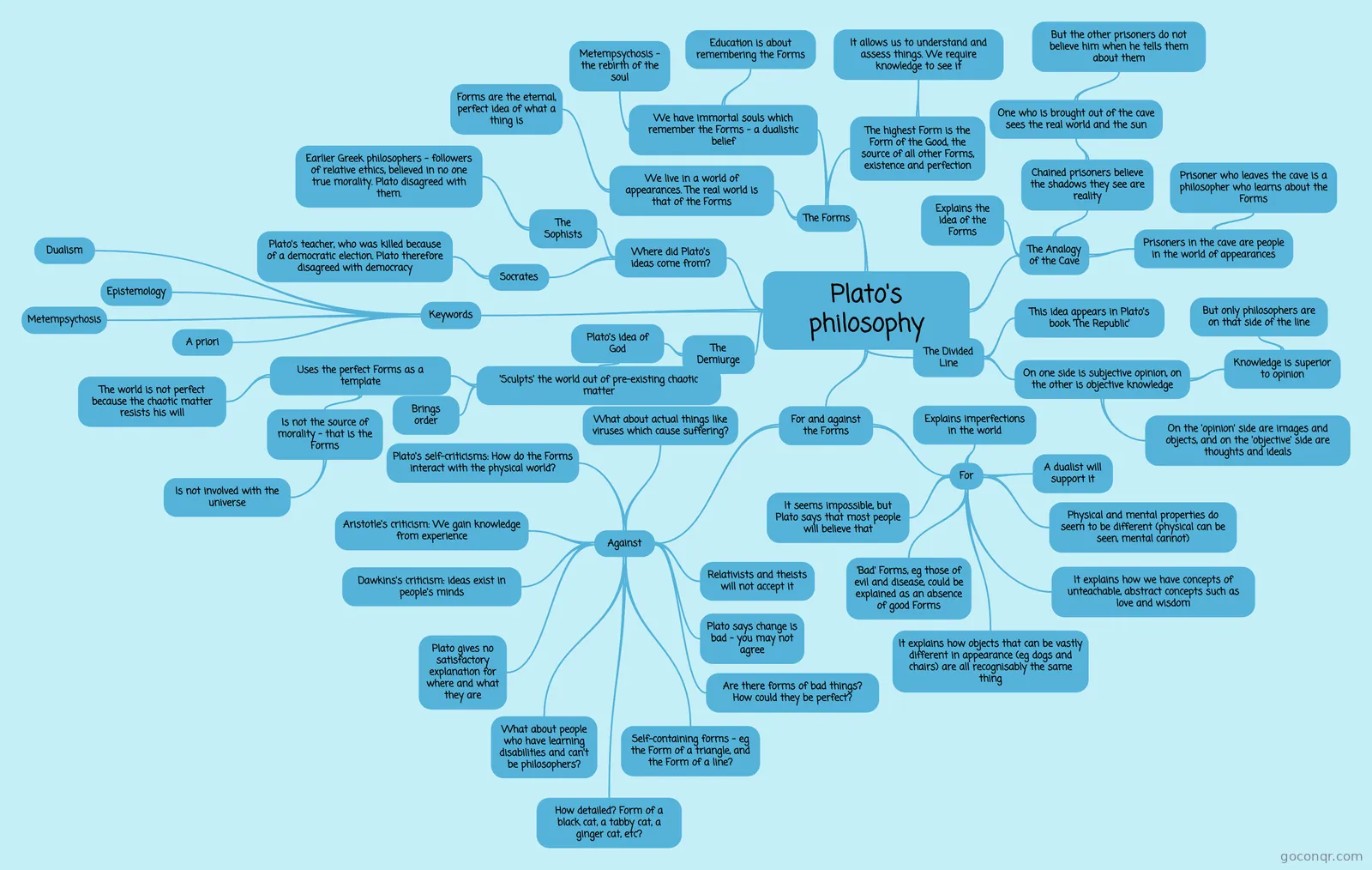 Plato's philosophy An explanation of Plato's idea of the Forms and the Demiurge
Flashcards
See all 24 flashcards-
14 cardsKey Terms: Ancient Greek Philosophy 1: Plato Plato (427-347 BCE)
-
14 cardsKey Terms: Ancient Greek Philosophy 1: Aristotle RS OCR Aristotle
-
7 cardsSocrates Who believed in 'The Art of Discourse' (talking to people, asking questions)
-
21 cardsPlato The Republic What is the Aim of The Republic?
-
12 cardsHellenistic Philosophy and and Ideas Traditional vs new view of the Hellenistic period intellectually
-
18 cardsAncient Greek Philosophy Ancient Greek Philosophy
-
13 cardsParmenides and Phaedo What is Eidos?
-
35 cardsGREEK PHILOSOPHY
Notes
See all 10 notes-
The Similes SummaryThe simile of the ship is designed to demonstrate the failings of a direct democracy and simultaneously highlight the mistreatment of the philosopher within Athenian society. The simile works in conjunction wit...
-
Sources Sources about the Stoics from all (ancient) time periods Sources during the Hellenistic period (323 - 133 BCE)Cleanthes, of Assos, Hymn to Zeus Sources outside the Hellenistic period (after 133 BCE)Diogenes Laertius, ...
-
Aristotle in 3 Minutes
-
Religion SOCRATES Three main ideas The interior life (soul) is essential for leading a good life If a person seeks goodness, truth, justice and self-knowledge is 'healthy', someone seeking wealth, fame and po...
-
Plato's Forms The Cave Analogy Prisoners were chained inside a cave all their lives, watching shadow cast on the walls by a fire One Prisoner escapes his chains, and with great difficulty climbed to the entrance of the cave and to ...
-
Aristotle on the Soul Introduction Aristotle's view of the soul is materialist, which differs from Plato's. Plato was interested in the best ways to run society and the importance of philosophical reasoning for gaining wisdom. Aristotle wa...
-
Symposium 2 Symposium- is love the love of something or of nothing? (Socrates)- Of something (Agathon) -Does love desire what love is? YES- he that desires something is in something and one that desires nothing is in nothing- He ...
-
Socrates,Aristotle and Plato In teaching order-Socrates - Plato - Aristotle1.Socrates was accused of corrupting the youth2.This is the Socratic method3.Plato is Socrates Mouthpiece and his own works were like Socrates' until they eventually...
Slides
More Philosophy topics
About Ancient Greek Philosophy
GoConqr OriginalWhat the resources cover
Most of this unit is made up of mind maps, and they centre on three thinkers. The Socrates map gives his dates, his execution and his place as the first of the great three thinkers of Classical Greece. Plato gets the widest coverage: the Theory of Forms, the Allegory of the Cave, the Republic and justice. Aristotle has maps on eudaimonia, the Four Causes and Prime Mover, and his Politics.
Where to start
Begin with the overview maps, Plato and Aristotle Summary and Ancient Greek Philosophers. They show who taught whom and where the two disagree. Aristotle's map says the world we live in is where true knowledge can be found, which sets him against Plato's two realms.
- Read the Socrates map for background.
- Work through Plato's Theory of Forms and the Allegory of the Cave.
- Move on to Aristotle, then to the Politics map and its six kinds of constitution.
Going deeper
Once the basics are clear, look at evaluation. Strengths and Weaknesses of Plato's Theory of the Forms explains why we recognise the same essential features in different things, and where the theory runs into trouble. The note on The Similes covers the ship simile and what it says about direct democracy and how philosophers were treated in Athens. Some resources mention A-level Philosophy and OCR A-level Religious Studies, so they suit those courses.
Using quizzes and maps together
Read a map, close it, then take a quiz such as Aristotle Revision Quiz, Pre-Socratic Philosophy or Plato quiz. Wrong answers show which map to reopen. Flashcard sets such as the key terms decks on Plato and Aristotle then help you fix the vocabulary.
Where this unit sits
This unit belongs to the History of Philosophy strand in the Philosophy subject. Teachers can use the slide sets on Socrates, Plato and Aristotle as ready-made starting points. Choose one thinker today and see how much you can recall.
Frequently asked questions
Which resource should I open first?
Start with the Plato and Aristotle Summary mind map. It sets out their backgrounds and influences side by side, so the later maps on Forms, the cave and Aristotle's ideas make more sense. After that, try the Aristotle Revision Quiz to see what has stuck.
What do the mind maps cover?
There are over 470 of them. They cover Socrates, Plato's Forms, the Allegory of the Cave and the Republic, Aristotle's Four Causes, eudaimonia and Politics, plus Pre-Socratics and overview maps. Several weigh up the strengths and weaknesses of Plato's Forms.
Are these resources free to use?
Yes. Every resource listed here is free to open, study and take, with no account needed. They were made by GoConqr users rather than by GoConqr itself, so styles and depth vary from one resource to the next.
Which levels and exams do they suit?
Most are at secondary or university level, with a small share of general material. Some resources mention A-level Philosophy, A-level Religious Studies and OCR A-level Religious Studies. School students, university students and professional candidates can all find something, and teachers can use the slides.
Are there quizzes on this page?
Yes, there are more than 20. Examples include the Aristotle Revision Quiz, Pre-Socratic Philosophy and Plato quiz. There are also quizzes that test who did what among the Ancient Greeks. A free account saves your scores and lets you write your own quizzes.
What if I can't find a topic I need?
Try the overview maps, such as Ancient Philosophy, which may point you to the right thinker. If a topic is still missing, you can build your own mind map, flashcards or notes and share them with other learners.