
Modern Philosophy and the Enlightenment
209 resources created by 171 users
This Modern Philosophy and the Enlightenment page on GoConqr gathers community-made quizzes, mind maps, flashcards and notes, from Descartes' Meditations and Locke to Berkeley, Hume, Kant, Rousseau and Spinoza. It's built for university students and school students revising a topic or filling gaps, and for teachers after ready-made material. There are over 200 resources here, including more than 100 mind maps, 50 flashcard decks and 9 quizzes. Pick a thinker, try a quiz to find your gaps, then build your own maps and flashcards.
Top Modern Philosophy and the Enlightenment resources
-
93 questionsPHIL 1010 Final Review Part 2 Berkeley was a rationalist
-
 Mind map René Descartes he
-
58 questionsModern Philosophy Father of modern thought
-
22 cardsIII - Critique's and Convictions of Kant's Programme Attacking Kant's Programme Kant's questions of how it is possible that knowledge can be independent of expe...
-
21 cards0 - Kant - Summary and Analysis Generally credited with effecting a synthesis between the empiricist philosophy of GB and rationalist philo...
-
62 cardsGreat Enlightenment Thinkers What was the Enlightenment?
-
15 cardsLeibniz How does Leibniz argue against atomism?
-
26 cardsHampshire's Enlightenment Nicolaus Copernicus 1473-1543
Quizzes
See all 10 quizzesMind maps
See all 130 mind maps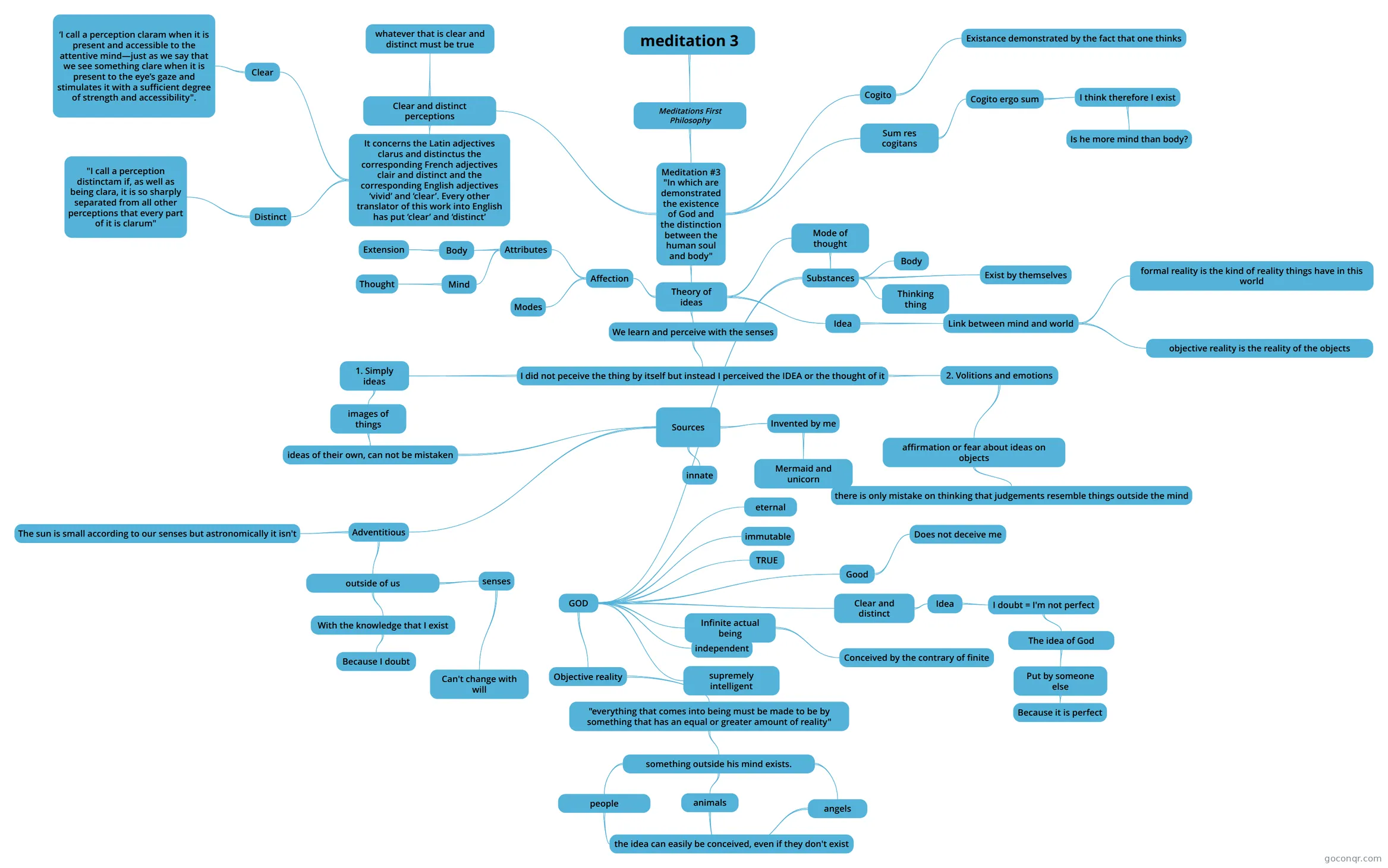

Flashcards
See all 52 flashcards-
22 cardsIII - Critique's and Convictions of Kant's Programme Attacking Kant's Programme Kant's questions of how it is possible that knowledge can be independent of expe...
-
21 cards0 - Kant - Summary and Analysis Generally credited with effecting a synthesis between the empiricist philosophy of GB and rationalist philo...
-
62 cardsGreat Enlightenment Thinkers What was the Enlightenment?
-
15 cardsLeibniz How does Leibniz argue against atomism?
-
26 cardsHampshire's Enlightenment Nicolaus Copernicus 1473-1543
-
9 cardsDescartes Definition of God
Notes
See all 13 notes-
Dissertation Information Kant's Noumenal world: In the Philosophy of Immanuel Kant noumenon, thing in itself and transcendental object are nearly synonymous expressions used to refer to the unknowable,...
-
Descartes Rene Descartes Background Information: Rene Descartes was a 17th century French philosopher (1596 to1650) Is regarded as the Father of Modern Philosophy Metaphysics, Epistemology were areas of interest Descartes was a...
Topics in Modern Philosophy and the Enlightenment
More Philosophy topics
About Modern Philosophy and the Enlightenment
GoConqr OriginalWhat this page covers
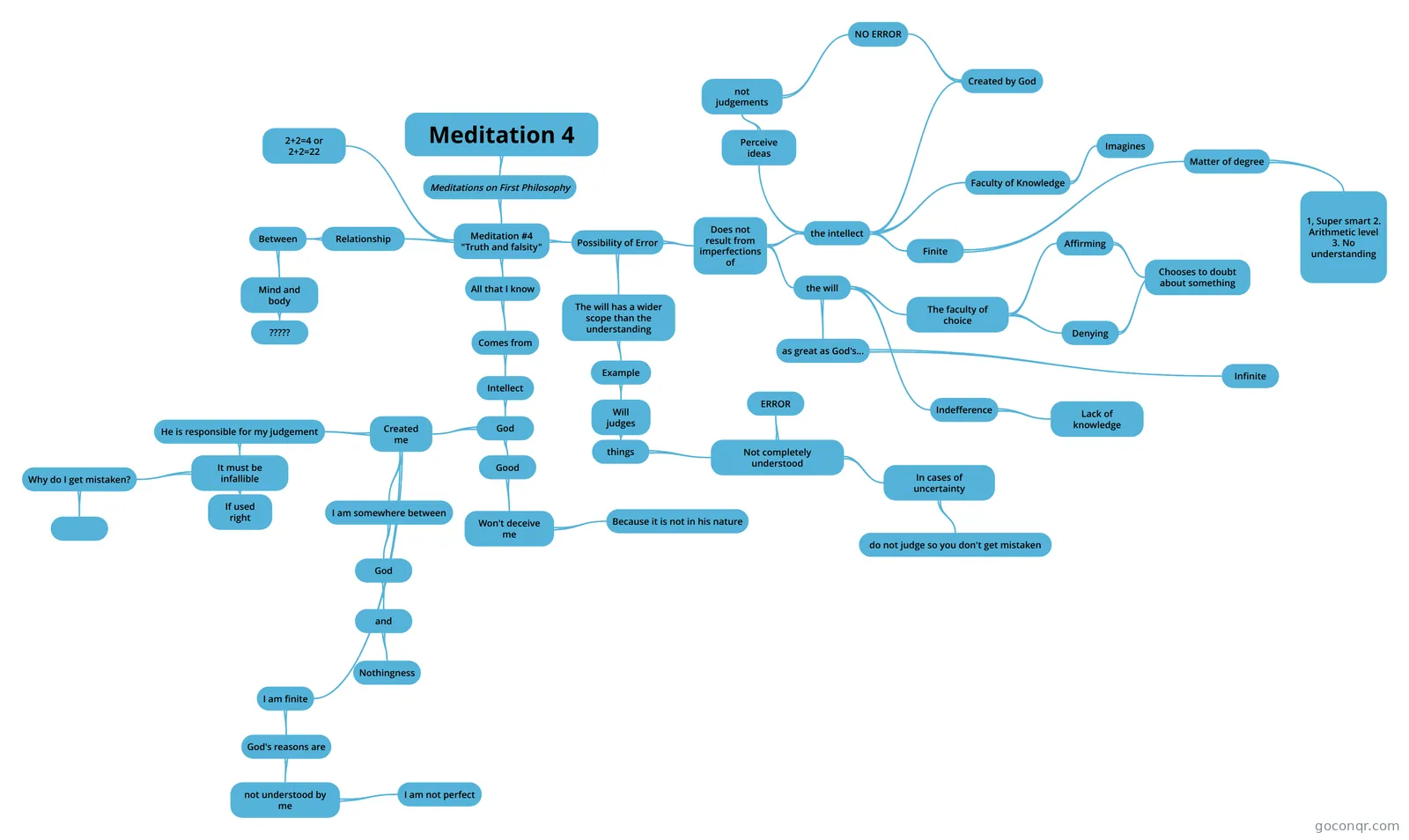
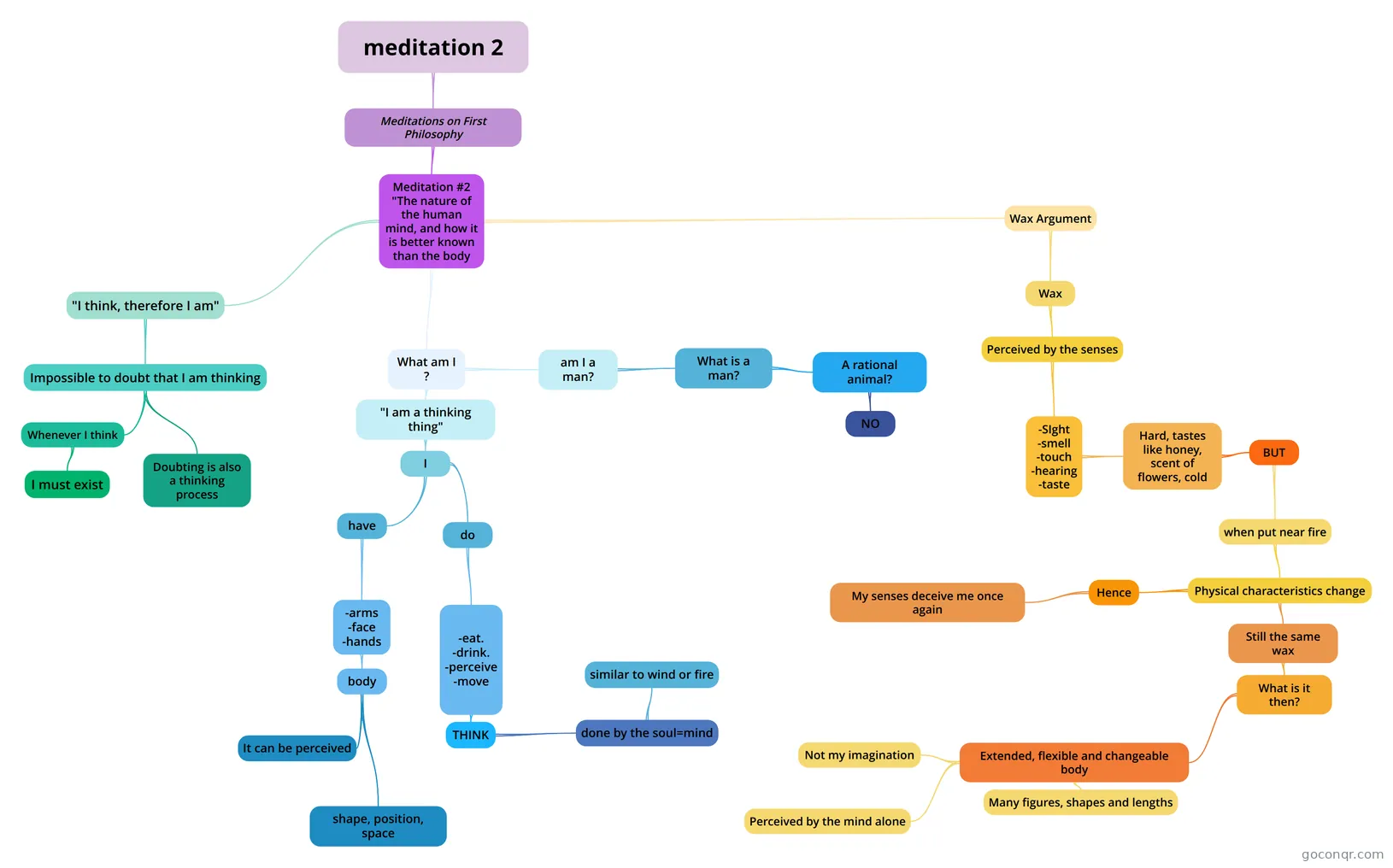
The resources follow the line from Descartes to Kant, with the wider Enlightenment alongside. Descartes is well served: the René Descartes mind map sets out the Meditations, the dreaming argument, the evil demon argument and the rebuilding of foundations. The Meditations on First Philosophy mind map goes meditation by meditation, including the waves of doubt that start with sensory deception.
Where to start
If Descartes is new to you, begin with the René Descartes mind map, then read one of the Descartes notes. One of them explains what a real distinction is: a technical term for the difference between substances. Next, move to the John Locke mind map, which introduces him as an influential Enlightenment thinker and a father of classical liberalism.
Then turn to the empiricists and rationalists. The flashcard deck Berkeley’s idealism asks about his attack on primary and secondary qualities. The Hume mind maps cover Hume's fork, belief and imagination, and the principles of association.
Kant and beyond
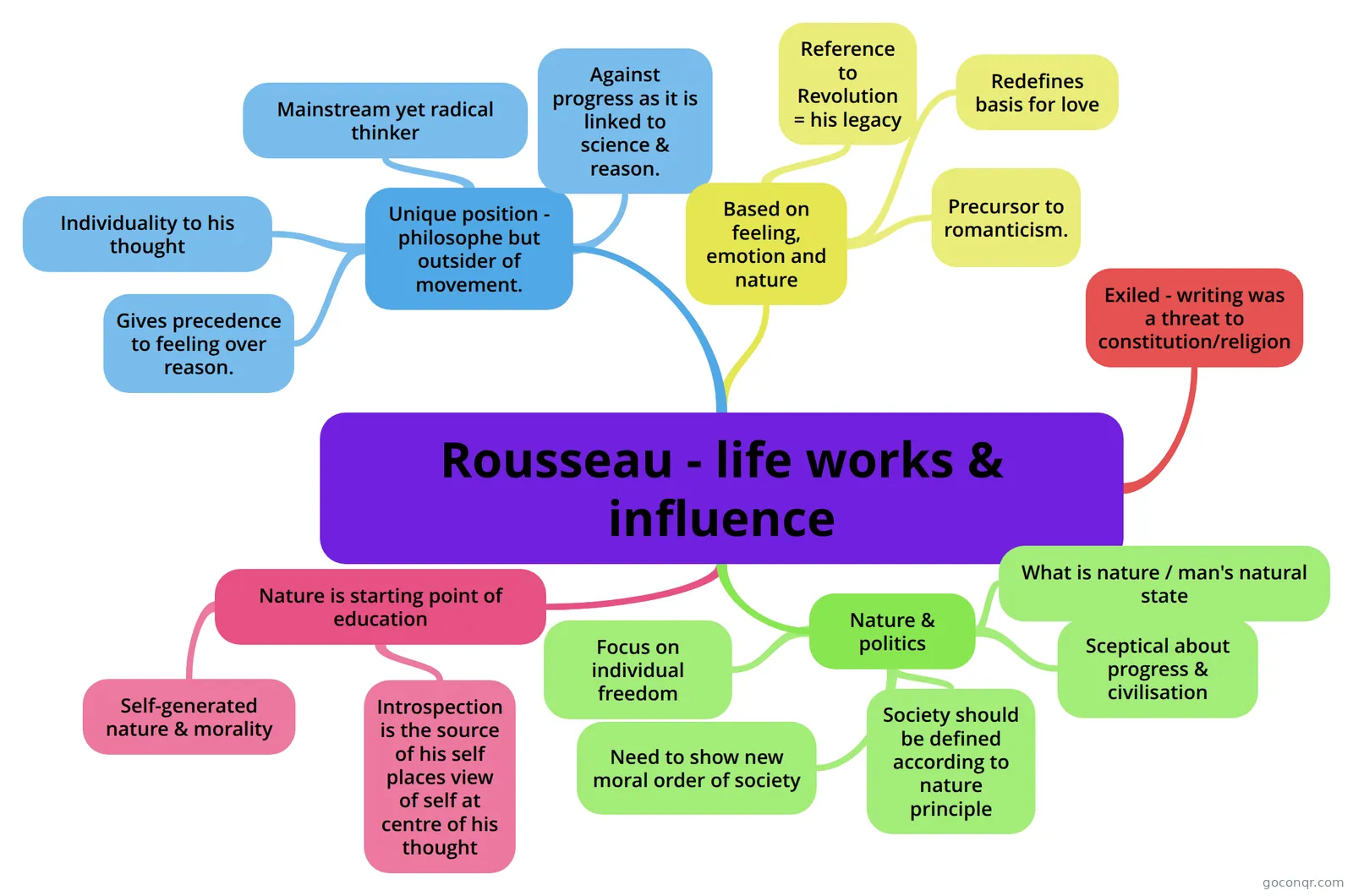
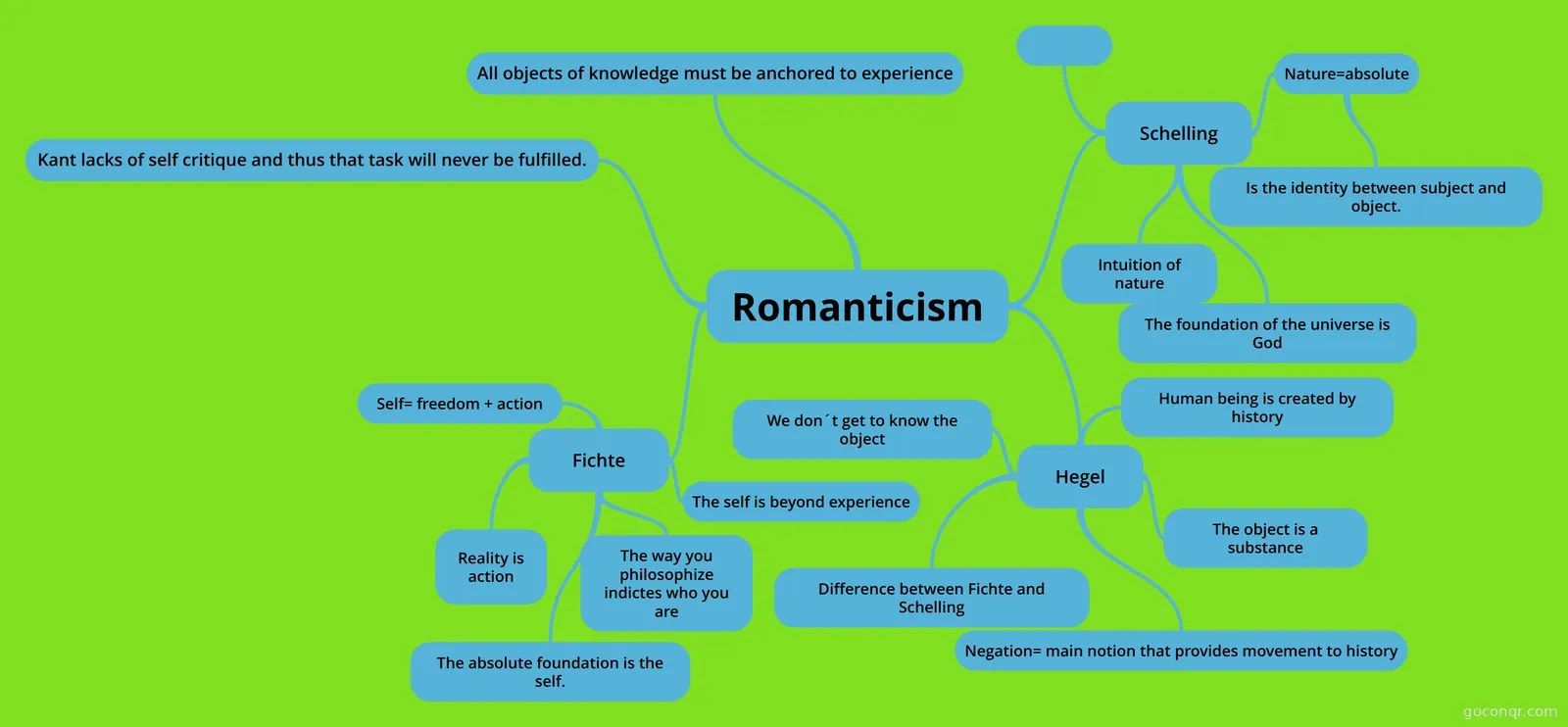
Kant has a run of flashcard decks. The summary deck describes him as bringing together empiricism and rationalism. Other decks cover his distinctions, the Transcendental Aesthetic and Logic, and critiques of his programme. There are also resources on Rousseau, Spinoza, Leibniz, Montesquieu, Voltaire, Nietzsche, Marx and Romanticism, so you can see how ideas moved on.
Using quizzes and maps together
Read a mind map first to see the shape of an argument. Then take a quiz. The quiz called Modern Philosophy mixes thinkers and ideas such as the tabula rasa, noumena and the gap between "is" and "ought". The quiz Descartes - The Meditations checks the detail. Wrong answers show you which map or deck to reopen.
Where it sits
This unit belongs to the History of Philosophy strand of the Philosophy subject. Choose one thinker, work through a map and a quiz, then make your own flashcards to fill the gaps.
Frequently asked questions
Which resource should I open first?
Start with the René Descartes mind map. It lays out the Meditations, including the dreaming argument and the evil demon argument, and gives you a base for the empiricist and rationalist resources that follow. Then try the quiz Descartes - The Meditations to check what stuck.
What do the mind maps cover?
There are over 100 of them. They cover Descartes and each Meditation, Locke, Rousseau, Spinoza, Leibniz, Kant, Nietzsche and Romanticism. Several give overviews of the Enlightenment and its philosophers, while the Hume maps look at Hume's fork, belief and imagination.
Are the quizzes useful for comparing thinkers?
Yes. The quiz PHIL 1010 Final Review Part 2 asks what Locke and Berkeley each believed about the cause of our ideas. The Modern Philosophy quiz also moves across several thinkers. Both help you separate positions that are easy to mix up.
Are these resources free to use?
Yes. Every resource on this page is free to open, study and take, with no account needed. They were made by GoConqr users, not by GoConqr. A free account also saves your quiz scores and lets you make your own quizzes, mind maps, flashcards and notes.
Who is this page for?
It suits university students and school students who want to revise a thinker or fill gaps, and teachers looking for ready-made material. Most resources are at university level, with a good share for school students.
What if the thinker I need is missing?
Look at the general Enlightenment maps and the flashcard decks on great Enlightenment thinkers first, as they may cover your thinker briefly. If not, you can build your own map or flashcards from your course notes.