
God: Nature, Attributes and Arguments for Existence
188 resources created by 143 users
This Philosophy of Religion page on GoConqr gathers community-made mind maps, flashcards, quizzes, slides and notes on the nature and attributes of God and the main arguments for his existence, from the ontological and cosmological arguments to design and morality. It's built for school students revising for A-level or GCSE courses, and for teachers after ready-made material. There are over 180 resources here, including more than 120 mind maps and over 140 contributors. Pick an argument, try a quiz to find your gaps, then make your own revision set.
Top God: Nature, Attributes and Arguments for Existence resources
-
22 cardsThe Moral argument The Moral argument
-
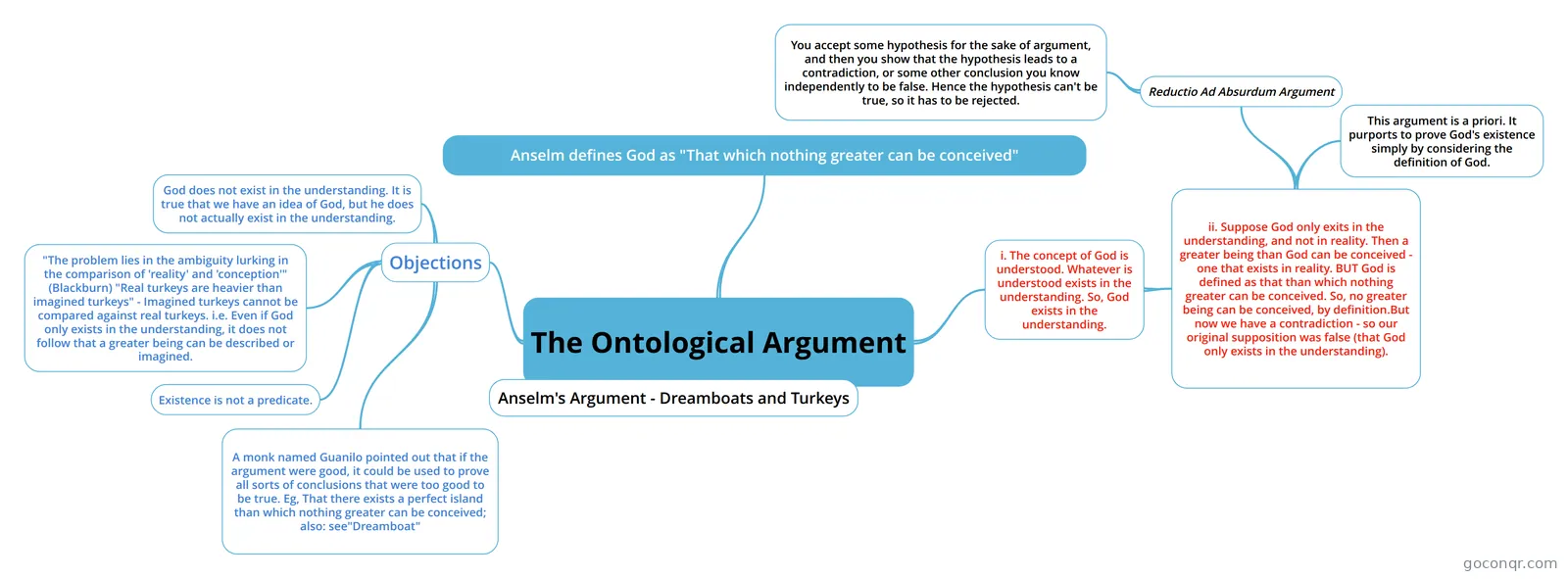 Mind map The Ontological Argument
-
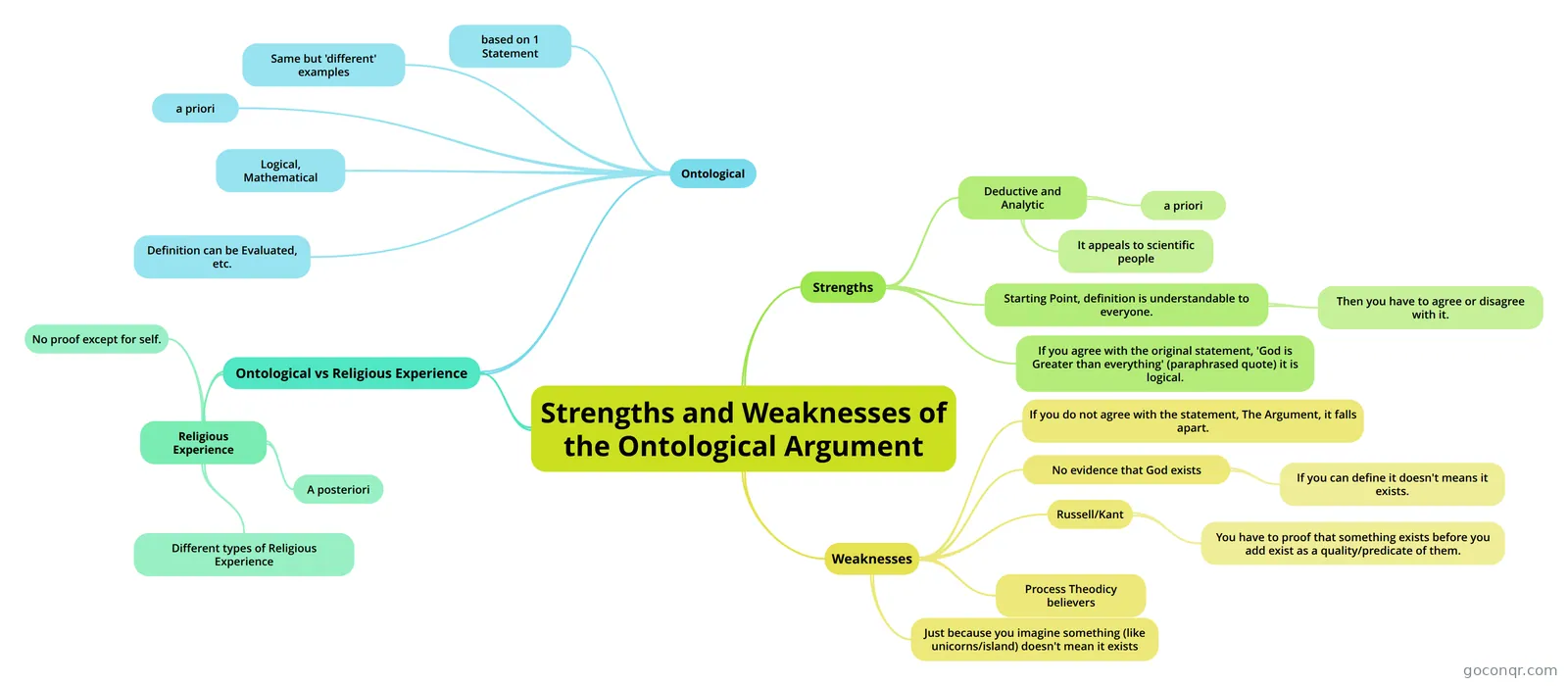 Mind map Strengths and Weaknesses of the Ontological Argument The basic Strengths and the Weaknesses of the Ontological Argument.
-
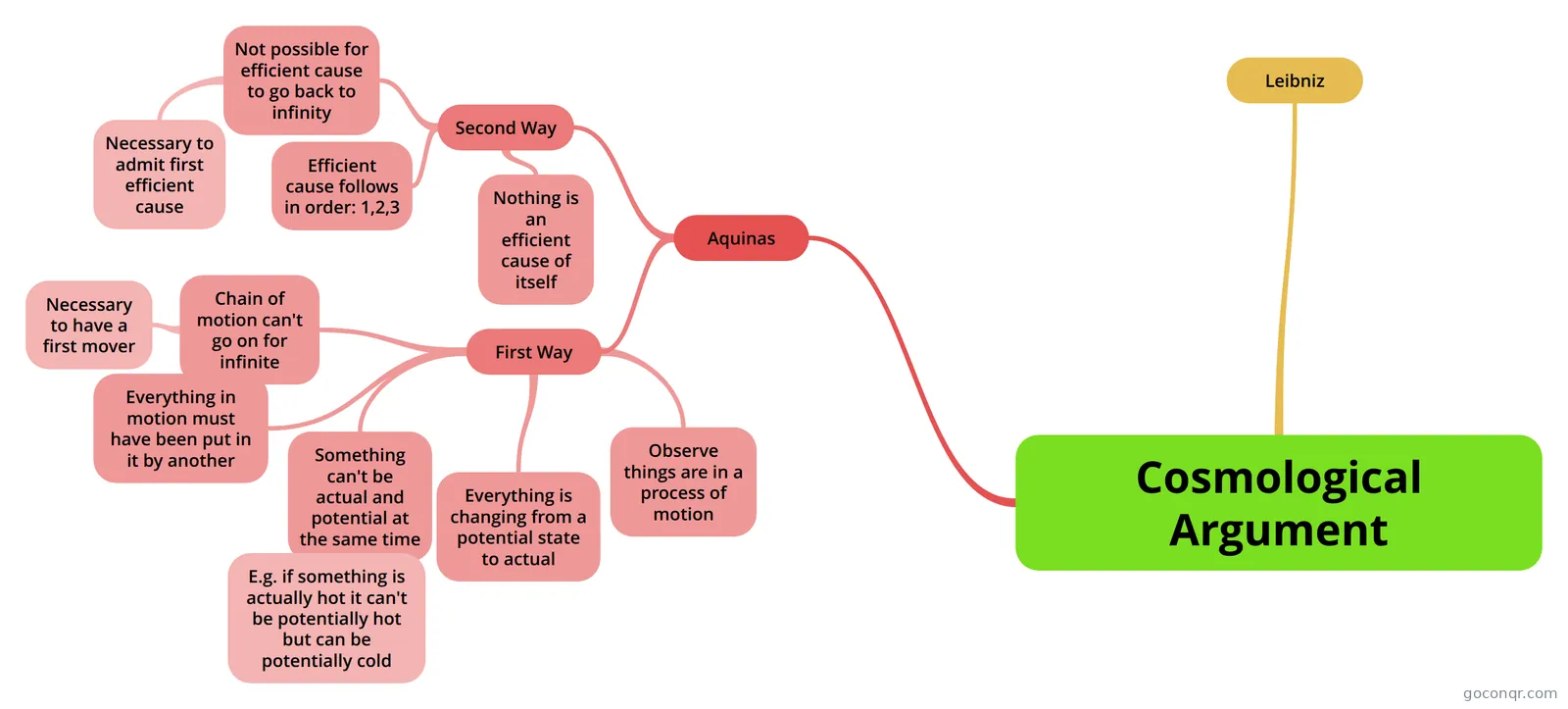 Mind map Cosmological Argument
-
3 questionsThe Design Argument
-
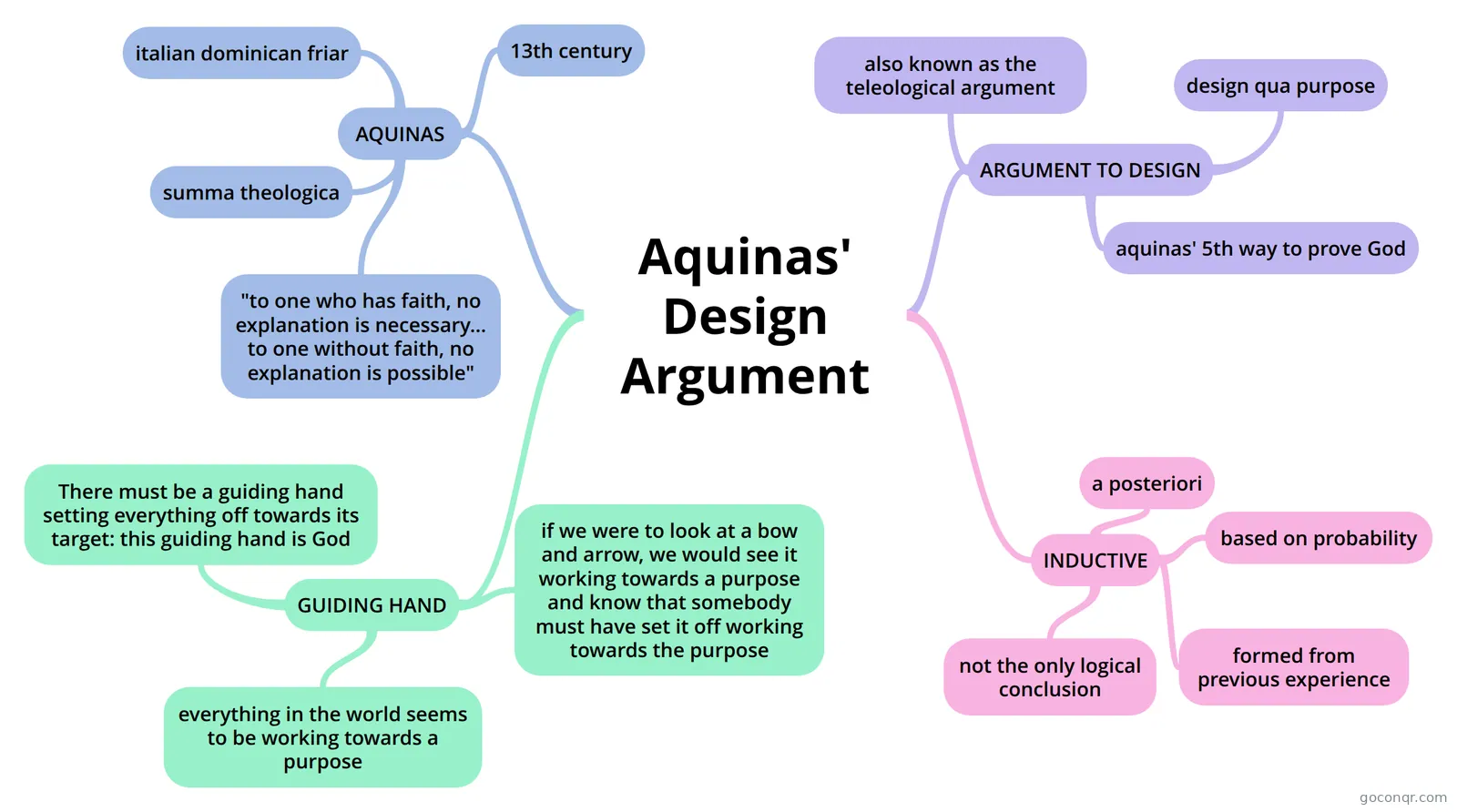 Mind map Aquinas' Design Argument
-
 Mind map Philosophy of Religion
-
45 cardsAttributes - Nature of G Aqui: simple as G signifies 'existing'.
Quizzes
Mind maps
See all 130 mind maps-
The Ontological Argument
-
Strengths and Weaknesses of the Ontological Argument The basic Strengths and the Weaknesses of the Ontological Argument.
-
Cosmological Argument
-
Aquinas' Design Argument
-
Philosophy of Religion
-
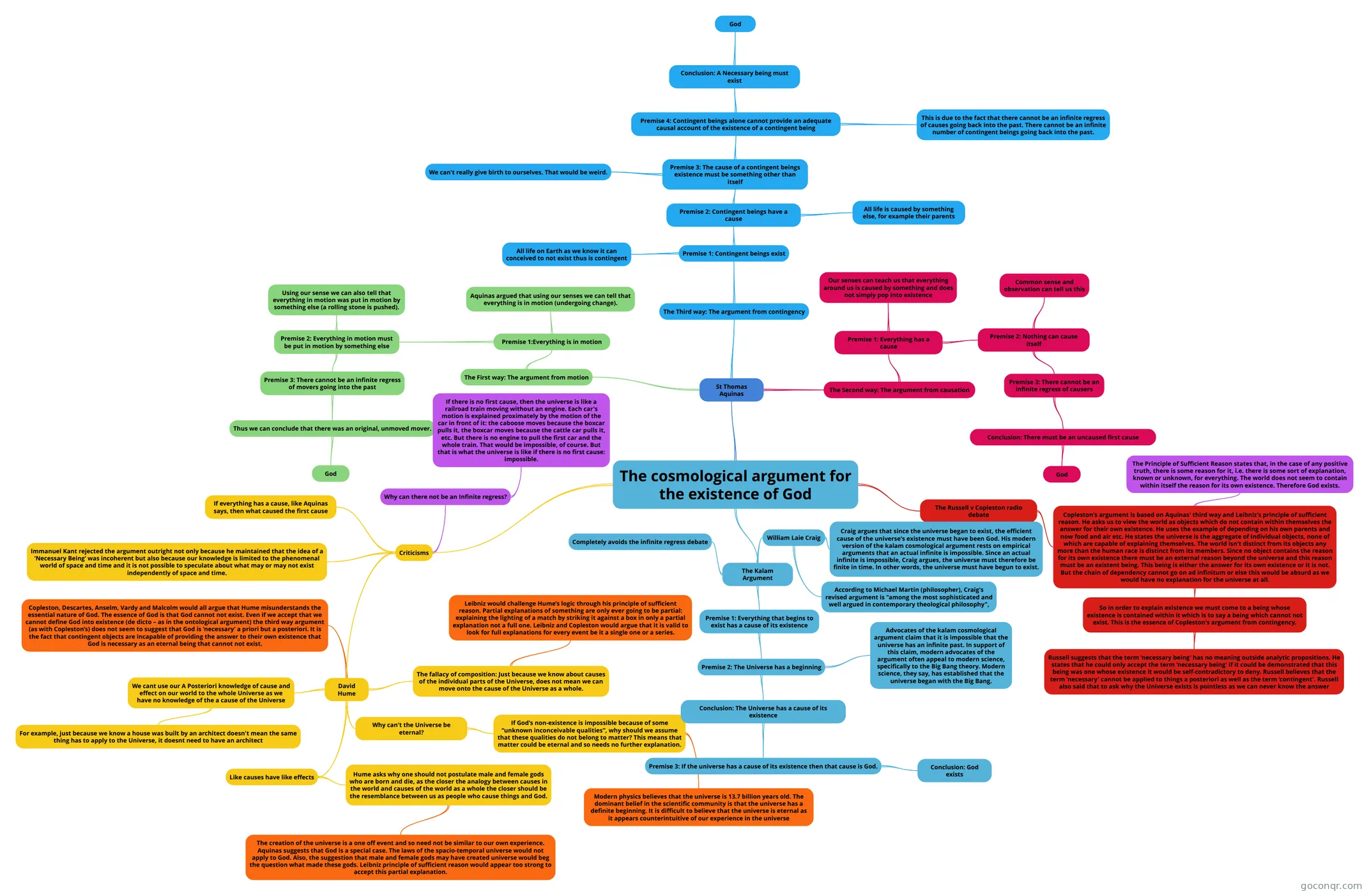 The cosmological argument for the existence of God I DID A THING
-
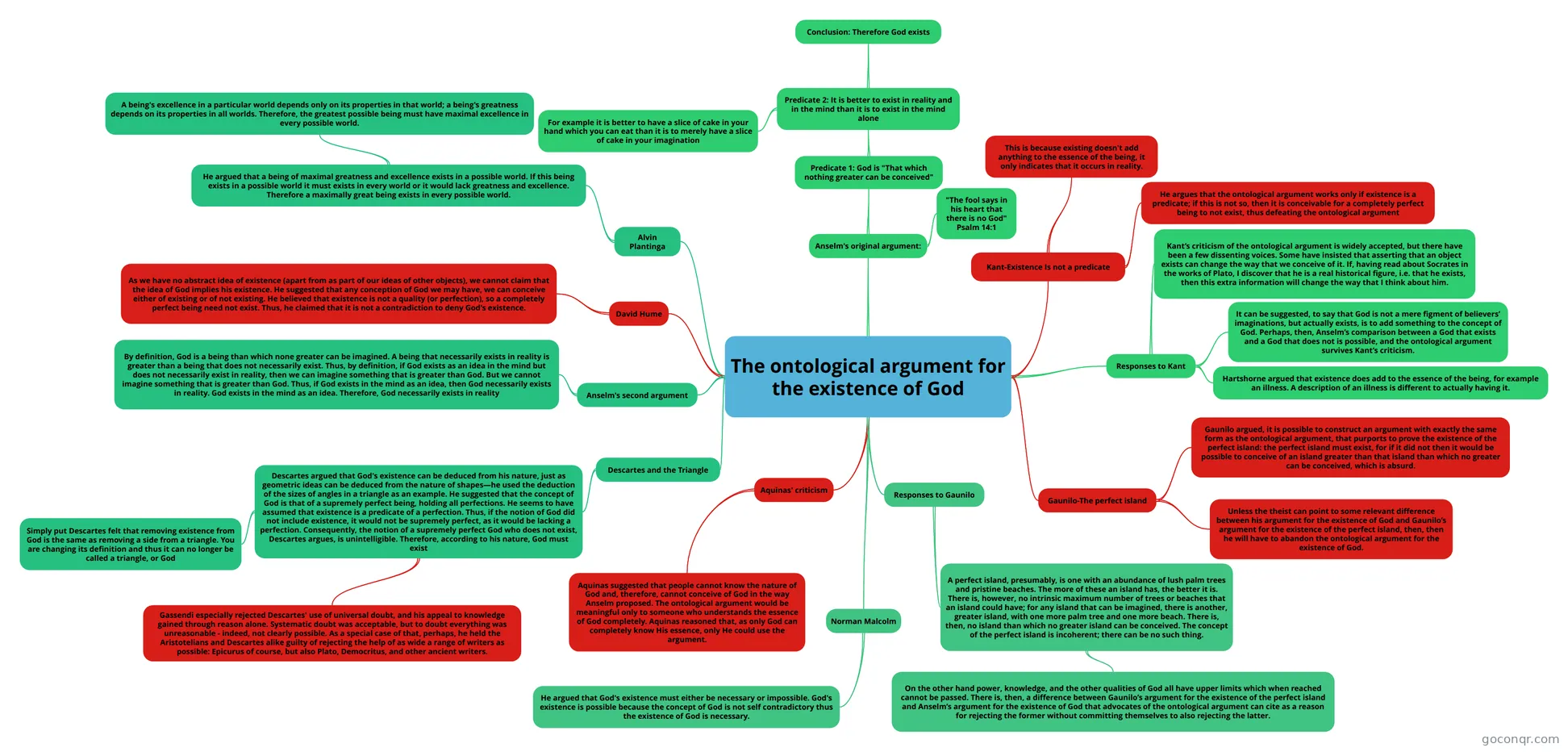 The ontological argument for the existence of God An overview of what the ontological argument is and the arguments for and against it
-
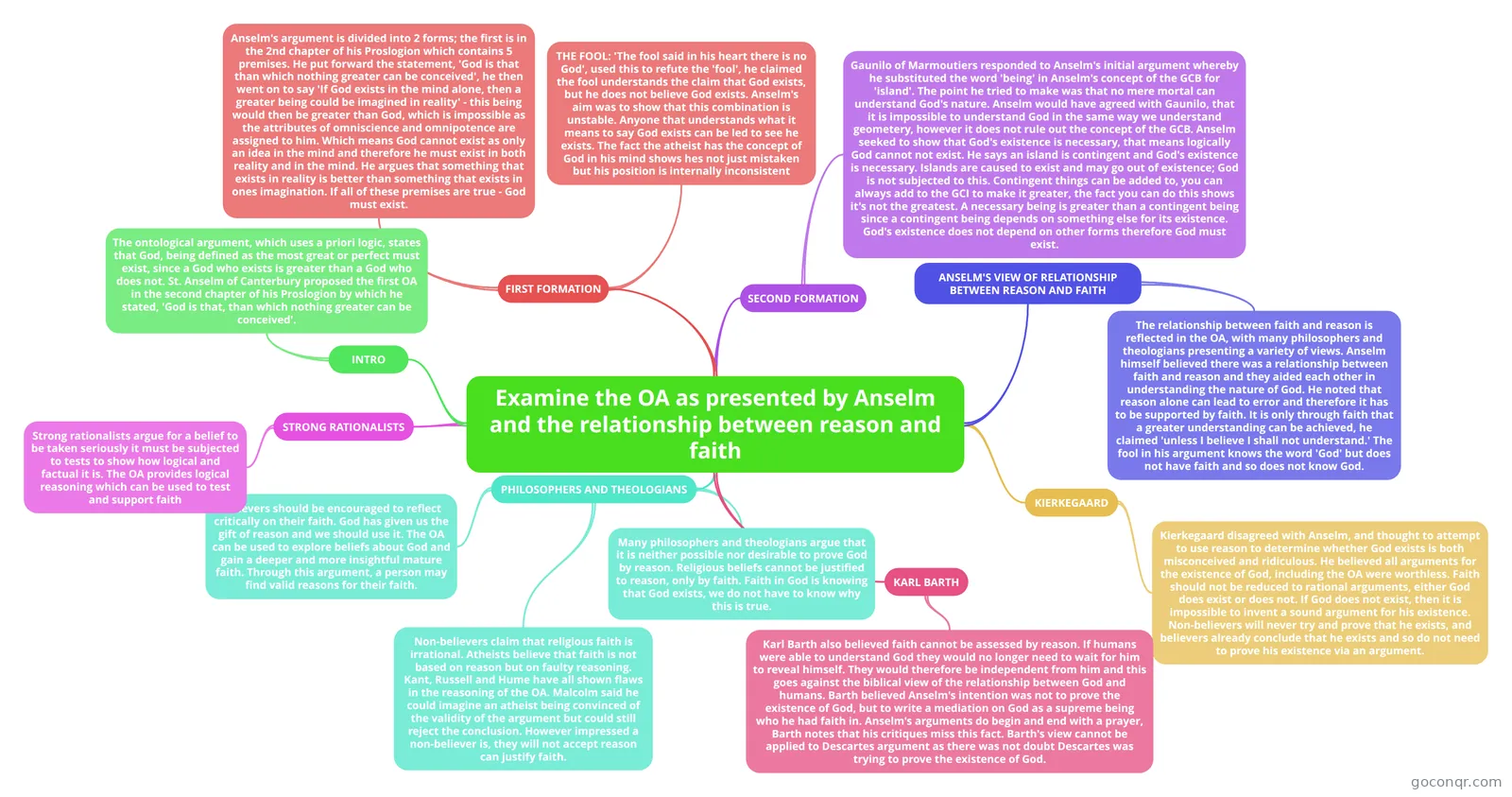 Examine the OA as presented by Anselm and the relationship between reason and faith
Flashcards
See all 41 flashcards-
22 cardsThe Moral argument The Moral argument
-
45 cardsAttributes - Nature of G Aqui: simple as G signifies 'existing'.
-
36 cardsthe cosmological argument :) What is the telelogical/design argument?
-
10 cardsRS Philosophy existence of God
-
15 cardsThe Cosmological Argument What is the God of Classical Theism?
-
6 cardsKey Words used in arguments for/against God Key words used to describe arguments for and against god
-
11 cardsOntological Argument- Key Words
-
7 cardsAquinas
Notes
-
The Argument from Morality The moral argument This is an argument for the existence of God. This argument can be found in a number of writings, including those of the author and theogian, C.S. Lewis (1898 - 1963). What is the moral argument? Th...
-
The design argument Overview of the design argument Design is the result of intelligent thought The universe shows evidence of being designed (eg gravity) This suggests that a being of higher power created it to be so The universe is too...
-
The Argument from Miracles The Argument from Miracles–Peter Kreeft A miracle is an event whose only adequate explanation is the extraordinary and direct intervention of God. There are numerous well-attested miracles. Therefore, there are numero...
Topics in God: Nature, Attributes and Arguments for Existence
More Philosophy topics
About God: Nature, Attributes and Arguments for Existence
GoConqr OriginalWhat this unit covers
The unit brings together revision material on the nature of God, the attributes of God and the classic arguments for existence. The listed resources mention A-level Religious Studies, A-level Philosophy and GCSE Religious Studies, so most of it suits secondary courses. Mind maps make up the bulk, backed by flashcards, a few quizzes, slide sets and notes.
Where to start
Begin with the arguments one at a time. For the ontological argument, open the mind map The Ontological Argument, which sets out Anselm's definition of God as that which nothing greater can be conceived. Then read Strengths and Weaknesses of the Ontological Argument, which looks at why it is deductive, analytic and a priori.
Next, move to the cosmological argument. The flowchart Cosmological argument explains that it is a posteriori and leads into Aquinas' Three Ways, including the Prime Mover. The mind map Cosmological Argument follows the First Way: things move from potential to actual, and nothing can be both at once.
Design and morality
- The notes The design argument give an overview: the universe shows signs of design, which suggests a designer.
- The mind map Aquinas' Design Argument explains why it is inductive and based on probability.
- The mind map Hume's Challenges to the Teleological Argument helps you weigh up criticism.
- The notes The Argument from Morality and the flashcards The Moral argument cover C.S. Lewis and Kant.
Using quizzes and maps together
Read a mind map first, then test yourself. The quiz The Design Argument is a fill-in-the-blank check on Paley and a posteriori reasoning. Anything you miss, go back to the matching map, then turn the gaps into flashcards. There are also flashcard decks on omnipotence, omniscience and God's simplicity for the attributes side of the unit.
Where it fits
This unit sits in the Philosophy of Religion strand of Philosophy. Teachers can use the maps as a starting point for lessons or essay planning, such as the mind map on definitions of God. Choose one argument today and see what you can add yourself.
Frequently asked questions
Which resource should I open first?
Start with the mind map The Ontological Argument, then Strengths and Weaknesses of the Ontological Argument. Both are near the top of the page and cover Anselm's definition of God and the main points for and against. After that, move on to the cosmological argument.
What do the quizzes cover?
The page has a few quizzes. One is The Design Argument, a fill-in-the-blank quiz on Paley and why the argument is a posteriori. Others are titled cosmological and Cosmological Argument. Use them after reading a mind map to see which points you can recall.
Which exams are these resources suited to?
The listed resources mention A-level Religious Studies, A-level Philosophy and GCSE Religious Studies. Most of the material is aimed at secondary students, with a smaller share at university level. Check your own specification to see which arguments and thinkers your course expects.
Are the resources free, and who made them?
Every resource here is free to open, study and take, with no account needed. They were made by GoConqr users, not by GoConqr itself. A free account also saves your quiz scores and lets you create your own quizzes, mind maps, flashcards and notes.
Does the unit cover the attributes of God?
Yes. The mind map Attributes of God gives an overview, and there are flashcard decks on omnipotence, omniscience and God's simplicity. Other listed items include a slide set on immanence and transcendence and flashcards on Boethius and the nature of God.
What if the topic I need is missing?
Try nearby titles first, as many arguments appear under several names, such as design and teleological. You can also make your own mind map, flashcards or notes on the missing topic and use them alongside the community resources here.