
Normative Ethical Theories
65 resources created by 54 users
This Normative Ethical Theories page on GoConqr gathers community-made mind maps, quizzes, flashcards, notes and slides, from utilitarianism and Kantian ethics to virtue ethics, natural moral law and situation ethics. It's built for school students revising a topic, university students and professional candidates filling gaps, and teachers after ready-made material. There are over 600 resources here, including more than 70 quizzes, over 400 mind maps and more than 90 flashcard decks, with a clear lean towards A-level work. Pick a theory, try a quiz, then see what you remember.
Top Normative Ethical Theories resources
-
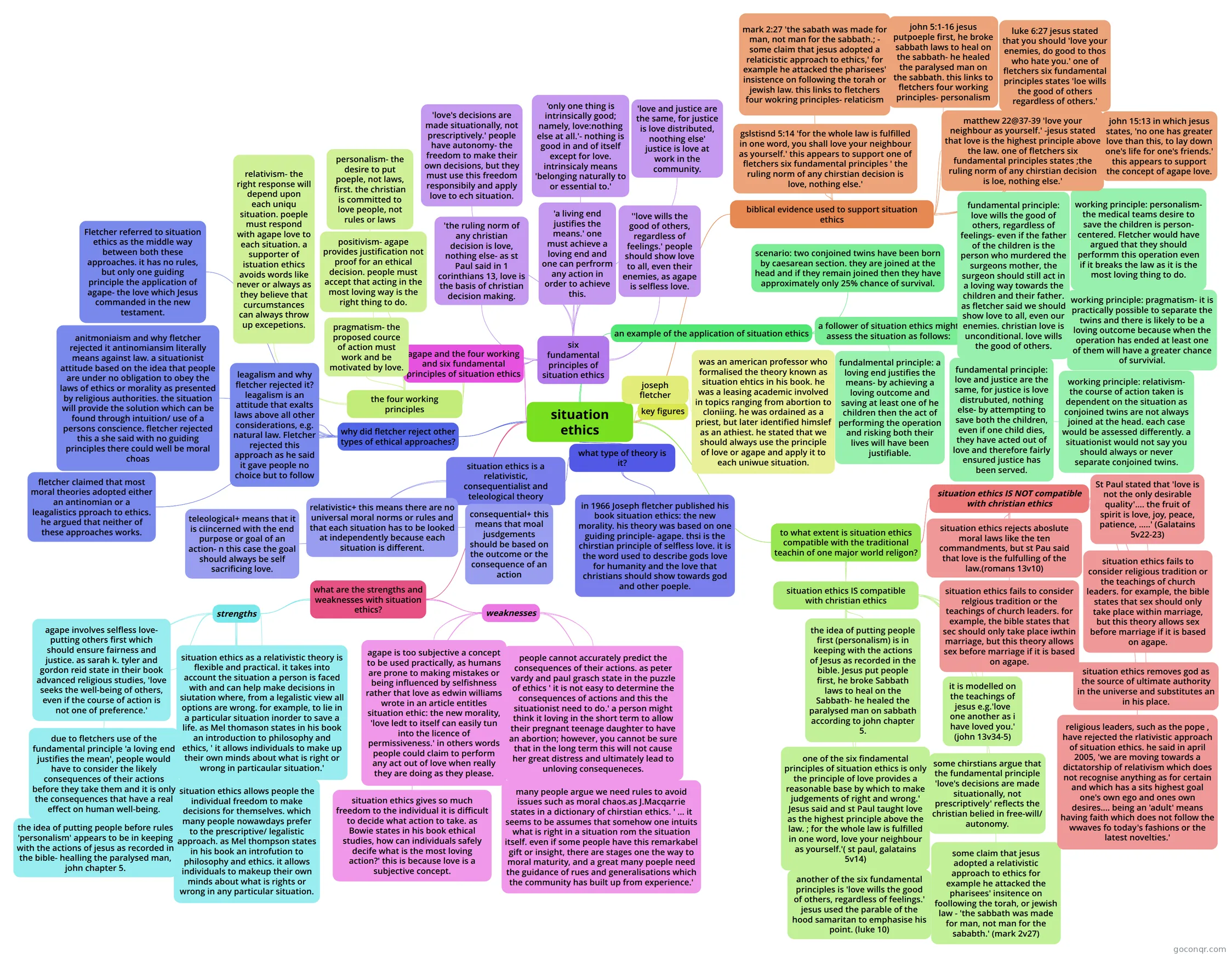 Mind map situation ethics everything needed to know for situation ethics
-
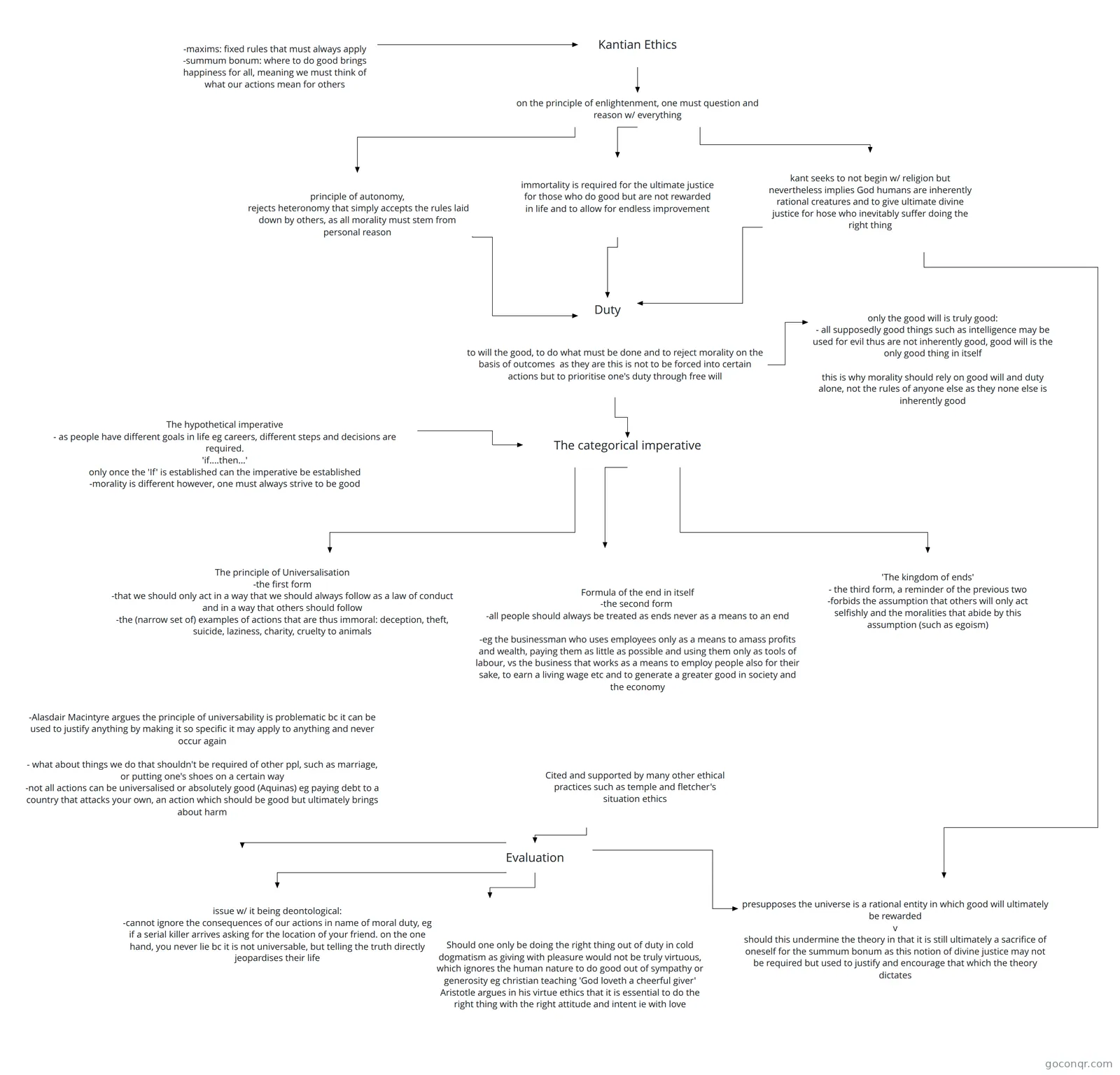 Flowchart Kantian ethics
-
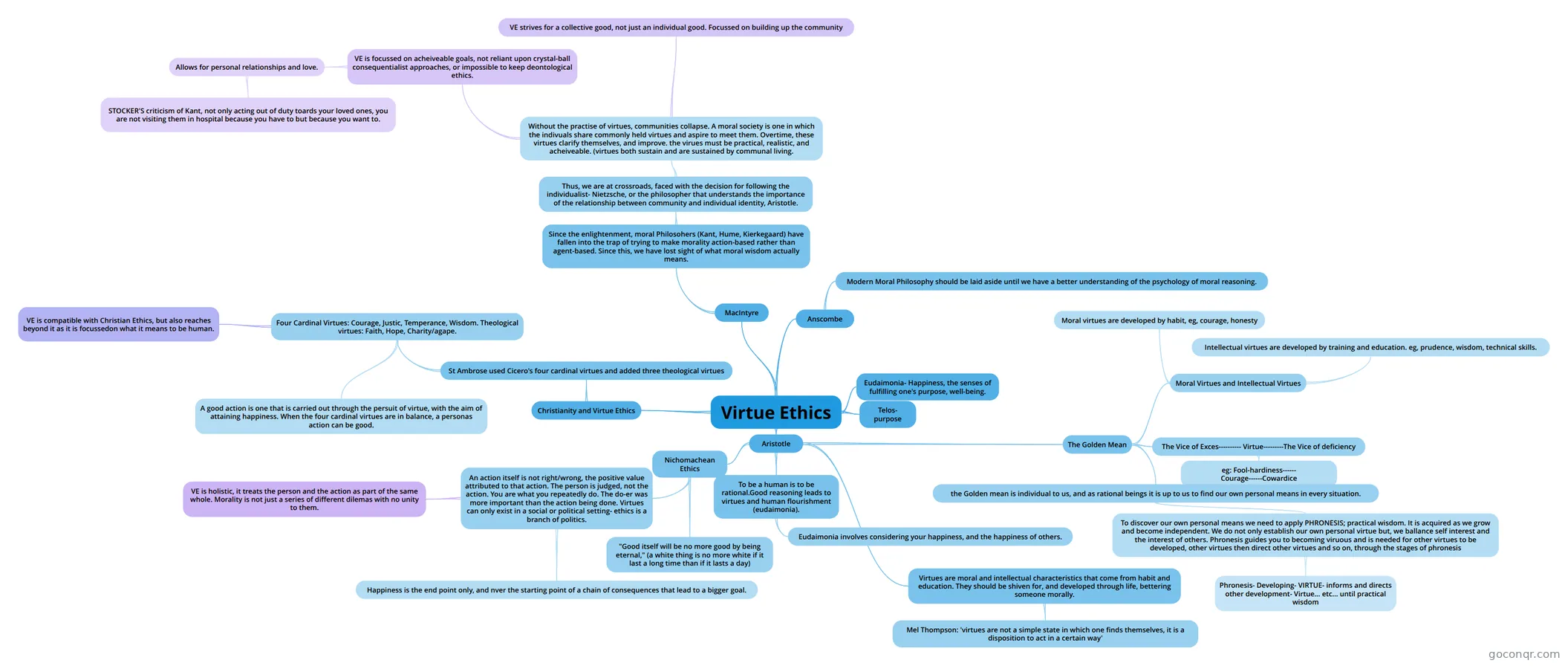 Mind map Virtue Ethics
-
30 questionsEthics Exam 2 What is the human function, according to Aristotle is
-
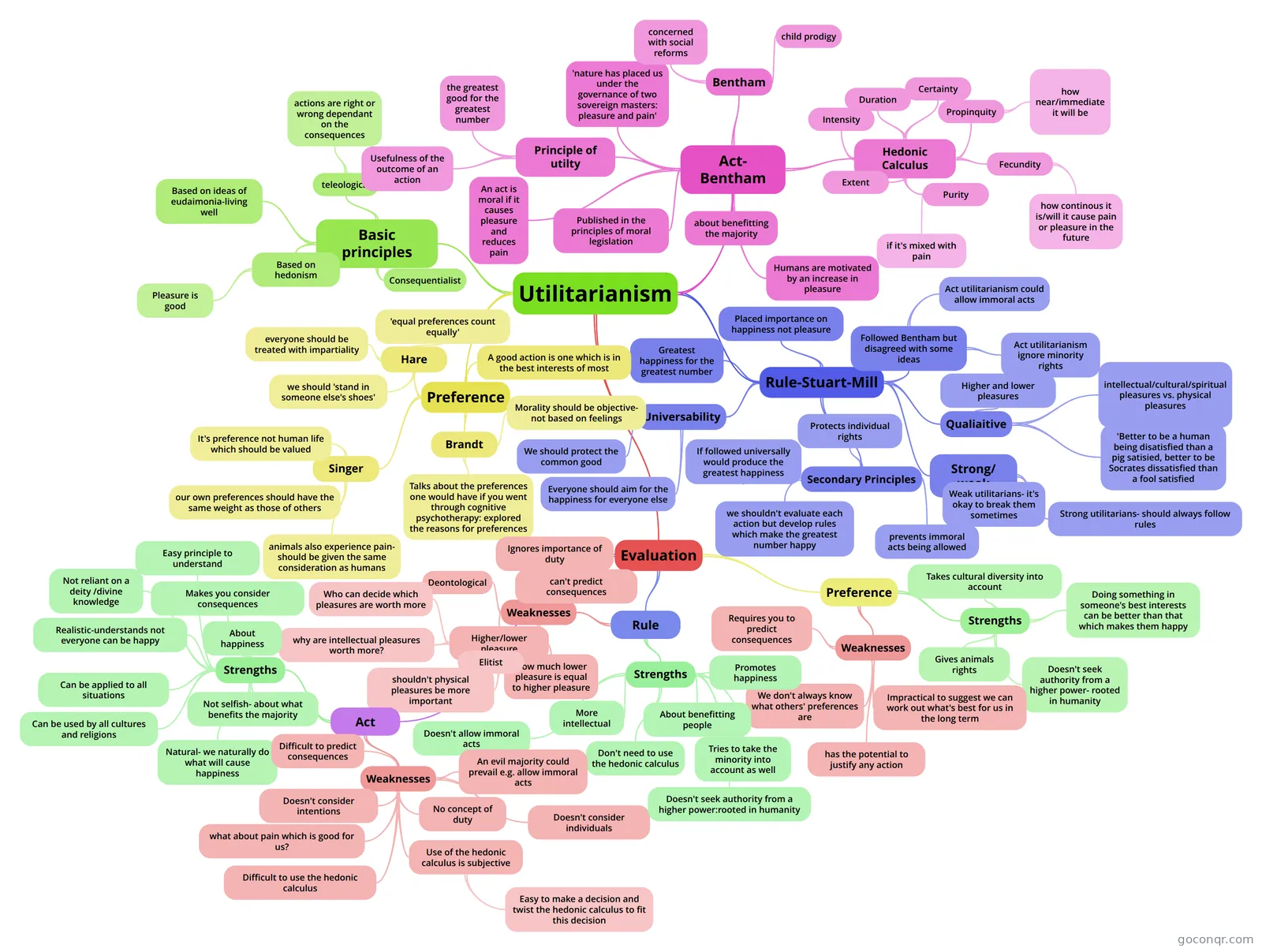 Mind map Utilitarianism
-
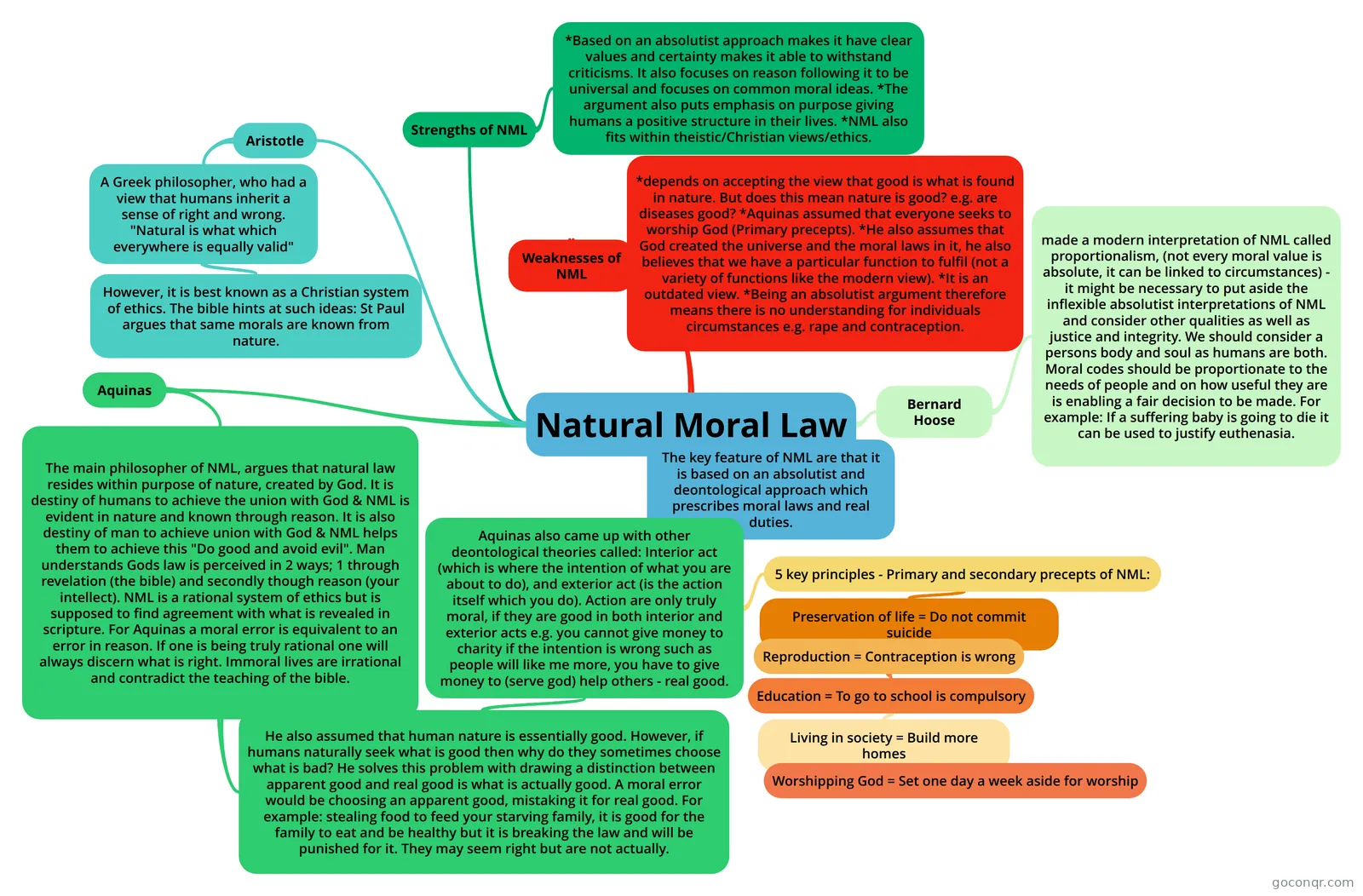 Mind map Natural Moral Law
-
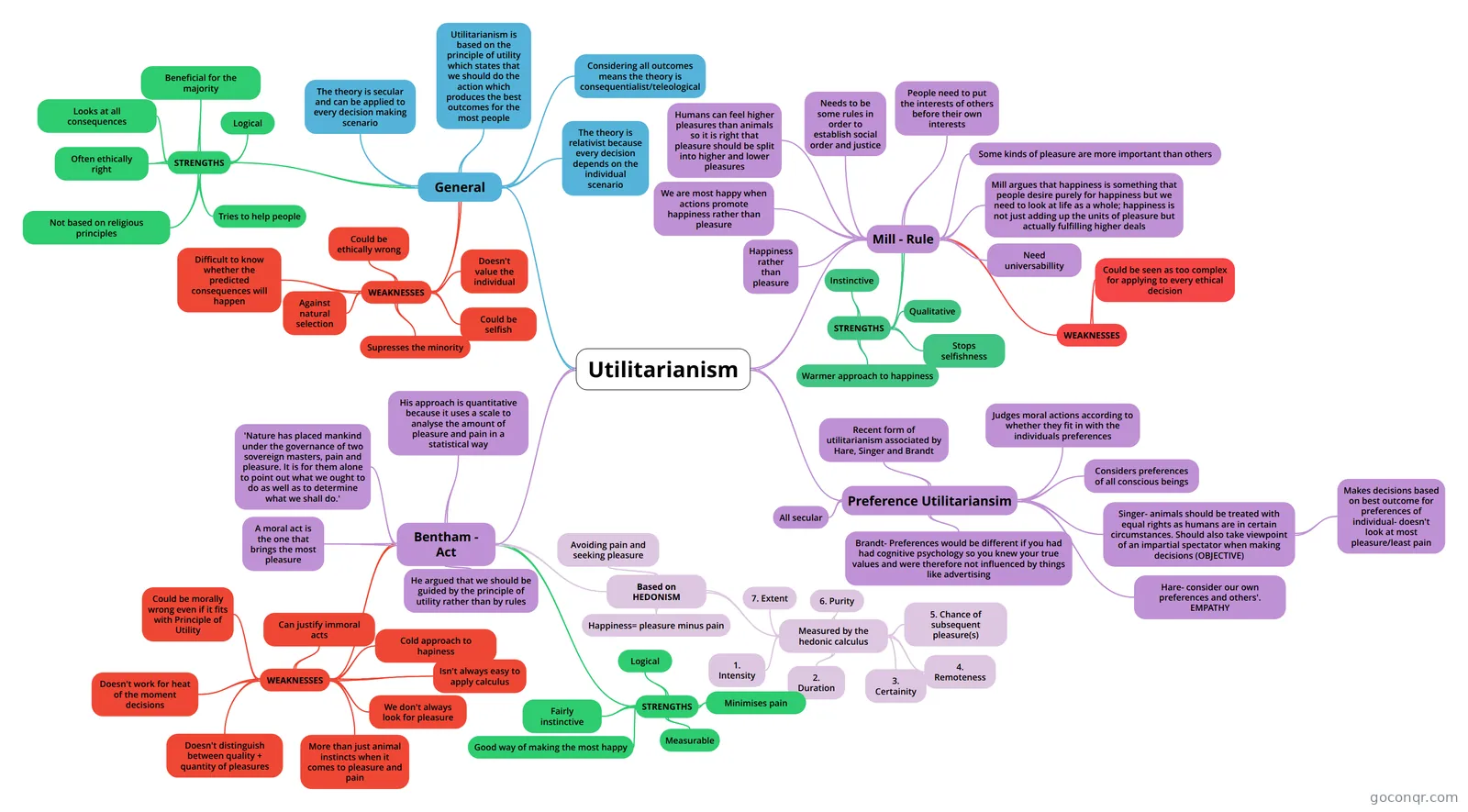 Mind map Utilitarianism Mind map on Utilitarianism - Act, Rule and Preference
-
Mind map Normative ethics normative ethics
Quizzes
Mind maps
See all 41 mind maps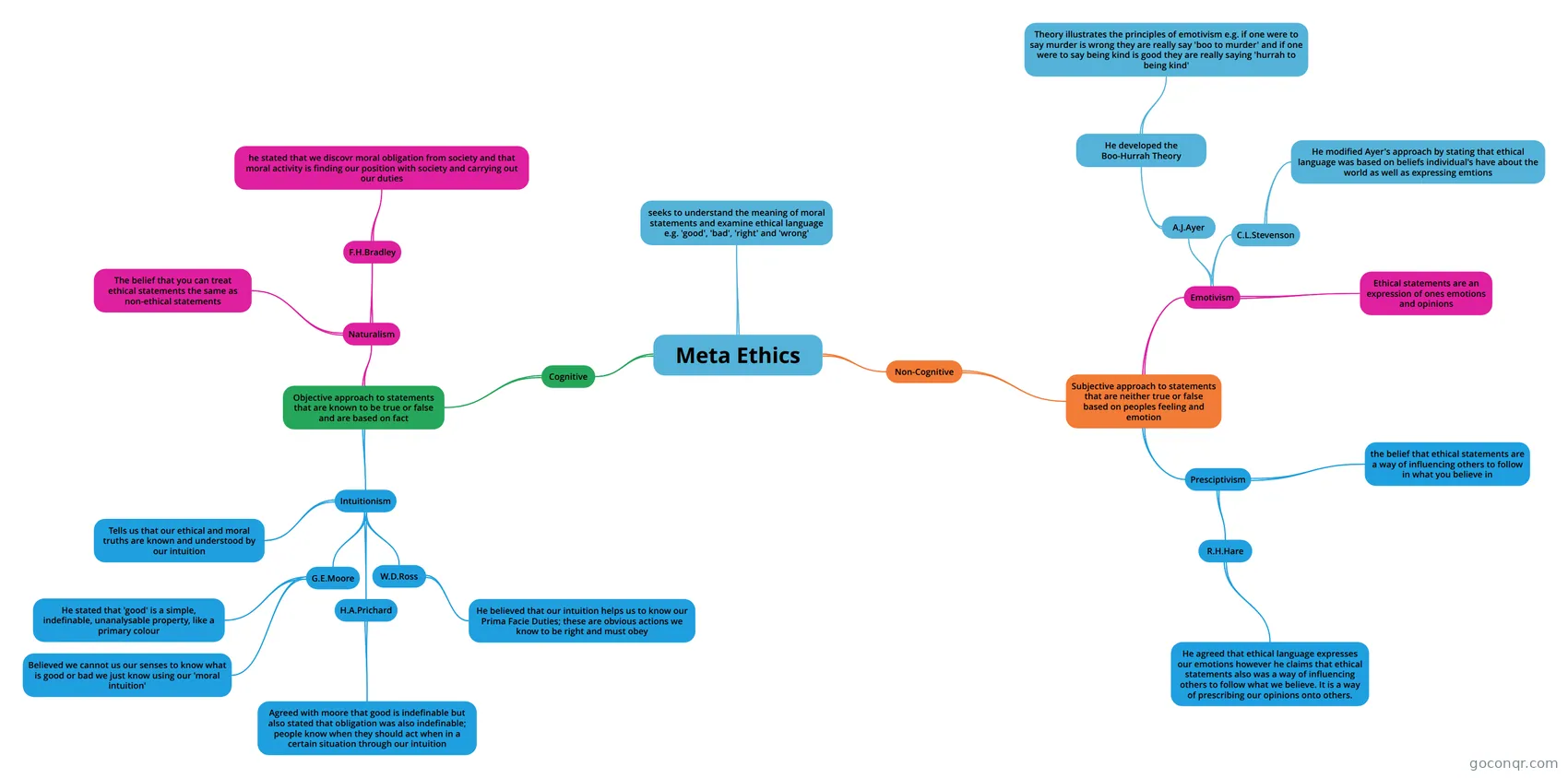
Flashcards
See all 13 flashcards-
8 cardsA Level ethics
-
31 cardsUtilitarianism What are Jeremy Bentham's Dates?
-
11 cardsVirtue Ethics
-
7 cardsUtilitarianism - notes What is Utilitarianism? - Utilitarianism is an ethical theory behind justifications. - U. is a teleological...
-
10 cardskant Kant's Ethical theory
-
22 cardsNatural Law What are the four laws?
-
11 cardsEthics PHI-2204 - Week 1 STUDYCARDS All terms from material on Week 1.
-
9 cardsMoral Relativism and Absolutism Name 2 Strengths of Absolutism
Flowcharts
Notes
-
Meta-ethics Ethical Naturalism All ethical statements can be translated into non-ethical ones - verifiable factual statements. 'X is good' can be defined be referring to some combination of naturalistic properties/characteristics...
-
Natural Law Natural Law Natural Law is an absolutist theory most commonly associated with St Thomas Aquinas (1224 -1274). It relies on Aquinas' basic understanding that humans innately try to do good and to avoid evil in order to...
-
Natural Law Levels of Law Eternal Law: God creates everything and his will and wisdom is revealed to us through.... Divine Law:The sacred text and the teaching of the church. Which are made known in....
-
Absolutist and Relativist Revision Explain the differences between Absolutism and Relativism in less than 100 words Absolutism is the belief that a set of rules/ morals are always applicable and must always be followed by all, without exception. They a...
-
Virtue Ethics Notes What is virtue theory? Virtue theory is principall concerned with the idea of human charcter and asks how ou can be a better person Virtue theor is interested in defining good people and the qualities that make them g...
-
Gender equality Essay on gender equality The issue of gender equality has been widely discussed in philosophical literature and mass media sources. In any democratic society, gender equality is considered to be an important moral pri...
Slides
More Philosophy topics
About Normative Ethical Theories
GoConqr OriginalWhat this unit covers
The page is built around the big normative theories. The mind maps lead the way: Utilitarianism sets out the principle of utility, with Bentham's act approach and Mill's rule approach. Virtue Ethics picks up Aristotle, MacIntyre, telos and eudaimonia. Deontology focuses on duty as the basis of morality, and there is a Kantian Ethics flowchart covering maxims and the summum bonum.
Other maps cover Ethical Egoism, Natural Moral Law, Situation Ethics and Moral Absolutism and Moral Relativism. The map called Normative ethics explains that the field is also called prescriptive and seeks to set out norms for judging what is right.
Where to start
- Open the maps called Normative ethics and Ethical Theories for a quick overview of the main positions.
- Choose one theory and read its map, then the matching notes, such as Virtue Ethics Notes or What is Virtue Ethics?.
- Move to the flashcard decks for key terms and thinkers, such as Introduction to Ethics and Key Terms Flashcards.
Using quizzes and maps together
Read a map first, then take a quiz on the same theory. There are many quizzes on Utilitarianism, Kantian Ethics and Natural Law, plus some on Christian Ethics and Meta Ethics. Wrong answers show you which branch of the map to go back to. Then try the exam-style material, such as AS Ethics Exam Questions.
Applied topics
Some maps and decks apply theories to real issues, including Euthanasia, Contraception, embryo research, genetic engineering and war and peace. They are useful once you know the theories well enough to argue from them.
Where it fits
This unit sits in the Ethics and Value Theory strand of Philosophy. Pick one theory today, work through its map and quiz, and then make your own version.
Frequently asked questions
Which resource should I open first?
Start with the mind maps called Normative ethics and Ethical Theories. They give a short overview of the main theories, so you can see how utilitarianism, Kantian ethics and virtue ethics differ before moving into a single theory's notes or quizzes.
What do the mind maps cover?
They cover utilitarianism, virtue ethics, deontology, ethical egoism, natural moral law, situation ethics, and moral absolutism and relativism. Some also apply theories to topics such as lying, euthanasia and contraception, so you can see how the ideas are used in arguments.
Are there quizzes on specific theories?
Yes. There are more than 70 quizzes on the page, with many on Utilitarianism, Kantian Ethics and Natural Law. You will also find quizzes on Christian Ethics, Meta Ethics and sexual ethics, so you can test one topic at a time.
Which exams do these resources suit?
Many resources mention A-level, including A-level Philosophy and A-level Religious Studies, along with OCR Religious Studies and GCSE Religious Studies. Others read more like university course material, so check the title and content to see whether it matches your course.
Are the resources free, and who made them?
Every resource listed here is free to open, study and take, with no account needed. They were made by GoConqr users, not by GoConqr itself. A free account lets you save quiz scores and create your own maps, flashcards and notes.
What if my theory or thinker is not listed?
Look at the neighbouring resources first, as theories often appear inside broader maps, notes or decks. If you still can't find it, make your own mind map or flashcards and fill the gap yourself.