
Political Philosophy and Ideologies
290 resources created by 215 users
This Political Philosophy and Ideologies page on GoConqr gathers community-made mind maps, quizzes, flashcards and notes, from Hobbes, Locke and Rousseau to liberalism, conservatism, Marxism and justice. It's built for university students and professional candidates, school students, and teachers after ready-made material. There are over 280 resources here, including more than 200 mind maps, over 40 flashcards decks and more than 10 quizzes, made by over 200 contributors. Pick a thinker, try a quiz to find your gaps, then make your own revision sets.
Select topic
- Ancient Greek Political Thought8
- Machiavelli5
- Human Nature and Politics5
- Social Contract Theory29
- Thomas Hobbes14
- John Locke12
- Political Authority and Obligation12
- Liberty and the Harm Principle23
- Theories of Justice15
- Democracy and Forms of Government5
- Liberalism37
- Conservatism8
- Marxism and Socialism14
- Capitalism8
Top Political Philosophy and Ideologies resources
-
90 questionsHobbes, Locke, and Rousseau Hobbes - The Second law of nature requires that
-
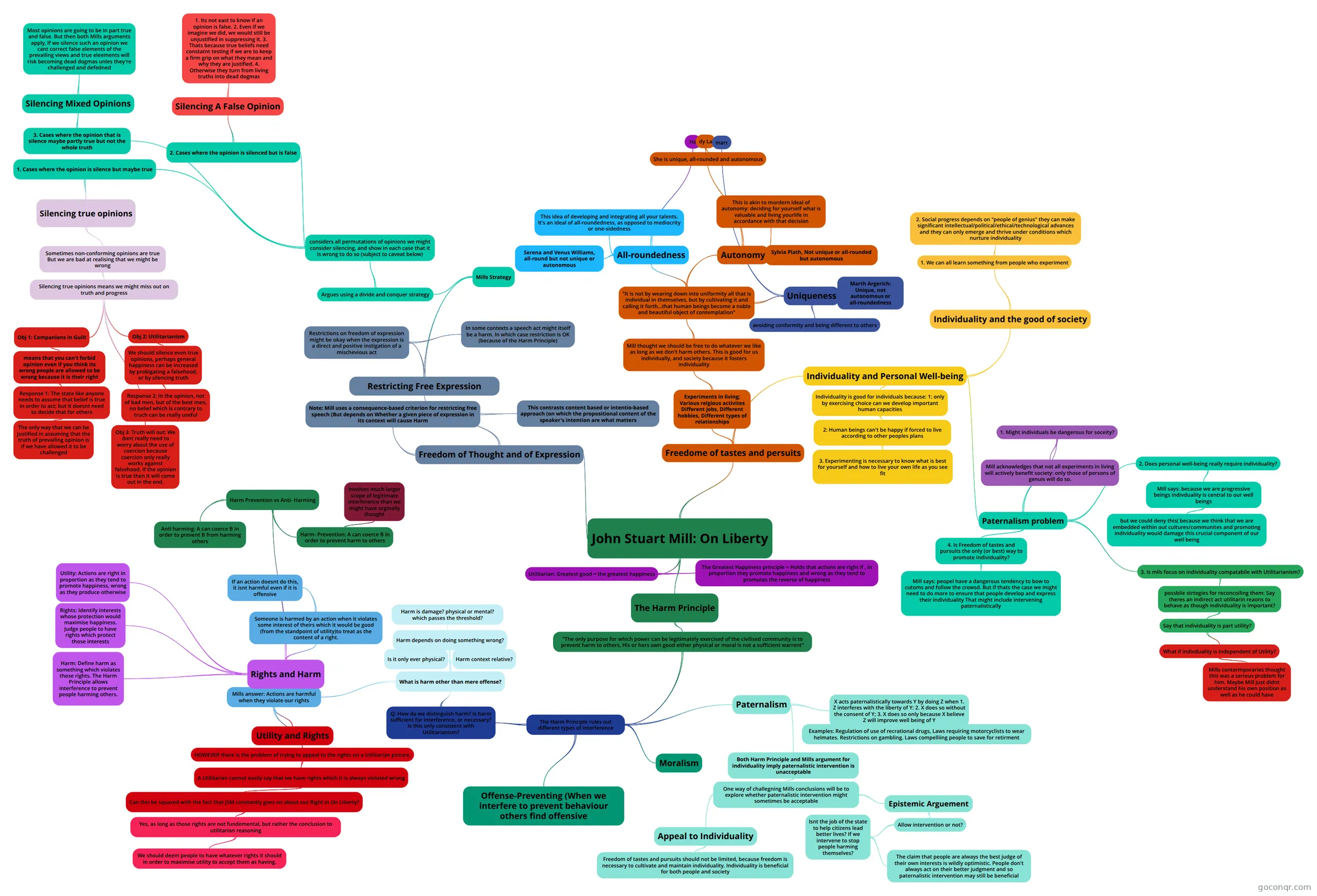 Mind map John Stuart Mill: On Liberty Mind Map on John Stuart Mill: On Liberty, created by Adam Fraser on 24/04/2017.
-
14 cardsThomas Hobbes What is the Leviathan
-
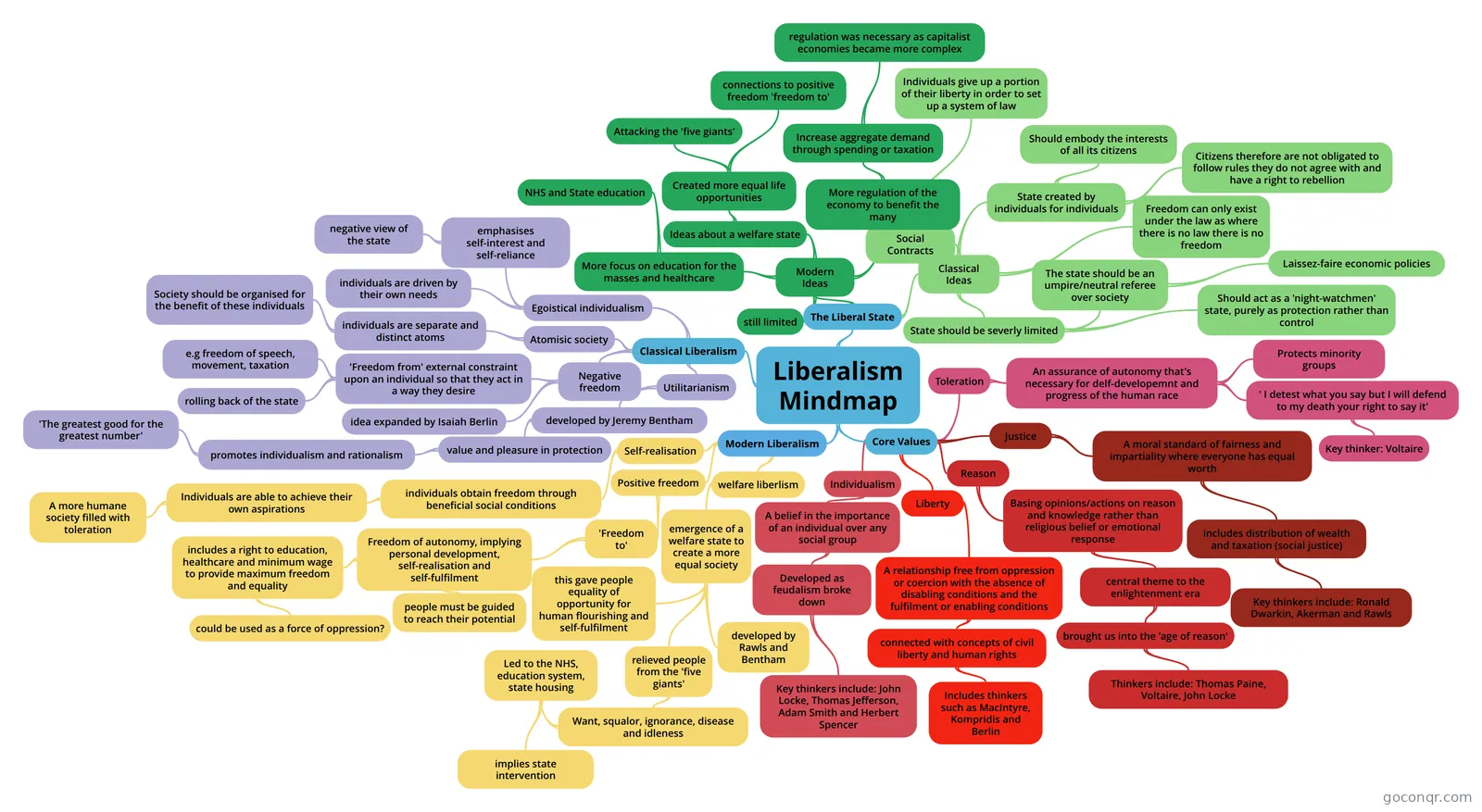 Mind map Liberalism Mindmap Basic mind map of Liberalism, good for tests in lessons but not enough detail for an exam
-
25 cardsPolitical and Social Philosophy flashcards Literally, allow to do. A system of free market exchanges with absolute minimal govt. control.
-
16 cardsLiberal Perspectives Flashcards on liberal perspectives on key ideological concepts
-
 Mind map Social and Political Philosophy
-
20 cardsLiberalism Liberalism Orifins and development Central Theme
Quizzes
See all 16 quizzesMind maps
See all 212 mind maps-
John Stuart Mill: On Liberty Mind Map on John Stuart Mill: On Liberty, created by Adam Fraser on 24/04/2017.
-
Liberalism Mindmap Basic mind map of Liberalism, good for tests in lessons but not enough detail for an exam
-
Social and Political Philosophy
-
Anarchism - Thinkers and ideas
-
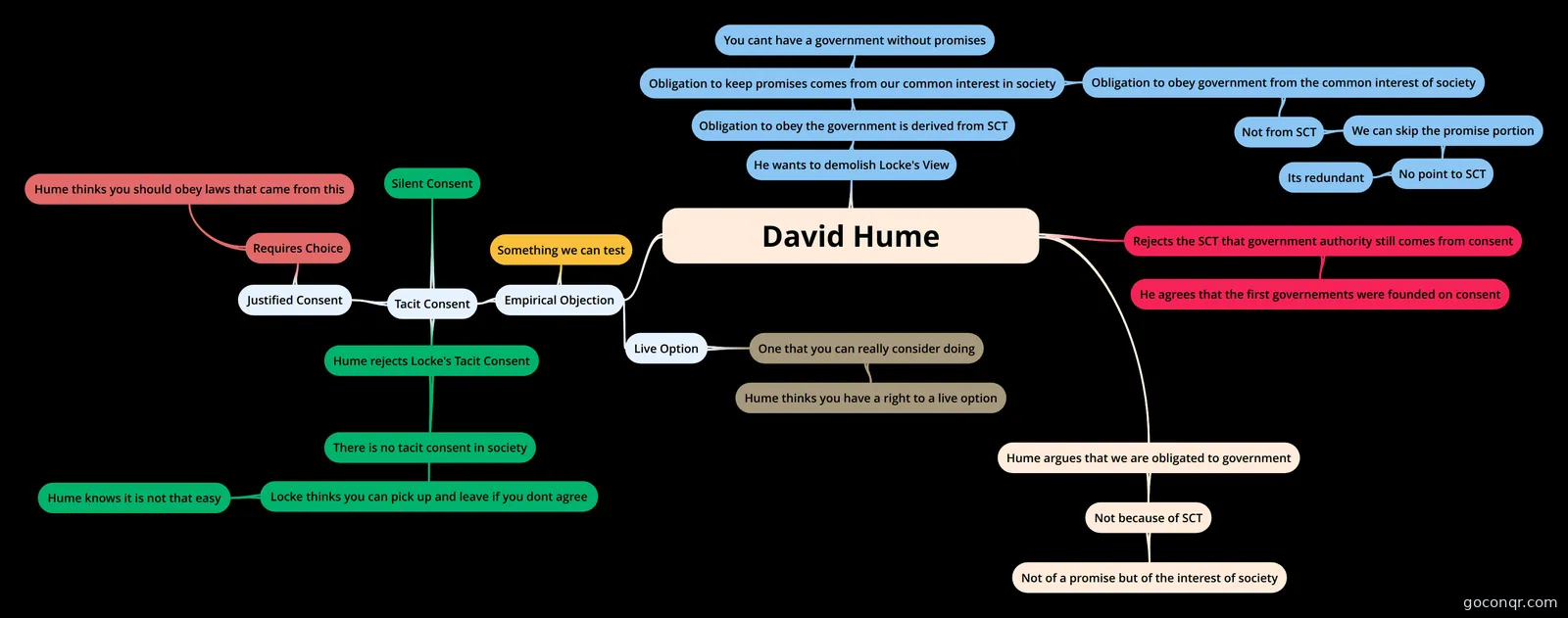 David Hume Hume, Mill, Berlin, Rawls and Nozick
-
 2. In what ways does human nature justify political authority? In what ways does human nature justify political authority?
-
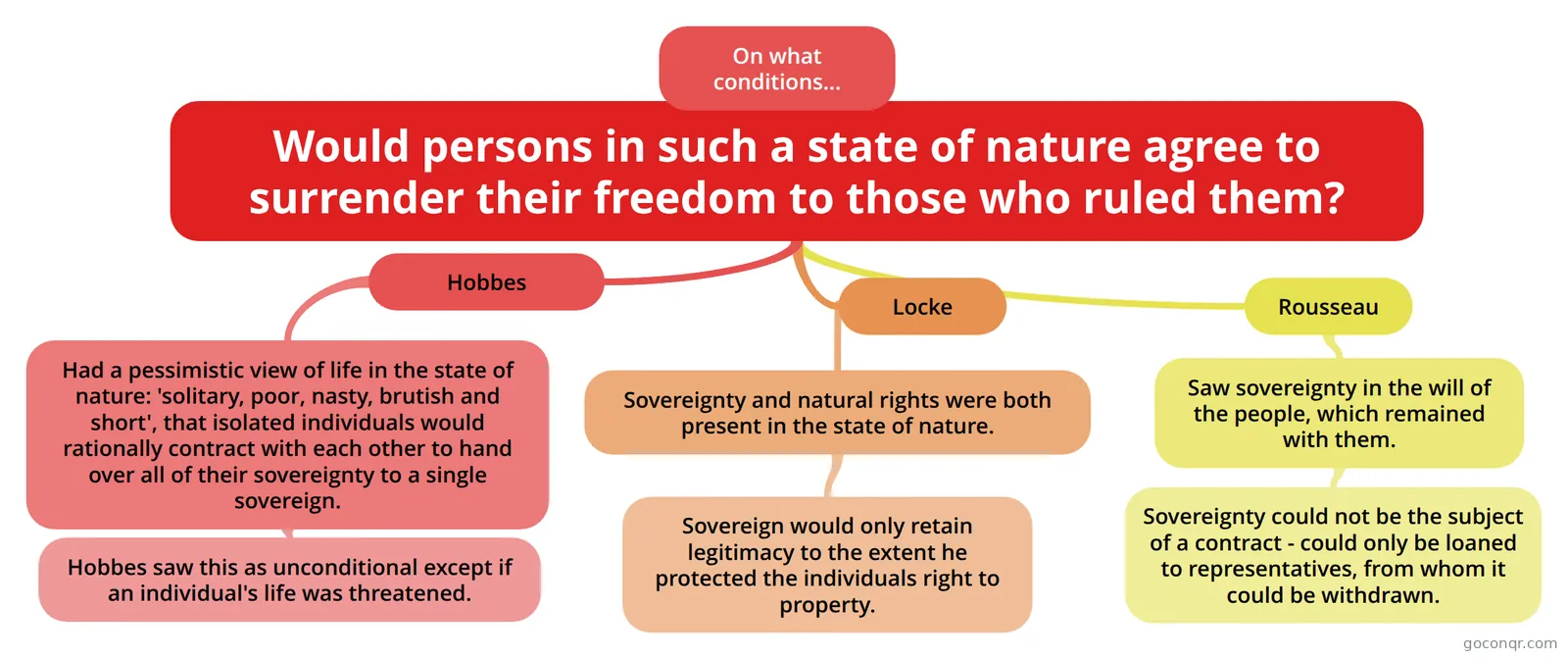 Would persons in such a state of nature agree to surrender their freedom to those who ruled them? who rules them
-
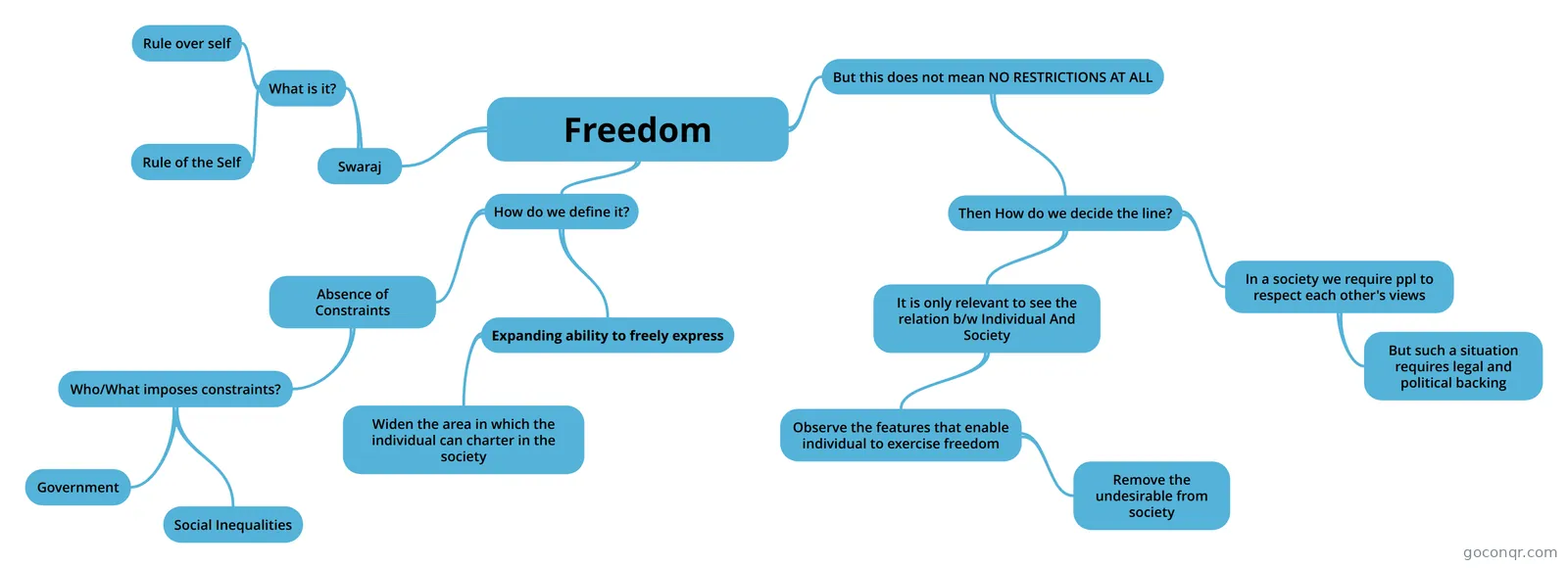 Freedom
Flashcards
See all 48 flashcards-
14 cardsThomas Hobbes What is the Leviathan
-
25 cardsPolitical and Social Philosophy flashcards Literally, allow to do. A system of free market exchanges with absolute minimal govt. control.
-
16 cardsLiberal Perspectives Flashcards on liberal perspectives on key ideological concepts
-
20 cardsLiberalism Liberalism Orifins and development Central Theme
-
7 cardsConservatism Flashcards Personal traits of conservatives
-
15 cardsLiberalism Key Terms
-
14 cardsState Of Nature - Philosophy 1 (WHY SHOULD I BE GOVERNED) Who is Thomas Hobbes?
-
13 cardsPhilosophy Unit 3 terms Political Philosophy
Notes
See all 11 notes-
Thomas Hobbes Thomas HobbesGreatest works Leviathan (published 1651)-Born in the year of the Spanish Armada.-Educated at Oxford.-In 1640 he and many families of the aristocracy fled England after the execution of Charles I and the ...
-
Seminar 2: The Right of Revolution from Locke to Burke to Marx When, if Ever, is a People Justified in Overthrowing the Government? Saddat Nazir Yale Young Global Scholars Seminar 2: The Right of Revolution from Locke to Burke to Marx When, if Ever, is a People Justified in Overthrowing the Government? State of Nature A state of nature refe...
Topics in Political Philosophy and Ideologies
More Philosophy topics
About Political Philosophy and Ideologies
GoConqr OriginalWhat the resources cover
The unit centres on the social contract and on liberal thought. The Liberalism Mindmap sets out core values such as individualism and names thinkers including John Locke and Thomas Jefferson. The mind map on John Stuart Mill's On Liberty works through the harm principle. Other maps look at justice, political obligation, civil disobedience, conservatism, feminism and capitalism.
Older thinkers are here too. You will find flashcards on Aristotle, Plato and Machiavelli, and a mind map on Augustine's City of God. There is also a map on Nozick and his entitlement theory of justice.
Where to start
- Open the Social Contract mind map. It compares Locke, Rousseau and Hobbes on human nature and the role of the state.
- Read the notes on Thomas Hobbes, then run through the Thomas Hobbes flashcards on the Leviathan and sovereign power.
- Move on to Liberalism and the Mill map on liberty.
- Finish with justice and obligation, including Nozick and John Rawls and Civil Disobedience.
Using quizzes and maps together
Read a map first, then test yourself. The quiz Hobbes, Locke, and Rousseau asks about the laws of nature and the origin of religion in Hobbes. The true or false exam quizzes include statements on Burke and political society. Check any answer you miss against the matching map, then retry.
Some resources mention A-level Politics, so school students will find material they can use alongside their course. University students can use the longer notes, such as the seminar on the right of revolution from Locke to Burke to Marx.
Where it sits
This unit belongs to the Political and Social Philosophy strand of Philosophy. It suits comparing thinkers side by side, because many resources set one against another, such as the notes on Hobbes versus Locke.
Make it your own
Choose one thinker today, open a map and a quiz, and see what sticks. Then build a flashcard deck of your own for the ideas you keep forgetting.
Frequently asked questions
Which resource should I open first?
Start with the Social Contract mind map. It lines up Locke, Rousseau and Hobbes, covering human nature, the state of war and the sovereign. Once that makes sense, the Hobbes, Locke, and Rousseau quiz is a good way to see which parts you still need to revisit.
What do the mind maps on this page cover?
They cover liberalism, liberty, justice, political obligation, conservatism, feminism and the social contract. There are maps on Mill's On Liberty, Nozick's entitlement theory, Machiavelli, Aristotle's Politics and Augustine's City of God. Together they run from ancient and medieval thought to modern liberal debates.
Are these resources free to use?
Yes. Every resource listed here is free to open, study and take, with no account needed. They were made by GoConqr users, not by GoConqr itself. If you want to save quiz scores or make your own maps, flashcards and notes, a free account lets you do that.
Which levels do the resources suit?
Most of the material is pitched at university students and professional candidates, with a smaller share for school students. One or more resources mention A-level Politics. Teachers can also pick out ready-made maps, notes and quizzes to share with a class.
Are there flashcards for individual thinkers?
Yes. There are flashcard decks on Thomas Hobbes, Rousseau, Aristotle, Marxism, Conservatism and anarchist philosophers. Others cover Machiavelli and Plato, including the Ring of Gyges and the Noble Lie. Use them after a map to practise recalling key terms and arguments.
What if I cannot find the topic I need?
Try a nearby thinker or theme, since many resources compare several philosophers at once. If a topic is still missing, you can build your own mind map, quiz or flashcard deck with a free account and use the listed resources as models.