
Weather and the Atmosphere
93 resources created by 87 users
This Weather and the Atmosphere page on GoConqr gathers community-made quizzes, mind maps, flashcards, notes and slides, from atmospheric circulation and rainfall types to anticyclones and tropical cyclones. It's built for school students revising the topic, and for teachers after ready-made material, with a few resources suited to primary pupils too. There are over 700 resources here, including more than 40 quizzes and over 400 mind maps, made by over 600 contributors. Pick a quiz to find your gaps, then explore the maps.
Top Weather and the Atmosphere resources
-
21 questionsWeather and Climate Exam 2 Review This is quiz filled with practice questions related to topics 6, 7, and 8. It does not count for any points...
-
25 questionsGeography 101 Part 3
-
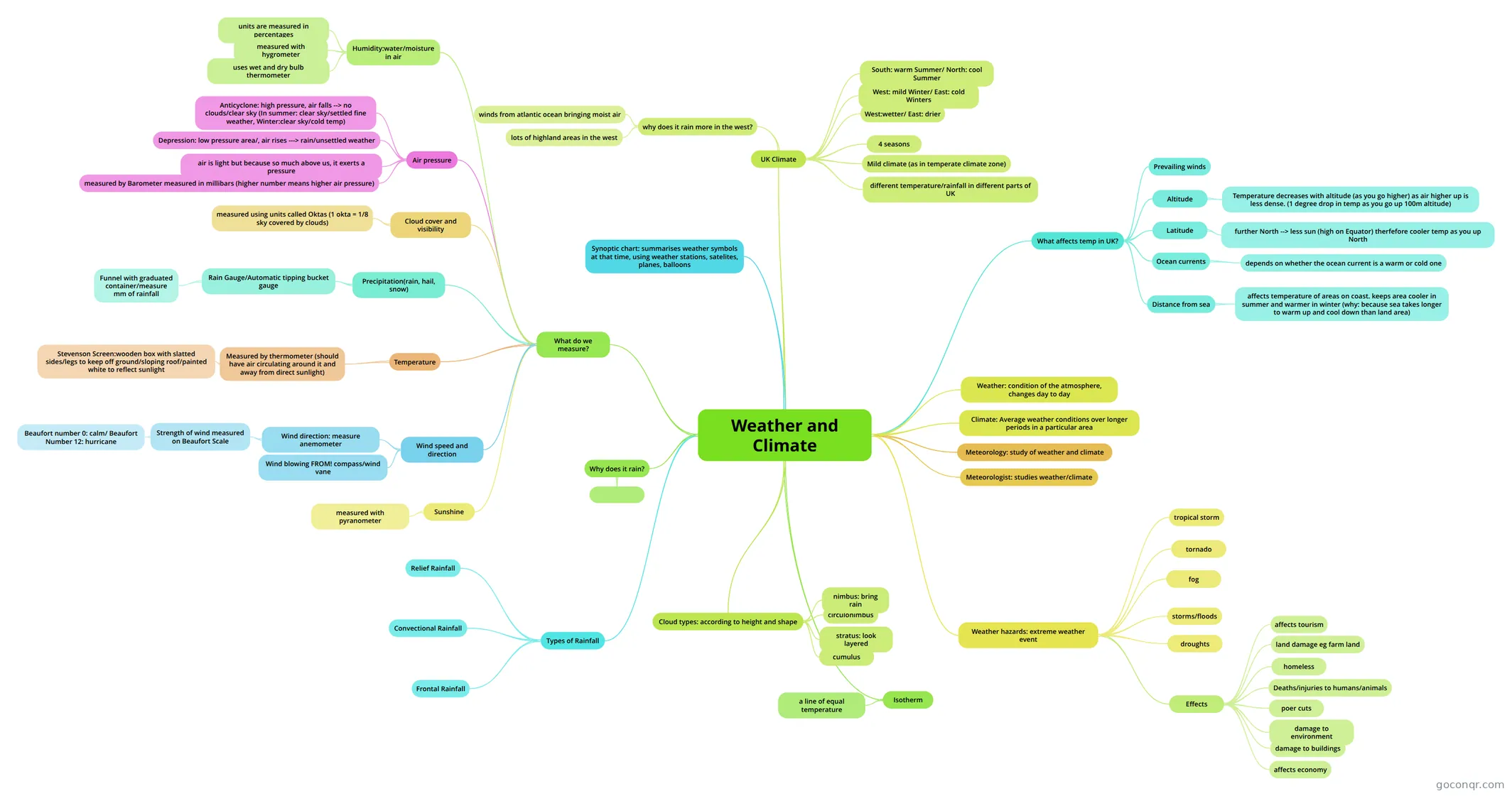 Mind map Weather and Climate
-
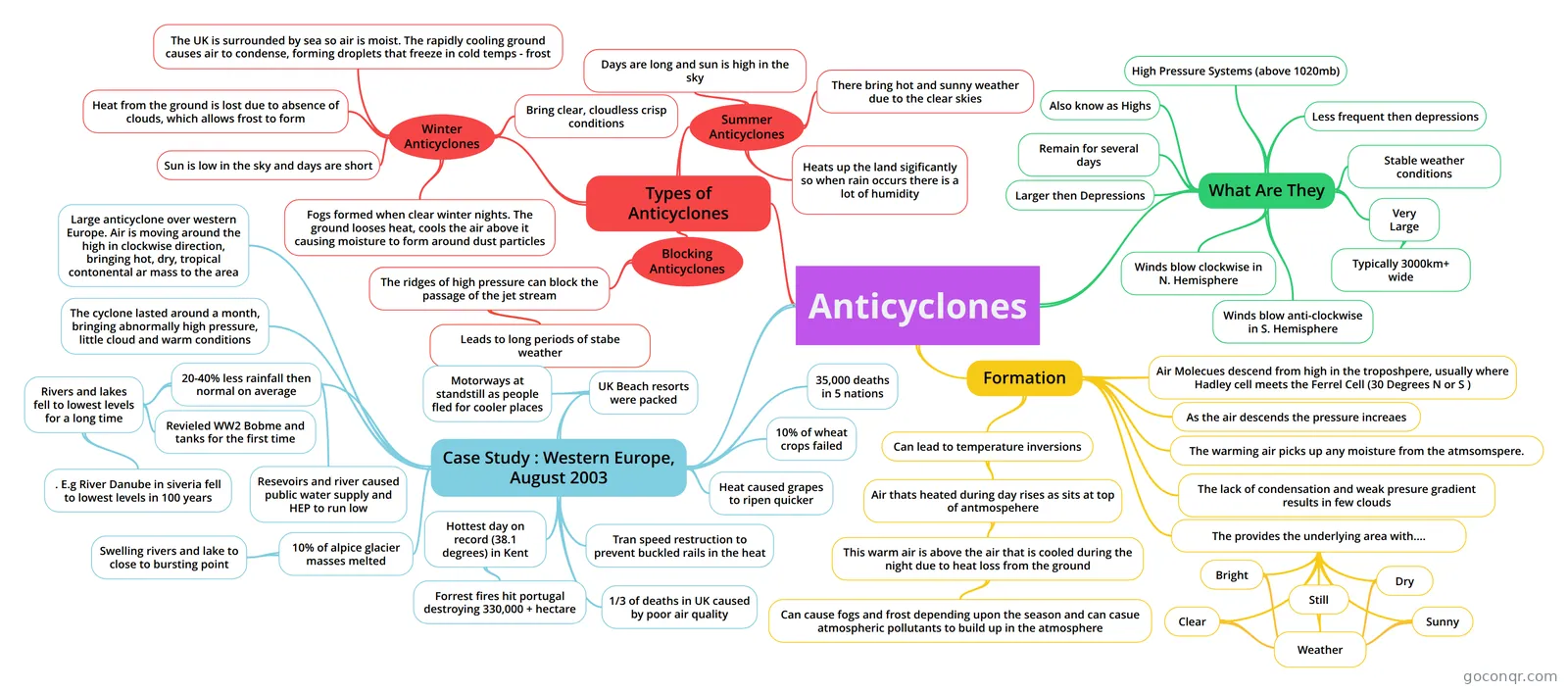 Mind map Anticyclones
-
Mind map Humidity and Rainfall
-
Mind map Tropical cyclones (Hurricanes)
-
4 questionsGlobal atmospheric circulation Label the Global Circulation cell map; with the correct name of each circulation cell.
-
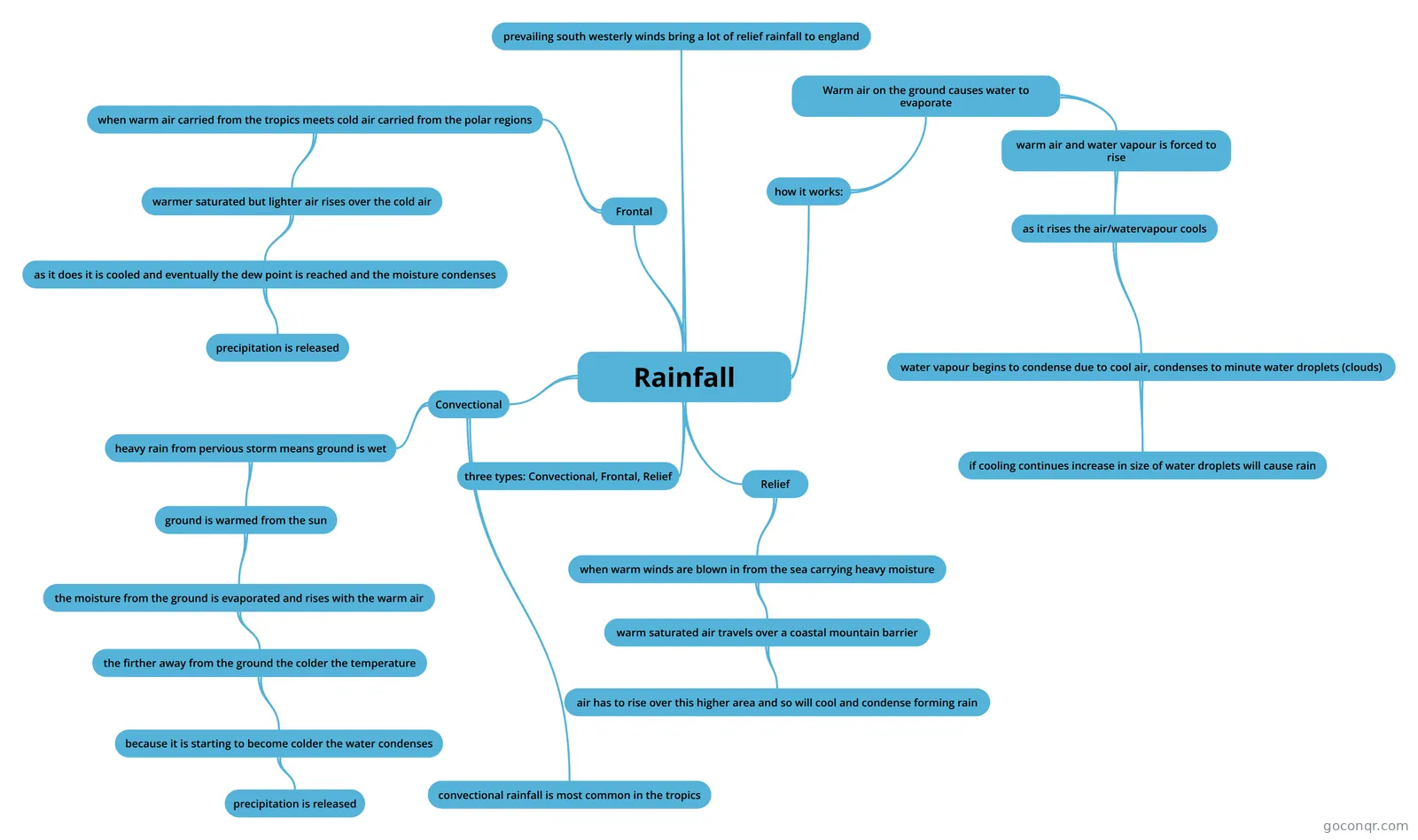 Mind map Rainfall Describes the three different types of rainfall (Convectional, Relief, Frontal)
Quizzes
See all 12 quizzes-
21 questionsWeather and Climate Exam 2 Review This is quiz filled with practice questions related to topics 6, 7, and 8. It does not count for any points...
-
25 questionsGeography 101 Part 3
-
4 questionsGlobal atmospheric circulation Label the Global Circulation cell map; with the correct name of each circulation cell.
-
126 questionsGeography Midterm The average length of time that individual molecules of a given substance remain in the atmosphere is calle...
-
13 questionsWeather Forecasting and Graphing Weather forecasting is a difficult task due to ever changing conditions. Graphs are used to show us relatio...
-
20 questionsClimate and weather Weather is the state of the atmosphere at a particular point at a specific time. It is a short-term state a...
-
22 questionsGeography 101 Water in the Atmosphere A parcel of air that is warmer than its surroundings is considered
-
10 questionsn Cold fronts move slowly across the landscape.
Mind maps
See all 30 mind maps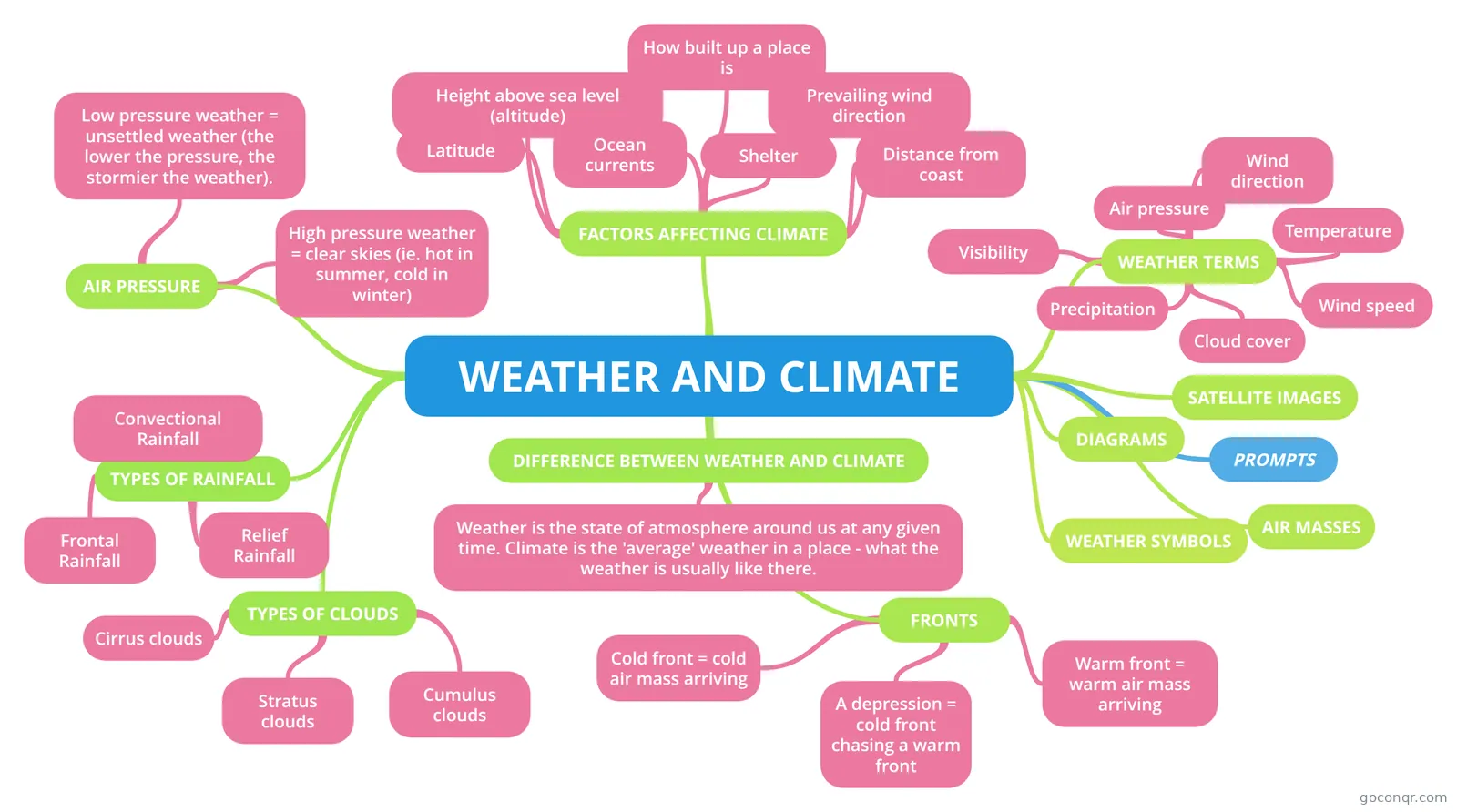
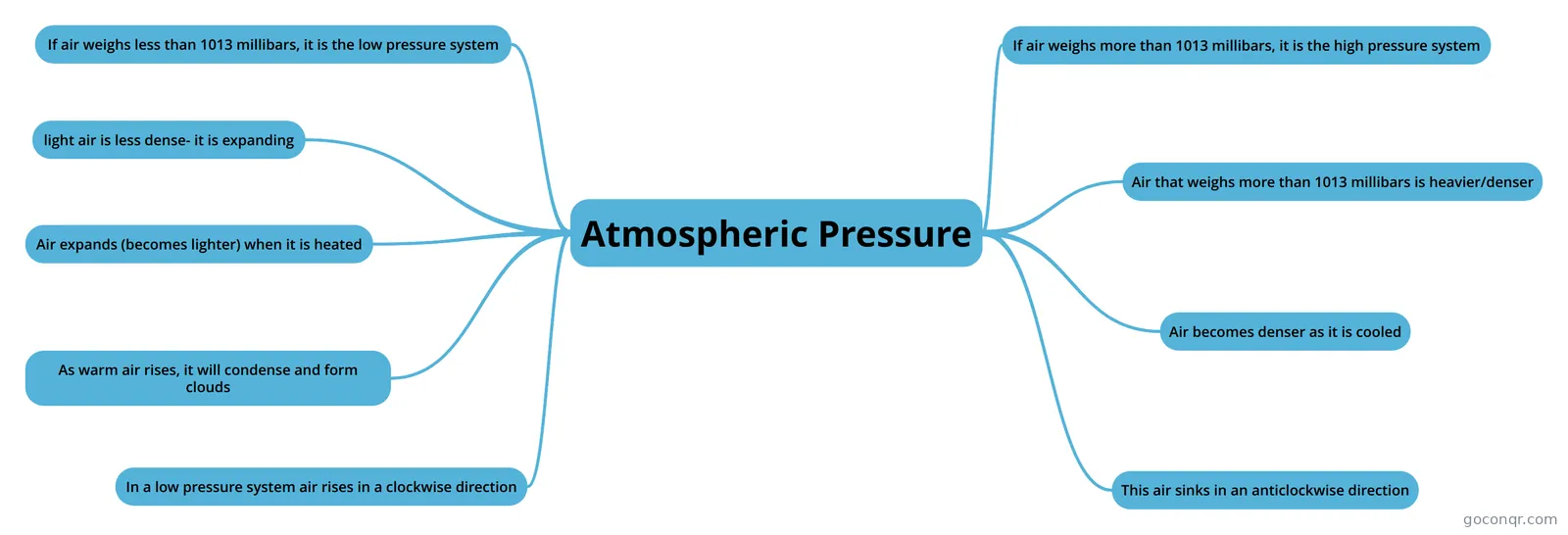
Flashcards
See all 44 flashcards-
3 cardsTypes of Rainfall
-
44 cardsGoegraphy: Weather & Climate Elements of Weather: Temperature It refers to the degree of hotness or coldnesss of a place. What determine...
-
56 cardsGeography Year 11 Exam Revision
-
52 cardsWeather hazards and climate change key revision points What is global atmospheric circulation?
-
69 cardsGeography - Weather
-
13 cardsG E O G R A P H Y E X A M Weather describes the day to day conditions of the atmosphere. ex one day it can be rainy the next day its ...
-
30 cardsWeather and Climate Geography Test
-
19 cardsWeather and Climate What is the differerence between weather and climate?
Notes
-
Global Atmospheric and Ocean Circulation Global Atmospheric Circulation Global atmospheric circulation contributes to the understanding of the location of the Earth's climatic zones. Atmospheric circulation is the movement of air masses in the atmosphere to ...
-
Preparation for Class Test 4 CHAPTER 3 VARIABLE WEATHER CHANGING CLIMATE(DIFF BETWEEN WEATHER & CLIMATE)+(HOW LATITUDE AND ALTITUDE AFFECT TEMP) WEATHER : 1) SHORT TERM,CHANGES HOURLY/REFERS TO THE SPECIFIC CONDITION OF ATMOSPHERE AT A CERTAIN TI...
-
Geography- Weather and Climate Weather and ClimateWhy does climate vary within the UK? Winds- prevailing winds from the south west will bring warm and wet wind which makes the UK warm and wet, this means the west of the UK will get more of the warm...
-
Weather and Climate Weather and Climate Weather is the daily condition of the atmosphere measured over a short period of time.Climate is the average weather condition measured over a long period of time.There are positive and negative ef...
-
Weather and climate - created from Mind Map Weather and Climate Depressions Anticyclones extreme weather Enter text here 1. Warm air rises over cold air 2. low pressure 3. Air forced upwards 4. Warm air condenses synoptic chart areas of low atmospheric pressure...
-
Different Types Of Clouds Cumulus Clouds DESCRIPTION: Fluffy Clouds which form LOW in the sky , can bring short, heavy showers (SOME GROW INTO DARK CLOUDS THAT BRING HEAVY RAIN) Stratus Clouds DESCRIPTION: Big blank...
Slides
More Geography topics
About Weather and the Atmosphere
GoConqr OriginalWhat this page covers
The unit brings together weather and climate material in several formats. The mind maps are the largest group. They cover the atmosphere's structure, energy transfer, humidity, rainfall, depressions, anticyclones and tropical storms. Flashcard decks handle key words, weather instruments, fronts and air masses. Notes and slide sets add fuller explanations on topics such as precipitation and clouds.
Where to start
Begin with the mind map Weather and Climate. It sets out the basic terms: weather is the condition of the atmosphere and changes day to day, while climate is average weather over a longer period. Then move to Climate, which links atmospheric circulation, the Hadley, Ferrel and Polar cells, and ocean currents.
Next, choose the topic you find hardest:
- Rainfall: the mind maps on types of rain cover relief, frontal and convectional rainfall.
- Pressure systems: Anticyclones covers high pressure above 1020mb, stable weather and a case study of Western Europe in August 2003.
- Storms: Tropical cyclones (Hurricanes) looks at where they form and the ocean conditions they need.
Using quizzes and maps together
Read a map first, then test yourself. The quiz Global atmospheric circulation asks you to label the circulation cell map and complete a paragraph on the cells. Weather and Climate Exam 2 Review checks ideas such as direct methods of observation, using a thermometer as the example. Where a quiz catches you out, go back to the matching map or flashcard deck and try again.
Teachers can use the quizzes as short starter tasks, and the maps and slide sets as ready-made revision material. Some resources mention GCSE Geography, A-level Geography or IB, so check the wording against your own course.
Where it fits
This unit sits in the Weather, Climate and Hazards strand of Geography. It leads naturally into hazard topics such as tropical storms, which several resources here cover.
When you are ready, open a quiz, then make your own flashcards from the points you missed.
Frequently asked questions
Which resource should I open first?
Start with the mind map called Weather and Climate. It defines weather, climate and meteorology in a few lines. After that, try the quiz Global atmospheric circulation, which asks you to label the circulation cells, then move on to rainfall or pressure systems.
What do the mind maps cover?
The mind maps cover the atmosphere's structure, energy transfer, humidity and rainfall, rainfall types, depressions, anticyclones, measuring weather and tropical cyclones. Some also deal with factors affecting the UK's climate, such as latitude, prevailing winds and distance from the sea.
Are the resources free to use?
Yes. Every resource on this page is free to open, study and take, with no account needed. They were made by GoConqr users, not by GoConqr itself. A free account also saves your quiz scores and lets you make your own quizzes, maps, flashcards and notes.
Which levels and exams do they suit?
Most resources are aimed at secondary school students, and a small share suits younger pupils or older learners. Some of the resources mention GCSE Geography, A-level Geography or IB. Check them against your own specification before relying on them.
Is there anything on tropical storms?
Yes. There are mind maps called Tropical cyclones (Hurricanes) and TROPICAL STORMS, flashcard decks on tropical storms and Hurricane Katrina, and a flowchart on the stages of a tropical storm. Together they give you several ways to revise the same topic.
What if I can't find my topic?
Try a different title wording, such as depressions, fronts, clouds or precipitation, because contributors name things differently. You can also make your own mind map, flashcards or notes on the missing point with a free account.