
Python and Scratch Programming
384 resources created by 302 users
This Python and Scratch Programming page on GoConqr gathers community-made quizzes, mind maps, flashcards and notes, from strings, functions and lists to NumPy and a few Scratch skills maps. It's built for school students revising a topic, university students and professional candidates filling gaps, and teachers after ready-made material. There are over 370 resources here, including more than 80 quizzes, over 160 mind maps and more than 70 flashcard decks, made by over 290 contributors. Pick a topic, try a quiz to find your gaps, then build your own revision sets.
Select topic
- Python Basics74
- Python Variables, Data Types and Operators23
- Python Strings14
- Python Lists and Data Structures25
- Python Conditionals and Loops12
- Python Functions23
- Python Modules and Packages17
- Object-Oriented Programming in Python5
- Python for Data Analysis6
- Python Turtle Graphics12
- Python Arcade Graphics and Games17
- Python Game Projects11
- Scratch Basics and Blocks16
Top Python and Scratch Programming resources
-
38 questionsPython Quiz Examine the code and determine the value of the variable b when the code completes.
-
14 questionsOOPs Concept in Python Quiz 2
-
15 questionsStrings in Python Select the correct output of the following String operations strOne = str("pynative") strTwo = "pynative" p...
-
12 questionsFunctions in Python Given the following function fun1() Please select the correct function calls def fun1(name, age): print(nam...
-
10 questionsPre-Test (Python Basic)
-
12 questionsInput and Output Operations in Python What is the output of the following print() function print(sep='--', 'Ben', 25, 'California')
-
13 questionsMultiple Choice Questions -Lists What is the output when we execute list(“hello”)?
-
31 cardsPython Cheat Sheet find type of object?
Quizzes
See all 92 quizzes-
38 questionsPython Quiz Examine the code and determine the value of the variable b when the code completes.
-
14 questionsOOPs Concept in Python Quiz 2
-
15 questionsStrings in Python Select the correct output of the following String operations strOne = str("pynative") strTwo = "pynative" p...
-
12 questionsFunctions in Python Given the following function fun1() Please select the correct function calls def fun1(name, age): print(nam...
-
10 questionsPre-Test (Python Basic)
-
12 questionsInput and Output Operations in Python What is the output of the following print() function print(sep='--', 'Ben', 25, 'California')
-
13 questionsMultiple Choice Questions -Lists What is the output when we execute list(“hello”)?
-
30 questionsPE1 -- Module 2 Quiz The escape character owes its name to the fact that it?
Mind maps
See all 168 mind maps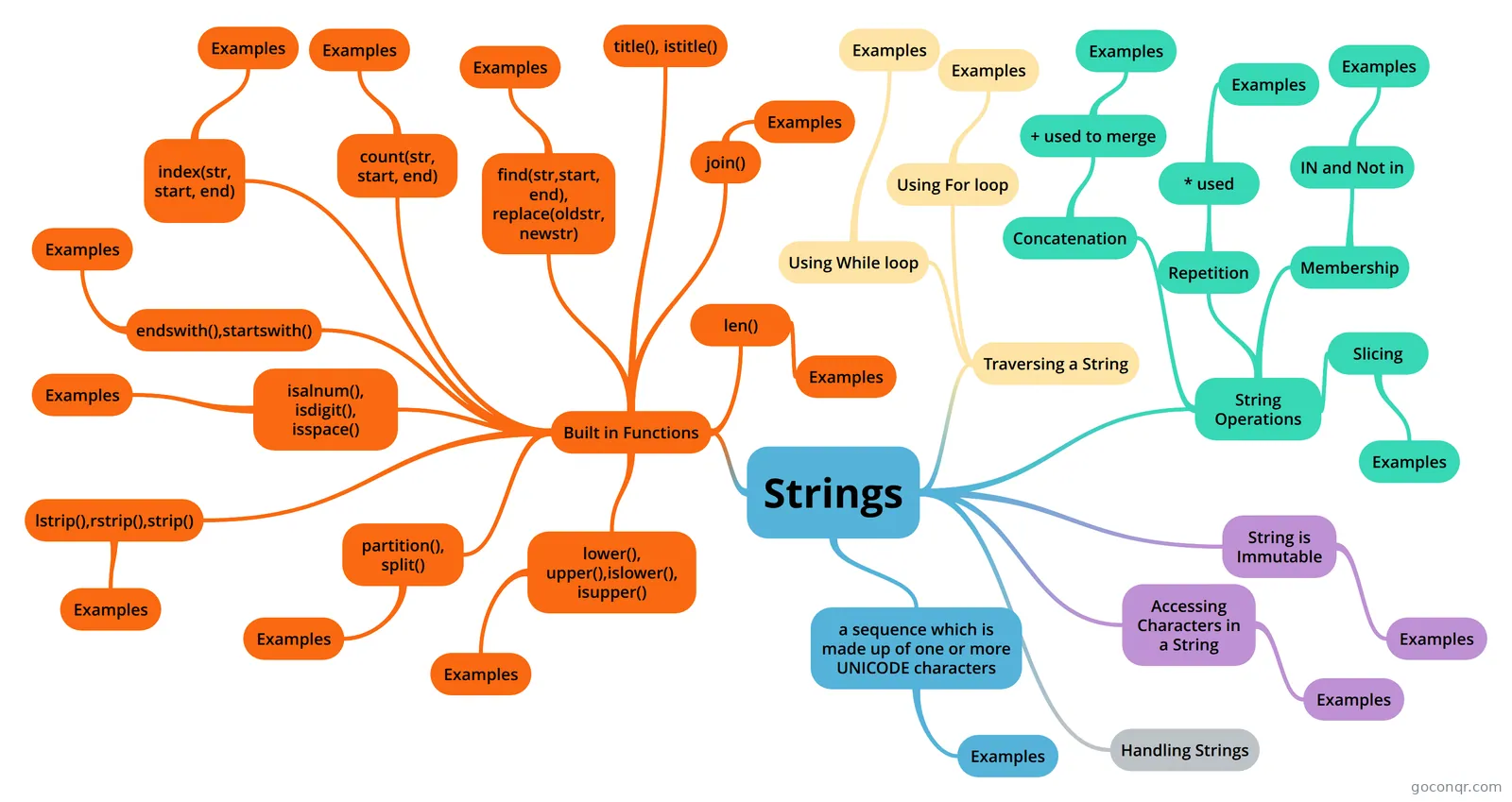
Flashcards
See all 77 flashcards-
31 cardsPython Cheat Sheet find type of object?
-
37 cardsPython Programming Language (Day 1) A programmer can interact with python in 2 ways. what are they?
-
44 cardsPython 3.8 Datetimes
-
187 cards020_Iterations Comprehensions and Generations List Comprehensions A First Detailed Look
-
188 cardsCS 111 UIC syllabus based flashcards for CS111 - law themed
-
46 cards026_Classes_Part2
-
62 cards033_Exeptions Processing division by zero
-
200 cardsPython 1
Flowcharts
Notes
See all 40 notes-
Basic Python Python is a widely used high-level programming language for general-purpose programming, created by Guido van Rossum and first released in 1991. An interpreted language, Python ...
-
PYTHON SAMPLE PROGRAMS
-
Mostly Asked Question
-
python A program is a list of instructions or statements under which a computer performs or executes a task in the order in which the inst. sets appear. x = 1 : assignment statement variable name : can be as long as yo...
-
Python Strings in python are surrounded by either single quotation marks or double quotation marks. 'hello' is the same as "hello". You can display a string literal with the print() function Assigning a string to a variable ...
-
Untitled 1. Python Interpreter: Python uses an interpreter, allowing you to write and execute code interactively. You can access the Python interpreter by typing python in your terminal or command prompt. 2. Basic Syntax: Comm...
-
Python Programming Notes Lambda Functions The following terms may be used interchangeably depending on the programming language type and culture: Anonymous functions Lambda functions Lambda expressions Lambda abstractions Lambda form Function...
-
Python Variables in python: there are 4 data types float,int,str,boolean to convert str(),bool(),int(),float() Python List: created using [], a collection of python types to get data of lists we use the index li...
Slides
Topics in Python and Scratch Programming
More Computing and ICT (programming, computer science, digital skills, educational technology) topics
About Python and Scratch Programming
GoConqr OriginalWhat the page covers
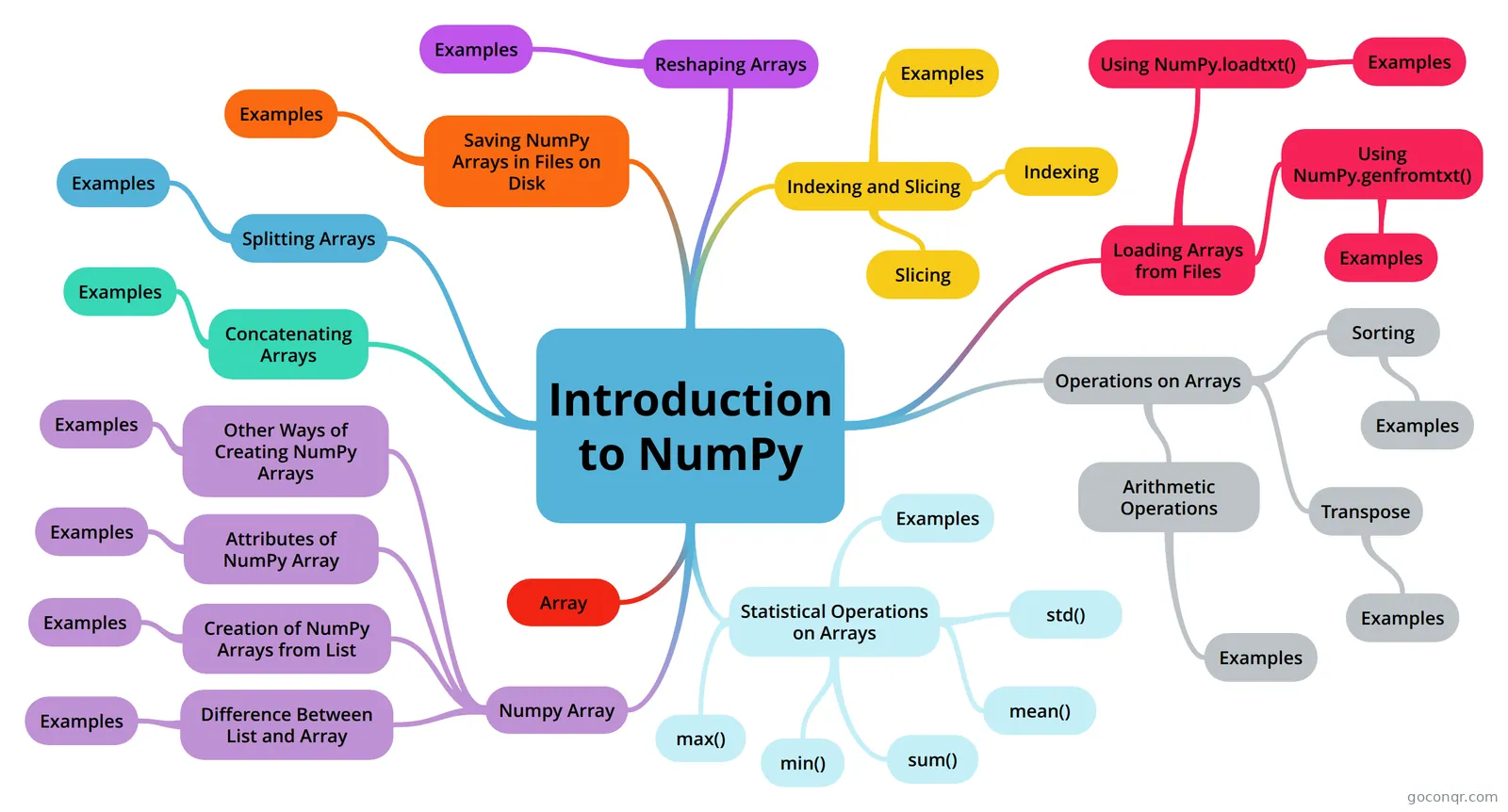
Most of the material is about Python, with a smaller group on Scratch. The mind maps give you the outline of a topic. The Strings map starts with Unicode characters, then moves on to accessing characters, immutability, concatenation and repetition. The Introduction to NumPy map covers arrays, how they differ from lists, creating them, attributes, indexing and slicing. Getting Started with Python deals with features, interactive and script mode, keywords, identifiers, variables and comments.
Where to start
If Python is new to you, open the Getting Started with Python map first. Then try the quiz Online Test on -Getting start with python or Pre-Test (Python Basic), which tests if and elif logic and membership checks. Scratch learners can look at the maps Scratch Skills and What we have learnt (Scratch), plus the deck Scratch key words.
Using quizzes and maps together
Read a map, then test yourself straight away. A sensible order is:
- Read the Strings map.
- Take Strings in Python, which asks about == and is on string objects.
- Move to Input and Output Operations in Python, which looks at print() and its sep argument.
- Continue with Functions in Python and Multiple Choice Questions -Lists.
Wrong answers show you which part of the map to reread. The Python Cheat Sheet flashcards are handy for quick recall of type conversion, comparisons and string length.
Exam-style practice
Some resources mention PCEP and PCAP. One example is the German-language Python PCAP Zertifizierung Quiz (241-280). Deeper topics such as iterables, context managers, exceptions and classes appear in several flashcard decks, so you can move on once the basics feel steady.
Where it sits
This unit belongs to the Programming strand of Computing and ICT. Choose one topic that you find tricky, work through its map and quiz, and then make your own flashcards to fill any gaps.
Frequently asked questions
Which quiz should I try first?
Try Pre-Test (Python Basic) if you already know a little, as it checks if statements and membership tests. For a gentler start, take Online Test on -Getting start with python. Both help you see which basics need another look before you move on.
What do the mind maps cover?
They cover Python topics such as strings, variables, functions, modules and packages, built-in functions and dealing with errors. There is also an Introduction to NumPy map covering arrays and slicing, and two Scratch maps, Scratch Skills and What we have learnt (Scratch).
Are the resources free to use?
Yes. Every resource on this page is free to open, study and take, with no account needed. They were made by GoConqr users, not by GoConqr itself. If you sign up for a free account, your quiz scores are saved and you can make your own sets.
Which levels and exams do these suit?
The material is mostly aimed at school students and university students, with some for professional candidates. A few resources mention the PCEP and PCAP certifications, so those preparing for them will find relevant quizzes, including one PCAP quiz written in German.
Is there anything on Scratch?
Yes, though Python makes up most of the page. For Scratch, look at the Scratch Skills mind map, the What we have learnt (Scratch) map and the Scratch key words flashcards. They suit beginners who want the basic terms and ideas in one place.
What if I cannot find my topic?
Try a nearby title first. Topics such as tuples, dictionaries, loops, classes and the random module each have their own quiz, map or notes. If your exact topic is missing, you can build your own flashcards or mind map and use the existing ones as a model.