
Respiratory System
328 resources created by 259 users
This Respiratory System page on GoConqr gathers community-made quizzes, mind maps, flashcards, slide sets and notes, from the nasal cavity and larynx to the trachea, lungs and pleura. It's built for university students revising anatomy and for teachers after ready-made material. There are over 300 resources here, including more than 80 quizzes, over 80 mind maps and more than 130 flashcard decks. Pick a topic, try a quiz to spot your gaps, then make your own study sets.
Top Respiratory System resources
-
50 questionsLungs Anatomophysiology Label the thoracic cage
-
40 questionsRespiratory: Anatomy and clinical relevance of nasal cavity/larynx Which meatus communicates with the pterygopalatine fossa via the sphenopalatine foramen and drains the post...
-
Mind map Lungs Anatomy of the lungs
-
21 questionsA&P: PULMONOLOGY
-
32 cardsRespiratory System Anatomy 2 MCQ Alveolocyte II type participates in the blood air barrier (Y/N)
-
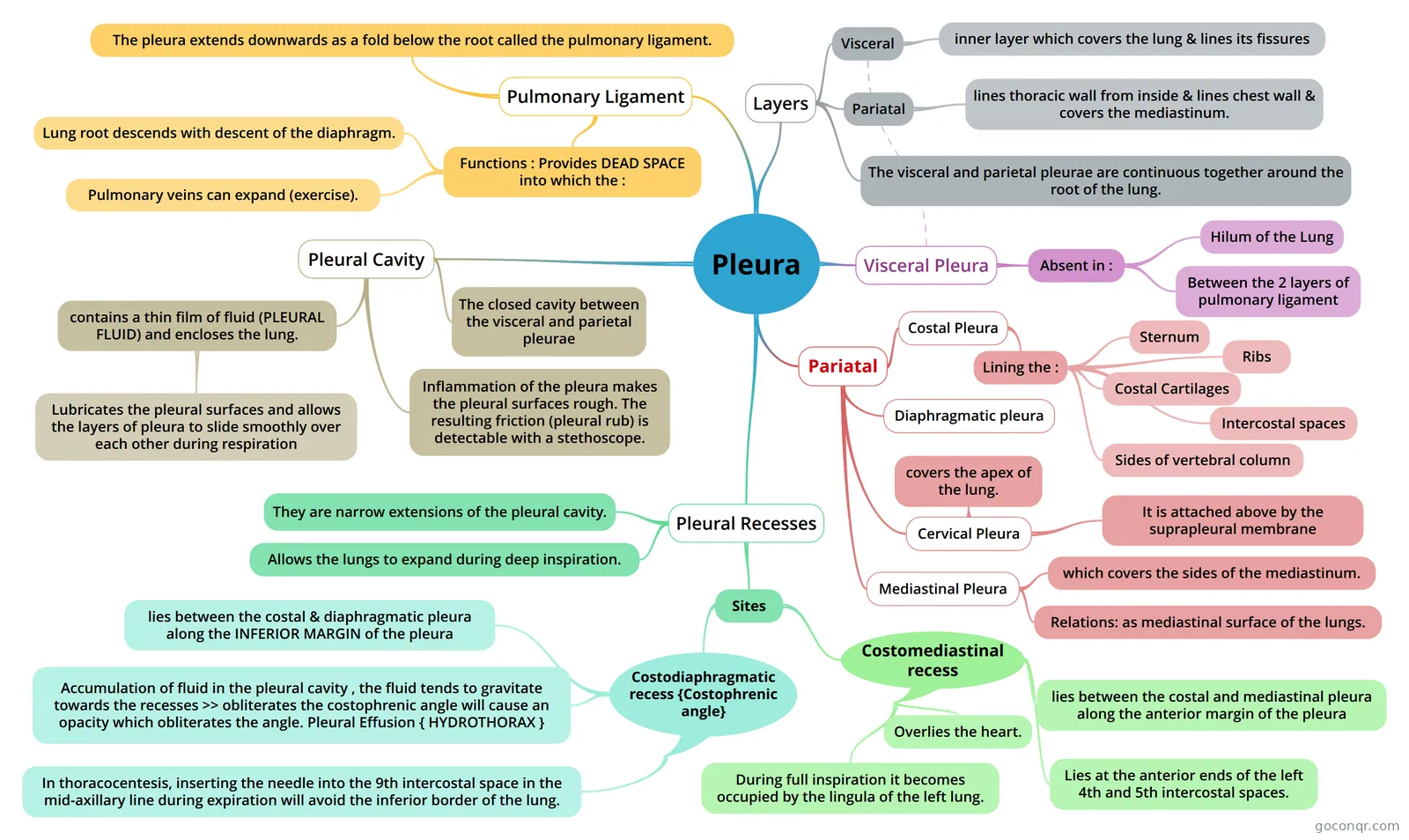 Mind map Pleura pleura
-
Mind map Introduction to Respiration
-
7 questionsLung Lobule What structure is this?
Quizzes
See all 86 quizzes-
50 questionsLungs Anatomophysiology Label the thoracic cage
-
40 questionsRespiratory: Anatomy and clinical relevance of nasal cavity/larynx Which meatus communicates with the pterygopalatine fossa via the sphenopalatine foramen and drains the post...
-
21 questionsA&P: PULMONOLOGY
-
7 questionsLung Lobule What structure is this?
-
7 questionsNasal Cavity and Pharynx What structure is this?
-
5 questionsTrachea What structure is this?
-
14 questionsRespiratory System Respiratory System Anatomy & Physiology I Laboratory List 7: Respiratory System
-
41 questionsThe Lungs Which of the following structures are in close proximity to the medial surface of the left lung?
Mind maps
See all 89 mind maps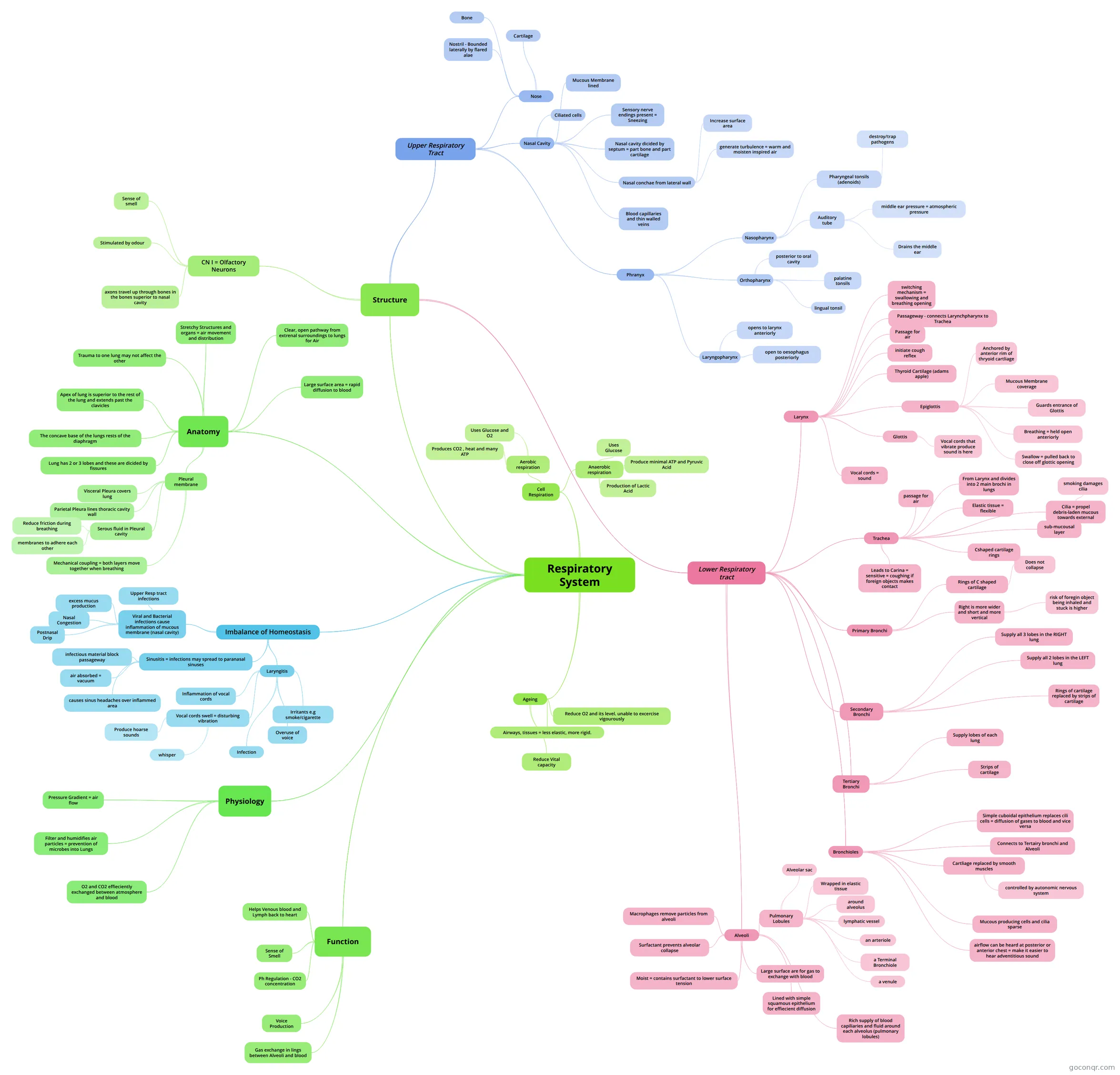
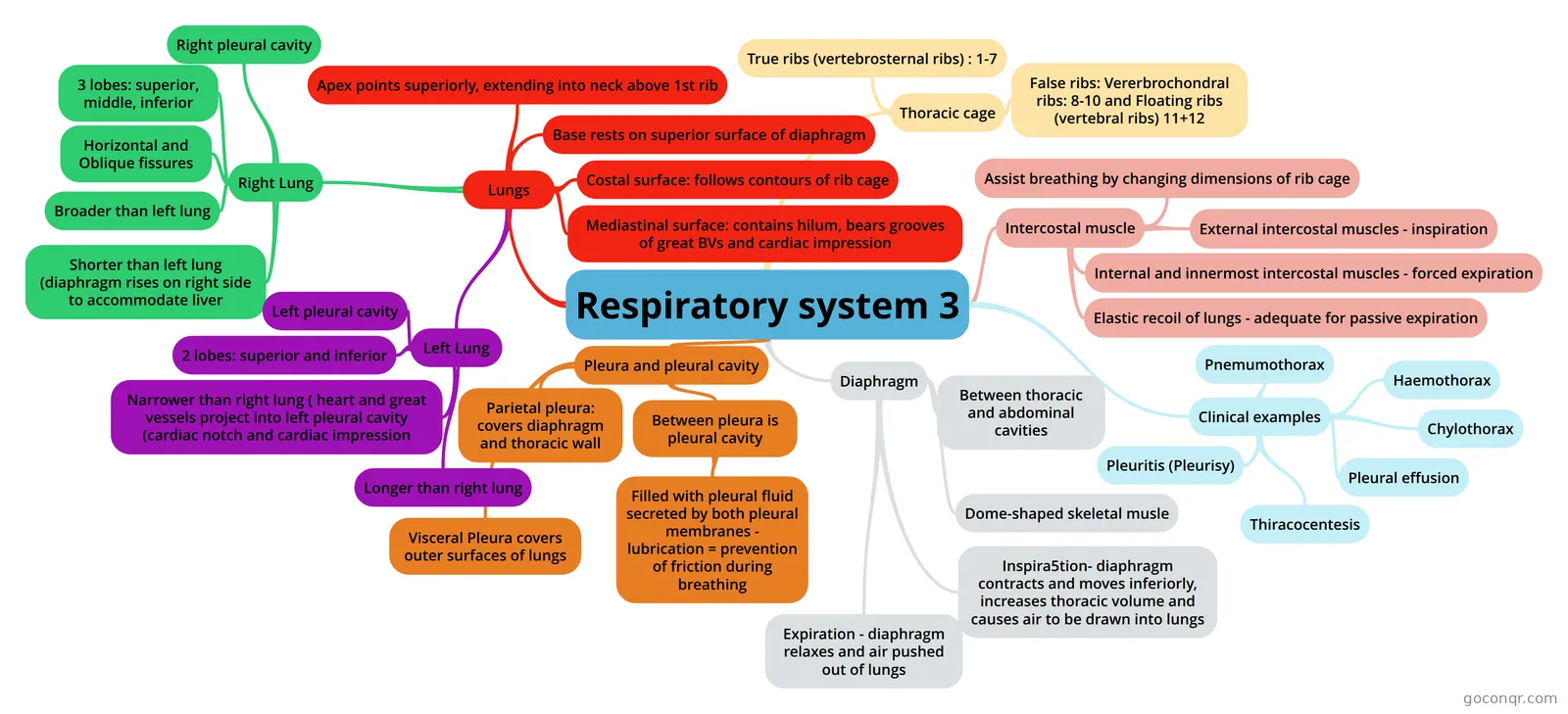
Flashcards
See all 142 flashcards-
32 cardsRespiratory System Anatomy 2 MCQ Alveolocyte II type participates in the blood air barrier (Y/N)
-
17 cardsLower Respiratory System Anatomy
-
19 cardsNasal Cavity of Respiratory System Anatomy
-
197 cardsRespiratory 1 Describe the nose?
-
124 cardsbiology chapter 23
-
66 cardsRespiratory
-
55 cardsAnatomy of breathing On average, how much fluid does the parietal cavity contain?
-
45 cardsNasal Cavity, Paranasal Sinuses & Nasopharynx What are the functions of the respiratory system?
Notes
-
Respiratory System Notes Part 1 Respiratory System Notes Part 1 I. Overview A. Function: Brings about the exchange of oxygen and carbon dioxide between the blood, air, and tissues B. Organs Nose Pharynx Larynx Trachea Bronchi Lungs - alveoli C...
-
Pharynx & larynx Nasopharynx behind the nasal cavity above the soft palate Oropharynx behind mouth and tongue extends from soft palate above to epiglottis below Laryngopharynx behind opening into larynx and posterior surf...
-
Respiratory Lab Lungs apex & base (follows curve of diaphragm) fissure divide lung into lobes Right lung oblique fissure horizontal fissure superior, middle, inferior lobe Left lung oblique fissure superior & inferior lobe Ea. lung h...
-
The respiratory muscles - created from Mind Map Diaphargm Respiration Internal and external intercostal muscles
-
Aims and Learning Outcomes of The Respiratory System Learning objectives: After this and related lectures, associated practicals and private study you should be able to :- Recall the major structures involved in respiration and their functions Outline the structure of t...
-
Respiratory Notes Larynx / Pharynx Oral cavity Nerves of trachea - cranial laryngeal n (branch of vagus n CNX) and caudal laryngeal n (terminal branch of recurrent laryngeal n from vagus (CNX returning from thorax).
-
Thoracic Cavity 2 - Respiratory System Thoracic Cavity 2 - Respiratory System Hilum Primary bronchi- most posterior Pulmonary artery- most superior Pulmonary vein- most inferior
-
Anatomy and Physiology of the Pulmonary System - created from Mind Map LUNGS THORAX The Airways
Slides
Topics in Respiratory System
More Anatomy topics
About Respiratory System
GoConqr OriginalWhat this unit covers
The Respiratory System unit sits in the Integument, Circulation and Respiration strand of Anatomy. The resources follow the airway from top to bottom. Upper tract material includes the quiz Nasal Cavity and Pharynx and the deck Nasal Cavity, Paranasal Sinuses & Nasopharynx. Lower down you will find the deck Larynx, the quiz Trachea and the deck Trachea, Bronchial Tree & Lungs.
Where to start
Begin with a broad map to see the whole tract. The mind map Introduction to Respiration defines respiration and ventilation, then splits the tract functionally into conducting and respiratory parts, and clinically into upper and lower. Then move to the Lungs mind map, which describes the apex, the base and their relations.
Using quizzes and maps together
Read a map first, then test yourself. Many quizzes here are label-the-diagram sets. Lung Lobule and Trachea repeatedly ask "What structure is this?", so they suit anyone learning to recognise parts on an image. A&P: PULMONOLOGY uses fill-in-the-blank questions on the hilum, the pulmonary ligament and where the pleura meet.
- Read a mind map such as Pleura, which covers the visceral and parietal layers.
- Take a matching quiz, such as Lungs and Pleurae.
- Note what you missed and revisit that branch of the map.
- Finish with flashcards for quick recall.
Flashcards and quick checks
The deck Respiratory System Anatomy 2 MCQ uses yes/no statements, for example on the blood-air barrier and the surfaces of the lungs. That makes it a fast check between longer sessions. Teachers can pick from the slide sets and notes, including notes on the pharynx and larynx and on the respiratory muscles.
Make it your own
Everything listed was made by GoConqr users, and you can open it all for free. Choose one resource that matches what you are studying today, work through it, and see what is left to cover.
Frequently asked questions
Which resource should I open first?
Try the Introduction to Respiration mind map for an overview of the conducting and respiratory parts of the tract. After that, the Lungs mind map covers the apex and base. Once you have the outline, a label-style quiz such as Trachea shows how well the structures stuck.
What do the mind maps cover?
There are over 80 mind maps. They range from whole-system overviews to specific topics such as Pleura, Bronchus, Lungs, the muscles used in breathing and the muscles of the posterior chest. Some separate the upper and lower respiratory tract into their own maps.
Are the resources free to use?
Yes. Every resource on this page is free to open, study and take, with no account needed. They were made by GoConqr users rather than by GoConqr itself, so styles and depth vary from one set to another.
Who are these resources suited to?
They are mostly at university level, so they suit university students revising respiratory anatomy. Teachers can also use them as ready-made material, such as quizzes to set, slide sets or notes. Students practise labelling diagrams, recalling terms and answering short questions.
Can I save my quiz scores or make my own sets?
A free account saves your quiz scores and lets you make your own quizzes, mind maps, flashcards and notes. That is handy if you find a gap on this page, such as a structure you keep missing, and want a personal set for it.
What if the topic I need seems to be missing?
Look through the related titles first, as many cover the same ground under different names, such as Respiratory Tract or Upper Respiratory System. If you still cannot find it, build your own flashcards or mind map and keep it for later revision.