
Cardiovascular and Lymphatic Systems
750 resources created by 573 users
This Cardiovascular and Lymphatic Systems page on GoConqr gathers community-made quizzes, mind maps, flashcards and notes, from heart chambers and the pericardium to arteries of the limbs, veins and lymphatic drainage. It's built for university students and professional candidates testing their recall, and for teachers after ready-made material. There are over 700 resources here, including more than 170 quizzes, over 170 mind maps and more than 310 flashcards. Pick a topic, try a quiz to find your gaps, then revisit the maps.
Top Cardiovascular and Lymphatic Systems resources
-
72 cardsCardiovascular USMLE What are the five dilatations of the primitive heart tube?
-
43 cardsLecture Exam 2: Chapter 15: Cardiovascular System What are the three largest veins in the body?
-
60 questionsCVR Anatomy Set 1 Quiz - Cardiovascular blood supply [Part 1] Label 1 shows
-
13 questionsHeart anatomy Structure of pericardium
-
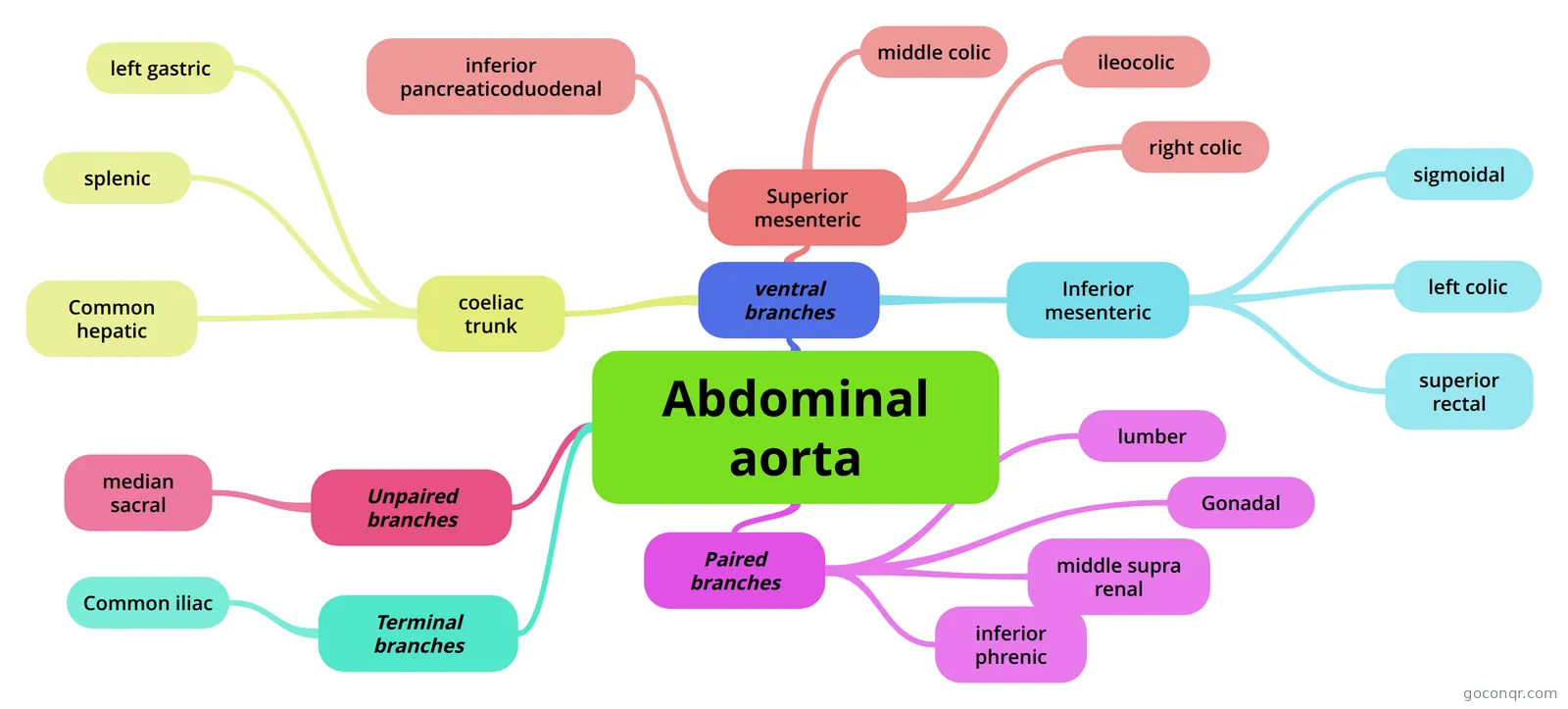 Mind map Abdominal aorta Large blood vessels of GUT
-
8 questionsArteries of Head & Brain Anatomy & Physiology I Laboratory List 6: Blood Vessels
-
7 questionsArteries of Right Upper Limb Arteries of Right Upper Limb
-
Mind map Heart
Quizzes
See all 186 quizzes-
60 questionsCVR Anatomy Set 1 Quiz - Cardiovascular blood supply [Part 1] Label 1 shows
-
13 questionsHeart anatomy Structure of pericardium
-
8 questionsArteries of Head & Brain Anatomy & Physiology I Laboratory List 6: Blood Vessels
-
7 questionsArteries of Right Upper Limb Arteries of Right Upper Limb
-
82 questionsHeart which side of the heart is blue/deoxygenated?
-
40 questionsThe Heart Quiz External features of the heart include
-
30 questionsAnatomy: Cardiovascular and lymphatic system: Vascular routes The innermost part of the artery...
-
25 questionsANATOMY OF HEART Fibrous pericardium is external to serous pericardium.
Mind maps
See all 182 mind mapsFlashcards
See all 347 flashcards-
72 cardsCardiovascular USMLE What are the five dilatations of the primitive heart tube?
-
43 cardsLecture Exam 2: Chapter 15: Cardiovascular System What are the three largest veins in the body?
-
60 cardsCardiovascular Y1 What is the root of the lugs called?
-
87 cardsThe Heart What is Cyanosis?
-
72 cardsAnatomy of the Heart: Pericardium and Heart Chambers Name the region marked '?' and state its position relative to the sternum.
-
55 cardsCardiovascular System II - Lecture 2 What is the pericardium?
-
36 cardsAnatomy of heart coronary vessels 1. Describe the pericardium 2. Trace the flow of blood through the heart and identify the great vessels 3. ...
-
43 cardsBlood Vessels & Lymphatics Name the layers of the blood vessels
Flowcharts
See all 12 flowchartsNotes
See all 18 notes-
Cardiovascular System (The Heart) Pulmonary and Systemic Circuits Heart is a transport system consisting of two side-by-side pumps Right side receives oxygen-poor blood from tissues Pumps blood to lungs Left side receives oxygenated blood from lungs P...
-
Untitled 1)The pericardium is the double sac membrane that a)encloses the heart b)line the aorta c)makes up the heart valves d)it found only in c...
-
Untitled 1. The septum: Divides the right and left chambers of the heart 2. Where are the valves located?: At the exit of each heart chamber 3. What do valves prevent?: Backward flow of blood 4. When do valves open?: When each...
-
Ductus Arteriosis Connects the PA to the proximal descending aorta. It allows most of the blood from the RV to bypass the fetus's fluid filled non-functioning lungs. Normally closes within 72 hours of life. In utero it allows blood to ...
-
NPLEX VASCULAR Liver: proper hepatic (off of common hepatic) Stomach Lesser curvature: Left and right gastric Greater curvature : right gastroepiploic & left gastroepiploic (Celiac – common hepatic – gastroduodenal ...
-
Foramen Ovale Develops late in the fourth week of gestation.Fetal cardiac shunt which allows blood to enter the LA from the RA which allows blood to bypass the non functional fetal lungs while the fetus obtains its oxygen from the ...
-
Lymphatic Drainage Lymphatic Capillaries Lymphatic Vessels Lymph Nodes
-
A. subclavia - created from Mind Map A. suprascapularis A. dorsalis scapulae A. axillaris
Slides
Topics in Cardiovascular and Lymphatic Systems
More Anatomy topics
About Cardiovascular and Lymphatic Systems
GoConqr OriginalWhat the page covers
This unit sits in the Integument, Circulation and Respiration strand of Anatomy. The listed resources follow the circulation from the heart outwards: the pericardium and chambers, the coronary vessels, the aorta and its branches, arteries and veins of the limbs, head and brain, and finally the lymphatic vessels and drainage.
Where to start
Begin with the heart. The mind map THE HEART sets out the pericardium as a double-layered serous membrane that protects the heart and holds it in position. The quiz Heart anatomy then tests the structure and function of the pericardium, including its fibrous layer. The flashcard deck Anatomy of the Heart: Pericardium and Heart Chambers asks you to name marked regions and say where they sit relative to the sternum.
Moving on to vessels
Once the heart feels familiar, turn to the vessels. Work through these in order:
- The quiz Anatomy: Cardiovascular and lymphatic system: Vascular routes, which covers the layers of the artery wall, elastic and muscular arteries, and vasoconstriction.
- The mind map Abdominal aorta, which splits branches into ventral, paired and terminal groups.
- The quizzes Arteries of Right Upper Limb and Arteries of Head & Brain, which ask you to name labelled vessels such as the brachial, radial and basilar arteries.
Using quizzes and maps together
Read a mind map first to see how the branches connect. Then take the matching quiz without looking. Anything you miss goes back onto a flashcard deck such as Lecture Exam 2: Chapter 15: Cardiovascular System, which asks about anastomoses, angiogenesis and why arteries are thicker than veins. For embryology, the deck Cardiovascular USMLE covers the dilatations of the primitive heart tube.
Lymphatics and extras
The lymphatic material includes the quiz Lymphatic System and mind maps on lymphatic vessels and drainage of the gut. There are also notes on the foramen ovale and the ductus arteriosus. Choose one topic today, try its quiz, and then make your own set of maps and flashcards to match.
Frequently asked questions
Which resource should I open first?
Start with the mind map THE HEART, which lays out the pericardium and its role, then take the quiz Heart anatomy to check what stuck. After that, move to the vessel resources, beginning with the quiz on vascular routes and the Abdominal aorta mind map.
Are the resources free to use?
Yes. Every resource on this page is free to open, study and take, with no account needed. They were made by GoConqr users, not by GoConqr itself, so styles and depth vary from one quiz, map or deck to the next.
What do the mind maps cover?
The mind maps range across the heart, heart valves, coronary circulation, the aorta and its branches, veins flowing into the right atrium, venous drainage of the lower limbs, the external carotid artery, and lymphatic vessels and drainage. Several are simply titled Heart, so compare a few.
Who are these resources for?
They are mostly university-level, so they suit university students and professional candidates revising anatomy, and teachers who want ready-made material. One listed resource mentions BTEC Health and Social Care, but the page is not organised around a particular exam.
Is there anything on the lymphatic system?
Yes. You will find quizzes such as Lymphatic System and Lymphs, flashcards on lymphatic anatomy and pathophysiology, and mind maps on lymphatic vessels and gut drainage. If you need a topic that is missing, you can make your own quiz, map or flashcards.
Can I test myself on labelled diagrams?
Yes. The quiz CVR Anatomy Set 1 Quiz - Cardiovascular blood supply asks you to identify numbered labels, and Heart Diagram offers similar practice. The limb and head quizzes also ask you to name arteries, so you can practise recognising structures, not only recalling definitions.