
Nervous System Overview
93 resources created by 82 users
This Nervous System Overview page on GoConqr gathers community-made quizzes, mind maps, flashcards and notes, from the spinal cord and cranial nerves to the brain, meninges and nervous tissue. It's built for university students testing their anatomy knowledge and teachers after ready-made material. There are over 750 resources here, including more than 170 quizzes, over 200 mind maps and more than 340 flashcards. Pick a topic, try a quiz to spot your gaps, then build your own maps and flashcards.
Top Nervous System Overview resources
-
51 questionsTopic 2.0 Spinal Cord the spinal cord occupies the entire vertebral canal
-
57 cardsFunctional Anatomy the Brain and Spinal Nerves (Lab Material) The Organization of the Brain: Cerebrum, Diencephalon, Brainstem, and Cerebellum The brain's 6 major divisi...
-
41 questionsAnatomy of Cranial Nerves: Clinical Testing Anatomy of Cranial Nerves: Clinical Testing given by Luke Reid on 29/08/2018
-
25 questionsSpinal Cord The spinal cord occupies the entire vertebral canal:
-
21 questionsAnatomy: Cranial nerves Cranial nerve I...
-
24 questionsNerve and Nerve Root Review - Lumbar Plexus Which of the following nerve roots feed the Iliohypogastric n.?
-
33 questionsNMS 1 Anatomy booklet - The nervous system and muscle Label 1 shows
-
38 cardsAnatomy of the Nervous System Chapter 3
Quizzes
See all 36 quizzes-
51 questionsTopic 2.0 Spinal Cord the spinal cord occupies the entire vertebral canal
-
41 questionsAnatomy of Cranial Nerves: Clinical Testing Anatomy of Cranial Nerves: Clinical Testing given by Luke Reid on 29/08/2018
-
25 questionsSpinal Cord The spinal cord occupies the entire vertebral canal:
-
21 questionsAnatomy: Cranial nerves Cranial nerve I...
-
24 questionsNerve and Nerve Root Review - Lumbar Plexus Which of the following nerve roots feed the Iliohypogastric n.?
-
33 questionsNMS 1 Anatomy booklet - The nervous system and muscle Label 1 shows
-
3 questionsAnatomy of the Brain Drag and Drop the correct labels for the main parts of the brain...
-
3 questionsBIOL 2401 - Nervous System: Cranial Nerves What cranial nerves are classified as sensory?
Mind maps
See all 19 mind maps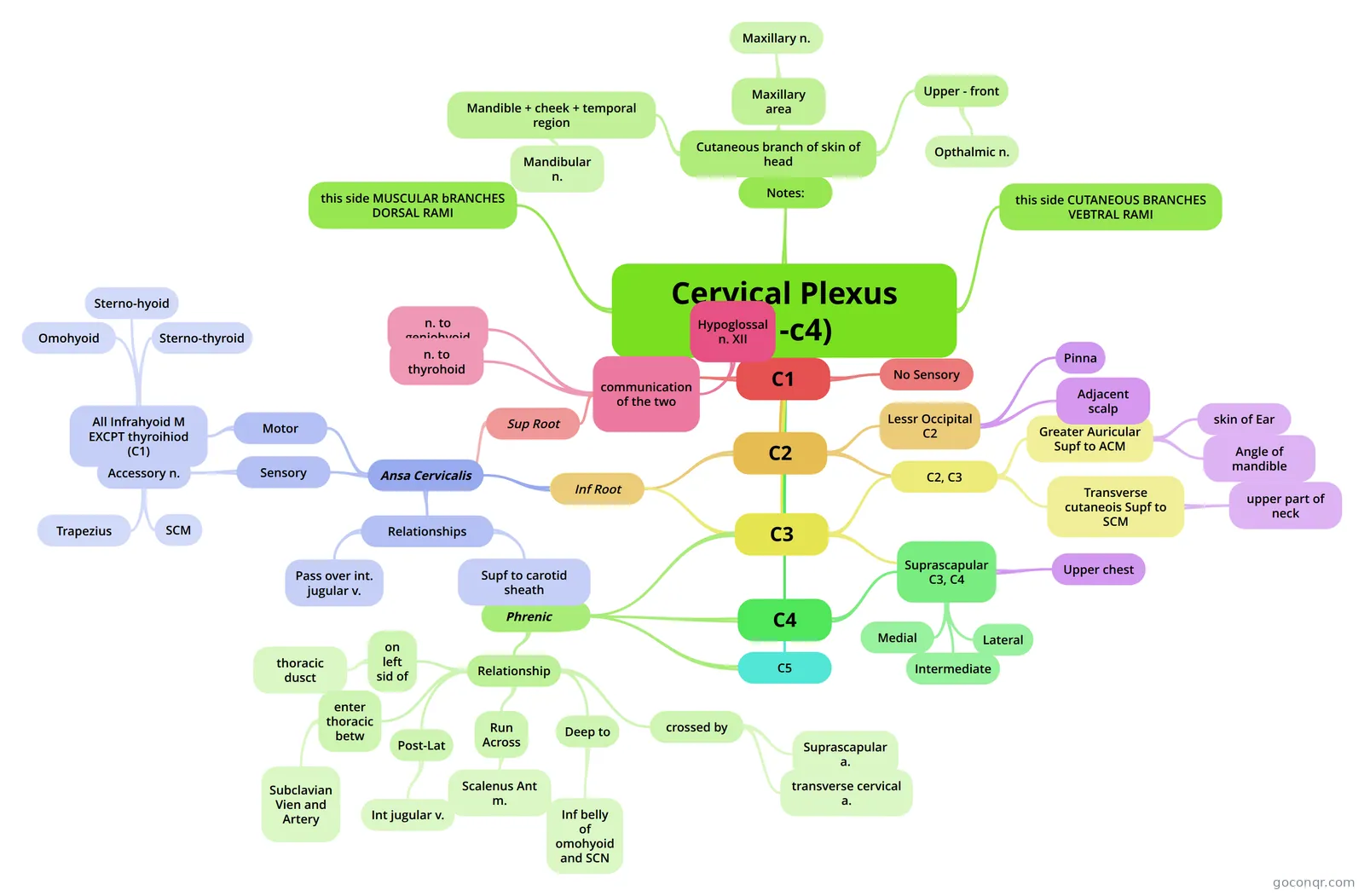
Flashcards
See all 33 flashcards-
57 cardsFunctional Anatomy the Brain and Spinal Nerves (Lab Material) The Organization of the Brain: Cerebrum, Diencephalon, Brainstem, and Cerebellum The brain's 6 major divisi...
-
38 cardsAnatomy of the Nervous System Chapter 3
-
91 cardsNervous system Flash cards Which cranial nerve relates to smell?
-
22 cardsThe Spinal Cord & Spinal Nerves (ID Material) BIOL252L Midterm 1 Shemer
-
92 cardsExam 1 (part 2) What is Nissl substance?
-
119 cardsBIOM1052 - Nervous System What is the central nervous system?
-
156 cardsA & P Lab Exam 2 Exercises 7-9 & 11-13
-
52 cardsAnatomy practicals pt.2 How many spinal/cranial nerves are there?
Notes
-
CNS - Cranial nerves I CN I - Olfactory nerve i) Course of tract ii) General features of CN I Shortest cranial nerve Does not join with brainstem Has meningeal covering but is not myelinated - covered by Schwa...
-
Anatomy - Chapters 9-10 Chapter 9: Nervous System Functions to monitor the external and internal environment to process and integrate information to decide what to do to tell effectors in the body what to do Neuroglial Cells MICROGLIAL CELLS...
-
A&P Theory Test 4 Chapter 12 - Nervous Tissue CNS = Central Nervous System [Brain & Spinal Cord] PNS = Peripheral Nervous System [Cranial Nerves & Spinal Nerves Neuron Terminology Initial Segment - First part of an axon Axon hillock - ...
-
Cranial Nerves - created from Mind Map Eye movement Vision Eye movement
Slides
More Anatomy topics
About Nervous System Overview
GoConqr OriginalWhat this unit covers
The resources here work through the nervous system from its overall organisation to individual structures. The quiz Topic 2.0 Spinal Cord looks at where the spinal cord sits in the vertebral canal and where it ends in adults. Nerve and Nerve Root Review - Lumbar Plexus asks which nerve roots feed nerves such as the iliohypogastric and ilioinguinal. Anatomy of the Brain uses drag-and-drop labelling for the main and deep parts of the brain.
Where to start
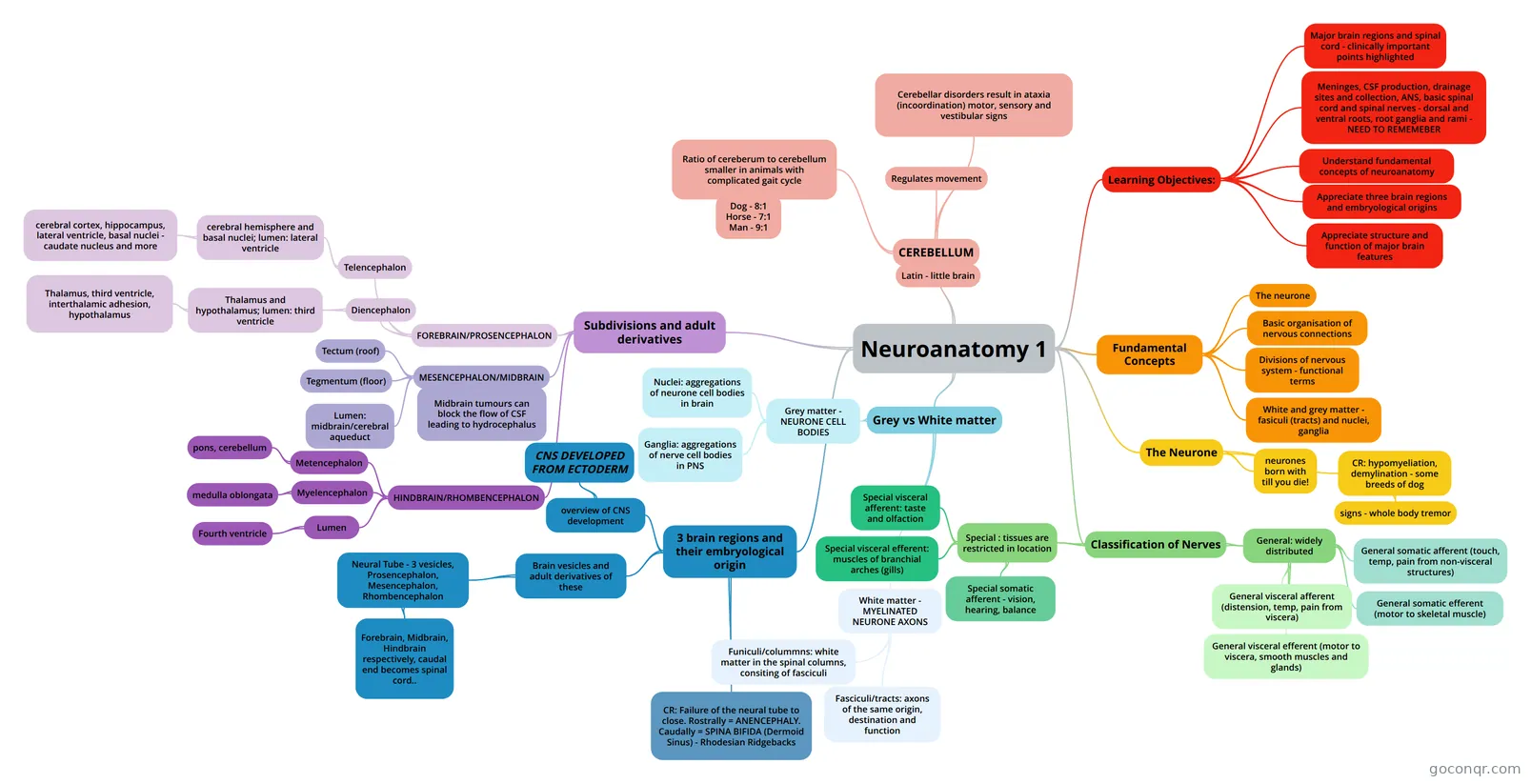
Begin with the big picture. The flashcard deck Anatomy of the Nervous System covers staining methods, tracing techniques and the axes of the vertebrate nervous system. Then try Anatomy: Nervous system overview and look through the mind maps called Nervous System and SUBDIVISION OF THE NERVOUS SYSTEM.
- Skim an overview mind map or deck.
- Move to the brain, using Anatomy of the Brain and the slide set BRAIN ANATOMY, which offers hints for dorsal, lateral and ventral views.
- Continue to the spinal cord and spinal nerves.
- Finish with cranial nerves.
Using quizzes and maps together
Read a mind map first, then close it and take a quiz on the same topic. Wrong answers show you which branch to reread. For cranial nerves there are many choices: BIOL 2401 - Nervous System: Cranial Nerves asks which nerves are sensory and asks you to identify labelled structures, while Anatomy of Cranial Nerves: Clinical Testing and the deck Cranial Nerves I-XII give you more angles on the same material.
Where it fits
This unit sits in the Nervous System and Special Senses strand of Anatomy. Related pages on the ear and special senses appear among the mind maps, such as EAR and special senses.
Make it your own
Teachers can pick a quiz or deck to share with a class. Students can start with one quiz today and see how far it takes them.
Frequently asked questions
Which resource should I open first?
Start with the flashcard deck Anatomy of the Nervous System or the quiz Anatomy: Nervous system overview for the big picture. Once that feels familiar, move on to the brain, the spinal cord and then cranial nerves, using a quiz after each mind map.
What do the mind maps cover?
The mind maps cover the nervous system as a whole, nervous tissue, the brain, the meninges, the peripheral nervous system and several cranial nerves. There are also maps on the cerebellum, the cervical plexus, the trigeminal nerve and the ear.
Are the resources free to use?
Yes. Every resource on this page is free to open, study and take, with no account needed. A free account also saves your quiz scores and lets you make your own quizzes, mind maps, flashcards and notes.
Who made these resources?
They were made by GoConqr users, not by GoConqr itself. Because they come from many different students and teachers, styles and detail vary, so it helps to compare a few resources on the same topic.
Which levels do these resources suit?
Almost all of them are at university level, so they suit university students and teachers. A small share is at secondary level. Quizzes such as the one on cranial nerves from BIOL 2401 show the kind of detail to expect.
What if I can't find the topic I need?
Try searching related terms, since topics often appear under different names, such as cranial nerves, the brain or the spinal cord. You can also build your own quiz, mind map or flashcards for the gap you have found.