
Sentence Structure and Clauses
99 resources created by 90 users
This Sentence Structure and Clauses page on GoConqr gathers community-made quizzes, mind maps, flashcards and notes, from simple, compound and complex sentences to relative, noun and adverbial clauses. It's built for school students practising sentence types, clauses and word order, and for teachers after ready-made material, with a little for university students too. There are over 900 resources here, including more than 70 quizzes and over 700 mind maps. Pick a topic, try a quiz to find your gaps, then make your own set.
Top Sentence Structure and Clauses resources
-
117 questionsIngles 4
-
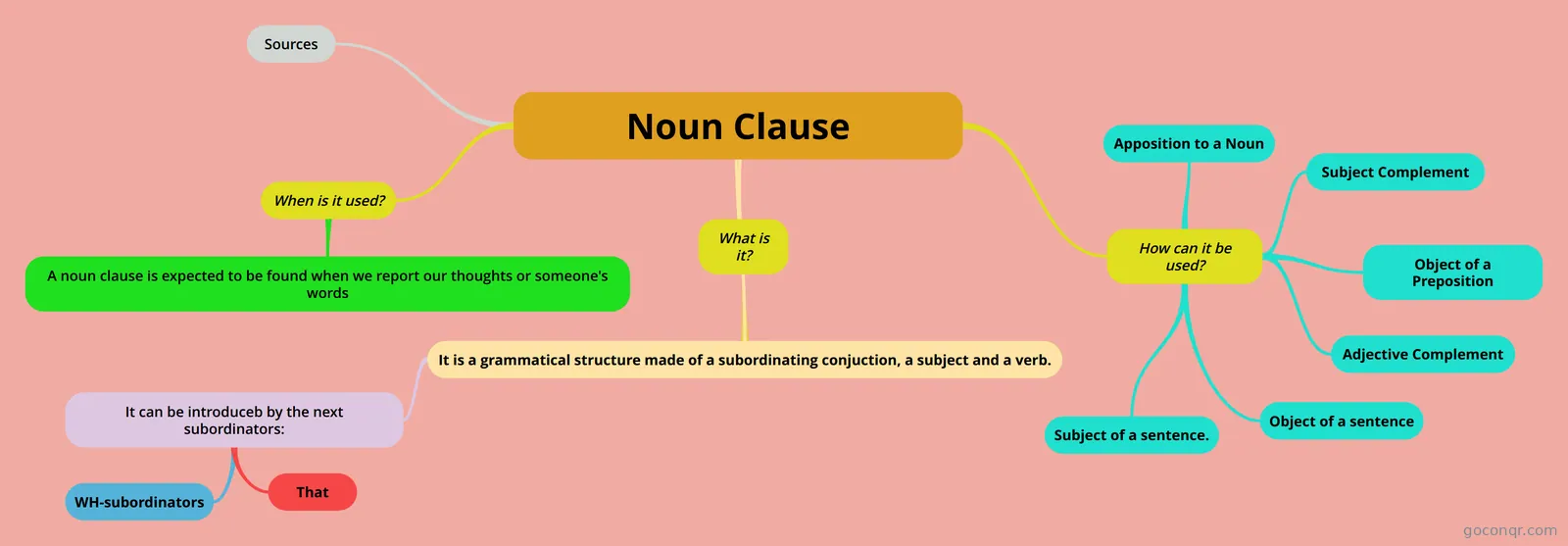 Mind map Noun Clause. Explanation of what a noun clause is, how does it behave, and where it tends to be used in.
-
33 questions4th Grade Language - Unit 1: Declarative, Interrogative, Imperative & Exclamatory Sentences What is your favorite food to make
-
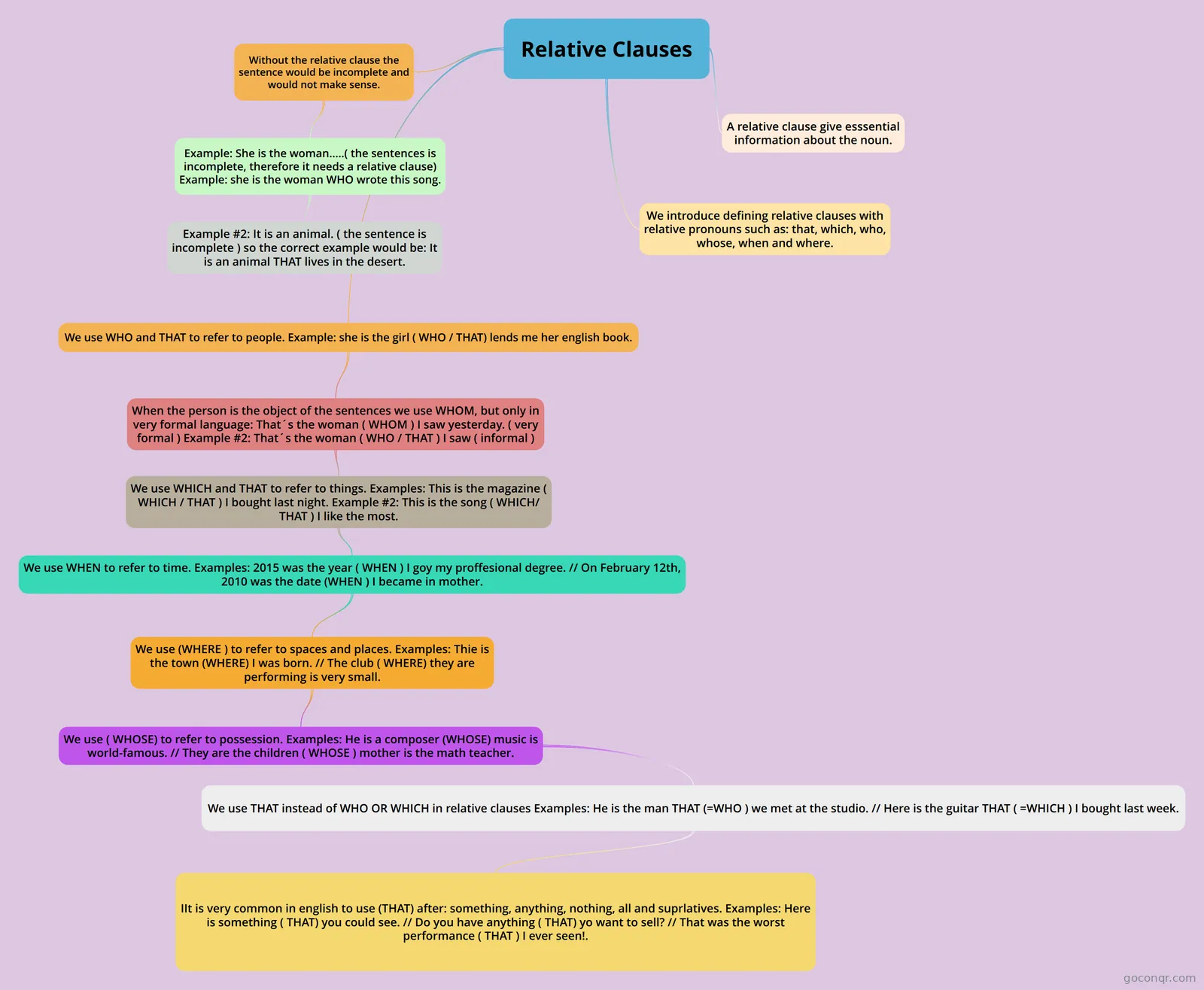 Mind map Relative Clauses
-
10 questionsDirect & Indirect Objects Read the following sentences carefully. Decide whether the words in CAPITAL LETTERS are subjects, direct ob...
-
10 questionsSimple, Compound, and Complex Sentences A simple sentence contains only a subject and a verb.
-
19 questionsEnglish: Run-on, Sentence, or Fragment? I can’t wait until Sunday we are going to a football game.
-
6 cardsNouns in subject Underline the subject once and the predicate twice. Circle the noun or nouns in the subject.
Quizzes
See all 26 quizzes-
117 questionsIngles 4
-
33 questions4th Grade Language - Unit 1: Declarative, Interrogative, Imperative & Exclamatory Sentences What is your favorite food to make
-
10 questionsDirect & Indirect Objects Read the following sentences carefully. Decide whether the words in CAPITAL LETTERS are subjects, direct ob...
-
10 questionsSimple, Compound, and Complex Sentences A simple sentence contains only a subject and a verb.
-
19 questionsEnglish: Run-on, Sentence, or Fragment? I can’t wait until Sunday we are going to a football game.
-
14 questionsEnglish - Grammar: Types of Sentences Quiz on English - Grammar: Types of Sentences, created by Jill Hurley on 06/01/2019.
-
38 questions4th Grade Language - Unit 1: Sentence or Fragment
-
5 questionsLISTENING EXERCISE OF THE IMPERATIVES 1 scene Where did the lady in the pink sweater need to go?
Mind maps
See all 37 mind maps-
Noun Clause. Explanation of what a noun clause is, how does it behave, and where it tends to be used in.
-
Relative Clauses
-
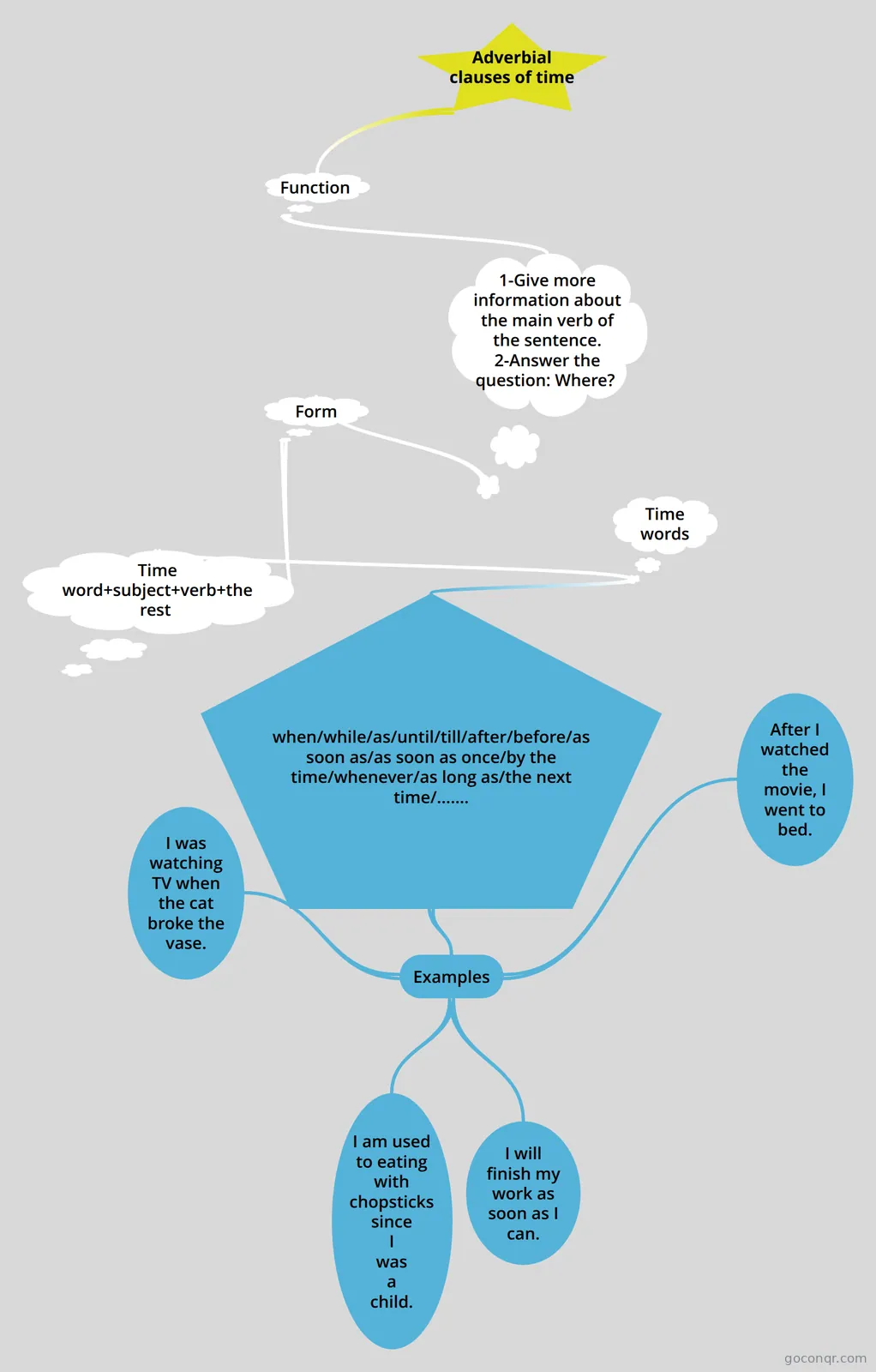 Adverbial clauses of time Grammar lesson
-
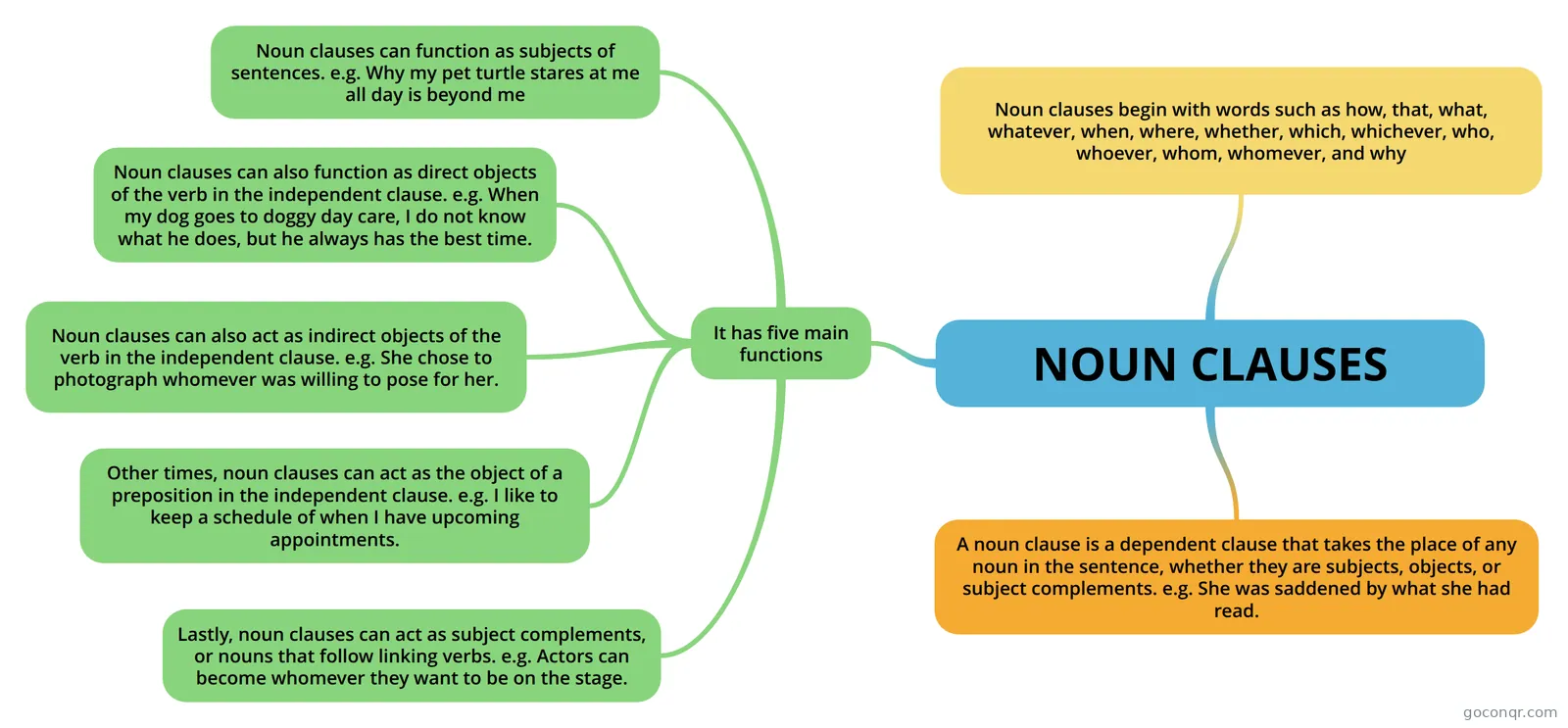 NOUN CLAUSES
-
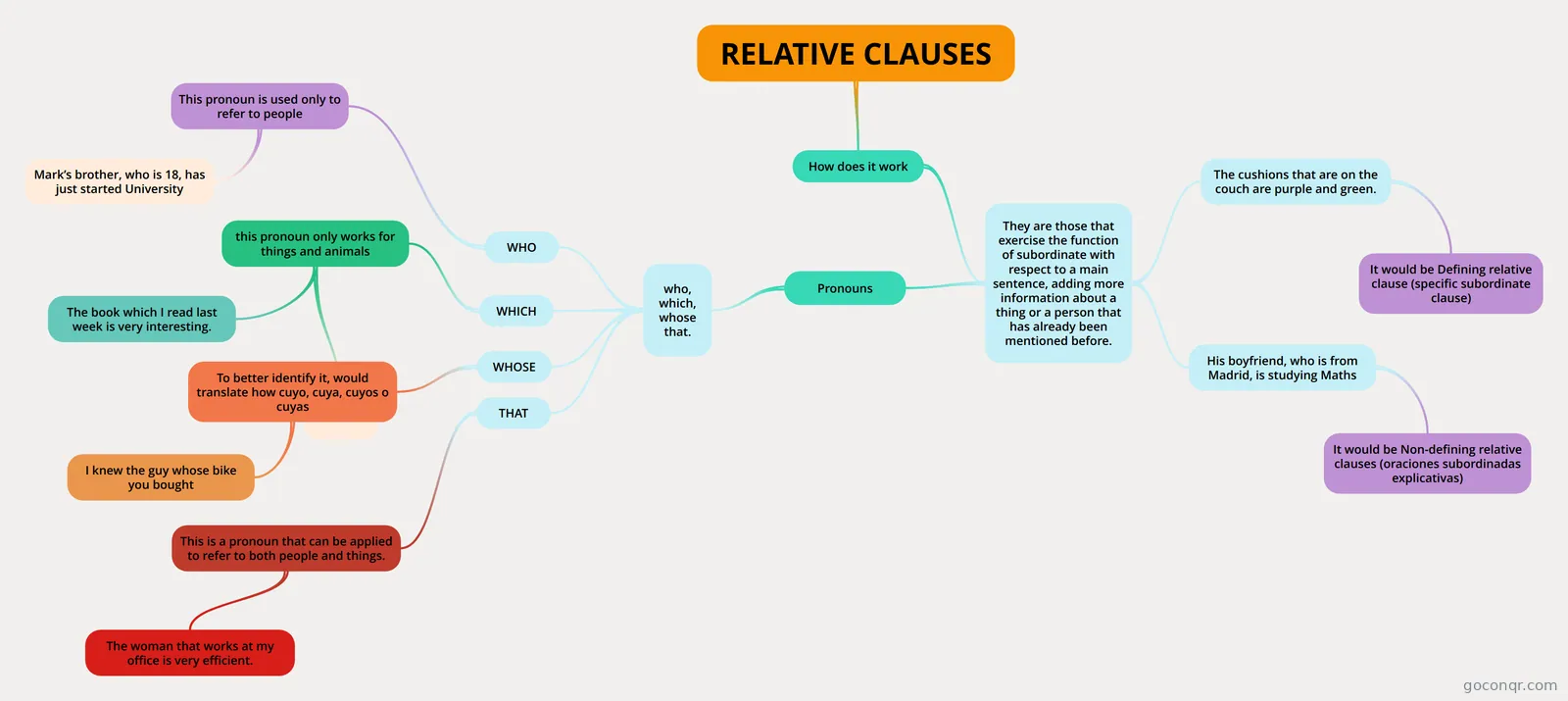 RELATIVE CLAUSES HH
-
Complex sentences
-
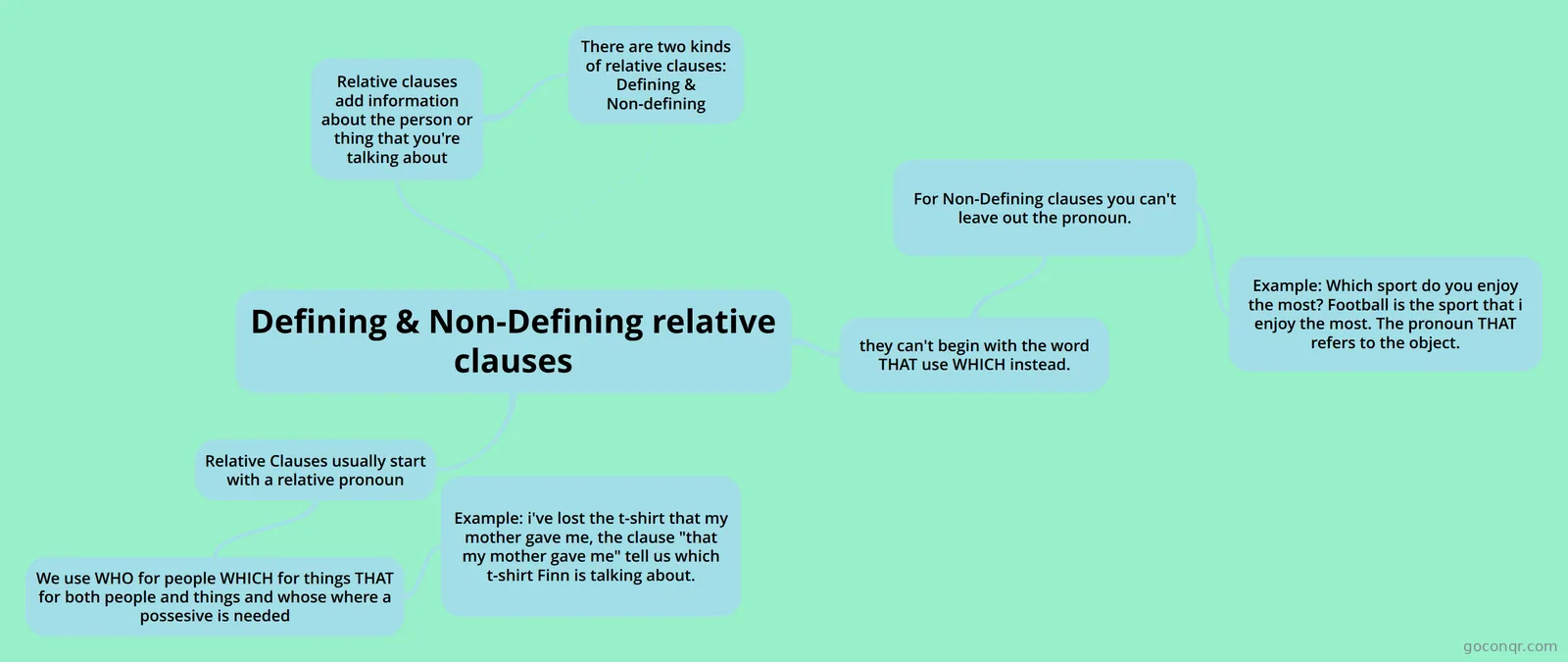 Defining & Non-Defining relative clauses
-
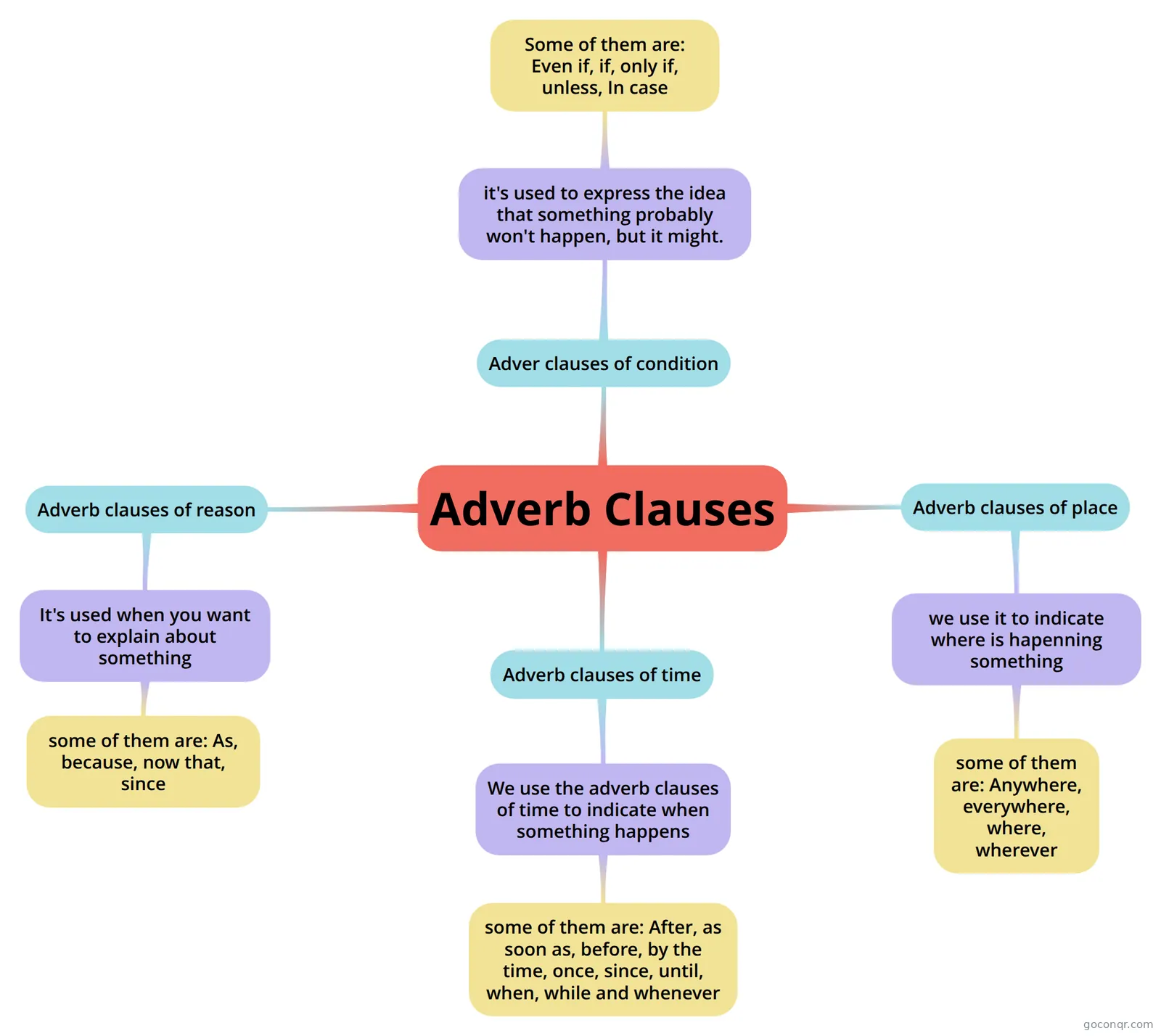 Adverb Clauses reason, time, place, condition
Flashcards
See all 22 flashcards-
6 cardsNouns in subject Underline the subject once and the predicate twice. Circle the noun or nouns in the subject.
-
4 cardsSentence, fragments and run-on What are sentences?
-
22 cardsGiU Topic 9 - Terminology
-
21 cardsUNIT 23 Quirk defines sentence as...
-
10 cardsWord Order - Making Sense p.30 Word Order Basic: Subject + verb
-
11 cardsSubject & Predicate Identify the Subject The princess walked in to the court and slipped.
-
7 cardsTypes of Sentences
-
59 cardsEl imperativo El imperativo es una orden de hacer algo: Haz eso, no hagas aquello. En español, como siempre, la conjugaci...
Flowcharts
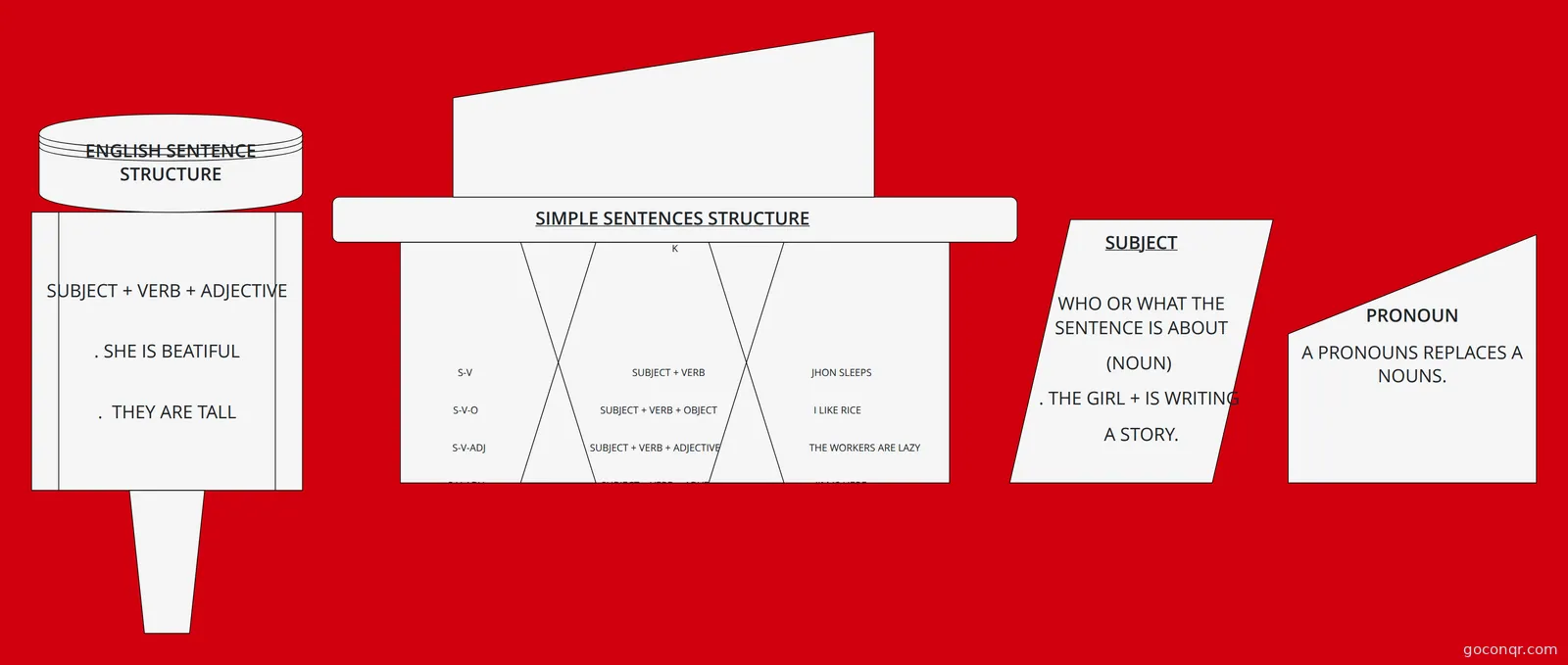
Notes
-
4th Grade Language Review Notes - Unit 1: Recognizing and Writing Good Sentences Review Notes 1:https://quizlet.com/25498754/4th-grade-english-sentence-or-fragment-flash-cards/Review Notes 2:https://quizlet.com/47683607/4th-grade-language-test-1-review-flash-cards/
-
clauses of concession
-
Sentence Terminology DeclarativeMakes a statement and ends with a full stop (caesura)ExamplesJulie taught her goldfish how to cook.Tommy decorated his locker with pictures of cheesecake. ImperativeIssuing a command or make a request and e...
-
English 7th Grade -Combining Sentences and Avoiding Padded Language- Combining Sentences - Sentences should contain a complete thought with descriptive details. A short sentence can be effective if it contains a singular idea that is best stated simply. Short sentences, particularly se...
-
Subject and Predicate Subject and Predicate Subject and predicate in the sentences Karla WILL CHOOSE THE COLOR S P
-
Sentences and Clauses Link
-
Indirect questions
Slides
More English language topics
About Sentence Structure and Clauses
GoConqr OriginalWhat this page covers
The resources here sit in the Grammar: Words and Sentences strand of English language. They look at how sentences are built and how clauses fit inside them. Most are mind maps, with quizzes, flashcard decks, notes, flowcharts and slide sets alongside. All were made by GoConqr users.
Where to start
Begin with the basics of sentence types. The quiz Simple, Compound, and Complex Sentences checks the key definitions, and the Sentence Types Mind Map adds compound-complex sentences. If you are younger or need a gentler start, try the quiz on declarative, interrogative, imperative and exclamatory sentences, which uses everyday examples about cookies and cooking.
Next, look at what goes wrong. English: Run-on, Sentence, or Fragment? asks you to spot a run-on, a full sentence or a fragment, such as a phrase with no verb. The flashcard decks on fragments and run-on sentences help you remember the fixes.
Moving on to clauses
Once sentences feel secure, work through the clause maps in this order:
- Noun Clause. It covers a subordinating conjunction, a subject and a verb, and how the clause can be used.
- Relative Clauses. It explains why a defining clause gives essential information about the noun.
- Adverbial clauses of time. It shows the form of a time word plus subject and verb, with when, while and as.
There are also separate maps for adverbial clauses of place, manner, cause, result and contrast. The quiz Direct & Indirect Objects asks you to label subjects, direct objects and indirect objects.
Using quizzes and maps together
Read a mind map first, then take the matching quiz without looking back. Note the questions you miss and return to the map for those branches. Flashcards are good for terms such as subject, predicate and phrase. Learners aiming at TOEFL can look at the maps on TOEFL skill structure, and UNED grammar students will find mock tests too.
Where it fits
This unit belongs to the Grammar: Words and Sentences strand of English language. Choose one map today, test yourself with a quiz, and build your own flashcards from what you find tricky.
Frequently asked questions
Which resource should I open first?
Start with the quiz Simple, Compound, and Complex Sentences or the Sentence Types Mind Map. Both set out the main sentence types, which makes later work on clauses easier. Younger learners may prefer the 4th Grade Language quiz on declarative, interrogative, imperative and exclamatory sentences.
What do the mind maps cover?
Most of the page is mind maps. They cover noun clauses, relative clauses, defining and non-defining clauses, and adverbial clauses of time, place, manner, cause, result and contrast. Others look at word order, coordination and subordination, phrases, and the parts of a sentence.
Are the resources free to use?
Yes. Every resource listed here is free to open, study and take, with no account needed. They were made by GoConqr users, not by GoConqr itself, so style and depth vary. A free account saves your quiz scores and lets you make your own quizzes, maps, flashcards and notes.
Which levels and exams do these suit?
The page is mostly secondary-level material, with a small amount for primary-age learners and some for university students. A few resources mention TOEFL, including maps on TOEFL skill structure, and others mention UNED English grammar, with mock tests and a practice exercise.
How can I practise run-on sentences and fragments?
Try the quiz English: Run-on, Sentence, or Fragment? and the 4th Grade Language quiz on run-together sentences. There are also flowcharts on run-on sentences and sentence fragments, plus flashcard decks, so you can check your answers against the rules.
What if I cannot find the topic I need?
Search the related units on GoConqr, or make your own. Many topics here, such as participle clauses and purpose clauses, appear as flowcharts or slide sets rather than quizzes. You can turn a map or note into flashcards of your own to fill any gap.