
Structure of the Earth
822 resources created by 727 users
This Structure of the Earth page on GoConqr gathers community-made quizzes, mind maps, flashcards, slides and notes on the crust, mantle and core, seismic waves, plate tectonics and the evidence for Earth's layers. It's built for school students revising a topic and teachers after ready-made material. There are over 700 resources here, including more than 50 quizzes, over 400 mind maps and over 100 flashcard decks, mostly at secondary level. Pick a resource, try a quiz to find your gaps, then make your own revision set.
Select topic
- Earth's Spheres18
- Formation of the Earth5
- Evidence for Earth's Internal Structure6
- Rocks and Minerals31
- Earth's Crust10
- Mantle Convection and Internal Dynamics14
- Earth's Core and Magnetic Field5
- Lithosphere and Asthenosphere8
- Plate Tectonics123
- Earthquakes and Faults8
- Landforms and Geological Processes13
- Earth's Rotation and Revolution7
Top Structure of the Earth resources
-
23 cardsDynamic Crust. Unit 4 visual flash cards
-
8 cardsInternal structure of the Earth The layers of the Earth can be divided into layers according to its chemical composition as we can see in t...
-
Mind map 3 THE GEOSPHERE
-
33 questionsLithosphere and Tectonic Activity Revision The asthenosphere is:
-
56 cardsyear 8 mid-term science test mlshs How deep is the crust?
-
22 questions1.1 Structure of the Earth Label the layers of the Earth.
-
Mind map The Ever Changing Earth Mind Map on Cells, created by caryslthomas on 09/06/2016.
-
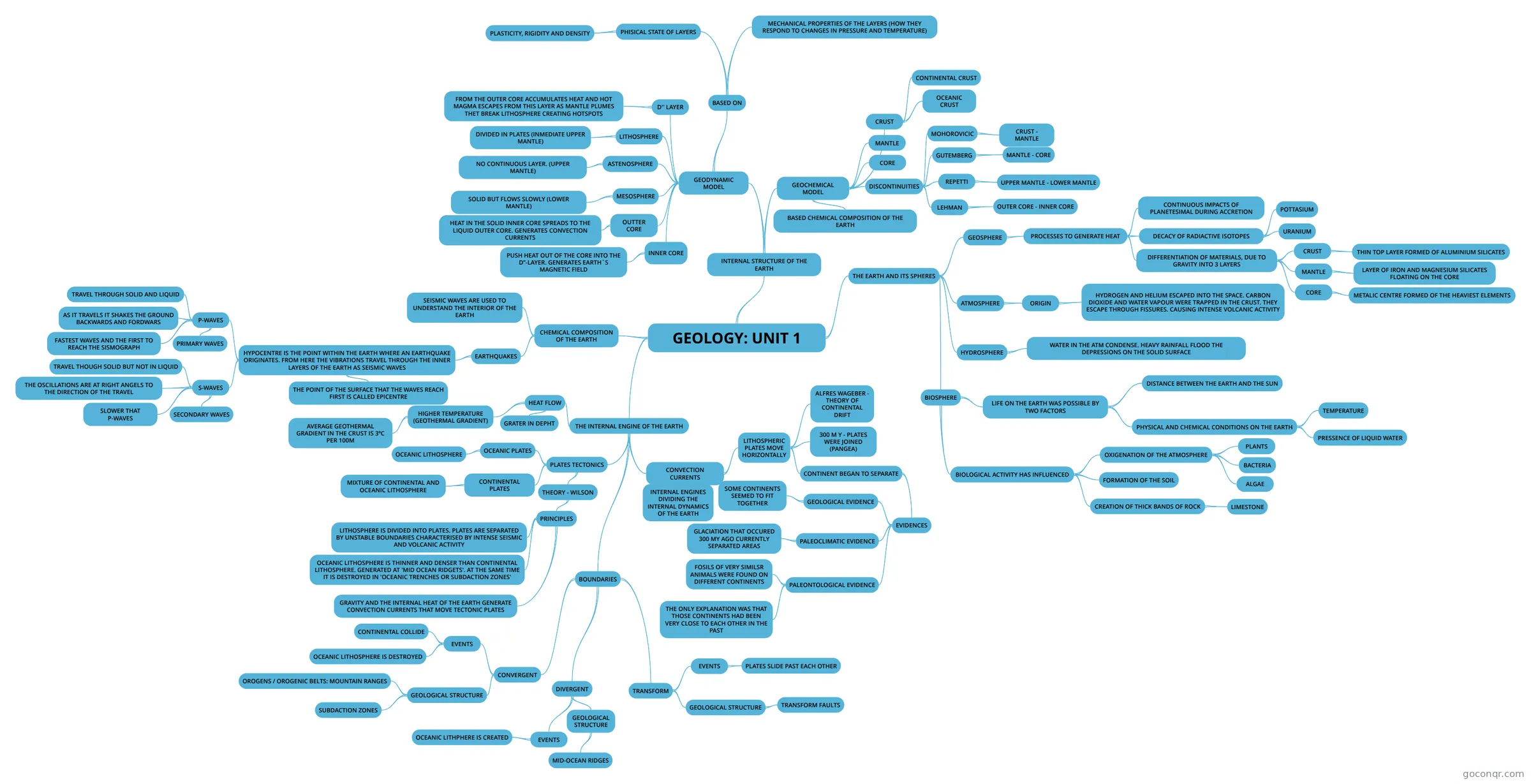 Mind map GEOLOGY: UNIT 1
Quizzes
See all 74 quizzes-
33 questionsLithosphere and Tectonic Activity Revision The asthenosphere is:
-
22 questions1.1 Structure of the Earth Label the layers of the Earth.
-
20 questionsEARTH'S BEGINNING About 61% of the Earth’s surface is covered by water.
-
5 questionsPlate Tectonics Quiz Seismic waves are used to map the earth's structure.
-
5 questionsStructure of the Earth The magnetic field of the Earth comes from the Earth's core.
-
29 questionsGEOGRAPHY Rotation is the movement of the Earth around the Sun.
-
11 questionsThe Earth's Structure how do we know that the earth has a liquid core
-
9 questionsEarth’s Layers: Vocab
Mind maps
See all 492 mind maps-
3 THE GEOSPHERE
-
The Ever Changing Earth Mind Map on Cells, created by caryslthomas on 09/06/2016.
-
GEOLOGY: UNIT 1
-
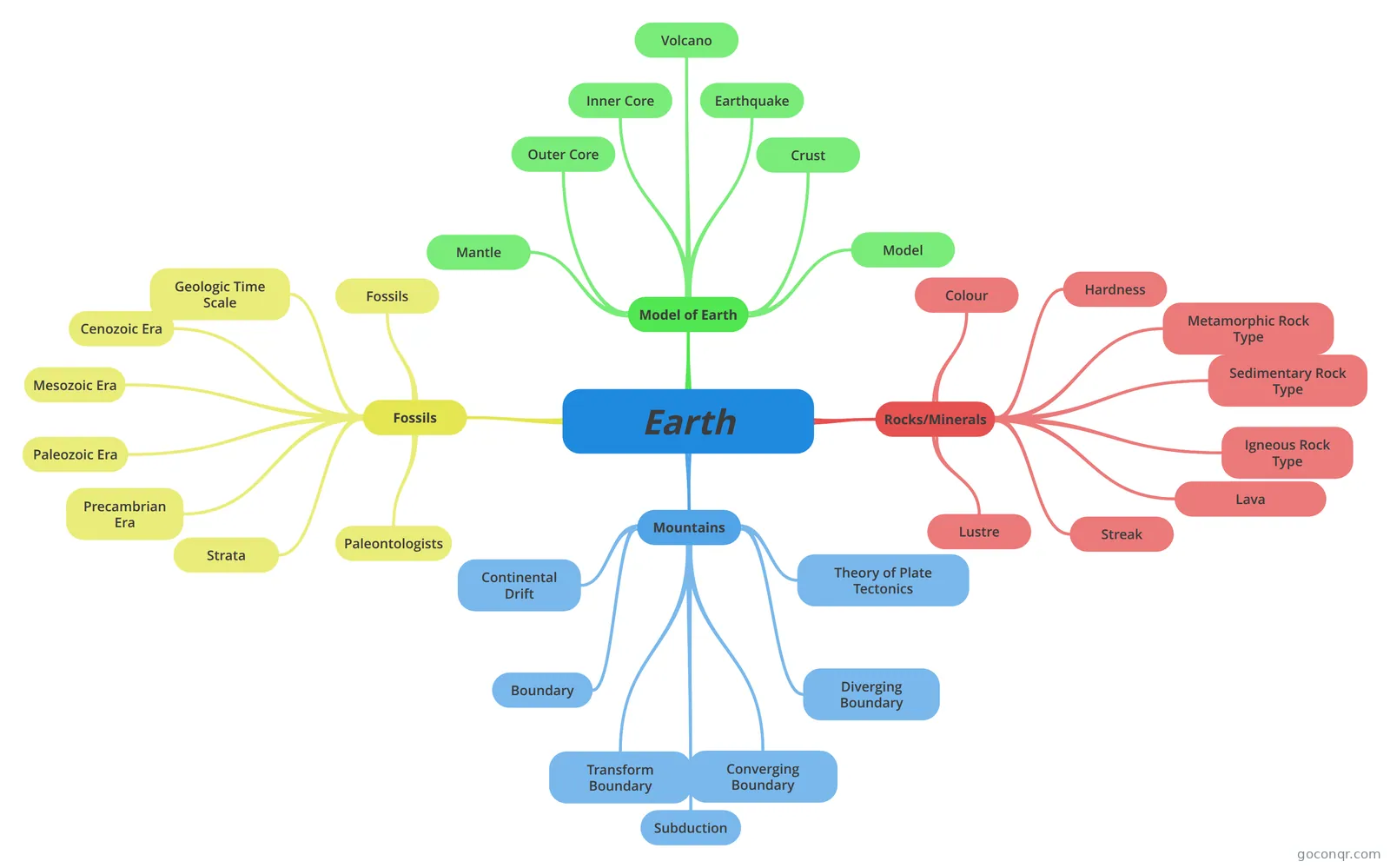 Earth The Earth Unit. Alberta Grade 7.
-
THE SOLID PART OF THE EARTH Geosfera. Geosphere. EStructura interna de la Tierra.
-
Structure of the Earth
-
P1 - Earth in the Universe
-
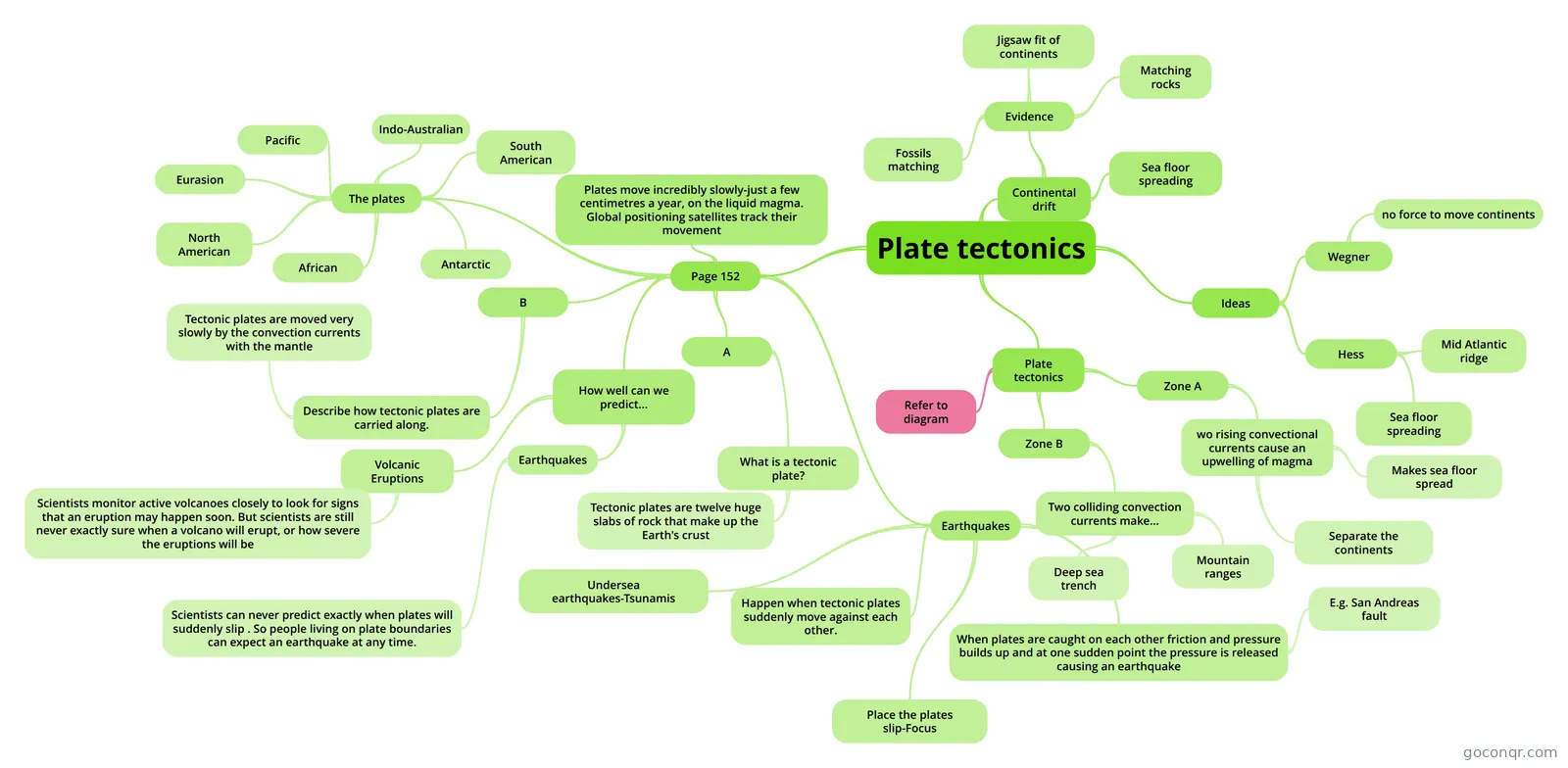 Plate tectonics
Flashcards
See all 176 flashcards-
23 cardsDynamic Crust. Unit 4 visual flash cards
-
8 cardsInternal structure of the Earth The layers of the Earth can be divided into layers according to its chemical composition as we can see in t...
-
56 cardsyear 8 mid-term science test mlshs How deep is the crust?
-
24 cardsThe Geosphere The Earth: Origin and composition
-
21 cardsEarth Structure The 4 Terrestrial Planets
-
20 cardsUnit 1.4 : Cycles Inside The Earth What happens deep within the Earth?
-
20 cardsCycles inside Earth unit 1.4 -.- How do earthquakes, volcanoes and continental drift all occur?
-
53 cardsEarth Structures and Mass Wasting Earth structures, earthquakes, mass wasting
Notes
See all 65 notes-
C3 Tectonic Plates Earth's almost spherical has layers Crust and upper part of mantle cut up into sections called tectonic plates Like rafts- float on the mantle Plates don't stay in one place Earth's look changed over y...
-
Earth Structure Diagram and composition table Earth Structure New Page
-
The structure of the earth 1. The inner core6371 km to approximately 5100 km The inner core is believed to be made of solid material, due to the extreme pressures which is estimated at 3600000 atmospheres, compared to 1 atmosphere at the surfac...
-
The Layers of the Earth Inner Core: the inner core is believed to be made of a solid material, due to extreme pressure which is estimated at 3,600,000 bars compared to 1 bar at the surface. Both P and S waves move through the inner core, wit...
-
Faults Faults can be described by: fault plane: plane of ffracture, along which rocks have been displaced throw: the vertical displacement of rocks along the fault plane fault dip: the maximum inclination of the fault plane ...
-
Direct Evidence for the Structure of the Earth Mines and BoreholesWe have direct access to higher levels of the crust by means of mines for coal, metal ores and diamonds. Problems of drainage, ventilation, high working temperatures and lifting the ore to the sufac...
-
Earths Structure & Formation
-
Plate Tectonics The Moving EarthA Unifying Theory - Plate TectonicsThe plate tectonic theory gives a coherent explanation for many of the major global geological events such as earthquakes, volcanoes, faults, folds and fold mountains...
Slides
Topics in Structure of the Earth
More Geology and earth sciences topics
About Structure of the Earth
GoConqr OriginalWhat this unit covers
The resources here describe the Earth as a set of layers. The slide set GCSE Chemistry: The Crust starts from the outermost layer, the thin rocky crust, then moves to the mantle, which behaves like a solid but can flow. The notes on the inner core explain why it is believed to be solid, because of the extreme pressure.
Where to start
Begin with a broad overview, then narrow down.
- Read the slide set GCSE Chemistry: The Earth's Structure or the notes The Layers of the Earth for the big picture.
- Work through the flashcards Internal structure of the Earth, which cover how layers are divided by chemical composition.
- Use Dynamic Crust. Unit 4 to compare oceanic and continental crust, the lithosphere and the Moho.
- Move on to Plate Tectonics and the notes on seismic waves.
Evidence and models
Several mind maps separate the chemical model (crust, mantle, core) from the physical or geodynamic model (lithosphere, asthenosphere, mesosphere, endosphere). The mind map TECTONIC PLATES lists ways of studying the interior, such as core sampling, studying rocks and meteorites, and P waves and S waves. The notes Direct Evidence for the Structure of the Earth and Indirect Evidence for the Structure of the Earth pair well with it.
Using quizzes and maps together
Look at a mind map such as Planet Earth first, and try to recall each branch from memory. Then take a quiz like Earth's Layers or Labelling the Earth. Any questions you miss show which branch to revisit. Exam-minded students will see GCSE Chemistry, Physics, Geography and Science mentioned across the resources, so it is worth checking which wording suits your course.
Where it fits
This unit sits in the Foundations of Earth Science strand of Geology and earth sciences. It gives the layer-by-layer picture that later topics build on. Choose one resource now, then try a quiz and see what you remember.
Frequently asked questions
Which resource should I open first?
Start with the slide set GCSE Chemistry: The Earth's Structure or the notes called The Layers of the Earth. Both give an overview of the layers. After that, the flashcards on the internal structure of the Earth help you remember the key terms before you try a quiz.
What do the mind maps cover?
There are over 400 mind maps. Many, such as Planet Earth, set out the crust, mantle, inner core and outer core, plus weathering, erosion and deposition. Others, like TECTONIC PLATES, cover the lithosphere, asthenosphere, evidence from rocks and meteorites, and P waves and S waves.
Are the resources free to use?
Yes. Every resource listed on this page is free to open, study and take, with no account needed. They were made by GoConqr users rather than by GoConqr itself, so it can be useful to compare a couple of versions of the same topic.
Which levels and exams do they suit?
Most of the resources are at secondary level, so they suit school students. Some mention GCSE Chemistry, GCSE Physics, GCSE Geography and GCSE Science. Teachers can also use the slide sets, notes and quizzes as ready-made material for classes.
Are there quizzes on this page?
Yes, there are more than 50. Titles include Earth's Layers, Labelling the Earth, Earths Layers Quiz and Lithosphere and Tectonic Activity Revision. They work well after you have read the notes or gone through a mind map.
What if I can't find what I need?
Check related resources such as the plate tectonics notes, the seismic waves notes and the geosphere flashcards, which may cover your topic from another angle. A free account also lets you save your quiz scores and build your own quizzes, mind maps, flashcards and notes.