
Geologic Time and Earth History
105 resources created by 86 users
This Geologic Time and Earth History page on GoConqr gathers community-made quizzes, mind maps, flashcards and notes, from the nebular hypothesis and the Precambrian to stratigraphy, fossils and radiometric dating. It's built for school students revising a topic, university students filling gaps, and teachers after ready-made material. There are over 400 resources here, including more than 50 quizzes and over 300 mind maps, mostly at school level with a quarter at university level. Pick a topic, try a quiz to find your gaps, then build your own.
Top Geologic Time and Earth History resources
-
7 cardsNY PS/ES regents example questions (geologic ages) Geologic history is divided into eras, periods, and epochs based on the: (1) type of rock deposited at diff...
-
10 questionsChapter 13 test 1 What is the Nebular Hypothesis?
-
19 questionsFossils and Geologic Time Test Which of the following is least likely to become a fossil? (Won't become fossilized)
-
41 cardsStratigraphy Principle of Original Horizontality
-
14 cardsProterozoic Cont. (16) How often did supercontinents form in the Proterozoic?
-
32 questionsdevelopment of life geological time Card sort
-
50 questionsExam 5 Which relative dating principle states that in an undeformed sequence of sedimentary rocks, each layer is o...
-
23 questionsEnvSci Q01 W02 Unit 1 Section 3 1. Scientists have divided Earth's history into a series of
Quizzes
See all 18 quizzes-
10 questionsChapter 13 test 1 What is the Nebular Hypothesis?
-
19 questionsFossils and Geologic Time Test Which of the following is least likely to become a fossil? (Won't become fossilized)
-
32 questionsdevelopment of life geological time Card sort
-
50 questionsExam 5 Which relative dating principle states that in an undeformed sequence of sedimentary rocks, each layer is o...
-
23 questionsEnvSci Q01 W02 Unit 1 Section 3 1. Scientists have divided Earth's history into a series of
-
12 questionsBirth of the Solar System More than 10 billion years since the universe exploded into existence, the solar system--including the [bla...
-
12 questionsCh. 10 Reading Quiz Which passage best defines the Principle of Uniformitarianism?
-
12 questionsThe Formation of the Earth Practice Quiz The earth formed from...
Mind maps
See all 62 mind maps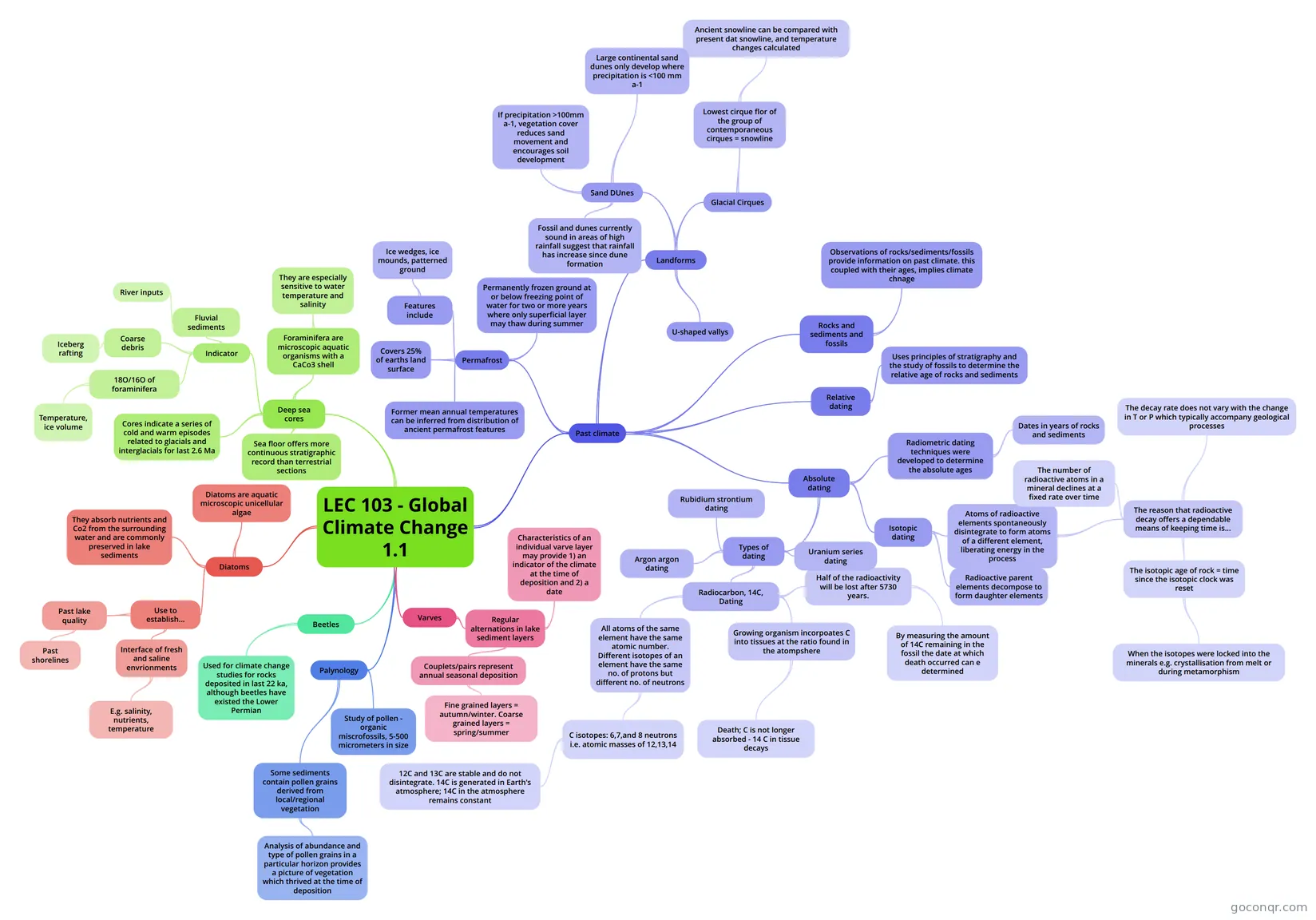
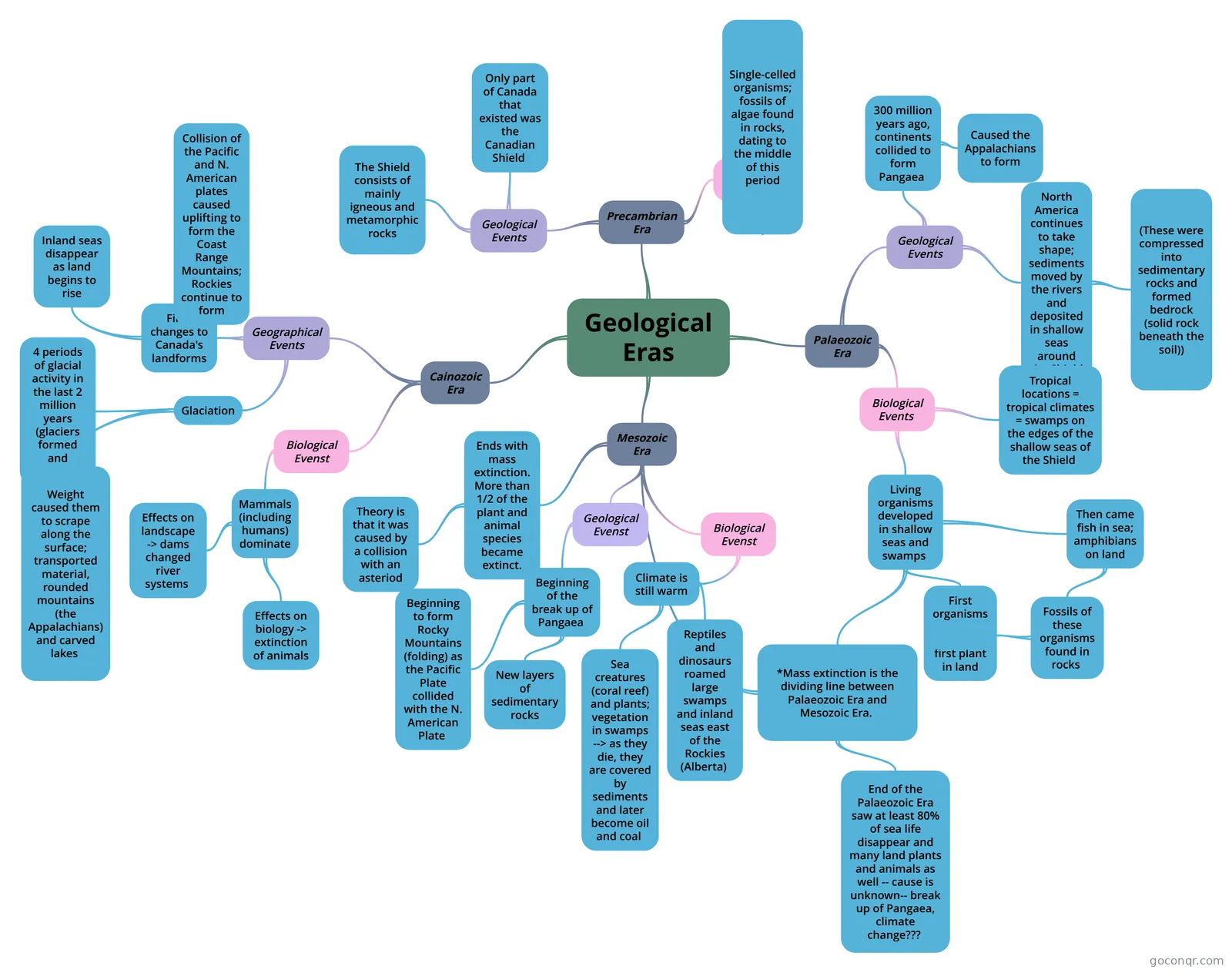
Flashcards
See all 19 flashcards-
7 cardsNY PS/ES regents example questions (geologic ages) Geologic history is divided into eras, periods, and epochs based on the: (1) type of rock deposited at diff...
-
41 cardsStratigraphy Principle of Original Horizontality
-
14 cardsProterozoic Cont. (16) How often did supercontinents form in the Proterozoic?
-
18 cardsBiology 108 - Geological History What are possible reasons for the rapid change in gene regulation?
-
23 cardsFossils, Relative, and Absolute Age Index Cards (7th Grade) Fossils, Relative, and Absolute Age Index Cards (7th Grade) by Irene Kim
-
10 cardsGeo Unit 2 Study What are the 4 geological eras in order from oldest to newest?
-
15 cardsOrigin of atmosphere (12) What is the origin of Earth's atmospheric gases?
-
14 cardsPhanerozoic [Paleozoic cont...] (25) In general, are Ordovician fossils similar to or different from Cambrian fossils?
Notes
-
GEO 3200 1 Formation of the Earth and the Moon Solar Nebula Hypothesis1. Cold cloud of gas and dust rotates and compresses into a disk-like shape90% mass concentrated in the centerTurbulence in cloud causes matter to collect in ...
-
GEO 3200 2 Global transgressions and regressions - what are they, when did they happen, how are they recognized? Paleogeographic features - changes in super-continents and features through time Fossils - which groups appear when...
-
Earth's Atmosphere_1 Evolution of Earth's atmosphere Earliest atmosphere The first atmosphere would have consisted of gases in the solar nebula, primarily hydrogen. In addition there would probably have been simple hydrides such as are no...
-
Earth Sciences [Earth History] Earth Sciences 106 Geology - the science of earth including: composition, structure, origin, life forms and the physical/chemical processes that affect it and its history Earth history - study of the origin and develo...
-
The Geological Column Eras are geological time units. All the divisions are systems. They refer to rocks formed during a particular interval of time.Dating PrinciplesThe geological column shows the relative ages of rocks and dates from abs...
-
Geologic time study guide a rapid event during which a significant part of all life forms on earth died.
More Geology and earth sciences topics
About Geologic Time and Earth History
GoConqr OriginalWhat this page covers
The resources follow Earth's story from its formation to the recent past. Some work through the geologic time scale: eons, eras, periods and epochs. Others deal with how we date rocks, or with life and climate through time. All were made by GoConqr users.
Where to start
Begin with the quiz Chapter 13 test 1. It asks about the nebular hypothesis, the names of the time divisions and when the Precambrian Eon was. Then read the mind map The Earth Through Time, which sets out eons, eras, periods and epochs by length. The Geologic Time Scale flashcards are a quick way to fix the order.
Dating and stratigraphy
Next, look at how geologists work out ages. The Stratigraphy flashcards cover the principles of original horizontality, superposition, lateral continuity, cross-cutting relationships and faunal succession. The mind map Dating of Rocks & Fossils and the Absolute Age quiz cover the radiometric side. The Easy Relative Age 1 quiz is a gentle start, with medium and hard sets after it.
Deep time and life
For the early Earth, try the PreCambrian flashcards, which ask about the age of the Earth and the formation of the Moon. The Fossils and Geologic Time Test covers fossil types and what is least likely to fossilise. Later periods have their own sets, such as the Mesozoic Test and the Cenozoic test.
Using quizzes and maps together
- Read a mind map to see the whole picture.
- Take a quiz on the same topic.
- Note what you missed and revisit it with flashcards.
- Retake the quiz later.
This unit sits in the Geologic Time and Earth History strand of Geology and earth sciences. Choose one topic today and open the first resource that suits you.
Frequently asked questions
Which resource should I open first?
Start with the quiz Chapter 13 test 1. It covers the nebular hypothesis, the geologic time scale and the Precambrian. If you would rather read first, open the mind map The Earth Through Time, then return to the quiz.
What do the mind maps cover?
There are over 300 mind maps. They range from the broad time scale and the Phanerozoic to Biostratigraphy, Isotopes, Snowball Earth and Jurassic Stratigraphy of England. Some are lecture-based, so topics vary in depth and style.
Are the resources free to use?
Yes. Every resource listed here is free to open, study and take, with no account needed. A free account also saves your quiz scores and lets you make your own quizzes, mind maps, flashcards and notes.
Who made these resources?
They were made by GoConqr users, not by GoConqr itself. That means you will find lecture notes, lab revision and class quizzes written by students and teachers, each in its own style.
Is there help with relative and absolute dating?
Yes. There are graded quizzes from Easy Relative Age 1 up to Relative Age Hard 3, plus the Absolute Age quiz. The Six Laws of Relative Dating flashcards and the Dating Methods mind map support them.
What if I cannot find my topic?
Try a nearby title, such as Stratigraphy, Fossils or Precambrian, since topics overlap. You can also make your own quiz, mind map or flashcards for the gap, and use the existing resources alongside them.