
Minerals and Mineralogy
43 resources created by 38 users
This Minerals and Mineralogy page on GoConqr gathers community-made quizzes, mind maps, flashcards and notes, from rock-forming minerals and silicates to hardness, lustre, cleavage and gemstones. It's built for school students revising a topic, university students filling gaps, and teachers after ready-made material. There are over 400 resources here, including more than 50 quizzes, over 170 mind maps and 180 flashcards, mostly at secondary and university level. Open a quiz to spot your gaps, then build your own sets.
Top Minerals and Mineralogy resources
-
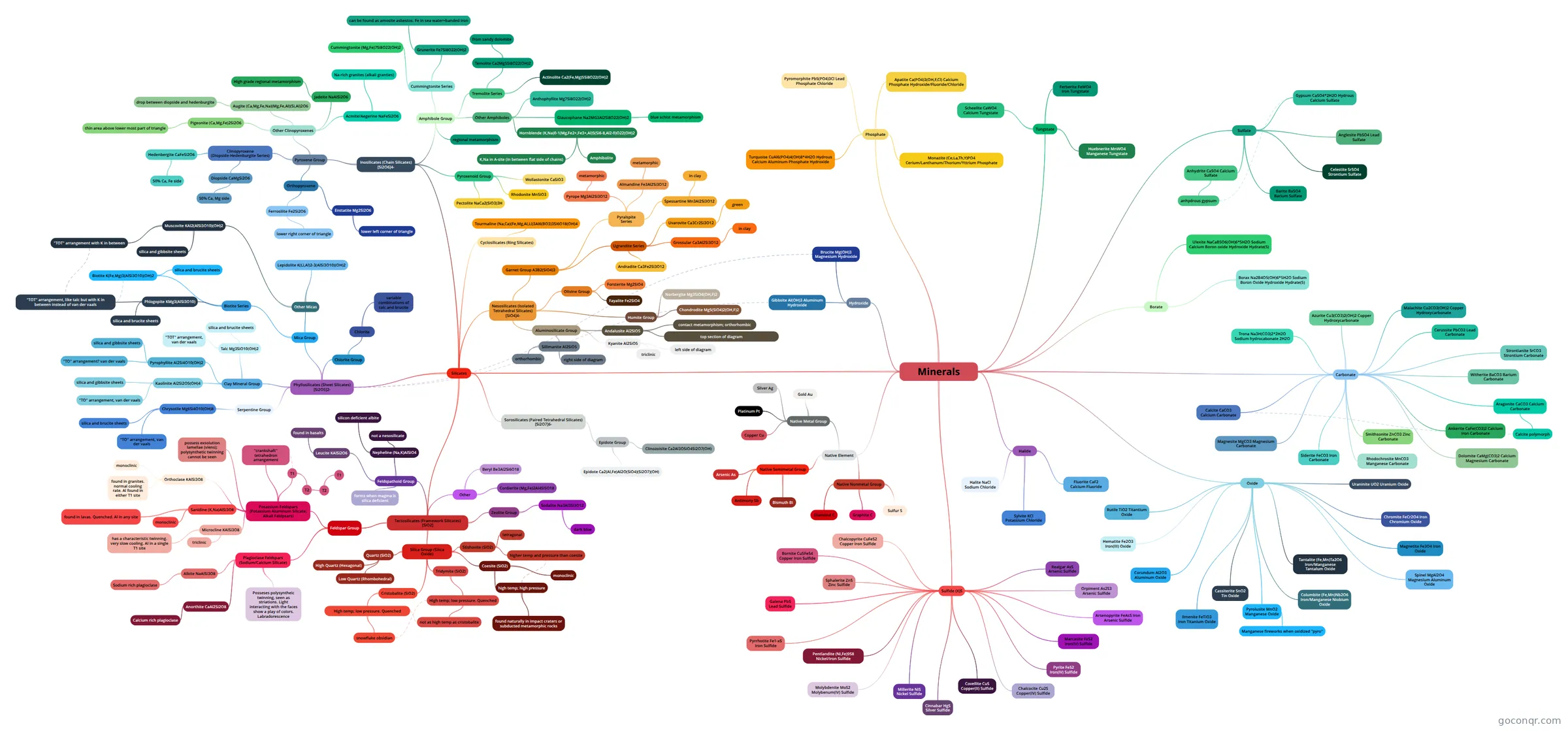 Mind map Minerals Probably not useful
-
12 cardsGeology WJEC GCSE Revision Flashcards What is a mineral?
-
40 cardsMineral Identification mineral sample pictures and names with some key features for identification
-
20 questionsMineral Identification Self Assessment Specimen #1 is
-
 Mind map The properties of the minerals
-
109 cardsROCKKS
-
59 questionsMinerals **the minerals by group report are not included :))
-
91 cardsEarth Science Reviewer Building blocks of rocks.
Quizzes
-
20 questionsMineral Identification Self Assessment Specimen #1 is
-
59 questionsMinerals **the minerals by group report are not included :))
-
6 questionsMinerals: Properties of Minerals Which is NOT an essential characteristic of any mineral?
-
22 questionsIntro to Geology What is an isotope?
-
12 questionsMinerals: Identifying Minerals A measure of how easily a mineral can be scratched
-
18 questionsMinerals What is this Mineral?
-
9 questionsUnit 6.3 Quiz What is a mineral?
Mind maps
-
Minerals Probably not useful
-
The properties of the minerals
-
Matter and Minerals I created this using notes from my textbook. These quick notes were made to easily jog my memory. I'm not s...
-
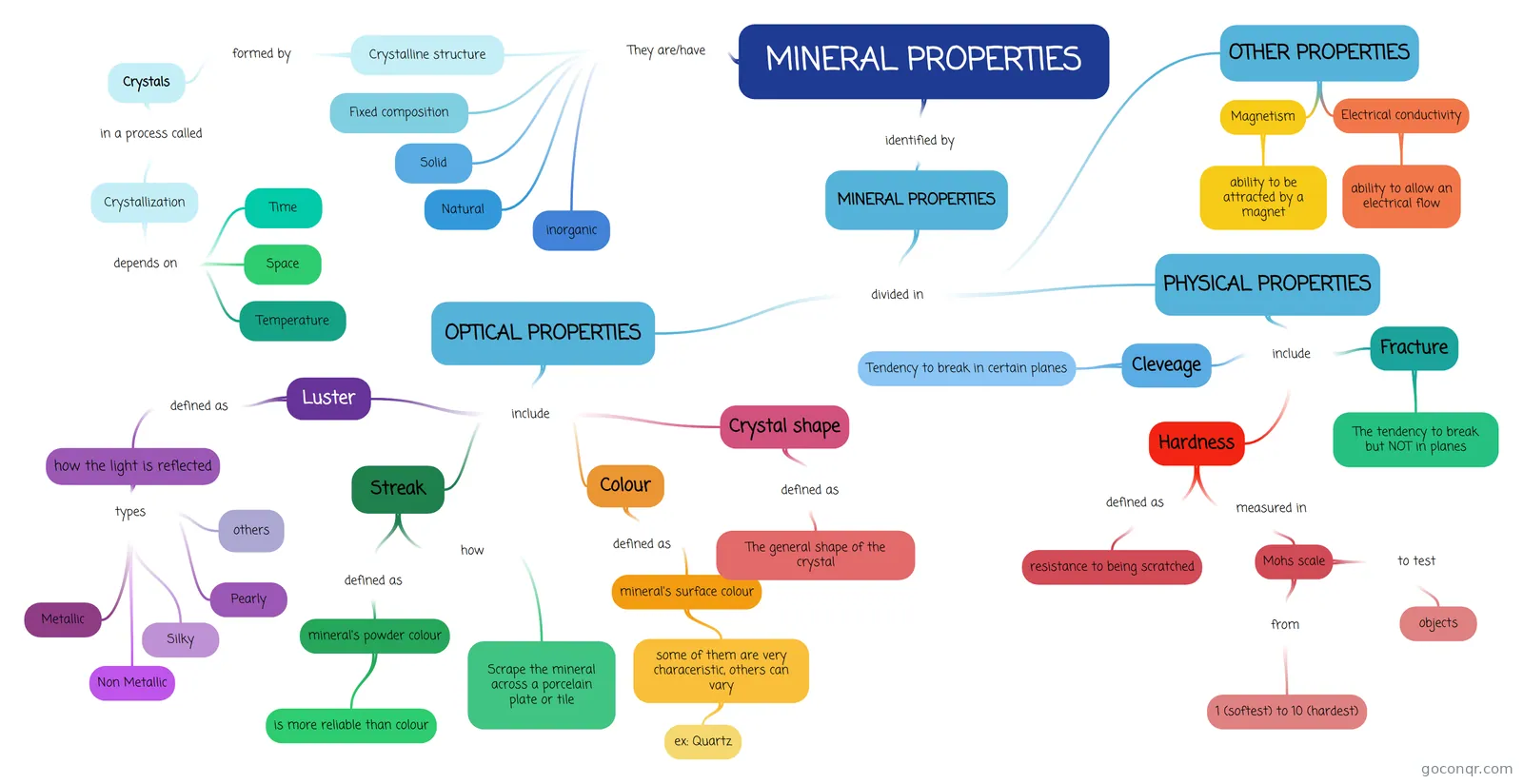 MINERAL PROPERTIES Mapa conceptual de las propiedades de los minerales
-
Minerals
-
Minerals are formed by
-
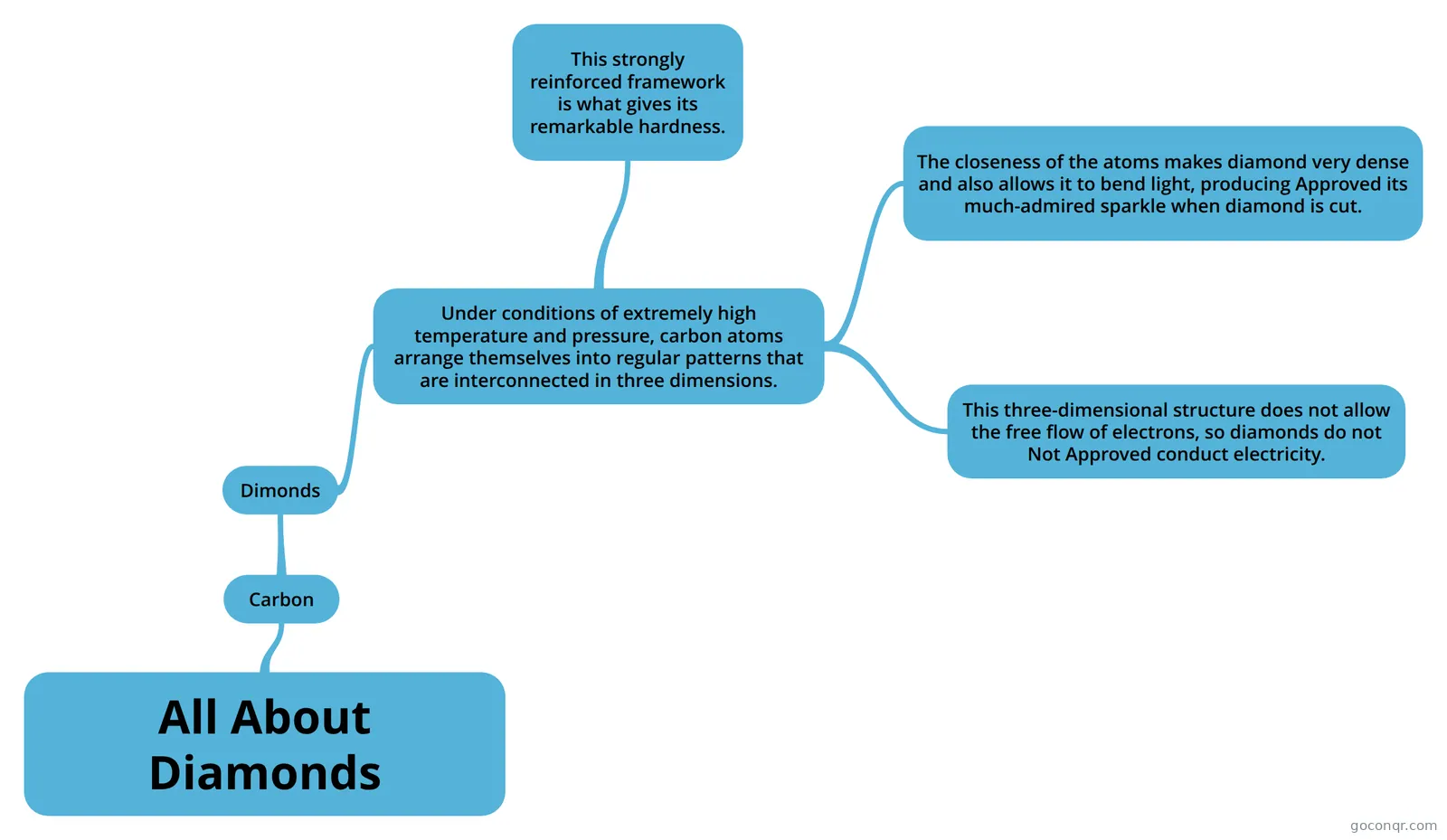 All About Diamonds By: Jatin Rishi
-
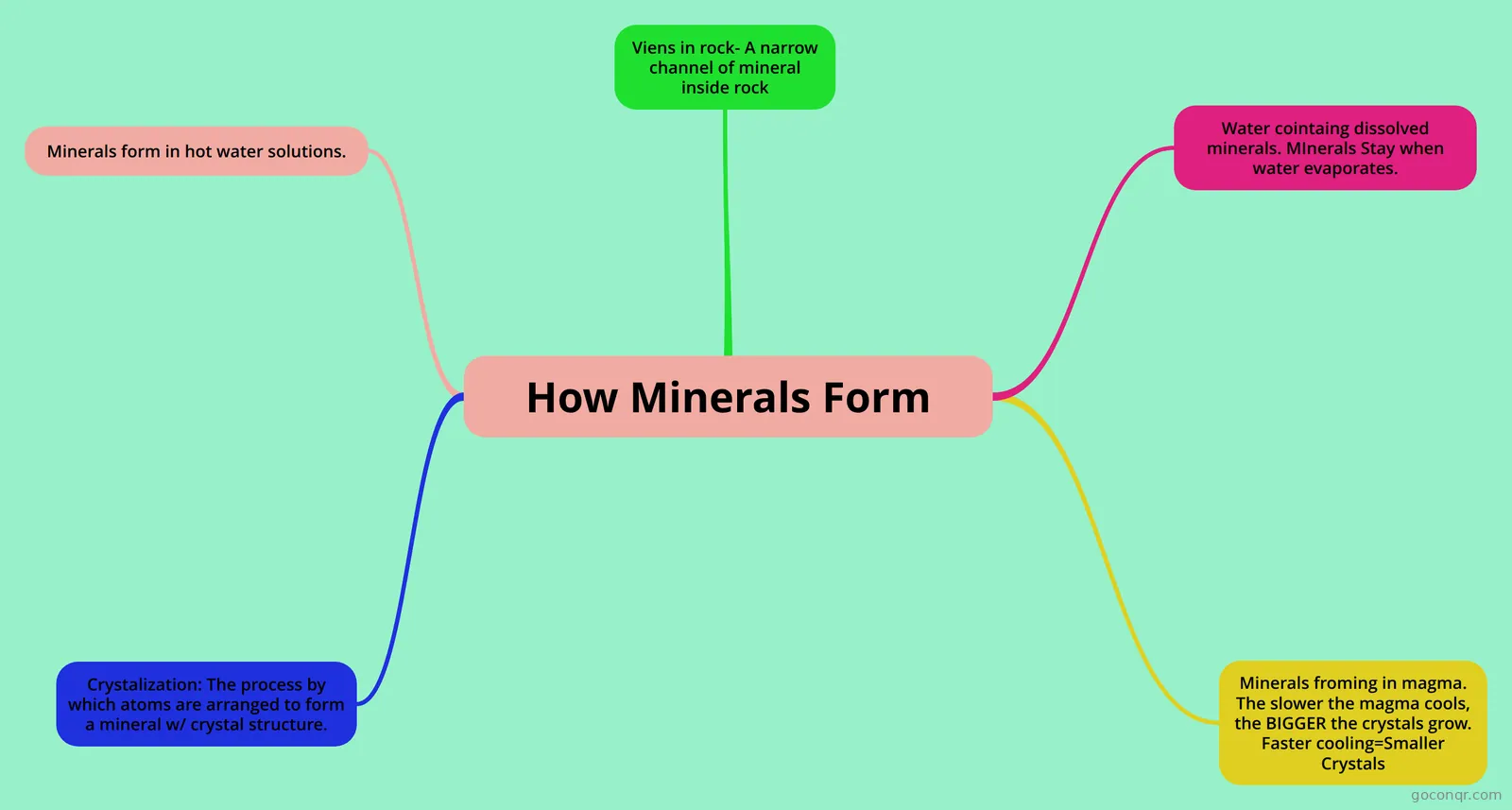 How Minerals Form How minerals form
Flashcards
See all 25 flashcards-
12 cardsGeology WJEC GCSE Revision Flashcards What is a mineral?
-
40 cardsMineral Identification mineral sample pictures and names with some key features for identification
-
109 cardsROCKKS
-
91 cardsEarth Science Reviewer Building blocks of rocks.
-
48 cardsEarth Rocks 1022 Quiz Flash Cards a quiz
-
31 cardsMinerals USE Crystal FORM CHEM
-
20 cardsUnit 8.5 What are minerals?
-
11 cardsMinerals 5 Properties of MInerals
Notes
-
Characteristics of Rock Forming Minerals Rocks and MineralsAll rocks are composed of minerals. A mineral is a naturally occuring chemical compound having a definite composition and crystalline structure. The rock forming minerals are those that form most of ...
-
Rock forming minerals. What is a mineral?A mineral is an element or chemical compound that is normally crystalline and has been formed as a result of geological processes.Minerals are naturally occurring, inorganic crystalline compounds wit...
More Geology and earth sciences topics
About Minerals and Mineralogy
GoConqr OriginalWhat this unit covers
The page brings together material on how minerals are defined, grouped and identified. The note Characteristics of Rock Forming Minerals opens with the basics: a mineral is a naturally occurring chemical compound with a definite composition and crystalline structure. Other resources move into silicate groups, mineral formulas, crystal habits, Bowen's Reaction Series and phase diagrams.
Where to start
Begin with the basics, then move to identification.
- Read the note on rock-forming minerals for the core definition.
- Work through the Geology WJEC GCSE Revision Flashcards, which ask what a mineral is, how hardness is tested, what a streak test is and what lustre means.
- Open the mind map The properties of the minerals, which sets out colour, lustre, hardness and cleavage in short branches.
Identifying specimens
Once the properties feel familiar, try the identification material. The Mineral Identification mind map sorts minerals into silicates, oxides, sulphates, sulphides, carbonates and halides, with examples such as olivine, biotite mica, quartz, haematite and gypsum. The Mineral Flow chart mind map works through relief, colour and alteration to reach an answer. The flashcards on Mineral Identification list key features, such as the two cleavage directions of augite and pyroxene at nearly 90 degrees.
Using quizzes and maps together
Read a map first, then test yourself. The Mineral Identification Self Assessment quiz asks you to name a series of specimens, which shows quickly which features you still mix up. Go back to the map or flashcards for those minerals, then try another quiz. Teachers can use the same pairing for starters and revision tasks.
Where it fits
This unit sits in the Earth Materials strand of Geology and earth sciences. It links naturally to rocks and igneous processes, as the phase diagram flashcards show. Pick one resource that suits your level, try it, and then make your own flashcards or maps for the minerals you find hardest.
Frequently asked questions
Which resource should I open first?
Start with the note Characteristics of Rock Forming Minerals for the definition of a mineral. Then try the Geology WJEC GCSE Revision Flashcards, which cover hardness, streak and lustre in short question-and-answer form. After that, the mind map The properties of the minerals gives a quick overview.
What do the mind maps cover?
They cover mineral properties such as colour, lustre, hardness and cleavage, and groups such as silicates, oxides, sulphates and carbonates. One maps tectosilicates and the silica group, including quartz. Others look at diamonds, corundum, garnet colours and a flow chart for identifying minerals under the microscope.
Is there a quiz for practising identification?
Yes. The Mineral Identification Self Assessment quiz asks you to name a run of specimens one by one. The page also lists a Mohs Hardness Scale quiz and several general mineral quizzes. Use them after reading a map, then revisit the minerals you got wrong.
Are the resources free to use?
Yes. Every resource on this page is free to open, study and take, with no account needed. They were made by GoConqr users, not by GoConqr itself. A free account also saves your quiz scores and lets you make your own quizzes, mind maps, flashcards and notes.
Who are these resources for?
Most are at secondary and university level, so they suit school students revising a topic and university students filling gaps. Teachers can pick ready-made quizzes, flashcards and maps for lessons or revision. Some items are gemstone-focused, such as the quizzes on quartz and chalcedony.
What if I can't find the mineral I need?
Try the broader resources first, such as the Silicates flashcards, the Olivine flashcards or the Mineral Families mind map. If your mineral is still missing, you can build your own flashcards or mind map from your notes and keep it for revision.