
Introduction to Geology and Earth Science
117 resources created by 107 users
This Introduction to Geology and Earth Science page on GoConqr gathers community-made flashcards, mind maps, quizzes, notes and slide sets, from the rock cycle and minerals to plate tectonics, earthquakes and Earth's history. It's built for school students revising a topic, university students and professional candidates filling gaps, and teachers after ready-made material. There are over 700 resources here, including more than 140 quizzes, over 340 mind maps and more than 190 flashcard sets. Pick a topic, try a quiz to find your gaps, then make your own revision sets.
Top Introduction to Geology and Earth Science resources
-
150 questionsPhys Scie II- Final Exam Review (Exam 4, Exam 1, & Exam 2) The first minerals to crystallize are those with the
-
101 questionsExam #1 The early Greek idea that the sun is located in the center of the “Universe” as it was then envision is cal...
-
79 cardsFinal Exam Fall 2014 Covers Earthquakes Volcanoes Plate Tectonics and the Rock Cycle
-
72 cardsFinal Exam Review Integrated Science Fall 2013 What are the three types of rock?
-
56 cardsRocks and Minerals Study flashcards for rocks and minerals
-
27 cardsScience Bowl Earth Science Questions The overall charge at the top and bottom, respectively, of a towering cumulonimbus cloud during a thunderst...
-
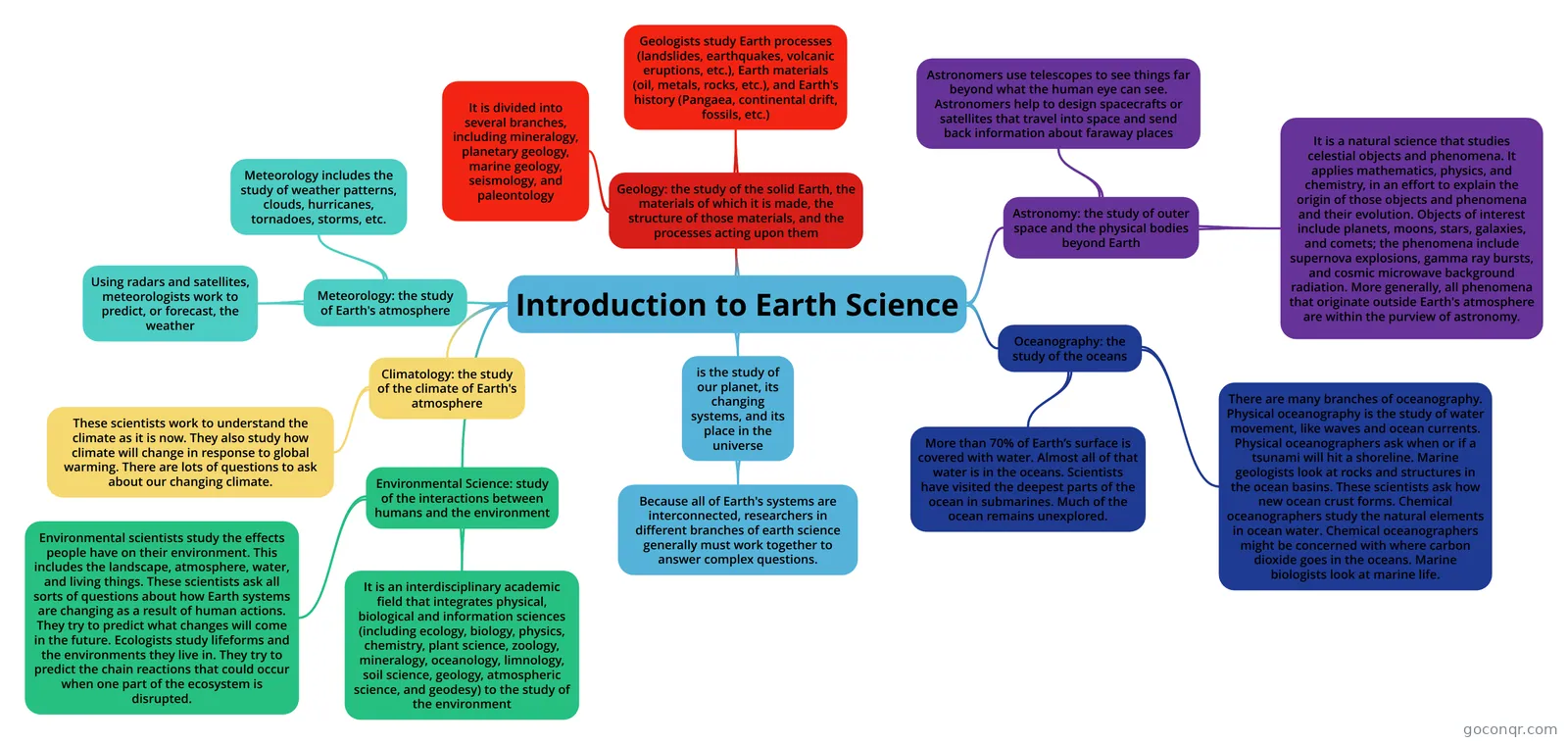 Mind map Introduction to Earth Science Earth Science REGENTS Course
-
Mind map Geology-Mindmap Year 8/9 Geology Mindmap
Quizzes
See all 27 quizzes-
150 questionsPhys Scie II- Final Exam Review (Exam 4, Exam 1, & Exam 2) The first minerals to crystallize are those with the
-
101 questionsExam #1 The early Greek idea that the sun is located in the center of the “Universe” as it was then envision is cal...
-
38 questionsEarth science 1023 midterm What planets don't orbit perfectly in the plane of the ecliptic?
-
38 questionsKarst and plate tectonics What is Karst?
-
5 questionsGeology true or false revision test Granite is an igneous rock?
-
63 questionsEarth Systems A physical cycle is the reversible changes in non-living aspects
-
29 questionsEarth science test review earth science review
-
40 questionsEarth science Lab Quiz formula for measuring depth of ocean floor:
Mind maps
See all 44 mind maps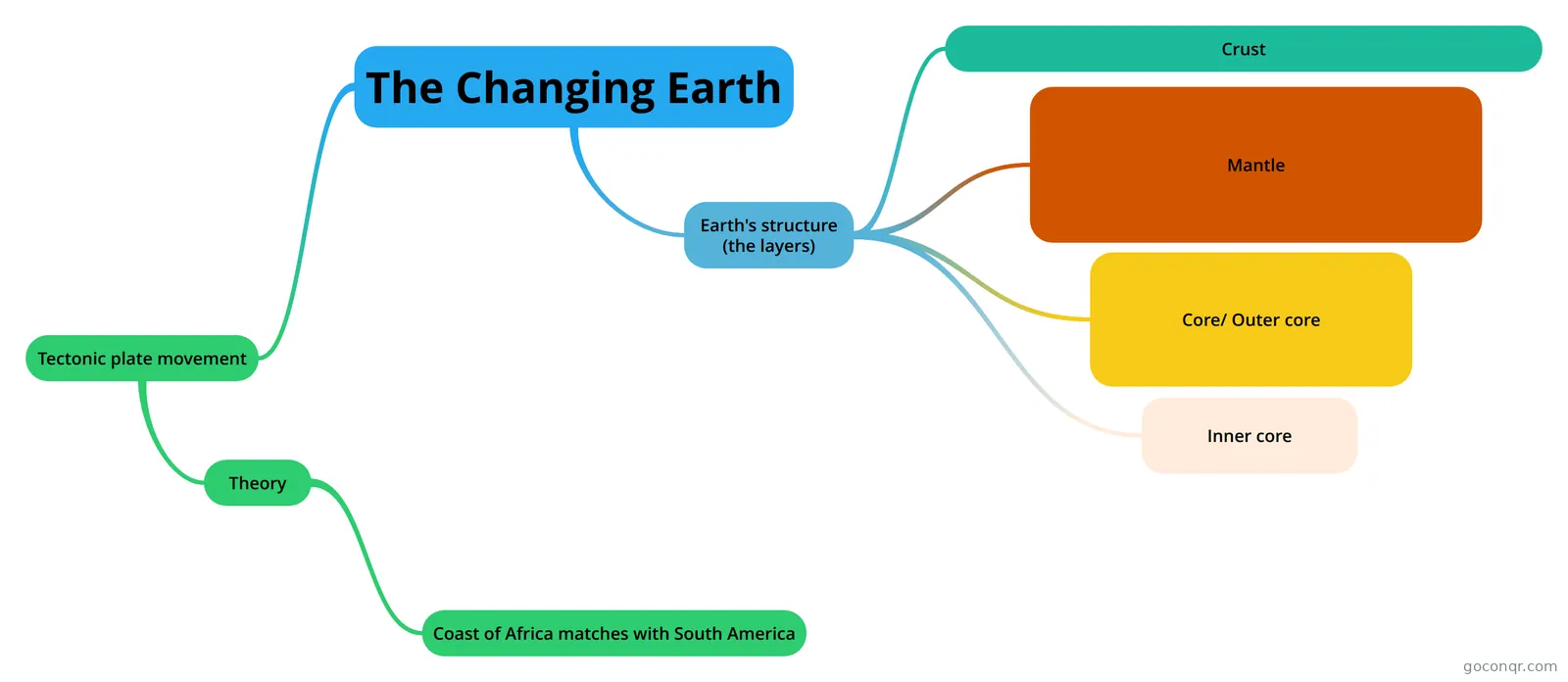
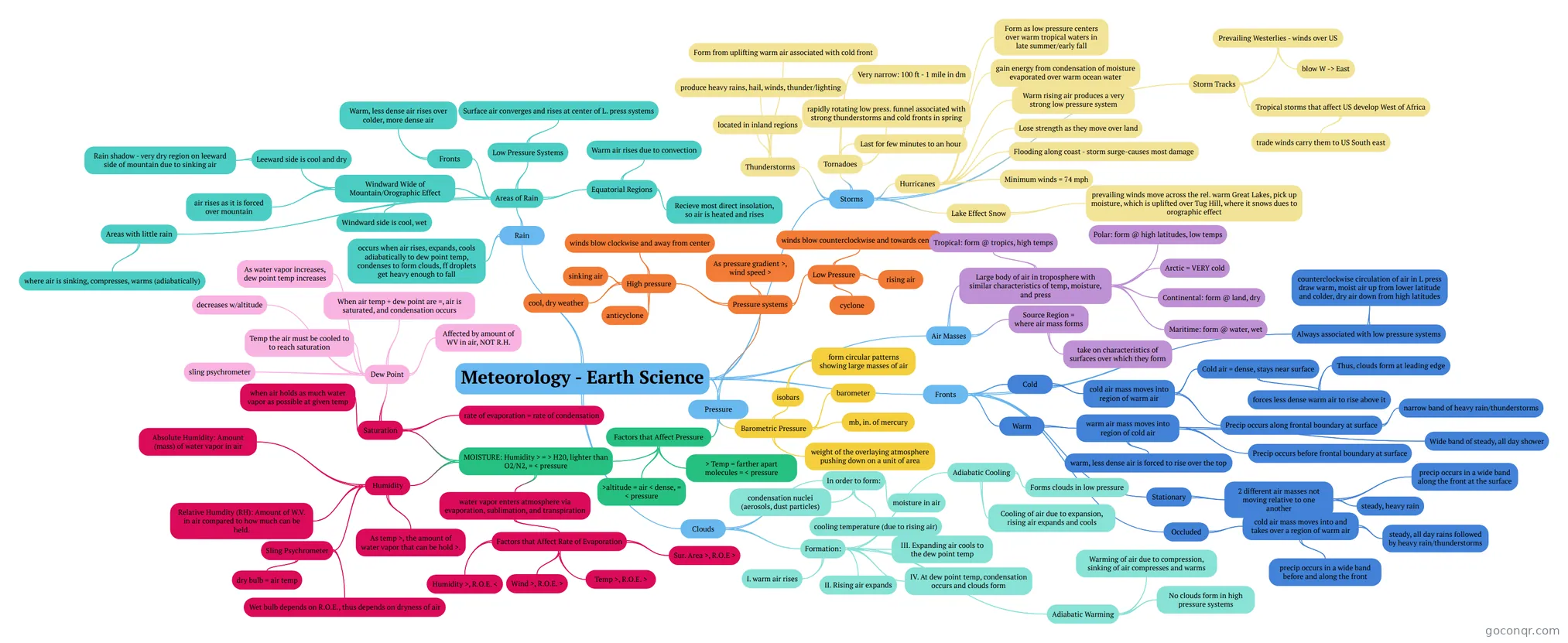
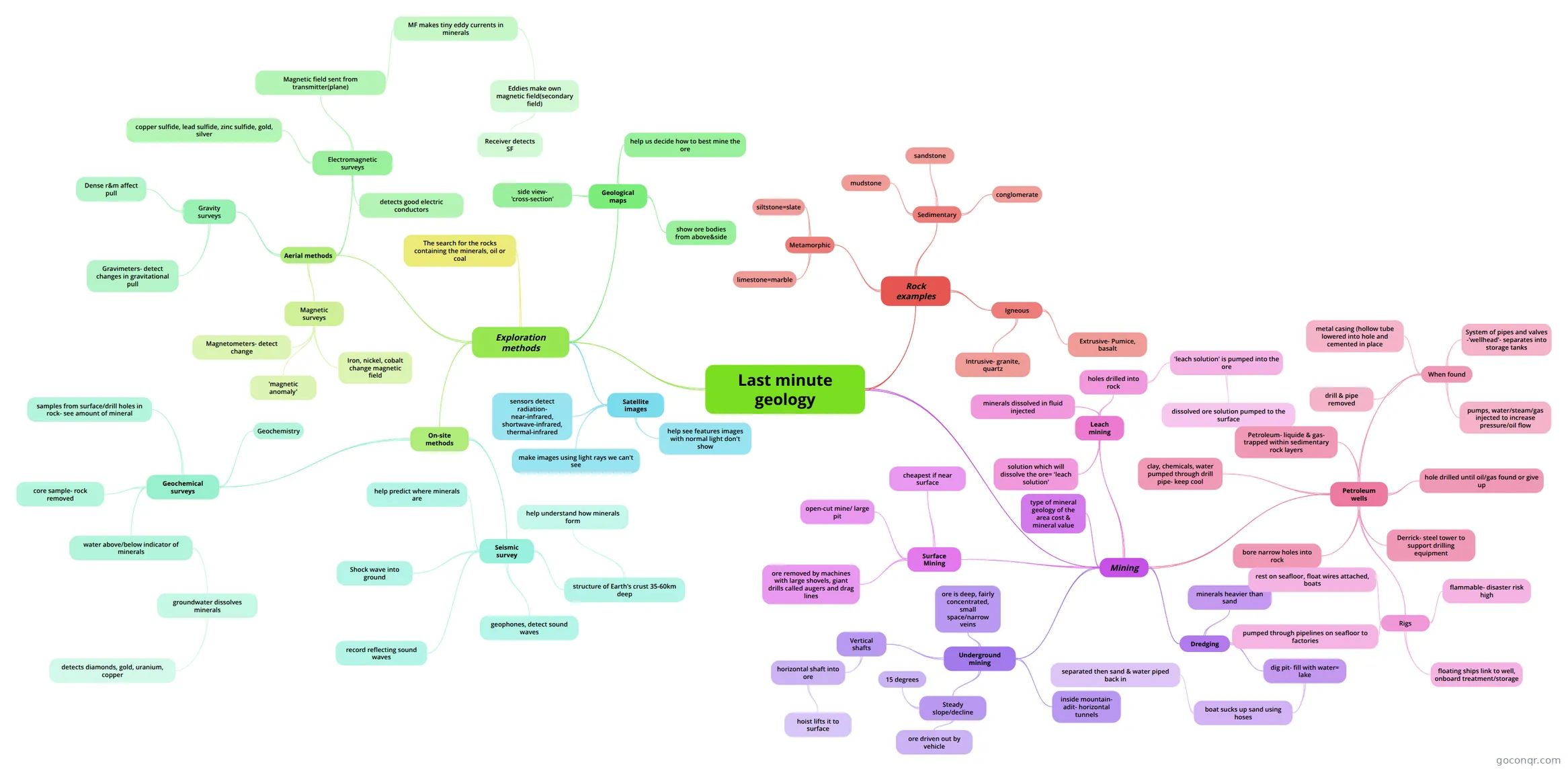
Flashcards
See all 41 flashcards-
79 cardsFinal Exam Fall 2014 Covers Earthquakes Volcanoes Plate Tectonics and the Rock Cycle
-
72 cardsFinal Exam Review Integrated Science Fall 2013 What are the three types of rock?
-
56 cardsRocks and Minerals Study flashcards for rocks and minerals
-
27 cardsScience Bowl Earth Science Questions The overall charge at the top and bottom, respectively, of a towering cumulonimbus cloud during a thunderst...
-
41 cardsGeology Earth Science What is the outer most layer of the earth? Describe it.
-
6 cardsearth science fifth edition. chapter 3, section A what is a map?
-
238 cardsGeology Flashcards What differences religion, art, law from science?
-
128 cardsearth science semester test part 1
Notes
-
The Rock Cycle Rocks are continuously being formed, changed/modified, destroyed, and reconstructed by forces within the Earth. This is known as the rock cycle. Rocks are formed when magma rises, then cools and solidifies to form ign...
-
1. An Introduction to Geology 1.1 Geology The Science of Earth Geology: The Science of EarthGeology - The science that examines Earth, its form and composition, and the changes that it has undergone and is undergoing.Physical and Historical Geolog...
-
Plate Tectonics Plate Tectonics Alfred Wegner- 1912 proposed that all continents were one land mass continents seemed to fit together Continental Drift continents collided and separated as they moved over the surface if ...
-
Examples of Various Rock Types Granite Igneous rock Contains large crystals Hard rock Cooled slowly under the surface of the Earth (intrustive) Composed mainly of quartz Found mainly in Dartmoor, southern Devon, England. Basalt
Slides
More Geology and earth sciences topics
About Introduction to Geology and Earth Science
GoConqr OriginalWhat the resources cover
Rocks are the biggest theme. The mind map ROCKS splits igneous rock into extrusive and intrusive, and links crystal size to cooling time. The Rock Cycle appears as a mind map, notes and a slide set, and the Rocks and Minerals flashcards run through foliated and non-foliated metamorphic rock, clastic and chemical sedimentary rock, and more.
Beyond rocks, you will find the structure of the Earth, plate tectonics, weathering, earthquakes, hydrology and oceans, meteorology, and the history of the planet. The Earth's History mind map covers the bombardment period and the geological time scale.
Where to start
- Open the Introduction to Earth Science mind map for an overview of the field.
- Move to The Rock Cycle notes, then the ROCKS mind map.
- Use the Rocks and Minerals flashcards to learn the vocabulary.
- Continue with the several sets on the composition and structure of Earth, then plate tectonics.
Using quizzes and maps together
Read a mind map first, then close it and take a quiz on the same topic. The quiz Karst and plate tectonics and the Geology true or false revision test are quick ways to check what stuck. Return to the map for anything you missed. Flashcards such as Final Exam Fall 2014, which asks about faults and earthquake focus, suit short sessions.
Most resources here are aimed at secondary level, with a smaller share for university study. Some mention exams such as GCSE Science, GCSE Geography, Regents Earth Science and AP Environmental Science, so check that a set matches your course.
Where this unit sits
This unit belongs to the Foundations of Earth Science strand in Geology and earth sciences. It is the place to build the basics before moving to more specific topics.
Choose one resource that suits your level, work through it, and add your own notes or flashcards as you go.
Frequently asked questions
Which resource should I open first?
The Introduction to Earth Science mind map is a sensible starting point, because it frames geology as the study of the solid Earth and its materials. After that, The Rock Cycle notes and the ROCKS mind map give you the core ideas on igneous, sedimentary and metamorphic rock.
What do the mind maps on this page cover?
They cover rocks and the rock cycle, the structure of the Earth, plate tectonics, weathering, Earth's history and meteorology. Some are broad overviews, such as Introduction to Earth Science, while others focus on one idea, such as how crystal size depends on cooling time in igneous rock.
Are the resources free to use?
Yes. Every resource listed here is free to open, study and take, with no account needed. They were made by GoConqr users rather than by GoConqr itself, so styles and depth vary from one set to the next.
Which levels and exams do these resources suit?
Most are at secondary level, with a smaller share for university students and professional candidates. Listed resources mention GCSE Geography, GCSE Science, Regents Earth Science and AP Environmental Science. Always check a set against your own course before relying on it.
Can I find practice for earthquakes and faults?
Yes. The Final Exam Fall 2014 flashcards ask about faults and the point on the surface above an earthquake's focus. There are also notes simply titled Earthquakes, and the Karst and plate tectonics quiz, which helps you practise related ideas.
What if the topic I need is missing?
Try a nearby topic, since many sets overlap, for example the several sets on the composition and structure of Earth. If nothing fits, a free account lets you make your own quizzes, mind maps, flashcards and notes and save your quiz scores.