
Earthquakes and Seismology
376 resources created by 310 users
This Earthquakes and Seismology page on GoConqr gathers community-made mind maps, quizzes, flashcards and notes, from faults and seismic waves to case studies such as Kobe, Nepal and L'Aquila. It's built for school students revising a topic and teachers after ready-made material. There are over 350 resources here, including more than 30 quizzes, over 240 mind maps and more than 50 flashcard decks, with GCSE Geography among the exams mentioned. Pick a case study, try a quiz to find your gaps, then make your own revision sets.
Top Earthquakes and Seismology resources
-
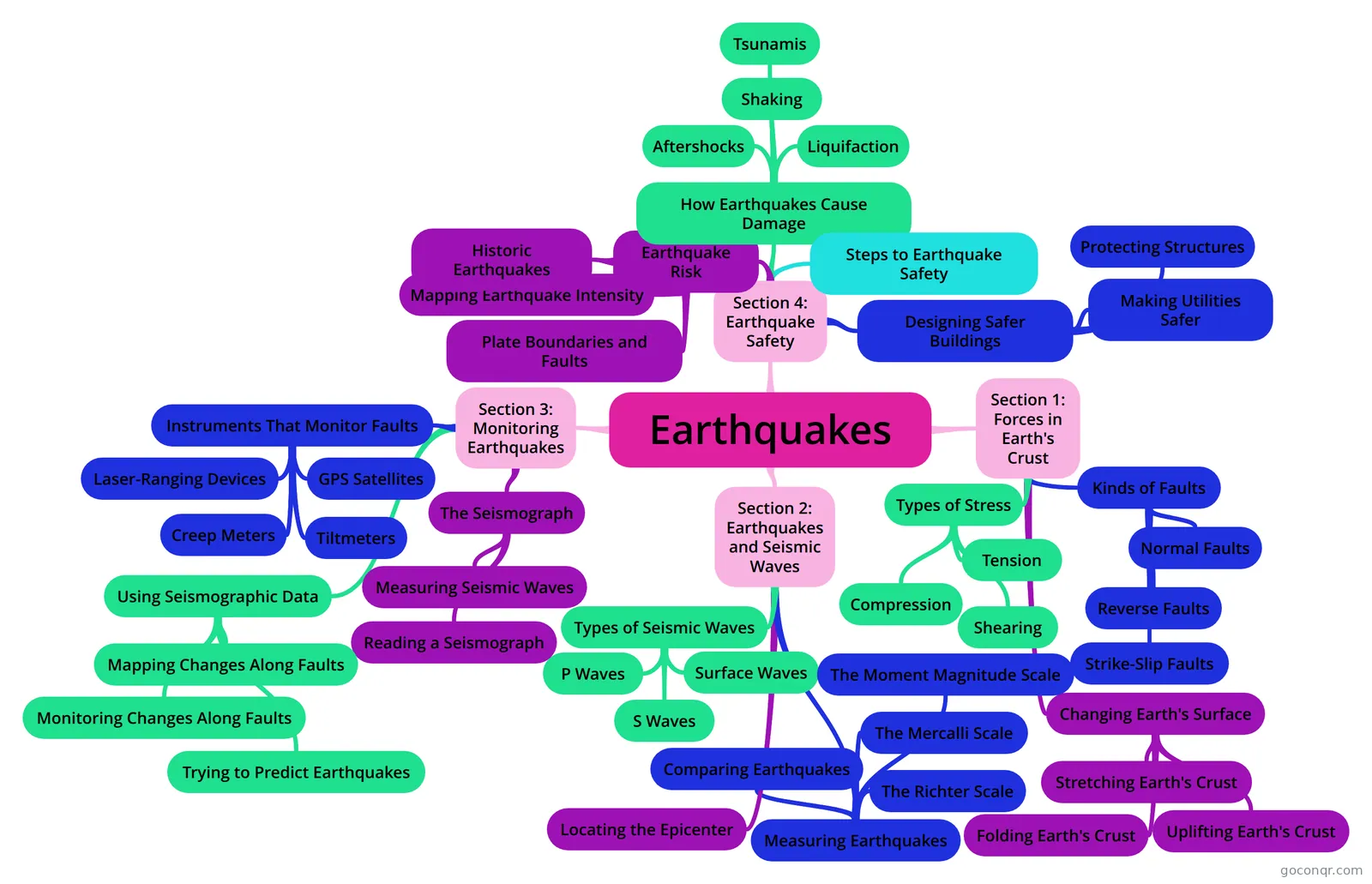 Mind map Earthquakes by: Nicole li
-
48 questionsEarth Science- Chapter 8 Earthquakes and Earth Part 1 Multipled Choice, word fits, and true or false
-
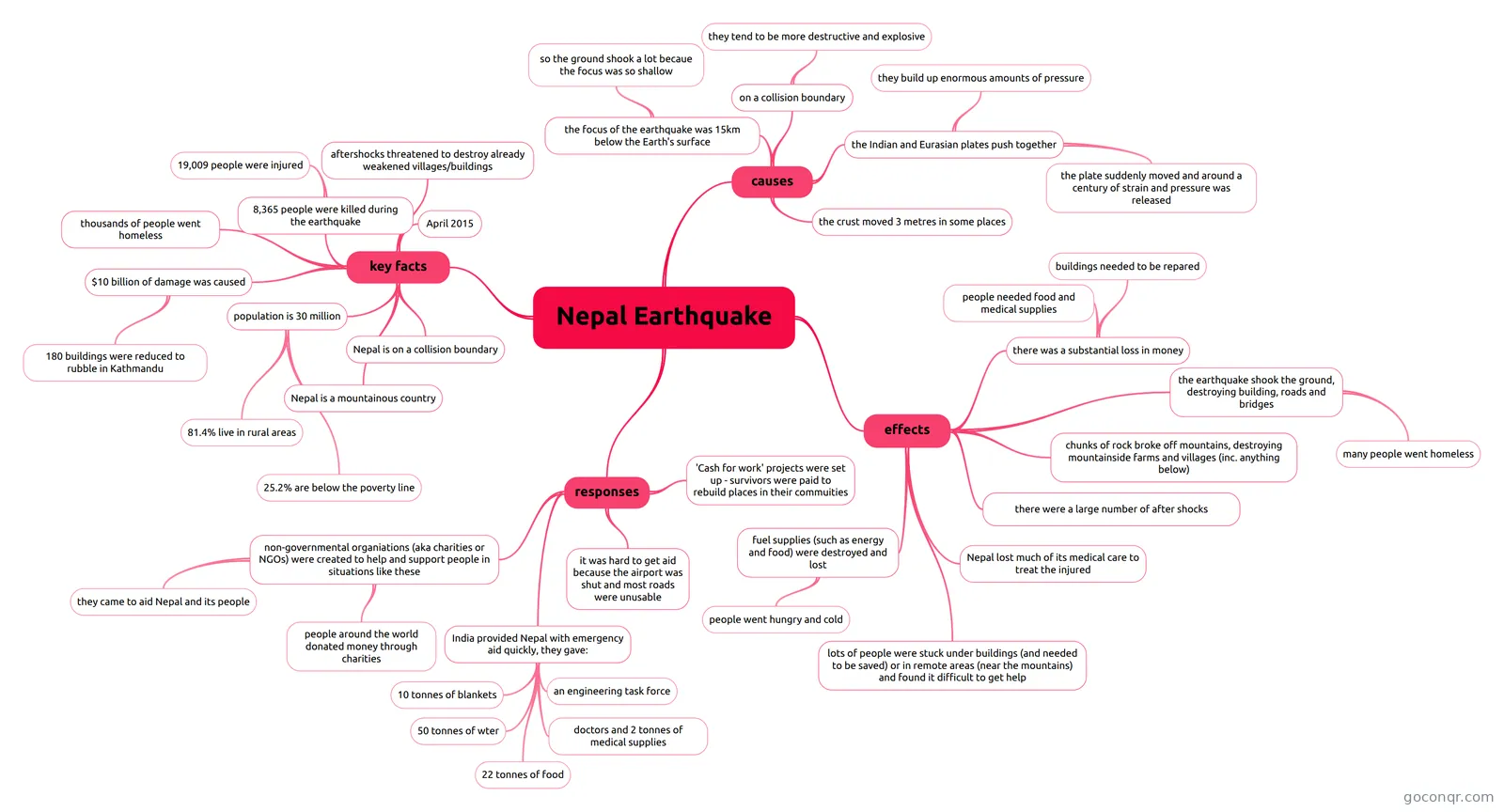 Mind map Nepal Earthquake
-
5 questionsCheck Your Understanding: Body Waves What evidence helps scientists best understand the composition of the Earth's internal structure?
-
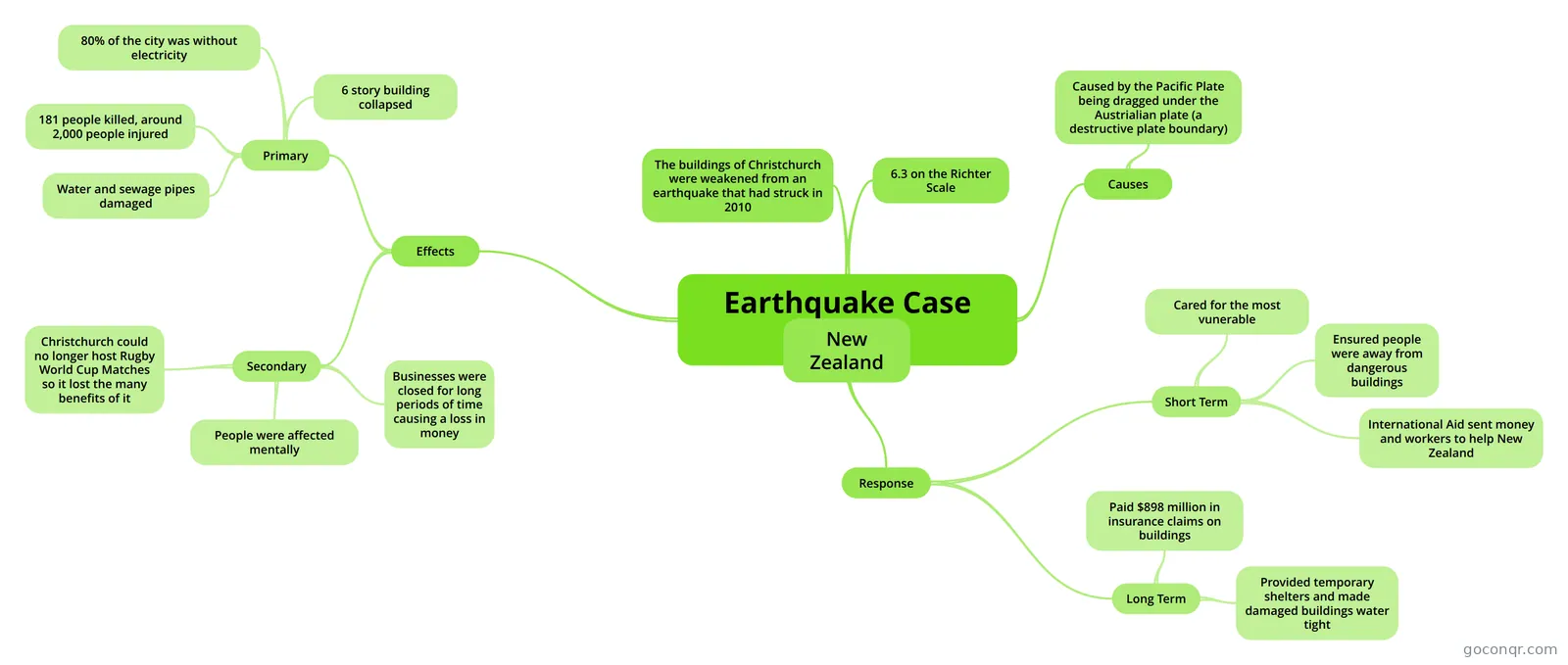 Mind map Earthquake Case Study
-
5 questions7.- Seismic waves Why is the study of seismic waves so useful?
-
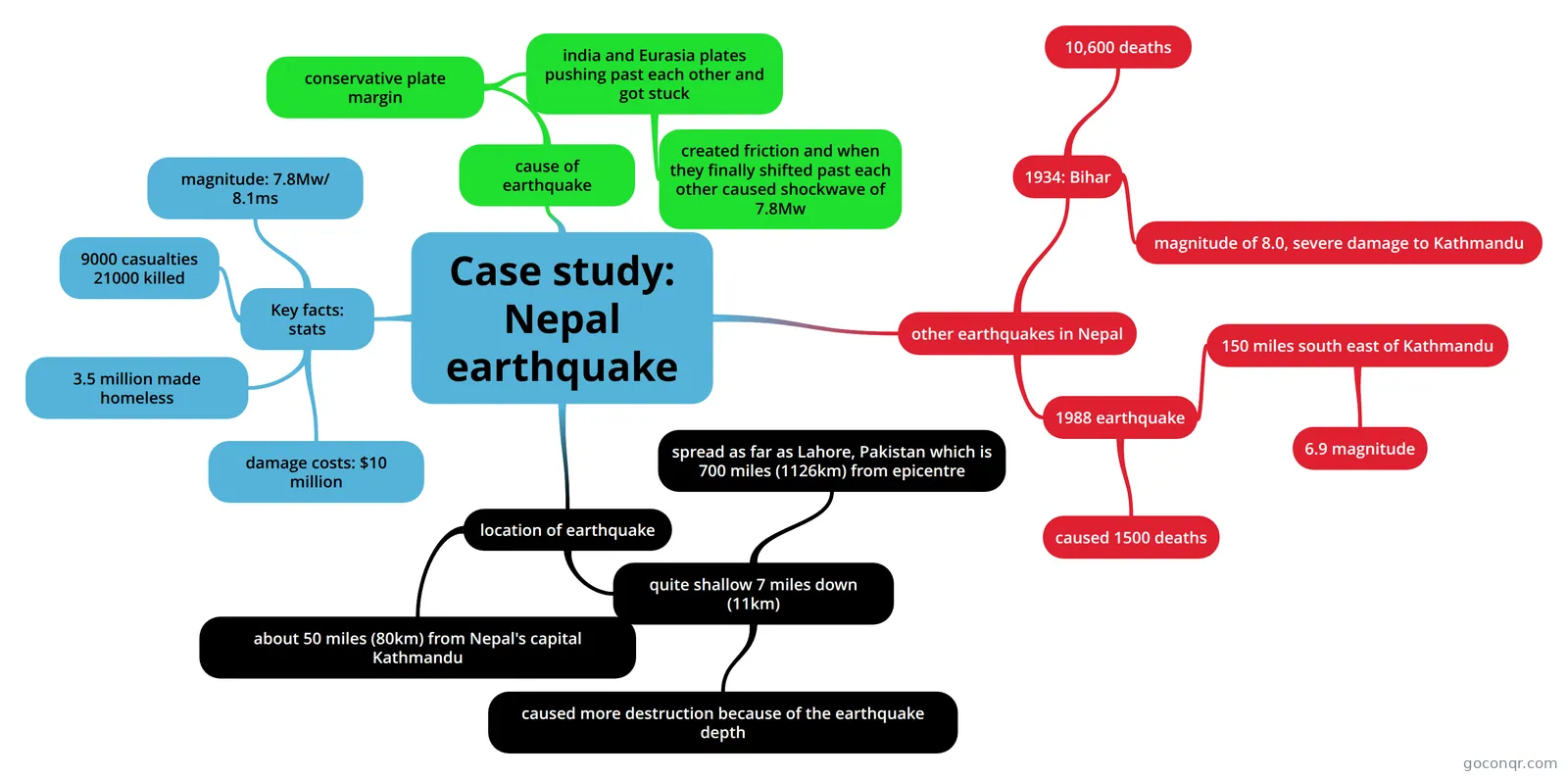 Mind map Case study: Nepal earthquake
-
16 questionsEarthquakes: True or false? P-waves are compression waves, which push the crust together and pull it apart as they travel
Quizzes
See all 37 quizzes-
48 questionsEarth Science- Chapter 8 Earthquakes and Earth Part 1 Multipled Choice, word fits, and true or false
-
5 questionsCheck Your Understanding: Body Waves What evidence helps scientists best understand the composition of the Earth's internal structure?
-
5 questions7.- Seismic waves Why is the study of seismic waves so useful?
-
16 questionsEarthquakes: True or false? P-waves are compression waves, which push the crust together and pull it apart as they travel
-
29 questions1.2 Earthquakes Complete the table on properties of seismic waves.
-
19 questionsEarthquakes: Vocabulary
-
6 questionsThe L'Aquila earthquake When was the L'Aquila earthquake
-
3 questionsEarthquakes: Types of Faults What type of fault is FAULT 1?
Mind maps
See all 254 mind maps-
Earthquakes by: Nicole li
-
Nepal Earthquake
-
Earthquake Case Study
-
Case study: Nepal earthquake
-
Chapter 5:Eartquakes Subjects
-
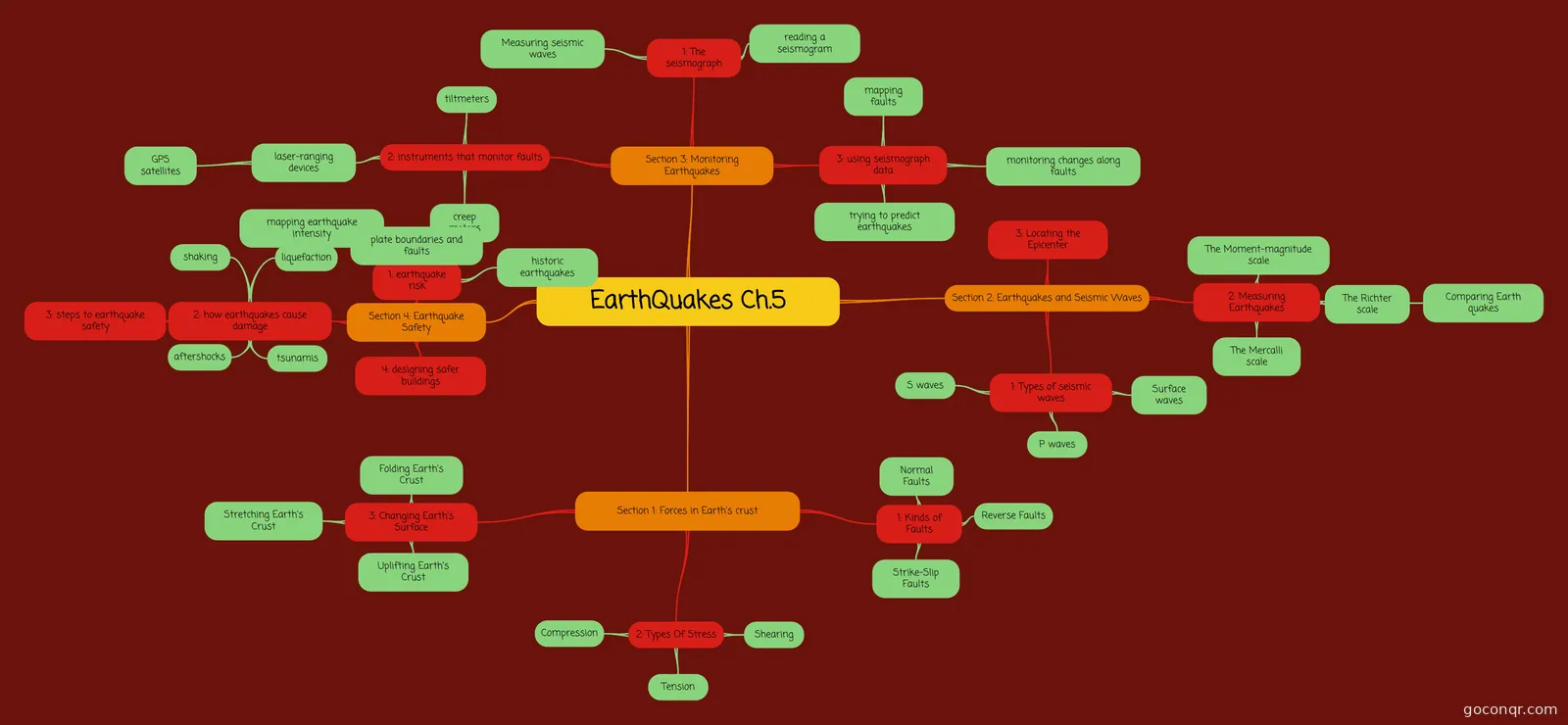 EarthQuakes Ch.5 Here is something that might help some of you people out there who view it so if it helps use it however yo...
-
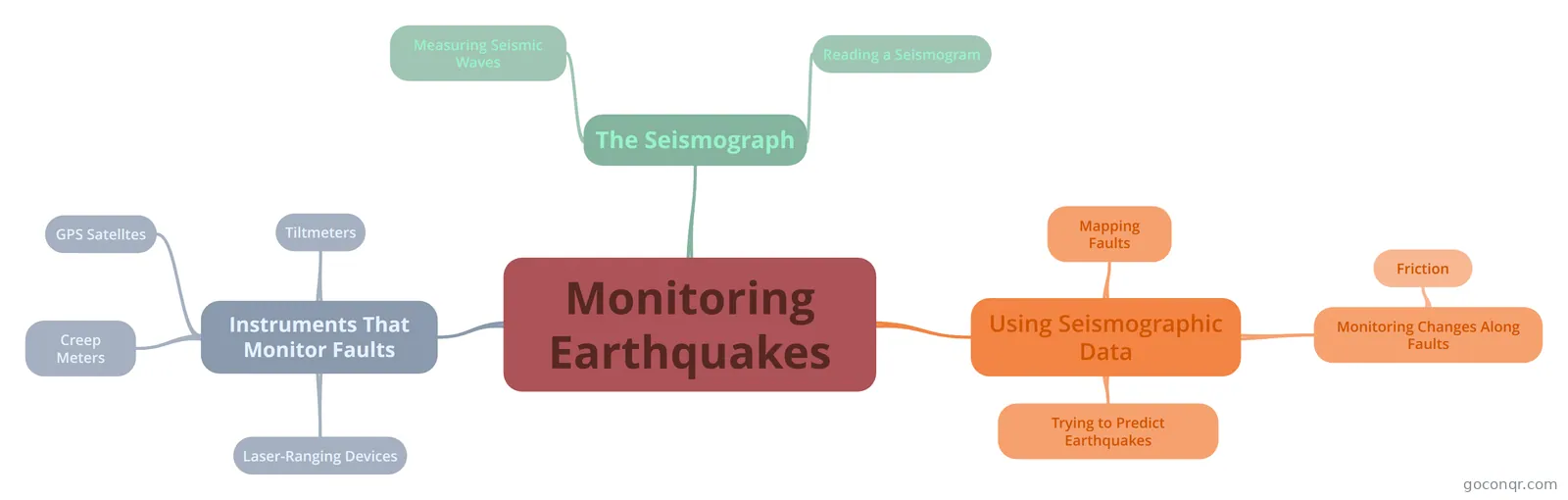 Monitoring Earthquakes
-
Northridge, USA (MEDC Earthquake)
Flashcards
See all 61 flashcards-
27 cardsGEO [#8] Earthquakes
-
12 cardsMEDC Earthquake- Christ Church New Zealand and its aftershock, 2011 Where is Christchurch?
-
23 cardsEarthquakes Flashcards a fracture in the Earth where movement has occurred
-
17 cardsTerms(Science)
-
16 cardsGeography Need to learn about Haiti
-
3 cardsTsunamis How earthquakes can cause tsunamis First Event
Flowcharts
Notes
See all 17 notes-
Science Earthquakes are the vibrations caused by rocks breaking under stress. The underground surface along which the rock breaks and moves are called a fault plane. The focus, or “hypocentre”, of an earthquake is the point w...
-
Detecting Earthquakes The Elastic Rebound Theory two parts of a body of rock are under stress due to opposing forces acting on the rock the opposing forces are often due to tectonic plates moving in opposite directions the body of rock is ...
-
The Physical Effects of Earthquakes When the crust suddenly fractures, elastic energy is released and transferred by high amplitude L waves travelling through the surface layers of the Earth. The most destructive effects of this energy are felt at the e...
-
Indian Ocean Tsunami - 2004 Boxing day Indian ocean Tsunami December 2004 On boxing day 2004, 25km beneath the Indian ocean a section of sea bed on the Eurasian side of the fault rose several metres. Magnitude 9.0 on Richter scale Epicentre was just off no...
-
Measuring Earthquakes Earthquake Intensity - the Mercalli scaleEarthquakes used to be mreausred by noticeable effects of surface vibrations in the area. This depends on: strength of earthquake at its origin or focus distance from focus and...
-
Science Flashcards🧪 seismic waves are used to... measure EARTHQUAKES earthquakes caused by...
Slides
Topics in Earthquakes and Seismology
More Geology and earth sciences topics
About Earthquakes and Seismology
GoConqr OriginalWhat this unit covers
The page brings together material on how earthquakes happen, how they are measured and what they do. The mind map Earthquakes starts with forces in Earth's crust: tension, compression and shearing, then normal, reverse and strike-slip faults and how they change the surface. Other maps cover seismic waves, the factors that affect the impact of earthquakes, and cause and measurement.
Case studies
Many listed resources are case studies, which suits GCSE Geography revision. You will find maps on the Nepal earthquake, with key facts, causes, effects and responses. There are also maps on L'Aquila, Kobe, Northridge, Haiti, Sendai and the Sichuan earthquake, plus the New Zealand case study. The Indian Ocean tsunami of 2004 and a flowchart on the stages of a tsunami sit alongside them.
Where to start
- Open the Earthquakes mind map to see faults and stress laid out on one page.
- Move to the seismic wave maps and the notes on measuring and detecting earthquakes.
- Pick one case study map, such as Nepal, and note causes, effects and responses.
- Test yourself with the quiz Earthquakes: True or false? or the quiz on seismic waves.
Using quizzes and maps together
Read a map first, then take a quiz on the same idea. If a question on P-waves or S-waves catches you out, go back to the map and look at that branch again. Flashcard decks on magnitude and intensity, or on comparing richer and poorer countries, are handy for quick repeat practice. Teachers can set a map as a starting point and a quiz as a check.
Where it fits
This unit sits in the strand Plate Tectonics and Internal Processes, within Geology and earth sciences. Choose a resource that matches what you are studying and try it today.
Frequently asked questions
Which resource should I open first?
Start with the Earthquakes mind map. It sets out stress, the three kinds of fault and how they change the surface, which gives you the vocabulary for everything else. After that, try a quiz on seismic waves to check that the ideas have stuck.
What do the case study resources cover?
They cover real events such as the Nepal earthquake, L'Aquila, Kobe, Northridge, Haiti, Sendai and the Sichuan earthquake. The Nepal map lists key facts, causes, effects and responses. Several flashcard decks compare richer and poorer countries, which helps when you are weighing up impacts.
Are these resources suitable for GCSE Geography?
Most resources here are at secondary level, and GCSE Geography is the exam the listed resources mention. Case studies, seismic waves and measuring earthquakes all appear. Check the resource against your own course before relying on it.
Do I need to pay or sign in to use them?
No. Every resource listed is free to open, study and take, with no account needed. A free account does let you save quiz scores and make your own quizzes, mind maps, flashcards and notes.
Who made these resources?
They were made by GoConqr users, not by GoConqr itself. That is why you will see different styles, from detailed case study maps to short flashcard decks. Look at a few and use the ones that suit how you revise.
What if I cannot find the topic I need?
Try a related resource first. For example, the notes on measuring earthquakes sit near the flashcards on magnitude and intensity. If nothing fits, you can build your own map or flashcards on the missing topic.