
Sedimentary Rocks and Sedimentology
21 resources created by 11 users
This Sedimentary Rocks and Sedimentology page on GoConqr gathers community-made quizzes, mind maps, flashcards and notes, from sedimentary structures and depositional environments to carbonates, turbidites and sedimentary basins. It's built for university students and school students revising a topic, and for teachers after ready-made material. There are over 160 resources here, including more than 10 quizzes and over 60 mind maps, pitched at both university and secondary level. Pick a topic, try a quiz to find your gaps, then build your own revision set.
Top Sedimentary Rocks and Sedimentology resources
-
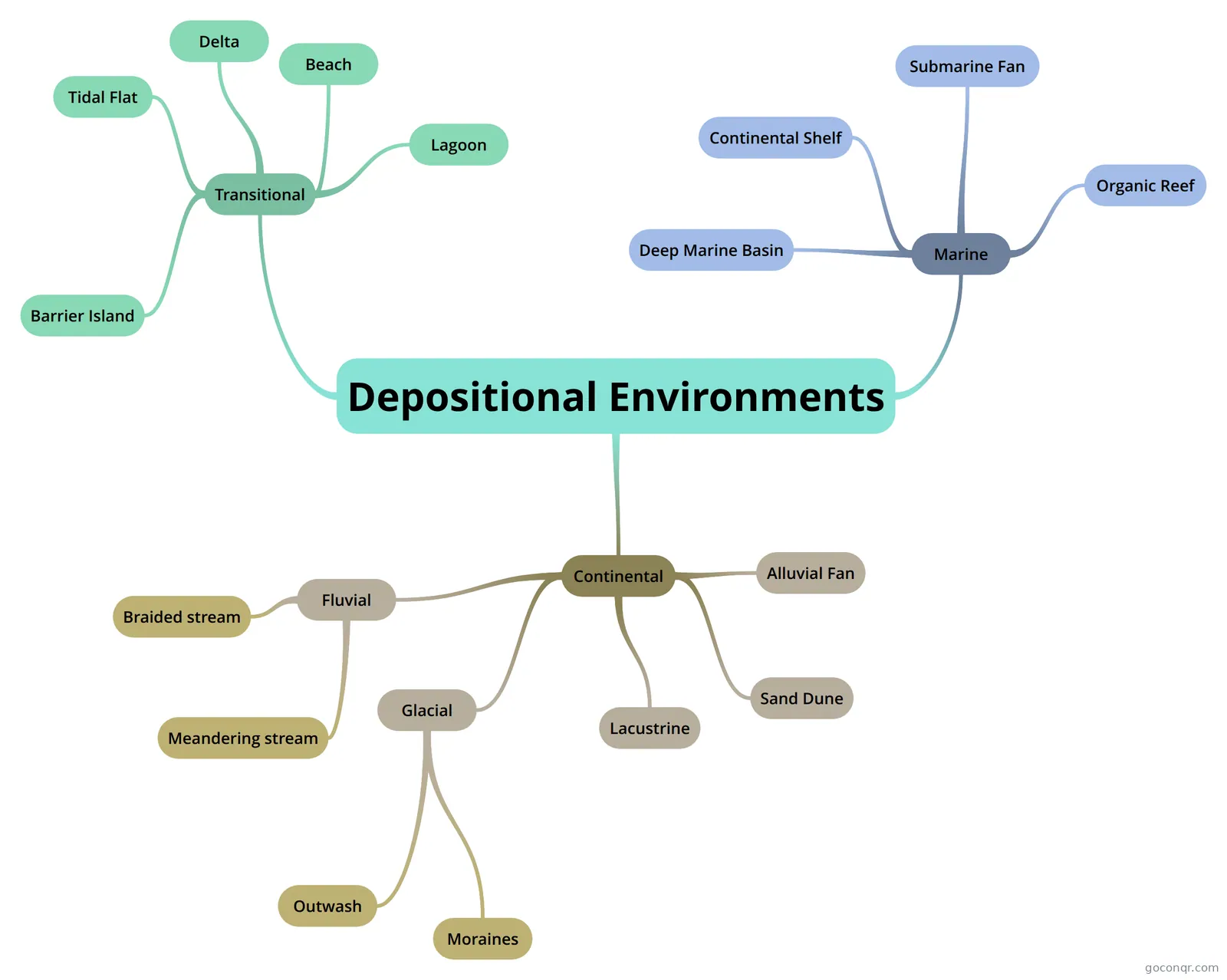 Mind map Depositional Environments Characterization of each depositional environment from continental to marine.
-
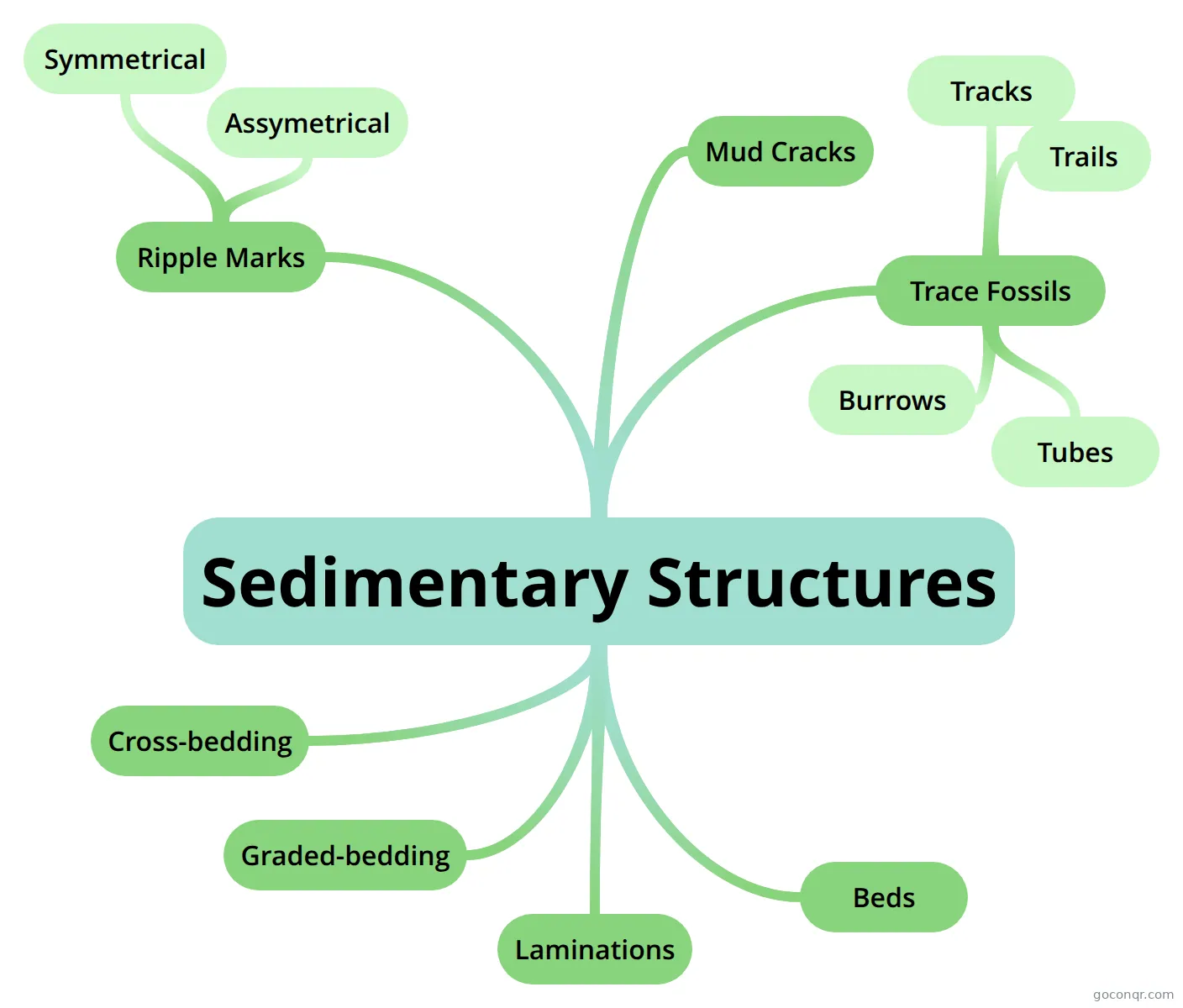 Mind map Sedimentary Structures List and description of sedimentary structures
-
20 cardsSedimentary Rocks examples Basic sedimentary rock types with clastic vs chemical classification, grain size, and other key features.
-
11 cardsAPSC 151 Sedimentary Rocks QU Rock Test
-
28 cards8.3 sedimentary rocks 8.3 Sedimentary Rocks
-
12 cardsDepositional Environments Packet V
-
20 cardsSedimentary Structures What are strata?
-
2 questions2.3 Sedimentary Processes and Products Complete the table on characteristics of clastic rocks.
Quizzes
Mind maps
-
Depositional Environments Characterization of each depositional environment from continental to marine.
-
Sedimentary Structures List and description of sedimentary structures
-
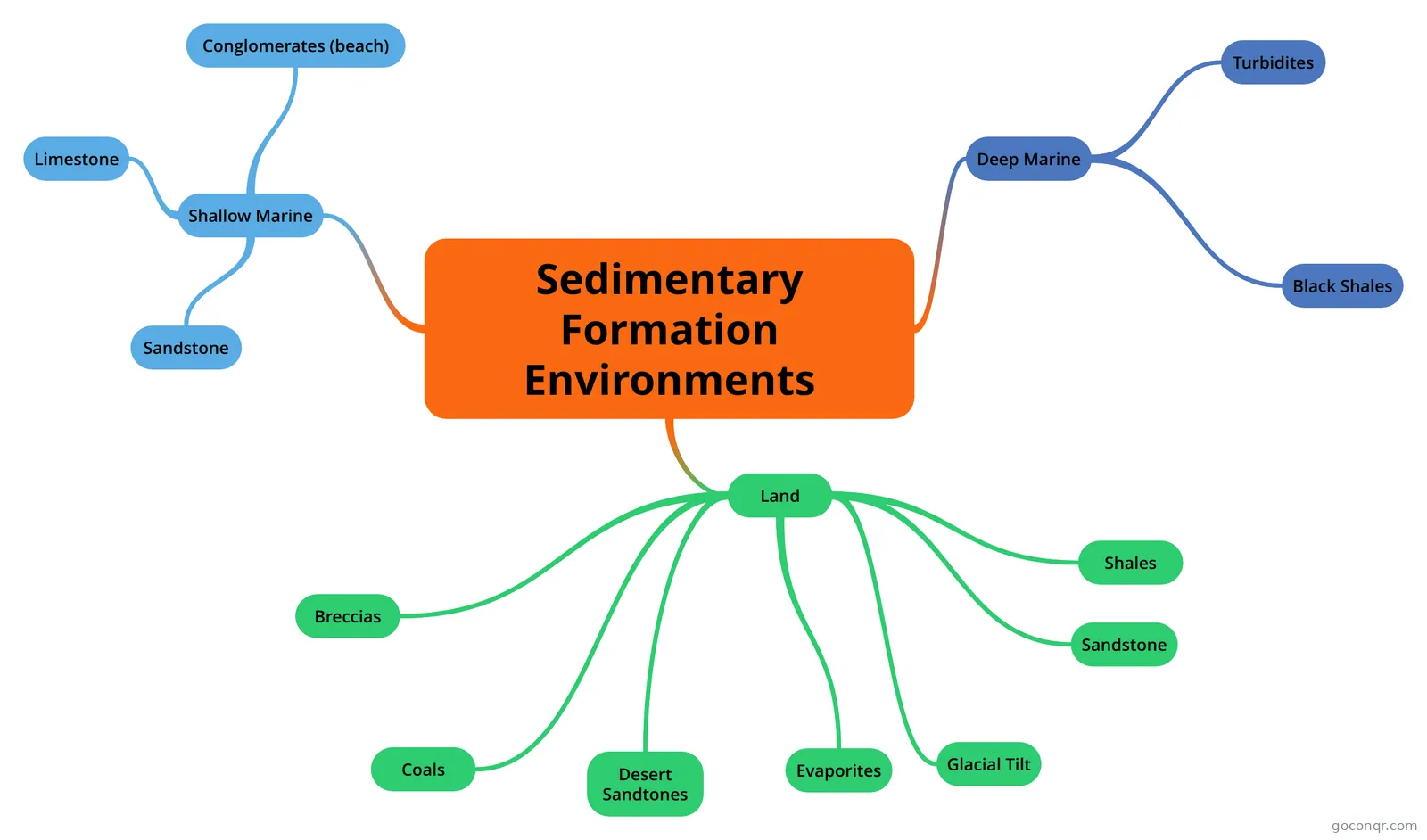 Sedimentary Formation Environments GCSE Geology
-
 Sediment Properties & Transport Ian Lecture 1- sediment properties and transport: single grains, bulk propertires and monitoring sediment t...
Flashcards
-
20 cardsSedimentary Rocks examples Basic sedimentary rock types with clastic vs chemical classification, grain size, and other key features.
-
11 cardsAPSC 151 Sedimentary Rocks QU Rock Test
-
28 cards8.3 sedimentary rocks 8.3 Sedimentary Rocks
-
12 cardsDepositional Environments Packet V
-
20 cardsSedimentary Structures What are strata?
Flowcharts
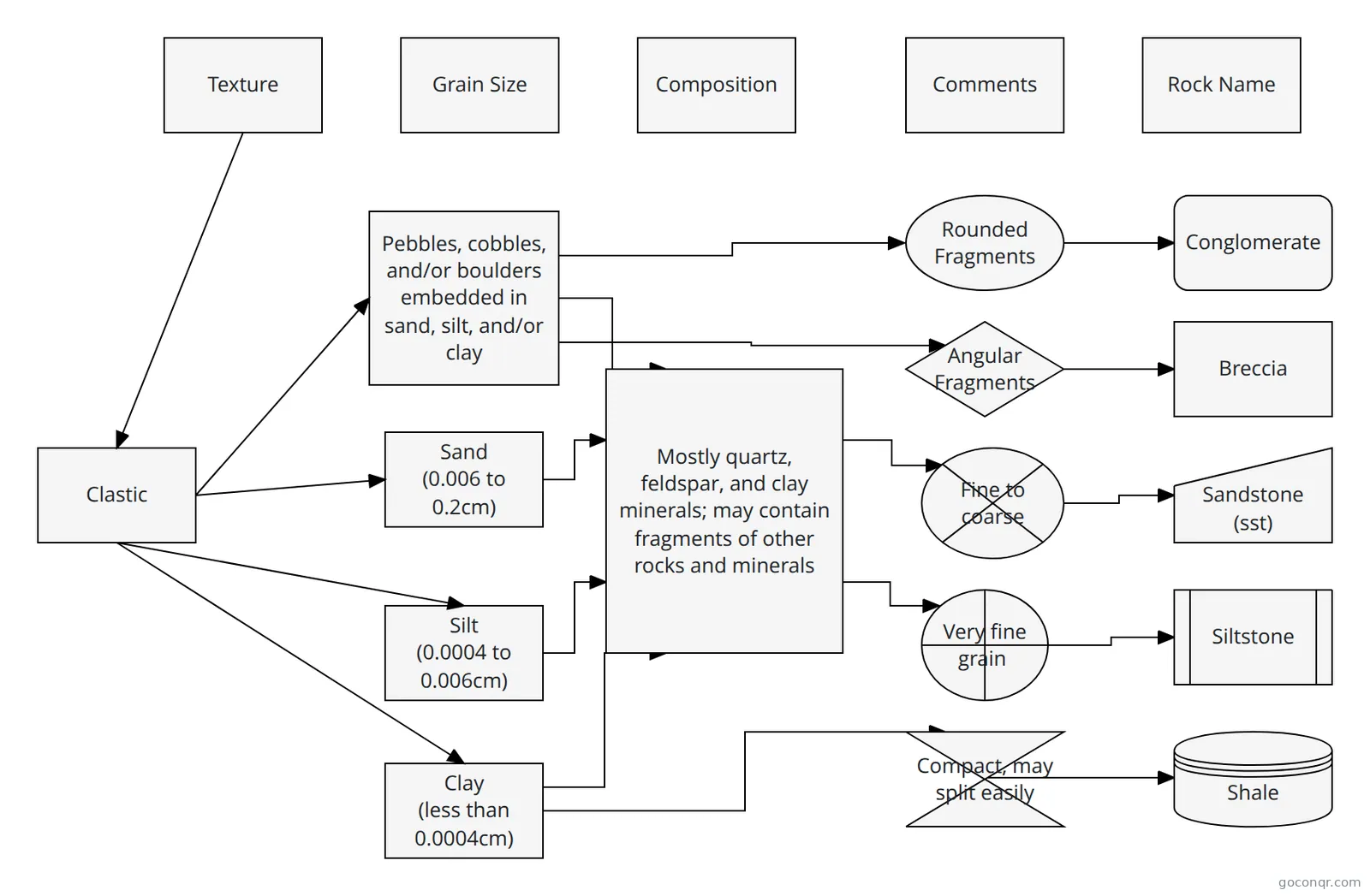
Notes
-
Sedimentary Structures Cross BeddingSand will be moved by wind, river or marine currents in high energy environments. The sand particles are deposited to form dunes or sand bars. The currents are unidirectional - they flow in one main direc...
-
Identifying Clastic Sedimentary Rocks
-
Clear Shallow Seas The seas have no suspended sediment, so there are a wide range of organisms. The rocks that form in clear, non-clastic shallow marine environments are biologically and chemically formed limestone. All limestones consi...
-
Clastic Shallow Seas Most shallow sea areas receive large amounts of clastic sediment transported from the land by rivers. Shallow seas extend from the extreme low water of the spring tide to the edge of the continental shelf about 200m b...
-
What can sediments tell us? The sizes, size range and roundess of sediments are all related to how the sediments were transported, because wind, water and ice vary in terms of energy and viscosity Fine grained, well rounded sediments have been t...
-
Marine Evaporites Evaporites form in shallow marine environments or on land in playa lakes in hot deserts. Normal sea water contains a variety of ions in solutions, giving it a salinity of about 35 parts per thousand or 3.5%. As sea wa...
-
Fluvial Environment Velocity and DepositionStreams flow downhill from a source area to a lake or the sea. The gradient down which the stream flows is steeper in upper mountainous areas and shallower across the flood plain near the mouth ...
-
Classify Sedimentary Rocks Three groups of sedimentary rocksMost sedimentary rocks are formed from clasts produced as a result of weathering and erosion. Clasts can range in size from boulders to clay and include solid fragments called pyroclas...
More Geology and earth sciences topics
About Sedimentary Rocks and Sedimentology
GoConqr OriginalWhat the page covers
This unit sits in the Earth Materials strand of Geology and earth sciences. It follows sediment from source to rock. Notes and maps cover how sediment is moved, laid down and turned into rock, and how geologists read the clues left behind.
- Structures: the notes called Sedimentary Structures start with cross bedding, where currents move sand into dunes or sand bars. The matching mind map adds laminations, graded bedding, ripple marks, mud cracks and trace fossils.
- Environments: the Depositional Environments mind map runs from alluvial fans and dunes to deltas, tidal flats, lagoons and submarine fans.
- Rock types: the notes Identifying Clastic Sedimentary Rocks explain breccia and its angular clasts, and the flashcards cover examples such as arkose, breccia and chert.
- Carbonates: the notes Clear Shallow Seas and the Carbonate Depositional Environments mind map look at limestones formed by biological or chemical processes.
Where to start
Begin with the Sedimentary Rocks examples flashcards to learn the main rock names and their grain types. Then read Identifying Clastic Sedimentary Rocks, so you can tell coarse and fine clastic rocks apart.
Next, open the Sedimentary Structures mind map. Work through it, then read the cross bedding notes to see how one structure is explained in detail.
Using quizzes and maps together
Read a mind map first to get the outline. Then take a quiz, such as Sedimentary Rock Classification or Turbidites, and note which branches you missed. Go back to those parts of the map and read them again. Larger topics, such as Sedimentary Basins and Reconstructing Past Sedimentary Environments, work well as a final check once the basics feel secure.
Make it your own
Some resources are short and some are detailed, so choose what suits your level. Teachers can use maps and flowcharts, such as Conglomerate Classification, as ready-made starting points for a lesson. Pick one topic today, try a quiz, and see what you remember.
Frequently asked questions
Which resource should I open first?
Start with the Sedimentary Rocks examples flashcards for the main rock names and grain types. Then read the notes Identifying Clastic Sedimentary Rocks. After that, the Sedimentary Structures mind map gives a clear overview of bedding, ripples, mud cracks and trace fossils.
What do the mind maps cover?
The mind maps cover sedimentary structures, depositional environments, carbonate environments, sedimentary basins, turbidity currents, flow regimes and bedforms, sediment transport and fluvial sedimentology. Others give broad overviews of sedimentary rocks, which makes them handy for a quick revision pass.
Are the resources free to use?
Yes. Every resource listed here is free to open, study and take, with no account needed. They were made by GoConqr users, not by GoConqr itself, so style and depth vary. A free account lets you save quiz scores and make your own quizzes, maps, flashcards and notes.
Who are these resources for?
They suit university students and school students, and the mix leans towards university level. Learners can practise rock identification, structures and environments. Teachers can pick out maps, flowcharts and flashcard decks to use as ready-made material.
Are there quizzes on this page?
Yes, there are more than 10 quizzes. Topics include sedimentary rock classification, turbidites, carbonate reservoirs, and sedimentary processes and products. Use them after reading a map or notes, so you can see which ideas still need another look.
What if I can't find the topic I need?
Try a related map, note or flashcard deck, since many resources overlap. For example, depositional environments appear in maps, notes and flashcards. You can also make your own notes, maps or flashcards for the gap, using a free account.