
Weathering, Erosion and Mass Movement
36 resources created by 31 users
This Weathering, Erosion and Mass Movement page on GoConqr gathers community-made quizzes, mind maps, flashcards and notes, from physical and chemical weathering to sediment transport, landslides and mudflows. It's built for school students revising a topic, and for teachers after ready-made material, with a little for university students too. There are over 260 resources here, including more than 20 quizzes, over 100 mind maps and over 80 flashcard decks. Pick a deck, try a quiz to find your gaps, then make your own.
Top Weathering, Erosion and Mass Movement resources
-
20 cardsWeathering What is weathering?
-
14 cardsDenudation Calcite, Calcium Carbonate, Carbonation, Denudation, Deposition, Erosion, Freeze-Thaw Action, Karst, Materi...
-
23 questionsWeathering and Sediment Transport Complete the table of definitions.
-
20 cardsUnit 1.2 : Weathering What is the process of weathering?
-
32 cardsGeologic Weathering and Sedimentary Rocks Chapters 7 and 8 from the textbook
-
39 cardsWeathering Junior cycle physical and chemical weathering
-
30 cardsScience Erosion Index Cards (7th Grade) Science Erosion Index Cards (7th Grade) made by Irene Kim
-
20 cardsWeathering Flashcards Unit 1.2:) What is weathering?
Quizzes
Mind maps
-
Types of mass movement
-
Chapter 3 - Erosion and Deposition
-
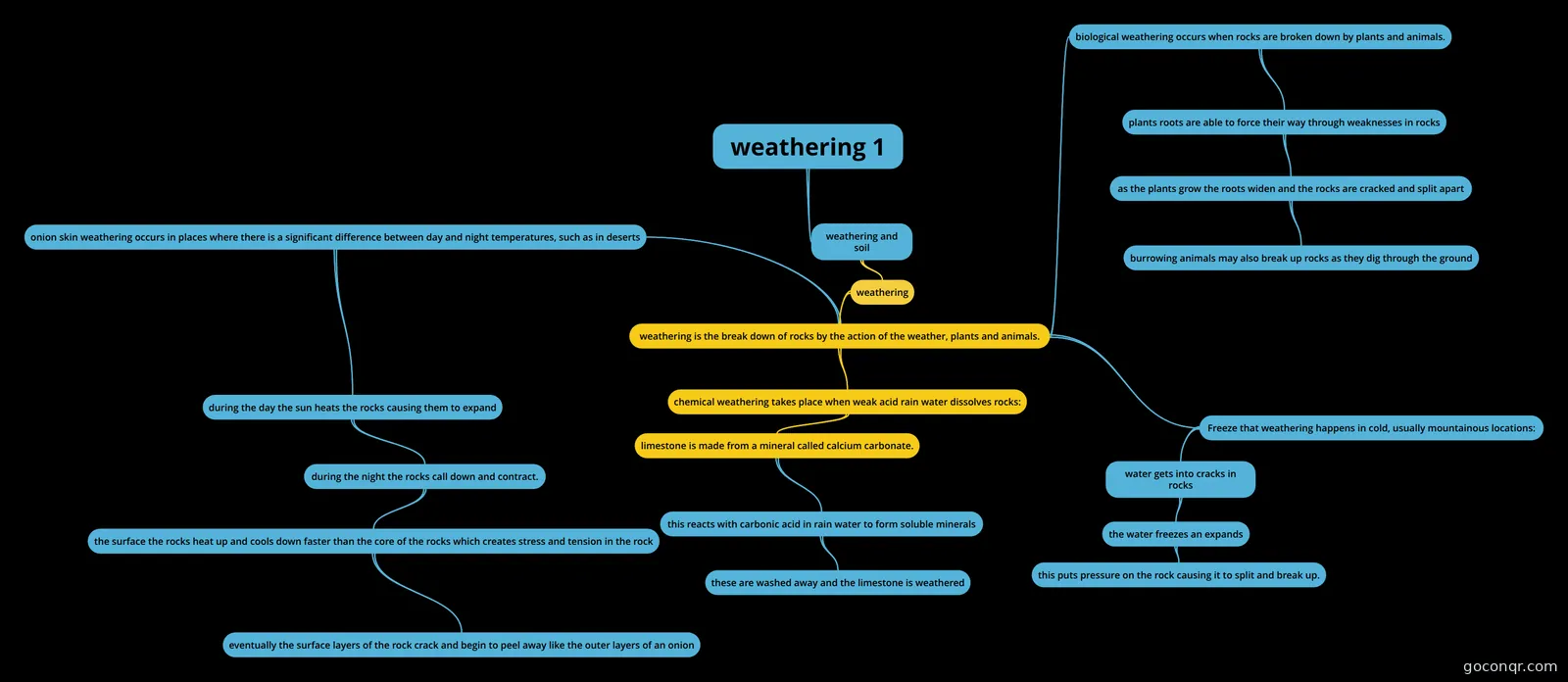 weathering 1 here is some info on weathering on rocks
-
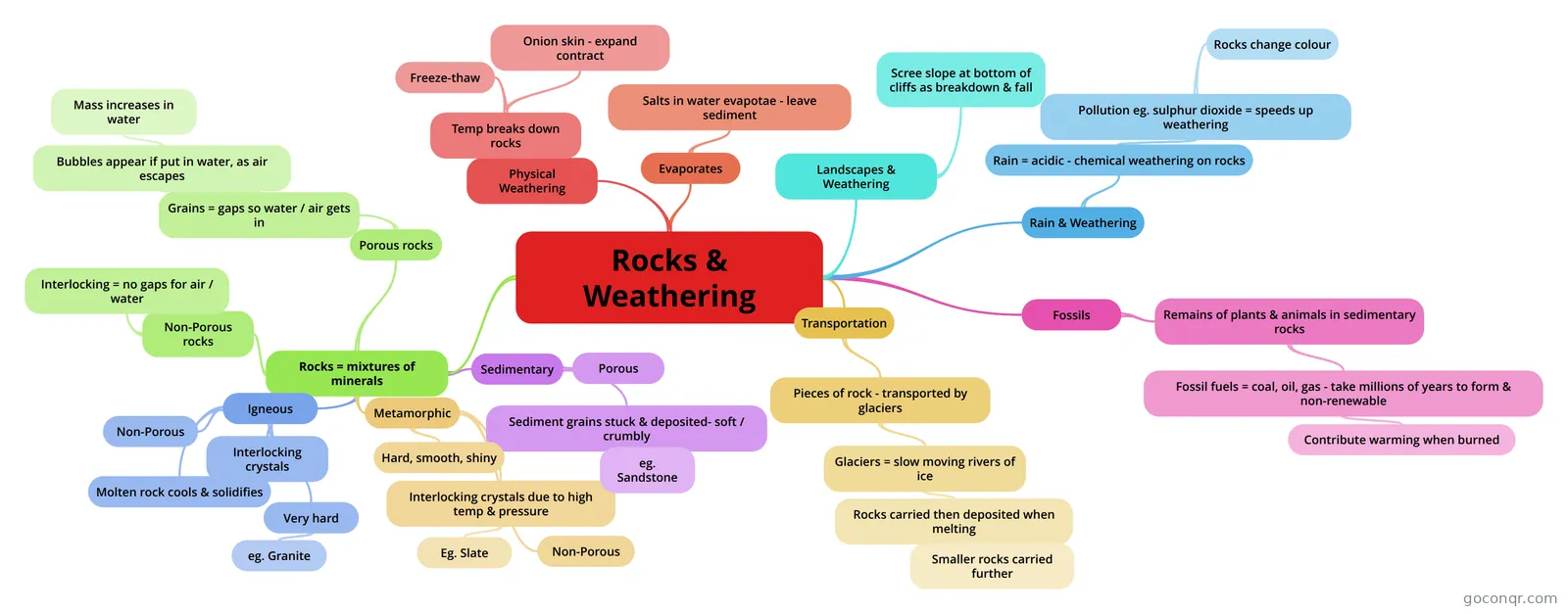 Rocks & Weathering
-
Chemical weathering
-
Weathering and Erosion Diagram explaining the process of weathering and erosion and its causes.
-
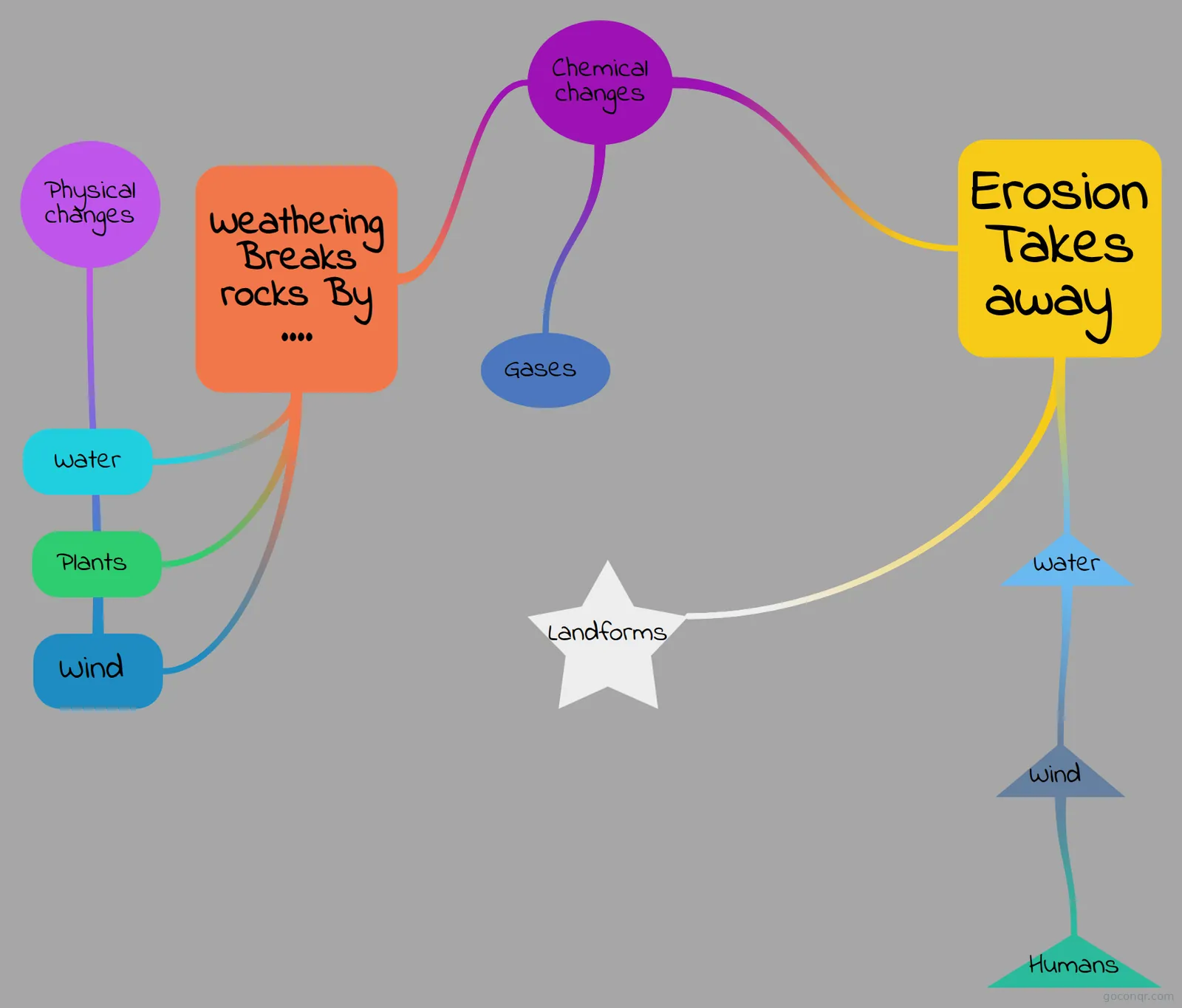 Weathering Breaks rocks By .... Mapa Mental en Weathering and erosion, creado por daniel Trejo en 06/03/2018.
Flashcards
See all 21 flashcards-
20 cardsWeathering What is weathering?
-
14 cardsDenudation Calcite, Calcium Carbonate, Carbonation, Denudation, Deposition, Erosion, Freeze-Thaw Action, Karst, Materi...
-
20 cardsUnit 1.2 : Weathering What is the process of weathering?
-
32 cardsGeologic Weathering and Sedimentary Rocks Chapters 7 and 8 from the textbook
-
39 cardsWeathering Junior cycle physical and chemical weathering
-
30 cardsScience Erosion Index Cards (7th Grade) Science Erosion Index Cards (7th Grade) made by Irene Kim
-
20 cardsWeathering Flashcards Unit 1.2:) What is weathering?
-
21 cardsScience Weathering Index Cards (7th Grade) Science Weathering Index Cards (7th Grade) made by Irene Kim
Notes
-
Weathering When rocks are uplifted near to the surface, they are exposed at the surface to temperature, pressure and chemical conditions are different from those where they were formed. Weathering is the in situ chemical alterat...
-
Earth Space Science Study Guides 6.1 Running Water Key Concepts · Water constantly moves among the oceans, the atmosphere, the solid Earth, and the biosphere. This unending circulation of Earth’s water ...
-
Sediment Transport What happens to weathered material?Some will remain where it is, the rest will be transported away. Transport can be due to: gravity - moves loose weathered sediment down slopes wind - lifts and transports finer grain...
-
Earth Forces Erosion The process of eroding or being eroded by wind, water, or other natural agents Deposition
Slides
More Geology and earth sciences topics
About Weathering, Erosion and Mass Movement
GoConqr OriginalWhat this unit covers
The resources here follow the path rock takes once it reaches the surface. It breaks down in place, is carried away, and sometimes slides downhill. The notes titled Weathering explain that uplifted rocks meet new temperature, pressure and chemical conditions. The notes on sediment transport ask what happens to weathered material and list gravity, wind and other carriers.
Where to start
- Begin with the flashcard deck Denudation. It covers terms such as calcite, carbonation, freeze-thaw action, karst and deposition.
- Move to the Weathering flashcards. They ask what weathering is and split physical weathering into temperature, ice and water, salts, wind and plants. Chemical weathering is split into gases, acids and water.
- Read the slideshow notes titled Weathering Notes from Slideshow for a fuller explanation.
Mass movement
Once weathering makes sense, open the mind map Types of mass movement. It sorts slow movements such as soil creep from fast ones, and uses a local example from Oxfordshire. The mind maps on erosion and deposition cover landslides, mudflows, slump and creep. For real events, look at The Hong Kong Landslides, and the maps on human factors causing mass movement.
Using quizzes and maps together
Read a mind map first, then take a quiz such as Weathering and Sediment Transport or Mass Wasting. Note the questions you missed. Go back to the matching branch of the map or the flashcards and test yourself again. Some listed resources mention GCSE Geography and A-level Geography, so they suit those courses well.
Where it sits
This unit belongs to the strand Surface Processes and Landscapes, within Geology and earth sciences. Teachers can set a deck or quiz as a starter or homework task. When you are ready, choose one resource and work through it.
Frequently asked questions
Which resource should I open first?
Start with the Denudation flashcard deck. It gives you the key vocabulary, including erosion, deposition, carbonation and freeze-thaw action. After that, the Weathering flashcards break the topic into physical and chemical types, which makes the maps and quizzes easier to follow.
What do the mind maps cover?
They cover weathering, both physical and chemical, plus erosion, deposition and mass movement. Types of mass movement sorts slow and fast movements, while other maps look at landslides, human factors and the Hong Kong landslides. Use them to see how the ideas connect.
Are the resources free to use?
Yes. Every resource listed here is free to open, study and take, with no account needed. A free account also saves your quiz scores and lets you make your own quizzes, mind maps, flashcards and notes.
Which exams do these resources suit?
Some listed resources mention GCSE Geography and A-level Geography, and most of the material is aimed at secondary students. A few items are at university level. Check the title and content of each resource to see whether it matches your course.
Who made these resources?
They were made by GoConqr users, not by GoConqr itself. That means styles differ, from short flashcard decks to detailed notes and maps. If one does not suit you, try another on the same topic.
What if I cannot find what I need?
Try a nearby topic. Erosion, deposition, soil and landslides are all covered here, so a related map or deck may fill the gap. You can also build your own flashcards or mind map to cover the point.