
Discourse Analysis and Text Linguistics
30 resources created by 27 users
This Discourse Analysis and Text Linguistics page on GoConqr gathers community-made mind maps, flashcards, quizzes, flowcharts and notes, from cohesion, anaphora and deixis to speech acts, conversation analysis and critical discourse analysis. It's built for university students and professional candidates, including those preparing for oposiciones, and for teachers after ready-made material. There are over 350 resources here, including more than 300 mind maps and more than 20 flashcard decks, made by over 200 contributors. Pick a topic, try a quiz, then make your own maps.
Top Discourse Analysis and Text Linguistics resources
-
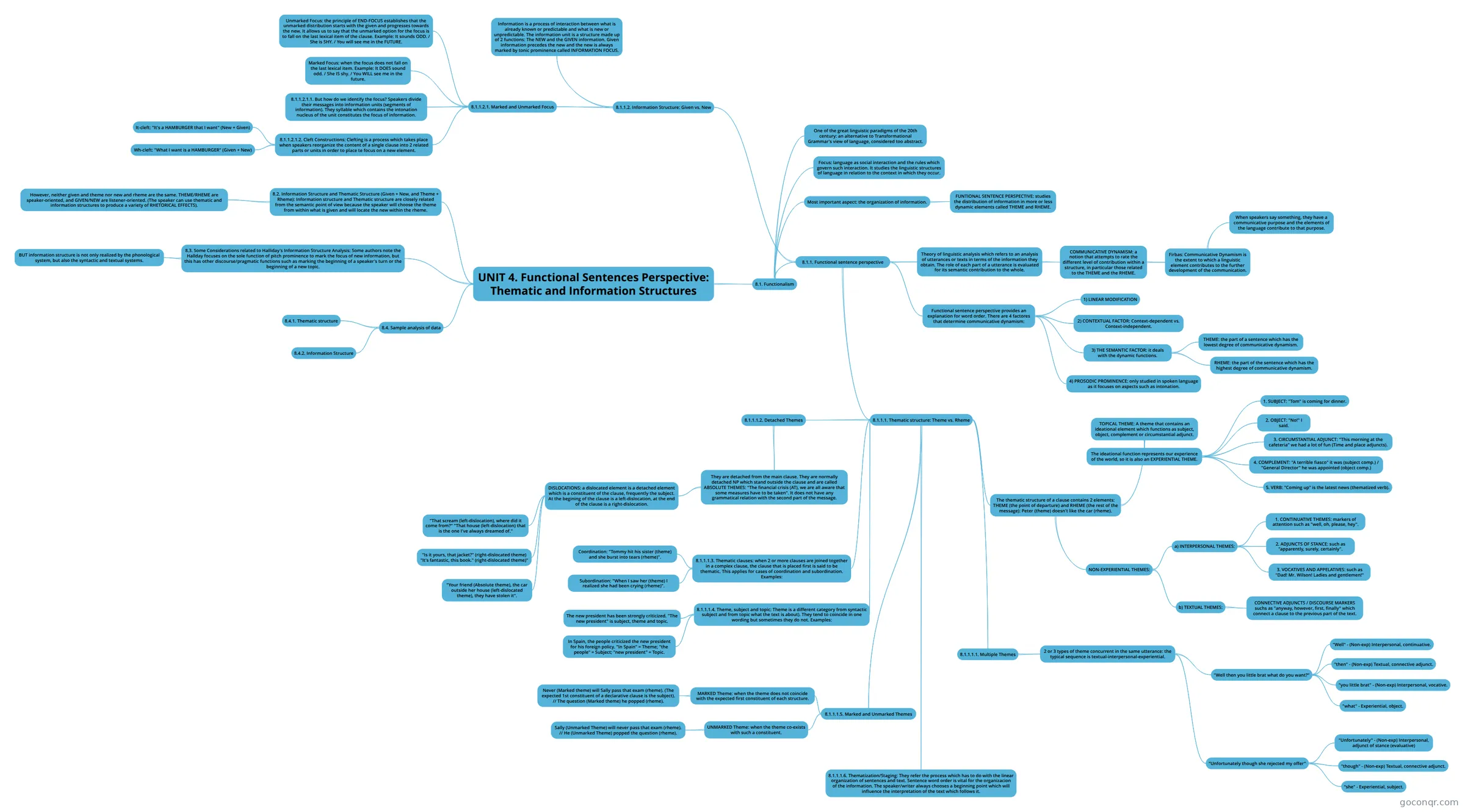 Mind map UNIT 4. Functional Sentences Perspective: Thematic and Information Structures Book: Perspectives on Discourse Analysis. Laura Alba-Juez
-
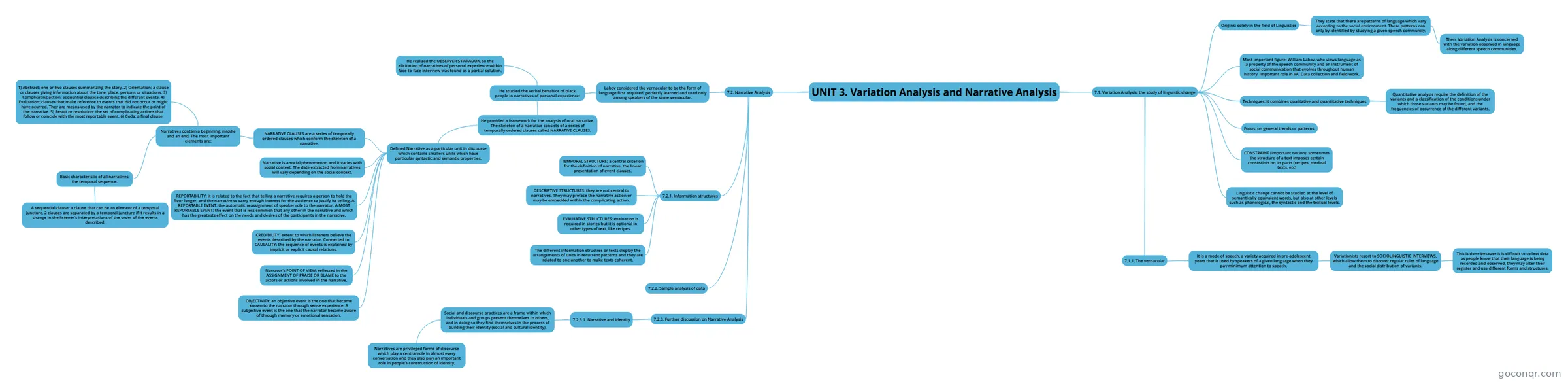 Mind map UNIT 3. Variation Analysis and Narrative Analysis Book: Perspectives on discourse analysis. Laura Alba-Juez.
-
21 cardsDiscourse Analysis - Speech Acts Definition of SPEECH ACT
-
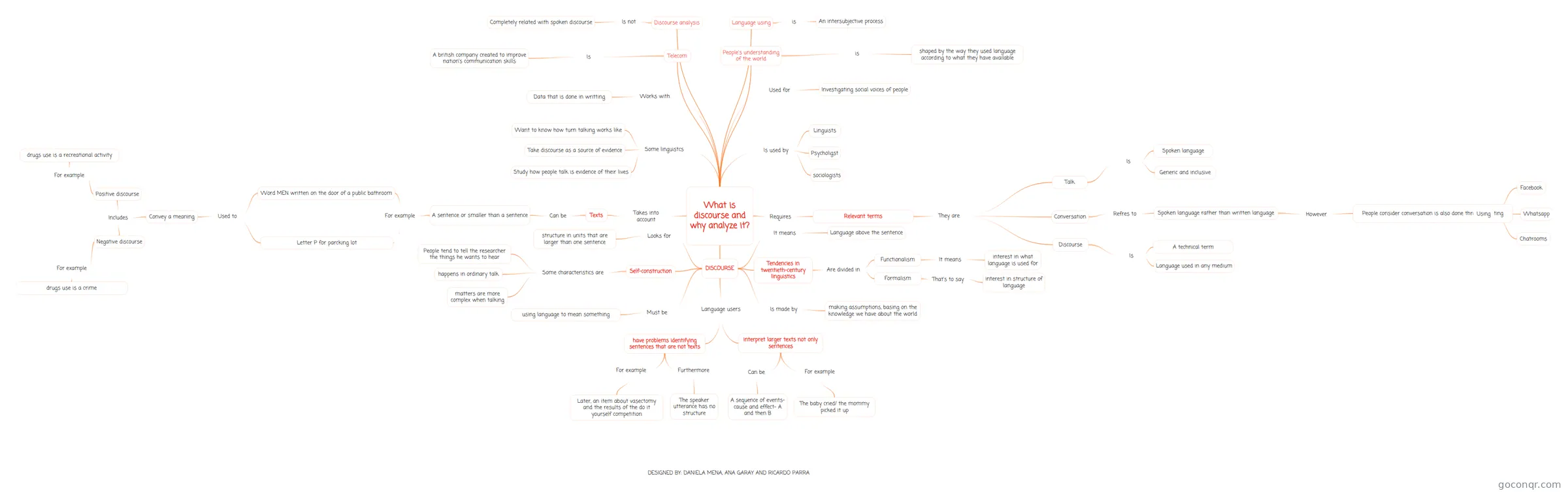 Mind map What is discourse and why analyze it? Conceptual map
-
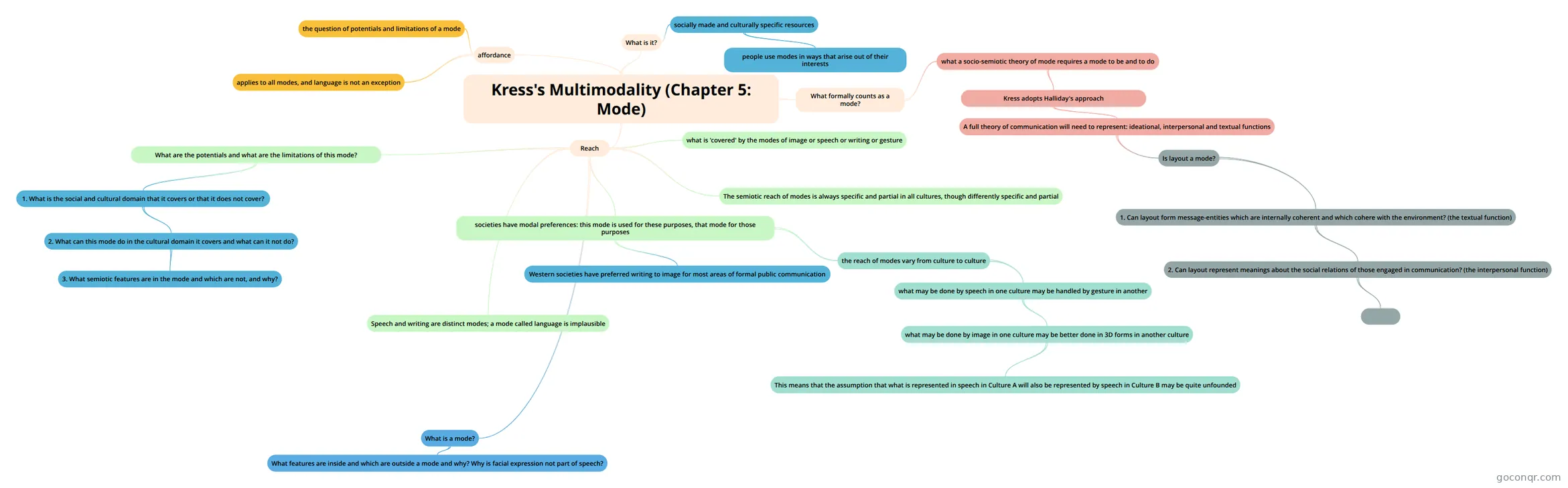 Mind map Kress's Multimodality (Chapter 5: Mode) Mode
-
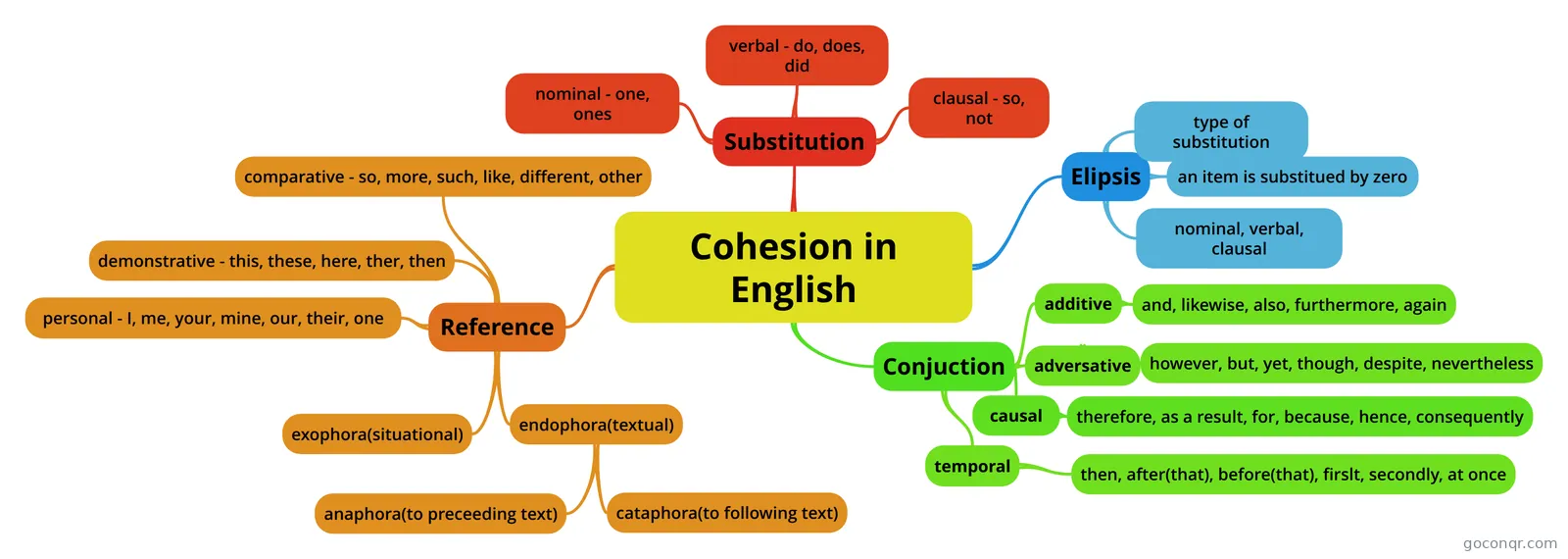 Mind map Cohesion in English
-
27 cardsspontaneous speech glossary
-
Mind map Characteristics of Written Language. Characteristics of written language
Quizzes
Mind maps
See all 19 mind maps-
UNIT 4. Functional Sentences Perspective: Thematic and Information Structures Book: Perspectives on Discourse Analysis. Laura Alba-Juez
-
UNIT 3. Variation Analysis and Narrative Analysis Book: Perspectives on discourse analysis. Laura Alba-Juez.
-
What is discourse and why analyze it? Conceptual map
-
Kress's Multimodality (Chapter 5: Mode) Mode
-
Cohesion in English
-
Characteristics of Written Language. Characteristics of written language
-
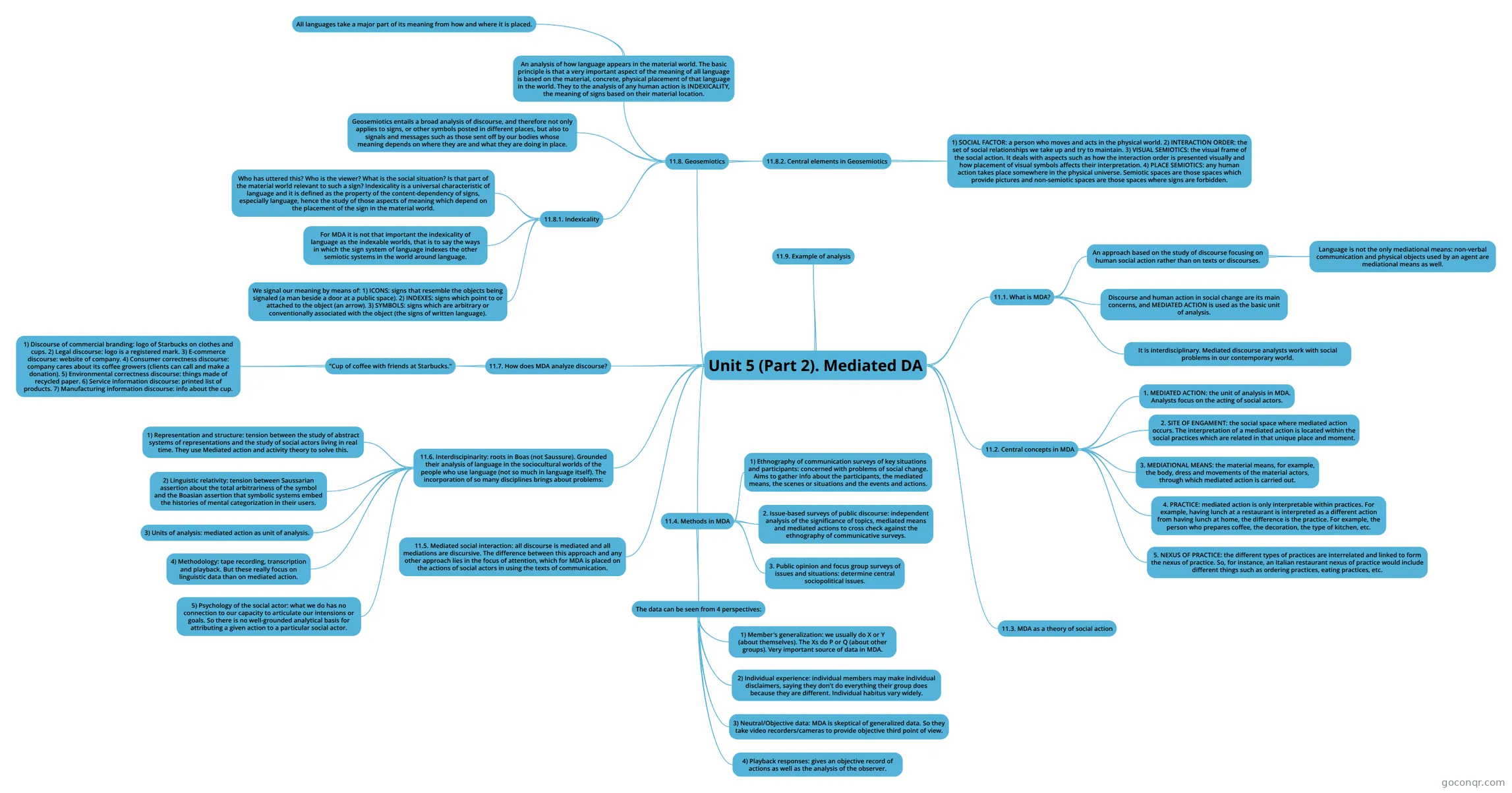 Unit 5 (Part 2). Mediated DA Perspectives on Discourse Analysis. Laura Alba-Juez
-
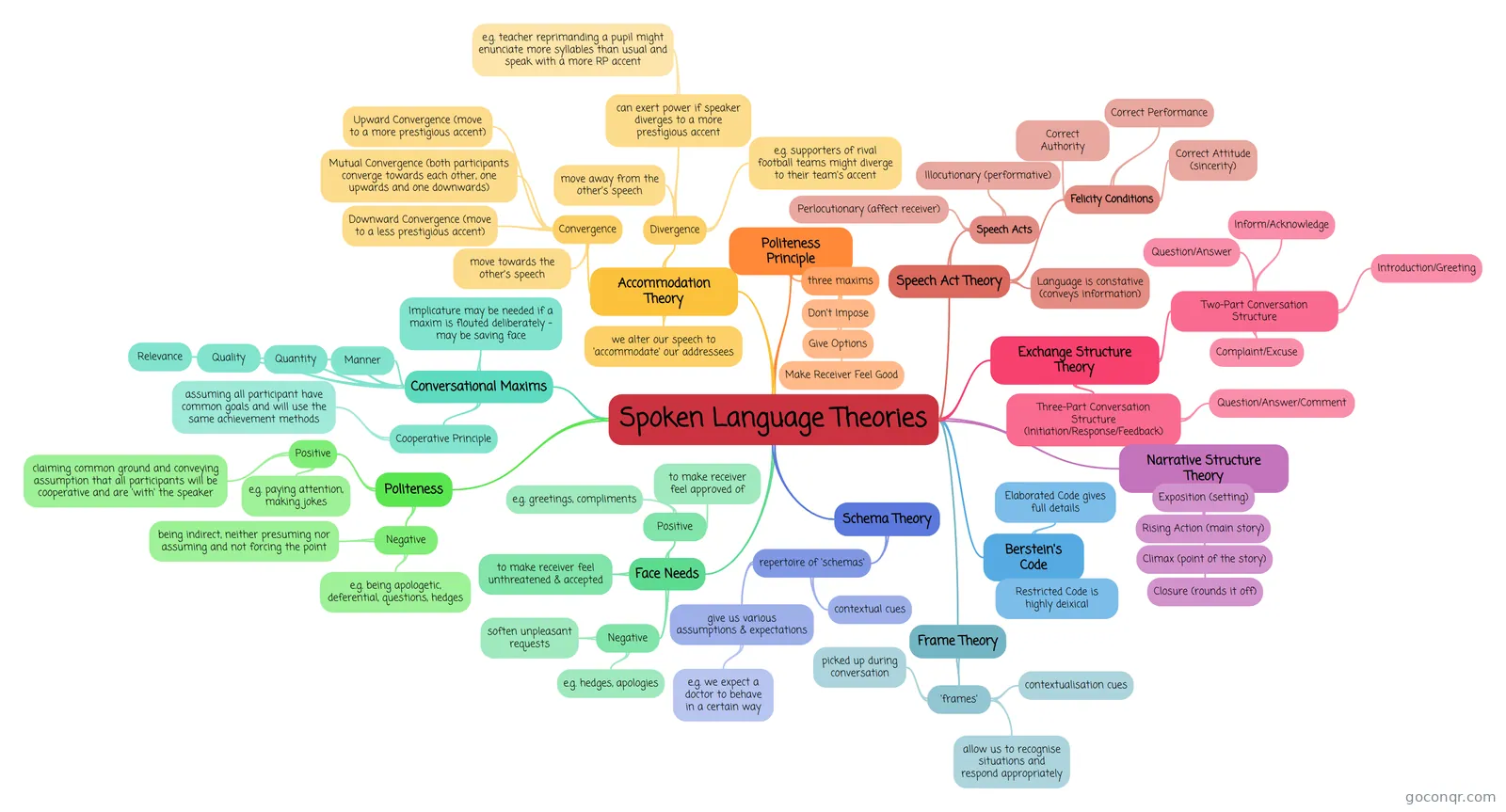 Spoken Language Theories Mind-Map of spoken language theories for A-Level English Language revision.
Flashcards
-
21 cardsDiscourse Analysis - Speech Acts Definition of SPEECH ACT
-
27 cardsspontaneous speech glossary
-
76 cardsArgumentation Theory
-
58 cardsDiscourse Analysis
-
15 cardsEnglish - Categorizing Texts One of the basic distinctions we can make about texts is whether they belong to the spoken or written mode....
-
5 cardsDiscourse Analysis DISCOURSE ANALYSIS general definition
-
5 cardsMisc.
Notes
Slides
More Linguistics and philology topics
About Discourse Analysis and Text Linguistics
GoConqr OriginalWhat the resources cover
The page starts with how texts hold together. The note Anaphora Cataphora Deixis explains words that point back to something already mentioned or forward to something still to come. The mind map Cohesion in English separates reference into exophora (situational) and endophora (textual), then lists personal and demonstrative forms.
It then widens to discourse as language used in social context. The slide set Topic 8: Discourse Analysis defines text, discourse and discourse analysis. Further maps look at written language, spontaneous speech, narrative analysis, thematic structure and multimodality.
Where to start
- Read Topic 8: Discourse Analysis for the basic definitions.
- Open the mind map What is discourse and why analyze it? to see language above the sentence.
- Move to the cohesion material: the note, the map and the flowcharts on types of cohesion.
- Go on to the flashcards on speech acts, which cover locutionary, illocutionary and perlocutionary acts and Searle's classification.
Using quizzes and maps together
Work through a mind map first, then take a quiz on the same area. The self-evaluation quizzes for several units of Discourse Analysis are a good check once you have read the maps. Where an answer surprises you, go back to the matching map or flashcard deck and read that branch again.
Flashcards suit the vocabulary. The spontaneous speech glossary covers terms such as adjacency pairs, back channelling, ellipsis and fillers, so it works well for quick daily recall.
Where it fits
This unit sits in the Meaning, Use and Text strand of Linguistics and philology. Its resources are mostly university-level, with some material aimed at professional candidates, such as the map on analysis and articulation of discourse, cohesion and coherence, and connectives. Teachers can use the maps and slide sets as ready-made starting points.
Choose one resource that matches what you are studying this week, open it, and see how far it takes you.
Frequently asked questions
Which resource should I open first?
Start with the slide set Topic 8: Discourse Analysis, which sets out what a text is, what discourse is and what discourse analysis studies. After that, the mind map What is discourse and why analyze it? gives a visual overview before you move on to cohesion and speech acts.
What do the mind maps cover?
The mind maps range across cohesion, written language, spontaneous speech, narrative analysis, thematic structure and Kress's multimodality. There are also maps on conversation analysis and critical discourse analysis. With over 300 maps, you can usually find one for the area you are studying.
Are the resources free to use?
Yes. Every resource listed here is free to open, study and take, with no account needed. They were made by GoConqr users, not by GoConqr itself. If you want to save quiz scores or make your own quizzes, maps, flashcards and notes, a free account lets you do that.
Who are these resources for?
They are mainly for university students and professional candidates, including people working towards oposiciones, which some listed resources mention. Teachers can also use them as ready-made material for lessons or revision. Most of the content is at university level.
Which resources help with cohesion and reference?
Try the note Anaphora Cataphora Deixis, then the mind map Cohesion in English. The flowchart on types of cohesion and the map on analysis and articulation of discourse, which includes connectives, add further practice on the same ideas.
What if I can't find the topic I need?
Browse the related mind maps, flashcards and notes on the page, as many use different titles for similar topics. If nothing fits, you can make your own with a free account and build it around your course or syllabus.