
Introduction to Linguistics
387 resources created by 353 users
This Introduction to Linguistics page on GoConqr gathers community-made mind maps, flashcards, quizzes, flowcharts and notes, from human and animal language to the linguistic subsystems and key terminology. It's built for university students and professional candidates building a foundation, and for teachers after ready-made material. There are over 380 resources here, including more than 30 quizzes and over 240 mind maps, nearly all at university level. Open a quiz to find your gaps, then build your own maps and flashcards.
Top Introduction to Linguistics resources
-
50 cardsOnline Dictionary Term: Allomorph Definition: One of the variant pronunciations of a morpheme, among which the choice is dete...
-
51 cardsDIgital Dictionary - Daniel Paez UNIVERSIDAD TÉCNICA DE AMBATO LINGUISTICS II NAME: DANIEL PAEZ THIRD SEMESTER "B"
-
59 cardsLING Key Terms
-
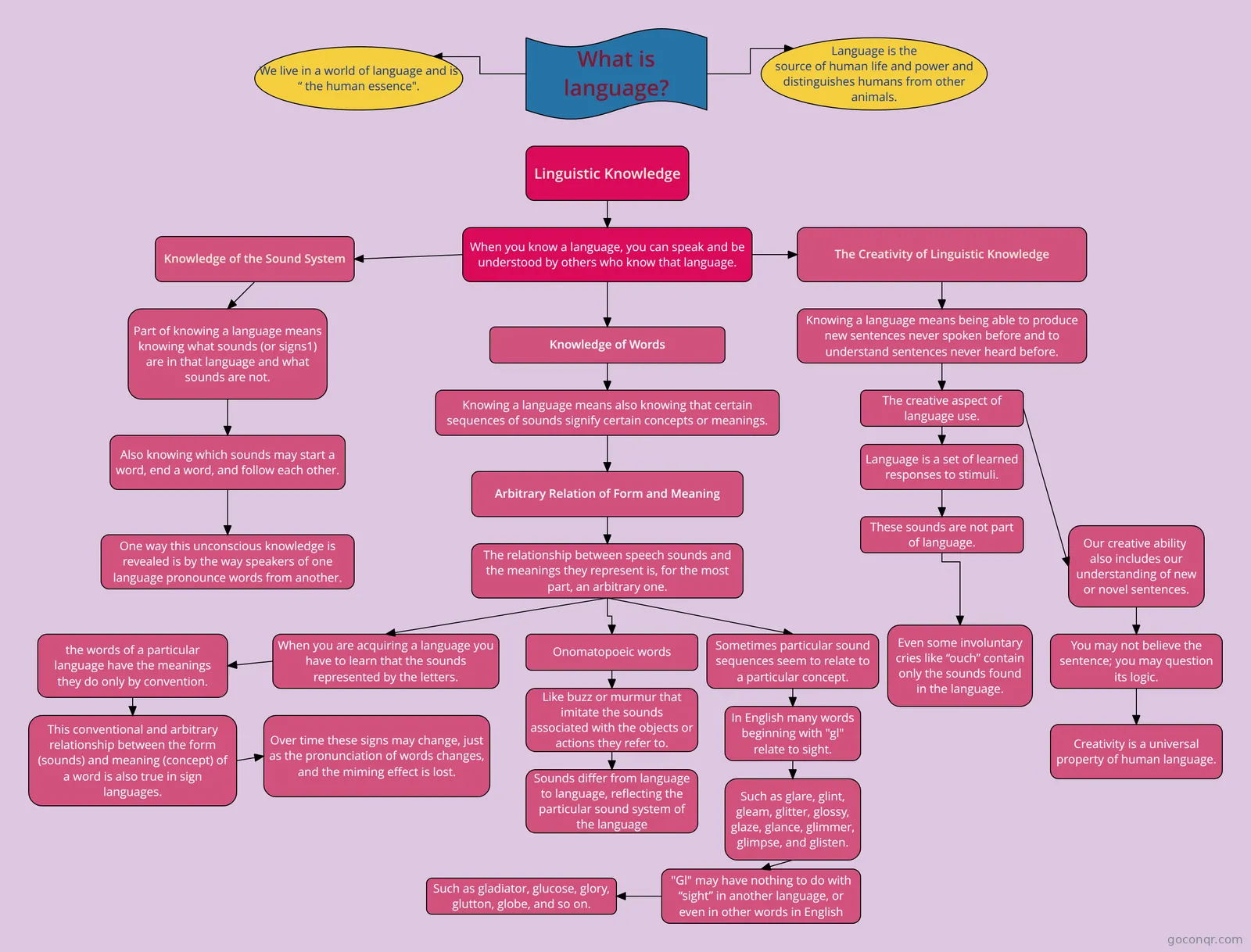 Flowchart What is language? An introduction to a language by Victoria Fromkin
-
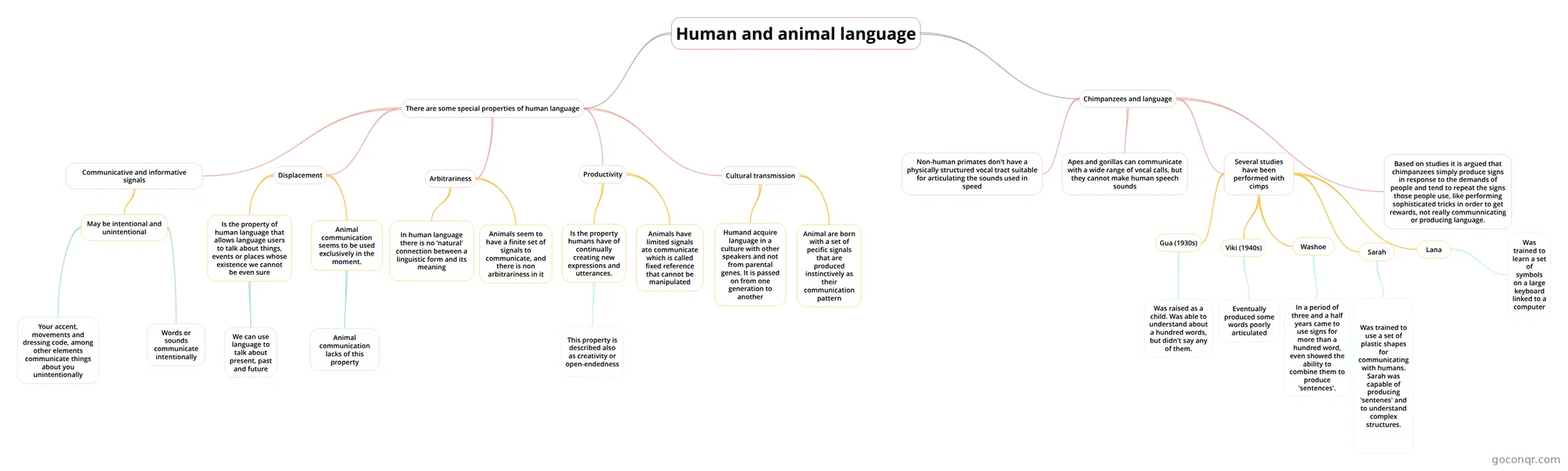 Mind map Human and animal language The folowing concept map contains information about the differences between human and animal language
-
10 questionsLinguistic Subsystems Subsystem 'Lexicon' is?
-
8 cardsLinguistic Subsystems Review the 7 linguistic subsystems and provide examples
-
41 cardsLinguistics Types of syllables
Quizzes
See all 35 quizzes-
10 questionsLinguistic Subsystems Subsystem 'Lexicon' is?
-
20 questionsLinguistics Vocabulary Quiz Linguistics is the study of language, including its structure, sounds, and meaning.
-
27 questionsLinguistics Vocabulary Quiz Linguistics is the study of language.
-
20 questionsLinguistics Vocabulary Quiz linguistic terms
-
20 questionsLinguistics A student is having difficulties understanding language. The student is therefore having difficulty with . . .
-
27 questionsLinguistics What is the definition of linguistics?
-
20 questionsLinguistics vocabulary quiz Which term has three aspects to its study: language form, language meaning, and language in context?
-
21 questionsKey Linguistics Vocabulary The following criteria apply to Descriptive Grammar...
Mind maps
See all 248 mind maps-
Human and animal language The folowing concept map contains information about the differences between human and animal language
-
Levels of language A01_ JMPA Mind Map – 6 Levels of Language
-
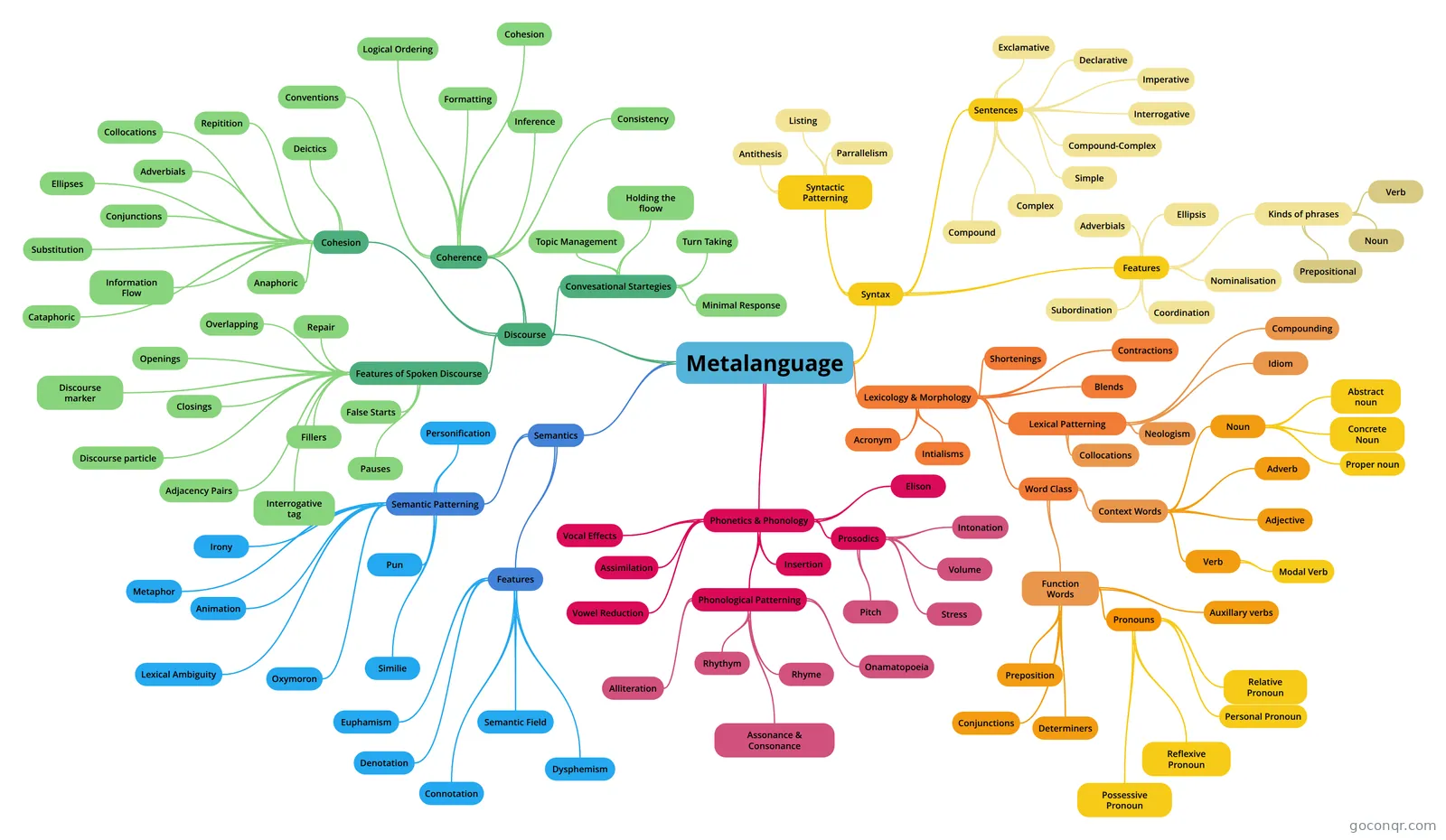 Metalanguage
-
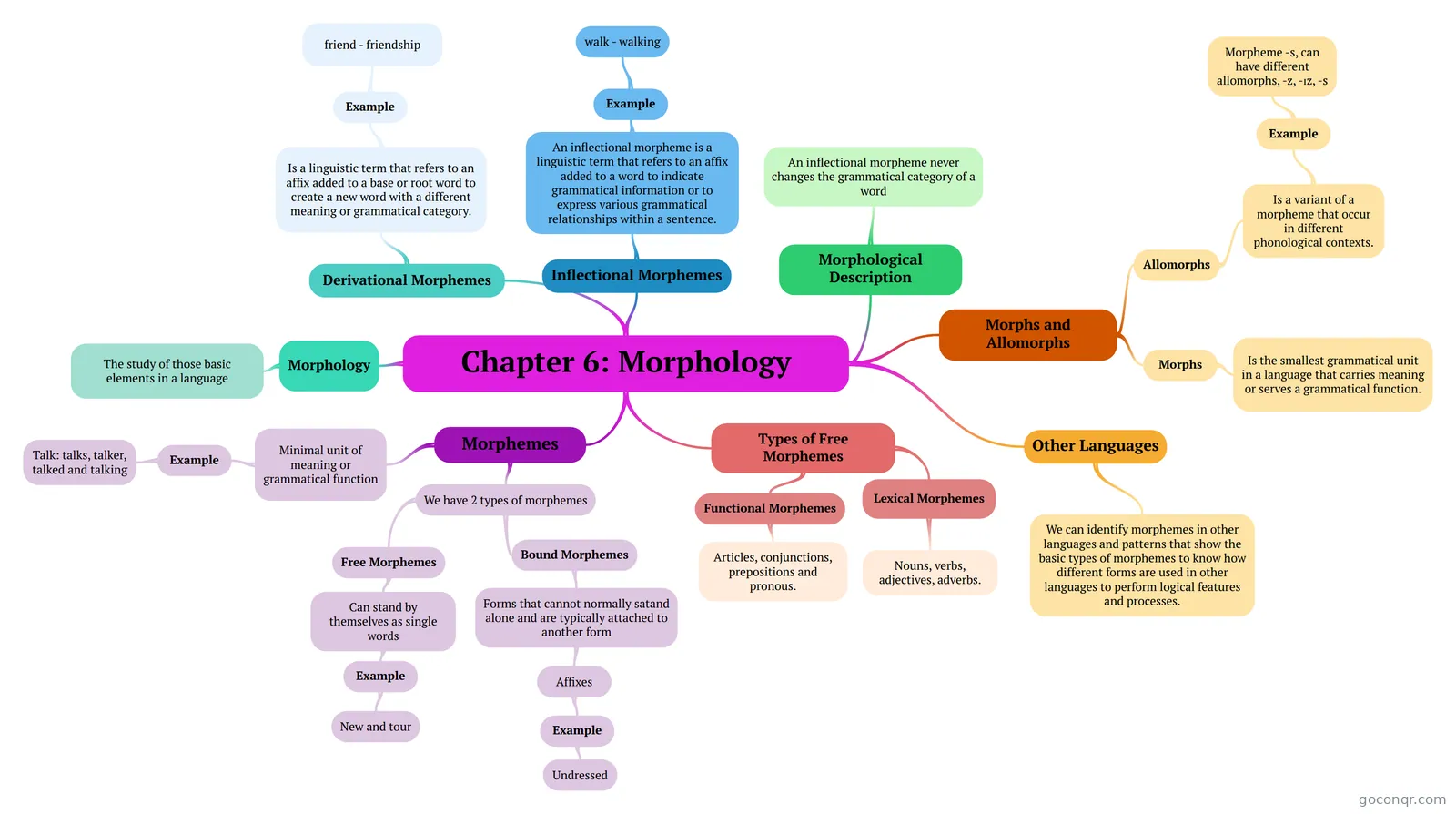 Chapter 6: Morphology Language and Interlanguage - Samanta Acevedo PINEI2 "A"
-
A01 Extra Terminology finished
-
The Origins Of Language Mental Mid of Alexandra Wedderburn 8-946-768
-
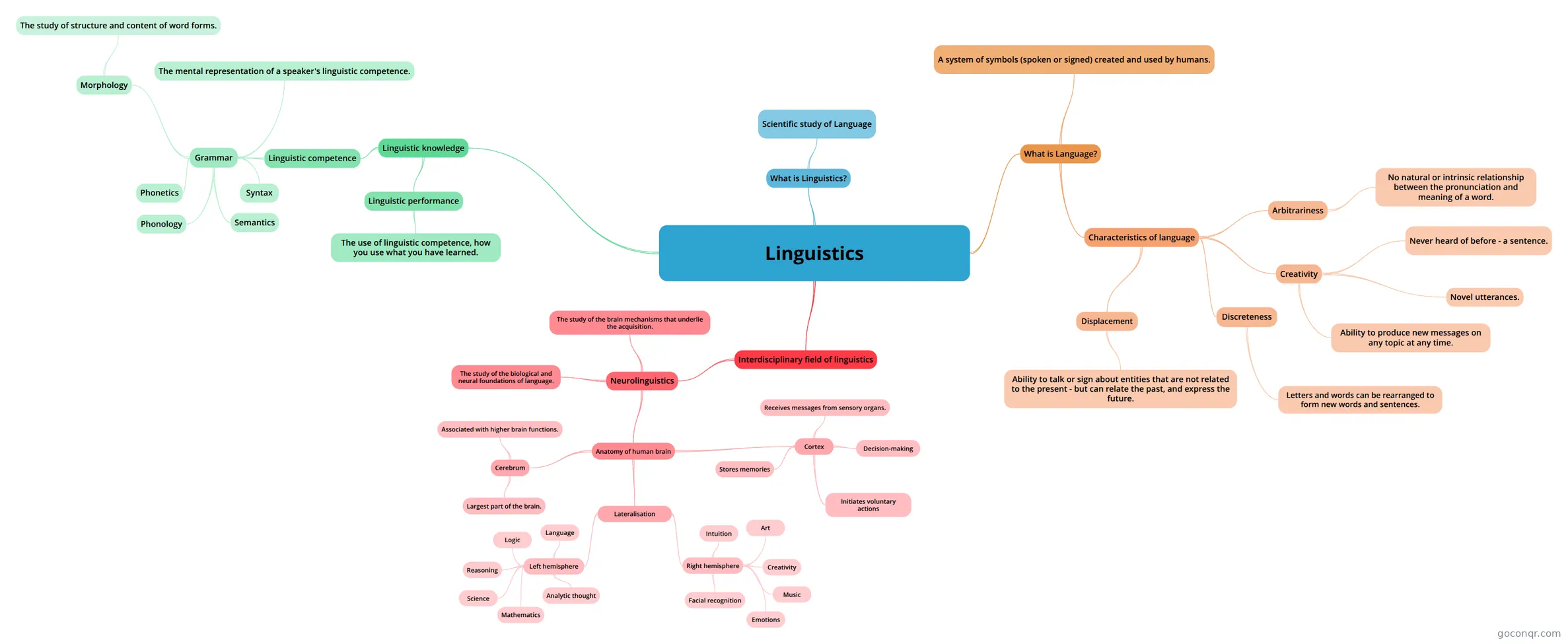 Linguistics 1001LAL 2016
-
Linguistic Study of language
Flashcards
See all 74 flashcards-
50 cardsOnline Dictionary Term: Allomorph Definition: One of the variant pronunciations of a morpheme, among which the choice is dete...
-
51 cardsDIgital Dictionary - Daniel Paez UNIVERSIDAD TÉCNICA DE AMBATO LINGUISTICS II NAME: DANIEL PAEZ THIRD SEMESTER "B"
-
59 cardsLING Key Terms
-
8 cardsLinguistic Subsystems Review the 7 linguistic subsystems and provide examples
-
41 cardsLinguistics Types of syllables
-
54 cardslinguistics 1-5
-
167 cardsLanguages of the World *Linguistic Universals (4)
-
39 cardsLuke's study questions Which of the following words might a prescriptivist use? -Inappropriate -Grammatical -Bad -Informal
Flowcharts
See all 12 flowchartsTopics in Introduction to Linguistics
More Linguistics and philology topics
About Introduction to Linguistics
GoConqr OriginalWhat the page covers
This unit collects material on the first questions of the subject: what language is, how human language differs from animal communication, and how linguists divide language into parts. The Human and animal language mind map covers the special properties of human language, and the flowchart What is language? looks at linguistic knowledge. Several other maps and notes return to the same comparison, so you can see it explained in different ways.
Where to start
- Begin with a map such as Human and animal language or the flowchart Introduction to linguistics to get the big picture.
- Move to the LING Key Terms flashcards, which pair terms such as tacit knowledge and descriptive grammars with short descriptions.
- Work through the linguistic subsystems: syntax, phonology, morphology, pragmatics, semantics, lexicon and spelling.
- Finish with a quiz to check what stuck.
Using quizzes and maps together
Read a map first, then take a quiz on the same topic. The Linguistic Subsystems quiz asks, for example, which subsystem deals with invisible meaning. If you get an answer wrong, go back to the matching map or flashcard and look at that branch again. Repeat until the terms feel familiar.
The dictionary-style decks, such as Online Dictionary, give fuller definitions with sources. They suit anyone who wants precise wording for an essay or a seminar. There is also a deck on Hockett's design features of language, useful alongside the human and animal language maps.
Where it sits
This unit belongs to the Foundations of Linguistics strand in Linguistics and philology. Its resources were made by GoConqr users, so styles and depth vary. Compare a few and keep the ones that explain things best for you.
Teachers can borrow a ready-made quiz or deck for a class. Students can pick a topic and try a quiz now.
Frequently asked questions
Which resource should I open first?
Start with a mind map such as Human and animal language, or the flowchart Introduction to linguistics, for an overview. Then use the LING Key Terms flashcards to learn the vocabulary. Once the terms look familiar, try the Linguistic Subsystems quiz to see which areas need another look.
What do the mind maps cover?
The mind maps cover the differences between human language and animal communication, the properties of human language, the linguistic subsystems, morphology and phonology, the origins of language, and branches of theoretical linguistics. Some also list terminology, so they work well as quick revision before a quiz.
Are the resources free to use?
Yes. Every resource listed here is free to open, study and take, with no account needed. They were made by GoConqr users rather than by GoConqr itself, so it is worth comparing a few on the same topic.
Which levels do these resources suit?
Almost all of the resources are at university level, which suits university students and professional candidates, with a small share at secondary level. Teachers can also use them as ready-made material. One listed deck, English Language UNIT 1/2, mentions A-level English Language.
How can I test my knowledge of key terms?
There are more than 30 quizzes here. Several are vocabulary quizzes, such as Linguistics Terms and Key Linguistics Vocabulary, and many others focus on the linguistic subsystems. Take one after reading a map, then revisit any terms you missed.
What if I cannot find the topic I need?
Try a nearby map or deck first, since topics overlap across formats. If nothing fits, a free account lets you make your own quizzes, mind maps, flashcards and notes, and saves your quiz scores.