
Linguistic Theory, Schools and Semiotics
289 resources created by 242 users
This Linguistic Theory, Schools and Semiotics page on GoConqr gathers community-made mind maps, quizzes, flashcards and notes, from structuralism and generative grammar to functional sentence perspective and semiotics. It's built for university students working through the schools of linguistics, and for teachers after ready-made material. There are over 280 resources here, including more than 260 mind maps, 2 quizzes and 8 flashcard decks. Pick a topic, try a quiz to find your gaps, then make your own notes.
Select topic
Top Linguistic Theory, Schools and Semiotics resources
-
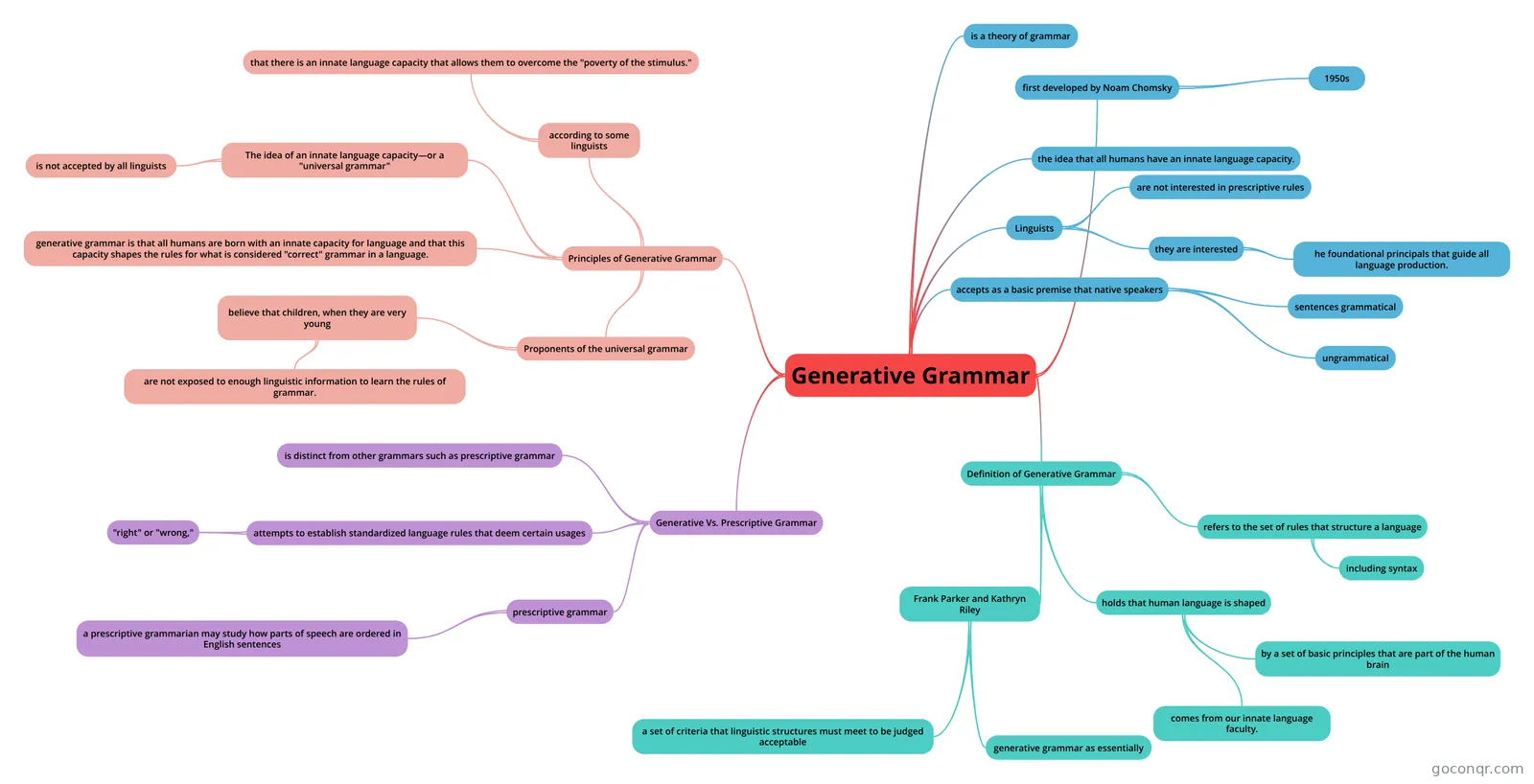 Mind map Generative Grammar
-
Mind map UNIVERSAL GRAMMAR It contains a lot of aspects about Universal grammar.
-
7 questionsEnglish Functional Grammar Section 2 (Basics) Quiz Naming words are called…
-
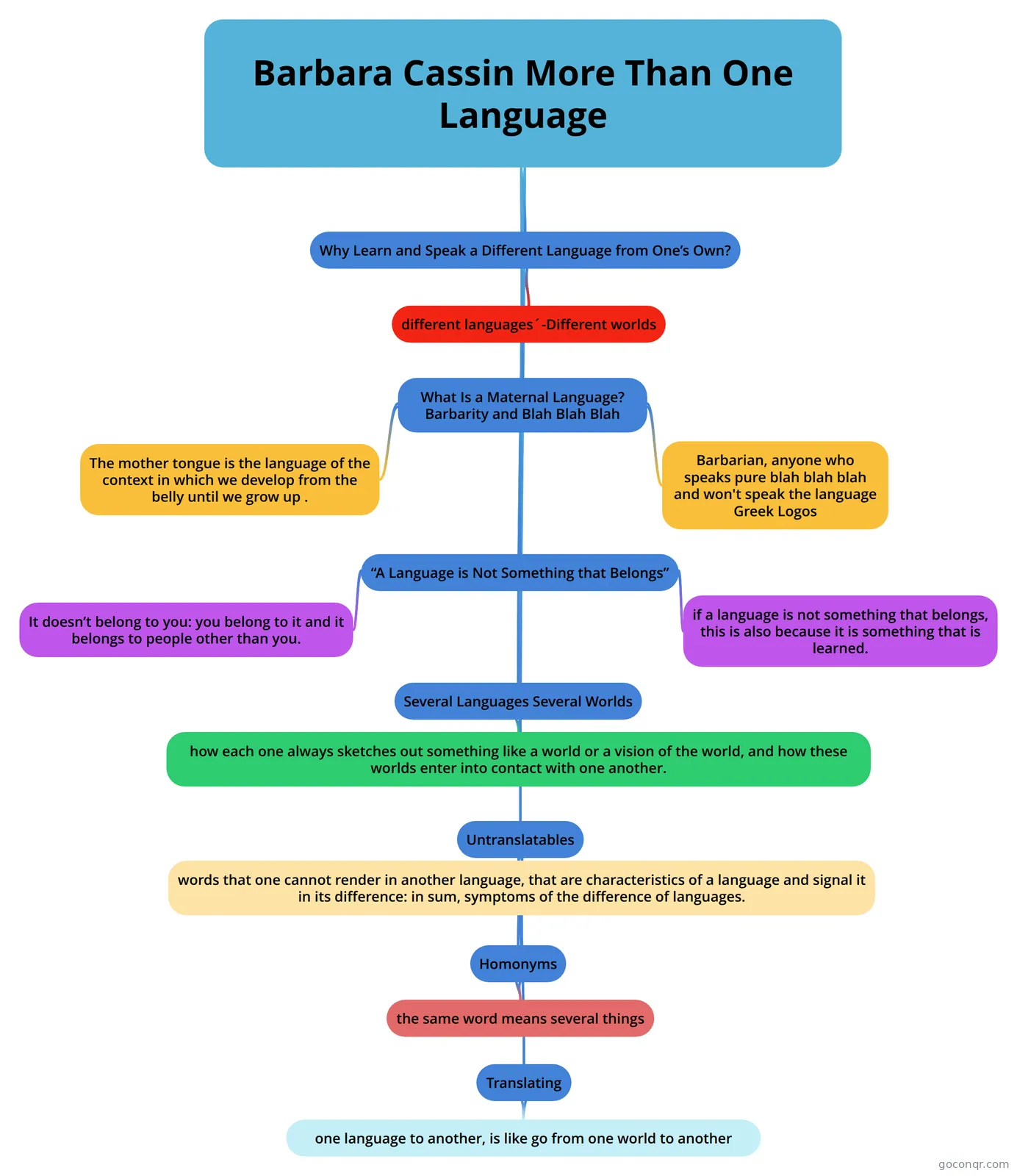 Mind map Barbara Cassin More Than One Language
-
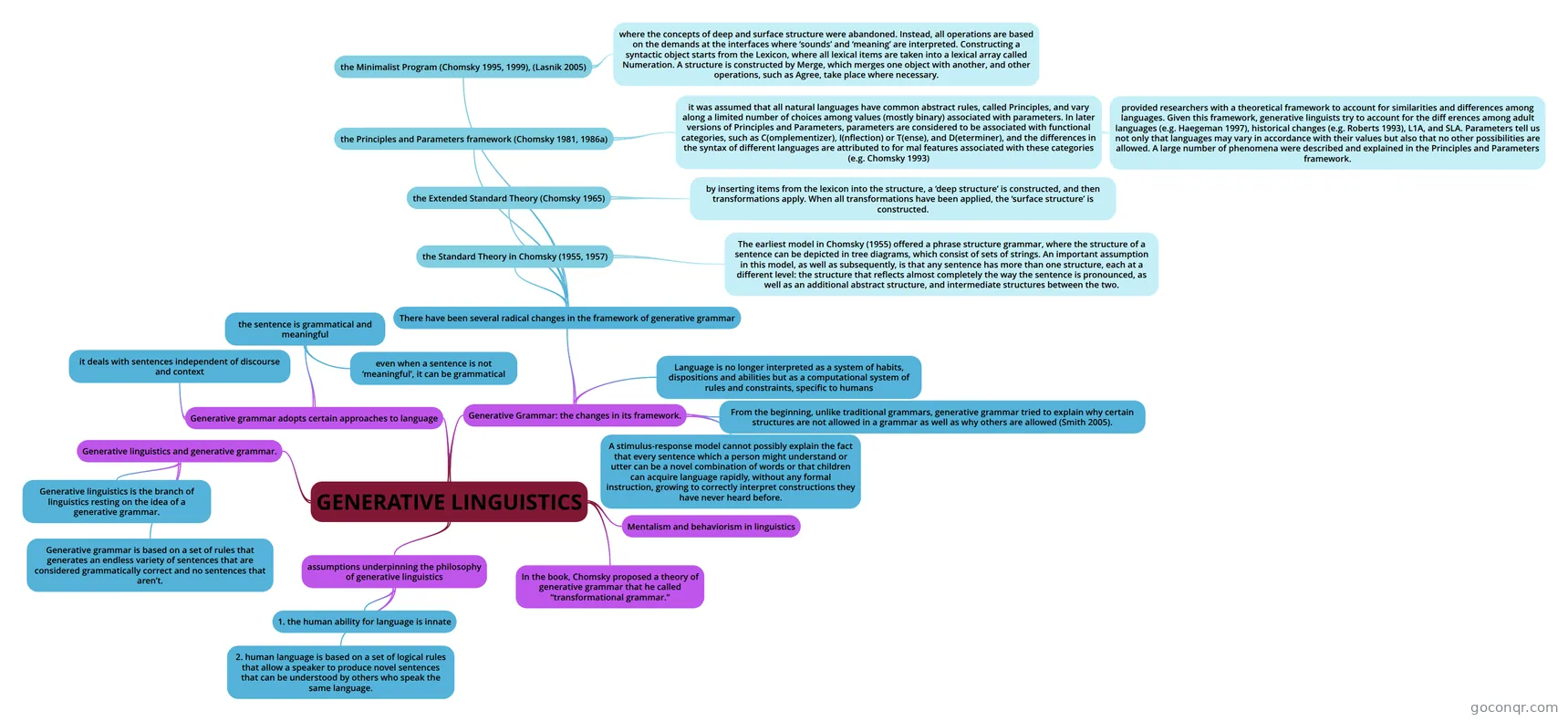 Mind map GENERATIVE LINGUISTICS
-
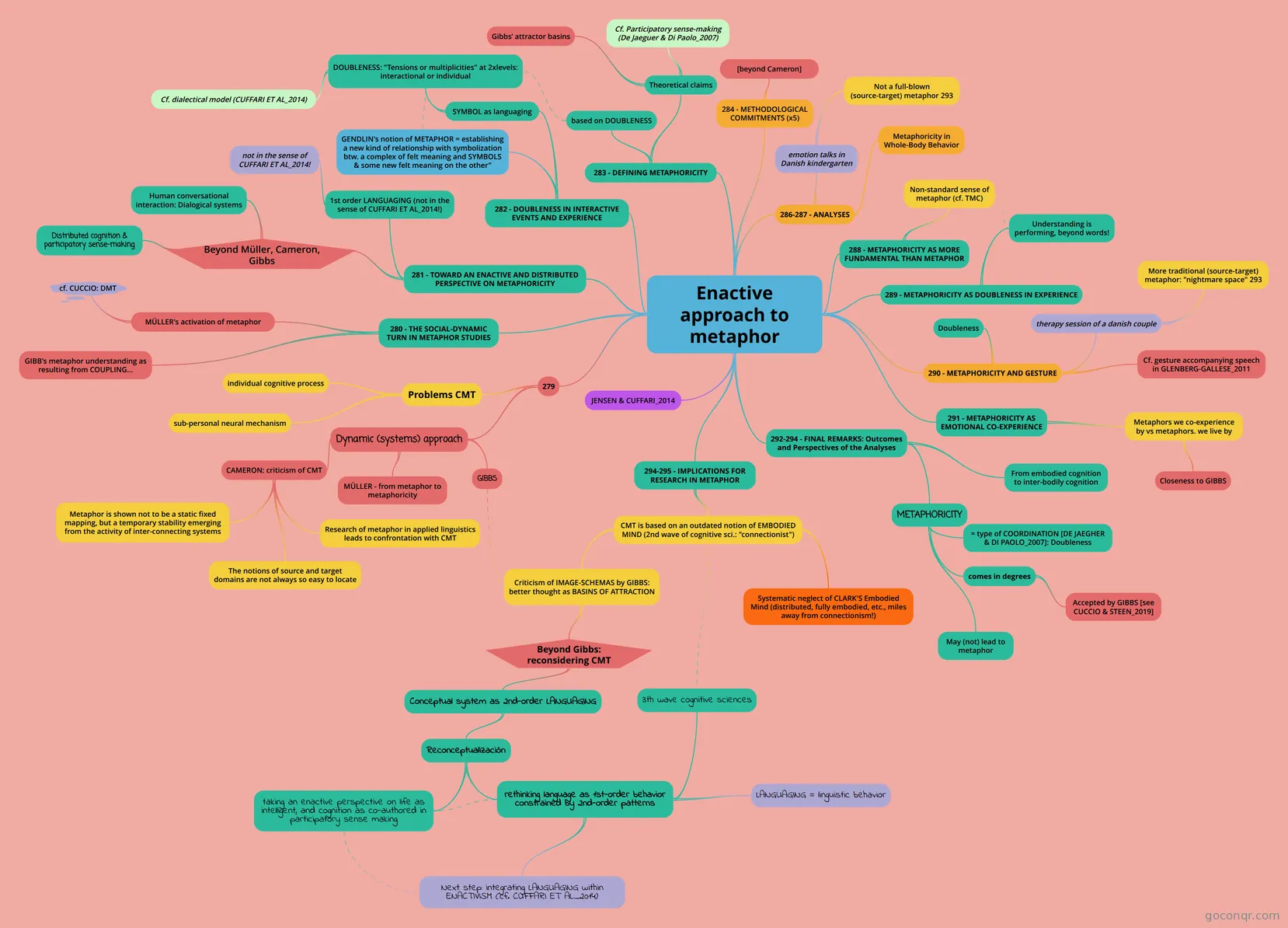 Mind map Enactive approach to metaphor
-
Mind map THE CLASSIFICATION OF MODERN LINGUISTIC STUDIES
-
 Mind map Zellig Harris
Quizzes
Mind maps
See all 268 mind mapsFlowcharts
Topics in Linguistic Theory, Schools and Semiotics
More Linguistics and philology topics
About Linguistic Theory, Schools and Semiotics
GoConqr OriginalWhat this unit covers
This unit sits in the Foundations of Linguistics strand of Linguistics and philology. Most of what you will find is mind maps, made by GoConqr users, that lay out the main schools and ideas of linguistic theory.
- Universal Grammar and Generative Grammar cover Chomsky's idea of an innate language capacity and the basic design shared by human languages.
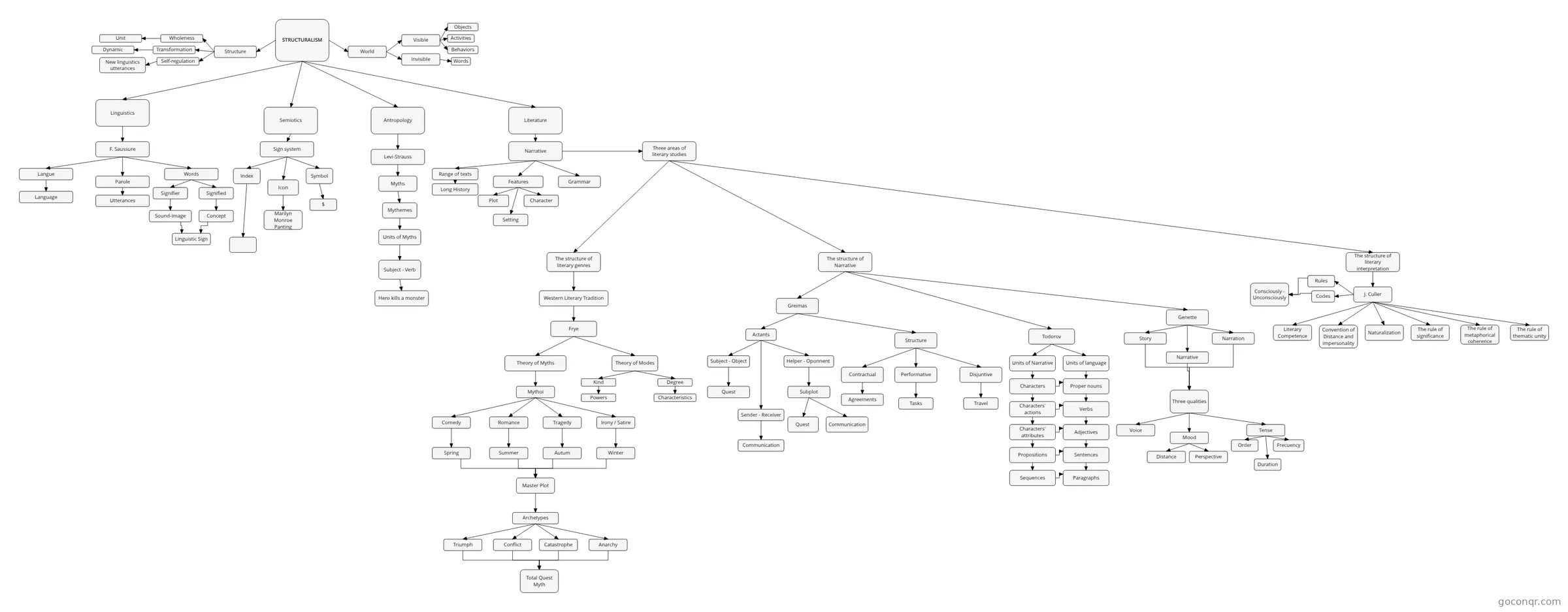
- Structuralism appears in several versions, with principles such as wholeness, transformation and self-regulation, and links to anthropology and semiotics.
- Functional Sentence Perspective looks at language as social interaction and traces its origins to the Linguistic School of Prague.
- Systemic Funtional Grammar sets Halliday's functional approach against the formal approach to grammar.
Where to start
Begin with the broad overview maps: LINGUISTICS walks through early grammarians, comparative philology, structuralism, generativism, cognitivism and functionalism. Linguistic paradigms adds the neurolinguistic, psycholinguistic and sociolinguistic views. Then move to a single school at a time.
Semiotics and context
Once you know the schools, look at the maps on Semiotics and on language, context and text from a social-semiotic perspective. Other maps cover context of situation, register and the functions of language. These show how meaning links to its setting.
Using quizzes, maps and flashcards together
Read a map, then test yourself. The English Functional Grammar Section 2 (Basics) Quiz checks word classes such as naming words, action words and words that describe nouns. The Language Classification quiz suits the typology maps. Flashcard decks such as Theme and Rheme, Typology and Systematic Functional Linguistics help you fix key terms.
Everything here is free to open and study. Choose one school, work through its map, then try a quiz or build a flashcard deck of your own.
Frequently asked questions
Which resource should I open first?
Start with the LINGUISTICS mind map. It runs from early grammarians and comparative philology through structuralism, generativism, cognitivism and functionalism, so it gives you the overall picture. After that, pick the map for one school, such as Structuralism or Generative Grammar, and study it in more detail.
What do the mind maps cover?
They cover the main schools and ideas of linguistic theory: Universal Grammar, Generative Grammar, structuralism, functional approaches, typology and semiotics. There are also maps on register, context of situation, adjuncts and the functions of language, plus maps on nineteenth- and twentieth-century linguistics.
Are there quizzes on this page?
Yes, there are 2. One is the English Functional Grammar Section 2 (Basics) Quiz, which tests word classes. The other is the Language Classification quiz. Use them after reading the related maps to see which points you still need to revise.
Are the resources free to use?
Yes. Every resource listed here is free to open, study and take, with no account needed. They were made by GoConqr users, not by GoConqr itself. A free account also saves your quiz scores and lets you create your own quizzes, mind maps, flashcards and notes.
Who is this page for?
It is mainly for university students studying linguistic theory and the different schools, who can use the maps to revise and the quizzes to check their understanding. Teachers can also use the ready-made maps, notes and flashcard decks as material for their own classes.
What if I cannot find a topic I need?
Try a nearby map first, since topics such as structuralism and functionalism appear in several versions with different emphasis. If your topic is still missing, you can make your own mind map, flashcards or notes and build the coverage you need.