
Psycholinguistics and Neurolinguistics
215 resources created by 176 users
This Psycholinguistics and Neurolinguistics page on GoConqr gathers community-made mind maps, flashcards, quizzes, flowcharts and notes, from language acquisition and the mental lexicon to speech production, sentence processing and bilingualism. It's built for university students working through the topic and teachers after ready-made material. There are over 200 resources here, including more than 170 mind maps and over 100 contributors' worth of study aids. Pick a map, try a quiz to find your gaps, then make notes of your own.
Select topic
- History and Research Methods in Psycholinguistics7
- Origins and Features of Human Language6
- Language and the Brain15
- Language, Thought and Linguistic Relativity36
- Language Acquisition13
- Second Language Acquisition and Bilingualism16
- Models of Language Processing9
- Speech Perception and Word Recognition15
- Sentence Comprehension and Parsing21
- Speech Production23
- Language Disorders and Aphasia6
Top Psycholinguistics and Neurolinguistics resources
-
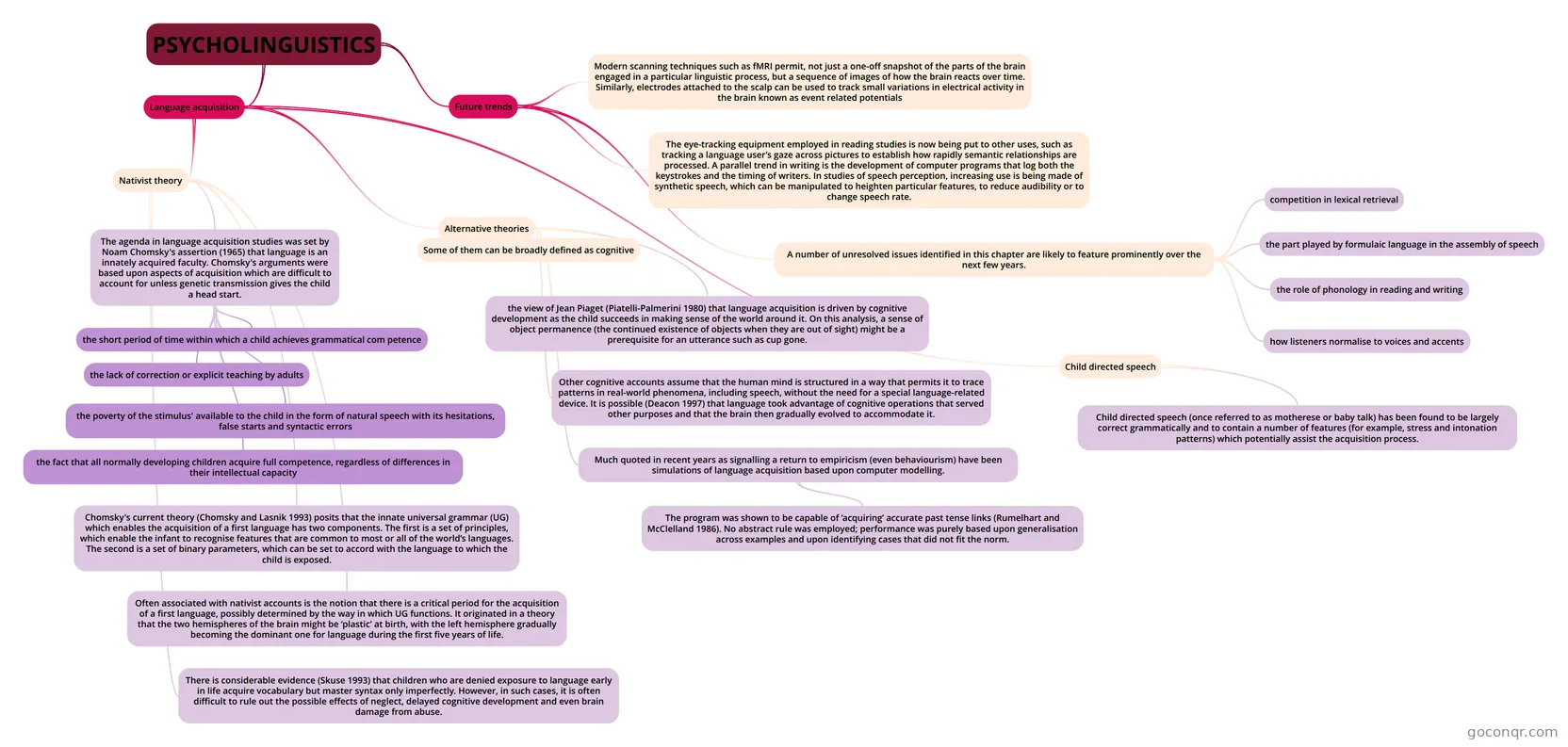 Mind map PSYCHOLINGUISTICS
-
Mind map PRODUCTION: putting words in one's mouth Mental map about production speech
-
Mind map PSYCOLINGUISTICS- Dana Damaris Garcia Mejia
-
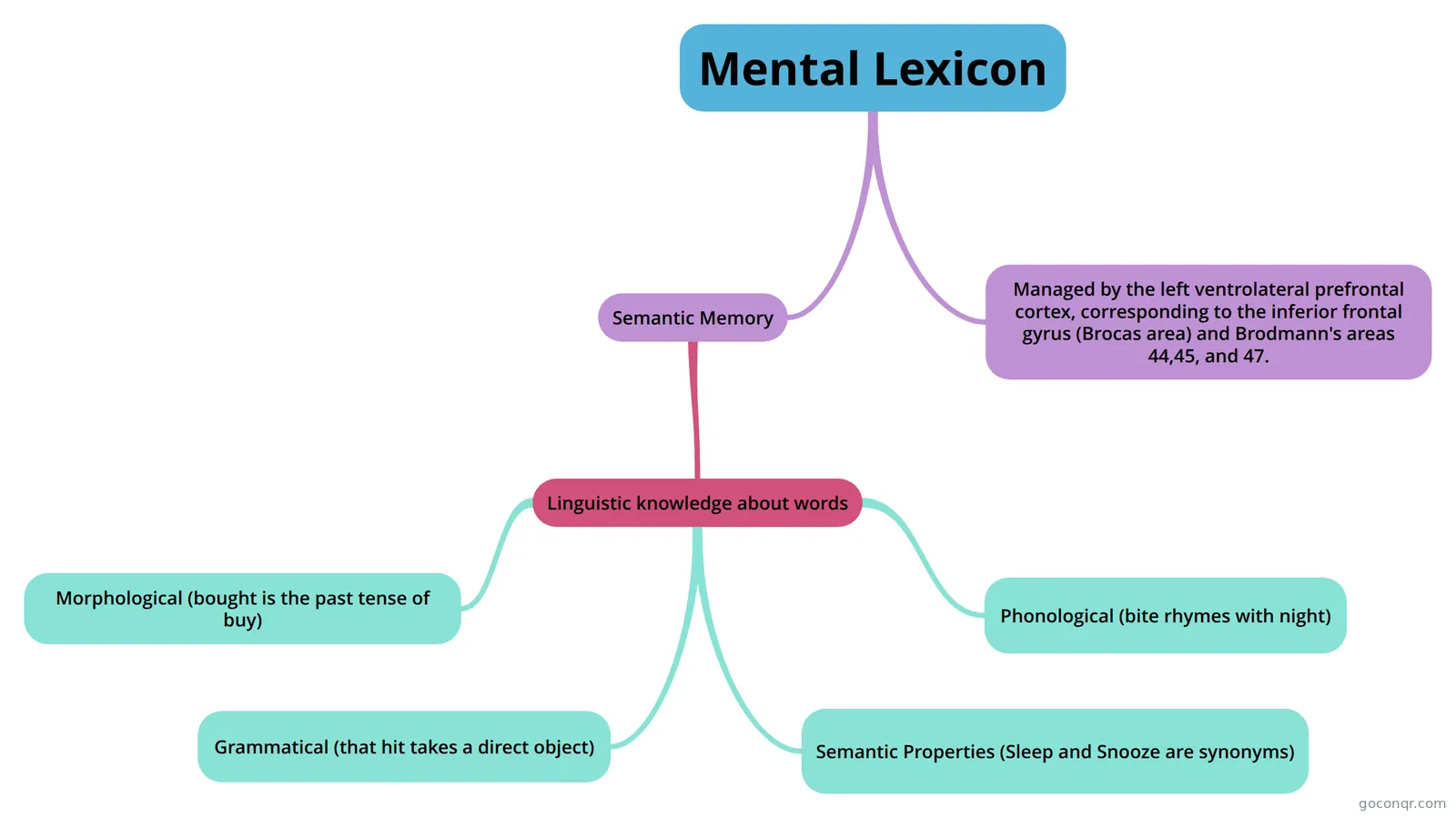 Mind map Mental Lexicon Mental Lexicon is our linguist knowledge
-
Mind map THE BRAIN the language process
-
10 cardsBilingualism shared memory hypothesis and how it is supported
-
7 cardsLinguistics What is the mental lexicon?
-
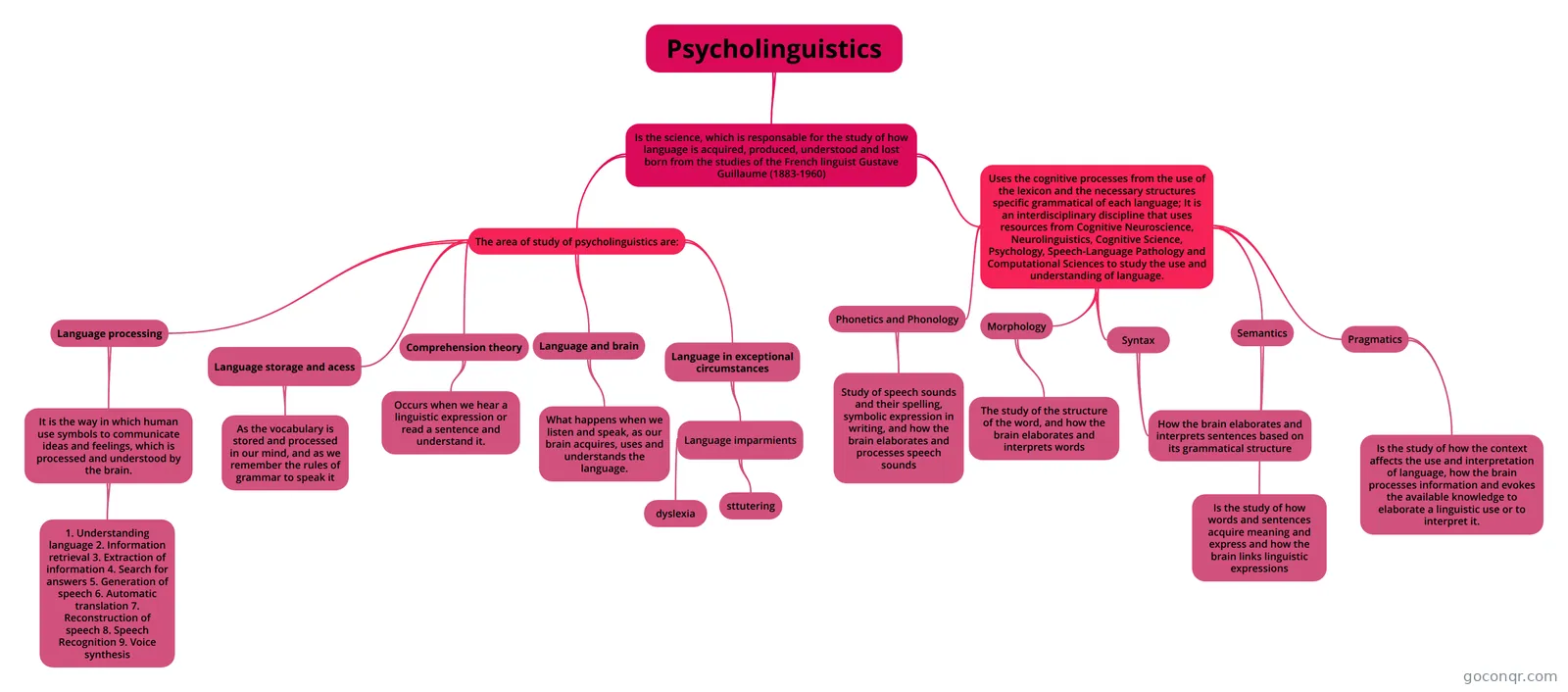 Mind map Psycholinguistics
Mind maps
See all 182 mind maps-
PSYCHOLINGUISTICS
-
PRODUCTION: putting words in one's mouth Mental map about production speech
-
PSYCOLINGUISTICS- Dana Damaris Garcia Mejia
-
Mental Lexicon Mental Lexicon is our linguist knowledge
-
THE BRAIN the language process
-
Psycholinguistics
-
The Origins of Language Mind Map origins of language
-
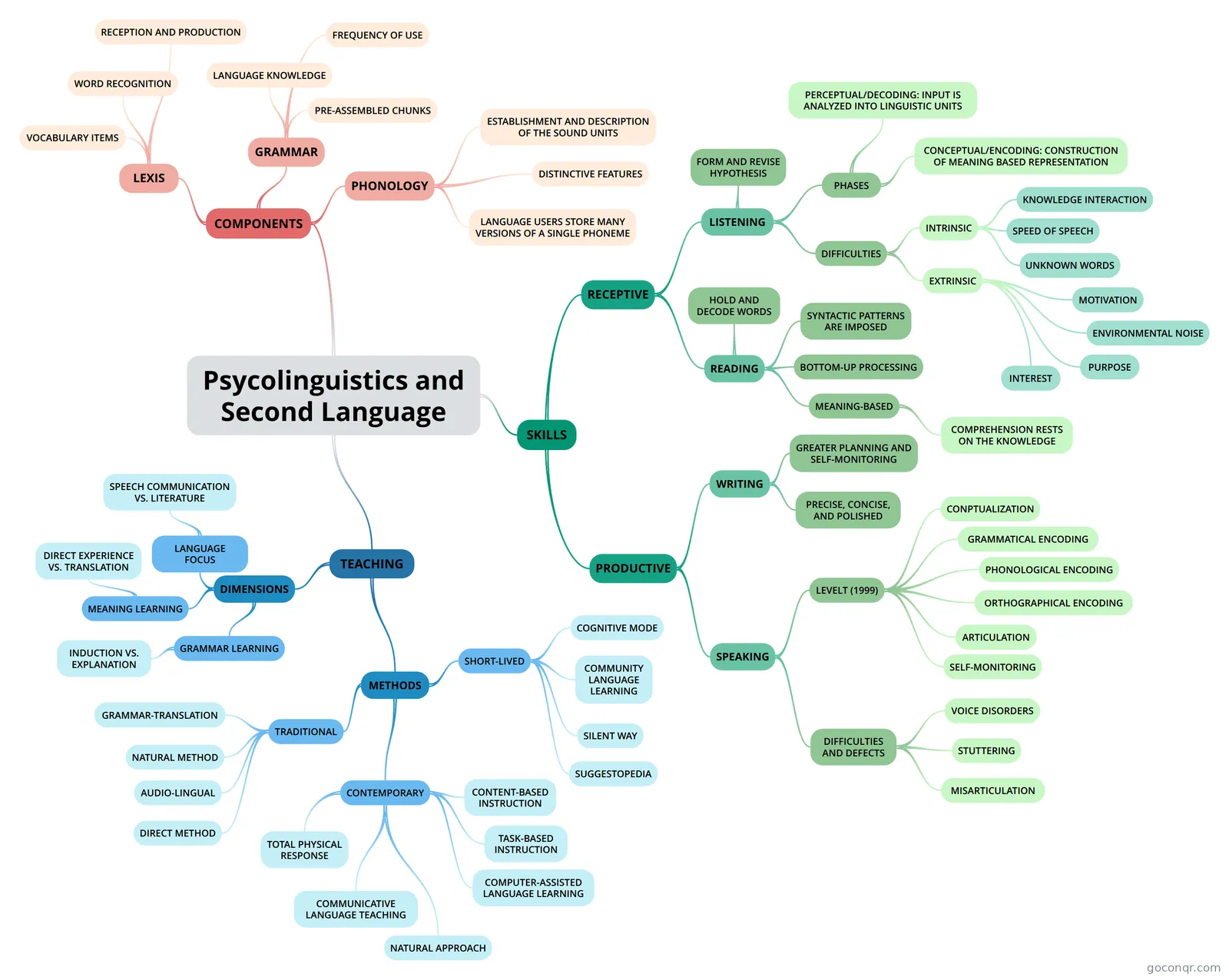 Psycolinguistics and Second Language Psycolinguistic analysis gave way to many findindigs: three components, four skills, and a great number of ...
Flashcards
See all 19 flashcardsSlides
Topics in Psycholinguistics and Neurolinguistics
More Linguistics and philology topics
About Psycholinguistics and Neurolinguistics
GoConqr OriginalWhat this unit covers
The resources here follow how people learn, understand and produce language, and how the brain supports it. The mind maps are the largest group, with more than 180 to browse, alongside flashcard decks, quizzes, flowcharts and a few notes and slide sets.
- Acquisition: the mind map called PSYCHOLINGUISTICS opens with Chomsky's 1965 claim that language is an innately acquired faculty. The slide set LANGUAGE ACQUISITION defines how humans come to perceive and understand language.
- Production: the map on putting words in one's mouth moves through the conceptualisation stage, formulation, slips of the tongue and priming. SPEECH PRODUCTION covers planning a message and moving the muscles to speak or sign.
- Words and sentences: Mental Lexicon sets out what we know about a word, whether phonological, morphological or grammatical. Language Processing - Linguistic Dependencies compares the garden path model with constraint-based models.
- Language and thought: Language and Thought and Nativism and thought ask how speech and ideas relate.
Where to start
Begin with the mind map PSYCHOLINGUISTICS for the overall picture, then read the LANGUAGE ACQUISITION slide set. Next, move to Mental Lexicon, then the production maps, then sentence processing. Leave language and thought until you have the basics.
Using quizzes and maps together
Read a map first, then test yourself. The quizzes here include Language Quiz, Psycholinguistics L1 and Auditory theory quiz. Note which questions you miss, go back to the matching map, and use the flashcard decks, such as the one on the mental lexicon, to fix the details in memory.
Where this fits
This unit sits in the Language, Mind and Acquisition strand of Linguistics and philology. It suits university-level study, and teachers can pull maps and decks straight into their own material.
Choose one map today, take a quiz, and see which topic to revisit next.
Frequently asked questions
Which resource should I open first?
Start with the mind map PSYCHOLINGUISTICS. It gives an overview and opens with language acquisition and Chomsky's argument that language is innate. After that, the LANGUAGE ACQUISITION slide set adds a clear definition, and you can then move on to the Mental Lexicon map.
What do the mind maps cover?
The maps cover acquisition, speech and language production, the mental lexicon, sentence comprehension, bilingualism, language loss and the brain. Some look at language and thought, including Nativism and thought. There are more than 180 in all, so you can pick the topic you need.
Are there quizzes to test myself?
Yes. There are a few quizzes, including Language Quiz, Psycholinguistics L1 and Auditory theory quiz. They work well after reading a map. Use your wrong answers to decide which map or flashcard deck to go back to.
Are the resources free, and who made them?
Every resource listed here is free to open, study and take, with no account needed. They were made by GoConqr users, not by GoConqr itself. A free account also saves your quiz scores and lets you make your own quizzes, mind maps, flashcards and notes.
What level are these resources?
They are aimed at university students, and teachers can use them as ready-made material. The topics range from basic definitions to models such as the garden path model and accounts of specific language impairment.
What if I cannot find my topic?
Try the flashcard decks and flowcharts as well as the maps, since titles vary. Topics like Sapir Whorf, attention and noticing, and Mandarin spoken word production are each covered by their own resource. If something is still missing, you can build your own.