
Historical Linguistics and Language Families
25 resources created by 24 users
This Historical Linguistics and Language Families page on GoConqr gathers community-made mind maps, flashcards, quizzes and notes, from language change terms and theorists to Proto-Indo-European roots and the Celtic languages. It's built for university students and professional candidates, school students, and teachers after ready-made material. There are over 240 resources here, including more than 190 mind maps and over 30 flashcard decks, made by more than 200 contributors. Pick a map, test yourself with a quiz, then make your own set.
Top Historical Linguistics and Language Families resources
-
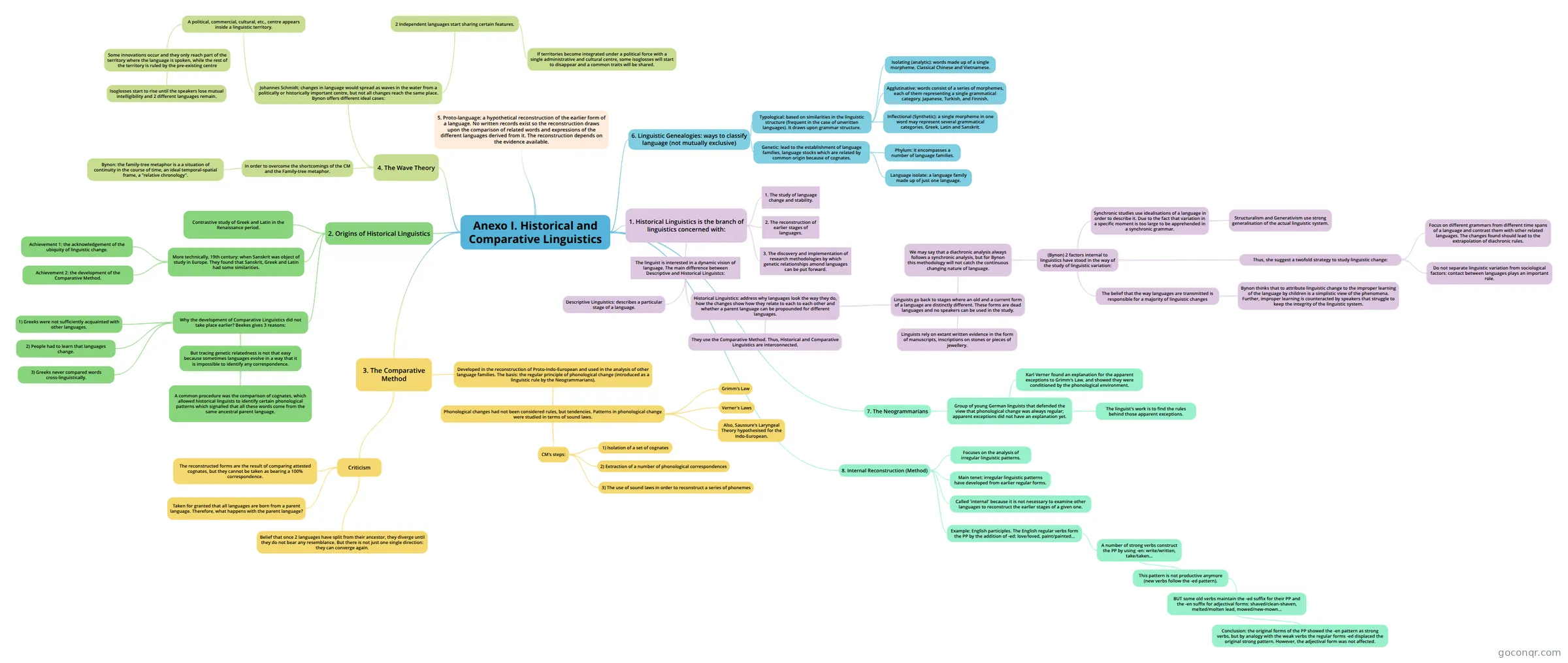 Mind map Anexo I. Historical and Comparative Linguistics Esquema del libro Diachrony and Typology of the English Language Through the Texts, by María del Carmen Gua...
-
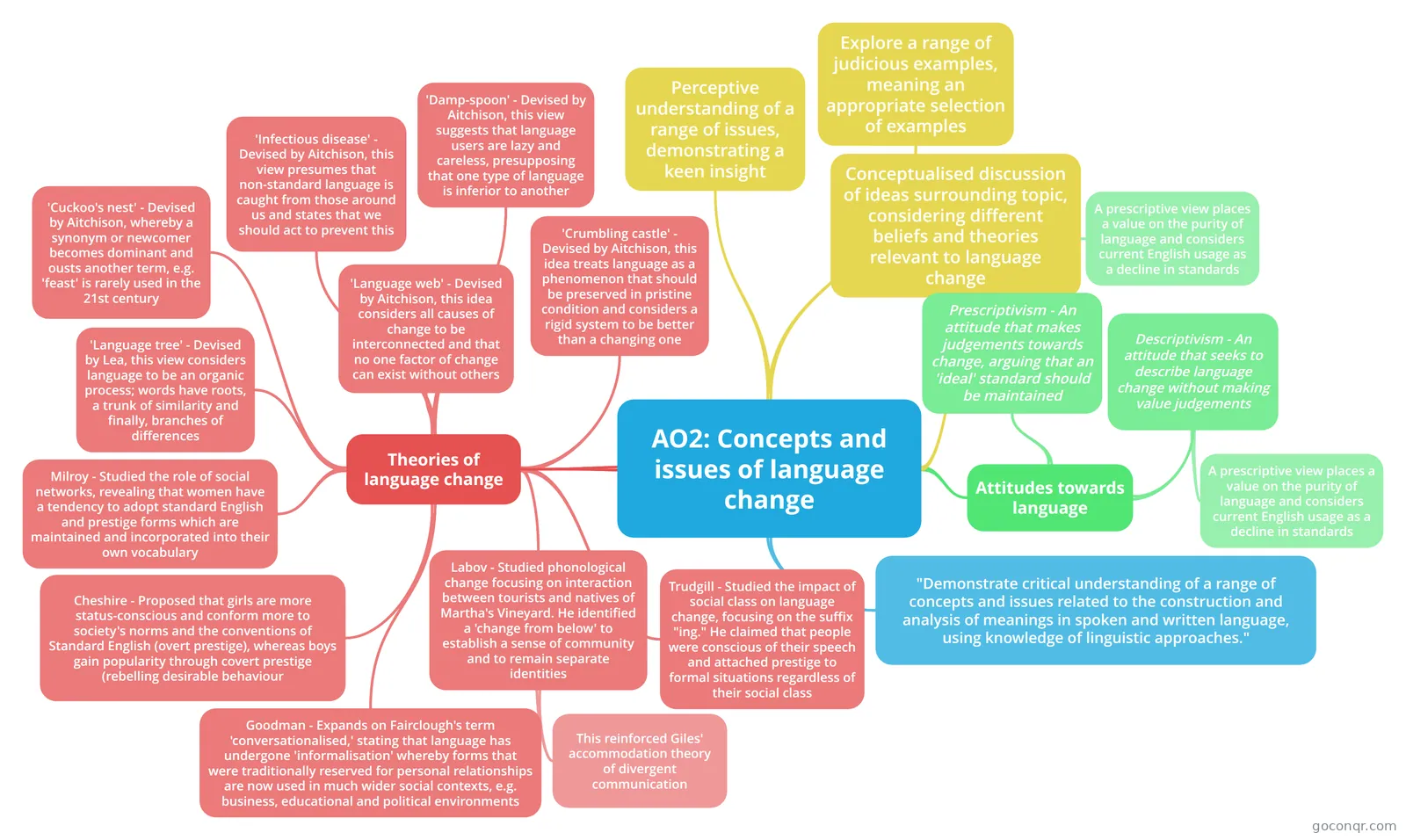 Mind map AO2: Concepts and issues of language change
-
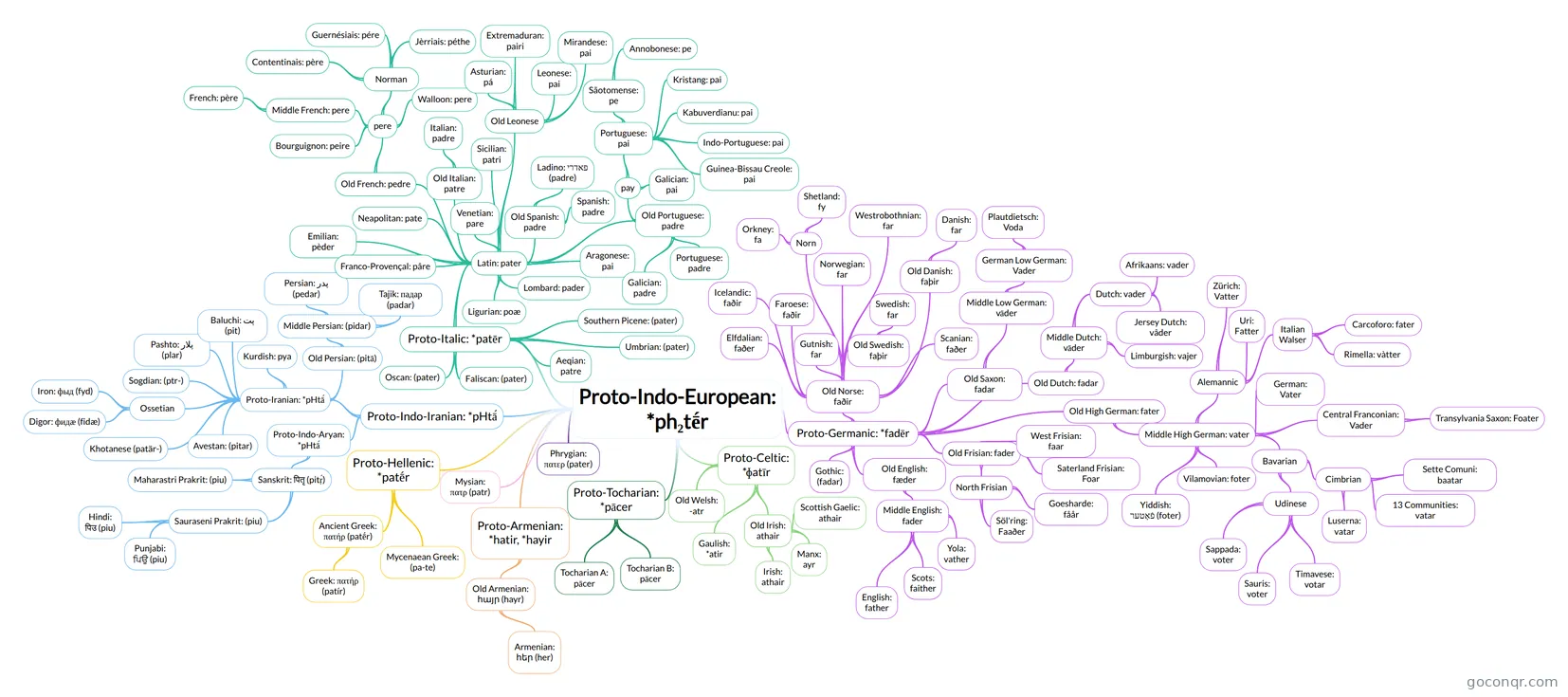 Mind map Proto-Indo-European: *ph₂tḗr Inherited descendants of Indo-European *ph₂tḗr "father".
-
 Mind map History of the English language
-
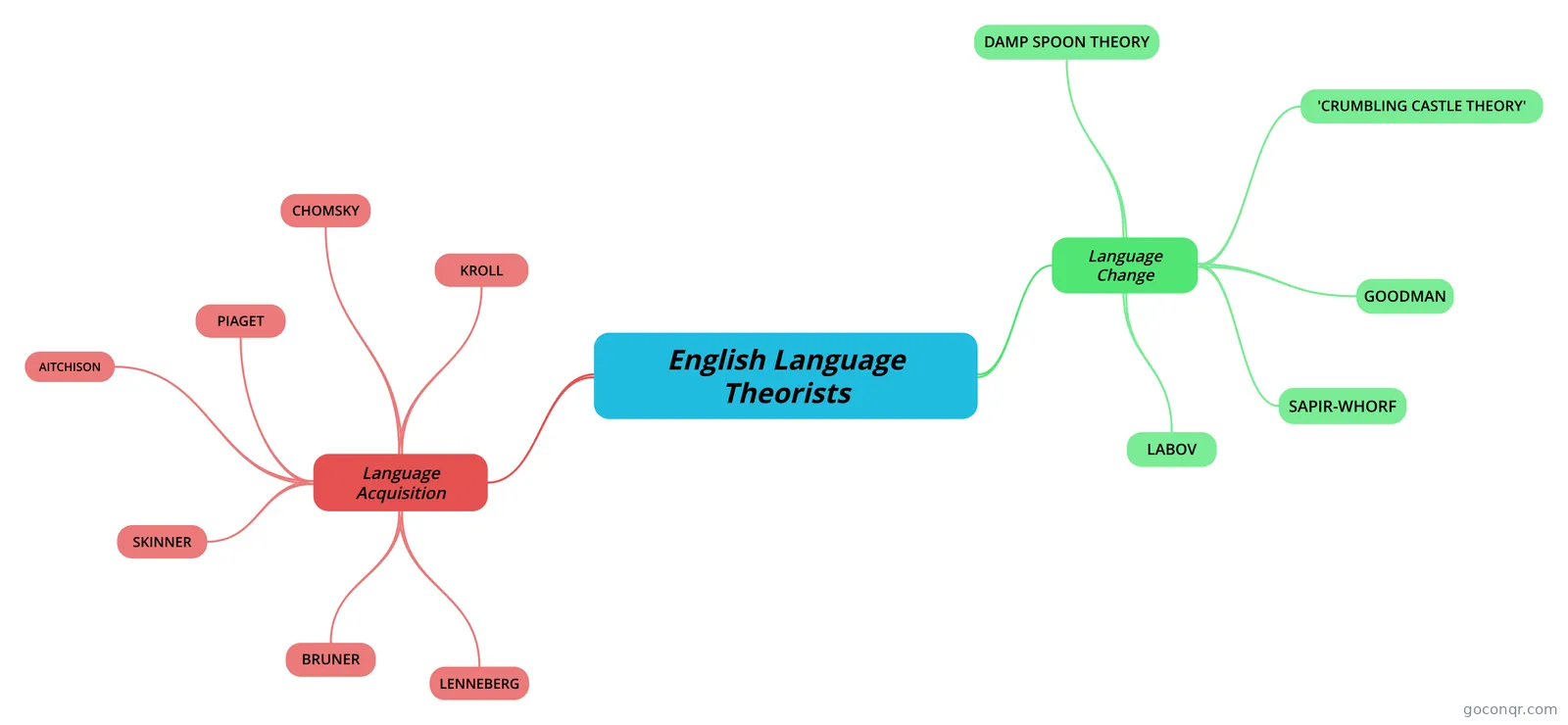 Mind map English Language Theorists
-
Mind map Language Change
-
Mind map The Indo-European languages
-
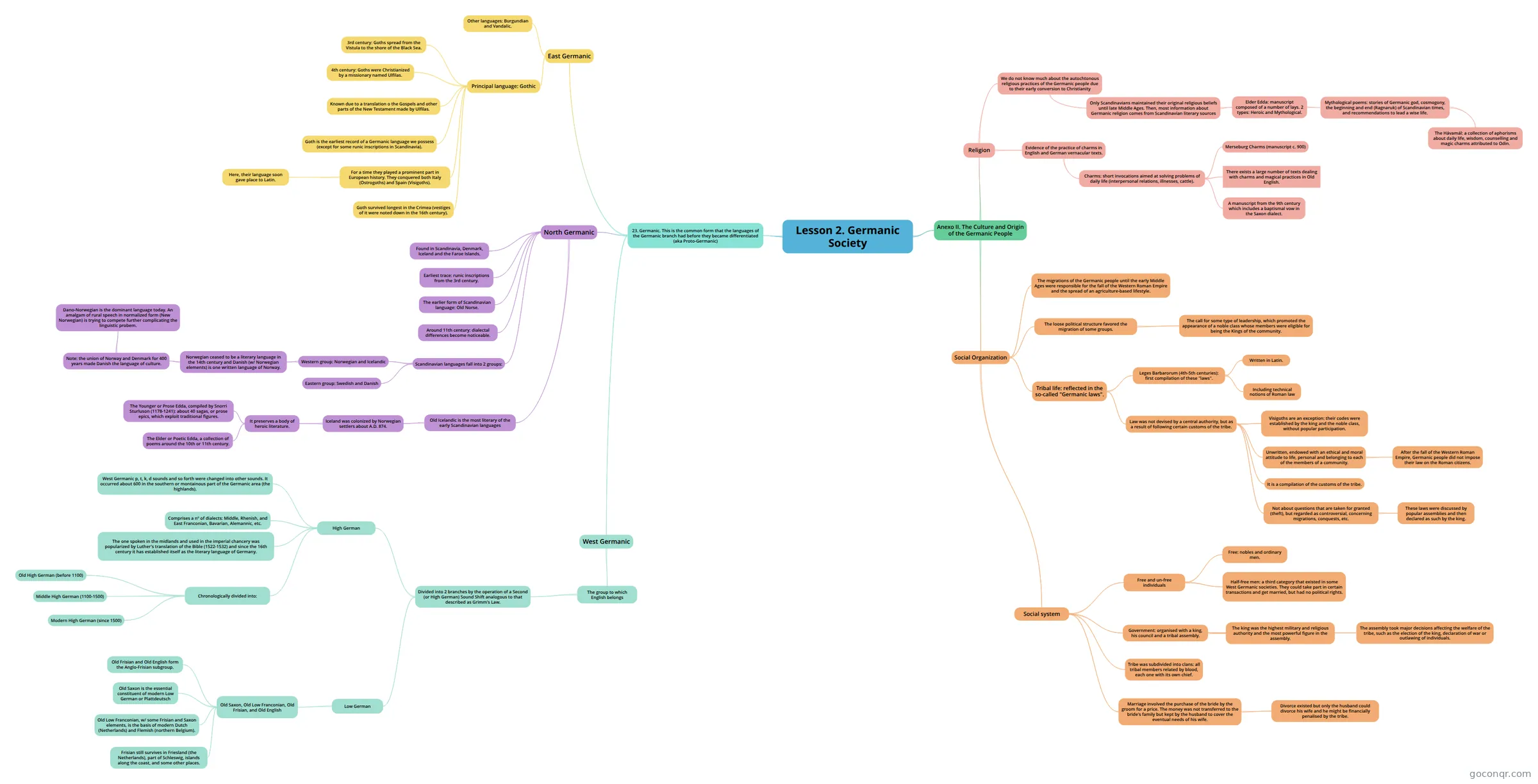 Mind map Lesson 2. Germanic Society Book: A History of the English Language, by Albert C. Baugh and Thomas Cable. Book: Diachrony and Typology ...
Quizzes
Mind maps
See all 17 mind maps-
Anexo I. Historical and Comparative Linguistics Esquema del libro Diachrony and Typology of the English Language Through the Texts, by María del Carmen Gua...
-
AO2: Concepts and issues of language change
-
Proto-Indo-European: *ph₂tḗr Inherited descendants of Indo-European *ph₂tḗr "father".
-
History of the English language
-
English Language Theorists
-
Language Change
-
The Indo-European languages
-
Lesson 2. Germanic Society Book: A History of the English Language, by Albert C. Baugh and Thomas Cable. Book: Diachrony and Typology ...
Flashcards
Notes
-
Language Change Activity Write Up (Completed) English Language B - Jun 2013 A2 Question: Language ChangeText E is an extract from a newspaper account of the testimony of Captain Thomas Preston, Commander of the British troops in Boston, America. In 1770, he was t...
-
Class Notes Hello According to the Oxford English Dictionary, hello is an alteration of hallo, hollo,[1] which came from Old High German "halâ, holâ, emphatic imperative of halôn,...
-
Indo-European languages The Indo-European languages are a family of related languages that today are widely spoken in the Americas, Europe. and also Western and Southern Asia. Indo-European languages are believed to derive from a hypothetica...
More Linguistics and philology topics
About Historical Linguistics and Language Families
GoConqr OriginalWhat the page covers
Most of the material here looks at how languages change and how they are related. The biggest group is language change itself: causes, attitudes, and the different kinds of change. You will find separate mind maps on Lexical Change, Semantic Change, Phonological Change and Onomastics, plus flashcard decks on grammatical and phonetic change.
Language families and origins
For the family side, look at the mind map on the Proto-Indo-European word for father, which traces *ph₂tḗr through Armenian, Celtic and other branches. The Celtic Languages mind map, the notes on Indo-European languages and the Etymology Root Word PIE Diagram flowchart sit alongside it. The History of the English language mind map starts with the tribes of Britain before 100 BC and works forward.
Where to start
- Begin with Anexo I. Historical and Comparative Linguistics. It defines the field as the study of language change and stability and the reconstruction of earlier stages.
- Move to a general map such as Language Change or Reasons for language change.
- Open the family maps, then the notes and flowcharts on Indo-European.
- Finish with the theory maps, such as English Language Theorists, which lists names like Chomsky, Labov and Aitchison, and the Crumbling Castle theory.
Using quizzes and maps together
Read a map first, then take the Language Change Terms quiz. It asks about amelioration, eponyms and the difference between prescriptivist and descriptivist attitudes. The matching flashcard deck covers terms such as archaism, blending, borrowing and clipping, so you can fix any gaps. Students working towards A-level English Language will also find the map on AO2: Concepts and issues of language change and a completed write-up of a language change question.
Where it fits
This unit belongs to the Historical Linguistics strand within Linguistics and philology. Choose one map that matches what you are studying today, work through it, and then try building your own flashcards from it.
Frequently asked questions
Which resource should I open first?
Start with the mind map Anexo I. Historical and Comparative Linguistics, or the flowchart and flashcards that share its topic. It sets out what historical linguistics is concerned with, including language change and reconstructing earlier stages. After that, move on to the general Language Change maps.
Is there a quiz on language change terms?
Yes. The Language Change Terms quiz asks about amelioration, naming an object after a person, and the difference between prescriptivist and descriptivist attitudes. A flashcard deck with the same title covers terms like archaism, blending, borrowing and clipping, which makes a good warm-up.
What do the language family resources cover?
They include a mind map following the Proto-Indo-European word for father into Armenian and Celtic languages, a Celtic Languages map, notes on Indo-European languages, an Etymology Root Word PIE Diagram flowchart and a flashcard deck on the Indo-European family.
Are these resources free, and who made them?
Every resource listed here is free to open, study and take, with no account needed. They were made by GoConqr users, not by GoConqr itself. A free account also saves your quiz scores and lets you make your own quizzes, maps, flashcards and notes.
Do any resources suit A-level English Language?
Yes. Resources mention A-level English Language, including the map on AO2 concepts and issues of language change, the English Language Theorists map and a completed language change write-up. Many other items are university-level, so check each resource's content before relying on it.
What if the topic I need is missing?
Try the neighbouring maps and decks, such as those on lexical, semantic or phonological change, since they often overlap. If a gap remains, you can make your own map or flashcards from your course notes and keep them for revision.