
Sociolinguistics and Language in Society
726 resources created by 509 users
This Sociolinguistics and Language in Society page on GoConqr gathers community-made quizzes, mind maps, flashcards, notes and slides, from code-switching and speech communities to language planning, pidgins and creoles. It's built for university students and professional candidates practising key terms and case studies, and for teachers after ready-made material. There are over 700 resources here, including more than 10 quizzes and over 500 mind maps, mostly at university level. Try a quiz to find your gaps, then build your own maps and flashcards.
Select topic
- Language, Culture and Identity44
- Speech Communities and Communication36
- Language Variation and Change71
- Dialects and Accents33
- Language and Social Class16
- Language, Gender and Age42
- Language Attitudes, Ideology and Power18
- Language Contact and Multilingualism48
- Code-Switching and Code-Mixing20
- Language Maintenance, Shift and Endangerment11
- Language Policy, Planning and Standardisation26
Top Sociolinguistics and Language in Society resources
-
10 questionsSociolinguistics Evaluation #1 It is a branch of Linguistics that studies how languages are related to society.
-
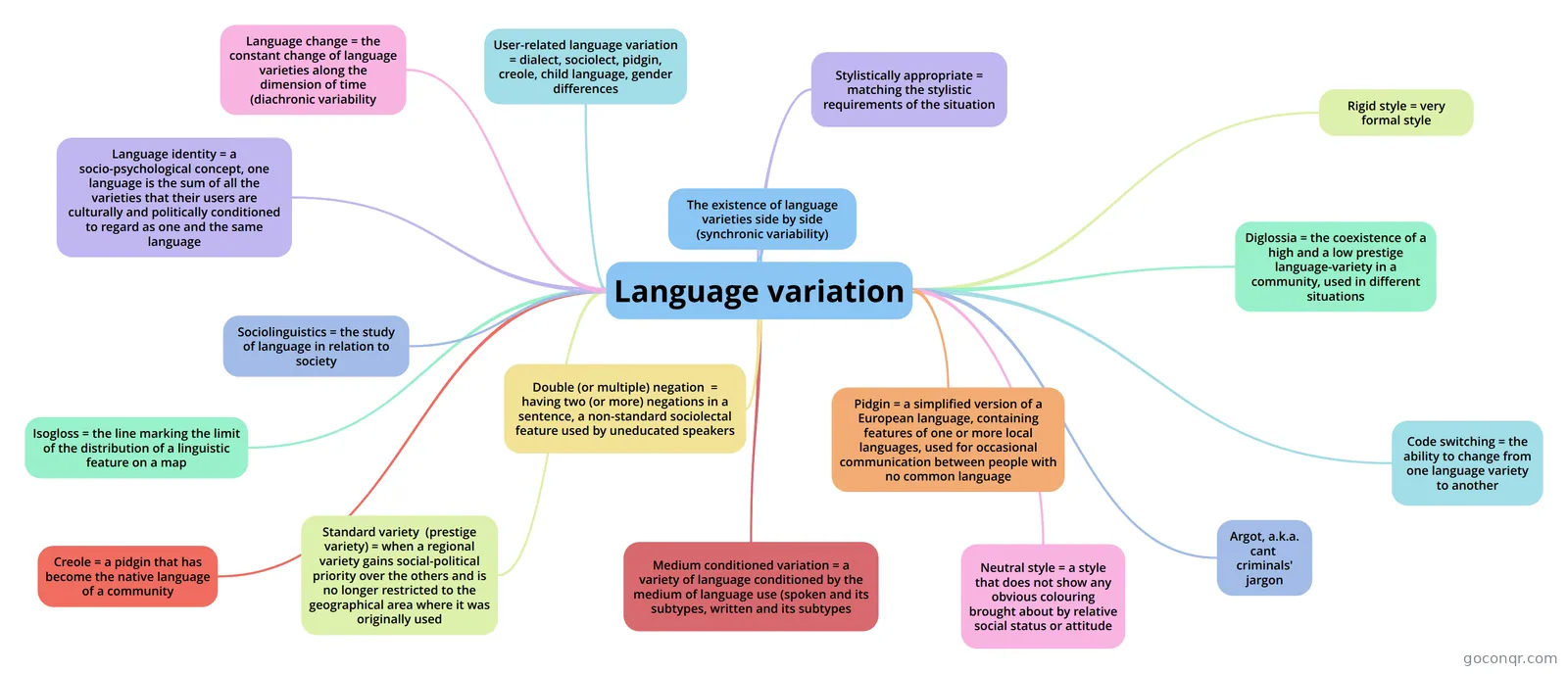 Mind map Language variation
-
Mind map Code-Switching Code-switching ( Code-mixing )
-
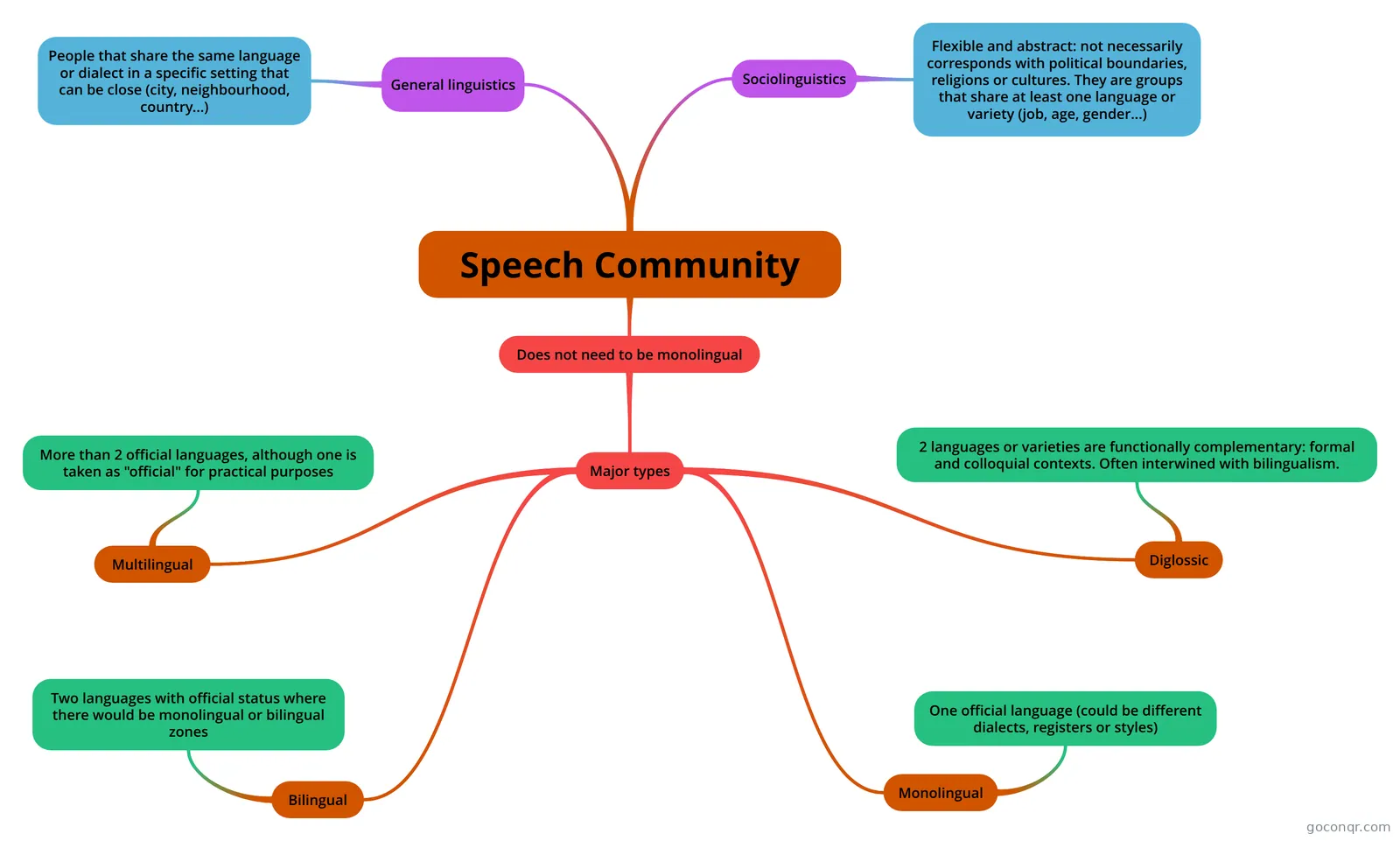 Mind map Speech Community Mind map about the definition of speech community and examples of it.
-
Mind map variation in speech sjjsjaa
-
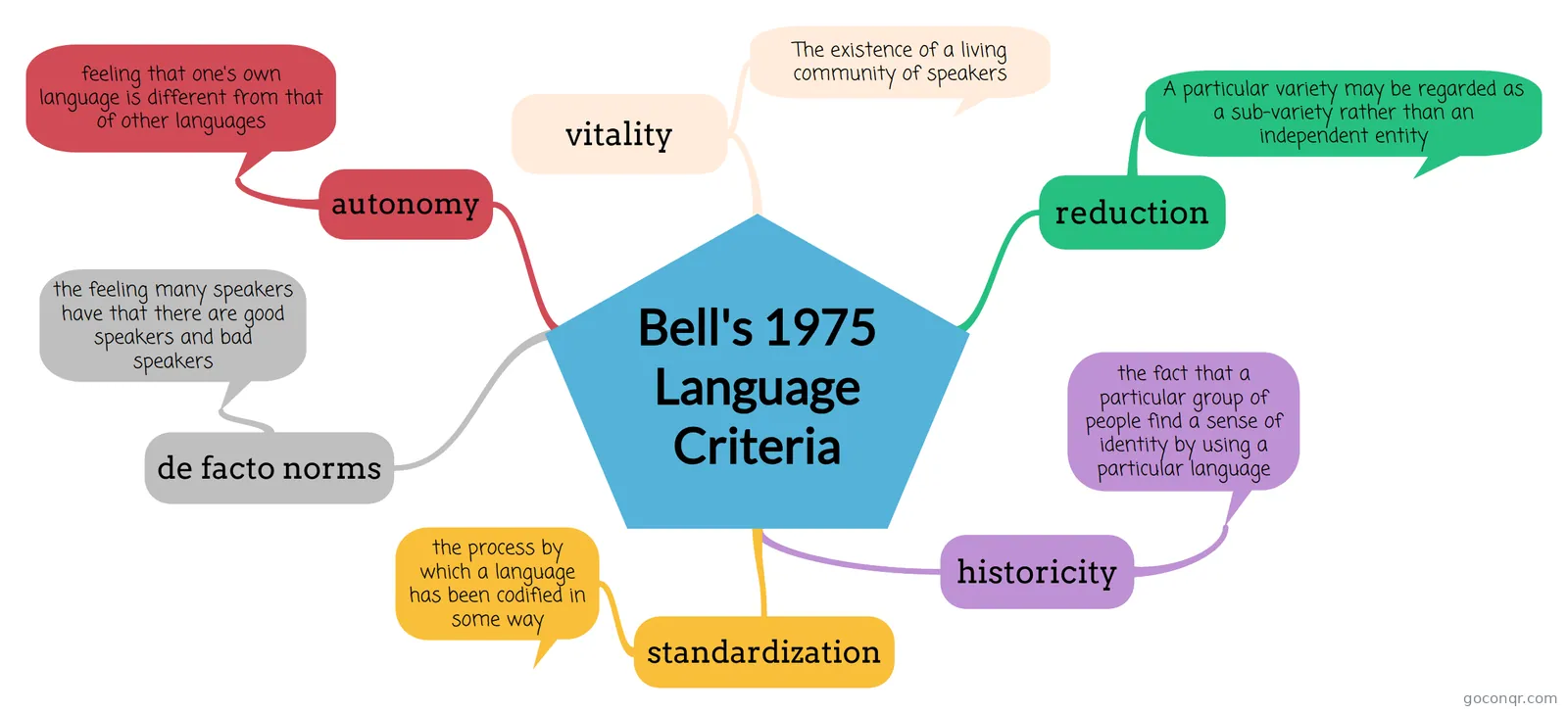 Mind map Bell's 1975 Language Criteria
-
5 cardsIntroduction to Sociolinguistics Linguistics is the study of?
-
Mind map sociolinguistics this new presentation its to learn about the language
Quizzes
See all 14 quizzes-
10 questionsSociolinguistics Evaluation #1 It is a branch of Linguistics that studies how languages are related to society.
-
20 questionsLinguistics Quiz If a student uses the word "ya'll" the word "ya'll" is considered a part of that student's accent not dialect.
-
9 questionsStrayan English Which sentence does NOT describe Australian English (AusE).
-
5 questionsS2 Positive face is the desire to do things the way you want to do them
Mind maps
See all 581 mind maps-
Language variation
-
Code-Switching Code-switching ( Code-mixing )
-
Speech Community Mind map about the definition of speech community and examples of it.
-
variation in speech sjjsjaa
-
Bell's 1975 Language Criteria
-
sociolinguistics this new presentation its to learn about the language
-
Social Linguistics Is the study of language in society and the study of variation in language
-
Lang. Virtual World Exam 1 Study content for the first exam.
Flashcards
See all 99 flashcards-
5 cardsIntroduction to Sociolinguistics Linguistics is the study of?
-
27 cardsMidsemester Flash 1 midsemester test euro2.1
-
7 cardsLING 2371 Final Exam (Researchers) Klofstad et al. (2014)
-
15 cardsChapter 1 Vocab Terms Explain the difference between 'Language' and 'Variety'
-
12 cardsLING 2371 Final Exam (Features) SVO word order
-
8 cardsLecture Four To import into Chap 2
-
9 cardsLING 2371 Final Exam (Cases) Cases that involved language discrimination
-
7 cardsLanguage and Gender What is a tag question?
Flowcharts
Notes
See all 17 notes-
Gardner-Chloros: Code-Switching Gardner-Chloros: Switch ReferenceIntroduction1. What is code-switching (CS)?- mixed discourse / mixed language speech / mixed codes- way of expressing group identity (characteristic accent)- sociolinguistic environmen...
-
The difference between good politicians, and bad politicians resources https://osf.io/mk5dv/ - analysing how they each construct language to persuade etc. https://repositorio.comillas.edu/xmlui/bitstream/handle/11531/46892/TFG%20-%20Comesana%20Perez%2C%20Andrea.pdf?sequen...
Slides
Topics in Sociolinguistics and Language in Society
More Linguistics and philology topics
About Sociolinguistics and Language in Society
GoConqr OriginalWhat the page covers
The unit brings together material on how language varies across people, places and groups. Several mind maps set out the basics. Speech Community describes groups that share at least one language variety and are not tied to political boundaries. Language variation separates variation at one point in time from change over time. Bell's 1975 Language Criteria lists standardisation, vitality, historicity, autonomy, reduction and de facto norms.
Where to start
Begin with the flashcard deck Introduction to Sociolinguistics. It asks what sociolinguistics is, what it is concerned with, and what the social factors and dimensions are. Then open the mind maps called Sociolinguistics and variation in speech, which cover repertoires, dialects and language in its geographical and social setting.
Going deeper
Once the terms feel familiar, follow a theme. For bilingual speech, try the Code-Switching mind map, which gives a mixed Arabic and English example. For social groups, look at the resources on gender, age, ethnicity and social class. For policy, there are maps on language planning, including status and corpus planning in France and Quebec. Labov's New York department store study also has its own map.
Using quizzes and maps together
- Read a mind map on one topic.
- Take a quiz such as Sociolinguistics quiz to see what stuck.
- Go back to the map for the points you missed.
- Drill the terms with a flashcard deck.
Teachers can use the slide sets, such as the ones on Robin Lakoff and on social groups theorists, alongside the maps.
Where it sits
This unit belongs to the Language in Society strand of Linguistics and philology. Choose one topic that you find hardest, open its map and see how far you get.
Frequently asked questions
Which resource should I open first?
Start with the flashcard deck Introduction to Sociolinguistics. It covers what sociolinguistics is, what it is concerned with, and the social factors and dimensions. After that, the Sociolinguistics mind map gives a visual overview of speech communities, repertoires and language varieties.
What do the mind maps cover?
The mind maps cover speech communities, language variation, code-switching, dialects, gender and age, ethnicity, language and power, pidgins and creoles, language maintenance and shift, and language planning. There are also maps on single studies, such as Labov's New York department store study.
Are the resources free to use?
Yes. Every resource on this page is free to open, study and take, with no account needed. A free account also saves your quiz scores and lets you make your own quizzes, mind maps, flashcards and notes.
Who made these resources?
They were made by GoConqr users, not by GoConqr itself. Over 400 contributors have added quizzes, maps, flashcards, notes, slides and flowcharts, so styles and depth vary. Check a resource against your own course materials before relying on it.
Which levels is this page suited to?
Most of the resources are at university level, so the page suits university students and professional candidates best. Teachers can also use it to find ready-made maps, slides and flashcards to share with a class.
What if my topic is missing?
Look through related maps and flashcard decks first, since topics like language and culture or language choice often overlap. If nothing fits, you can make your own mind map, flashcards or quiz with a free account and build the topic yourself.