
Translation Theory and History
48 resources created by 35 users
This Translation Theory and History page on GoConqr gathers community-made mind maps, flashcards, flowcharts, notes and a slide set, from translation techniques and equivalence to the translator's role in the 21st century. It's built for university students working through the theory, and for teachers after ready-made material. There are over 600 resources here, including more than 600 mind maps and 7 flashcards, almost all at university level. Open a map that matches your reading, then make your own notes alongside it.
Top Translation Theory and History resources
-
Mind map Translation Techniques Hi everyone, Below, you will find a mind map about the differences between the concepts of translation proc...
-
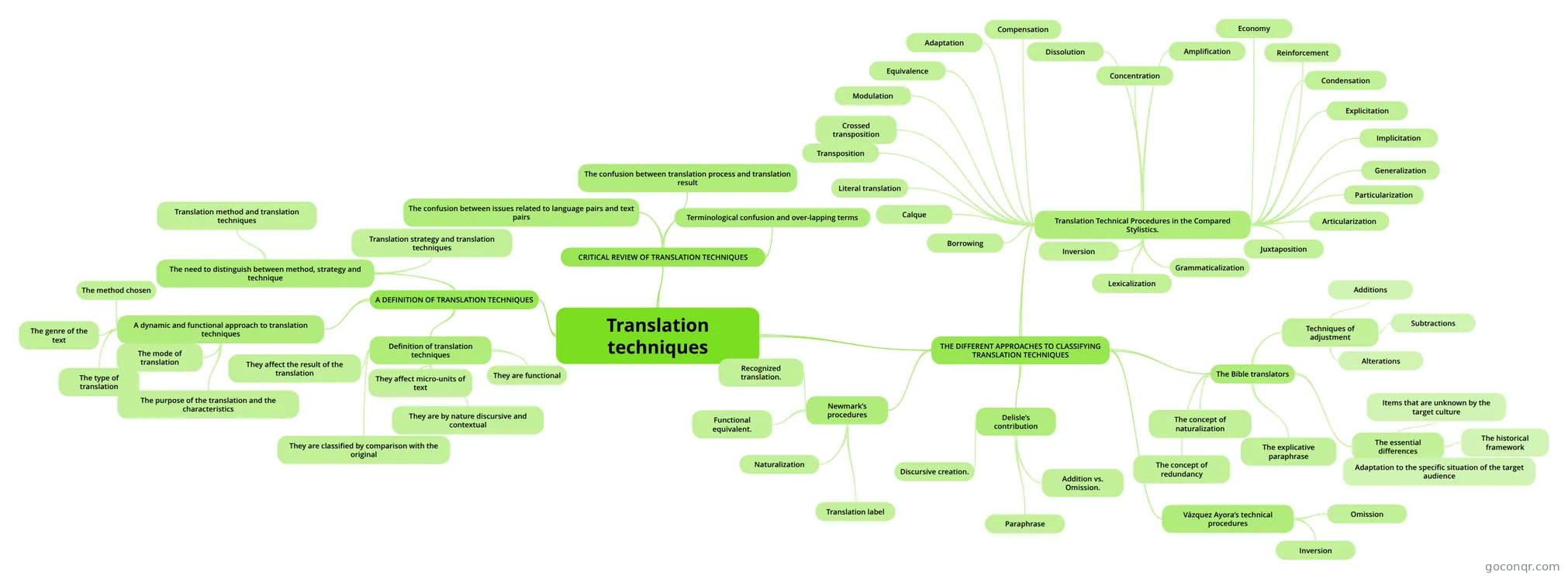 Mind map Translation techniques
-
Mind map Differences Between Translation Procedures, Strategies, Methods and Translation techniques
-
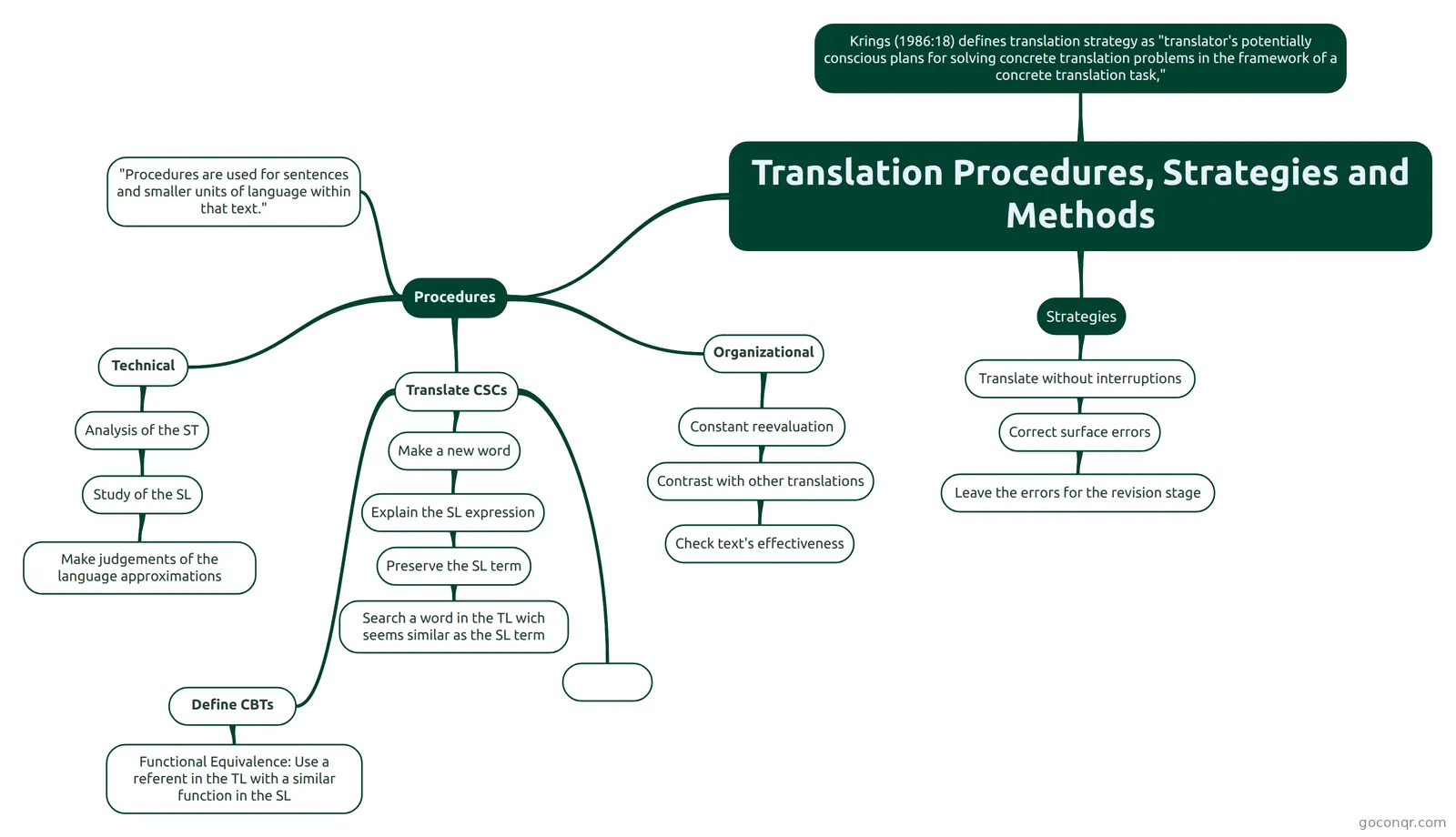 Mind map Translation Procedures, Strategies and Methods
-
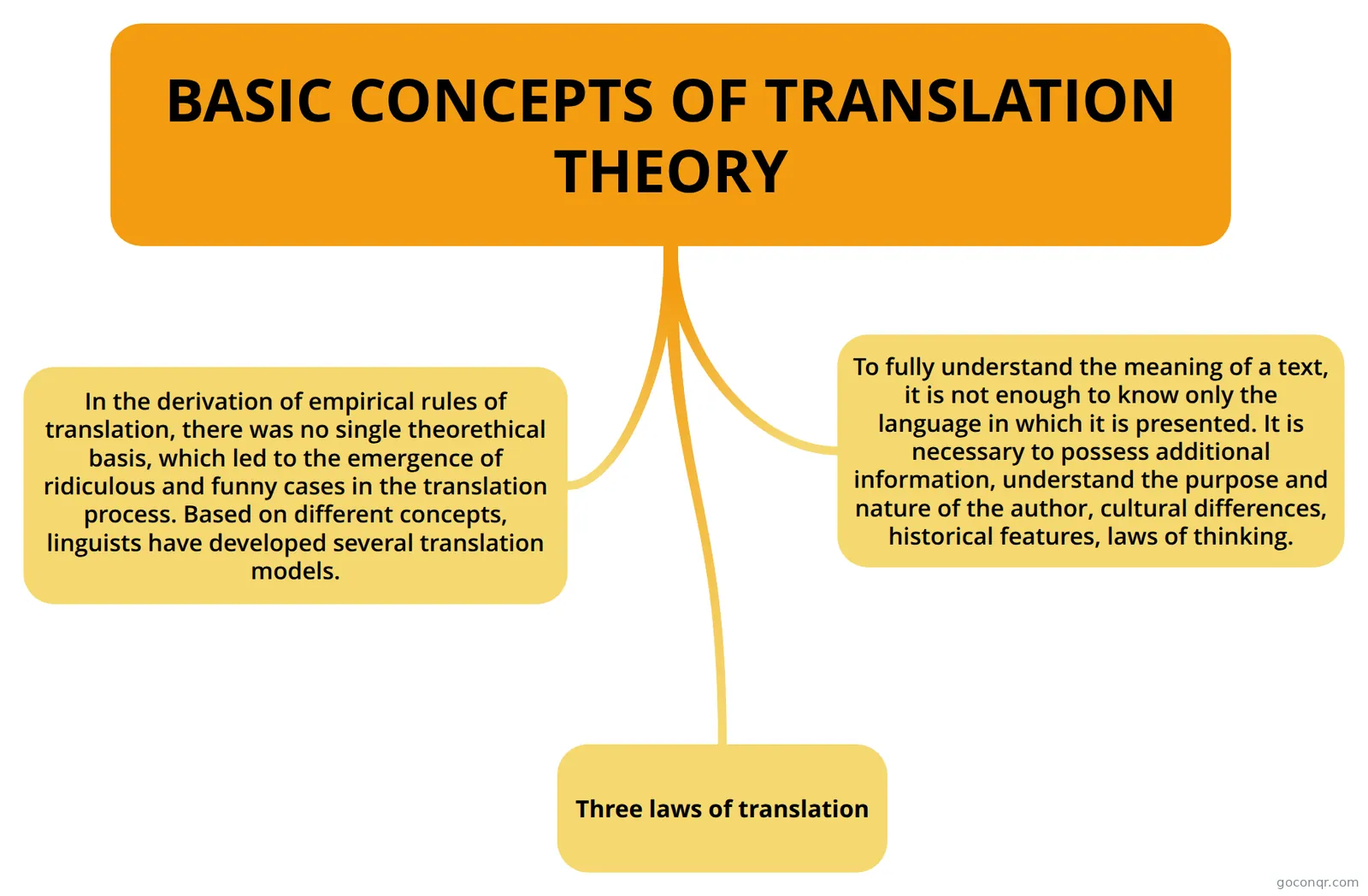 Mind map BASIC CONCEPTS OF TRANSLATION THEORY
-
Mind map The translator’s role in the 21st century. Theoretical issues. Poner en práctica medidas para erradicar la pobreza, para que las personas puedan lograr obtener recursos y...
-
Mind map Equivalence in translation Made by: Alejandro Moreno, Carol Cubillos and Nicole Pulgarín.
-
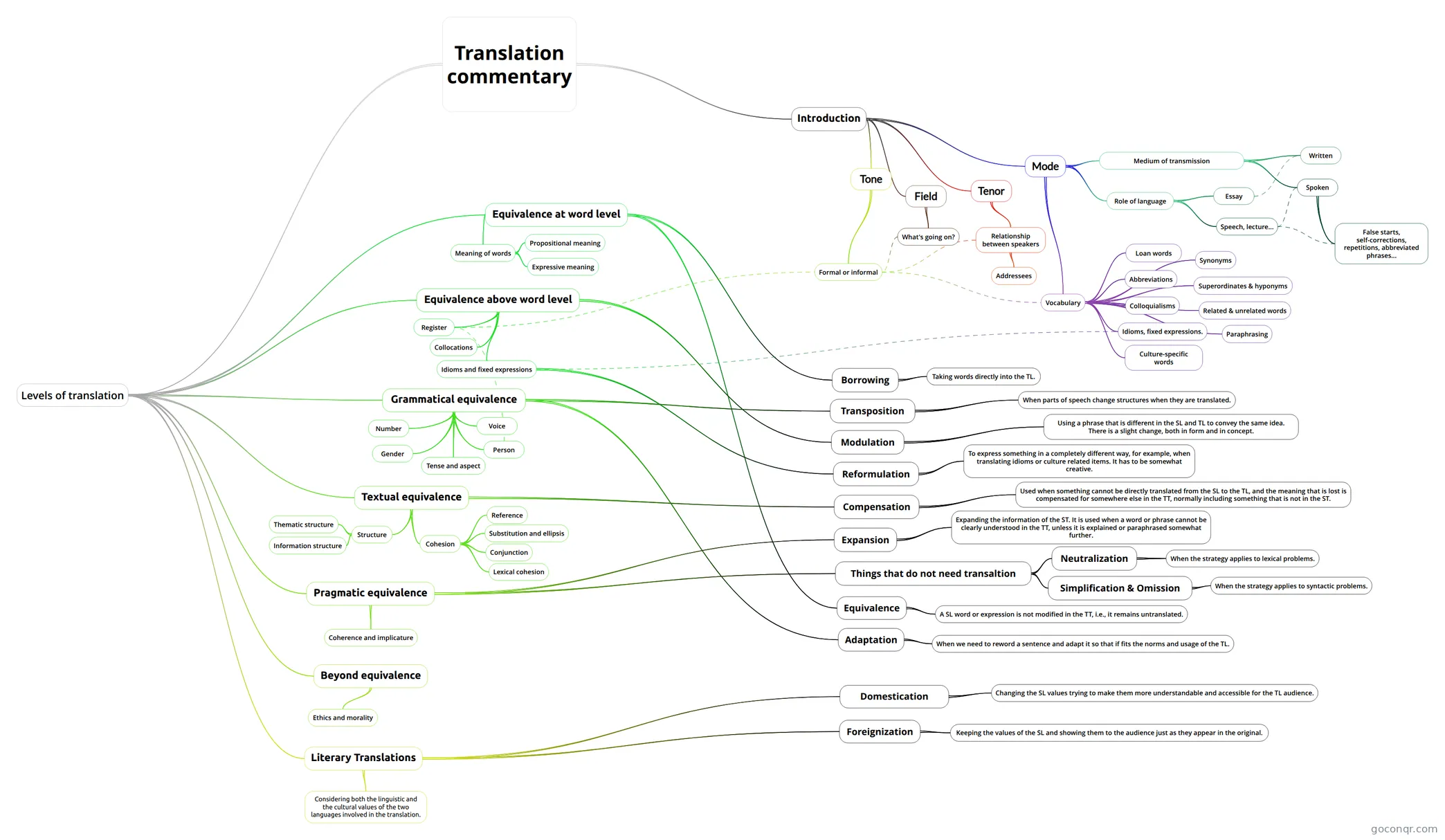 Mind map Translation commentary
Mind maps
See all 44 mind maps-
Translation Techniques Hi everyone, Below, you will find a mind map about the differences between the concepts of translation proc...
-
Translation techniques
-
Differences Between Translation Procedures, Strategies, Methods and Translation techniques
-
Translation Procedures, Strategies and Methods
-
BASIC CONCEPTS OF TRANSLATION THEORY
-
The translator’s role in the 21st century. Theoretical issues. Poner en práctica medidas para erradicar la pobreza, para que las personas puedan lograr obtener recursos y...
-
Equivalence in translation Made by: Alejandro Moreno, Carol Cubillos and Nicole Pulgarín.
-
Translation commentary
Flowcharts
More Linguistics and philology topics
About Translation Theory and History
GoConqr OriginalWhat this unit covers
The page is mostly mind maps, and many of them deal with how translators work. Several compare procedures, strategies, methods and techniques. The map called Translation Procedures, Strategies and Methods quotes Krings's definition of a translation strategy. Another, Differences Between Translation Procedures, Strategies, Methods and Translation techniques, draws on Newmark's distinction between methods and techniques.
Theory and concepts
For the wider ideas, look at Equivalence in translation, which sets formal equivalence beside dynamic equivalence. The map BASIC CONCEPTS OF TRANSLATION THEORY looks at why early rules of thumb lacked a single theoretical basis. There is also a slide set, Eugene Nida - Principles of Correspondance, and a flowchart simply titled Eugene Nida. A further map covers Toury's law of interference in genre-controlled multilingual corpora.
The translator and the profession
Some maps look at the person doing the work. The translator's role in the 21st century is described as more complex because of cultural sensitivity and ethical dilemmas. Other titles cover the status of interpreters and translators, Translation vs. Interpretation and the scientific and technical translation scene in Spain. Flashcards such as Cultural turn and The Myth of Literal Translation give short, focused review.
Where to start
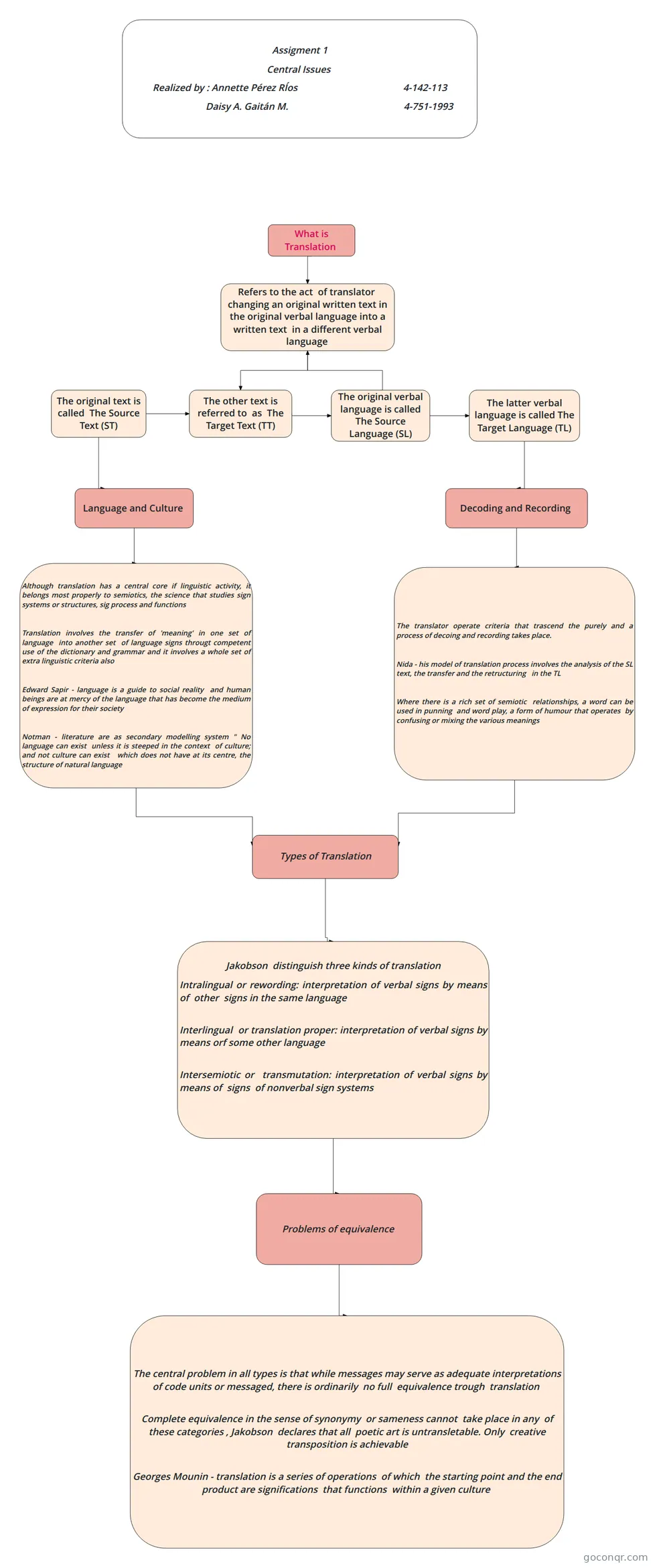
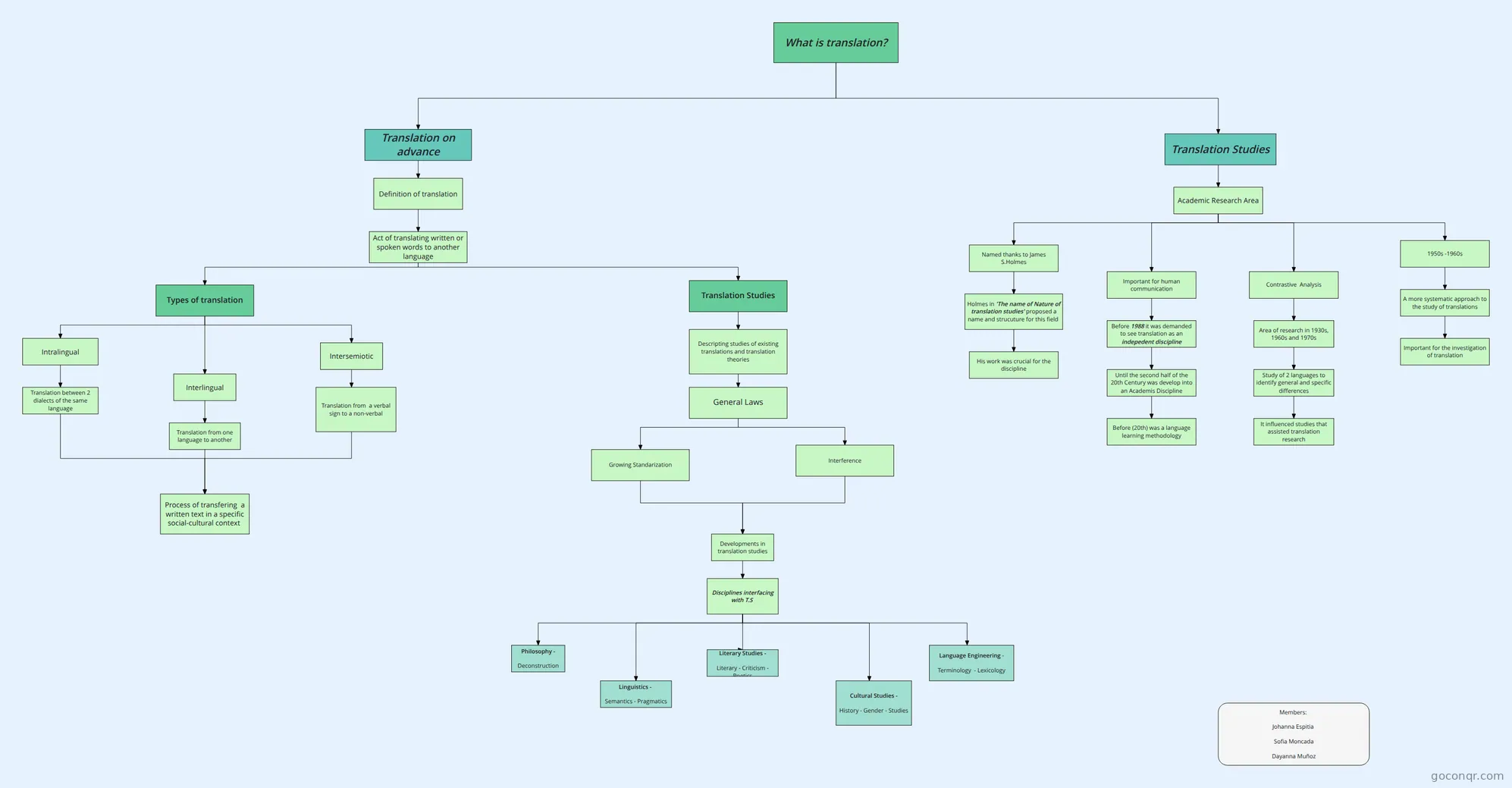
- Begin with a general map such as Introduction to translation or What is translation?.
- Move to the techniques and strategies maps, and compare how different authors classify them.
- Read the equivalence and Nida material next.
- Finish with the translator's role and status maps, then test yourself with the flashcards.
How it fits
This unit sits in the Translation and Interpreting strand of Linguistics and philology. Maps work well for seeing how terms relate, and flashcards help you recall the definitions. Teachers can set a map as a reading companion and ask students to compare two of them.
Pick one map today, read it through, then build your own version in your own words.
Frequently asked questions
Which resource should I open first?
Start with a broad map such as Introduction to translation or What is translation?. They set out the basic terms. After that, move on to the maps on translation techniques, strategies and methods, which make up a large share of this page.
What do the mind maps cover?
They cover techniques, procedures, strategies and methods, equivalence, models and approaches to translation, and Toury's law of interference. Others look at the translator's role, the status of interpreters and translators, and translation versus interpretation. Most are written at university level.
Are there quizzes on this page?
No, this page has no quizzes. It offers over 600 mind maps, a small set of flashcards, plus flowcharts, notes and a slide set. To test yourself, use the flashcard decks such as Cultural turn or Conceptos de traductología.
Are the resources free, and who made them?
Yes. Every resource listed here is free to open and study with no account. They were made by GoConqr users, not by GoConqr itself. A free account also lets you save quiz scores and create your own maps, flashcards and notes.
Who is this page for?
It suits university students studying translation theory and teachers looking for ready-made material. Almost all the resources are at university level, so they work best for study of concepts such as equivalence, techniques and the translator's role.
Is there anything on Eugene Nida?
Yes. The slide set Eugene Nida - Principles of Correspondance and a flowchart called Eugene Nida are both listed. Pair them with the Equivalence in translation map, which sets formal equivalence beside dynamic equivalence.