
Evolutionary Psychology
155 resources created by 119 users
This Evolutionary Psychology page on GoConqr gathers community-made mind maps, flashcards, quizzes and notes, from natural selection and sexual selection to parental investment, aggression and group display. It's built for university students and professional candidates, school students, and teachers after ready-made material. There are over 150 resources here, including more than 10 quizzes and over 70 mind maps, and they run from A-level Psychology topics to lecture-style university revision. Pick a topic, try a quiz to find your gaps, then make your own set.
Top Evolutionary Psychology resources
-
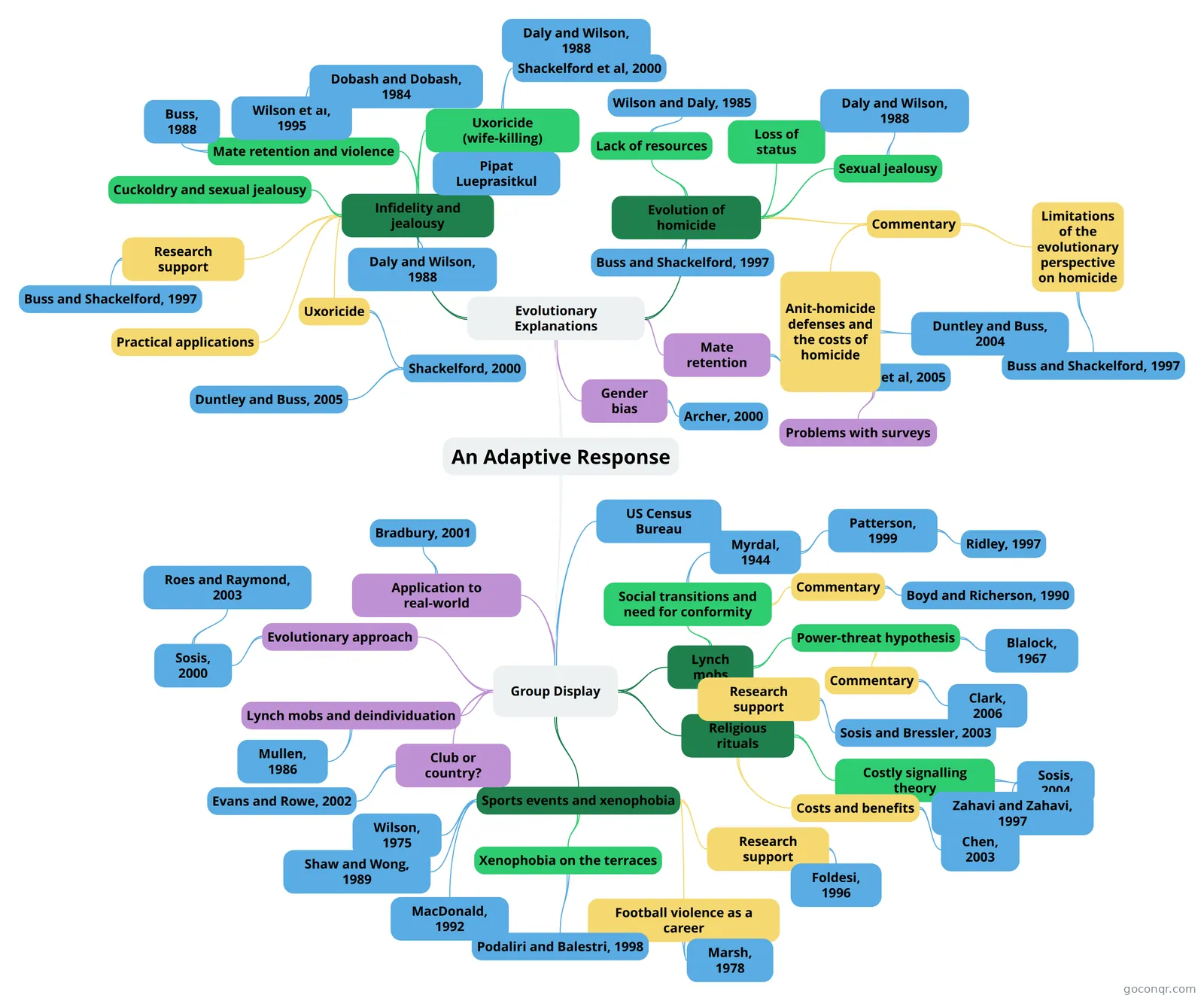 Mind map An Adaptive Response Done
-
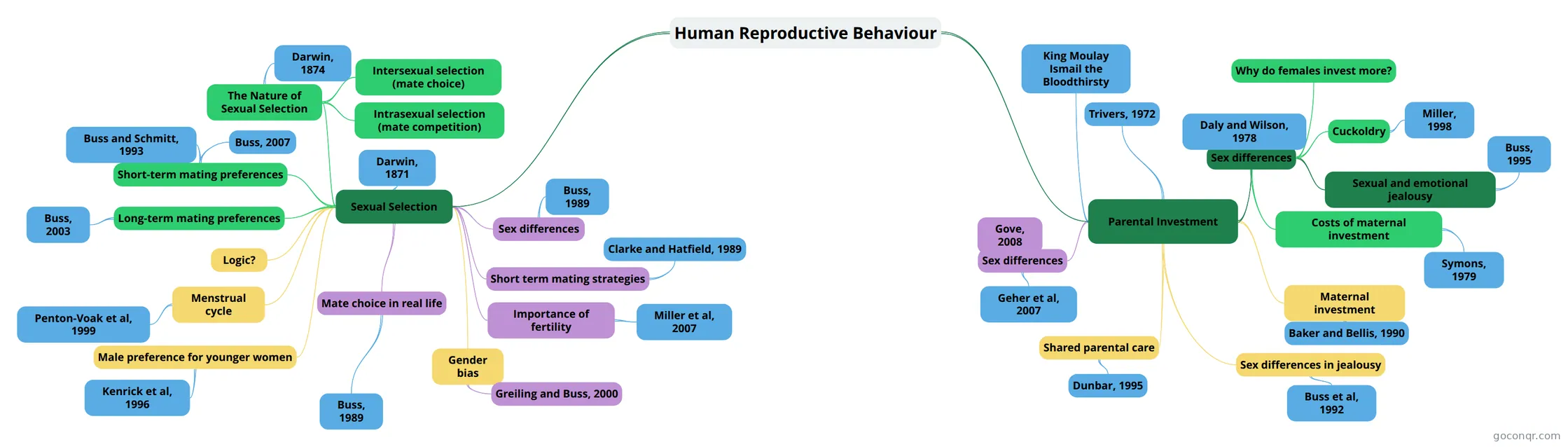 Mind map Human Reproductive Behaviour Done
-
51 cardsBuss What is sexual selection?
-
39 questionsmate selection and retention The medium mate distance in the US is what distance?
-
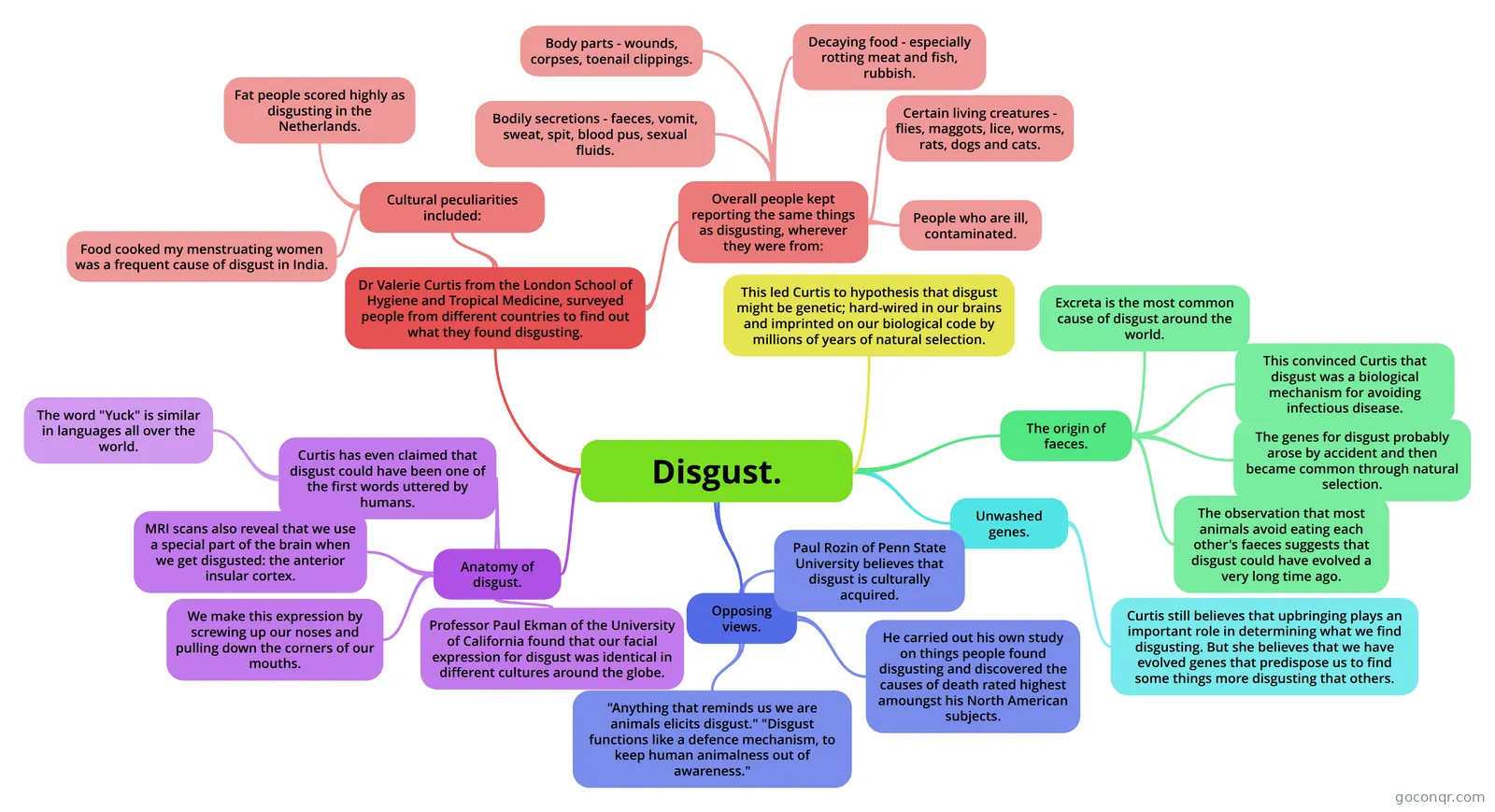 Mind map Disgust.
-
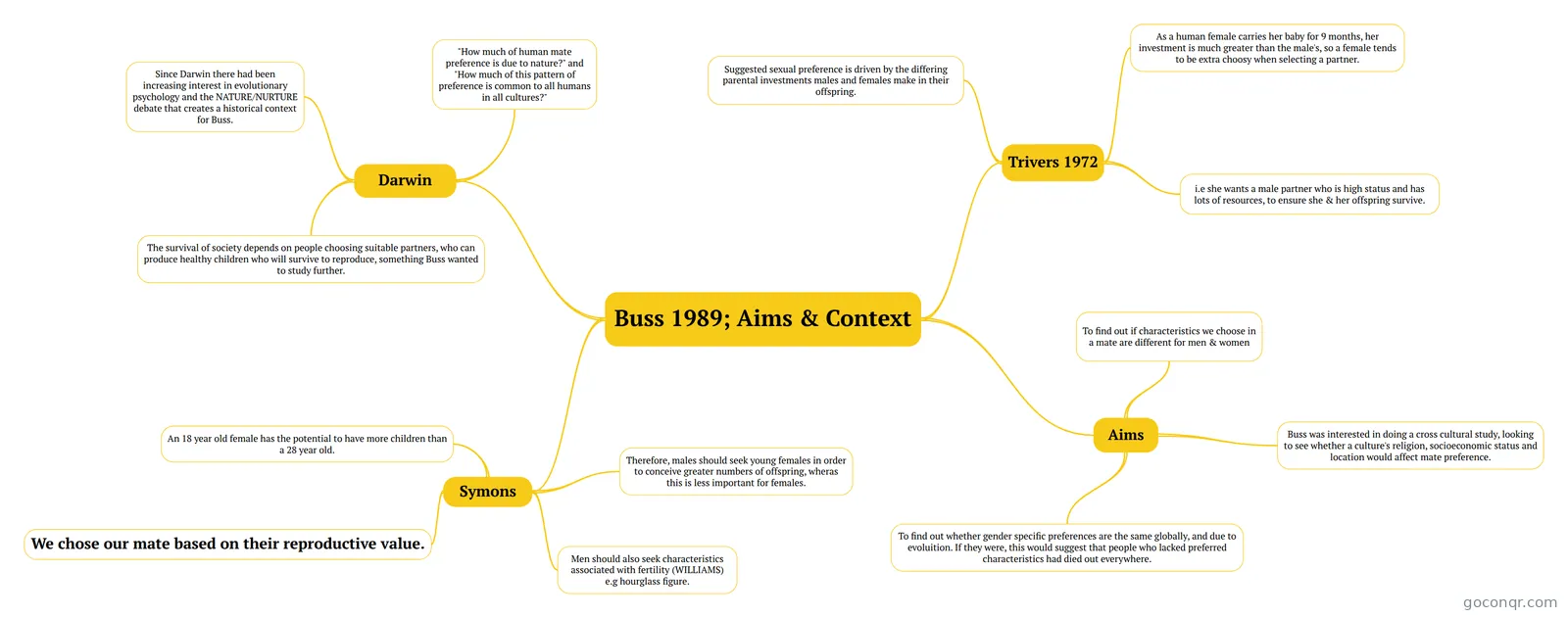 Mind map Buss 1989; Aims & Context
-
11 cardsProcedures Gardner and Gardner
-
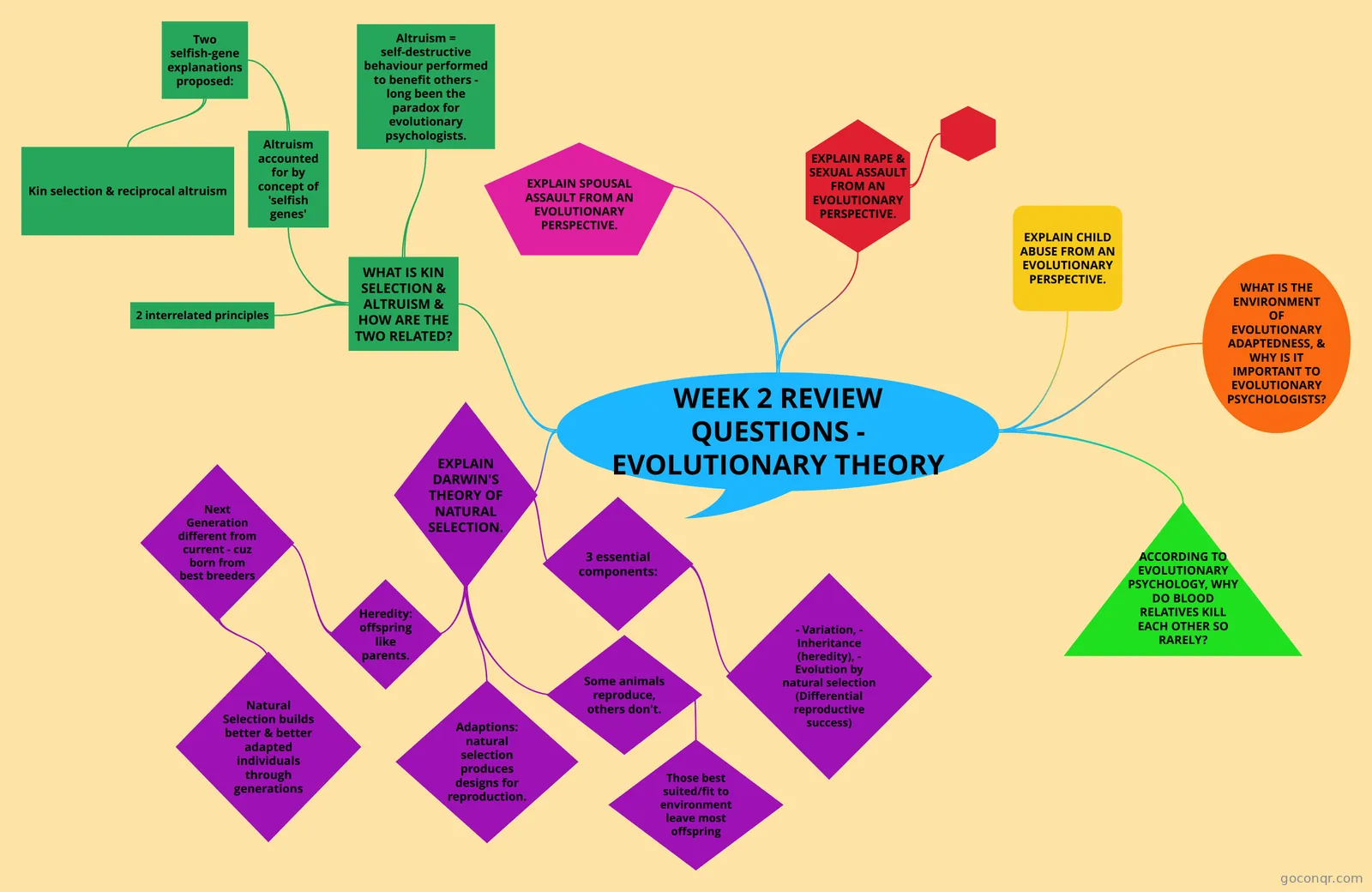 Mind map WEEK 2 REVIEW QUESTIONS - EVOLUTIONARY THEORY Evolutionary Theory Review questions for Final Exam Preparation.
Quizzes
See all 17 quizzesMind maps
See all 77 mind maps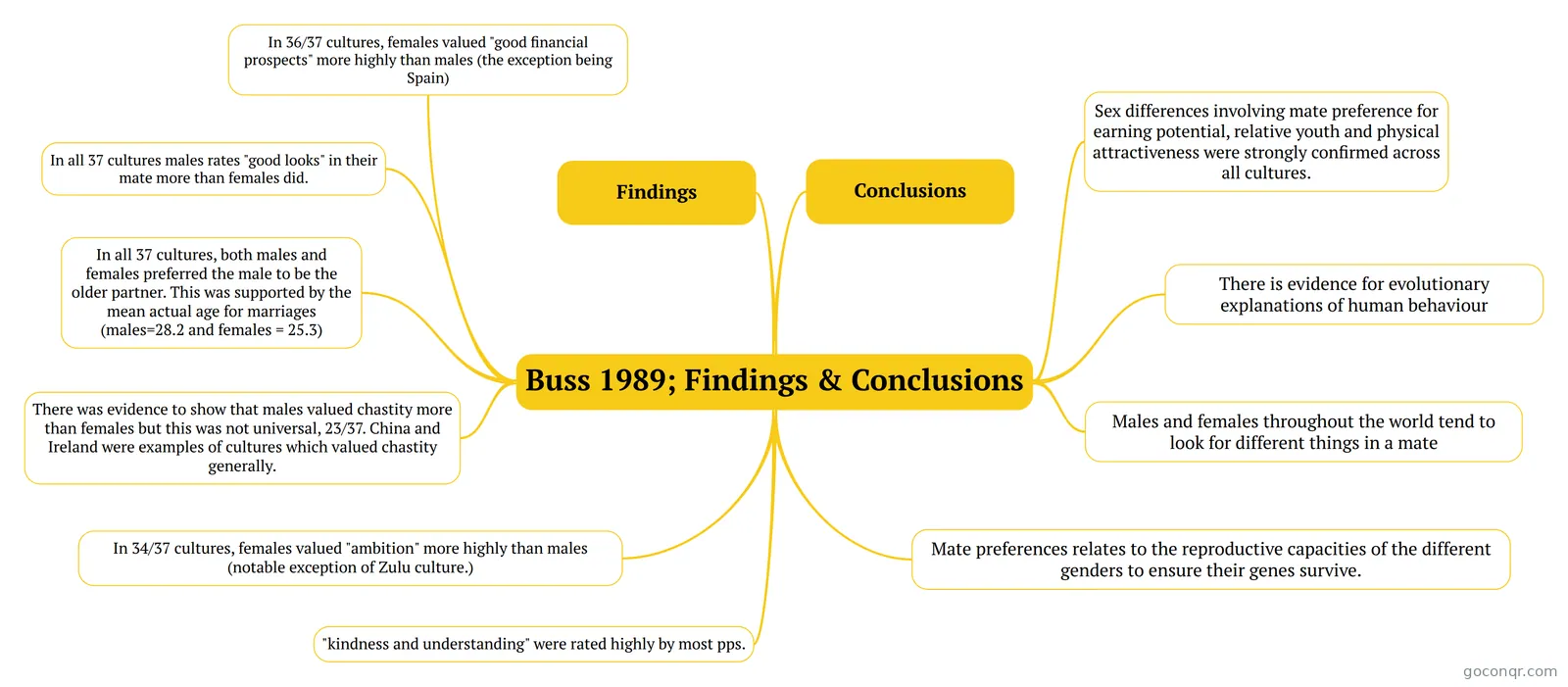
Flashcards
See all 46 flashcardsNotes
More Psychology topics
About Evolutionary Psychology
GoConqr OriginalWhat this page covers
The resources sit in the Biological Psychology strand of Psychology and look at behaviour through an evolutionary lens. Mind maps make up the largest share, with flashcard decks, quizzes, notes, flowcharts and slide sets alongside them.
- Core ideas: the mind maps on natural selection, Principles of Evolution and Evolutionary Basics set out how adaptive traits are passed on.
- Mating and parenting: Sexual Selection, Bateman's Principle, Parental Investment and Parent offspring conflict (POC) cover who competes, who chooses and who invests.
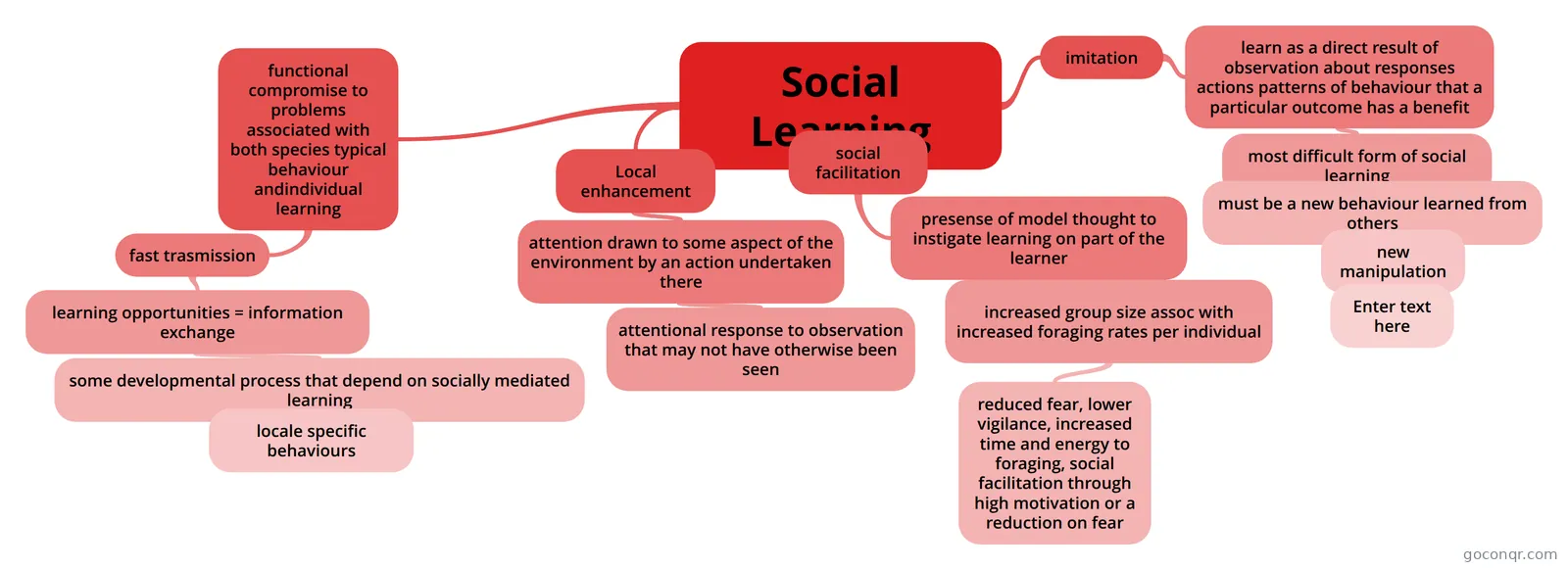
- Social behaviour: reciprocal altruism, Cooperation, Social Learning and Imitation paper examples look at helping, copying and learning from others.
- Conflict and emotion: there are maps on jealousy, infidelity, aggression and group display, plus a quiz called Evolution and emotion.
Where to start
Begin with the mind map on natural selection, which explains the process by which genes for adaptive characteristics are passed on. Then move to the sexual selection map, which covers inter-sexual and intra-sexual selection. If you prefer cards, the Chapter 2 Concepts deck pulls natural selection, sexual selection, reciprocal altruism and theory of mind together in one place.
Studies and exam-style practice
For A-level Psychology, the Buss decks and maps cover aims, context, findings and conclusions, and the Gardner and Gardner decks cover aims and procedures. The note on the relationship between sexual selection and human reproductive behaviour suits essay-style practice.
Using quizzes and maps together
- Read a mind map and cover its branches, trying to recall each one.
- Take a related quiz, such as Relationships - Evolutionary Theory or kin selection quiz.
- Note the questions you missed and go back to the matching map or deck.
- Repeat a few days later to see what has stuck.
Every resource here was made by GoConqr users, so styles vary. Open a few, then build your own maps and flashcards for the gaps you find.
Frequently asked questions
Which resource should I open first?
Start with the mind map on natural selection, then the sexual selection map. Together they set up most of what the later resources assume. After that, the Chapter 2 Concepts flashcards give a quick check on natural selection, sexual selection, reciprocal altruism and theory of mind before you move to specific topics.
What do the mind maps cover?
There are over 70 mind maps. They cover sexual selection, Bateman's Principle, parental investment, reciprocal altruism, social learning, jealousy, infidelity, aggression and group display. Some also summarise named studies, such as Buss 1989, with separate maps for aims and context and for findings and conclusions.
Are there quizzes I can use to test myself?
Yes, there are more than 10 quizzes. Titles include kin selection quiz, mate selection and retention, violence and warfare, Evolution and emotion and Evolutionary psych final. Take one after reading a map to see which ideas you can recall and which need another look.
Which levels and exams do these resources suit?
Most of the resources are aimed at university students and professional candidates, with a smaller share for school students. At school level, the listed resources mention A-level Psychology, for example the decks on Buss and on Gardner and Gardner. Teachers can also use them as ready-made material.
Are the resources free, and who made them?
Every resource listed here is free to open, study and take, with no account needed. They were made by GoConqr users rather than by GoConqr itself. A free account saves your quiz scores and lets you create your own quizzes, mind maps, flashcards and notes.
What if I can't find a topic I need?
Try a related resource first, since topics overlap. Aggression, for instance, appears in maps, decks and a quiz. If something is still missing, you can make your own mind map or flashcard deck and fill the gap yourself.