
Developmental Psychology: Foundations and Early Development
280 resources created by 232 users
This Developmental Psychology: Foundations and Early Development page on GoConqr gathers community-made quizzes, mind maps, flashcards and notes, from nature versus nurture and attachment to Piaget, Kohlberg and the case of Genie. It's built for university students and professional candidates, school students, and teachers after ready-made material. There are over 2,600 resources here, including more than 350 quizzes, over 1,300 mind maps and more than 700 flashcards. Pick a topic, try a quiz to spot your gaps, then make your own revision sets.
Top Developmental Psychology: Foundations and Early Development resources
-
191 cardsDevelopmental Psychology what will a child with a secure attachment show in the strange situation?
-
95 questionsDevelopmental Quiz Before learning about Piaget's theory, you understood the terms "assimilation" and "accommodation" as they ...
-
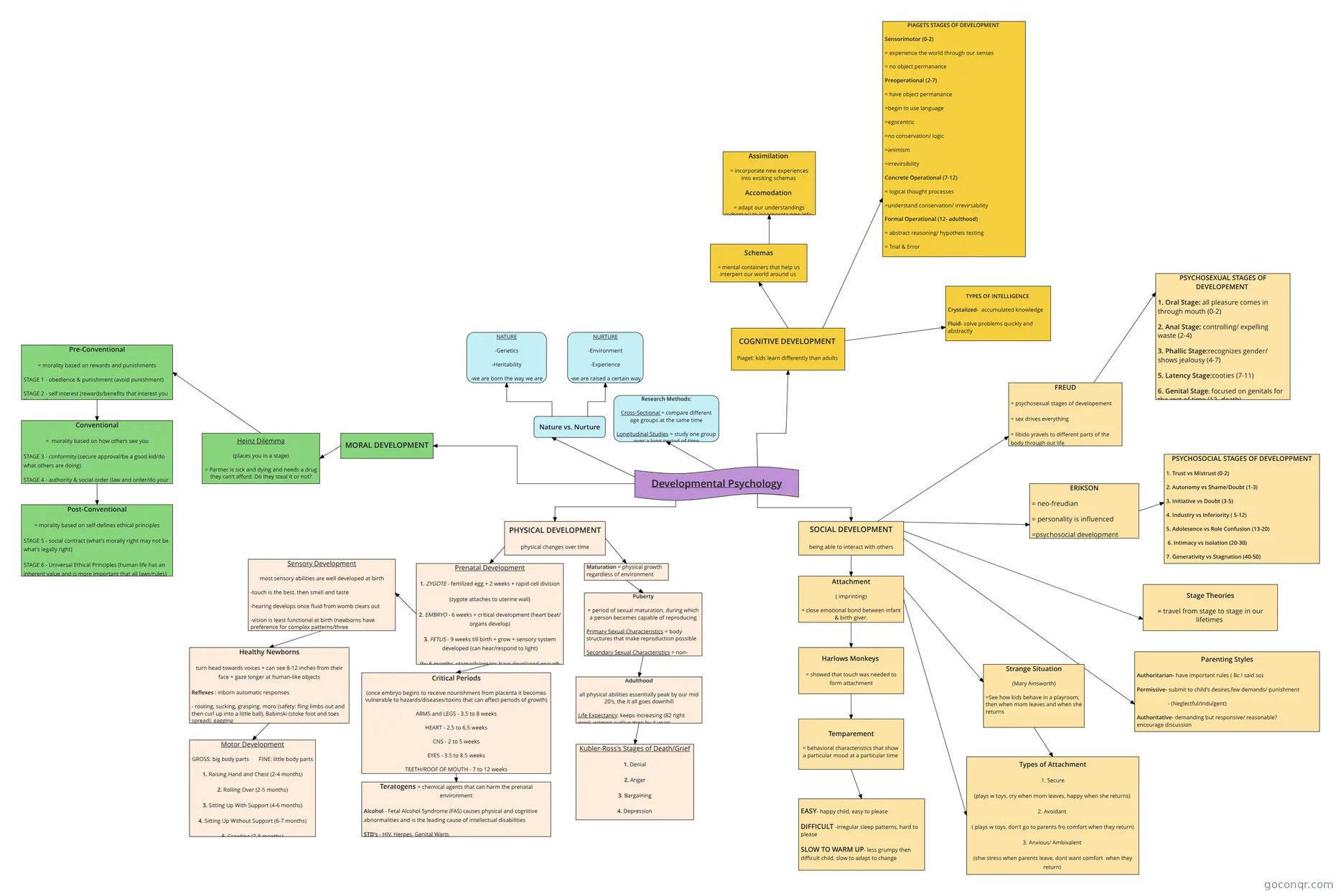 Flowchart Developmental Psychology mind map for unit 6
-
49 cardsAP Psychology Unit 9 Vocabulary the fertilized egg; it enters a 2-week period of rapid cell division and develops into an embryo
-
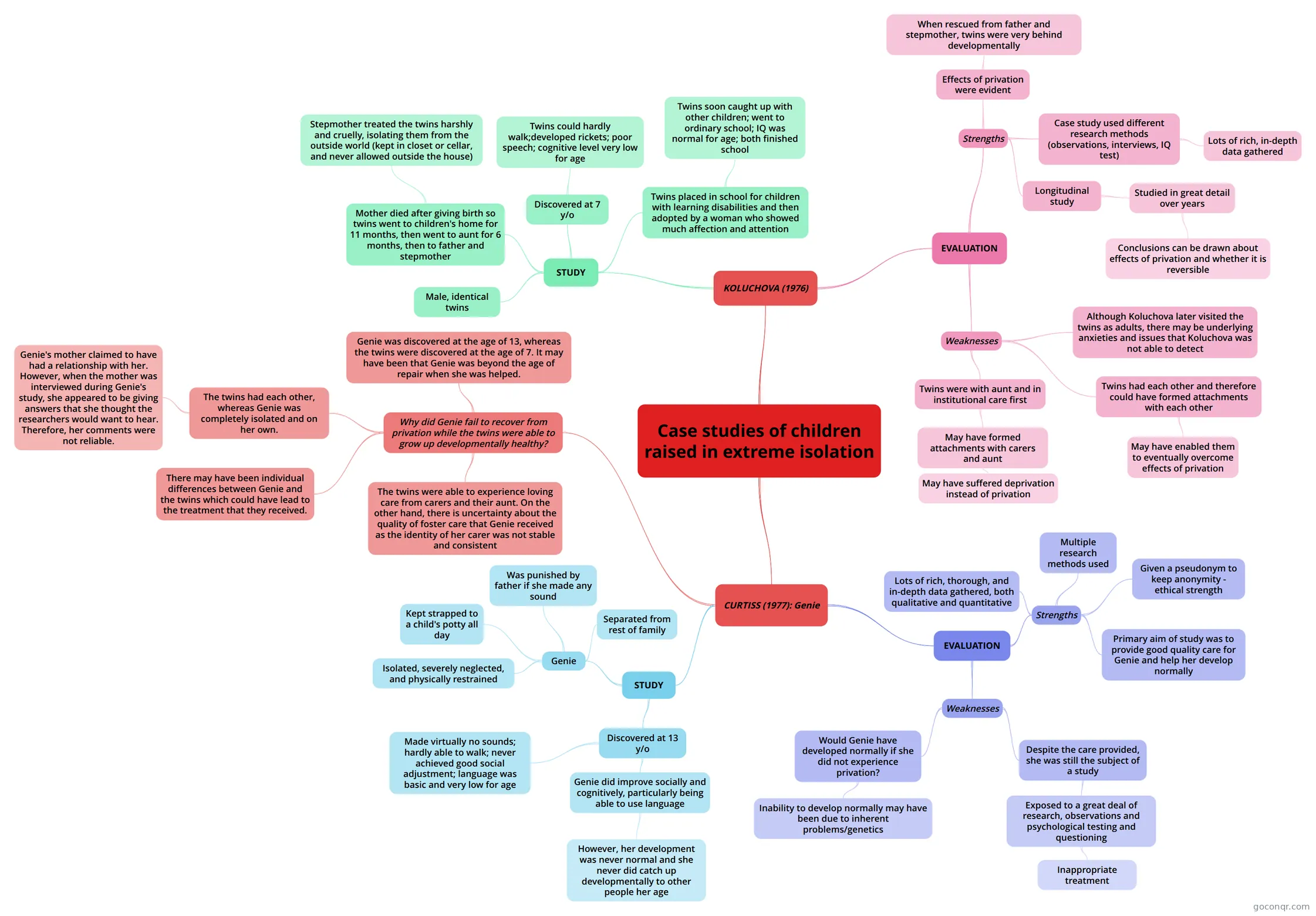 Mind map Case studies of children raised in extreme isolation
-
11 cardsKohlberg (1968) - Stages of Moral Development Kohlberg (1968) - Stages of Moral Development
-
20 questionsHuman Development pt. 2 Test 4 Question 1. Which one of the following is false regarding Freud’s theories of human development?
-
90 questionsPsyc 250 Final The first signs of superego development appear during which stage of Freud's psychoanalytic theory?
Quizzes
See all 64 quizzes-
95 questionsDevelopmental Quiz Before learning about Piaget's theory, you understood the terms "assimilation" and "accommodation" as they ...
-
20 questionsHuman Development pt. 2 Test 4 Question 1. Which one of the following is false regarding Freud’s theories of human development?
-
90 questionsPsyc 250 Final The first signs of superego development appear during which stage of Freud's psychoanalytic theory?
-
19 questionsHuman Development pt. 1 Test 1 Question 2. Which one of the following is not true regarding bonding and attachment?
-
35 questionsHuman Growth & Development A developmental theorist believes that children form personal attachments in phases. This person is:
-
53 questionsDevelopmental MCQ's A researcher reports that boys show more physical aggression than girls in free play. She is able to demons...
-
54 questionsDevelopmental Psychology A strong advantage of the longitudinal design is
-
66 questionsPsych Final exam
Mind maps
See all 114 mind maps-
Case studies of children raised in extreme isolation
-
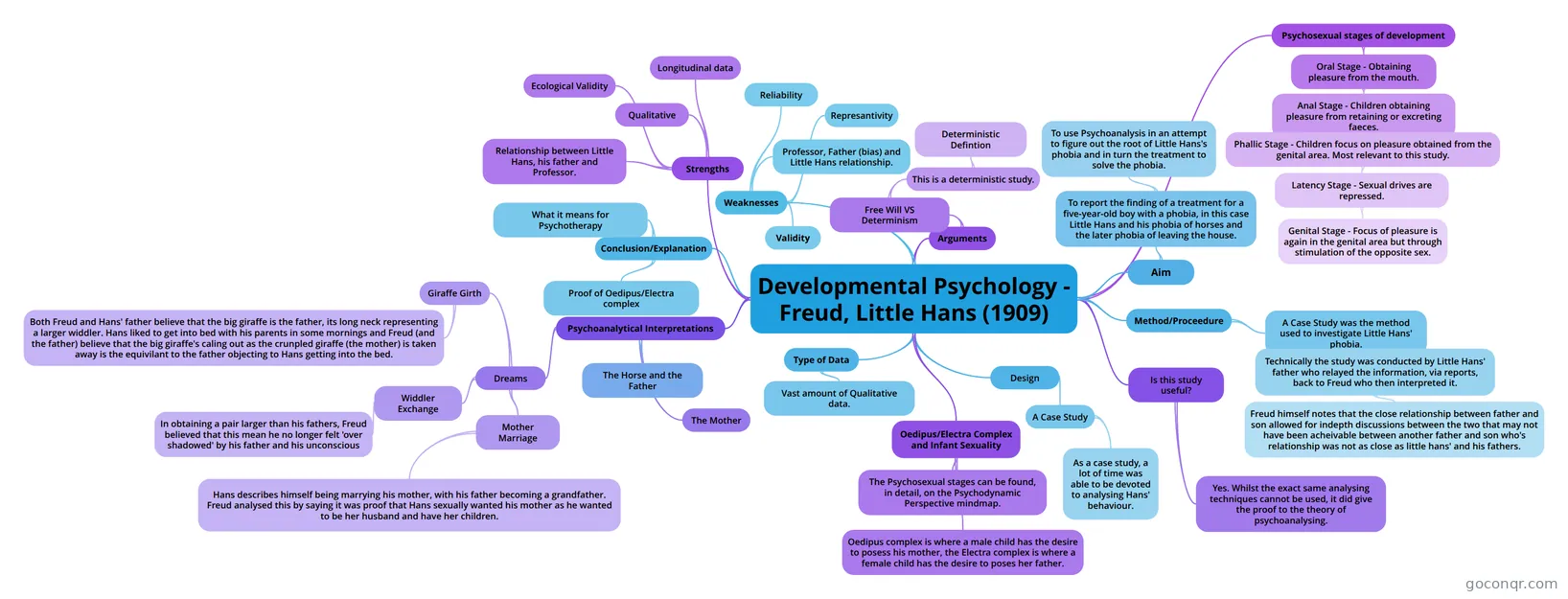 Developmental Psychology - Freud, Little Hans (1909)
-
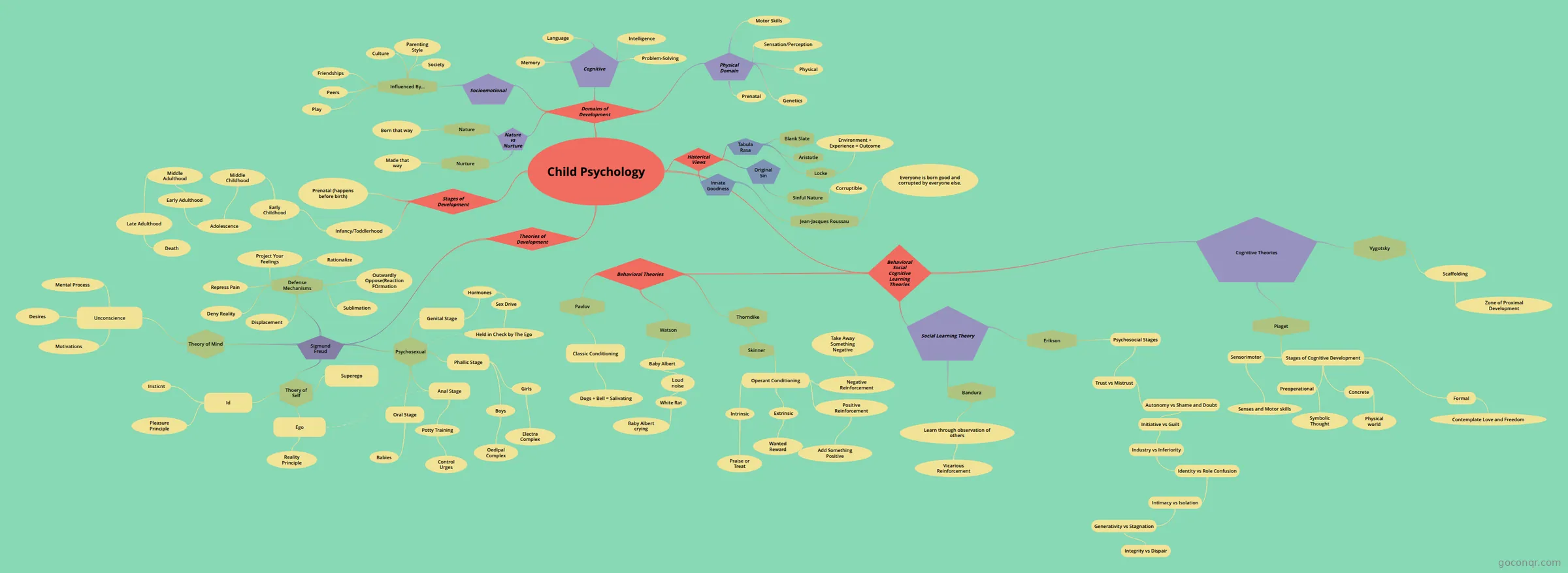 Child Psychology Child Psychology and Developmental Theories.
-
Human Development An unfinished mind map
-
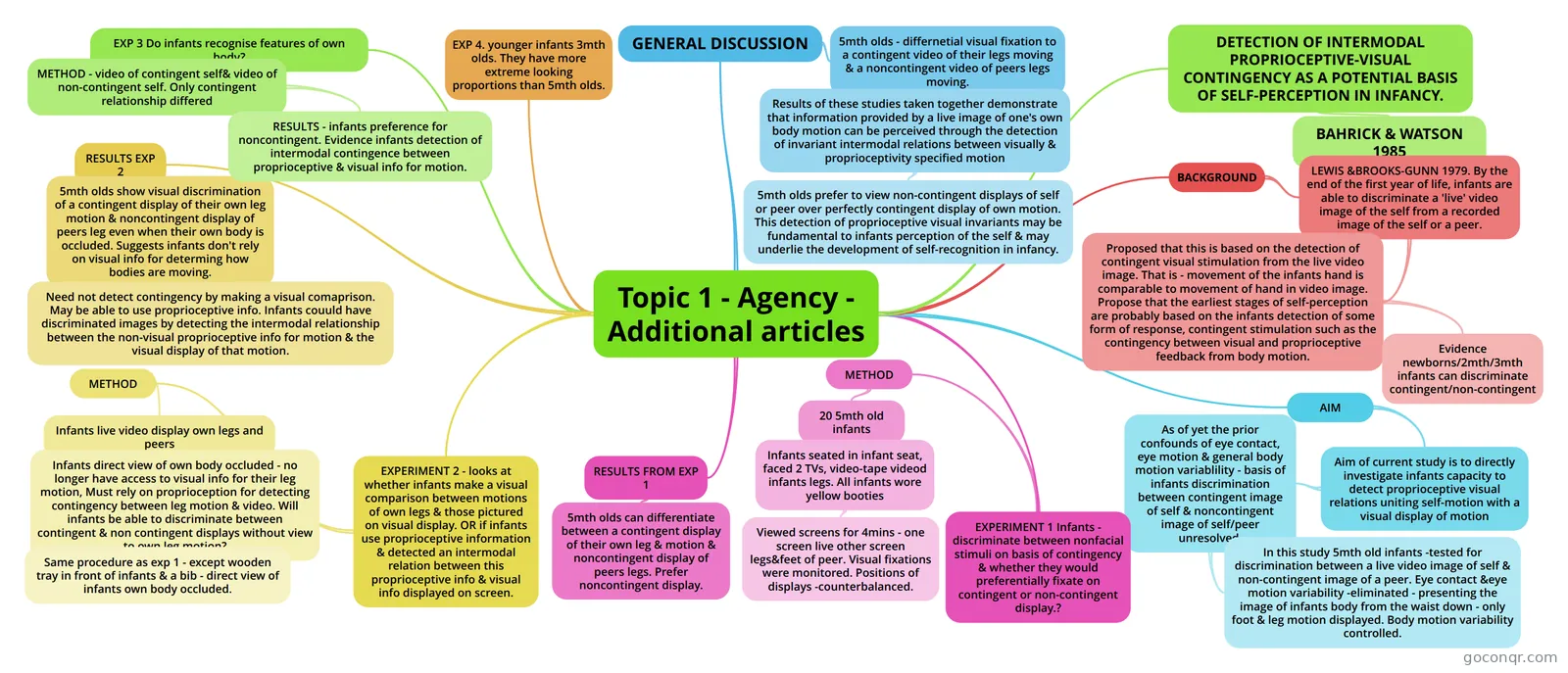 Topic 1 - Agency - Additional articles
-
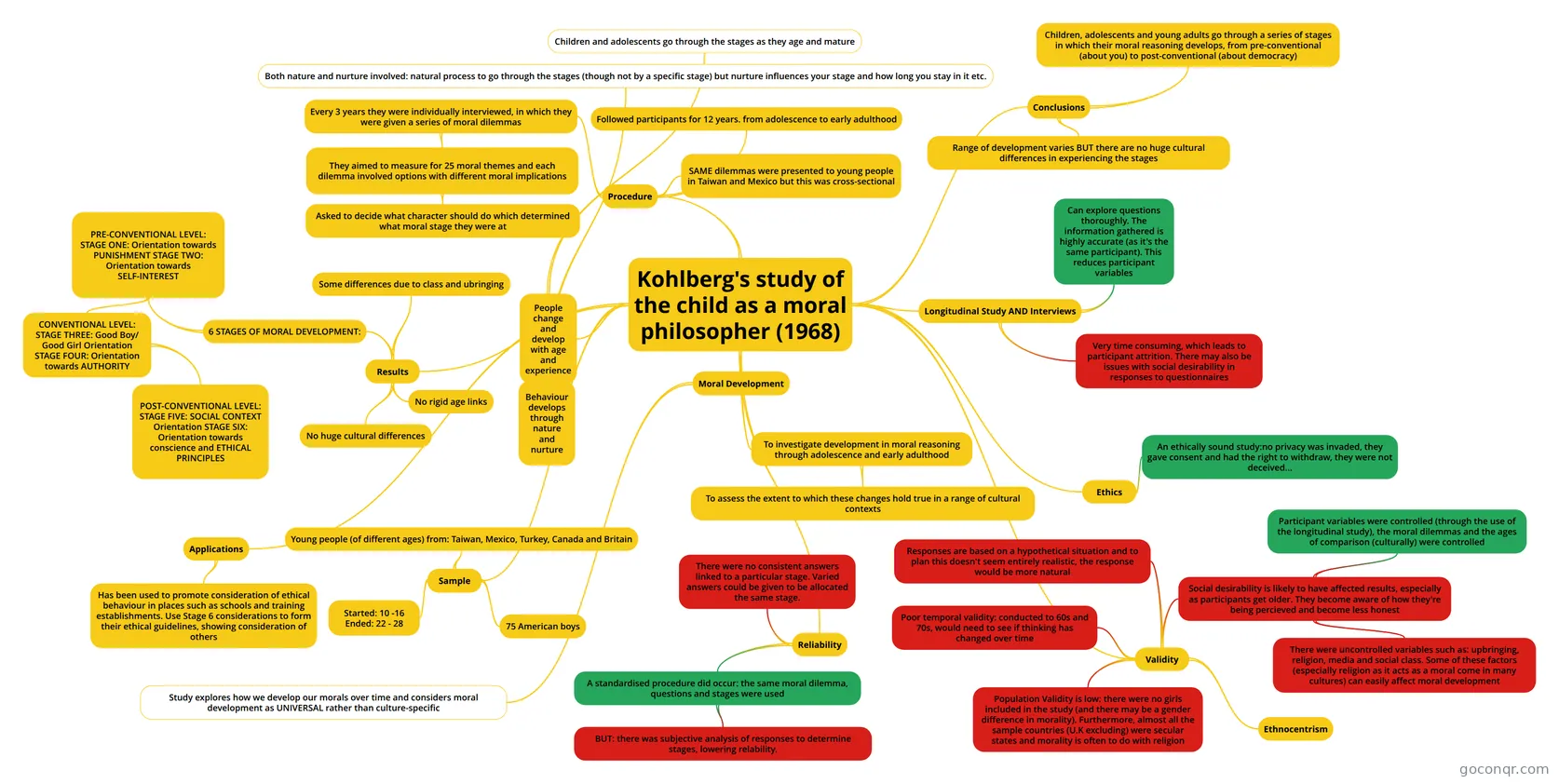 Kohlberg's study of the child as a moral philosopher (1968)
-
 Foundations of child and adolescent psychology Unit 1 mind map
-
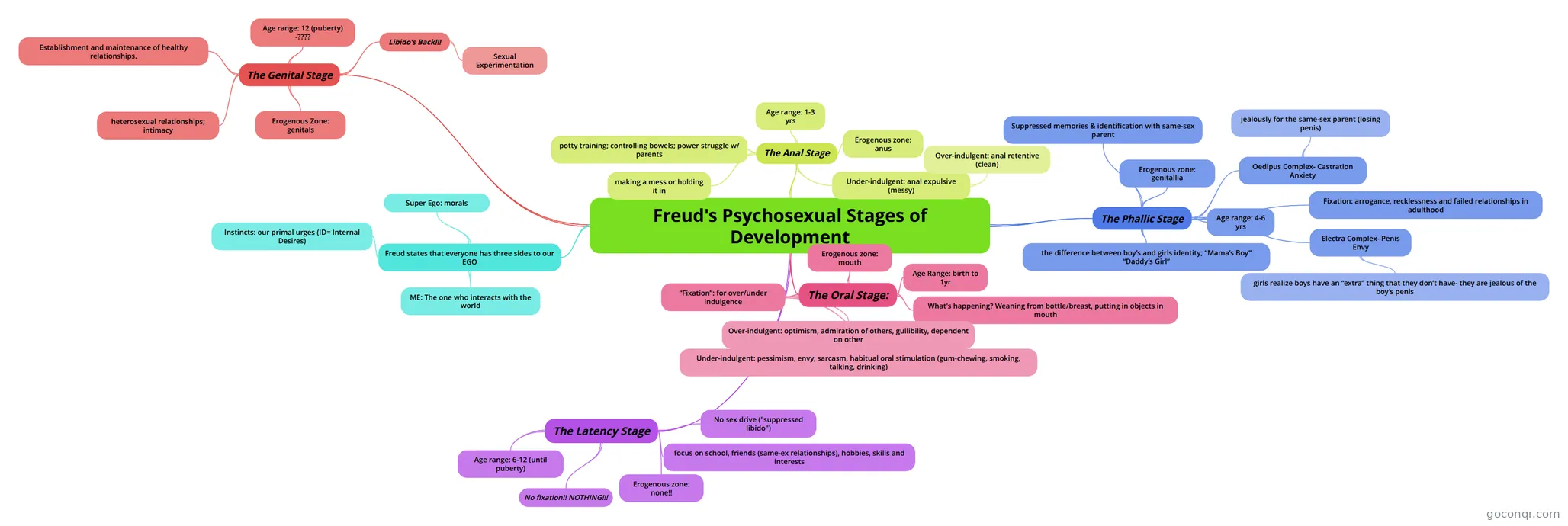 Freud's Psychosexual Stages of Development
Flashcards
See all 85 flashcards-
191 cardsDevelopmental Psychology what will a child with a secure attachment show in the strange situation?
-
49 cardsAP Psychology Unit 9 Vocabulary the fertilized egg; it enters a 2-week period of rapid cell division and develops into an embryo
-
11 cardsKohlberg (1968) - Stages of Moral Development Kohlberg (1968) - Stages of Moral Development
-
36 cardsTheories of Human Development Definition of Theory
-
20 cardsLesson 15-16 Quiz Connie pours the same amount of apple juice into two glasses. However, one of the glasses is taller and ski...
-
20 cardsChapter 11 - Exploring Psychology in Modules 10th Edition Infancy and childhood
-
8 cardsSPANKING . A study on spanking was conducted that suggested low income families are more likely to use spanking for ...
-
3 cardsNCE Freud's stages are psychosexual while Erikson's stages are
Flowcharts
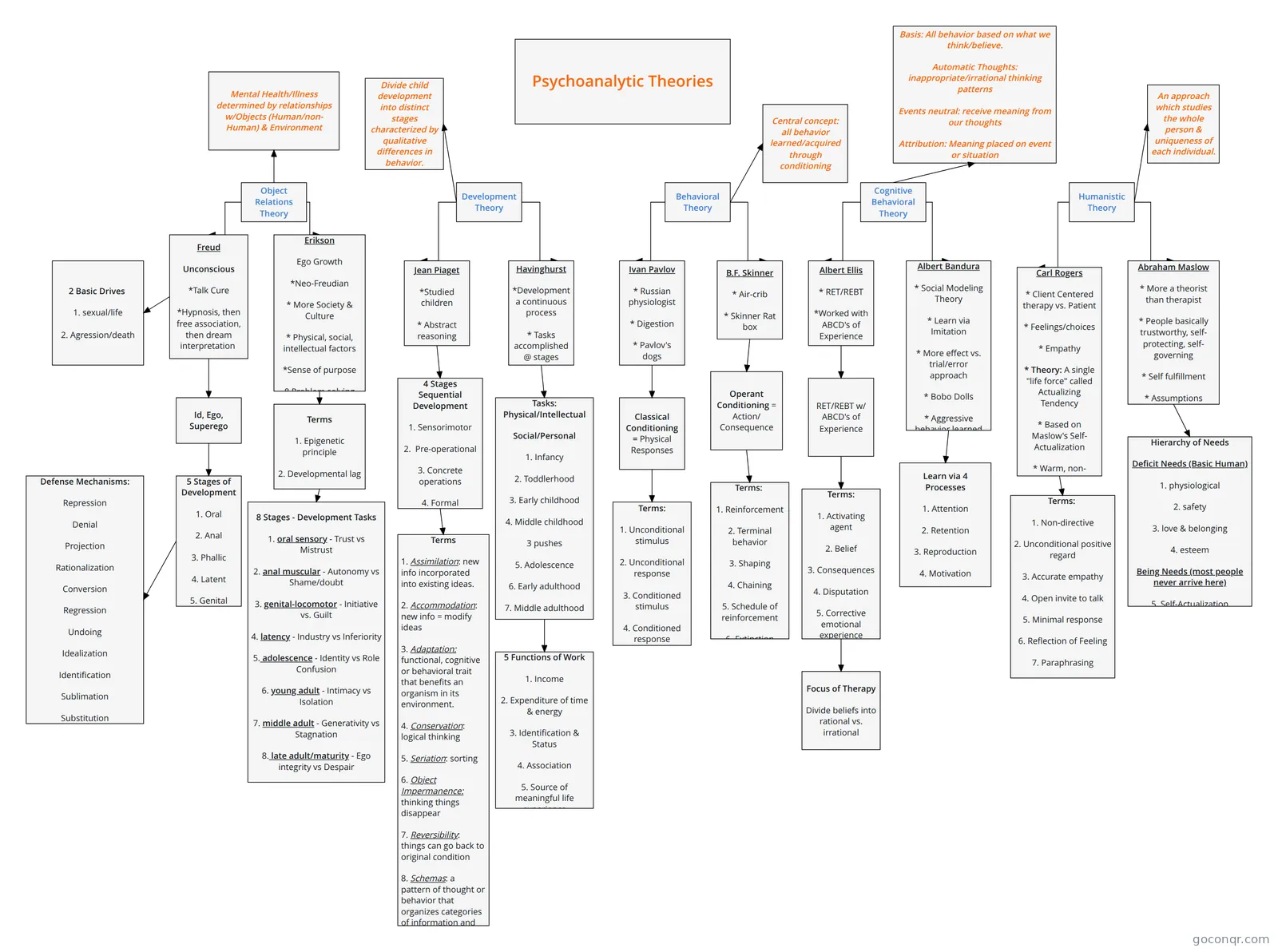
Notes
See all 12 notes-
Lifespan Development Introduction to Lifespan Development Developmental psychology concerns the physiological, behavioral, cognitive, and social changes that occur throughout human life, which are guided by both genetic predispo...
-
Chapter 1 1.1: How Should We Think About Development?Development: systematic changes and continuities in the individual that occur between conception and death (from "womb to tomb") Physical development: The growth of the body ...
-
Early Audio and Visual perception - created from Mind Map Researchers cannot tell what babies perceive the challenge is, is to develop methods that allow infants to demonstrate thisPiaget - sensori motor stage - infants have to develop the links between sensation and actions...
-
Day care Peer relations studies. (Peer Eppe, Campbell,Shea) EPPE project. (UK longitudinal study)Studied over 3000 UK children between 3-7 years old. Children who attended day care showed increased independence and peer s...
-
Developmental A strong emotional tie that develops over time between an infant and a caregiver. The tie is reciprocal as each partner is attached to the other. Macoby 1980-1) seek proximity2)Distress when seperated3)Pleasure when r...
-
Gender Development - Concepts SEX AND GENDER The term sex refers to biological status as either male or female. It is defined by our chromosomes, hormones and anatomical differences The term gender is psychosocial and refers to...
-
Day Care & Social Development - created from Mind Map PEER RELATIONS Field (1991) 56 American 11 Year Olds - Population Validity All started full time daycare before age of 2 - Good quality but why in daycare? Videotaped to assess for assertiveness, affection & playfulne...
-
Understand key questions/themes that are of interest to development psychologists - created from Mind Map development psychology is the discipline that seeks to identify and explain the changes that individuals undergo from the moment of conception until they die what are the sources of development changes? nature vs nurt...
Slides
More Psychology topics
About Developmental Psychology: Foundations and Early Development
GoConqr OriginalWhat this page covers
The resources here follow the early part of developmental psychology. The flowchart Developmental Psychology opens with nature versus nurture (genes and heritability against environment and experience) and goes on to research methods. Other items cover prenatal development, attachment, cognitive and moral development, gender development, language, play and autism.
Where to start
Begin with the flowchart for the big picture. Then read the flashcards AP Psychology Unit 9 Vocabulary, which define early terms such as the fertilised egg and the embryo. Next, take the Developmental Quiz, which tests whether you understand Piaget's terms assimilation and accommodation beyond their everyday meaning.
Theories and key studies
- Mind maps on Erikson's Psychosocial Development and Freud's Psychosexual Stages of Development set out the stage theories.
- The mind map on Piaget's theory and the one on Piaget and Inhelder (1956) cover cognitive development, while the Samuel and Bryant Quiz lets you test that material.
- The flashcards on Kohlberg (1968) walk through aims, method, sample, procedure, results and evaluation.
- The mind map on children raised in extreme isolation looks at Koluchova (1976) and Curtiss (1977), the case of Genie.
Using quizzes and maps together
Read a mind map first, then close it and take a quiz on the same topic. Questions such as the Piaget item or the attachment items in Human Growth & Development show which branches you still need to revisit. Go back to the map, fix the gap, and try again. Flashcards such as Developmental Psychology, with its strange situation questions, suit short bursts of recall.
Where it fits
This unit sits in the Developmental Psychology strand of Psychology. Most of the material is aimed at university students, with a smaller share for school students, and many items mention A-level, AP or IB courses. Choose one topic today, open a map and see how much you can recall.
Frequently asked questions
Which resource should I open first?
Start with the Developmental Psychology flowchart. It lays out nature versus nurture and research methods, which gives you a frame for everything else. After that, try the Developmental Quiz to check how well you understand Piaget's ideas, then move on to the mind maps on specific theorists.
What do the mind maps cover?
They cover stage theories from Freud and Erikson, Piaget's cognitive development, Kohlberg's moral development, Bronfenbrenner and Vygotsky. There are also maps on gender development, language, motor development, pretend play, autism and children raised in extreme isolation, so you can pick the topic your course is on.
Are the resources free to use?
Yes. Every resource listed here is free to open, study and take, with no account needed. They were made by GoConqr users rather than by GoConqr itself, so it is worth comparing a few on the same topic to see which explanation suits you.
Which levels and exams do these suit?
Most of the material suits university students and professional candidates, with a smaller share for school students. Some resources mention A-level Psychology, AP Psychology, GCSE Psychology and IB Psychology, so check the titles and excerpts against your own course before you settle on a set.
Can I save my quiz scores or make my own sets?
A free account saves your quiz scores and lets you create your own quizzes, mind maps, flashcards and notes. That is useful if you want to turn a lecture into a set of cards or rebuild a theory map in your own words.
What if my topic seems to be missing?
Look for a nearby theorist or term first, since many resources cover several ideas at once. The Lifespan Development and Human Development sets are broad, so they may include your topic. If nothing fits, you can build your own map or flashcards.