
Lesson Planning
52 resources created by 49 users
This Lesson Planning page on GoConqr gathers community-made mind maps, flowcharts, notes, flashcards and a quiz, from the stages of a lesson and aims and objectives to didactic sequences and foreign language area planning. It's built for university students and professional candidates preparing for teaching roles, and for teachers after ready-made plans. There are over 600 resources here, including more than 500 mind maps and over 400 contributors' work. Open a map, try the quiz, then build your own.
Top Lesson Planning resources
-
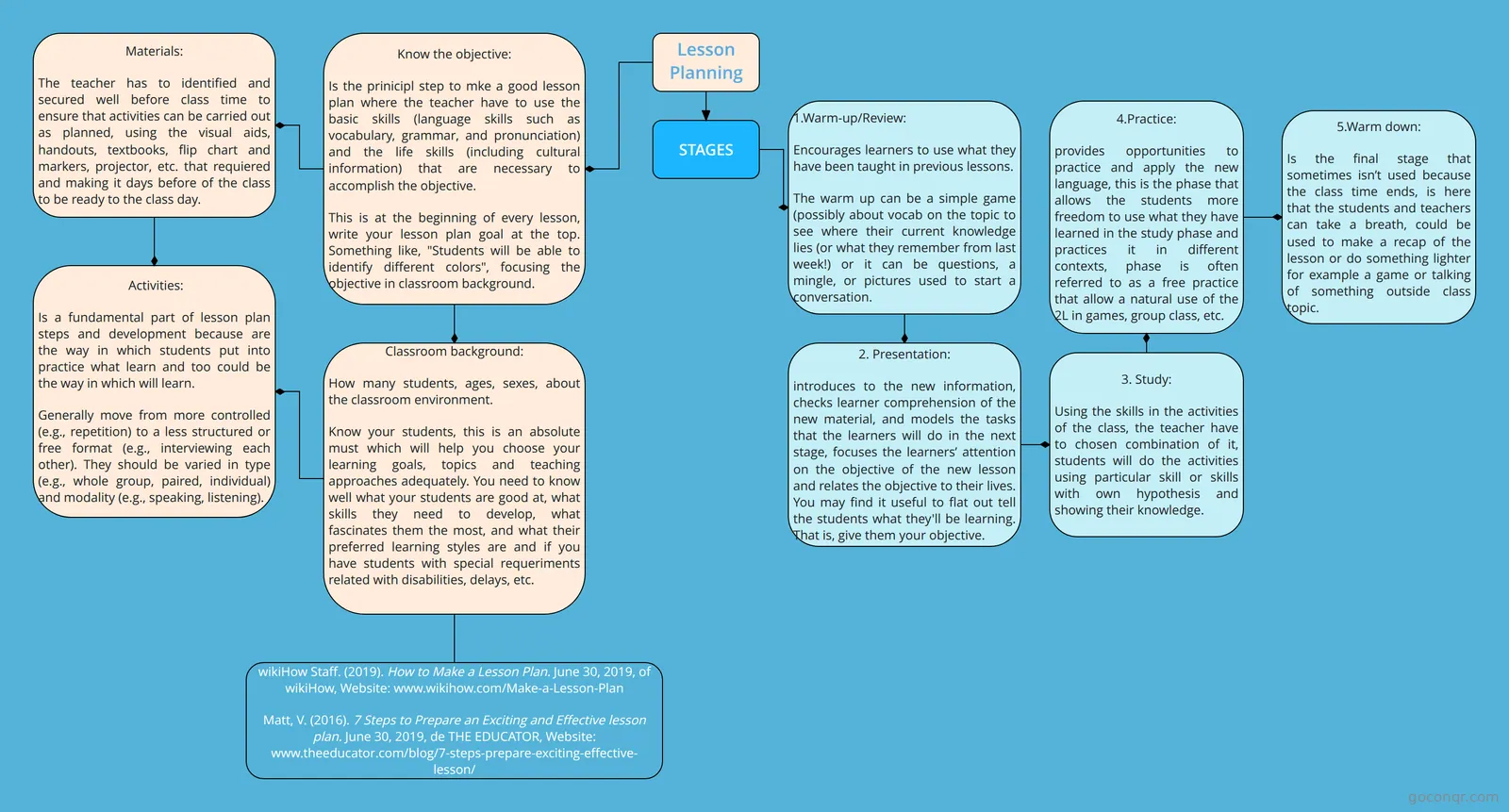 Flowchart Stages in a Lesson Planning Stages in a Lesson Planning
-
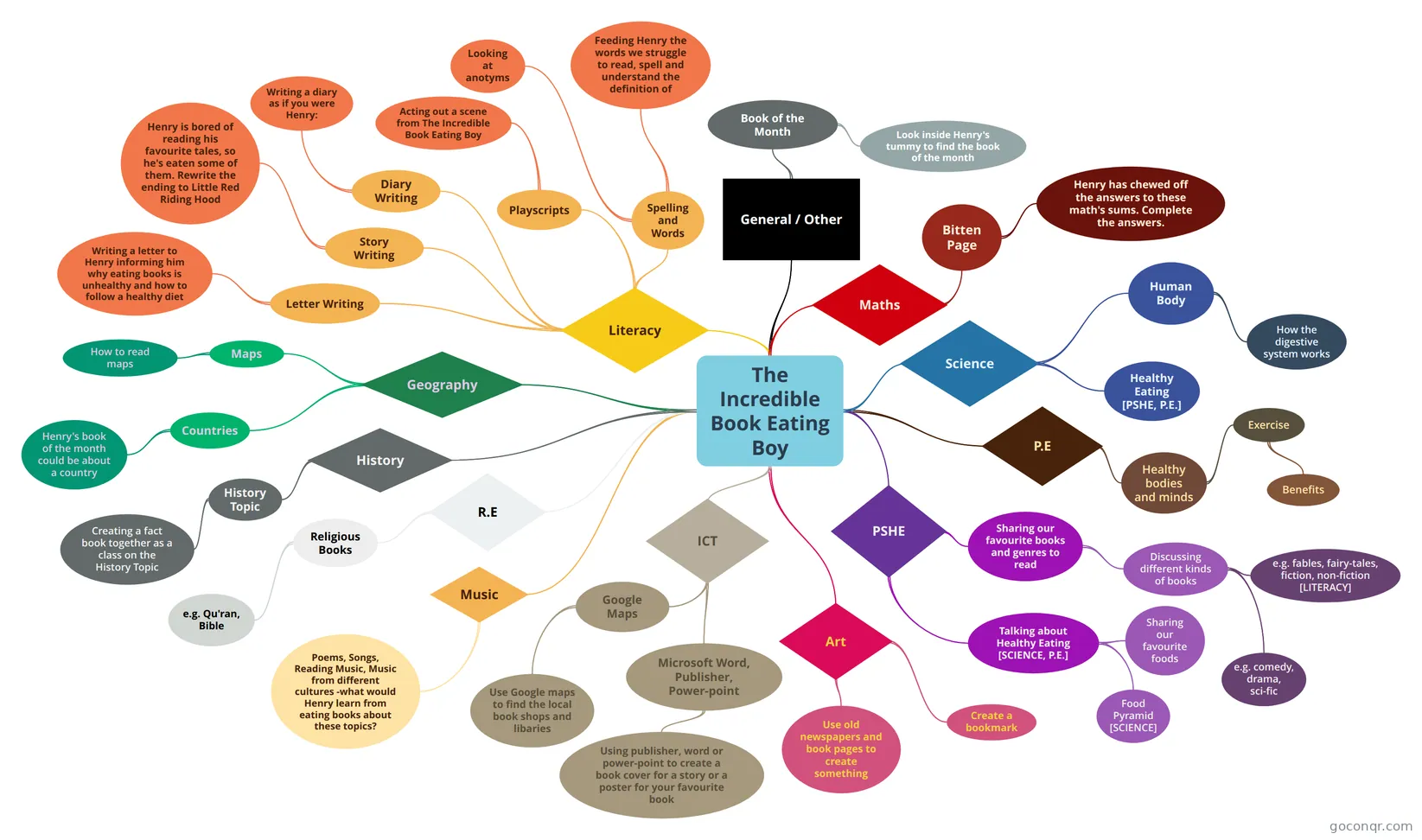 Mind map The Incredible Book Eating Boy How the Incredible Book eating boy can be used to inspire classroom lessons and activities.
-
Mind map TOPIC 21: FOREIGN LANGUAGE AREA PLANNING: DIDACTIC UNITS. CRITERIA FOR THE SEQUENCE AND TIMNG OF CONTENTS AND OBJECTIVES. SELECTION OF THE METHODOLOGY USED IN LEARNING AND ASSESSMENT ACTIVITIES
-
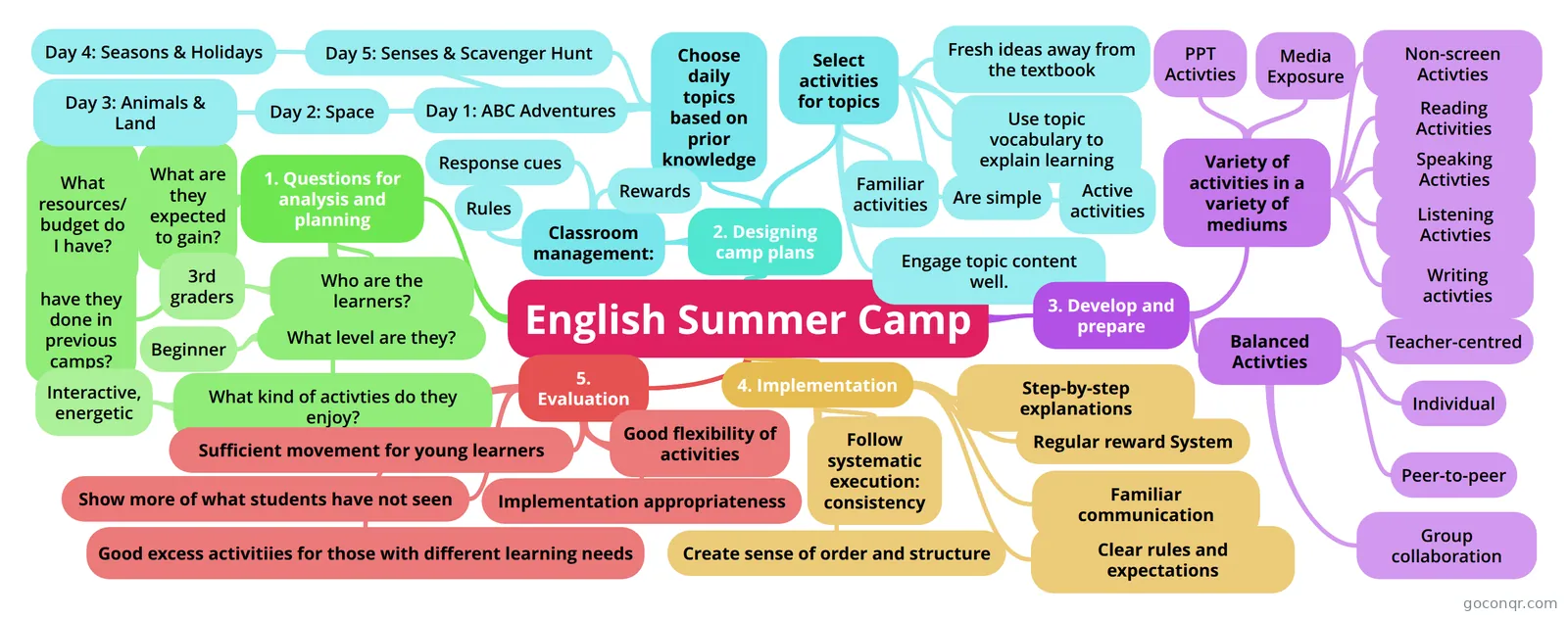 Mind map English Summer Camp
-
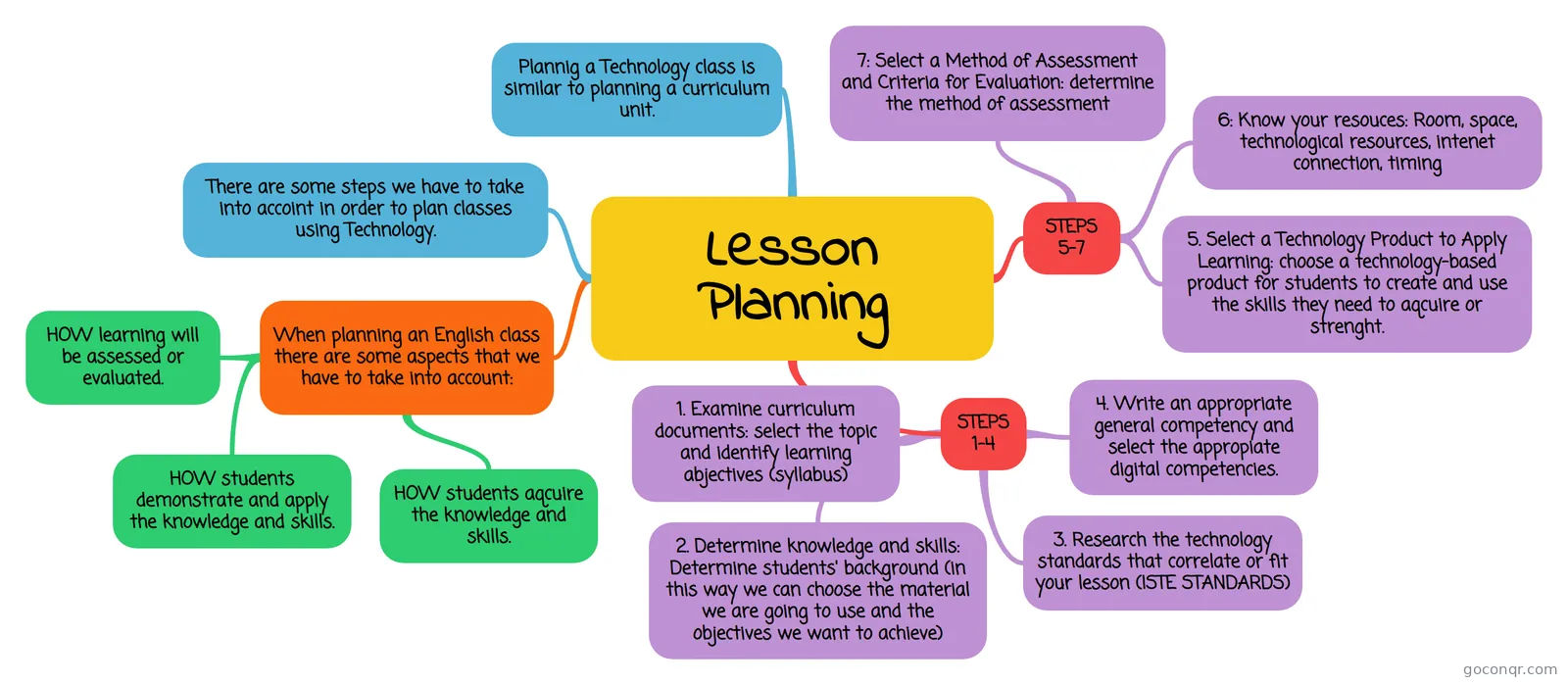 Mind map Lesson Planning The following C-map contains information about lesson planning and technology
-
4 questionsAim and objectives quiz What is the definition of an AIM?
-
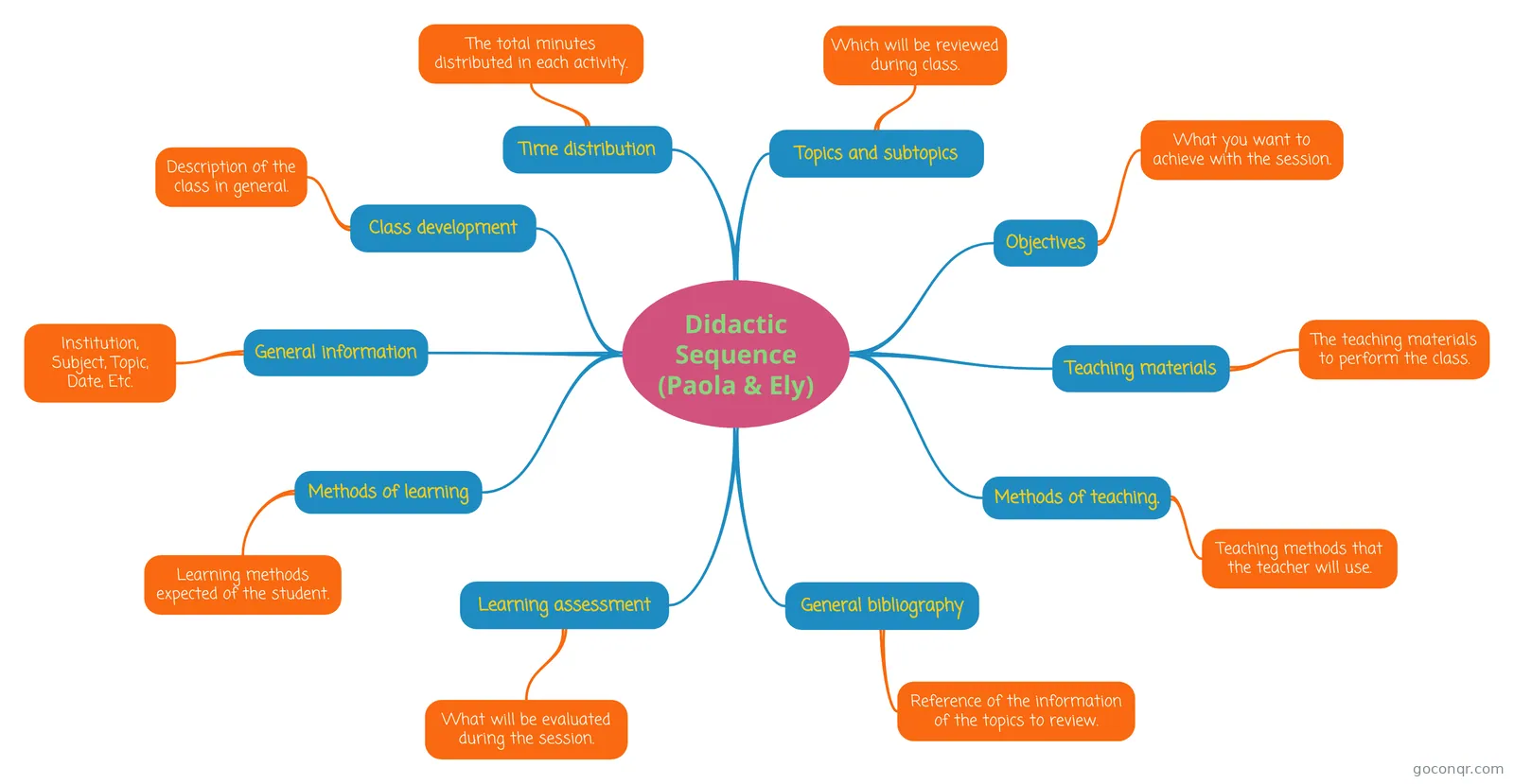 Mind map Didactic Sequence (Paola & Ely) Mapa conceptual de la secuencia didáctica hecha por Paola Valencia & Elizabeth Lara :)
-
Mind map Lesson Planning Mind map based on reading: http://dx.doi.org/10.1017/CBO9780511667190.006 Cambridge Books Online © Cambridg...
Quizzes
-
4 questionsAim and objectives quiz What is the definition of an AIM?
-
8 questionsCapítulo 2 - The nature of approaches and methos in language teaching The best activities and materials from the teacher's point of view are...
-
10 questionsChapter 13 A statement of skills or concepts that students should master after a given period of instruction
-
5 questionsLesson Plan. Student-Centered Clear evidence of balance between instruction and student partivipation
Mind maps
See all 37 mind maps-
The Incredible Book Eating Boy How the Incredible Book eating boy can be used to inspire classroom lessons and activities.
-
TOPIC 21: FOREIGN LANGUAGE AREA PLANNING: DIDACTIC UNITS. CRITERIA FOR THE SEQUENCE AND TIMNG OF CONTENTS AND OBJECTIVES. SELECTION OF THE METHODOLOGY USED IN LEARNING AND ASSESSMENT ACTIVITIES
-
English Summer Camp
-
Lesson Planning The following C-map contains information about lesson planning and technology
-
Didactic Sequence (Paola & Ely) Mapa conceptual de la secuencia didáctica hecha por Paola Valencia & Elizabeth Lara :)
-
Lesson Planning Mind map based on reading: http://dx.doi.org/10.1017/CBO9780511667190.006 Cambridge Books Online © Cambridg...
-
Self Study Project: Intentional Teaching CTRD Self Study Project
-
Week 1: 28.01 - 01.02
Flashcards
Flowcharts
Notes
Slides
More Education and pedagogy (incl. teaching methods, curriculum, educational psychology) topics
About Lesson Planning
GoConqr OriginalWhat this page covers
The resources here look at how a lesson is put together. Many are mind maps, with flowcharts, notes, slide sets and flashcard decks alongside them. Some are general, such as HOW TO PLAN A LESSON, which breaks a plan into goals, specific objectives, materials and equipment, procedures, evaluation and extra-class work. Others are tied to a setting, such as the English Summer Camp map, which starts from questions about who the learners are and what level they have.
Where to start
- Begin with the flowchart Stages in a Lesson Planning. It starts with knowing the objective, then moves through the stages of a plan.
- Move to the Aim and objectives quiz. It asks you to tell an aim, a goal, a target and an objective apart.
- Read a full plan structure, such as Lesson Plan Structure or Didactic Sequence (Paola & Ely), which covers time distribution, topics, objectives, materials and methods.
Planning for particular contexts
If you are preparing for oposiciones, look for the Topic 21 map on foreign language area planning. It deals with didactic units, the sequence and timing of contents and objectives, and the choice of methodology. There is also a matching flowchart and set of notes. Language teachers may also like How to Teach English: Adults and the deck on lesson plan parts and theory for Tesol. Resources mentioning TKT and CELTA sit in the same area.
For cross-curricular ideas, The Incredible Book Eating Boy map links maths, science, history, geography, literacy and more to a single story. A few of the resources suit young pupils, but most are written for those learning to teach.
Using quizzes and maps together
Read a map first, then test yourself with the quiz. Where you slip, go back to the node and reread it. Notes created from mind maps give you the same content in a linear form, handy for a quick revision pass.
This unit sits in the Curriculum and Planning strand of Education and pedagogy. Pick a map that matches your own context and see how far you can rebuild its structure from memory.
Frequently asked questions
Which resource should I open first?
Start with the flowchart Stages in a Lesson Planning. It begins with knowing the objective and gives you a simple order for a plan. Then read a fuller structure such as Lesson Plan Structure or the Didactic Sequence map, and test yourself with the Aim and objectives quiz.
What does the Aim and objectives quiz cover?
It asks you to give definitions for an aim, a goal, a target and an objective. The choices include ideas such as what you hope to do and a specific result. It suits anyone who mixes these terms up when writing the opening of a lesson plan.
Is there anything for oposiciones candidates?
Yes. The Topic 21 mind map covers foreign language area planning, didactic units, the sequence and timing of contents and objectives, and the choice of methodology. A flowchart and notes on the same topic are listed too, so you can move between formats.
Are there resources for English language teaching exams?
Some listed resources mention TKT and CELTA, and there are English lesson plan flowcharts, a Tesol lesson plan parts deck and a map on teaching English to adults. Check each resource to see how closely it fits your course.
Are the resources free, and who made them?
Every resource listed here is free to open, study and take, with no account. They were made by GoConqr users, not by GoConqr. A free account also saves your quiz scores and lets you make your own maps, flashcards, quizzes and notes.
What if I can't find the plan format I need?
Try the other formats on the page, because the same topic often appears as a map, a flowchart and notes. You could also build your own map using a structure you like, such as the ASSURE model or SIOP lesson planning resources listed here.