
Lesson Planning mind maps
551 mind maps by 443 users · Page 1 of 14
This page gathers over 500 lesson planning mind maps made by more than 400 GoConqr users, covering lesson sequences, activities and assessment. University students and professional candidates can use them to practise planning, while teachers can find ready-made ideas. Explore the maps to find a starting point for your next lesson plan.
Select topic
- Lesson Plan Components and Structure56
- Steps in Lesson Planning31
- Learning Objectives and Bloom's Taxonomy8
- Lesson Planning Models and Templates14
- Unit and Course Planning29
- Weekly and Daily Lesson Plans14
- Classroom Activities and Teaching Strategies13
- Language Teaching Lesson Plans14
- Classroom Management and Learning Environment8
- Formative Assessment and Task Evaluation12
Mind maps
-
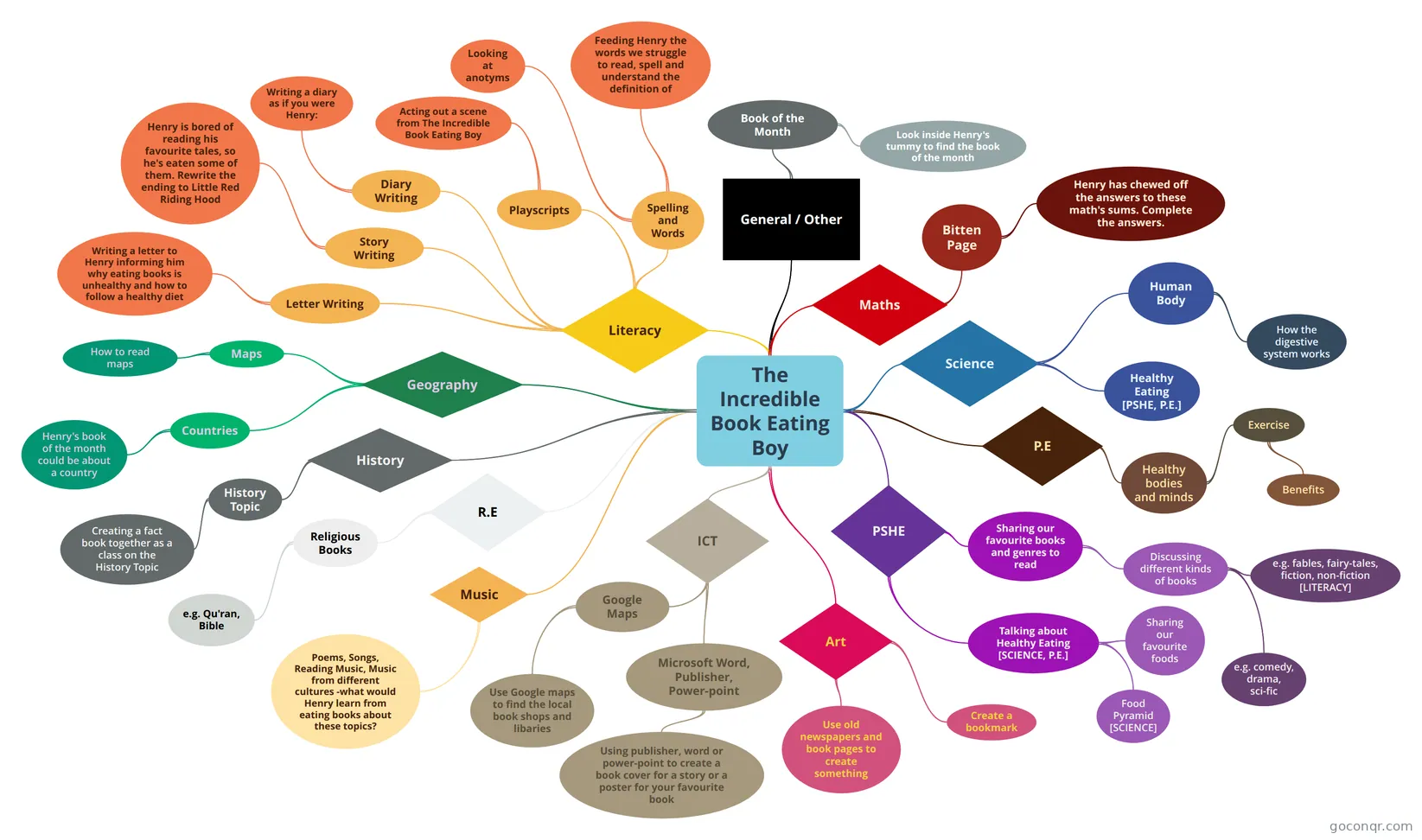 The Incredible Book Eating Boy How the Incredible Book eating boy can be used to inspire classroom lessons and activities.
-
TOPIC 21: FOREIGN LANGUAGE AREA PLANNING: DIDACTIC UNITS. CRITERIA FOR THE SEQUENCE AND TIMNG OF CONTENTS AND OBJECTIVES. SELECTION OF THE METHODOLOGY USED IN LEARNING AND ASSESSMENT ACTIVITIES
-
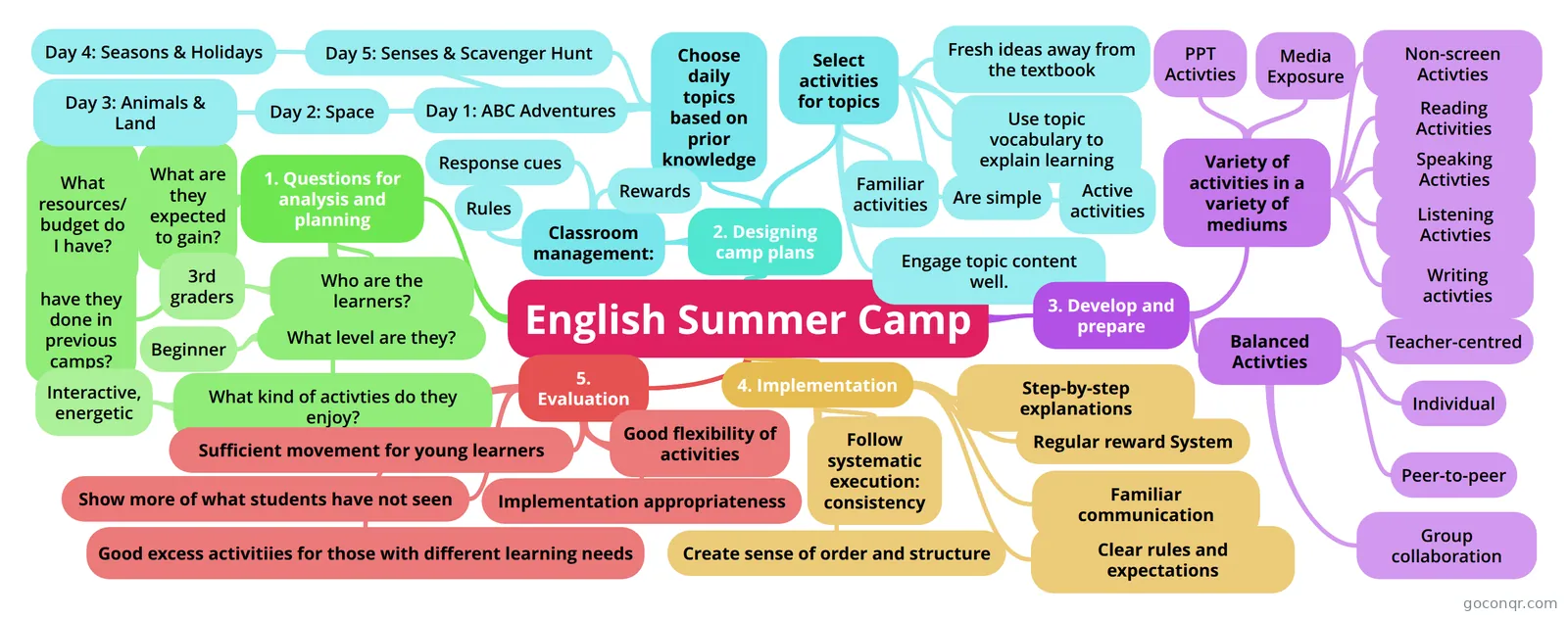 English Summer Camp
-
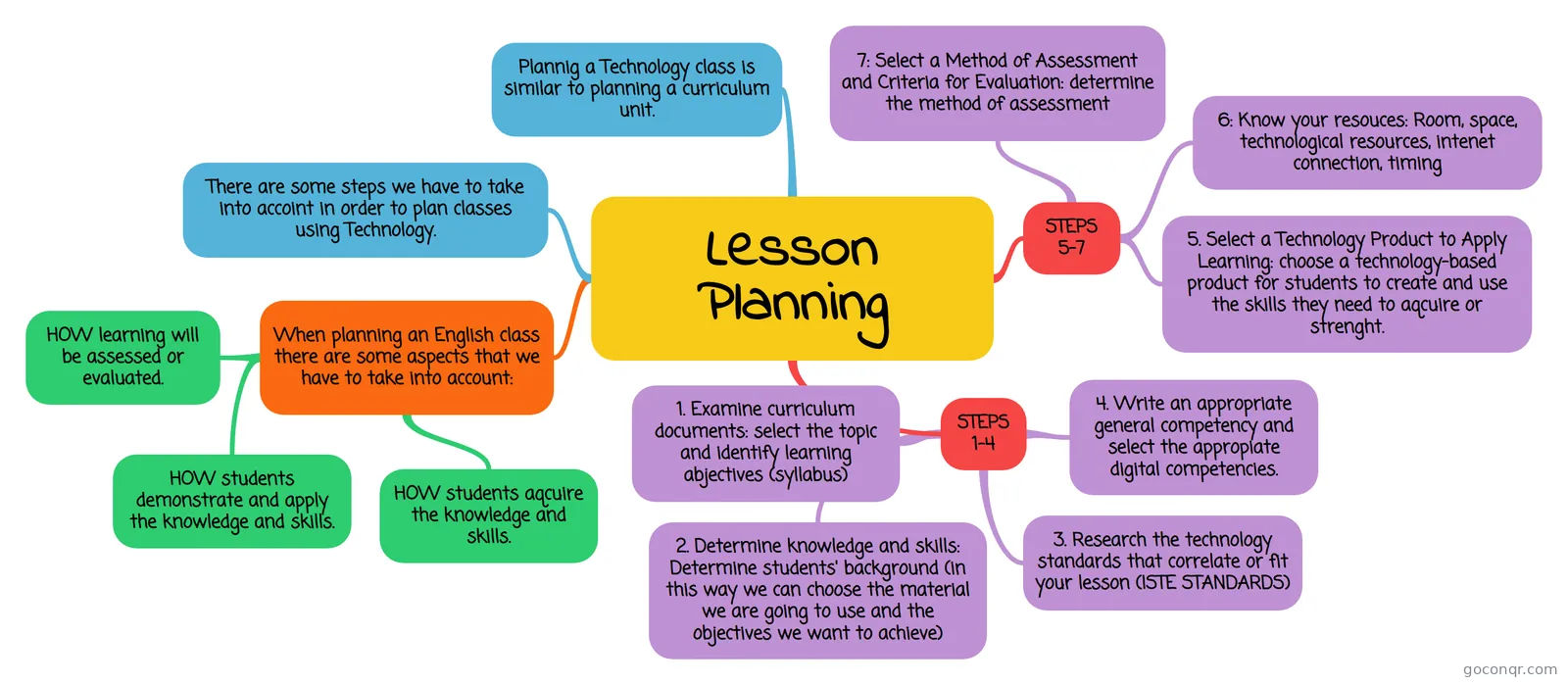 Lesson Planning The following C-map contains information about lesson planning and technology
-
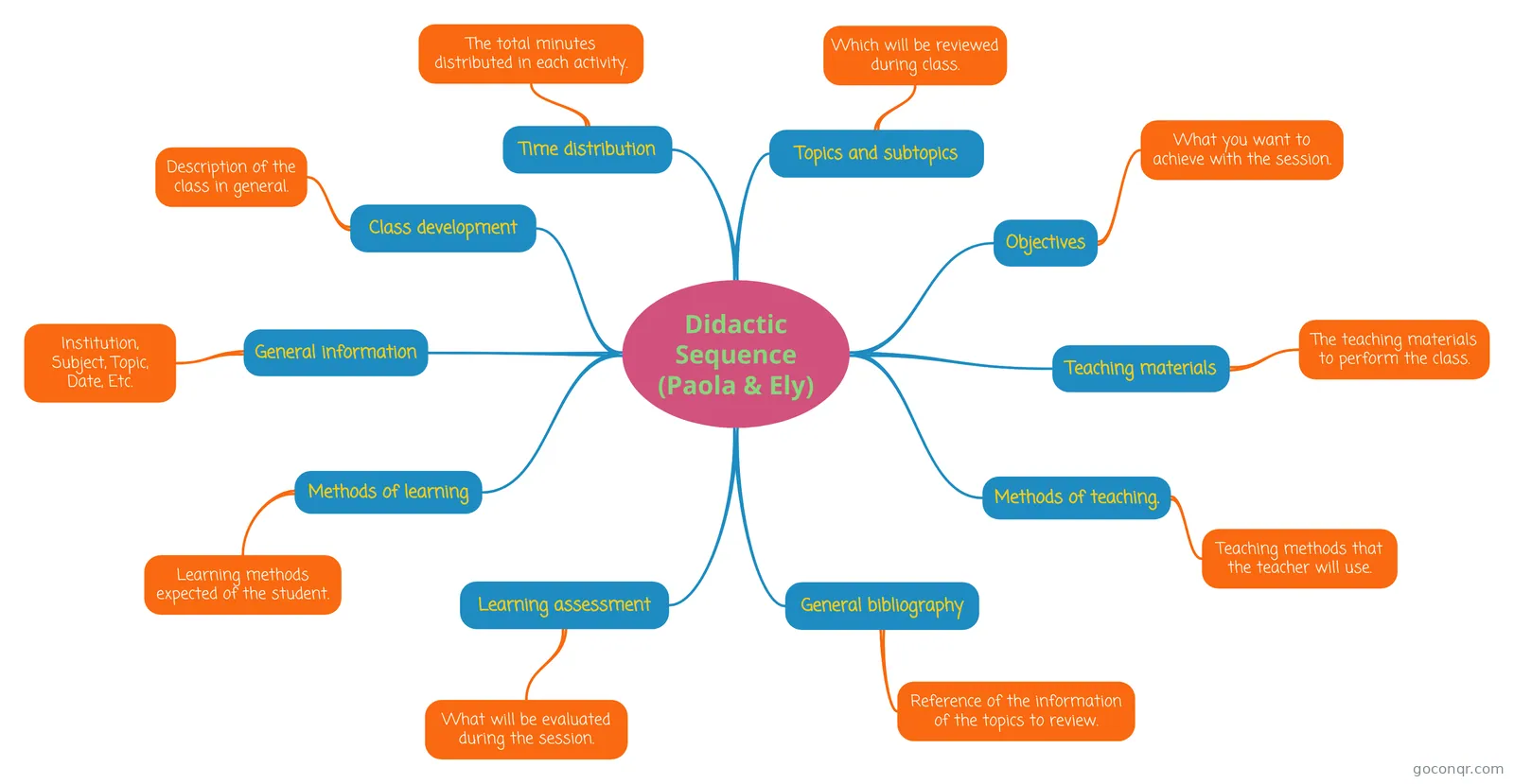 Didactic Sequence (Paola & Ely) Mapa conceptual de la secuencia didáctica hecha por Paola Valencia & Elizabeth Lara :)
-
Lesson Planning Mind map based on reading: http://dx.doi.org/10.1017/CBO9780511667190.006 Cambridge Books Online © Cambridg...
-
Self Study Project: Intentional Teaching CTRD Self Study Project
-
Week 1: 28.01 - 01.02
-
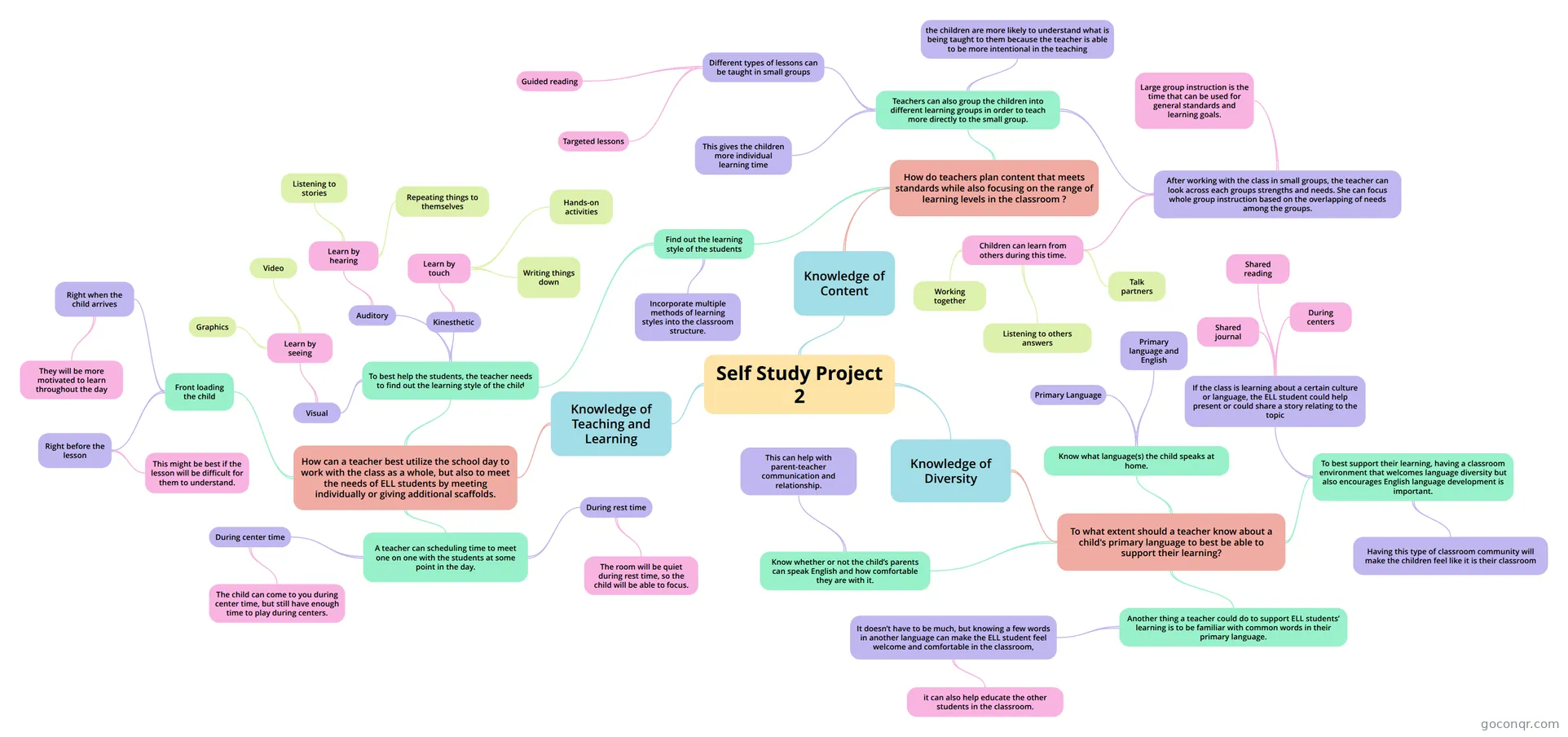 Self Study Project 2 self study project
-
planning lessons
-
Types of Teacher Plans
-
Effective Planning for All A mind map of out UW course in São Paulos
-
LESSON DESIGN & ASSESSMENT Explanation of the importance to designing lesson plans based on principles and knowledge of learning objec...
-
Planning and preparing a session
-
Planning for Learning A mindmap that outlines teaching strategies
-
S.I.O.P DESCRIPTION OF THE MIND MAP
-
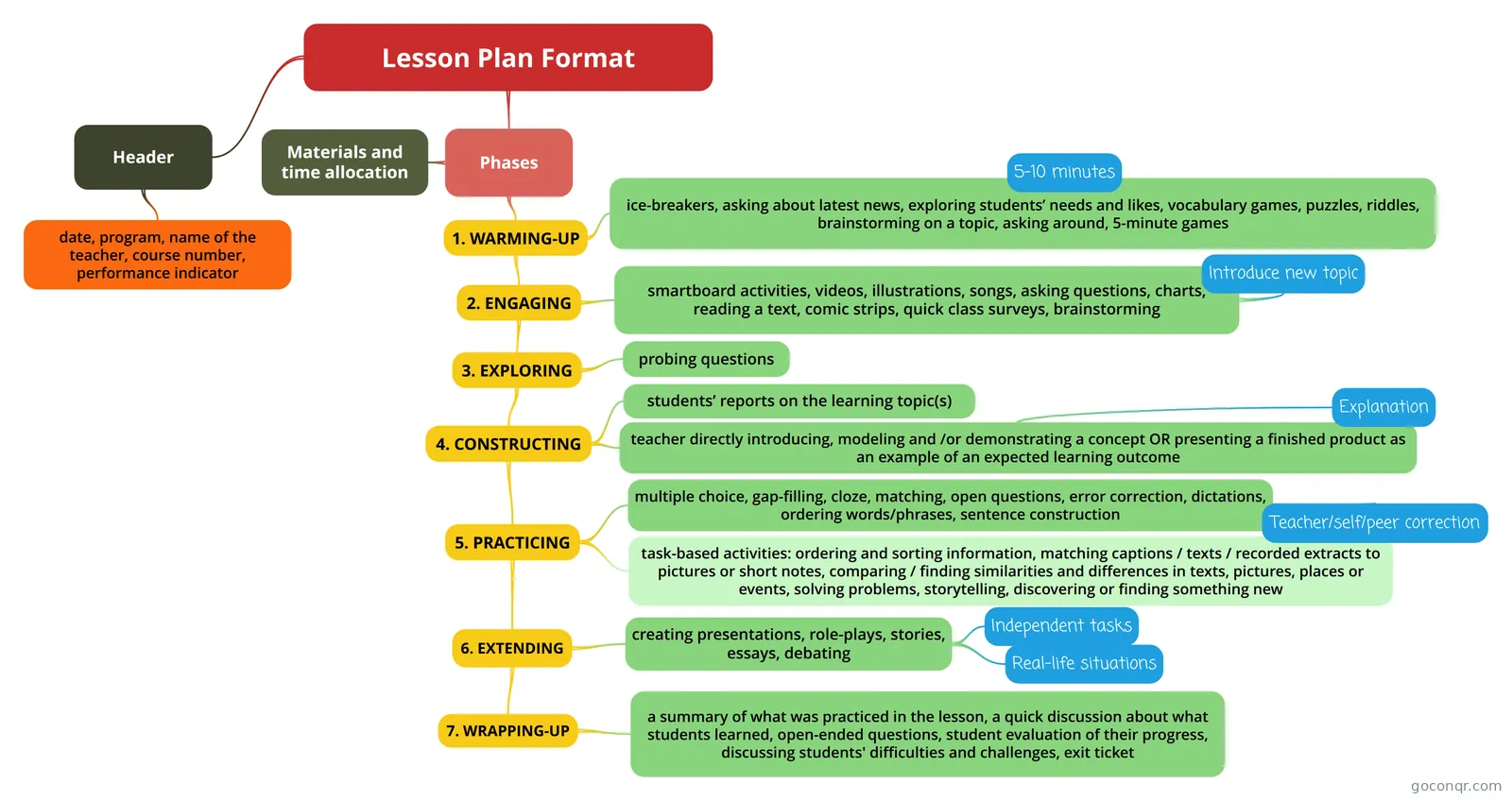 Lesson Plan Format Lesson Planning Format
-
Planning
-
 DIDACTIC UNIT
-
Formative Assessment Lesson Planning linking the formative assessment lesson components to one another
-
Lesson Planning Mapa mental
-
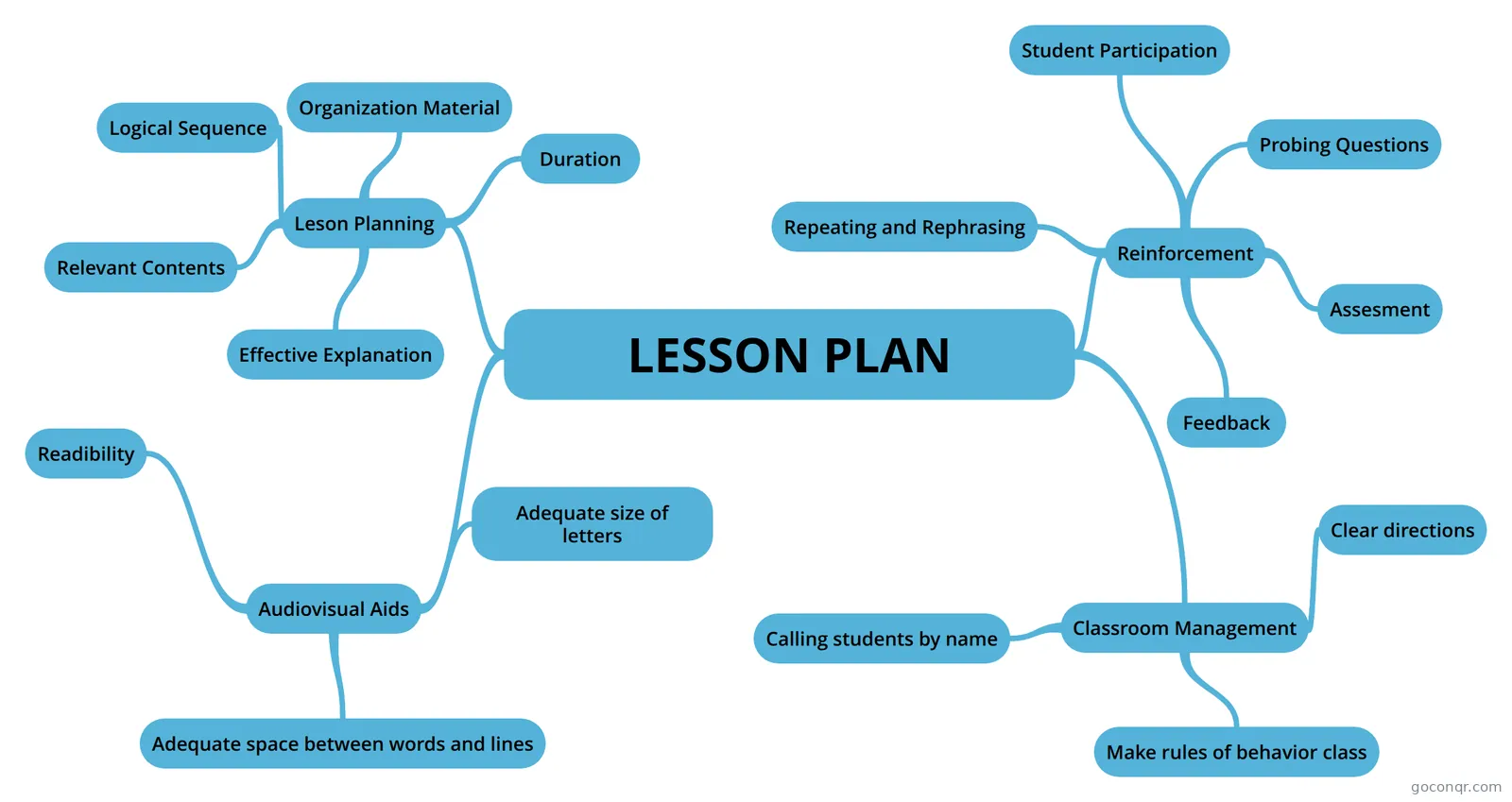 LESSON PLAN Lesson Plan mind map Microteaching
-
Week 10
-
Social Media Training Plan lesson plan training
-
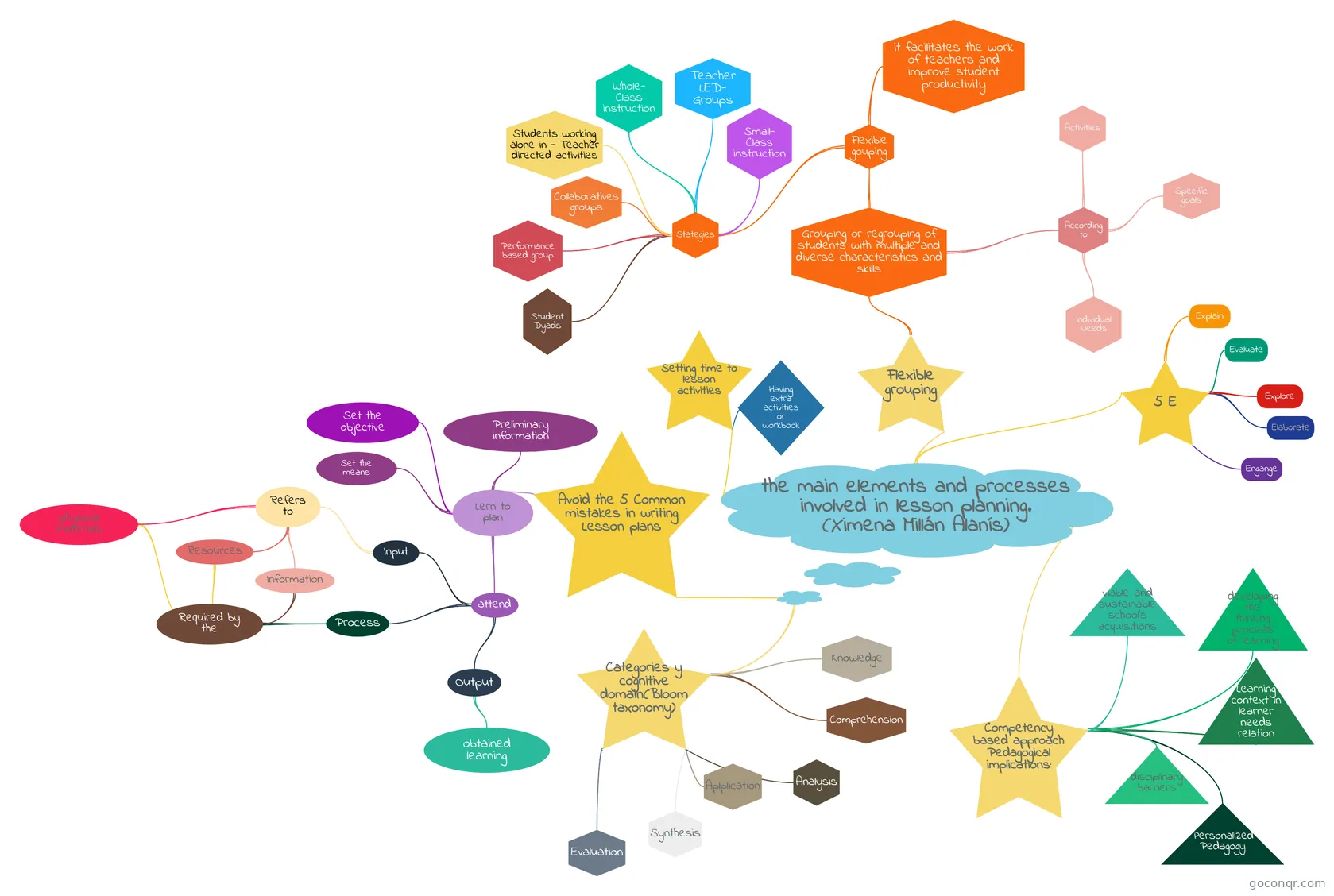 the main elements and processes involved in lesson planning. (Ximena Millán Alanís) Mental map of lesson 1 second product
-
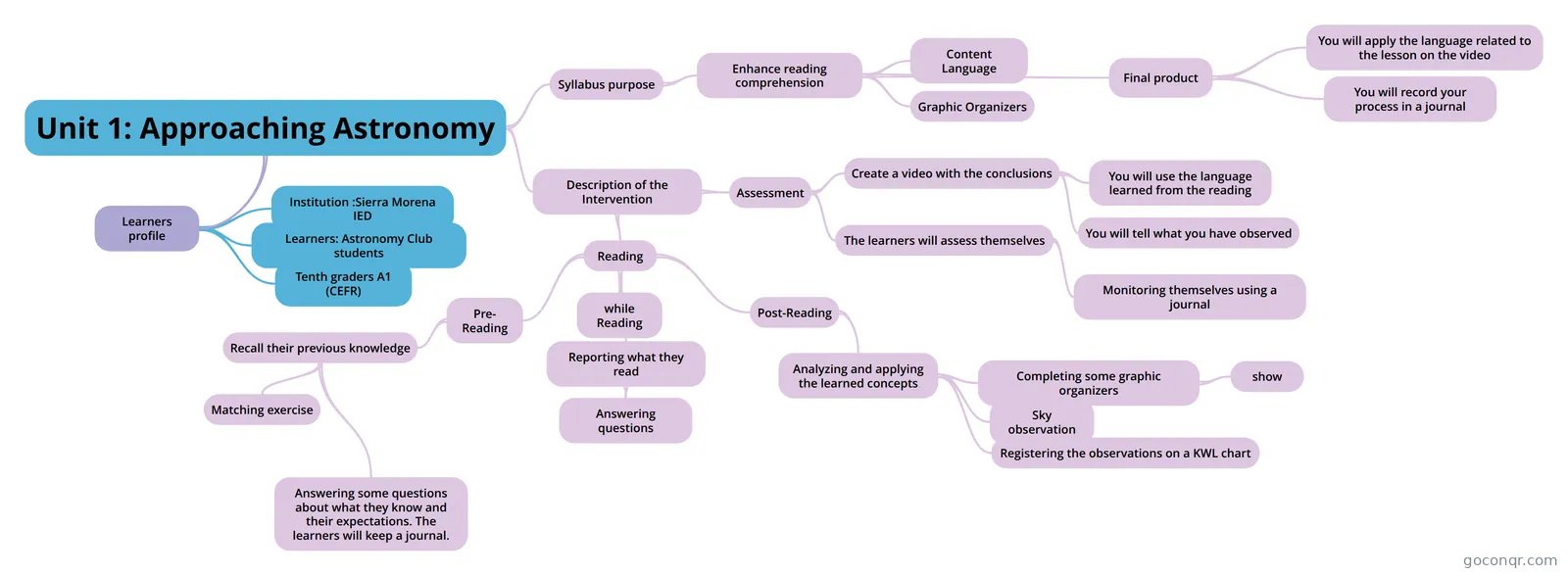 Unit 1: Approaching Astronomy syllabus design about astronomy
-
MAKING A PLAN MAP MIND THE 5 E´S
-
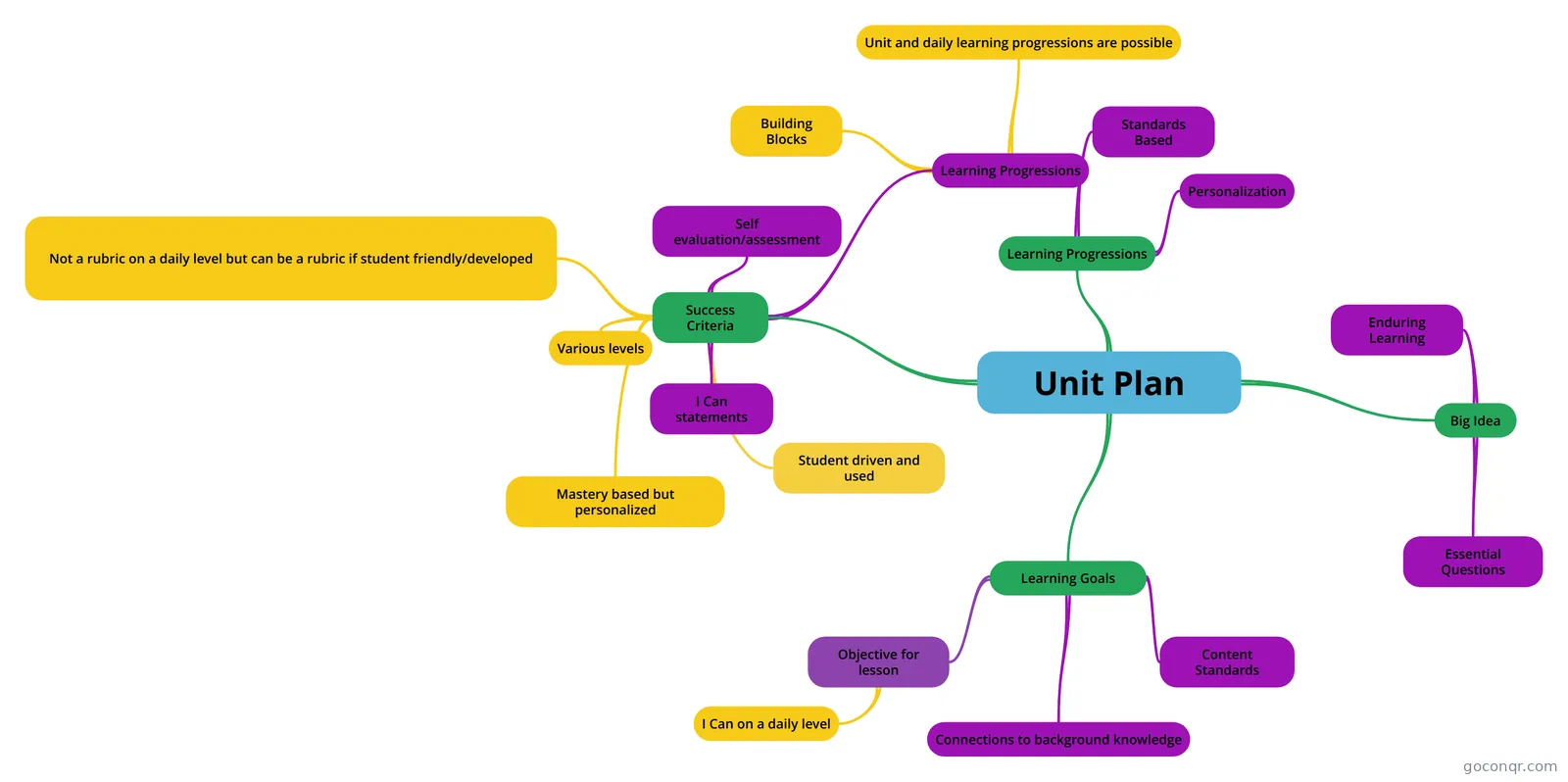 Unit Plan Mind map of essential vocabulary linked to Unit Plan
-
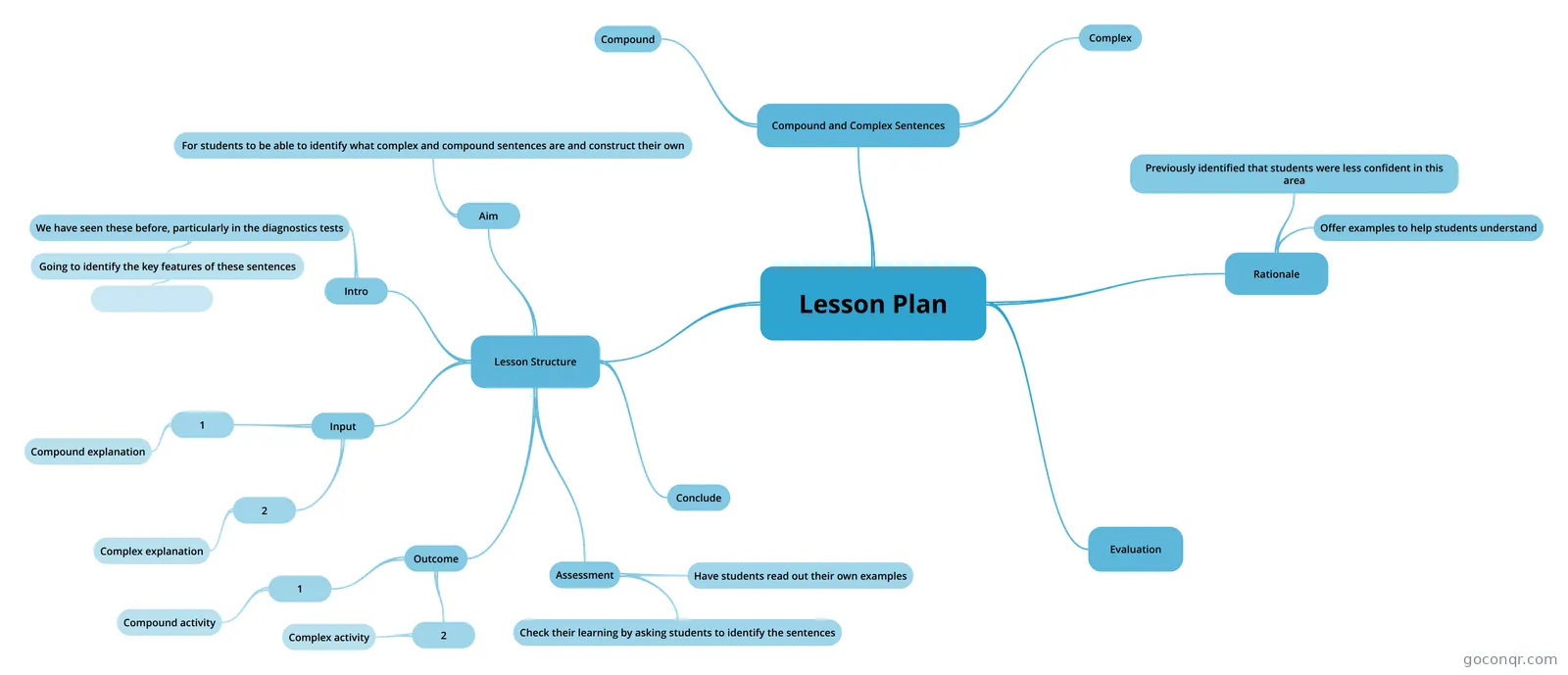 Lesson Plan 8-minute lesson plan
-
Inquiry Statement tema 2 de inglés de 2 eso
-
Mind Mapping Delivery This is a test description
-
FORMATIVE ASSESSMENT LESSON PLANNING mind map
-
Formative Assessment Unit Plan Mind Map illustrating the organization of a formative assessment unit plan
-
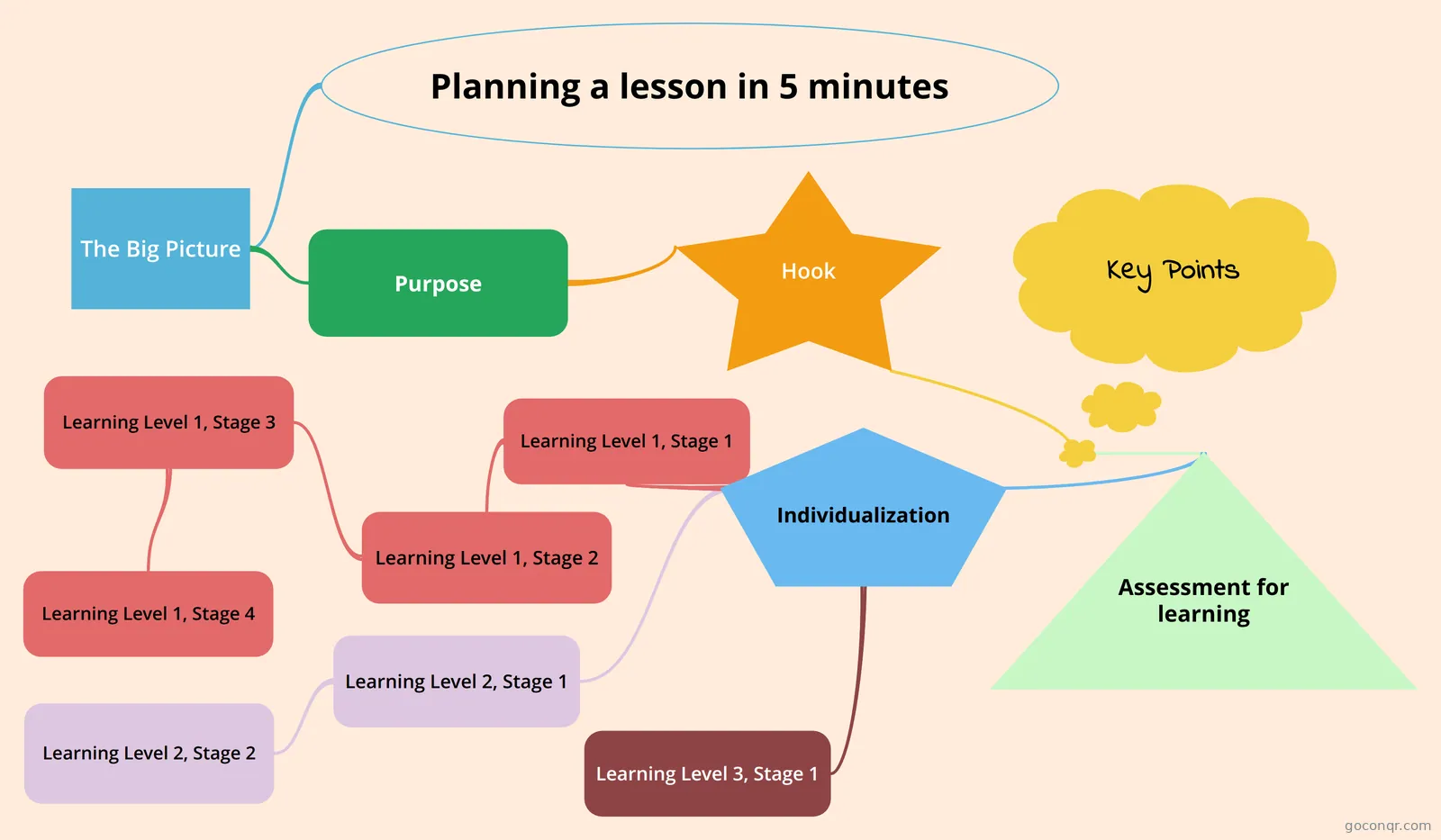 Planning a lesson in 5 minutes A Mind Map of the 5-Minute Lesson Plan, originally created by the British professor Ross Morrison McGill (T...
-
Formative Assessment Planning mIND mAP
-
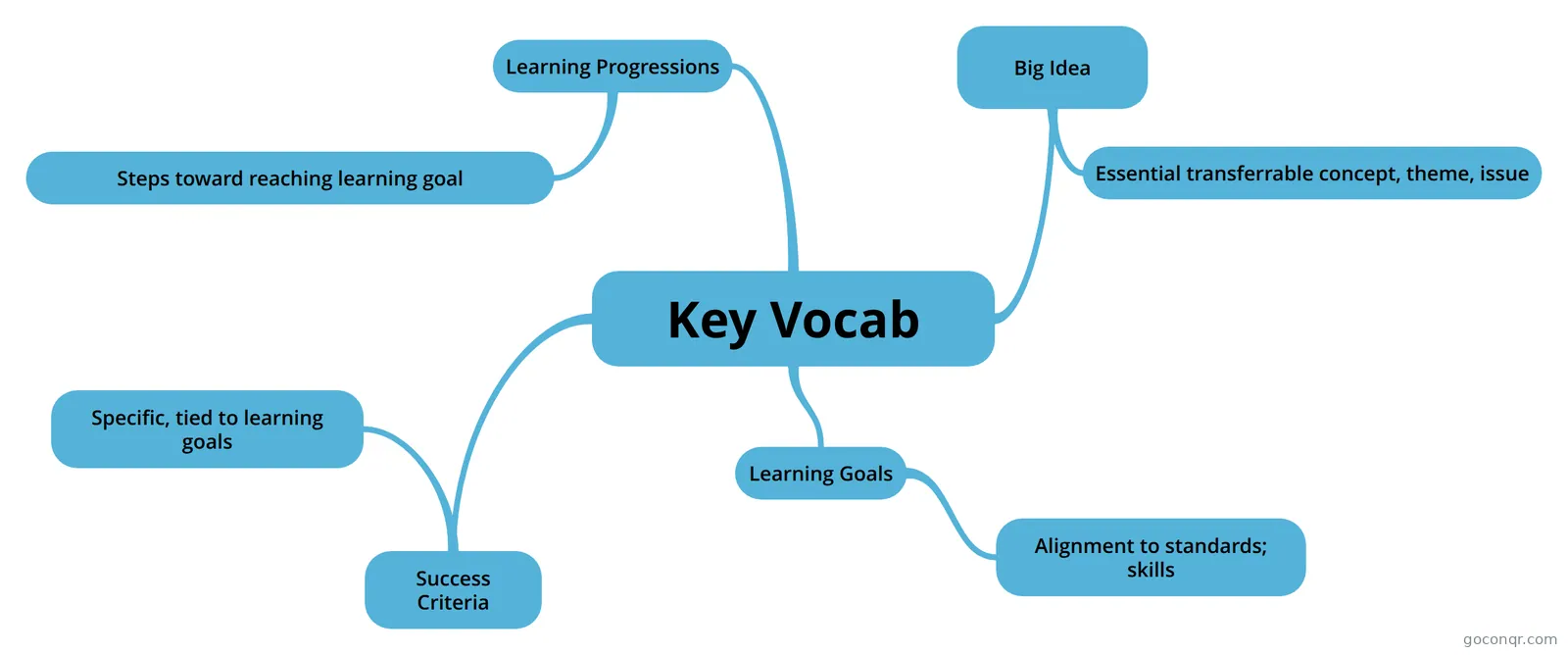 Key Vocab Key vocabulary about unit plans.
-
Formative Assessment Team 3
More Lesson Planning resources
About lesson planning mind maps
GoConqr OriginalUsing lesson planning mind maps
Mind maps on this page connect the parts of a lesson plan in different ways. Procedure sets out possible beginning, middle and end stages alongside timing, interaction and stage aims. It is a useful starting point if you want to see how a lesson can be organised.
Didactic Sequence (Paola & Ely) brings together objectives, time distribution, materials and teaching methods. For a different context, English Summer Camp starts with questions about the learners, their level and the activities they enjoy.
Revise with a map
Follow the branches of a map and note how its planning elements relate. Then cover the map and try to recall its structure before checking what you missed. If you want a linear account, switch to notes on the unit page; use a quiz when you want to test your understanding. Choose a map that fits the planning task you are working on.
Frequently asked questions
Which mind map is a good place to start?
Procedure is a useful first choice for looking at the stages of a lesson. Its branches include beginning, middle and end, as well as timing, interaction and stage aims. For a broader view of a teaching sequence, Didactic Sequence (Paola & Ely) includes objectives, materials and methods.
What do the mind maps cover?
The maps cover general lesson planning and particular teaching contexts. English Summer Camp considers questions about learners and activities, while How to Teach English: Adults includes lesson staging and classroom management. The Incredible Book Eating Boy connects a story with subjects including maths, science and literacy.
Are the mind maps free to use?
Yes. Every resource listed on this page is free to open and study without an account. The maps were made by GoConqr users rather than by GoConqr. A free account also lets you save quiz scores and make your own quizzes, mind maps, flashcards and notes.