
Neoplasia and Cancer Biology
39 resources created by 26 users
This Neoplasia and Cancer Biology page on GoConqr gathers community-made quizzes, mind maps, flashcards and notes, from the hallmarks of cancer and carcinogenesis to tumour suppressors, metastasis and tumour classification. It's built for university students working through general pathology and for teachers after ready-made material. There are over 300 resources here, including more than 50 quizzes, over 160 mind maps and more than 100 flashcard decks, made by over 240 contributors. Try a quiz to find your gaps, then pick a map to fill them.
Top Neoplasia and Cancer Biology resources
-
22 questionsTumor Suppressors What is the role of the Rb Susceptibility gene?
-
24 questionsS377 Chapter 19 A quiz based on the summaries of chapter 19
-
73 cardsBiology of cancer - what is cancer? How many people die from cancer in the UK every year? What portion of total deaths in the UK per year is th...
-
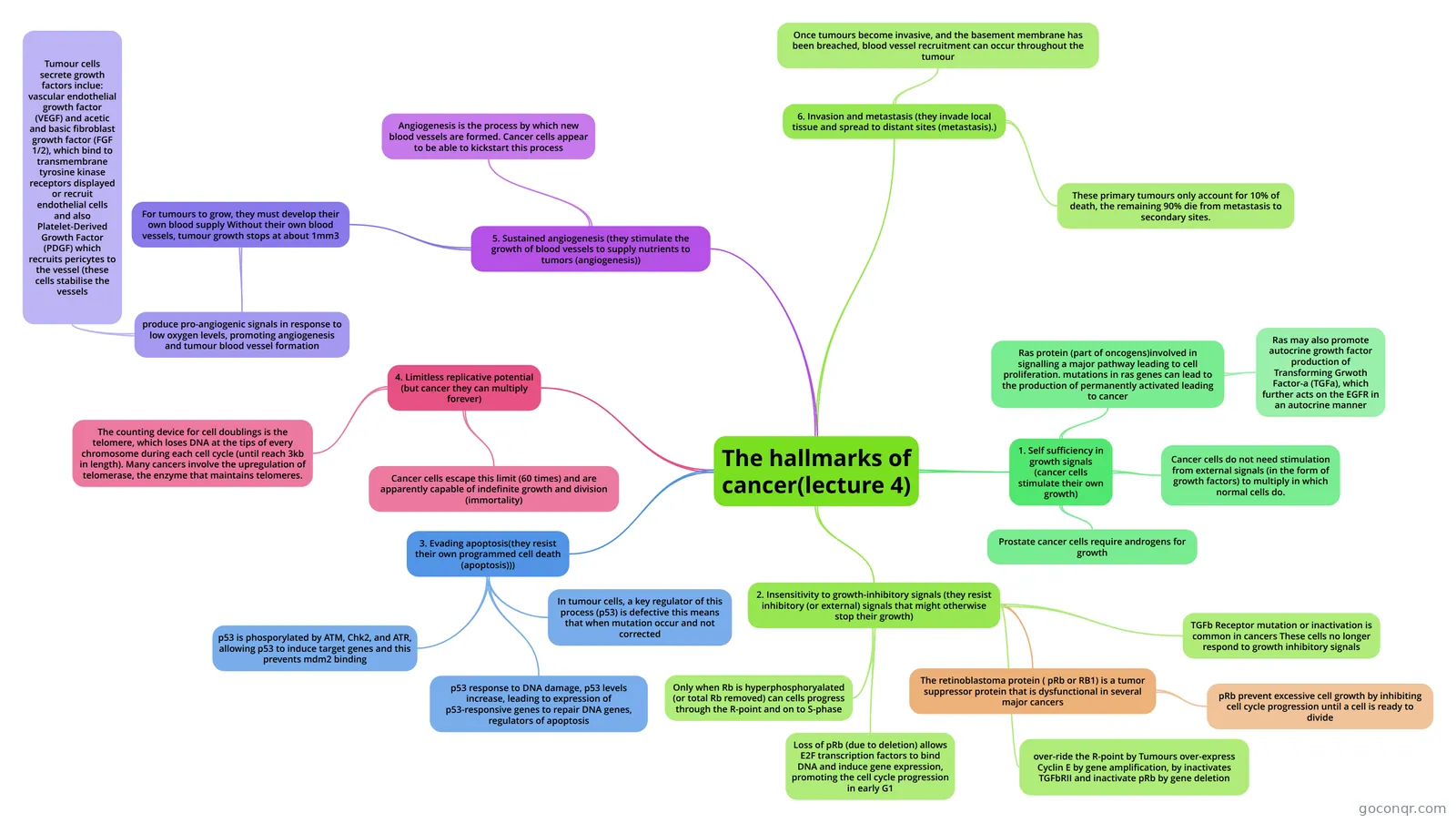 Mind map The hallmarks of cancer(lecture 4)
-
25 questionsCancer 1 What is the most common cancer in males?
-
 Mind map Molecular Basis of Neoplasm
-
Mind map Benign vs Malignant
-
72 questionsBioMed II Exam 2 Lectures Neoplasia I and II
Quizzes
See all 15 quizzes-
22 questionsTumor Suppressors What is the role of the Rb Susceptibility gene?
-
24 questionsS377 Chapter 19 A quiz based on the summaries of chapter 19
-
25 questionsCancer 1 What is the most common cancer in males?
-
72 questionsBioMed II Exam 2 Lectures Neoplasia I and II
-
11 questionsOncology The nurse at the clinic is interviewing a 64-year-old woman who is 5 feet, 3 inches tall and weighs 125 pou...
-
15 questionsPHSI3012 Midsem PHSI3012 Midsem
-
30 questionsPathophysiology exam 5 Which of the following is necessary for tumor cells to establish a nutrient network to support continued ov...
-
31 questionsCancer- Primary Events What is a primary event?
Mind maps
See all 12 mind maps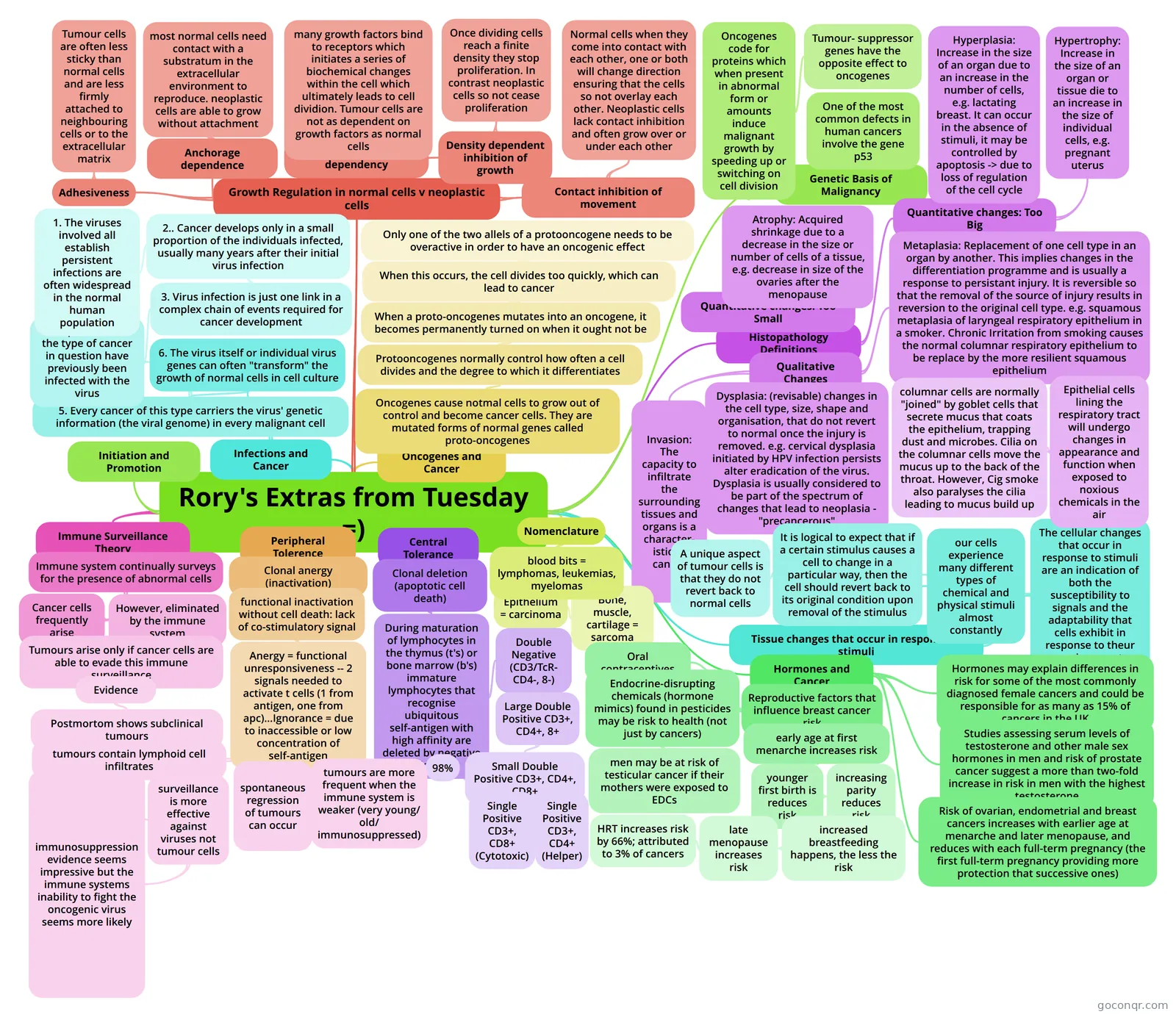
Flashcards
See all 11 flashcards-
73 cardsBiology of cancer - what is cancer? How many people die from cancer in the UK every year? What portion of total deaths in the UK per year is th...
-
34 cardsCancer Malignancy and tumorigenesis what is cancer
-
46 cardsWeek 5 What is a neoplasm?
-
34 cardsWeek 10 What is radiation therapy?
-
39 cardsWeek 8 Anatomy and cancer Cancer screening and prevention How do you know that a treatment works?
-
46 cardsCancer The increase of number of cells in a tissue is...
-
23 cardsWeek 6 What are the 3 most common cancers in adults?
-
19 cardsWeek 7: Breast cancer Which 4 stainings are always performed when a woman is diagnosed with breast cancer and why?
Notes
More Internal medicine, pathology and clinical semiology topics
About Neoplasia and Cancer Biology
GoConqr OriginalWhat this unit covers
The resources follow cancer from first definitions to spread around the body. Several mind maps set out the basics: Biology of Neoplasia covers definitions, risk factors, growth of tumours and altered differentiation, while Characteristics of major tumour types lists the commonest cancers in males and females. Others deal with benign versus malignant tumours, carcinogens and breast cancer.
Where to start
If neoplasia is new to you, begin with the flashcard decks Neoplasia and Carcinogenesis. They ask what neoplasia means, what the three broad steps of carcinogenesis are and which step produces clones. Then read the Cancer mind map, which sets out initiation, promotion and progression.
- Read a general map such as Biology of Neoplasia.
- Work through a deck such as Hallmarks of cancer.
- Test yourself with the Tumor Suppressors quiz, which asks about the role of the Rb gene and the protein it binds.
Using quizzes and maps together
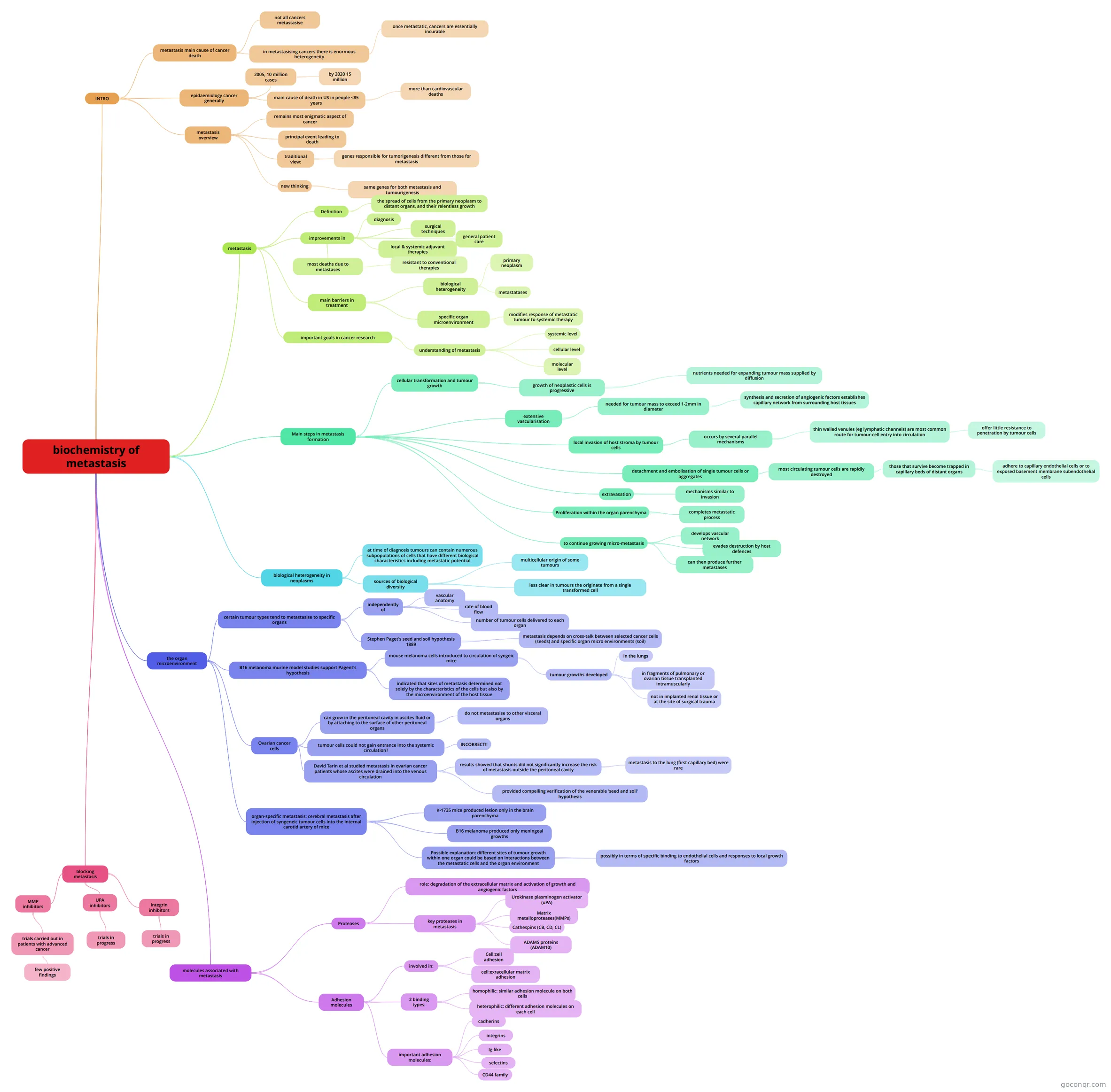
Take a quiz first and note what you missed. Then open the matching map and read only those branches. The quiz on cancer biology starts with tumour naming, such as why cancers of connective tissue end in -sarcoma and what carcinoma means. Use it before the maps on tumour types. For spread, the mind maps Metastasis, EMT, intravsation and extravasation break the process into steps, and the quiz on how cancer spreads through the body lets you check them.
Where it fits
This unit sits in the General Pathology strand of Internal medicine, pathology and clinical semiology. Most of the material is university level, with a small share at other levels. Teachers can use the decks and quizzes as ready-made starting points for classes.
Choose one quiz, see how you get on, and then make your own maps or flashcards from what you find.
Frequently asked questions
Which resource should I open first?
Start with the Neoplasia flashcard deck or the Biology of Neoplasia mind map. Both cover definitions and the main steps of carcinogenesis. Once those feel familiar, move on to the Tumor Suppressors quiz, which tests the role of the Rb gene and the protein it binds.
What do the mind maps cover?
They range from general topics, such as Biology of Neoplasia and Benign vs Malignant, to specific ones. You will find maps on carcinogens, oncogenes and targeted therapies, breast cancer, brain cancer, and the steps of metastasis, including EMT, intravasation and extravasation.
Are the resources free to use?
Yes. Every resource on this page is free to open, study and take, with no account needed. A free account also saves your quiz scores and lets you make your own quizzes, mind maps, flashcards and notes.
Who made these resources?
They were made by GoConqr users, not by GoConqr itself. Over 240 contributors have added quizzes, maps, decks and notes here, so styles differ. Some follow a lecture course, others a textbook chapter, which is useful for comparing explanations.
Which levels is this unit suited to?
Most of the material is aimed at university students, which fits general pathology and cancer biology. A small share is pitched at other levels. Teachers can also use the quizzes and flashcard decks as ready-made material for sessions.
What if I can't find a topic I need?
Browse the related mind maps and notes first, as many topics appear under different titles, such as Carcinogenesis or Process of Carcinogenesis. If it is still missing, make your own quiz, map or flashcards with a free account and keep them for later revision.