
Socialisation and Social Norms
41 resources created by 39 users
This Socialisation and Social Norms page on GoConqr gathers community-made mind maps, flashcards, quizzes, slides and notes, from primary and secondary socialisation to agents such as family, peers, media and religion. It's built for school students revising a topic, university students and professional candidates filling gaps, and teachers after ready-made material. There are over 300 resources here, including more than 100 flashcards and over 190 mind maps, with GCSE Sociology and A-level Sociology mentioned among them. Pick a mind map, try a quiz to find your gaps, then make your own.
Top Socialisation and Social Norms resources
-
Mind map Sociology Antro summative
-
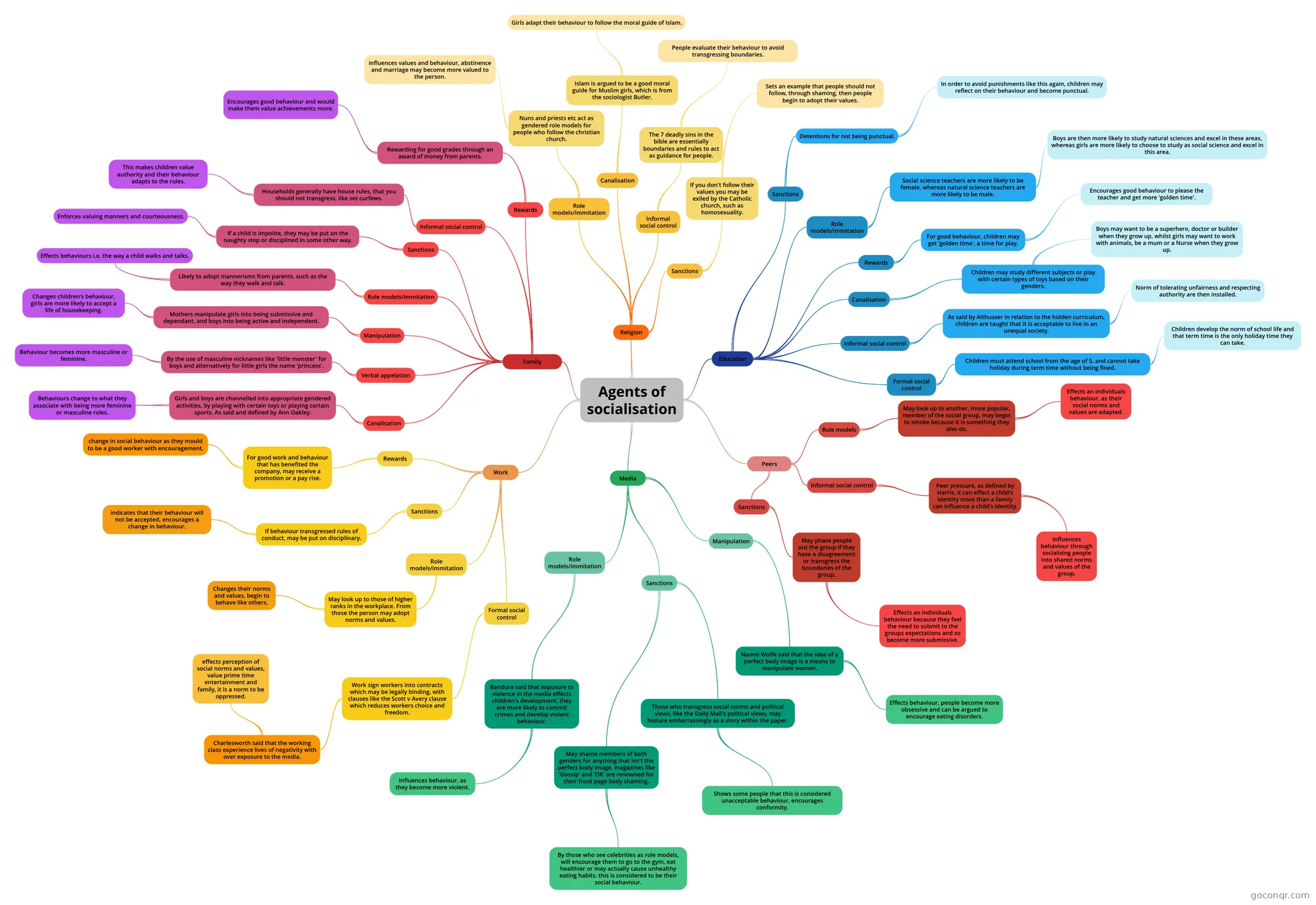 Mind map Agents of socialisation proccesses
-
48 cardsSociology key words
-
25 cardsSociology Key Terms :UNIT 1: Socialisation , Culture and Identity
-
25 cardsChapter 3: Socialization
-
 Mind map Agencies of socialisation: The Mass Media and Religion
-
15 cardsUnit 2.3 Relationships
-
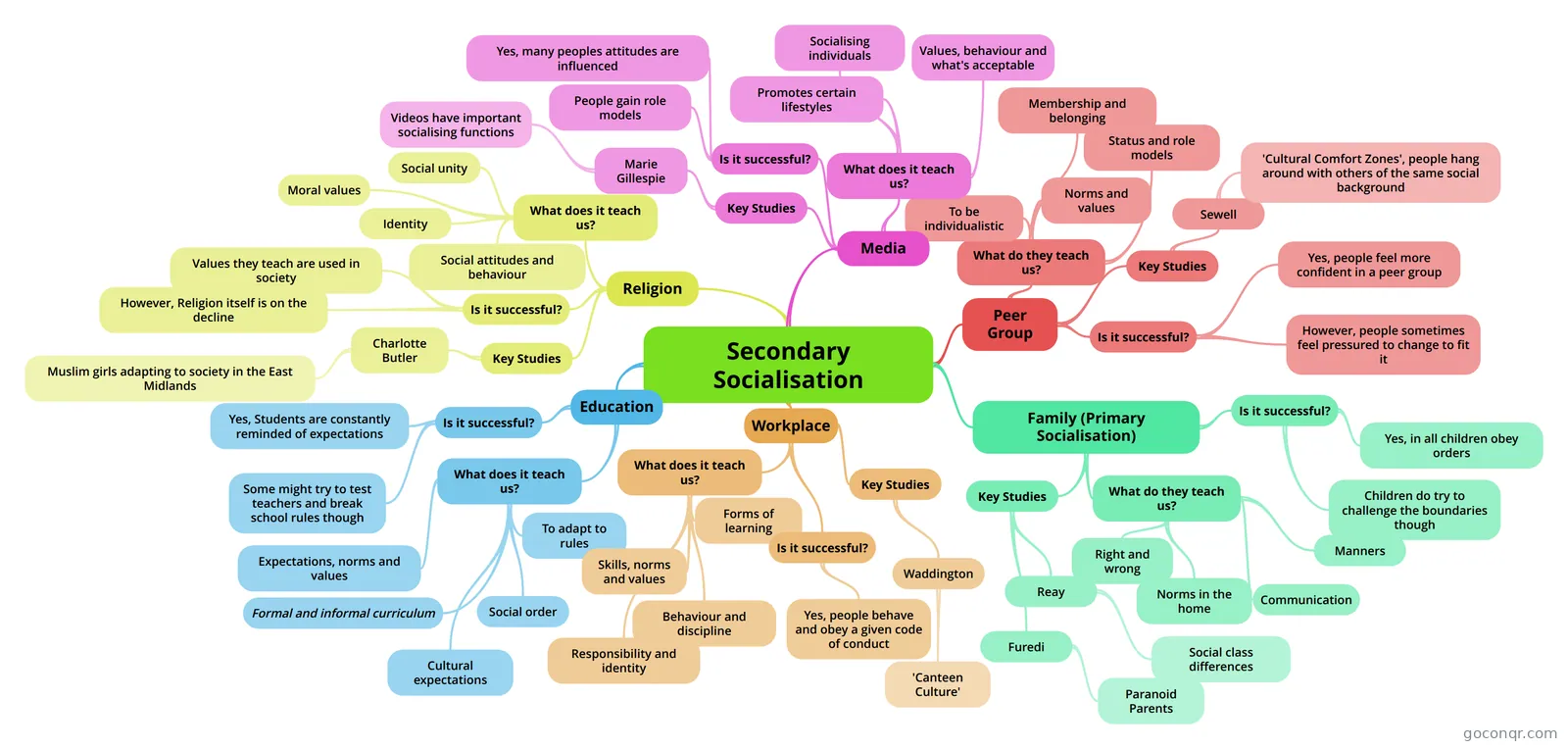 Mind map Secondary Socialisation
Quizzes
Mind maps
See all 20 mind maps-
Sociology Antro summative
-
Agents of socialisation proccesses
-
Agencies of socialisation: The Mass Media and Religion
-
Secondary Socialisation
-
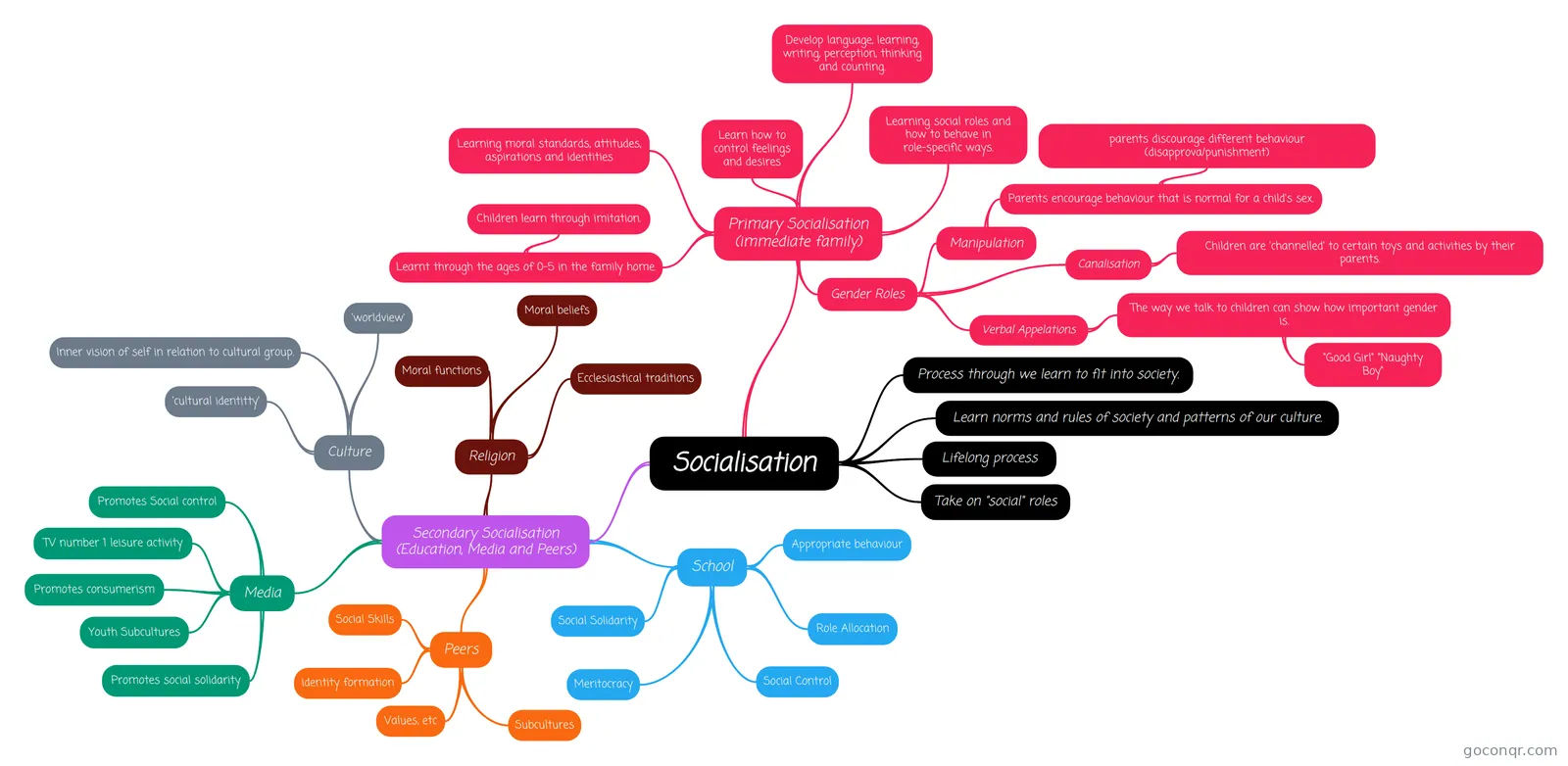 Socialisation soialisation
-
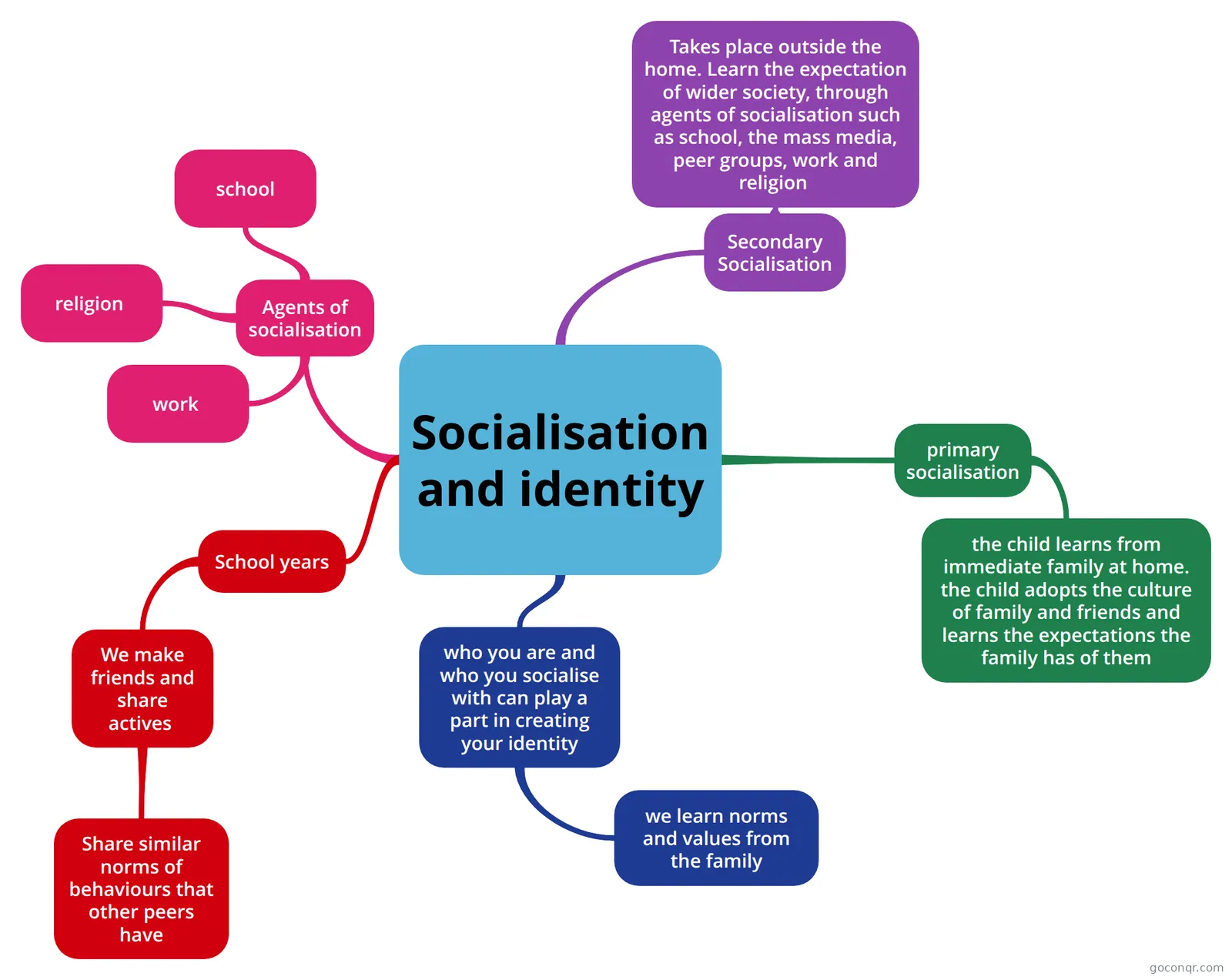 Socialisation and identity Mind Map on Socialisation and identity , created by Emilia Webster on 11/05/2016.
-
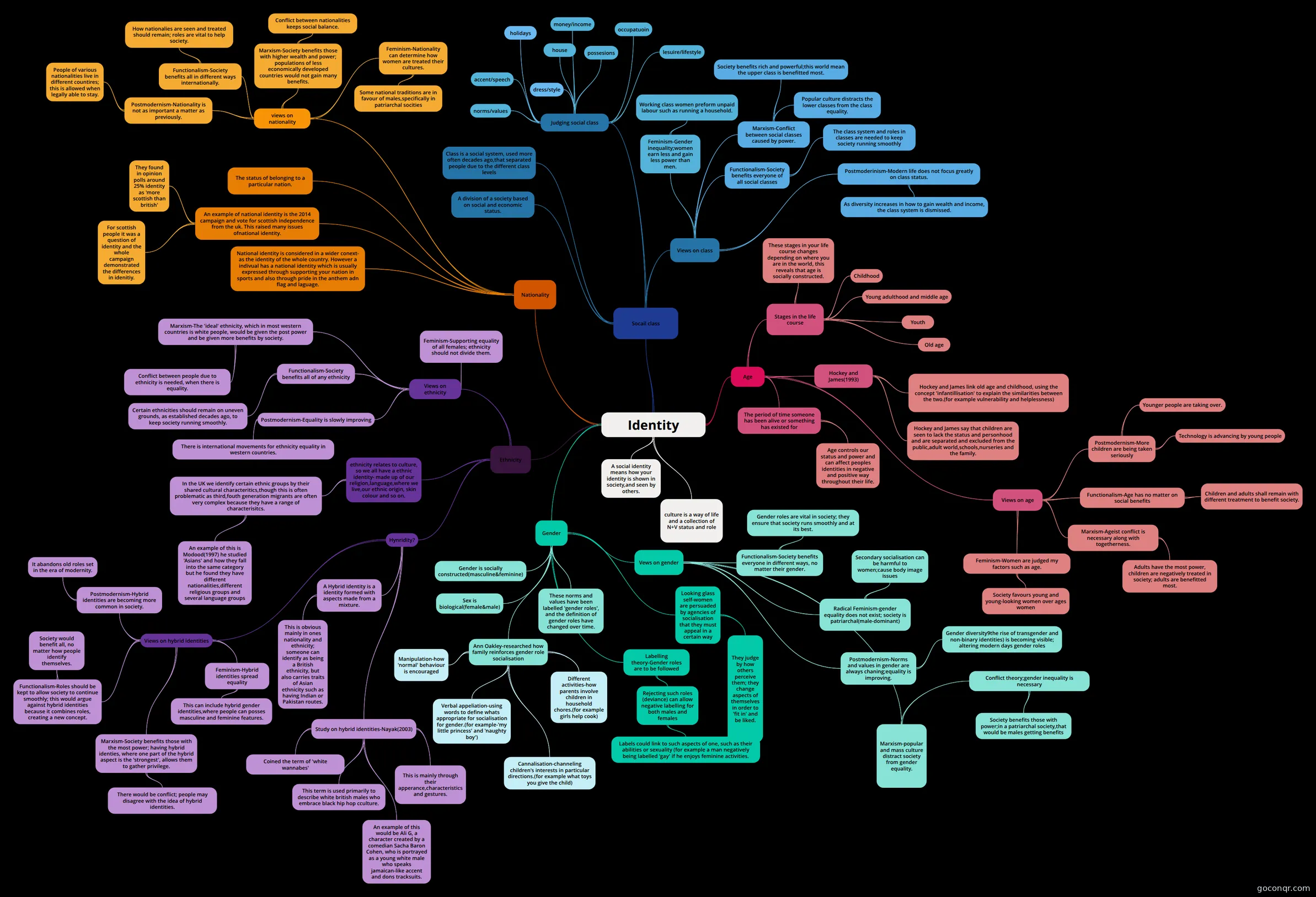 Identity identity mind map
-
Home and family
Flashcards
See all 19 flashcards-
48 cardsSociology key words
-
25 cardsSociology Key Terms :UNIT 1: Socialisation , Culture and Identity
-
25 cardsChapter 3: Socialization
-
15 cardsUnit 2.3 Relationships
-
70 cardssocialisation
-
31 cards(a) Ch. 5 Terms Socialization
-
33 cardsG671
-
19 cardsSocialisations and agents of socialisation What is socialisation
Slides
More Sociology topics
About Socialisation and Social Norms
GoConqr OriginalWhat the resources cover
The unit centres on how people learn the rules of their society. The mind map Socialisation sets out primary socialisation in the immediate family: learning to control feelings and desires, developing language and absorbing moral standards. The mind map Secondary Socialisation asks what the family teaches us, from manners to right and wrong, and whether that teaching works.
Agents and norms
The Agents of socialisation mind map covers family, education, peers, work, religion, media and role models, along with rewards, sanctions and informal social control. For deeper reading, one mind map looks at the mass media and religion, including the claim that secularisation changes where norms and values come from. There are also maps on gender socialisation, peer groups and social control.
Where to start
- Open the Socialisation mind map for the big picture.
- Move to Agents of socialisation to see who teaches what.
- Work through the flashcards, such as Sociology Key Terms:UNIT 1: Socialisation, Culture and Identity, which covers norms, values, roles, status, mores and canalisation.
- Try Primary Soclialisation or another quiz to check what stuck.
Using quizzes and maps together
Read a map first, then take a quiz on the same idea. Where you miss a question, go back to the matching branch of the map. The flashcards on status, roles, the looking-glass self and the self-fulfilling prophecy suit short, repeated sessions. Some quizzes look at gender-role socialisation and its evaluation, which helps with essay-style points.
Where it sits
This unit belongs to the Foundations of Sociology strand in Sociology. Most resources are made for secondary study, with a smaller share for university. Everything here was made by GoConqr users. Choose one map today and see how far it takes you.
Frequently asked questions
Which resource should I open first?
Start with the Socialisation mind map. It lays out primary socialisation in the family, including language, self-control and moral standards. After that, open the Agents of socialisation mind map to see how family, education, peers, work, religion and media each play a part.
What do the mind maps cover?
They cover primary and secondary socialisation, the agents of socialisation, gender socialisation, peer groups, social control, culture, norms and values, and identity. Some also look at media and religion, including secularisation, and at how working-class identity is created and reinforced.
Which exams are these resources linked to?
The listed resources mention GCSE Sociology and A-level Sociology. Most of the material is aimed at secondary study, and a smaller share suits university students and professional candidates. Check the title and content of each item to see whether it matches your course.
Are the resources free to use?
Yes. Every resource listed here is free to open, study and take, with no account needed. They were made by GoConqr users, not by GoConqr itself, so styles and depth vary. A free account also saves your quiz scores and lets you make your own quizzes, mind maps, flashcards and notes.
What can I use for key terms?
The flashcard decks are the place to go. One deck covers norms, values, roles, rules, status, mores and meritocracy. Another has nature, nurture, labelling, resocialisation and the self-fulfilling prophecy. A further deck covers ascribed and achieved status, role conflict and impression management.
What if I can't find the topic I need?
Try a nearby title, since many resources overlap. Searching for agents, gender, culture or social control may turn up what you want. You can also make your own mind map, flashcards or notes on the missing topic and keep them alongside the community material.