
Audiences mind maps
196 mind maps by 155 users · Page 1 of 5
This Audiences mind maps page on GoConqr gathers user-made maps on audience theory, research and media appeals. School students can practise these topics, and teachers can find ready-made material. The mostly secondary-level collection has over 190 mind maps by more than 150 users. Choose a map to explore.
Select topic
- Audience Profiling and Segmentation29
- Target Audiences55
- Audience Research and Feedback24
- Audience Appeal and Engagement11
- Audience Theories55
- Active and Passive Audiences7
- Reception Theory and Audience Responses22
- Uses and Gratifications Theory13
- Patterns of Media Consumption14
- Fandom, Celebrity and Participatory Culture7
Mind maps
-
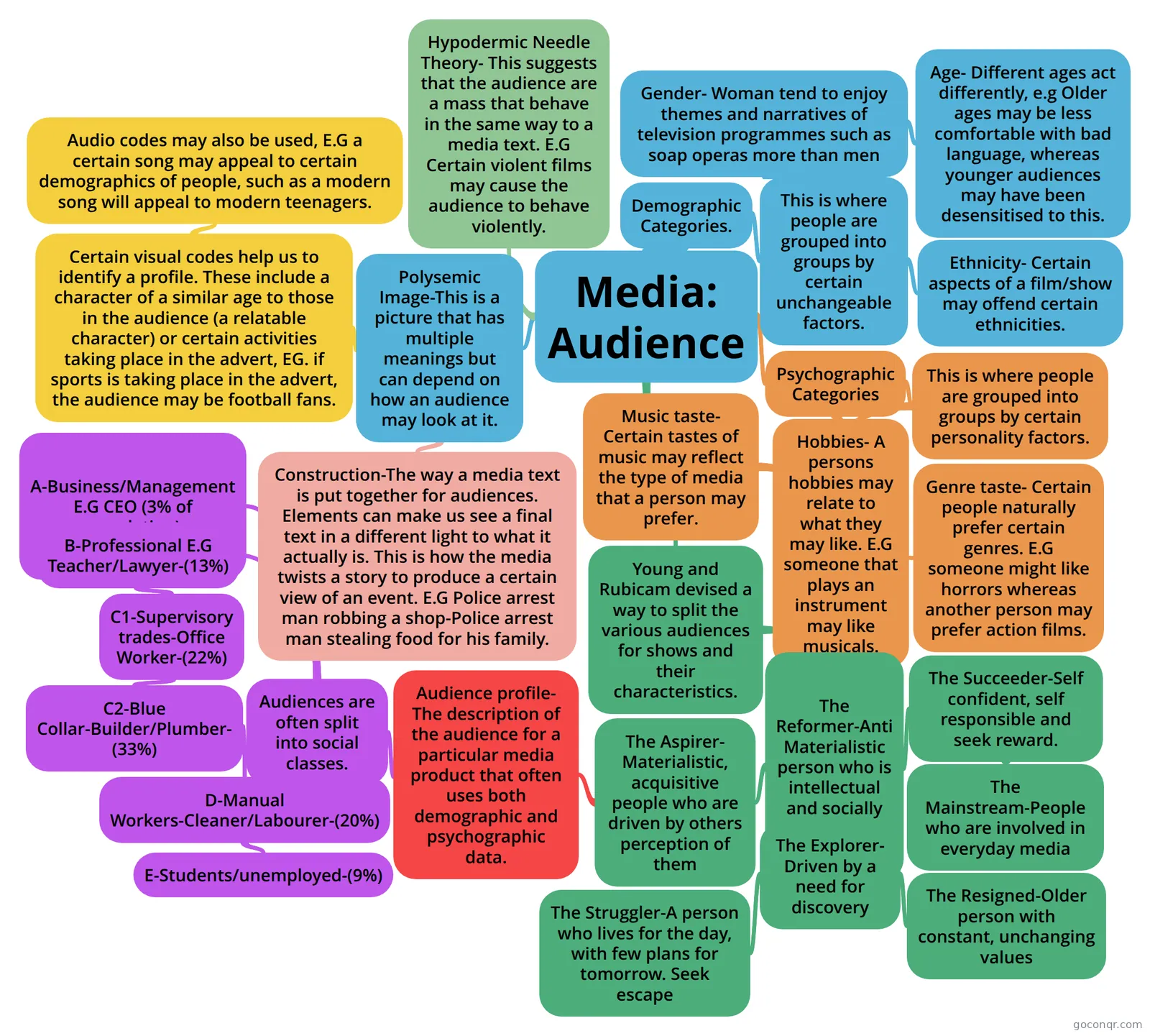 Media: Audience
-
Richard Dyer - Star Theory Relation of visuals to songs lyrics
-
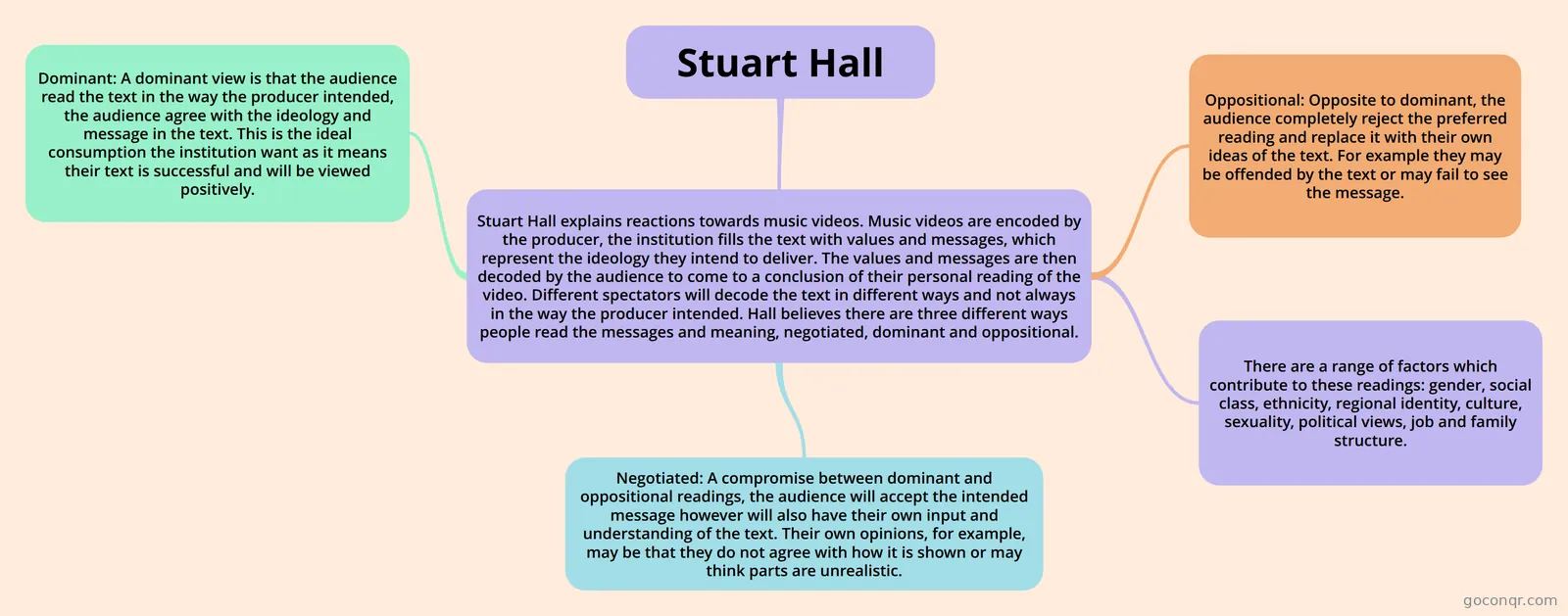 Stuart Hall Stuart Halls Reception Theory
-
Media Theory
-
Media Theory_1
-
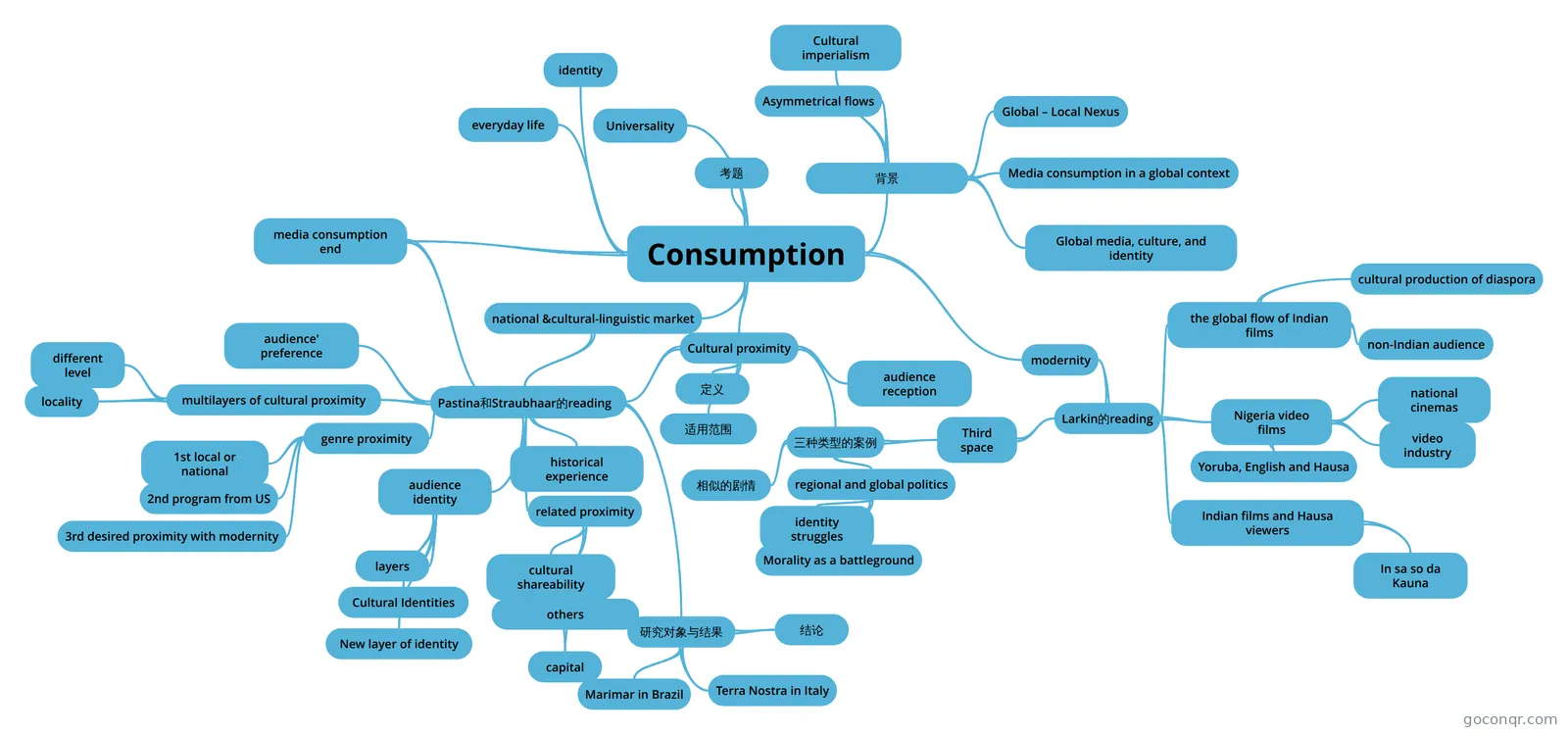 Consumption
-
Consumption
-
AS Exam - Audience and Institution Key Terms
-
1_MEDIA AS - AUDIENCE
-
MEDIA AS - AUDIENCE
-
Effects of the media on the audience
-
Mass Media Audiences: Reception Analysis Model and Selective Filter Model
-
1B Response: AS Film Audience
-
How does "The Longing" attract/ address our audience?
-
Audience theory influences for short film
-
Target audience factors to consider
-
Audience (all)
-
Primary Target Audience: Young People 15-20
-
Tide and Audience
-
Audiences: Encoding/Decoding + Reception Analysis Model
-
Media Audiences
-
To what extent do your 3 main texts appeal to different audiences?
-
Uses and Gratifications Model
-
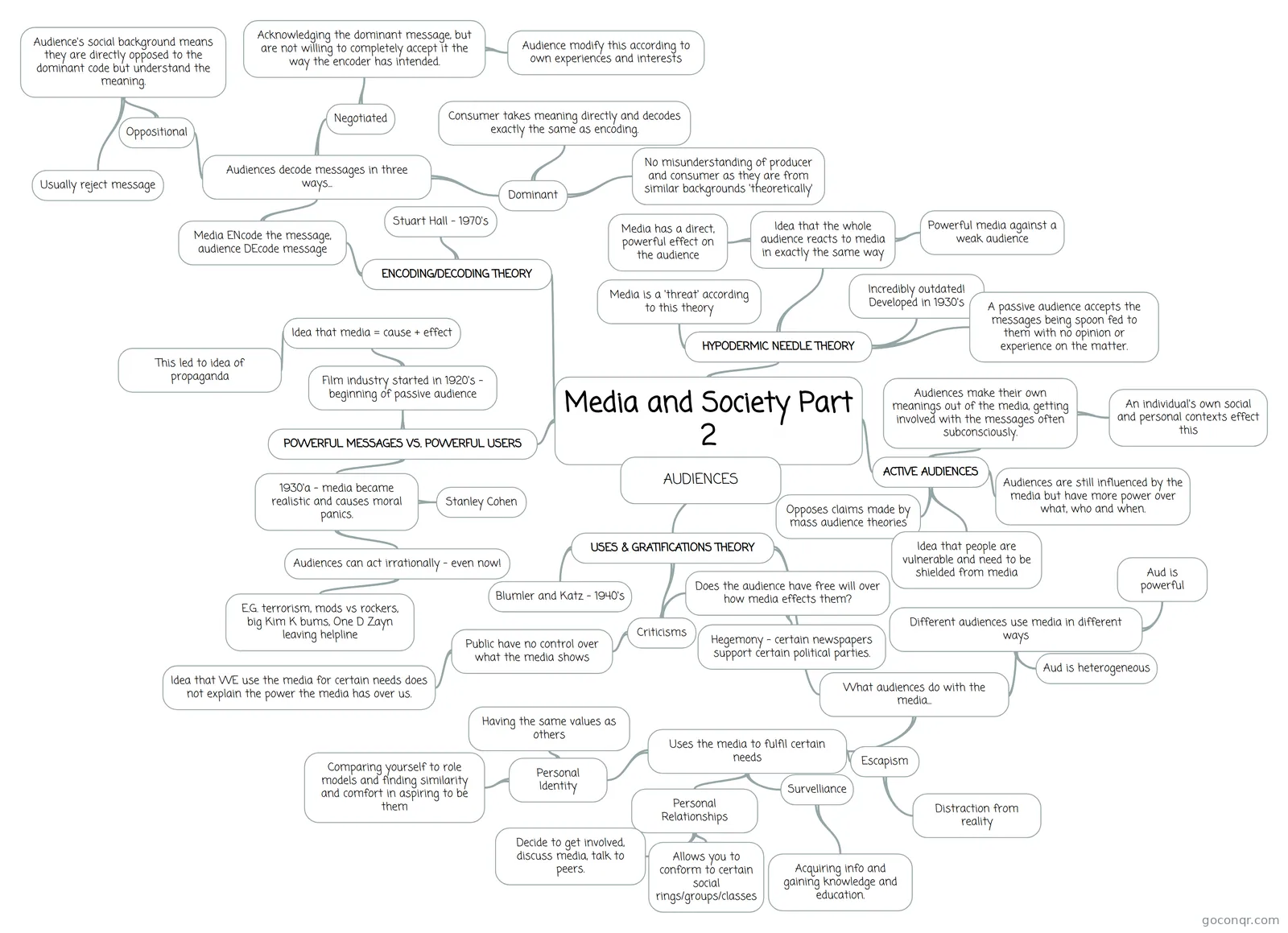 Media and Society Part 2 Second part tp audiences - media and society.
-
Mass Media Audiences: Hypodermic Syringe Model
-
Audience Theory
-
Audience
-
Target Audience
-
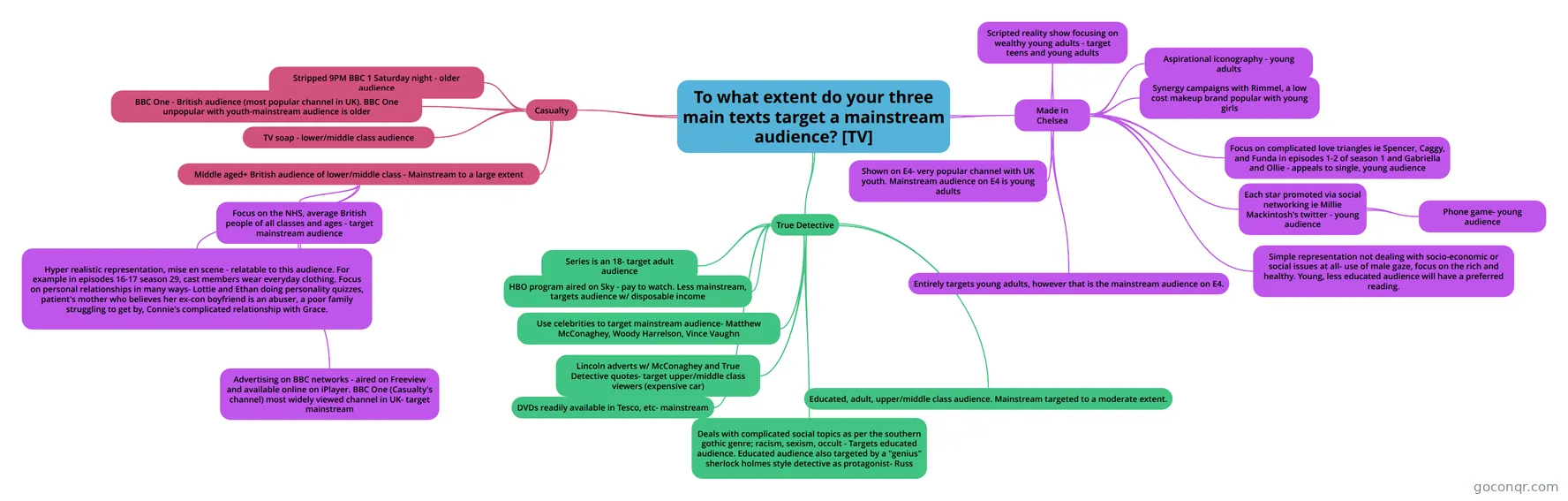 To what extent do your three main texts target a mainstream audience? [TV] An essay plan for audience question on wjec media ms4
-
How does your product engage with the audiences and how would it be distributed as a real media text?
-
Explain how different newspapers appeal to different audiences
-
Target Audience
-
Target Audience (Based on audience theories)
-
Audience Theories
-
Revising Audience - Either Q2 or 3!
-
Target Audience media studies target audience
-
 Media and Society Audiences Part 1 Mind map on audience with George and Shelly, part 1
-
take hart
-
What impact does 'Celebrity Culture' have on audiences?
-
Using New Media Technologies to Collect Audience Feedback
More Audiences resources
About audiences mind maps
GoConqr OriginalExploring Audiences mind maps
These maps connect ideas about media audiences in different ways. Media Theory introduces target audiences, demographics and the distinction between mass and niche audiences. It is a useful starting point if you want to see several audience terms together before looking at a particular theory.
For a closer look at how audiences respond, Audience Theorists includes David Gauntlett's ideas about active audiences and their choices. Stuart Hall's Reception Theory offers another route into audience theory, while Richard Dyer - Star Theory looks at how institutions construct stars.
Revise with a map
Follow the branches of one map, then cover it and sketch the connections you remember. Open it again to check what you missed. If you want to practise recall in a different way, switch to flashcards or a quiz on the Audiences unit page.
Pick a map and start with one branch.
Frequently asked questions
Which mind map could I start with?
Media Theory is a useful starting point because it brings together target audiences, demographics, and mass and niche audiences. Read its branches first, then move to Audience Theorists for a closer look at ideas about active audiences and the choices they make.
Are these mind maps free to use?
Yes. Every resource listed here is free to open and study without an account. The maps were made by GoConqr users, not by GoConqr. A free account also lets you save quiz scores and make your own quizzes, mind maps, flashcards and notes.
What do the mind maps cover?
The collection includes maps on audience theory, target audiences, audience research and media appeals. Audience Research includes questionnaires and focus groups, while Stuart Hall discusses how music videos are encoded. You can also find maps on active and passive audiences and uses and gratifications.